
To choose an advertising agency, judge its case studies by business results, confirm who will create your work, and understand exactly how it buys media and earns money. Clear answers on these points reduce several major commercial and delivery risks in an agency relationship.
Do you need a creative agency, media agency, or integrated advertising partner?
Start by defining what you need the agency to handle. Is it strategy, creative development, production, media planning, media buying, measurement, or a combination? An integrated partner handles creative and media together, which can simplify coordination.
The advertising agency services guide explains these responsibilities in more detail.
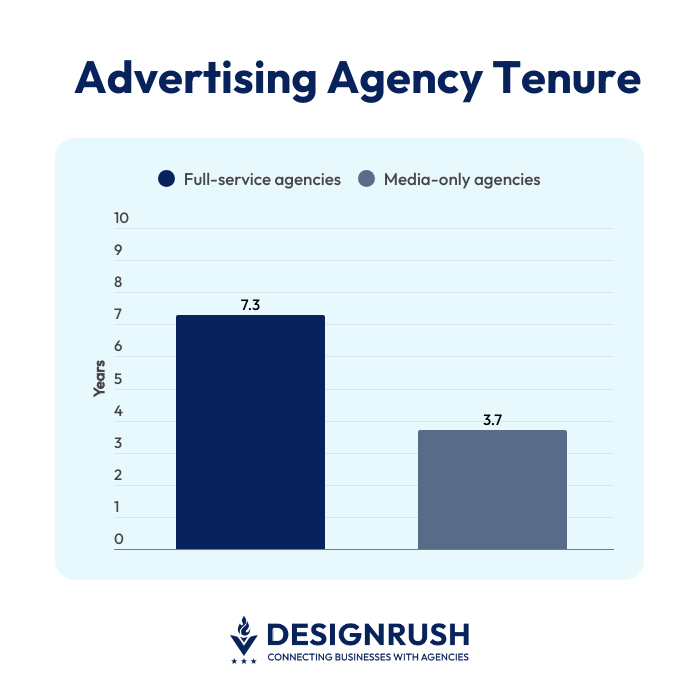
A joint study by the ANA and 4As Client-Agency Relationship Report revealed that integrated full-service agencies achieve an average tenure of 7.3 years, whereas media-only agencies face significantly higher turnover with an average tenure of just 3.7 years.
Separate creative and media agencies let you choose a specialist for each role. The right model depends on your budget, channels, and in-house team. Furthermore, according to research from the ANA In-House Agency Trends Report, 82% of brands maintain an in-house agency, yet 92% of those brands still rely on external agency partners for specialized support. If you mainly need media, compare media buying agencies as well.
If you mainly need media, compare media buying agencies as well.
How should you evaluate advertising case studies?
Start with the business problem the campaign was meant to solve and the results it achieved. Advertising case studies often start with creative work and the awards the ad agency won, because those are the most eye-catching parts. However, they’re not the most useful parts. Instead, look for what business problem the campaign was meant to solve, and what changed as a result.
Awards are a good sign that a campaign was creative and well respected in the industry. They don’t tell you whether it achieved what the client needed, such as more sales, more customers, or stronger brand awareness. A campaign can be admired and still not deliver those results.
So, when you read a case study, treat the awards as a bonus, and look for a clear problem, a clear goal, and a clear result.
| Element | Strong evidence | Weak evidence |
| Objective | A clear business goal, such as sales or market share | No stated goal |
| Audience | Who the campaign targeted and why | Broad description only |
| Channels and budget | Media mix and budget range | Creative shown without context |
| Results | Business outcomes with method, such as lift studies | Views, impressions, or awards only |
Use the table above to compare the campaign with your own goal, audience, channels, and budget. Awards can support a creative reputation, but they do not replace evidence that the campaign met its business goals.
Who creates the campaign work?
The senior team on the pitch may not run your account. Therefore, you should ask for named roles, such as account lead, strategist, creative director, and media lead, and how much time each will spend on your business.
Ask which work is done in-house, and which goes to freelancers, production companies, or partner agencies. Outsourcing can work well. You should still know who is responsible for quality.
Does the agency buy media itself or use external partners?
Advertising services providers buy media in different ways. Some act as an agent and buy media on your behalf, while others use affiliated media businesses or trading desks. In principal-based buying, the agency or an affiliated company buys media or media products on its own account and resells them to you. The use of an external or affiliated partner does not, by itself, explain which commercial model applies.
Each setup can work. Each also changes how much you can see about the real cost of your media. Ask the agency to describe who executes the media purchase and what commercial role the agency takes. It should describe this in detail in writing.
How transparent is it about media and production markups?
Advertising agencies can earn money in several ways beyond their fees. Examples include markups on production, margins on resold media, and rebates or volume incentives from media owners.
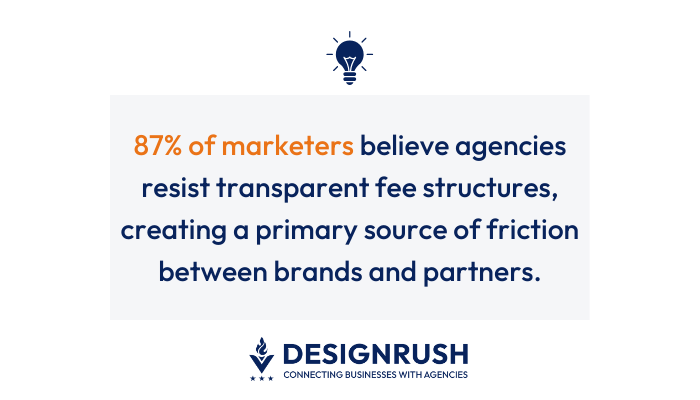
According to findings from the World Federation of Advertisers Agency Remuneration Study, 87% of marketers believe agencies resist transparent fee structures, creating a primary source of friction between brands and partners. The buyer should clarify which ones apply, whether they are disclosed, and whether they are passed back to you. A contract can include audit rights, which let you or a third-party review media spend and invoices.
Who owns ad accounts, audiences, data, and finished creative?
Clarify ownership and access for each item in the contract. Where platform structures allow, the client should retain the appropriate owner or administrator-level access to its ad accounts, with the agency granted the access it needs. The contract should also state what audience data and campaign history remain available to you after the relationship ends.
For creative, clarify who owns the final ads and source files. Also check usage rights for talent, music, and images. These may be limited by time, region, or channel, and renewal can cost extra. Seek legal advice for large campaigns.
How does the agency connect creative performance to business results?
Ask how the agency would measure success for your campaign. Strong answers match metrics to goals: brand lift or awareness surveys for brand campaigns, and conversions or sales for performance campaigns. Then ask how the reporting distinguishes observed results from results attributable to the advertising.
Ask how the agency tests different creative versions and decides when to shift budget. The decision criteria need to match your campaign goal, rather than leaving 'strongest' undefined. Request an anonymized sample report showing how test results inform the next campaign decision.
How should conflicts with competing clients be handled?
Agencies may serve competitors, especially larger networks. Ask whether the ad agency works with companies in your category and how it separates teams and data.
If exclusivity matters, define your competitors in the contract and agree on how long the restriction lasts.
Questions to ask an advertising agency
Before you sign with an agency, ask these questions to test its experience, transparency, and fit with your business.
- Which campaign is closest to ours in goal, audience, and budget, and what business results did it achieve?
- Who will work on our account, and how much of their time will we get?
- How do you buy media, and do you resell the inventory you have bought in advance?
- Do you earn markups, margins, or rebates on media or production? Are they disclosed to us?
- Will our contract include audit rights over media spend?
- Who will own the final creative, and what usage limits apply to talent and music?
- Do you work with any of our competitors?
- How will you measure success, and can we see a sample report?
What advertising-agency red flags matter most?
Watch for these warning signs during the selection process, since each one can leave you paying more, knowing less, or owning less than you expected.
- Unclear answers on how media is bought. You may not know what you actually pay for ad space.
- Refusal to discuss markups or audit rights. This can limit your ability to verify costs and understand the agency's commercial model.
- Case studies built only on awards or views. Business impact remains unknown.
- A pitch team that disappears after signing. Ask for named roles in the contract.
- Client ad accounts controlled only by the agency, without appropriate client access. You may lose access to data and campaign history when the relationship ends.
- No mention of usage rights for production. Owning a finished ad does not necessarily give you unlimited rights to the talent, music, or images used in it. Confirm the permitted time period, regions, and channels, along with renewal costs, before reusing the ad.
How should you compare your final candidates?
Compare proposals against the same campaign goal, scope, budget, and timeline. Use the factors below to record the evidence each agency provides, identify unanswered questions, and resolve differences in fees, responsibilities, ownership, and reporting before making a final choice.
| Factor | What to compare |
| Relevant results | Business outcomes in comparable campaigns |
| Team | Named people and time commitment |
| Media model | How media is bought and how transparent it is |
| Commercial terms | Fees, markups, rebates, and audit rights |
| Ownership | Accounts, data, creative, and usage rights |
| Measurement | Proposed metrics and reporting quality |
Before choosing an agency, compare proposals that separate agency fees, production costs, and media spend. The advertising agency pricing guide explains these categories in more detail.