How to Hire Graphic Design Companies in California
Table of Contents
What should you prepare before starting an engagement with a graphic design agency in California?
Before starting any engagement with graphic design agencies in California, prepare your brand assets, project scope, target audience data, reference brands, project head, budget range, and timeline.
Without these details, you may receive graphic design proposals that completely miss your objectives. Worse, it can lead to more expensive quotations, as the agency accounts for extra discovery hours, more revision cycles, and a longer timeline.
Here is a checklist of items to prepare:
Asset audit. Compile your existing brand assets, guidelines, and positioning. It also helps to provide information on your design debt, such as inconsistent marketing materials or outdated UI.Defined project scope. Detail your desired output quantity and specs, target platforms, and objectives. For example: logo, brand guidelines, and 10 Instagram and Facebook posting templates for a product launch in Quarter 3.Target audience information. Gather information on your buyer personas, their motivations, and your localization needs. For example, a Gen Z couple looking for budget-friendly apartments in the Bay Area.Competitive reference brands. Provide a list of 3-5 companies whose visual identity you wish to emulate or avoid and why. It helps to be as specific as possible, so California agencies understand the direction you are aiming for.Stakeholder lead. Identify a person from your team who has the final approval authority. Doing so reduces revision overruns and project delays.Budget range. Know how much your company is willing to spend on the design project, so the agency can deliver a proposal that better matches what you can afford.Timeline and hard deadlines. Inform the agency if you are aiming for a fixed date, such as trade shows, product launches, or investor decks. Doing so will help the agency plan its design timeline accordingly, especially when print production is involved.
What should you look for in a California graphic design portfolio?
When evaluating California graphic design portfolios, look for relevance, business impact, and commercial scalability. These three factors help ensure the agency is a strategic fit beyond style alignment.
#1 Proven market experience An experienced graphic design company in California understands your market's visual language, including its regulatory environment and audience expectations. As such, it can produce designs that more accurately capture your brand positioning and resonate with target audiences.
For instance, a Los Angeles agency with strong entertainment and fashion credentials may not understand the visual standards of a San Diego biotech firm.
#2 Strategic thinking Beware of "dribblization" of graphic design portfolios, or when the portfolio focuses on aesthetics rather than strategic and business outcomes.
Instead, look for the problem statement, design methodology, and measurable business results across the California design company’s portfolio. Also, ask about its research and discovery process, and how it customizes its visual language to the target audience.
#3 Commercial scalability One standout project can be an outlier and not proof of experience. To avoid this, search for:
Live links to a finished website
Complete brand guidelines
Different marketing assets for a single client, such as Instagram and Facebook posts, and display ads
These show that the graphic designers in California can consistently scale designs for different platforms and complete projects beyond the mockup stage.
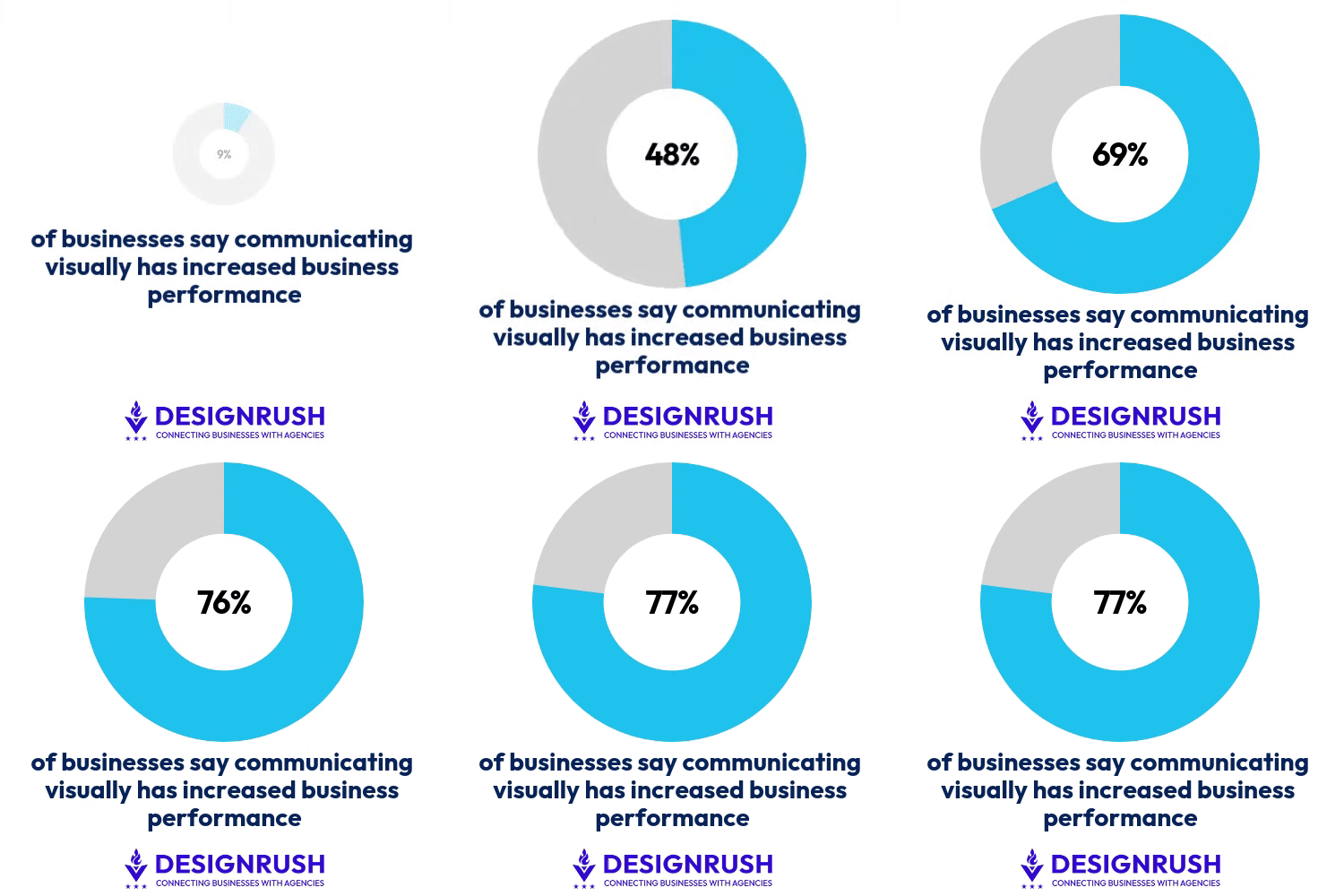
With 77% of businesses linking visual communication to business performance,
How do you know if graphic design companies in California understand your market?
California graphic design companies demonstrate market understanding by speaking specifically to your regional competitive landscape, target audience demographics, and cultural context.
This matters because California is not a single market.
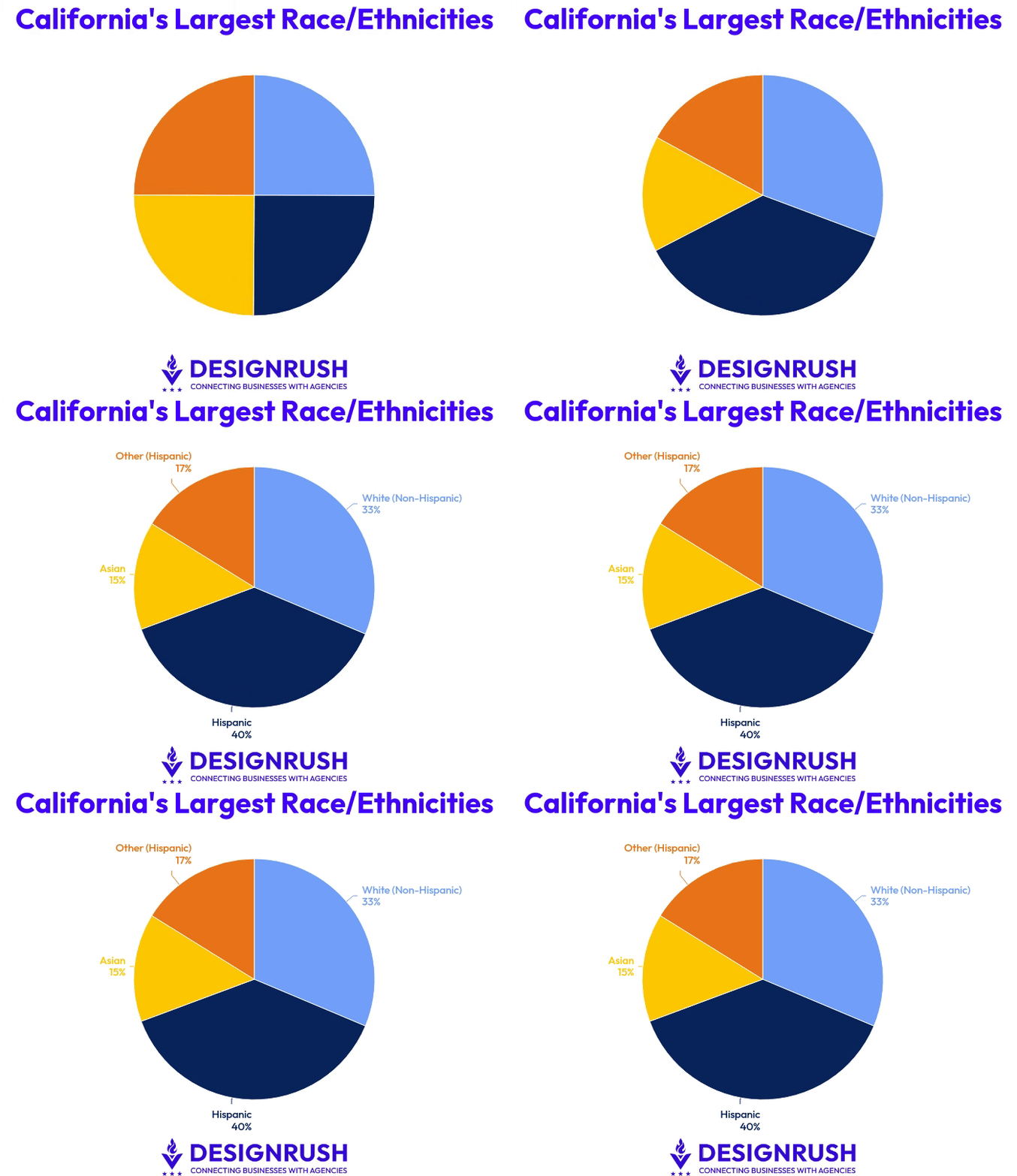
According to Data USA , 27% of California's population is foreign-born, nearly double the US average of 14%, with Los Angeles, Long Beach, and Anaheim reaching 32%.
The state has over 185 languages spoken , with Spanish spoken in 28.3% of households, Chinese in 8%, and Tagalog in 5%.
A design strategy that ignores this demographic reality will underperform across California's most valuable regional markets. To verify that an agency has the cultural and strategic fluency your design needs, consider the following:
Ask them to describe your competitive landscape. A California agency that truly knows your market should be able to name two or three of your competitors and comment on their visual positioning.Probe their audience assumptions. Pay attention to how they answer the question: "Who do you think our customer is, and what visual cues are they most responsive to?" Weak agencies give generic answers. Strong agencies give specific ones grounded in regional demographics, cultural nuance, and channel behavior.Request references from clients in your industry. California's creative industry is relationship-dense; an agency serious about your sector will have past clients willing to take a 10-minute call.Evaluate their questions, not just their answers. A California agency that asks about your sales cycle, buyer decision triggers, and competitive differentiation understands that design is a business tool and not just a creative output.
What are the red flags during the proposal and discovery phase?
The clearest red flags in a California graphic design proposal are vague revision language, missing ownership terms, and a discovery process that skips strategic alignment entirely. Catching these early protects you from scope disputes, IP complications, and creative misalignment that are difficult and costly to reverse once a contract is signed.
Watch for these specific red flags:
Red flag Why it is important
Portfolio is irrelevant and generic
Design work that looks similar across different clients may indicate that the agency relies on templates, AI, or stock assets. As such, it will be unable to customize its work to your brand.
Skipping discovery
Unsolicited concepts before the agency understands your brand, audience, and business goals signal that it is focused on style and will likely struggle when revisions require strategic justification.
No named point-of-contact for communication
California designers that route client communication through shared inboxes or project management platforms without a named account manager create accountability gaps that expand timelines and blur approval chains.
Vague revision language
Phrases like "revisions as needed" or "until you're happy" can subject you to revision overruns and disputes.
Ambiguous ownership terms
Proposals that do not clearly state who owns the assets, source files, and licensing rights are preventing you from independently using the designs you paid for. It is also creating an unnecessary dependency on the agency.
No client references from the last 12 months
An agency that can only produce references from 2-3 years may have experienced team changes, ownership transitions, or quality shifts that their portfolio does not reflect.
What should be included in your contract with the graphic design company in California?
Your graphic design contract must include details on the project's scope and deliverables, ownership rights, payment schedule, timelines, and third-party licensing. Because California has specific legal standards, you should also ensure that your design contract contains language that addresses these regulations.
Pay attention to the following details when reviewing your California design contract:
#1 Scope of work and deliverables Your contract should state the following details:
Type of work, such as inside page layout and cover design for a bookNumber of designs, such as a 100-page book layout or 10 Facebook post templatesSpecs, such as 1080x1080 Facebook posts or a 5x7-inch bookNumber of revisions and what constitutes a new round versus a minor amendmentWhat is out of scope, and how much would it cost
#2 Intellectual property ownership and transfer California ownership rights can be complex due to the California Labor Code 2870 and Civil Code 982. The former stipulates that an employee's work outside the office belongs to the employee, while the latter emphasizes that the artist owns the reproduction rights to their work after sale.
As such, your contract should stipulate work-for-hire terms and ownership and reproduction rights of all final deliverables, including the editable source files and the specific format (Adobe Illustrator, InDesign, Figma, etc.).
#3 Payment terms Your contract should specify the full payment schedule, including the deposit amount, milestone-based installments, and the final payment trigger. It should also define out-of-scope fees and what work qualifies as out-of-scope, late payment fees, and a kill fee for early project termination.
#4 Timeline milestones with agency accountability Contracts that only specify a final delivery date with no intermediate milestones give agencies no accountability checkpoints. Build in milestone dates and define what happens, including your right to terminate, if they are missed without cause.
#5 Third-party asset licensing California agencies frequently use stock photography, licensed typefaces, and icon libraries. Your contract should require disclosure of all third-party assets, confirm licensing terms, and clarify who bears the cost of licensing beyond the project's delivery date.
Why Companies Trust DesignRush
Rated 4.8 on Google and 4.7 on Trustpilot , DesignRush Agency Directory is a reliable resource for finding graphic design companies in California. We owe this to our executive selection team, which follows a strict screening process when featuring agencies on the platform, assessing key performance indicators, like portfolio, client reviews, and industry reputation.
Learn more about DesignRush Agency Ranking Methodology .
Sources
DesignRush sustains a directory of over 40,000 agencies categorized by service category, location, expertise, and reviews. We build our database in two ways:
Our dedicated team of agency experts actively searches the web for top-performing companies. We then pull information from their websites, online presence, and client testimonials to verify their status and qualifications prior to listing.
The agencies listed get notified of their profiles on the website and they can choose to claim it or not, which suggests their availability for more collaborations.
Agencies can also reach out to DesignRush and must go through the verification process prior to being listed.


 Proposals