
To choose a social media marketing agency, look at the live accounts it manages, test how it handles approvals and problems, and check organic and paid skills separately. Social work happens in public, so you can verify much of what an agency claims.
This guide assumes you know what social media marketing services include. It focuses on evidence and risk.
Which platforms does the agency genuinely specialize in?
Each platform rewards different formats and habits, therefore LinkedIn, TikTok, Instagram, and YouTube all need different content, timing, and tone.
Ask the agency which platforms make up most of its work and then ask for live client accounts on your main platforms. A long list of platforms on a services page will tell you little about depth.
How should you evaluate the accounts it currently manages?
Open three or four live accounts the agency manages and scroll through recent months. Look for the following signals:
Signal | Strong evidence | Weak evidence |
Consistency | Regular posting with a clear visual and verbal style | Long gaps or sudden style changes |
Conversation | Thoughtful replies to comments and questions | Unanswered comments or copy-paste replies |
Engagement quality | Real comments and shares from the target audience | Likes only, or comments that look like spam |
Platform fit | Formats suited to each platform | Identical posts on every platform |
Variety | Different styles for different clients | Every client looks the same |
Confirm what the agency controls on each account. A client may produce its own videos or run ads in-house. Credit the agency only for the work it actually does.
Can the agency adapt content to each platform?
Cross-posting the same asset everywhere can underuse platform-specific formats and audience behavior. The social media agency should be able to adapt captions, formats, aspect ratios, hooks, and calls to action where the platform or campaign requires it.
Ask the agency to show one idea adapted for two platforms. The difference between versions shows how well it understands each one.
How does its content approval process work?
A clear approval process prevents mistakes and delays. Ask how far ahead the social media management agency plans content, who approves it on your side, and how fast it needs feedback. In a 2026 survey of enterprise marketing leaders, approvals and sign-off were the most common reason campaigns launched late, accounting for 47%.
Regulated or high-risk industries may require additional legal, compliance, or internal review before content is published. If that applies to your business, check whether the agency can work within the required approval process.
How does the agency handle comments, complaints, and social crises?
The social media marketing agency may speak for your brand in public, sometimes in real time. That makes approvals, escalation, and response authority one of the highest-risk areas in social media outsourcing.
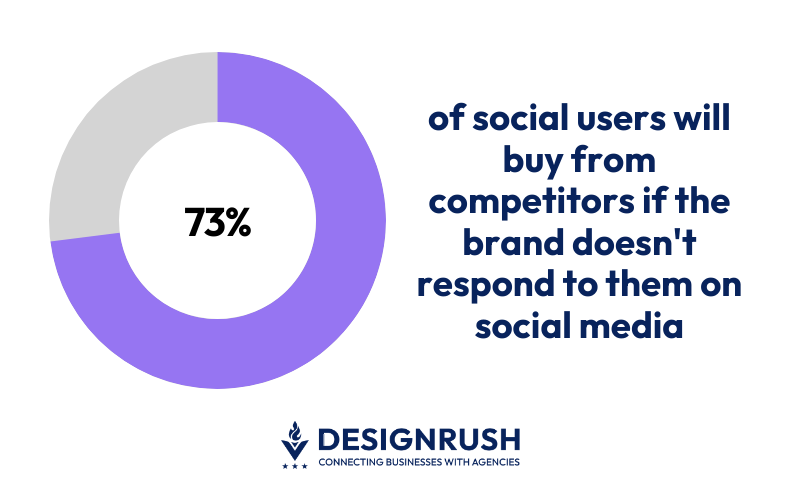
According to the 2025 SproutSocial Index, 73% of social users agree they will buy from a competitor if a brand doesn't respond to them on social media.
Ask for a sample escalation plan. A strong plan defines which issues the agency answers, which it passes to you, and how fast. It names who on your side makes decisions during a crisis and how to reach them after hours.
Also ask about a past difficult situation, such as a viral complaint. Listen for specific steps taken, timing, and what changed afterward.
How should you evaluate organic and paid social expertise separately?
Organic and paid social need different skills. An agency can excel at one and be average at the other.
Organic evidence includes growth in reach, engagement from the right audience, and traffic to your site. Paid evidence includes cost per lead, cost per purchase, or return on ad spend, with budgets and time frames stated.
If you need both, ask who handles each one. Some agencies outsource paid social or assign it to a separate team.
What metrics should the agency use for your goals?
The right metrics depend on what you want social media to do. The follower count alone rarely shows business value.
Goal | Useful metrics |
Awareness | Reach, video views, and share of conversation |
Engagement | Comments, shares, saves, and replies from target users |
Website traffic | Clicks and sessions from social in your analytics |
Leads or sales | Conversions, cost per lead, and revenue from tracked links or ads |
Customer care | Response time and resolved conversations |
Ask the agency to propose metrics for your goal before it signs. A useful proposal explains where each number will come from.
Who owns the content, ad accounts, audience data, and creative assets?
Your company should retain ownership and admin access to its social accounts, ad accounts, and business manager tools wherever the platform allows it. The agency should get access through user roles you can remove.
Check three more items in the contract:
- Confirm whether editable source files are included in the handover and what rights you receive to the finished content.
- Creator content may come with time-limited or channel-specific usage rights, so confirm how long and where you can use it.
- Stock music, images, and other licensed assets need terms that cover your intended use.
Who will do the work?
A social team may include a strategist, a content creator or designer, a video editor, a community manager, and a paid social specialist. Ask which roles your account gets and how much time each one spends on it.
Community management needs consistent brand knowledge. Ask how the agency trains community managers, documents response rules, and handles handoffs when different people cover the account.
What should make you cautious before signing?
These signals point to real risk. Context matters, so ask follow-up questions.
- Promises of fast follower growth without a clear acquisition explanation. Sudden growth can reflect low-quality or artificial audience acquisition and can distort the metrics used to judge performance.
- No escalation plan. The agency may respond badly to complaints or stay silent during a crisis.
- Vague content volume. "Regular posting" with no number of posts or formats makes the
- scope hard to hold.
- The agency insists on sole ownership or control of your pages or ad accounts. Your company should retain appropriate ownership and administrative access wherever the platform supports it.
- Reports that show followers and likes only. These say little about business results.
- Creator campaigns with no disclosure process. For US-facing campaigns, material
- Connections between brands and endorsers may require clear disclosure under FTC guidance, and other markets can have their own rules.
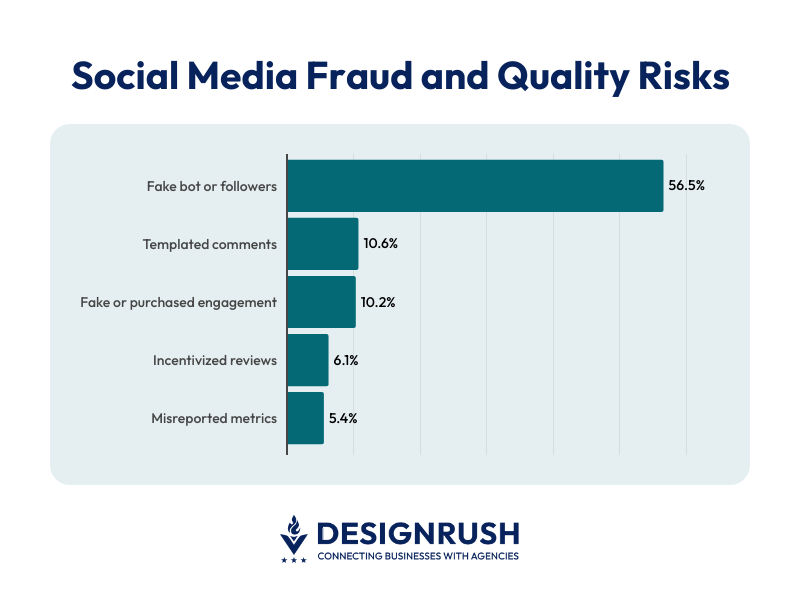
In Influencer Marketing Hub's 2026 survey, fake or bot followers made up more than half of all reported fraud and quality problems.
How should you compare your final candidates?
Before you choose the best social media social media marketing agency, compare finalists on the same criteria. Price is one factor among several.
Factor | What to compare |
Platform depth | Live accounts on your main platforms |
Content quality | Platform-native work and production level |
Risk handling | Approval process and escalation plan |
Paid capability | Paid results with budgets and time frames, if needed |
Measurement | Proposed metrics tied to your goals |
Ownership and terms | Account access, file ownership, usage rights, notice period |
For the price side of the comparison, our social media marketing pricing guide breaks down what agencies typically charge for monthly packages, add-ons, and hourly work.