Markovate, HatchWorks AI, Oxagile, DataRoot Labs, InData Labs - these are among the top AI automation agencies businesses choose to streamline operations, reduce manual workloads, and implement intelligent systems that improve efficiency, scalability, and data-driven decision-making.
Organic rankings are determined by five factors: top services, reviews, portfolio, awards/press, and team expertise. Sponsored listings pay for a placement that appears above organic positions. Sponsorship does not affect star ratings or review content - read more on our methodology page.
At BMS Services, we build apps, websites, and custom software that simplify your work and help your business grow.From app development and CRMs to automation, web development, and SEO, we turn your goals into smart, scalable solutions that actually work.Why BMS: honest advice without the jargon, live...
Top Services:
- Software Development
- Mobile App Development
- AI Development
- Digital Services
- Web Development
- Show more
- Location
- Semarang, Indonesia
- Number of Employees
- Under 49
- Average Hourly Rate
- $35/hr
- Minimal Budget
- Under $1,000
- Portfolios Count
- 3 Projects Listed
Explore AI Development Specializations
Everything You Need to Know Before Hiring an AI Automation Agency
What does an AI automation agency do?
An AI automation agency helps organizations automate repetitive work, improve decision-making, and integrate artificial intelligence into everyday operations. By combining AI workflow automation, machine learning, generative AI, and automation tools, these firms help businesses operate faster, reduce costs, and scale operations more efficiently.
Most AI automation agencies offer a combination of strategy, development, integration, and optimization services:
- AI workflow automation: Automating repetitive tasks and multi-step business processes such as document handling, approvals, reporting, and data entry.
- AI agents and agentic AI systems: Building agentic AI systems that execute multi-step tasks across tools, monitor workflows, trigger actions, and coordinate work in business applications such as CRM platforms or project management tools.
- Conversational AI: Creating conversational AI assistants and AI chatbots for customer support, internal help desks, and automated communication.
- Custom AI models: Tailored solutions built on a company’s own processes and data, including predictive analytics, recommendation engines, fraud detection, and intelligent document processing.
- AI integration and system architecture: Connecting automation systems with CRM software, ERP systems, cloud infrastructure, and analytics platforms.
- Intelligent process automation: Combining robotic process automation, machine learning, and AI models to automate both rule-based and data-driven processes.
- AI consulting and automation strategy:AI consulting that identifies automation opportunities, maps workflows, evaluates tools and platforms, defines ROI metrics, and builds automation roadmaps.
Adoption is moving fast. In 2024, 78% of organizations reported using AI in at least one business function, up from 55% the year before. McKinsey found the most common enterprise uses are IT, marketing and sales, and service operations.
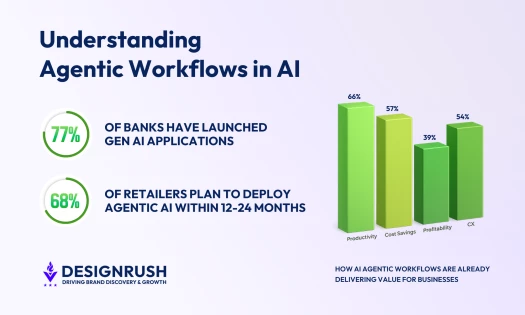
AI agents are following a similar path: 79% of companies report adopting AI agents at some level, according to a 2025 PwC survey, and 66% of those using them say the technology delivers measurable productivity improvements.
As AI becomes more embedded in business operations, companies can use the five stages from AI adoption to AI-native to understand how their AI capabilities can progress from isolated tools to organization-wide workflows.
What can AI automation replace in your business?
AI automation works best on processes that run often, follow repeatable steps, and live in software you already use. These are the tasks it most often takes over:
- Ticket triage: Models read incoming support requests, tag them by topic and urgency, route them to the right team, and draft first replies. Salesforce reports that AI resolved 30% of service cases in 2025 and expects that share to reach 50% by 2027.
- Invoice processing: Document AI extracts line items from invoices, matches them to purchase orders, and flags mismatches for review before payment.
- Lead qualification: Scoring models rank inbound leads, enrich CRM records, personalize follow-up campaigns, and book meetings with sales-ready prospects.
- Reporting: Automated pipelines pull data from multiple systems, build recurring reports, and summarize changes in plain language.
- Document handling: Automatically classify, extract, and file contracts, claims, forms, and onboarding paperwork, with a person approving edge cases.
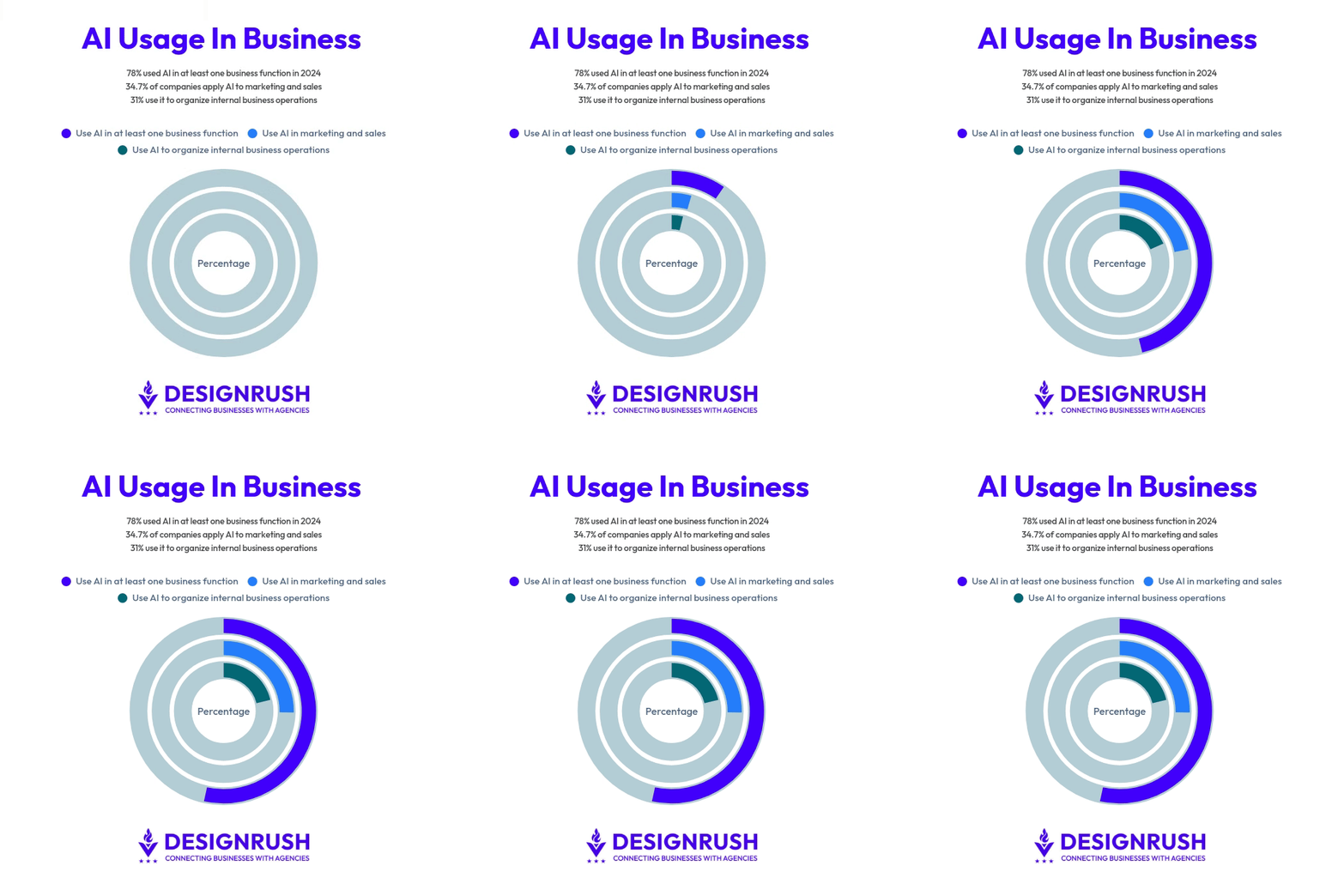
According to enterprise data, 34.7% of companies use AI for marketing and sales, while 31% use it to organize internal business operations.
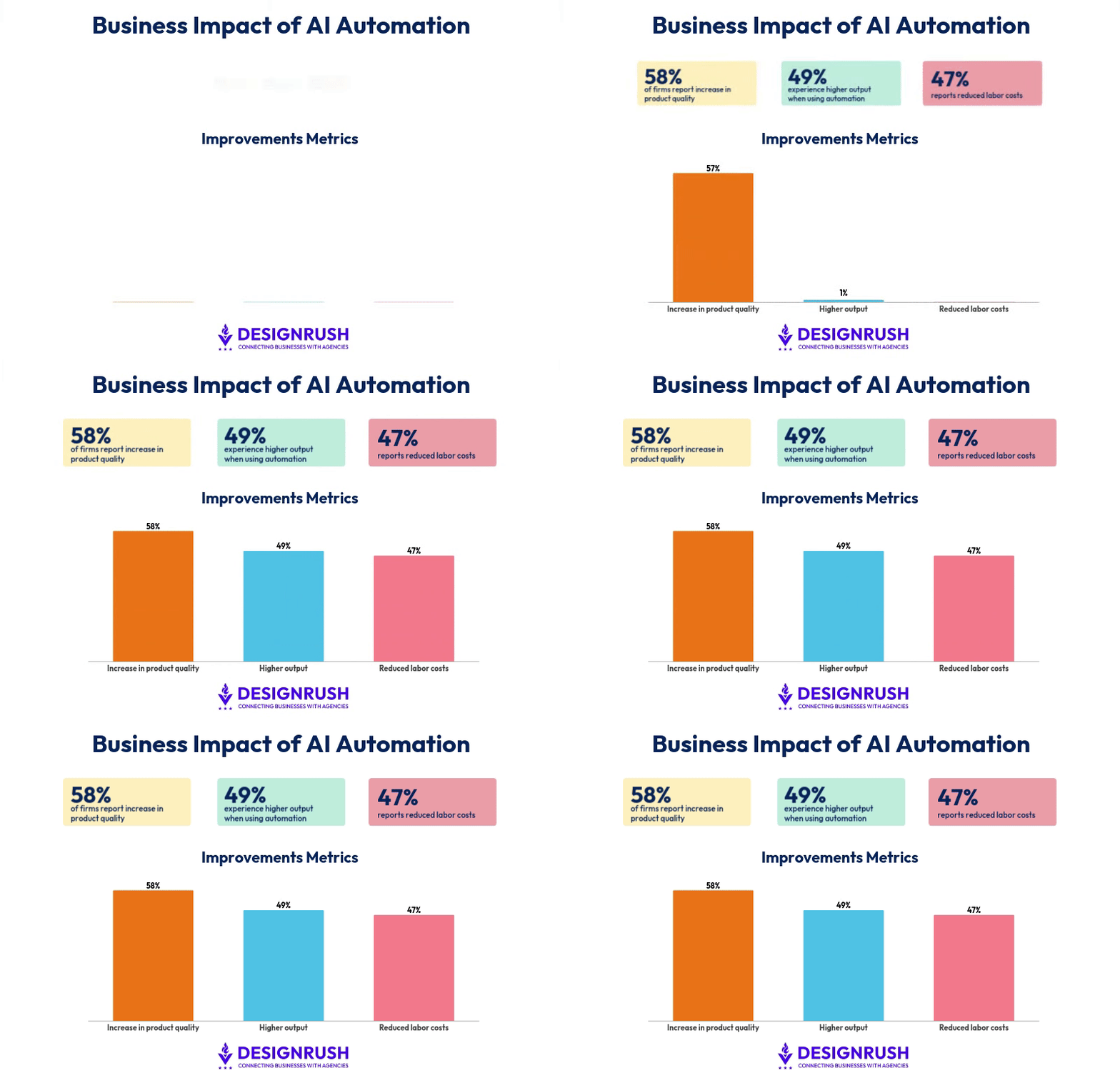
Companies implementing automation report several measurable improvements:
- 58% see increased product quality
- 49% experience higher output
- 47% report reduced labor costs
The global robotic process automation (RPA) market was valued at about $22.6 billion in 2025 and is projected to surpass $110 billion by 2034. A workflow automation agency usually starts with one of the processes above, proves the result, and then extends the same approach to other departments such as finance, HR, supply chain, and IT.
How much does an AI automation agency cost?
AI automation services range from $2,500 for small projects to over $150,000 for intelligent automation. The final cost varies depending on complexity, integrations, and whether the solution requires custom AI development.
According to the latest industry benchmarks, you should expect to pay the following:
- Small AI workflow automation projects cost from $2,500 to $15,000+, with ongoing monitoring retainers from $500 to $5,000+.
- Intelligent automation projects typically cost $15,000 to $150,000 per automated process.
- Robotic process automation bots commonly cost $5,000 to $15,000 per bot, depending on scale.
More advanced AI systems, such as AI agents or multi-system integrations, typically cost more:
- Implementing a medium-complexity AI agent can cost $20,000 to $95,000 plus ongoing monthly infrastructure expenses.
- Agencies building AI agents usually charge $50 to $150 per hour, with projects lasting 20 to 100+ hours, depending on complexity.
Returns can justify the spend when you choose the right workflow. Research on enterprise AI adoption points to:
- An average return of about $3.70 for every $1 invested in AI initiatives
- Around 210% ROI over three years
- 10 to 20% improvements in sales ROI
- Operational cost reductions of up to 30%
McKinsey sizes the long-term opportunity from corporate AI use cases at up to $4.4 trillion in added productivity growth.
AI automation vs AI development: which do you need?
AI automation connects existing models, platforms, and business tools into workflows. It suits processes that already run on your software, such as customer support, finance operations, sales operations, and reporting. Projects are scoped per workflow, launch in weeks to months, and are usually priced per process or per agent.
AI development builds new software or models. It suits companies that need a customer-facing AI product, a model trained on proprietary data, or a platform that several teams will build on. These projects involve data engineering, model work, and long-term maintenance, so budgets and timelines are larger.
A simple test:
- Hire an AI automation company when the process already exists, the data sits in tools you use today, and the goal is to save time or cost on that process.
- Hire an AI development partner when you need a new product, a proprietary model, or a system other teams will build on. US buyers can compare AI development companies in the USA by rate, budget, and verified reviews.
Many businesses start with automation to prove value on one workflow, then bring in a development partner once the use case needs custom software. Some firms offer both.
How to choose an AI automation company
The best AI automation agency for your business combines strategic fit, implementation expertise, and a record of measurable outcomes. With AI adoption growing rapidly, selecting the right partner can determine whether automation initiatives succeed or fail.
- Look for proven experience in real business workflows
The best AI automation agencies demonstrate experience solving real operational problems. A strong partner should show case studies in areas such as AI workflow automation, customer service automation, process automation, or digital marketing automation. - Evaluate their ability to deliver measurable business value
A credible agency should clearly explain how automation will improve metrics such as operational efficiency, productivity, or revenue growth. - Assess their expertise in AI integration and systems architecture
Automation rarely works as a standalone tool. Effective AI automation solutions must integrate with existing systems such as CRM platforms, ERP software, data warehouses, and customer support tools. - Choose companies that focus on high-impact use cases
Successful AI automation companies typically begin with one focused workflow and expand once it delivers results. A good partner will prioritize automation opportunities with clear ROI, such as customer support automation, document processing, or workflow optimization. - Look for strong consulting and strategic guidance
The best partners offer AI consulting to help businesses identify automation opportunities, redesign workflows, and manage organizational change. - Evaluate governance, security, and long-term support
AI systems introduce new risks related to data privacy, governance, and compliance. A reliable AI automation agency should offer clear policies for model monitoring, data protection, and ongoing maintenance. - Prioritize partners that understand your industry
Top AI automation providers understand the workflows, compliance requirements, and operational challenges of your industry.
Warning signs to watch for when hiring AI automation agencies
When evaluating top AI automation providers, certain warning signs can indicate that a partner may not deliver real business value:
- The agency cannot define clear business outcomes or ROI
Research analyzing enterprise deployments found that about 95% of corporate generative AI pilots fail to deliver measurable financial impact, often because projects were launched without clear business objectives or success metrics. - Ignores data quality and data readiness
Data underpins machine learning, AI systems, and intelligent automation. If an agency does not assess your data infrastructure before proposing solutions, the project may struggle. - Promises a fully autonomous AI without discussing integration
Some agencies promote AI agents, generative AI, or AI-powered automation as instant solutions without addressing integration with existing business systems. Analysts warn that over 40% of agentic AI projects may be canceled by 2027, largely because integrating agent systems into legacy workflows can be complex and expensive. - Lacks a structured implementation process
Organizations without a structured strategy often struggle to scale AI initiatives. Studies show that 47% of AI initiatives never move beyond the pilot stage, often because organizations lack a clear implementation roadmap. - Recommends automation without understanding your workflows
If an AI automation agency immediately suggests tools or platforms without analyzing your workflows, it may indicate a one-size-fits-all approach. - Overlooks change management and employee adoption
Automation projects often fail because organizations underestimate the human side of transformation. - Treats AI projects as isolated experiments
Organizations often fail when AI initiatives stay disconnected from business operations, creating fragmented automation efforts that never scale across the company.
Questions to ask before you sign the contract
Ask AI automation companies the following questions before you sign the contract:
Relevant background
- What industries and business problems have you successfully automated?
- Can you provide measurable results from previous AI automation projects?
- What experience do you have with AI technologies like machine learning, generative AI, or AI agents?
- Do you provide AI consulting and strategic guidance, or only development services?
Services and Processes
- What AI automation services do you provide end-to-end?
- How do you identify the best workflows for automation?
- What AI tools and platforms do you use?
- How do you handle AI integration with existing systems?
Related to Your Project
- What timeline should we expect for implementing AI workflow automation?
- What ROI should we expect from this automation project?
- How will you ensure data security, governance, and compliance?
- What support and optimization do you provide after deployment?
How we rank AI automation agencies on DesignRush
Organic rankings on this page are based on five factors: top services, client reviews, portfolio, awards and press coverage, and team expertise. Reviews go through a verification process with past clients before they count toward an agency’s rating. Sponsored listings pay for placement above organic results, and sponsorship doesn't affect star ratings or review content. The full process is outlined on DesignRush's methodology page.
To narrow the list, filter AI automation agencies by industry, budget, and hourly rate, then compare verified reviews and portfolios side by side.
Sources
DesignRush sustains a directory of over 40,000 agencies categorized by service category, location, expertise, and reviews. We build our database in two ways:
- Our dedicated team of agency experts actively searches the web for top-performing companies. We then pull information from their websites, online presence, and client testimonials to verify their status and qualifications before listing them.
- The agencies listed get notified of their profiles on the website, and they can choose to claim them or not, which suggests their availability for more collaborations.
Agencies can also contact DesignRush and must complete the verification process before being listed.

Why companies trust DesignRush
Every agency is independently vetted before it can be listed or ranked
 4.8
 4.8
Some agencies pay for sponsored placement, clearly labeled and held to the same vetting standards.
Frequently Asked Questions About AI Automation Companies
What is an AI automation agency?
An AI automation agency is a service firm that designs, builds, and maintains AI systems to automate repetitive business work. Typical projects include support ticket triage, invoice and document processing, lead qualification, reporting, and AI agents that complete multi-step tasks across business tools.
Agencies combine automation platforms, machine learning (ML), and large language models (LLMs) with integrations into CRM, ERP, and help desk software. Most engagements start with one workflow and expand once it shows results.
How much do AI automation services cost?
Small AI workflow automation projects cost from $2,500 to $15,000+, with monitoring retainers from $500 to $5,000+. Intelligent automation projects run $15,000 to $150,000 per automated process, and a medium-complexity AI agent costs $20,000 to $95,000 plus monthly infrastructure.
Agencies building AI agents usually charge $50 to $150 per hour. The final price depends on the number of systems involved, data quality, and how much custom AI development the workflow needs.
How long does it take to deploy an AI automation workflow?
Basic conversational AI or chatbot systems take 2 to 4 weeks, standard workflow automation projects take about 6 to 12 weeks, and a proof of concept for AI agents or agentic AI workflows takes about 4 to 6 weeks. Timelines depend on workflow complexity, data quality, and the number of systems involved.
Most business AI automation projects take 3 to 6 months, covering discovery, data preparation, development, integration, and deployment. Enterprise-wide intelligent automation programs can take 9 to 18 months to scale.
Integration with existing infrastructure alone typically needs 4 to 8 weeks, plus 4 to 6 weeks of testing and 2 to 4 weeks for deployment and stabilization.
What is the difference between AI automation and robotic process automation?
Robotic process automation (RPA) follows fixed rules to repeat the same steps, while AI automation uses machine learning and language models to handle tasks that need interpretation or judgment. Intelligent process automation combines the two, and most companies use them together.
- How they work: RPA bots follow a predefined script of clicks and keystrokes. AI automation reads input, interprets it, and decides the next step.
- What data they handle: RPA needs structured data in fixed formats, such as forms and spreadsheets. AI automation also handles emails, documents, images, and free text.
- Typical uses: RPA fits data entry, payroll, and moving records between systems. AI automation fits ticket triage, invoice reading, lead scoring, and AI agents.
Which processes are the best candidates for AI automation?
The best candidates share four traits: high volume, repetitive steps, digital inputs, and a measurable outcome.
Processes that run hundreds of times a week, follow a known path with some exceptions, and live in software such as email, a CRM, or an ERP deliver returns fastest. Common starting points are support ticket triage, invoice and expense processing, lead qualification and routing, recurring reporting, and document intake for contracts, claims, or onboarding.
Processes that depend on rare judgment calls, rely on paper or poor-quality data, or change every few weeks are weaker candidates until the underlying data and steps are stable.
What are the top AI automation agencies in 2026?
The top AI automation agencies in 2026 include:
Latest Trends Related to AI Automation
Artificial Intelligence
Top 20 AI Companies in 2026: Leaders, Innovators and the Battle for Market Dominance
49,124