
A branding agency defines how your company presents itself and builds the tools your teams use to express it. Branding services usually cover research, strategy, positioning, naming, messaging, visual identity, and brand guidelines. Projects range from a logo refresh to a full rebrand.
Which branding agency services you need depends on what has changed in your business and what your team can already produce.
What does a branding agency actually create?
A branding agency typically develops a brand strategy and the system for expressing it. The strategy defines who you serve, what you stand for, and how you differ from competitors. The brand system can include naming, messaging, visual identity, and usage rules that teams can apply consistently.
Providers describe their focus in different ways:
- A brand strategy agency leads with research and positioning.
- A brand identity agency or brand design agency leads with visual work.
- A brand development agency often covers both and helps roll the brand out.
- A full-service branding company may also handle rollout and ongoing design support.
You can compare these specialists in the branding agencies directory.
What branding services can an agency provide?
Company branding services usually fall into the seven groups below. Some buyers need all seven. Others need only one or two, such as brand strategy services before a launch or a new visual identity.
Brand research and strategy
Research gives brand strategy services a factual base. Agencies interview leadership, talk to customers, and audit competitors and the wider market.
What you receive: research findings and a brand strategy document. The strategy usually covers purpose, audience, values, and brand personality. Large customer surveys are often scoped separately.
Positioning and differentiation
Positioning defines the space your brand owns in the buyer’s mind. It explains why a customer should pick you over the alternatives.
What you receive: a positioning statement, a value proposition, and often a map that shows where competitors sit.
Naming
Naming creates names for a company, product, or sub-brand. The agency develops options, checks meaning in key languages, and runs early availability checks on domains and existing names. Early screening can include public databases such as the WIPO Global Brand Database.
Naming research and preliminary availability checks are not the same as formal trademark clearance. The proposal should state what screening the agency performs and when qualified trademark counsel or another appropriate legal professional should review a name before registration or launch. In the US, the USPTO encourages trademark applicants to work with a licensed trademark attorney.
Messaging and verbal identity
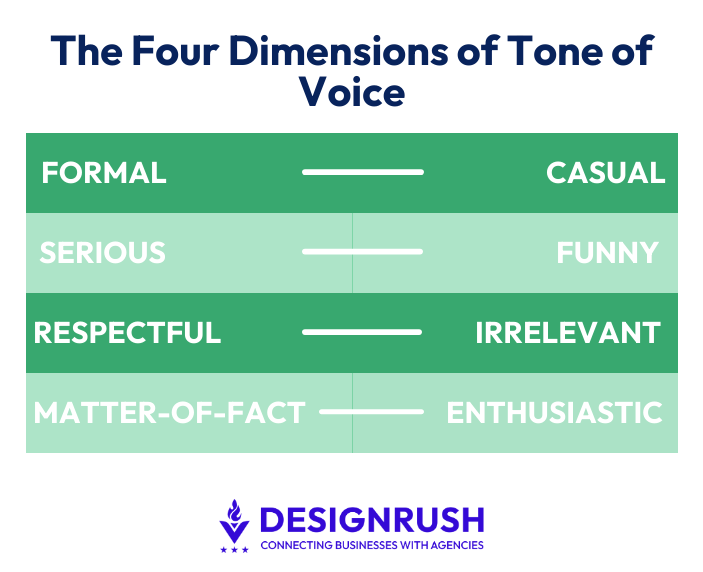
Verbal identity is how your brand sounds. It covers the words you use, the tone you take, and the key messages for each audience. Nielsen Norman Group describes four tone-of-voice dimensions, such as formal or casual and serious or funny, that teams can use to set the brand’s tone.
What you receive: a messaging framework, tone of voice guidelines, and sometimes a tagline and company description. Design-led studios may not offer this, so it is often scoped separately.
Logo and visual identity
Visual identity is how your brand looks. It includes the logo system, color palette, typography, image style, icons, and graphic elements.
What you receive: logo versions for different uses and master files. These commonly include vector formats such as SVG, EPS, or PDF and image formats such as PNG.
Commercial typefaces and stock images may require separate licenses. Confirm whose name each license is in and whether it covers your intended users and uses, such as your website, apps, and printed materials.
Brand guidelines
Brand guidelines explain how to use every part of the brand correctly. They help designers, marketers, and partners apply the brand the same way.
What you receive: a guidelines document or an online brand portal. Strong guidelines include real examples of correct and incorrect use.
Brand rollout and implementation
Rollout applies the new brand to the places customers see it. That can include the website, sales materials, social templates, packaging, and signage.
What you receive: branded versions of the agreed items, such as templates, presentation decks, or signage artwork.
Rollout is often priced as a separate phase. Larger implementation work may move to other specialists, such as web design companies or packaging design companies. Ongoing work on sales and social materials often goes to graphic design companies.
Is a logo the same thing as a brand identity?
A logo is one part of a broader brand system. That system can include visual identity, verbal identity, messaging, and the rules that connect them.
A logo alone can work for a new small business with a tight budget. A company that needs consistent marketing across many channels usually needs the full identity system that complete branding services provide. For a logo-only project, logo design companies are a closer fit.
What deliverables should a complete branding project include?
A complete branding project produces strategy documents, verbal tools, visual assets, and usage rules. The table shows the common set.
| Deliverable | What it is | Typical format |
| Research findings | What customers, leaders, and competitors reveal | Report or presentation |
| Brand strategy | Purpose, audience, values, and personality | Strategy document |
| Positioning | Where the brand competes and why it wins | Statement and competitor map |
| Messaging framework | Key messages for each audience | Document |
| Tone of voice guide | How the brand writes and speaks | Document with examples |
| Logo system | Primary logo, variations, and icon | Vector and image files |
| Color and typography | Palette codes and type hierarchy | Part of guidelines |
| Brand guidelines | Rules for using all brand elements | PDF or online portal |
| Templates | Ready-to-use layouts for common materials | Editable design files |
Design-led projects often start at the logo system and skip much of the strategy work. Strategy-led projects may end with strategy and messaging, leaving visual work to another studio. Both are valid when the scope matches the need.
What is usually optional or priced separately?
Branding scope varies widely. The table groups common branding agency services by how they are usually scoped.
| Service | How it is commonly scoped |
| Brand strategy and positioning | Commonly part of a full branding engagement |
| Logo and visual identity | Commonly part of a full branding engagement |
| Brand guidelines | Commonly part of a full branding engagement |
| Messaging and tone of voice | Often separately scoped |
| Naming | Often separately scoped |
| Large customer research studies | Often separately scoped |
| Templates and sales materials | Often separately scoped |
| Trademark clearance and registration | Specialist or adjacent service (legal) |
| Website design and build | Specialist or adjacent service |
| Packaging and signage production | Specialist or adjacent service |
| Advertising campaigns | Specialist or adjacent service |
| Photography and video | Specialist or adjacent service |
Third-party costs may also sit outside the agency fee. Common examples include font and stock-image licenses, printing or production, and legal fees for trademark review or registration. The branding pricing guide explains how these choices affect the budget.
Where does branding end and marketing or advertising begin?
Branding defines who you are and how you look and sound. Marketing uses that identity to reach and convert customers. Advertising creates paid campaigns within those rules.
Company branding services typically end with the handover of the identity and guidelines. Campaign ideas and media buying usually belong to advertising agencies. Creative agencies can carry the brand into campaigns and content, and video production companies create brand films and other video assets. Ongoing marketing execution sits with digital marketing agencies or your in-house team.
Do you need a full rebrand or a visual refresh?
The right mix of branding services depends on what has changed in your business. These scenarios cover the most common cases.
- You are launching a new company. You likely need strategy, naming, visual identity, and basic guidelines.
- Your company merged, changed its offer, or entered a new market. You likely need a full rebrand that starts with strategy and positioning.
- Your strategy still fits, but the visuals look dated. You likely need a visual refresh that updates the logo, colors, and type.
- Teams apply the brand in different ways. You likely need clearer guidelines and templates before you consider a new identity.
- You face a name conflict. You likely need a naming project plus advice from qualified trademark counsel or another appropriate legal professional.
- You are adding product lines or sub-brands. You likely need brand architecture, which defines how the parent brand and its sub-brands relate.
Once you know the scope you need, the guide to choosing a branding agency covers what to check before you sign.