
To choose a software development company, look for evidence that it has built systems with comparable complexity, can explain its technical decisions, and offers clear ownership, access, and handover terms. A strong vendor should also reduce unnecessary dependence on its team after the engagement ends.
You do not need to read code to make a good choice. How a company discusses your project, explains its decisions, and answers practical questions shows how it will work once development begins.
Has the company built systems with comparable technical complexity?
Technical complexity and architecture fit often matter at least as much as industry experience. A simple website and a platform with user roles, payments, and many integrations need very different delivery skills.
Ask for one or two projects closest to yours in complexity. Ask what the company built, what the client team did, which integrations were involved, and what problems came up. Where a product is publicly accessible, using it provides more evidence than screenshots alone. Internal and confidential systems may require other proof, such as anonymized examples or client references.
Client reference calls are especially useful here. Ask past clients how the vendor handled scope changes, missed deadlines, production problems, and handover. Problems happen in every software project, and the response to them is stronger evidence than a polished case study.
How should you evaluate architecture and technical capability before seeing code?
You can judge technical thinking before any code exists. Listen to how the company discusses your project in early calls.
Strong signs:
- It asks about expected users, data, integrations, and future growth
- It explains trade-offs between options in plain language
- It suggests a discovery phase for unclear scopes
Weak signs:
- It names a technology stack before understanding the problem
- It gives a fixed estimate after one short call on a complex project
- It cannot explain its recommendations without jargon
If you lack technical staff, an independent senior engineer can join final calls or review proposals to help assess architecture, estimates, security assumptions, and technical trade-offs.
Who will actually build your software?
A strong portfolio says little about who will be assigned to your project. Ask for the planned team by role and seniority. Depending on scope, the team may include a delivery or project manager, developers, QA specialists, a technical lead, product roles, and designers.
Ask whether team members are employees or subcontractors, and where they work. Check time zone overlap with your team. Ask whether you can meet the tech lead before signing.
How does the company handle QA, security, and code review?
Quality should be built into the delivery process. Ask who tests the software, when testing begins, what types of automated tests are expected, and how peer review is used for material code changes. For high-stakes systems, an independent team from the software testing companies list can test the product separately from the developers.
For security, ask how the company controls access to different parts of the system, protects user data, manages secrets such as credentials and keys, checks third-party dependencies, and handles vulnerabilities found after launch.
The OWASP Top 10:2025 is a widely used awareness baseline for web application security. Broken access control still ranks first, and software supply chain failures, which cover risks in third-party components, now rank third. Citing OWASP alone does not demonstrate a complete security program. For sensitive systems, an outside review from cybersecurity companies adds assurance.
How does the team use AI coding tools?
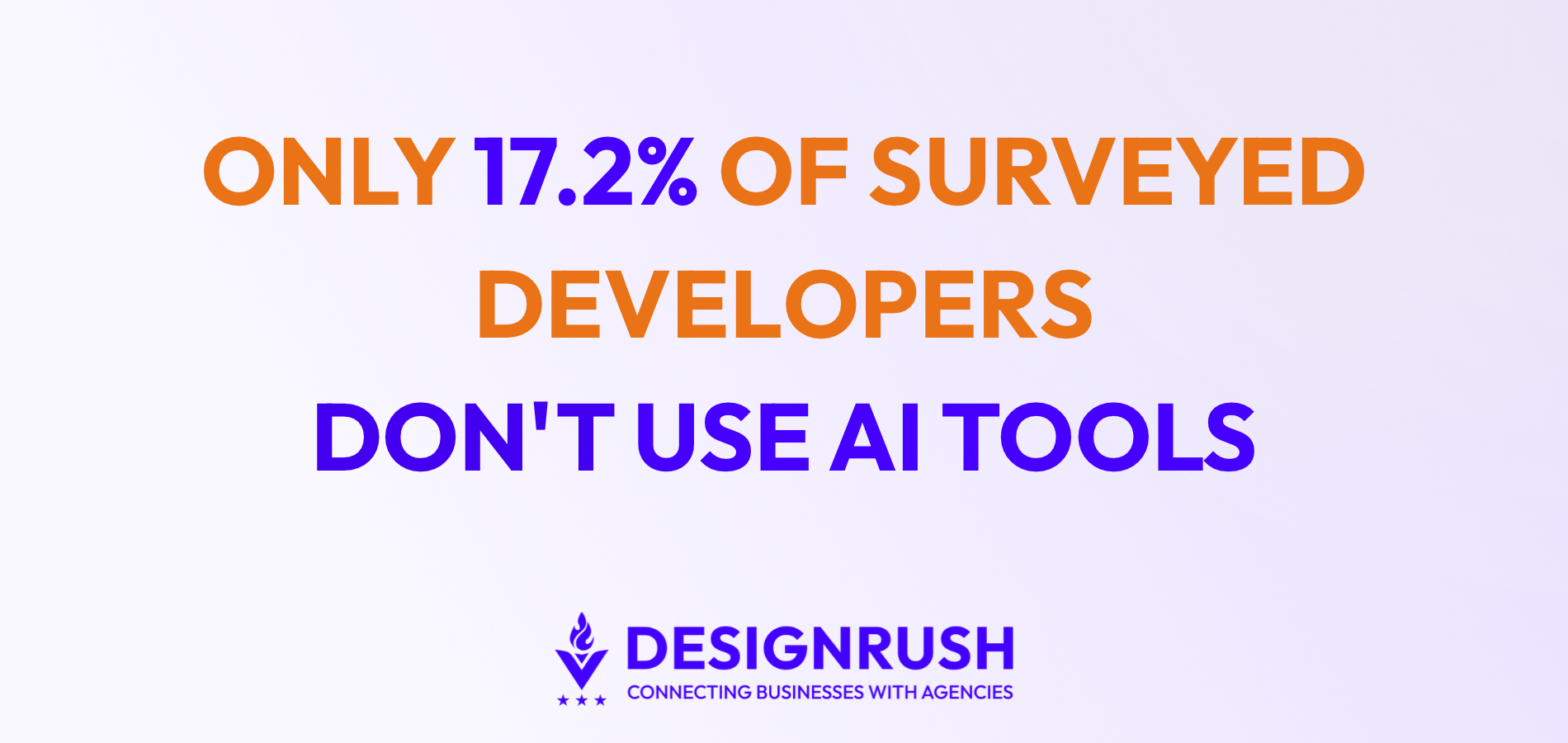
AI coding tools are now part of most development work. In Stack Overflow’s 2026 Developer Survey, only 17.2% of respondents said they did not use AI tools, and only 6.6% said they would trust AI output for an important decision. Nearly half said they trust the output when they can verify it.
Company rules vary widely. Only 24% of respondents said their employer had approved tools or an official AI policy, and about 30% said each individual handled AI use at work.
Ask whether the company has a written AI policy, whether developers may submit client code or sensitive data to AI tools, and whether AI-generated code goes through the same review and testing as other code.
Who owns the source code and intellectual property?
The contract should state who owns or is licensed to use the code and other intellectual property created during the project, when any transfer takes effect, and which components are excluded. Reusable vendor components, third-party software, and open-source dependencies may remain subject to separate license terms.
Ownership needs explicit terms. Under US copyright law, a commissioned work counts as a work made for hire only in specific categories and with a written agreement, as the US Copyright Office explains. Custom code rarely fits those categories, so software contracts typically include an explicit assignment of rights. Have a lawyer review the IP terms before signing.
Agree where the repository will live during development, what access your company will have, and who controls hosting, cloud infrastructure, domains, and production environments. Ask the vendor to identify reusable or third-party components it will not transfer and the license terms that apply to them.
What documentation should you receive?
Documentation helps another team understand, operate, and change the system. For maintainable custom software, relevant documentation may include setup instructions, architecture notes, API documentation, environment information, and deployment steps.
Ask to see anonymized documentation from a past project. A promise of “full documentation” means little until you see an example. Thin or missing documentation increases your dependence on the original vendor.
What happens if the original development team changes?
People leave during long projects. Ask how the company handles a key developer leaving, how quickly it replaces them, and how knowledge is passed on.
Good documentation, code reviews, and shared repositories make team changes far less disruptive.
What support exists after launch?
Ask what support agreements the company offers and what they include. Look for clear response times for urgent issues, coverage hours, who monitors the live system, and how bug fixes differ from new feature work.
Also ask whether the contract includes a post-launch defect-fix or warranty period, what it covers, and what is treated as new feature work.
Which contract terms create vendor lock-in risk?
| Term or practice | Why it creates risk |
| Code stored only in the vendor’s repository with no access or handover terms | Increases dependency on the vendor for transfer and continuity |
| Hosting or domains held only in the vendor’s accounts with no transfer terms | Creates avoidable dependency on the vendor for production access or transfer |
| Proprietary components with unclear license terms | Your rights to use, modify, or maintain key parts may be uncertain |
| No documentation requirement | Another team faces a slow, costly takeover |
| Long notice periods with no handover clause | Leaving is slow and unclear |
For exit readiness, the contract should address handover. Relevant terms can cover access transfer, documentation, repository and environment access, and any transition support for a new team.
What are the strongest red flags in a software development proposal?
- A fixed price for a poorly defined complex scope. This can create pressure for later change requests, scope reductions, or disagreements over what was included.
- No meaningful discovery or requirements work for a complex product. A precise estimate without enough information about scope, constraints, and integrations deserves scrutiny.
- No named roles or seniority. You cannot judge who will do the work.
- Testing mentioned only in passing. Bugs are more likely to reach your users.
- No policy for AI-assisted coding. You cannot tell whether client code reaches outside tools or how AI output is checked.
- Unclear code ownership, licensing, repository access, or handover terms. These gaps can create avoidable dependency on the vendor.
- Very low rates with no explanation. Ask how the vendor staffs and reviews work at that price.
How should you compare your final candidates?
Once you have a shortlist from the software development companies directory, compare each candidate on the same factors.
| Factor | What to compare |
| Comparable work | Projects of similar complexity, with references |
| Technical reasoning | Quality of questions and trade-off explanations |
| Team | Roles, seniority, employment model, and time zone |
| Quality and security | Testing, code review, and security practices |
| AI use | Written policy, data rules, and review of AI-generated code |
| Ownership and exit | Repository control, IP terms, and handover clause |
| Delivery process | Change management and progress visibility |
When two companies look equally capable, compare how they behaved during the evaluation. The one that asked better questions and gave more specific answers about delivery and risk is showing you how it will work once the project gets complicated.
For a large build, a paid discovery phase with your top choice can confirm the fit before you commit to full development.