
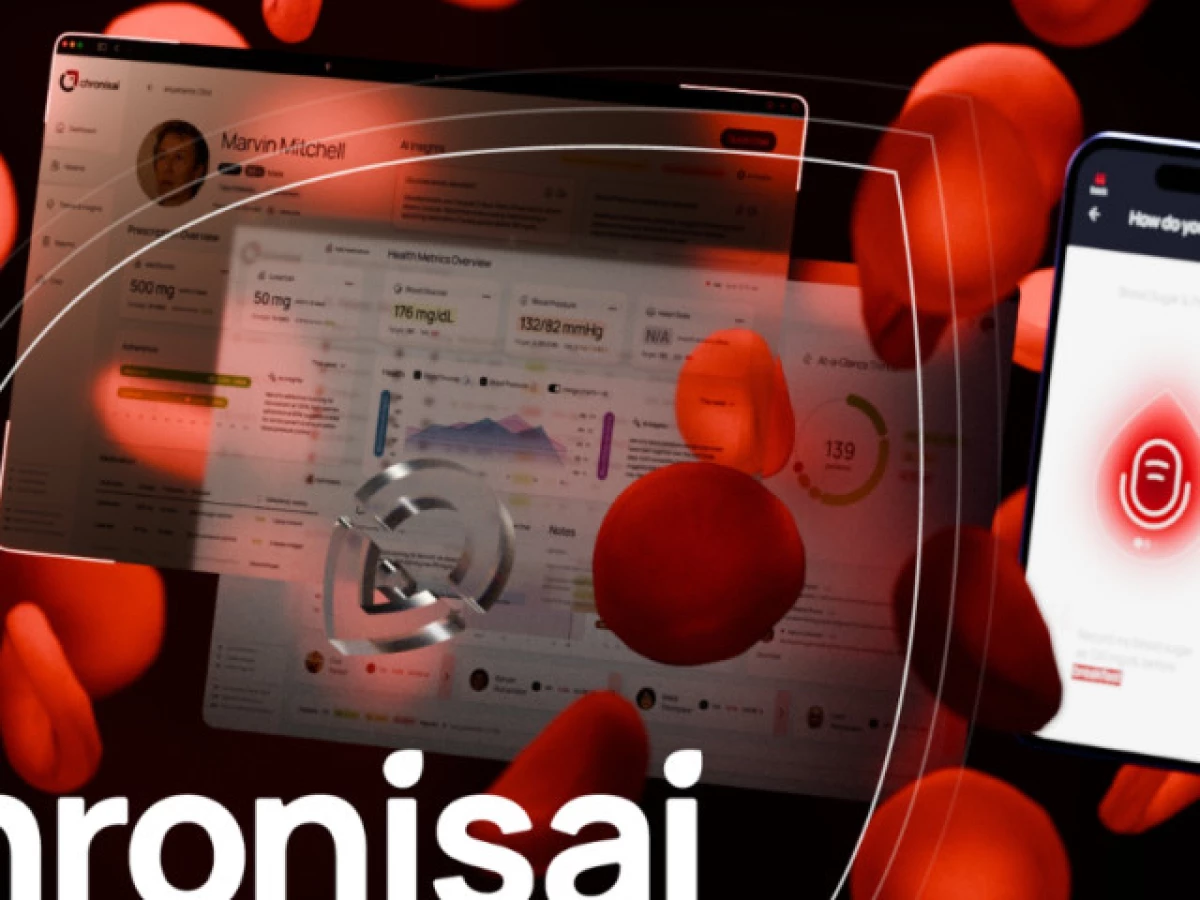

Managing a chronic condition isn’t just about tracking numbers — it’s about staying informed, in control, and supported every day. Enter Digiteum, the team behind Chronisai. This intelligent, voice-enabled health app simplifies daily care for patients with diabetes, hypertension, and other long-term conditions, turning complex health management into a seamless, personalized experience.
Key Insights for Brands:
- Design for flexibility and control to accommodate diverse user needs
- Prioritize simplicity with a streamlined onboarding and navigation flow
- Leverage clear visual cues like color coding to highlight critical health data
Chronisai’s Clean UI Design Simplifies Health Tracking
Chronisai’s clean, minimal interface is more than just easy on the eyes — it’s a strategic tool for better health management. Color-coded sections for blood pressure, glucose, medication, and trends help users quickly grasp complex data, while a thoughtfully spaced layout ensures even less tech-savvy patients can navigate with ease.
With 81% of consumers expecting personalization in digital experiences, Chronisai meets that demand through user-centric design and intelligent functionality.
The app’s visual identity reinforces its purpose. Soft blues and whites evoke calm, sans-serif fonts enhance readability, and every icon serves a clear, functional role. There is no visual clutter — just clarity, simplicity, and precision. That same focus extends to Chronisai’s AI-powered alert system.
When a patient’s vitals signal potential risk, the app flags it with intuitive color warnings and prompts immediate action, such as contacting a provider or adjusting diet. For doctors, real-time dashboards surface red flags and trends, turning passive data into proactive care.
Chronisai’s Voice-First UX Makes Logging Accessible and Personalized for All Users
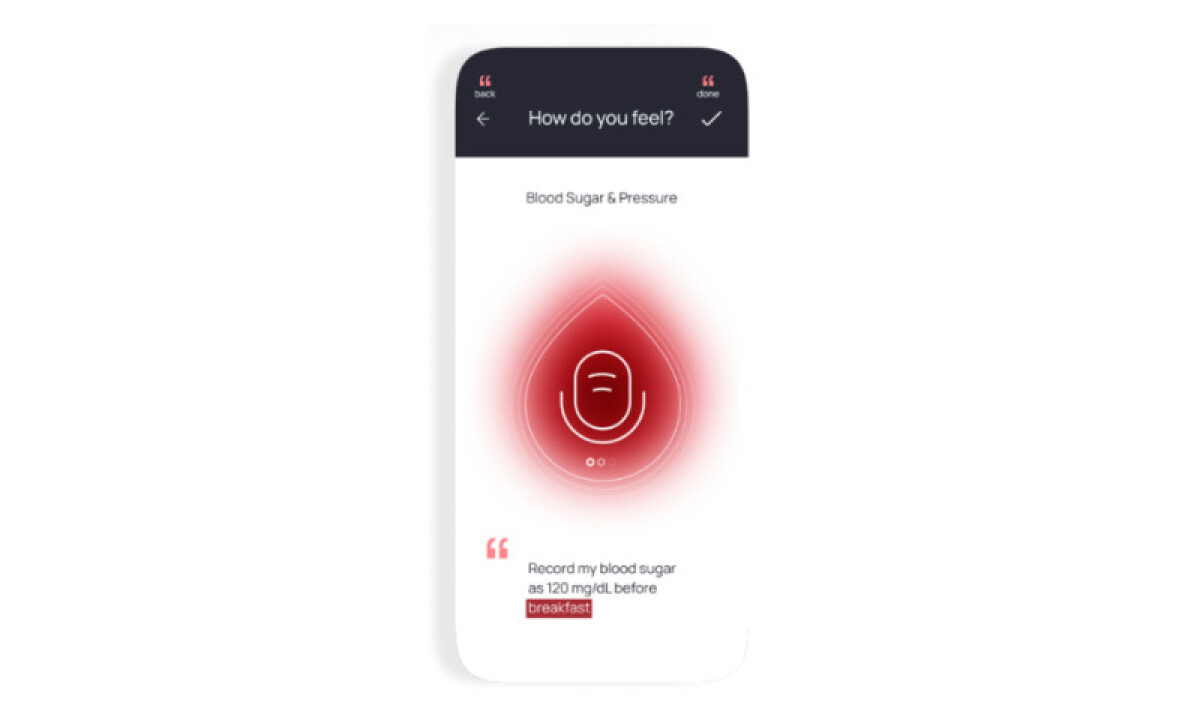
Chronisai introduces a voice-powered health logging feature that enables patients to input data, like meals, medication, and glucose levels, using speech.
This improves usability for elderly patients or those with physical impairments. Voice UI is becoming a standard among top health app designs, especially those serving users with limited dexterity or visual challenges.
Using NLP technology, the app accurately captures entries and refines suggestions with each use — making the experience more personalized over time. It’s a brilliant example of how AI and accessibility converge to improve daily health management.
Voice-enabled tech was forecasted to power over 8.4 billion devices by 2024, according to a Statista report, making Chronisai’s inclusive UX a future-proof investment.
Chronisai’s Dedicated Doctor Dashboard Improves Oversight

Beyond patient use, Chronisai equips doctors with a dedicated dashboard packed with meaningful data visualizations.
Each patient profile shows adherence rates, red-flag alerts, and AI-generated trend lines — allowing practitioners to monitor progress, detect issues early, and tailor treatment plans accordingly.
A streamlined layout means critical insights are never buried in noise. Medical teams get exactly what they need to make fast, informed decisions — a game-changer for time-constrained healthcare environments.
Chronisai’s Dual-Mode Dashboard Seamlessly Serves Patients and Healthcare Providers Alike
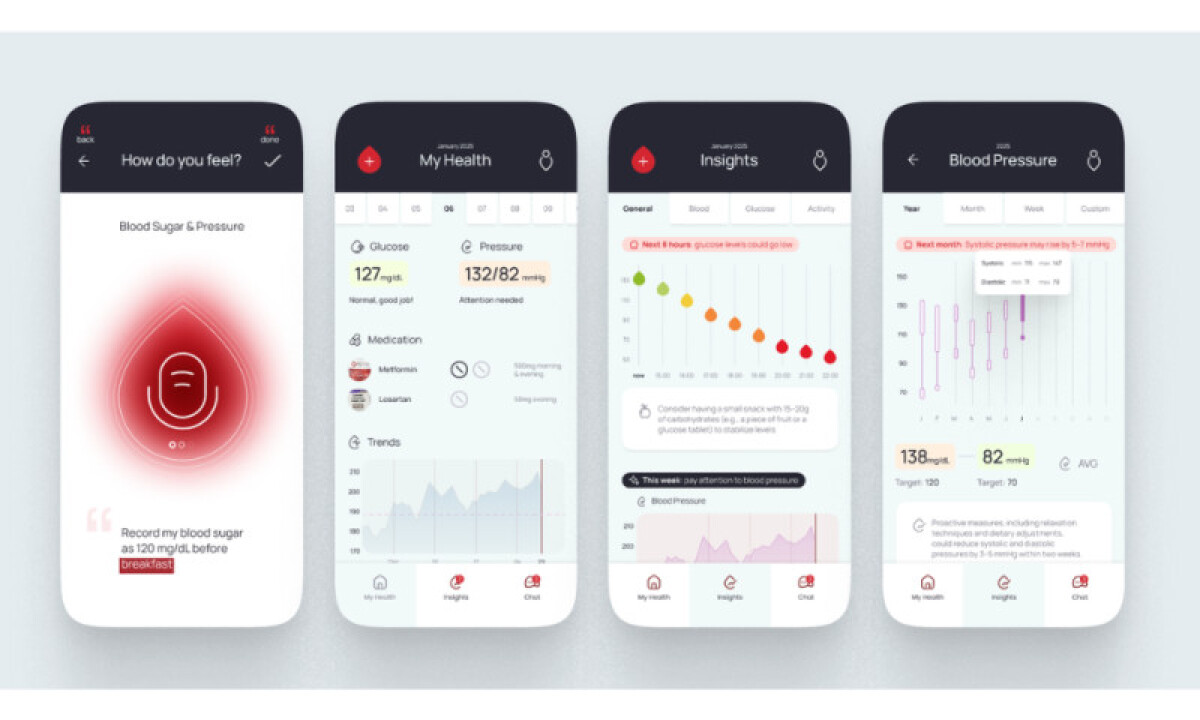
Chronisai’s interface is intelligently divided into two distinct experiences — one for patients and another for healthcare providers.
Patients get a clean dashboard that simplifies daily input with tap or voice gestures. Meanwhile, the provider version prioritizes speed and clarity, highlighting alerts and trends. This bifurcated design ensures that both user types have the exact tools they need: no clutter, just context-aware features.
Chronisai’s clear, role-specific layout enables faster decisions and improves team communication — vital in hybrid models where time and accuracy matter.
Telehealth visits are projected to surpass USD 175.5 billion globally by 2026, and apps like Chronisai are leading the way in hybrid care solutions.
Digiteum’s app exemplifies how thoughtful digital design by professional design agencies can improve healthcare outcomes. With predictive AI, voice-powered UX, and specialized dashboards, it delivers a solution that’s both smart and deeply user-centric.
As demand for hybrid care continues to rise, Chronisai leads the way with an inclusive, proactive approach to chronic condition management. A winner of this month’s Design Awards, it’s a prime example of how the principles behind best app design — simplicity, intentionality, and trustworthiness — can translate beautifully into the digital health space.

_d3e66366feba-preview.jpg)