
In 1930, two countries refused to share a soccer ball, so they played half of the first World Cup final with each. In 2026, the ball itself reports to the referees 500 times per second.
Everything between those two facts is a fight.
On one side: engineers chasing a rounder, faster, aerodynamically perfect sphere. On the other: players and goalkeepers who want the thing to go where they kick it. Every World Cup soccer ball since 1930 is a snapshot of that argument at a specific moment, and the argument has never once ended in a truce.
The roundest ball ever built, the 2010 Jabulani, was the one players trusted least. The most tested ball ever built, the 2014 Brazuca, existed only to apologize for it.
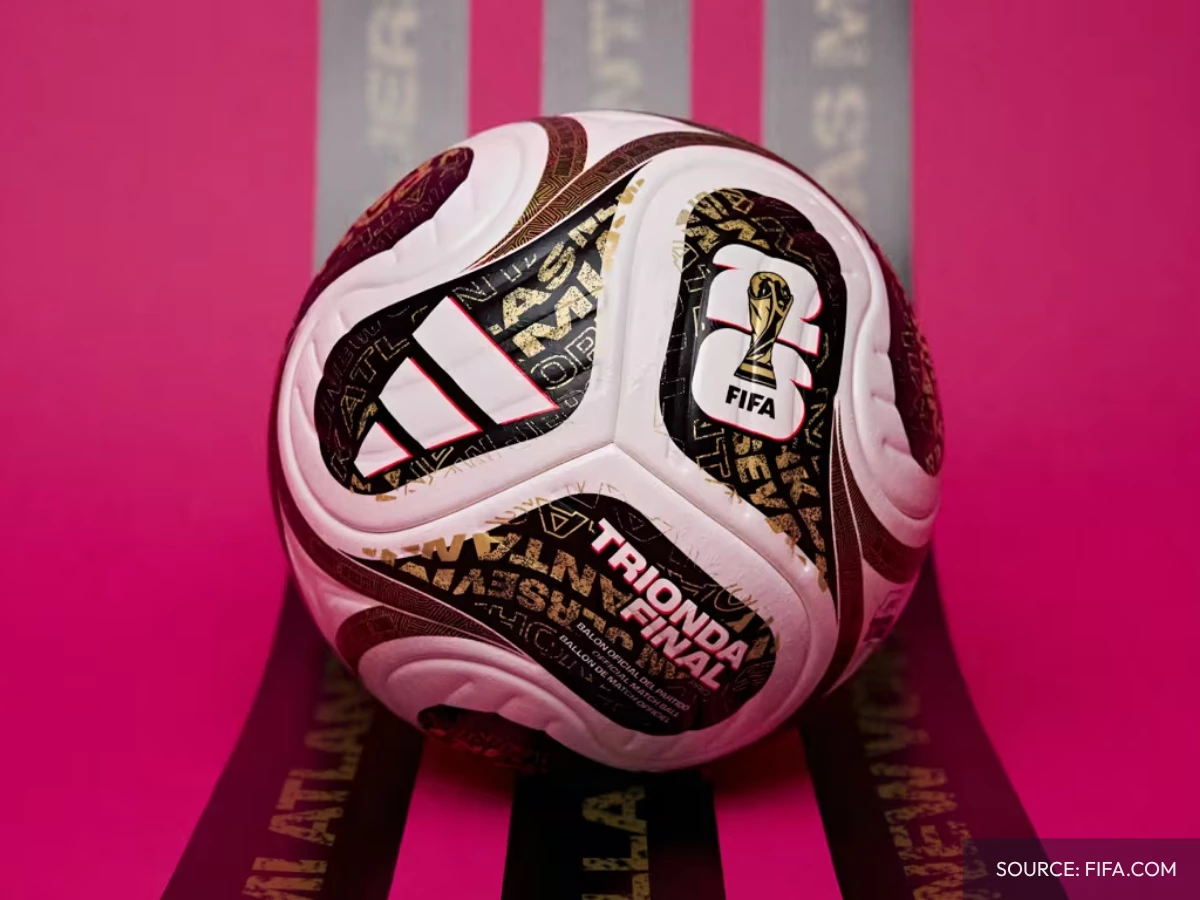
The current entry is the TRIONDA. It has four panels, fewer than any FIFA World Cup ball in history. A sensor chip mounted inside one of them tracks every touch, and counterweights beneath the other three keep the sphere honest. When its design leaked, critics called it "an assault on the eyes." Ninety-six years in, people are still arguing about the sphere. The argument is the tradition.
This article traces the full evolution of the soccer ball at the FIFA World Cup, all 23 tournaments of it, from laced leather to thermally bonded panels with electronics inside. adidas, the exclusive supplier since 1970, has spent more than half a century refereeing the fight it keeps restarting.
A Brief History of the Soccer Ball
Before the World Cup existed, the soccer ball was an agricultural object. Early balls were built around inflated animal bladders, usually from pigs, wrapped in stitched leather panels.
The bladder set the shape, the leather set the durability, and neither did its job especially well. So if you have ever wondered what the first soccer ball was made of, the honest answer is: whatever held air.
The FIFA Museum traces the modern arc from there in three broad phases. Hand-stitched leather dominated from the 1930s through the 1950s, complete with laces, absorbent hides, and balls that gained weight in the rain.
Synthetic materials took over from 1986, ending the waterlogging problem for good. Thermally bonded and molded panels arrived in 2006, replacing stitching entirely and pushing the ball closer to a true sphere.
The fourth phase is the current one: embedded technology. An NFC chip appeared in 2018, a live motion sensor supporting officiating followed in 2022, and the 2026 ball builds its entire construction around the electronics inside it.
Every World Cup Match Ball, Year by Year (1930 to 2026)
Here is every official FIFA World Cup ball, tournament by tournament, and what each one changed.
1930 Uruguay: T-Model and Tiento
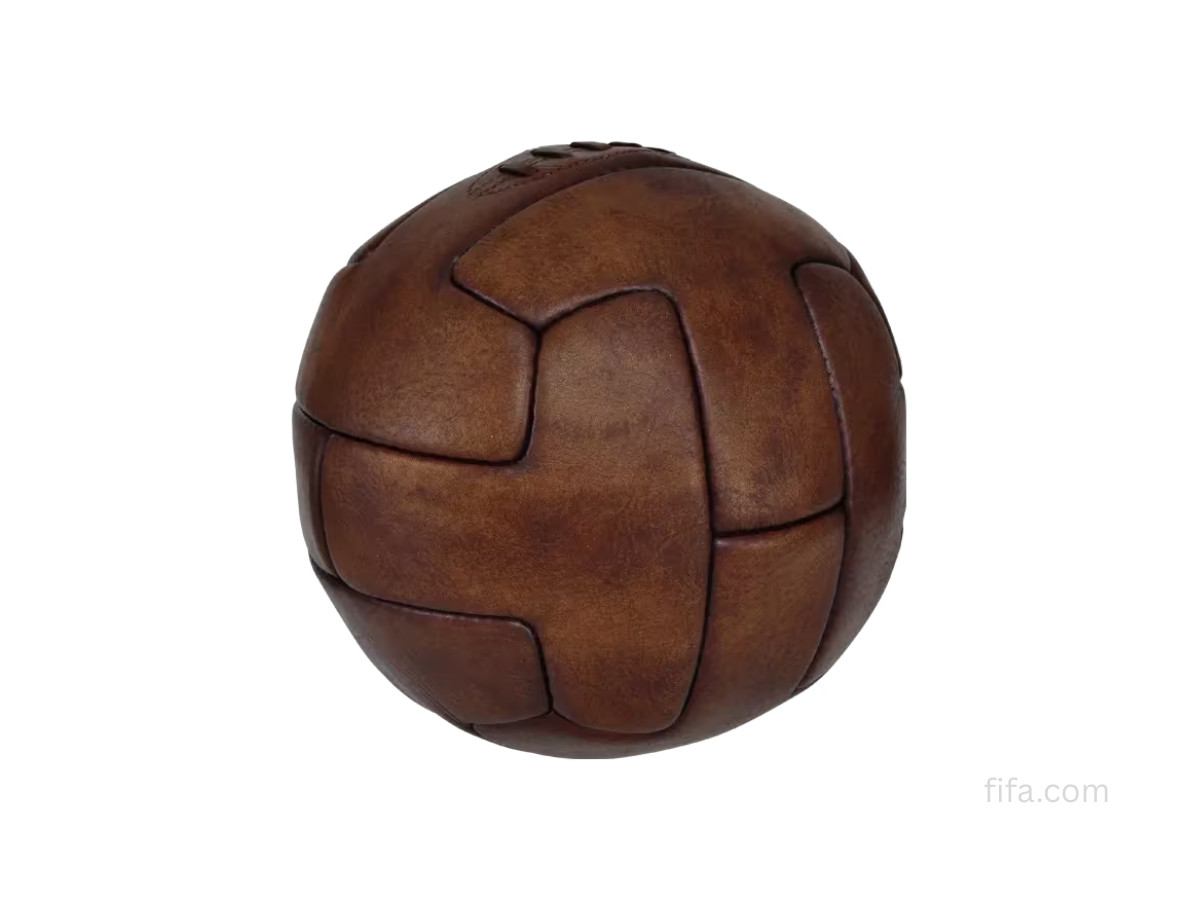
The first World Cup final needed two balls because Uruguay and Argentina could not agree on one. The teams compromised by playing one half with each: Argentina's Tiento in the first, Uruguay's T-Model in the second.
Argentina's Tiento was a conventional 12-panel laced leather ball, while Uruguay's heavier T-Model took its name from the distinctive T-shaped leather panels stitched across its surface. The switch seemed to matter. Uruguay trailed 1-2 at halftime with the Tiento, then won 4-2 with its own ball.
1934 Italy: Federale 102
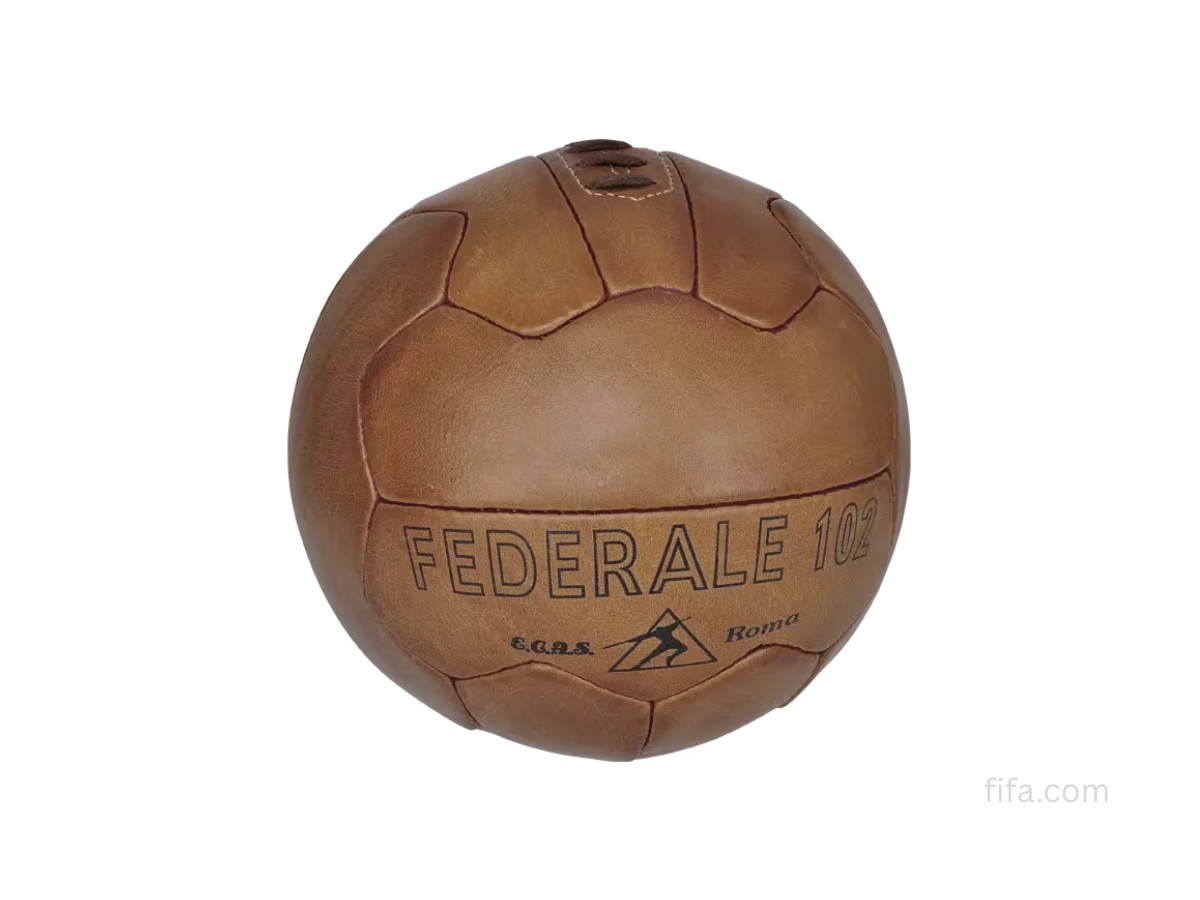
The Federale 102 used 13 hand-stitched polygonal leather panels and moved its laces onto a separate panel built for inflation. Its bigger comfort upgrade was material: the traditional leather laces were replaced with softer brown cotton, a small mercy for players heading the ball. It also stands as FIFA's first standardized World Cup ball.
1938 France: Allen
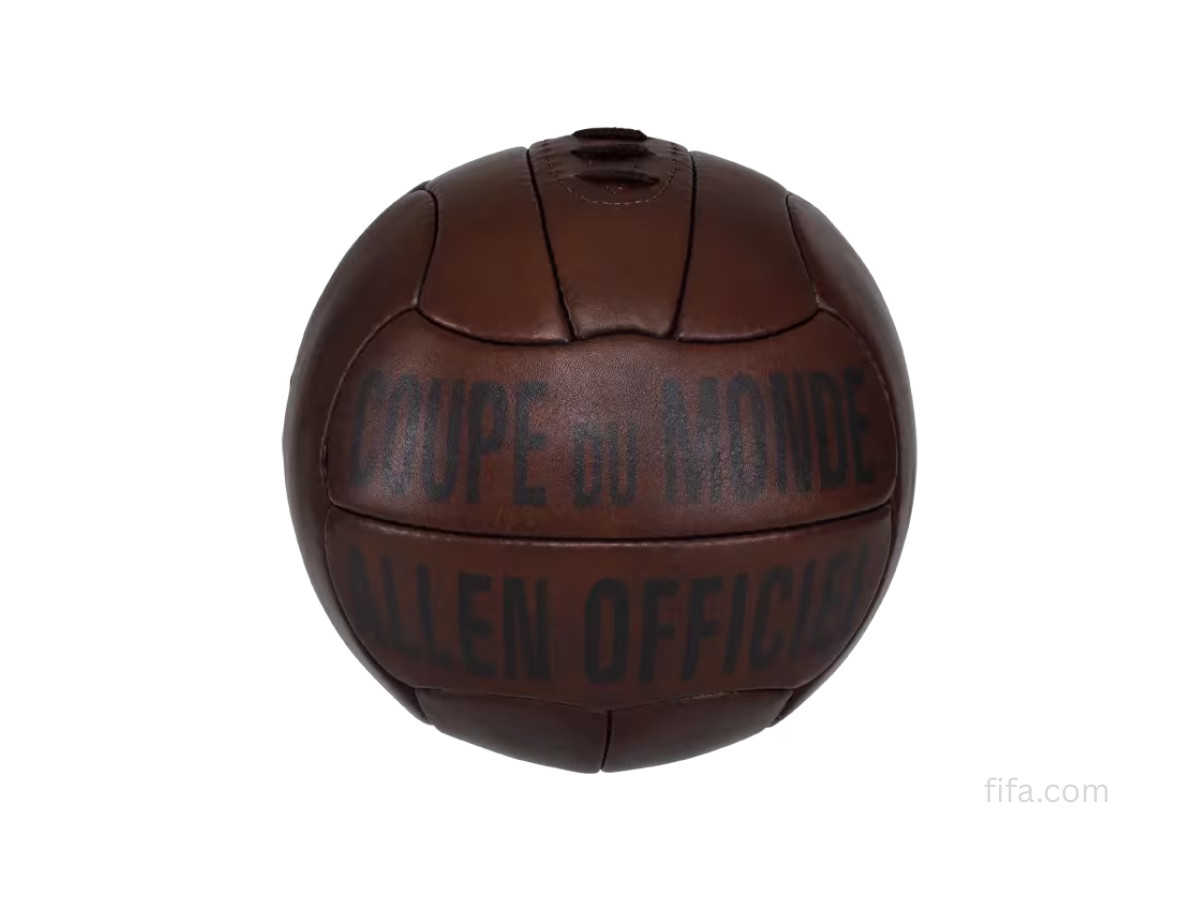
The Allen was a 13-panel leather ball made in Paris, nearly identical in construction to the Federale 102 before it. Its white cotton laces rarely stayed white, since rain and mud turned them brown within minutes of kickoff. The ball also had to be inflated and laced by a skilled hand, because an imprecise closure left it lopsided and altered its flight.
1950 Brazil: Superball Duplo T
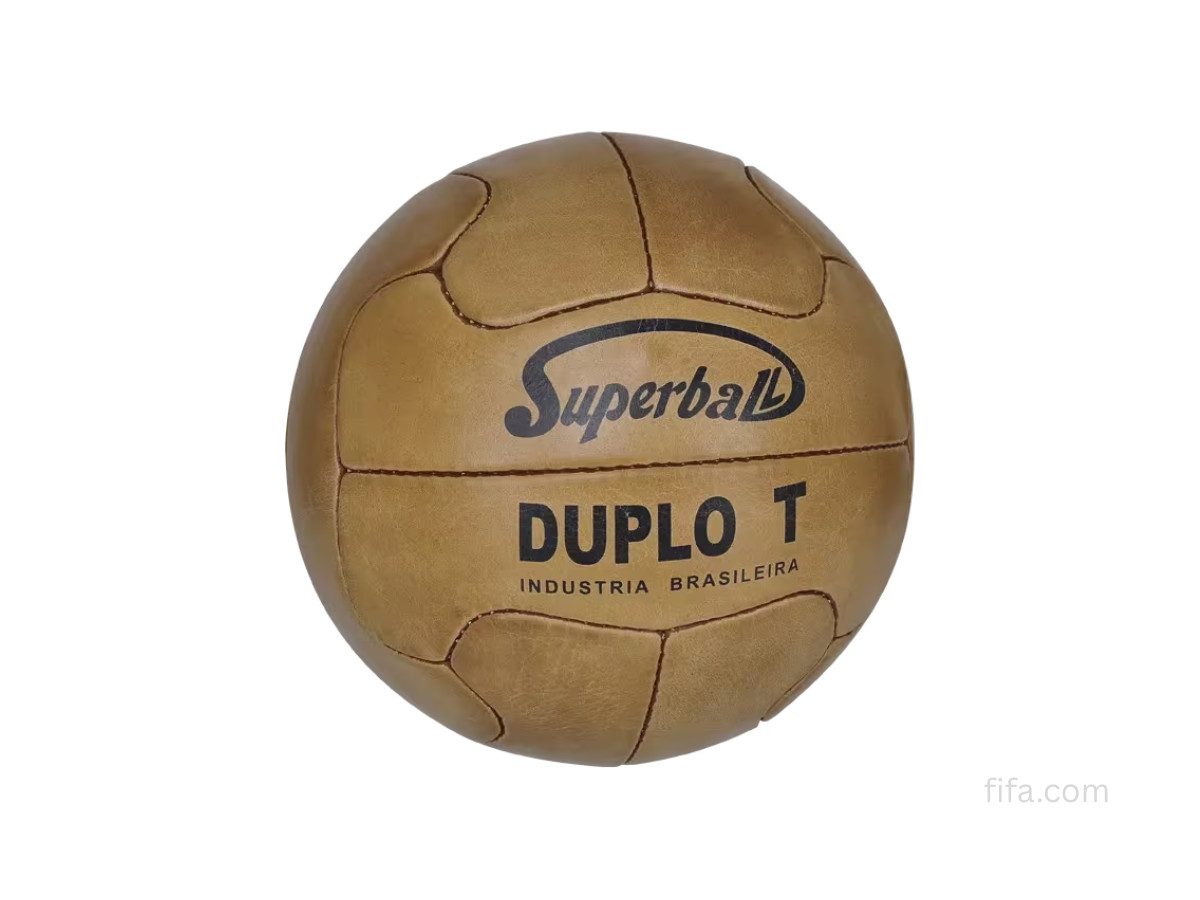
The Superball Duplo T was the first World Cup ball without laces. A valve handled inflation instead, which removed the raised seam that had punished foreheads for two decades. Its 12 hand-stitched leather panels had curved edges for a rounder shape, and FIFA allowed the manufacturer to print its branding directly on the ball, an exception it would not repeat consistently for years.
1954 Switzerland: Swiss World Champion
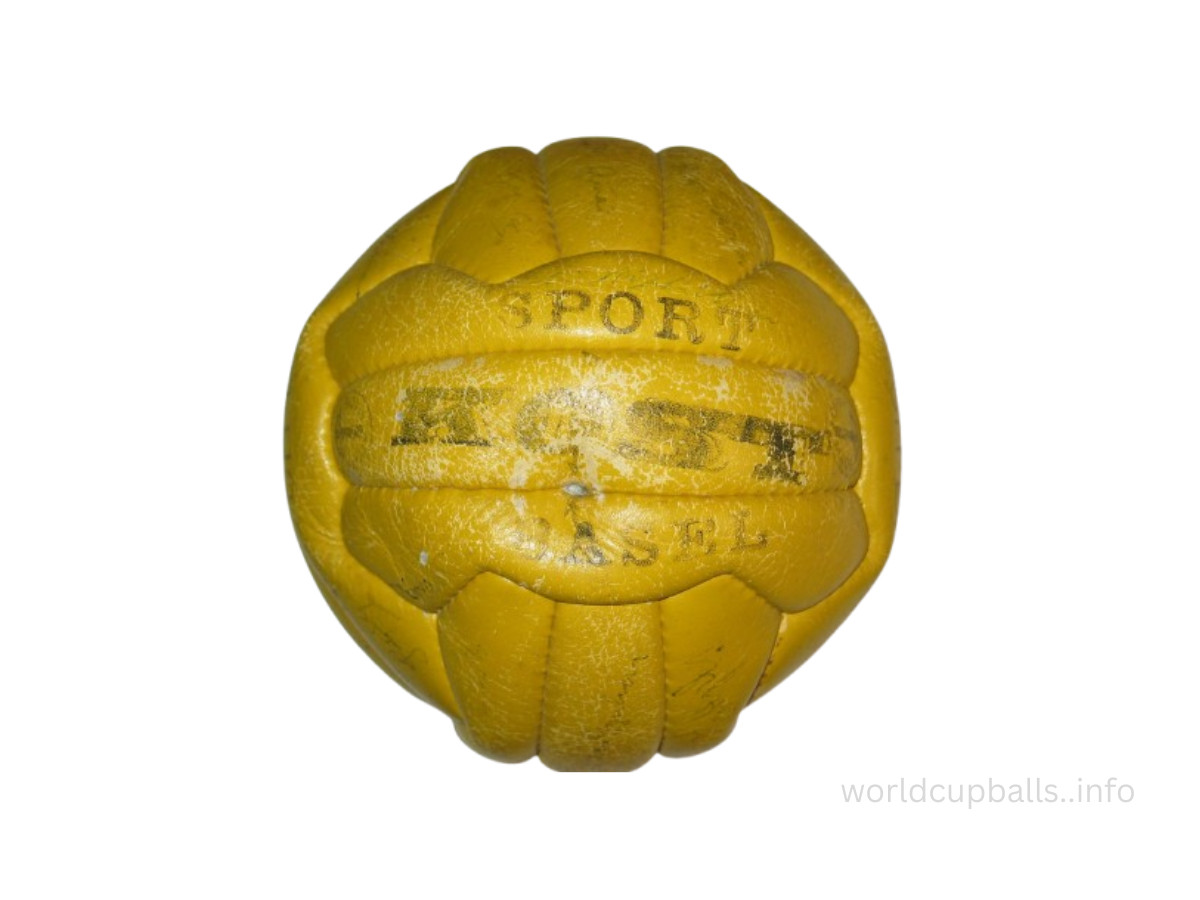
The Swiss World Champion used 18 panels joined by nylon thread, cut in a jagged-edge template that ball makers still reference today. The leather was greased and lighter in color for visibility.
None of that stopped it from becoming waterlogged during the rain-soaked final, the match remembered as the Miracle of Berne, in which West Germany beat the favored Hungarians 3-2.
1958 Sweden: Top Star
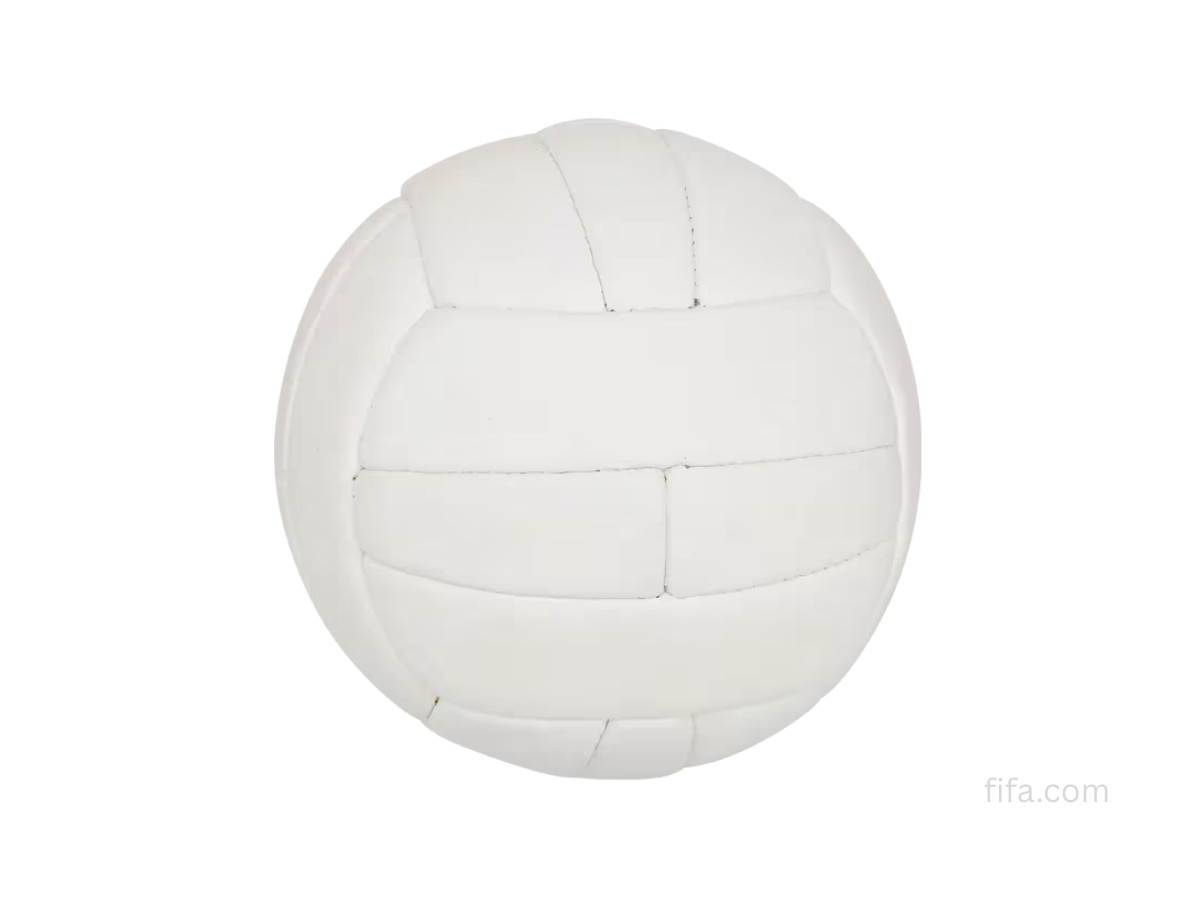
The Top Star won its place through a blind competition. Organizers received 102 unbranded balls, tested them, and revealed the winner only after the tournament draw. The winning design alternated long and short wax-coated leather panels for moisture resistance, and it came in yellow, light brown, and white, with the white version used in wet conditions like the final. It was the ball Brazil used to win its first title, with a 17-year-old Pelé scoring in the final.
1962 Chile: Crack
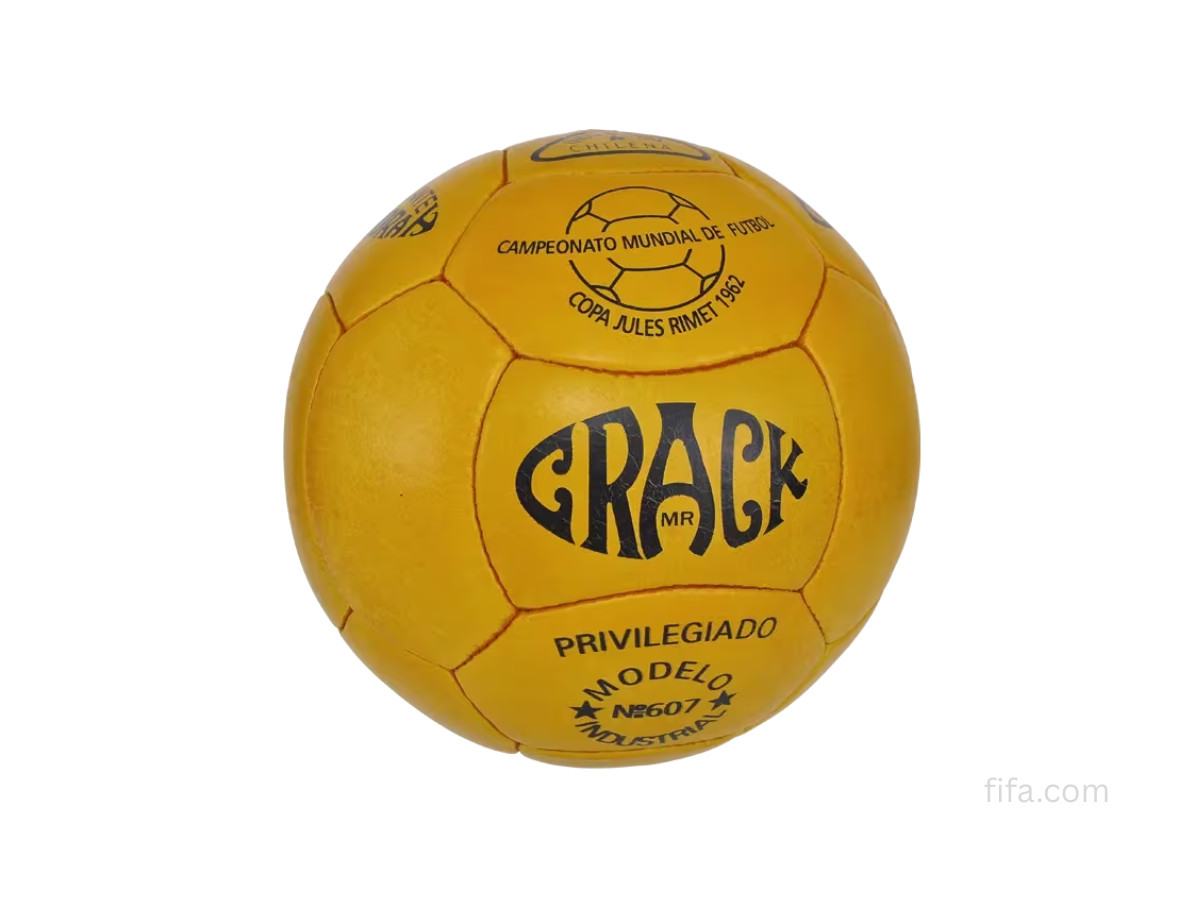
The Crack was built from 18 irregular polygonal panels in two shapes, curved hexagons and rectangles, fitted together like a puzzle, and it introduced the first latex valve in a World Cup ball. European teams distrusted it enough that 100 Top Stars from 1958 were shipped to Chile as backup.
Its larger legacy sits outside the tournament: the Crack directly inspired adidas to produce its first-ever ball, the Santiago, in 1963. The company that would soon own this category entered it by copying Chile.
1966 England: Challenge 4-Star
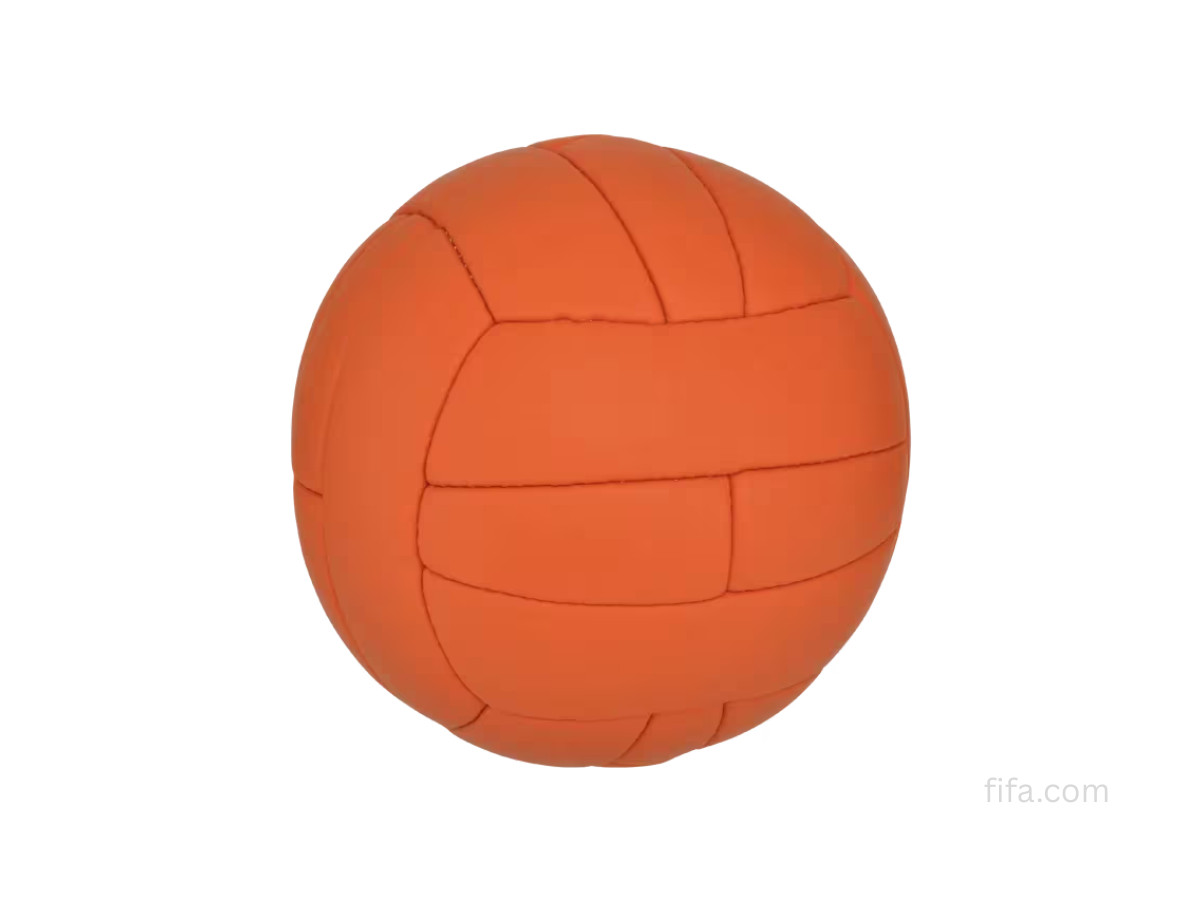
Slazenger made the Challenge 4-Star, a 25-panel ball selected after organizers tested more than 100 submissions. An orange version was used in the final, where England beat West Germany 4-2 at Wembley. It remains the last World Cup ball not made by adidas.
1970 Mexico: Telstar
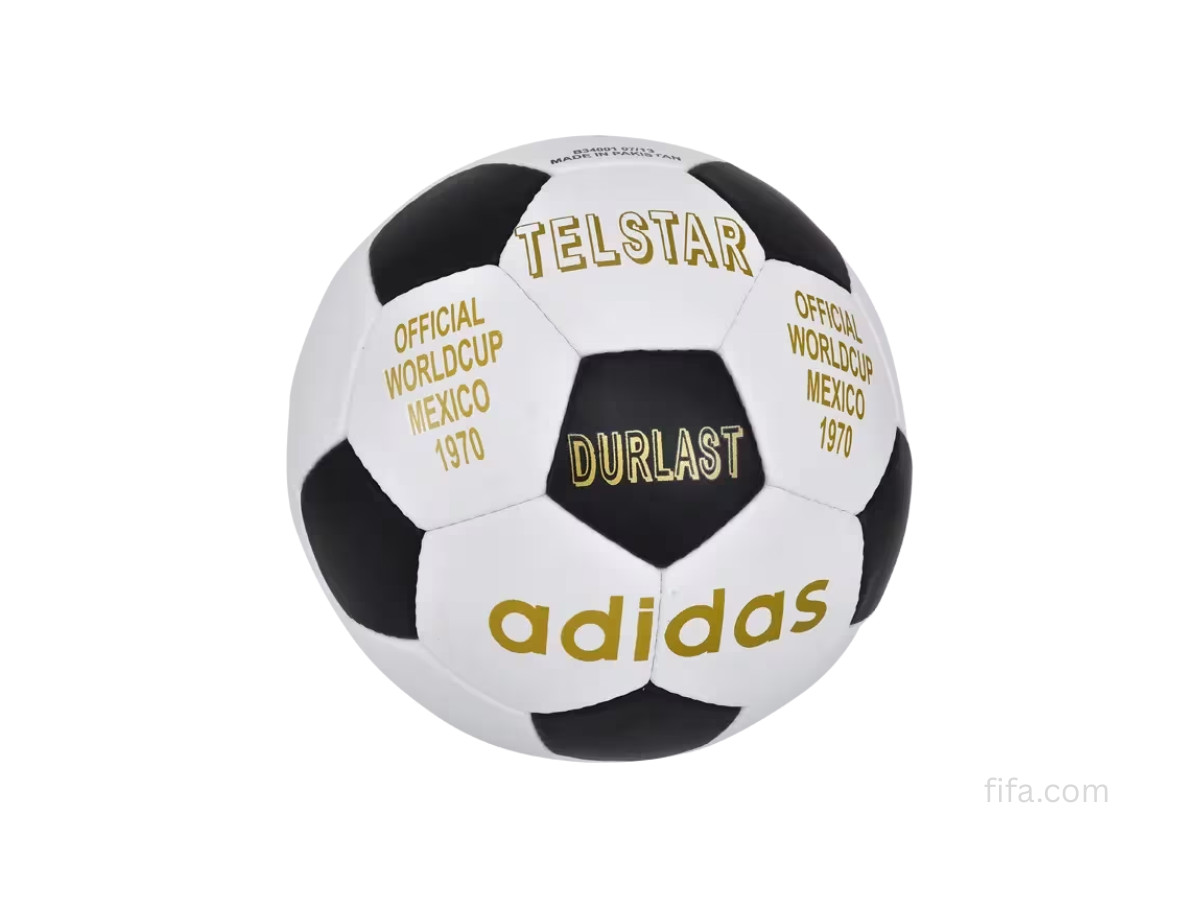
The Telstar started the partnership that continues today, making adidas the exclusive World Cup supplier from this tournament forward. Its 32 panels, 20 white hexagons and 12 black pentagons, were built for a specific audience: television viewers watching in black and white, who needed to track the ball on screen at the first World Cup broadcast worldwide. A plastic Durlast coating protected the leather and repelled water.
The name came from the Telstar communications satellite. The design became the default mental image of a soccer ball for generations, which is its own kind of branding achievement, the sort of instant recognition covered across the best logo design work.
1974 West Germany: Telstar Durlast
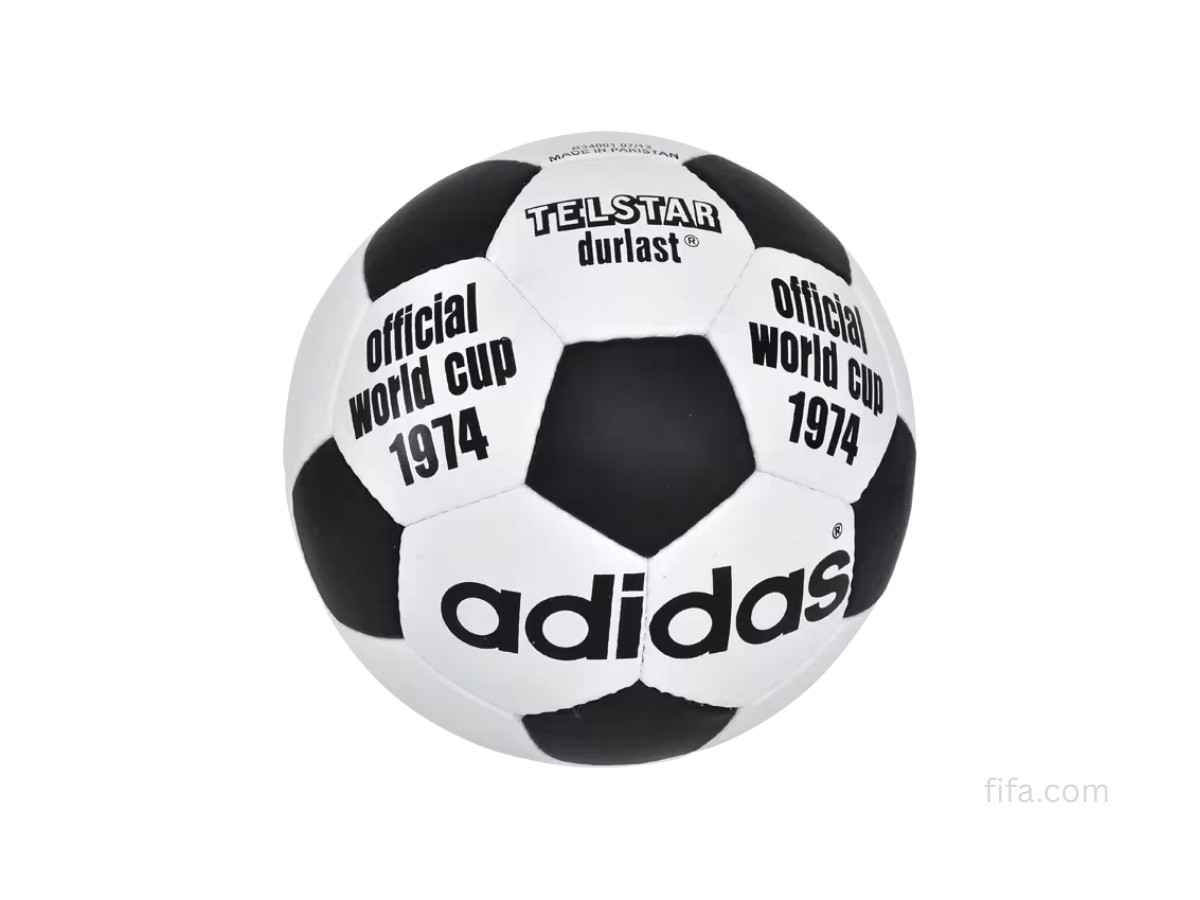
adidas did not replace the Telstar for 1974, which is its own proof of how well the design worked. The company kept the ball, updated the printed text, and applied a stronger Durlast layer to stop water seeping through the seams and weighing the ball down. This was also the first tournament with fully branded match balls.
1978 Argentina: Tango
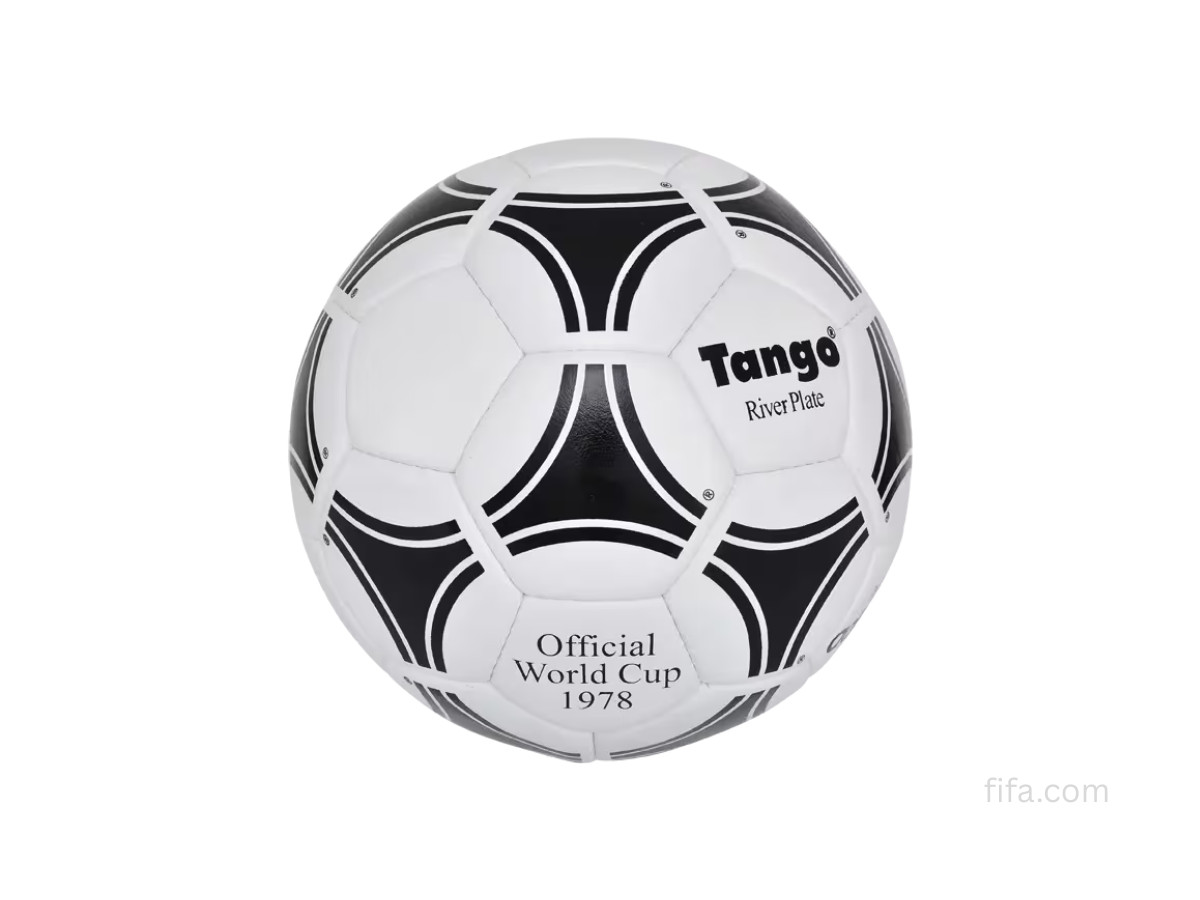
The Tango introduced the triad graphic: 20 curved black triangles printed on the white hexagons of a 32-panel ball, creating the illusion of 12 identical circles. The design proved so durable that the next five tournaments were variations on it. Host Argentina won the final 3-1 over the Netherlands with it.
1982 Spain: Tango España
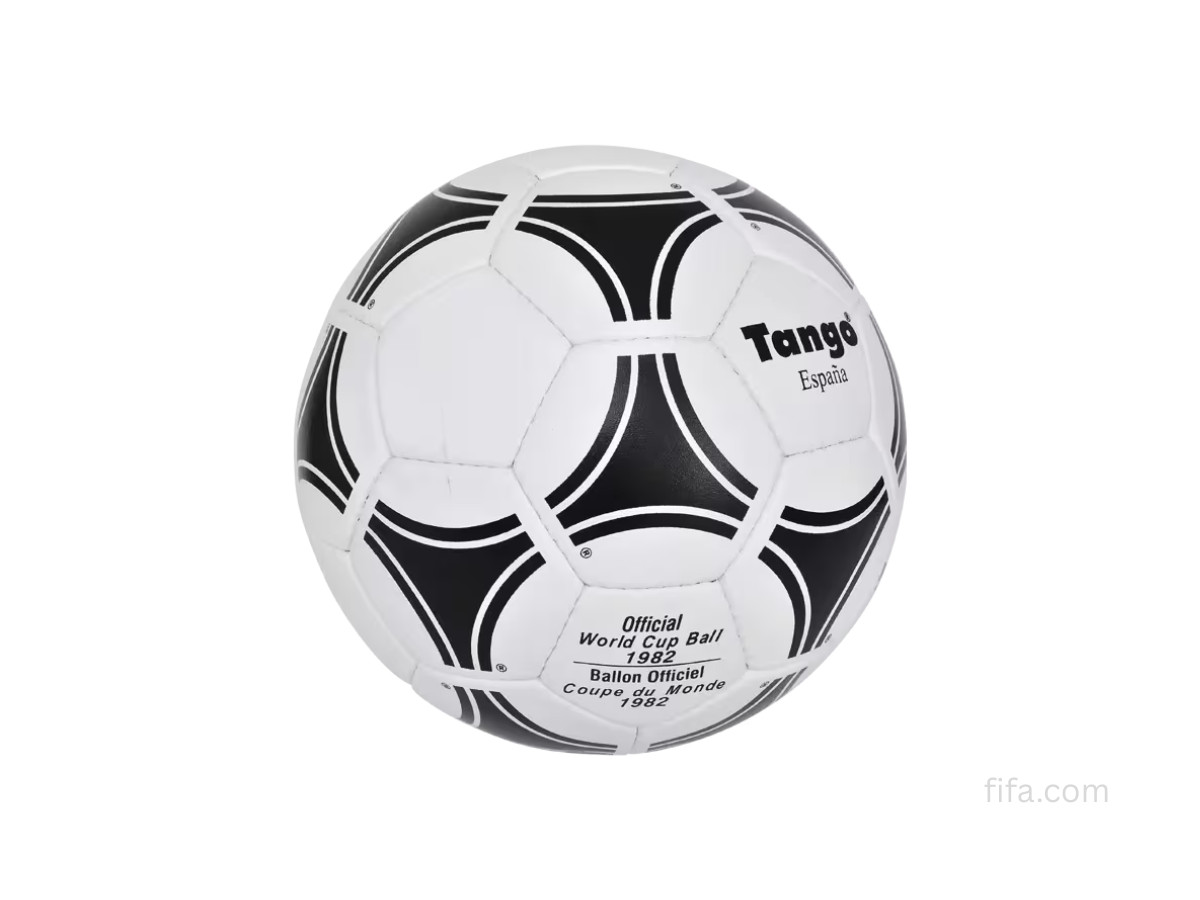
The Tango España kept the triad graphic and switched to a polyurethane coating, further sealing the ball against water. The design's long shadow reached three decades ahead: adidas revived it for the Tango 12 at Euro 2012.
1986 Mexico: Azteca
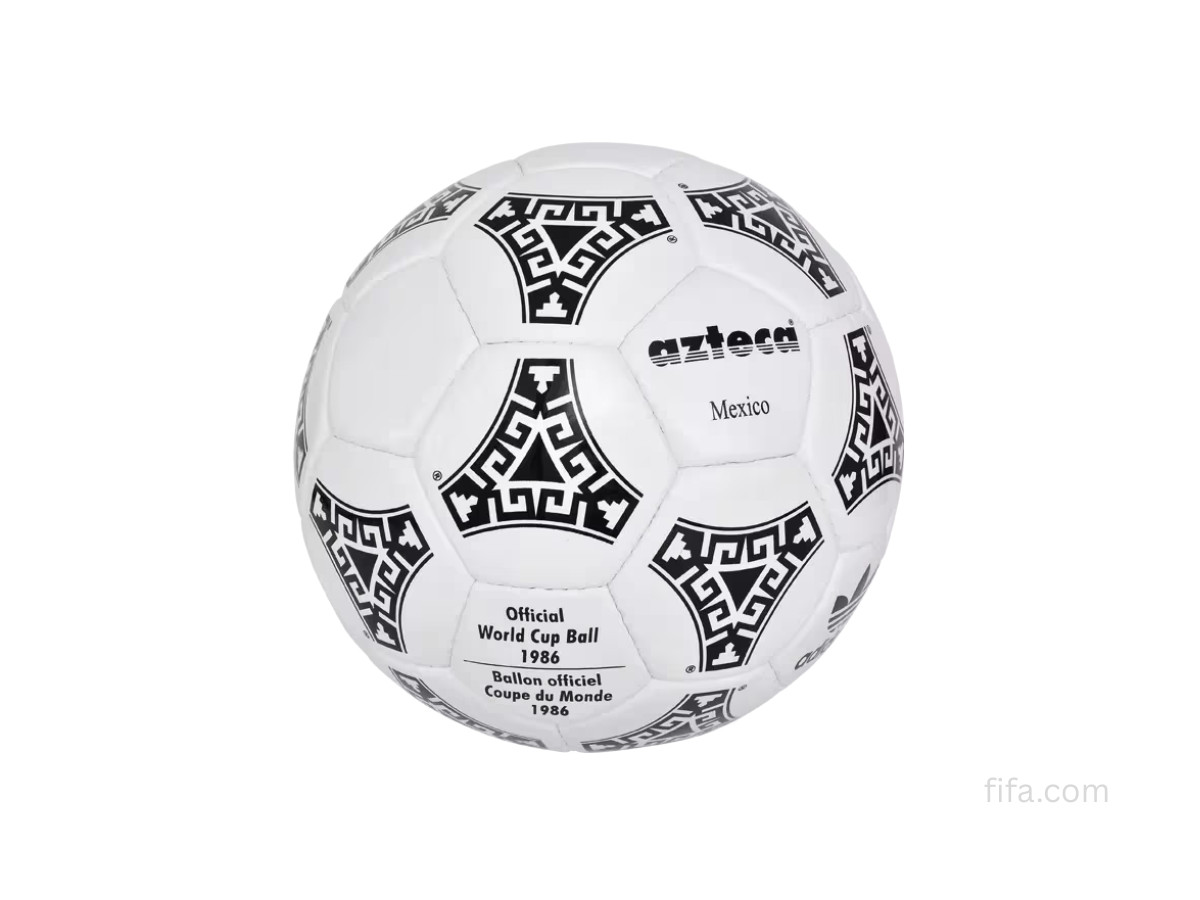
The Azteca was the first fully synthetic World Cup ball, ending the leather era after 56 years. Its triads carried Aztec-inspired artwork honoring the host nation, the first time a match ball's decoration told a local story rather than a purely technical one.
1990 Italy: Etrusco Unico
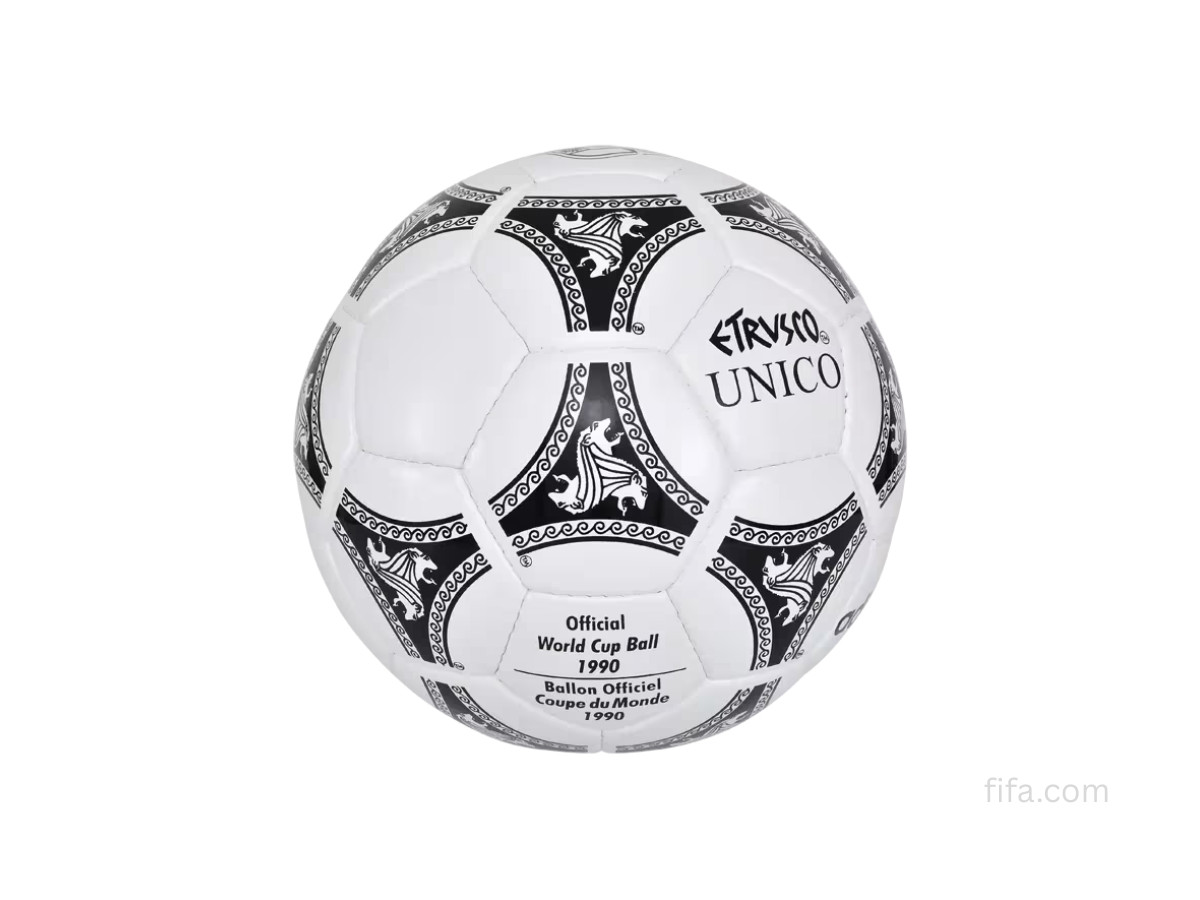
The Etrusco Unico decorated its triads with a three-lion Etruscan motif drawn from the host nation's ancient history. The design had staying power, getting reused at Euro 1992 and the 1992 Barcelona Olympics.
1994 USA: Questra
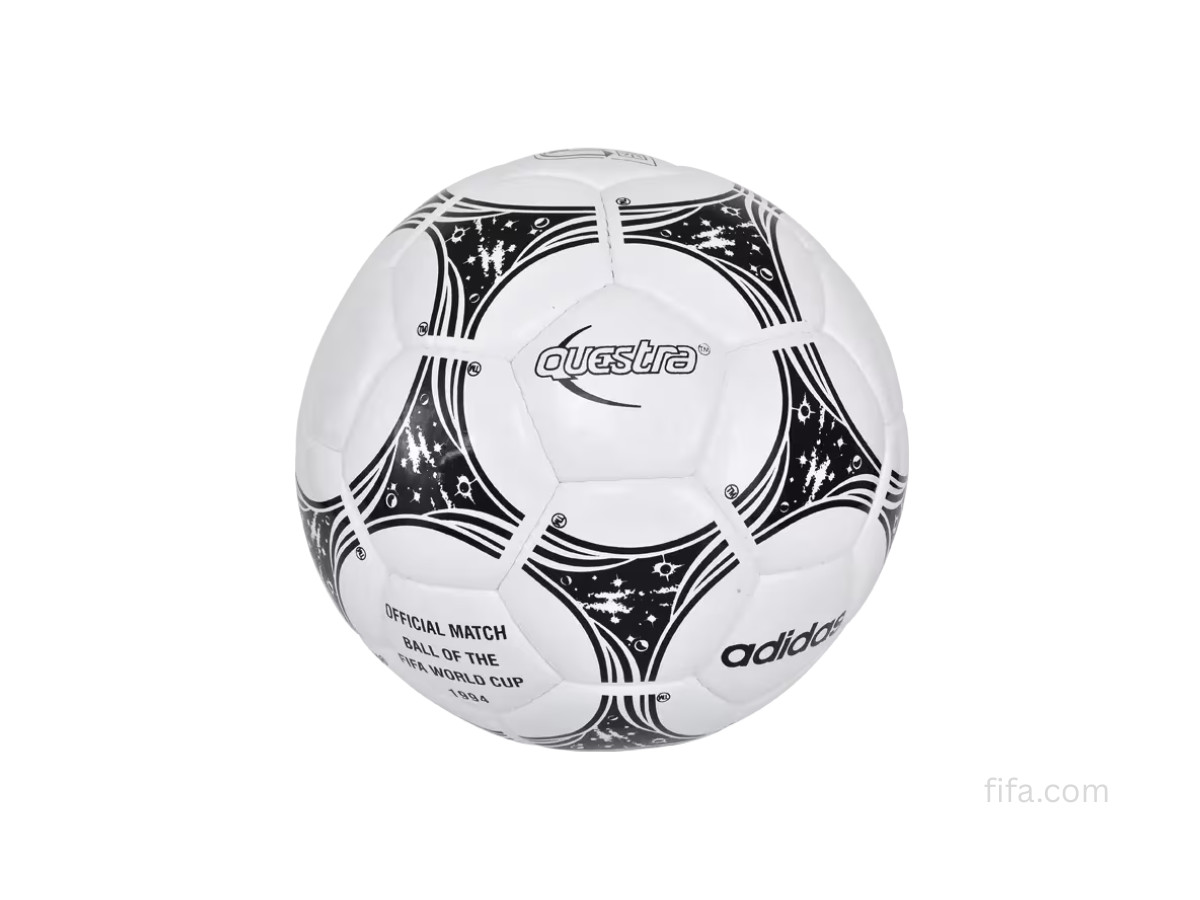
The Questra brought a space-themed design of planets, stars, and rockets to the American tournament, a nod to the host's space program. The graphic language was louder than anything before it, an early sign that the ball was becoming a canvas as much as a product.
1998 France: Tricolore
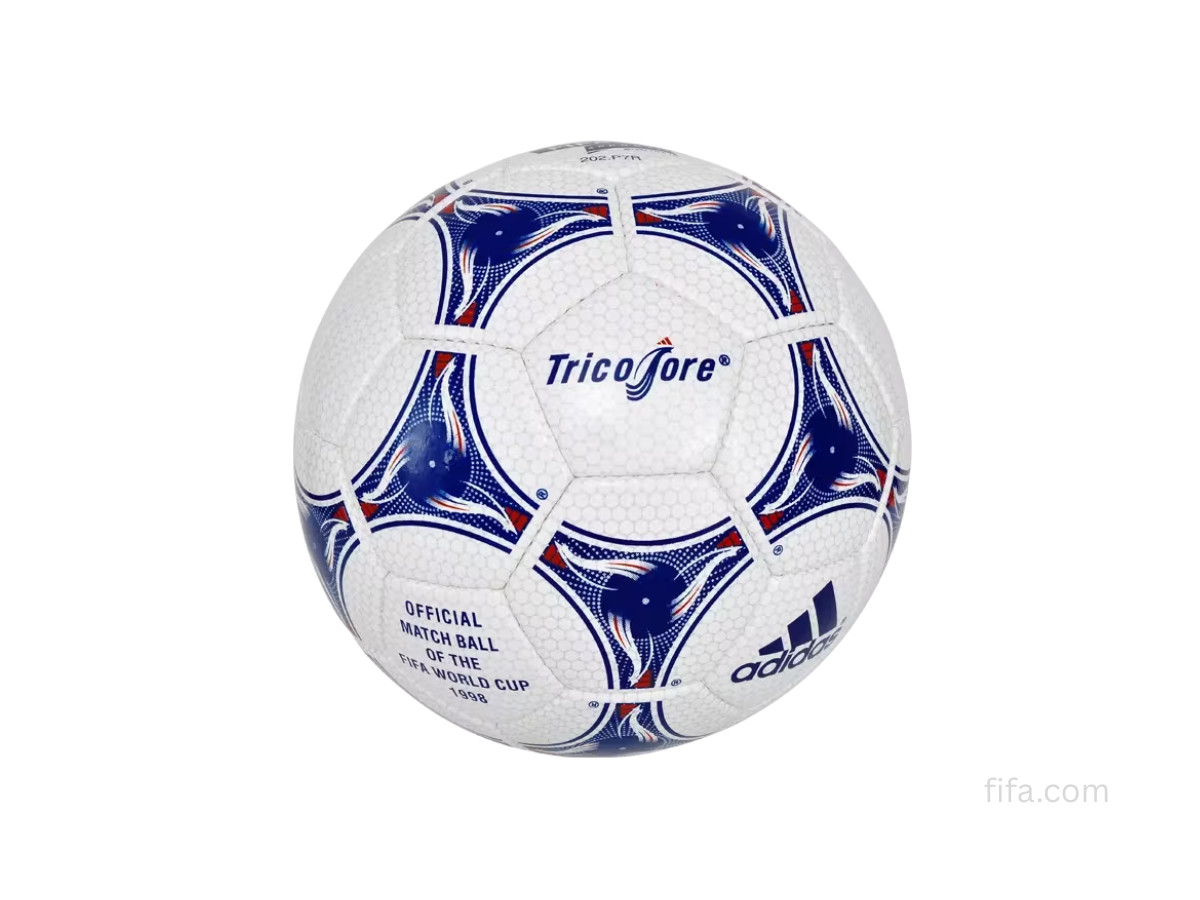
The Tricolore was the first multi-colored World Cup ball, trading black and white for red, white, and blue drawn from the French flag. It was also the first to use syntactic foam, a layer engineered for speed and energy return. Color and performance advanced in the same ball, and neither ever went back.
2002 Korea/Japan: Fevernova
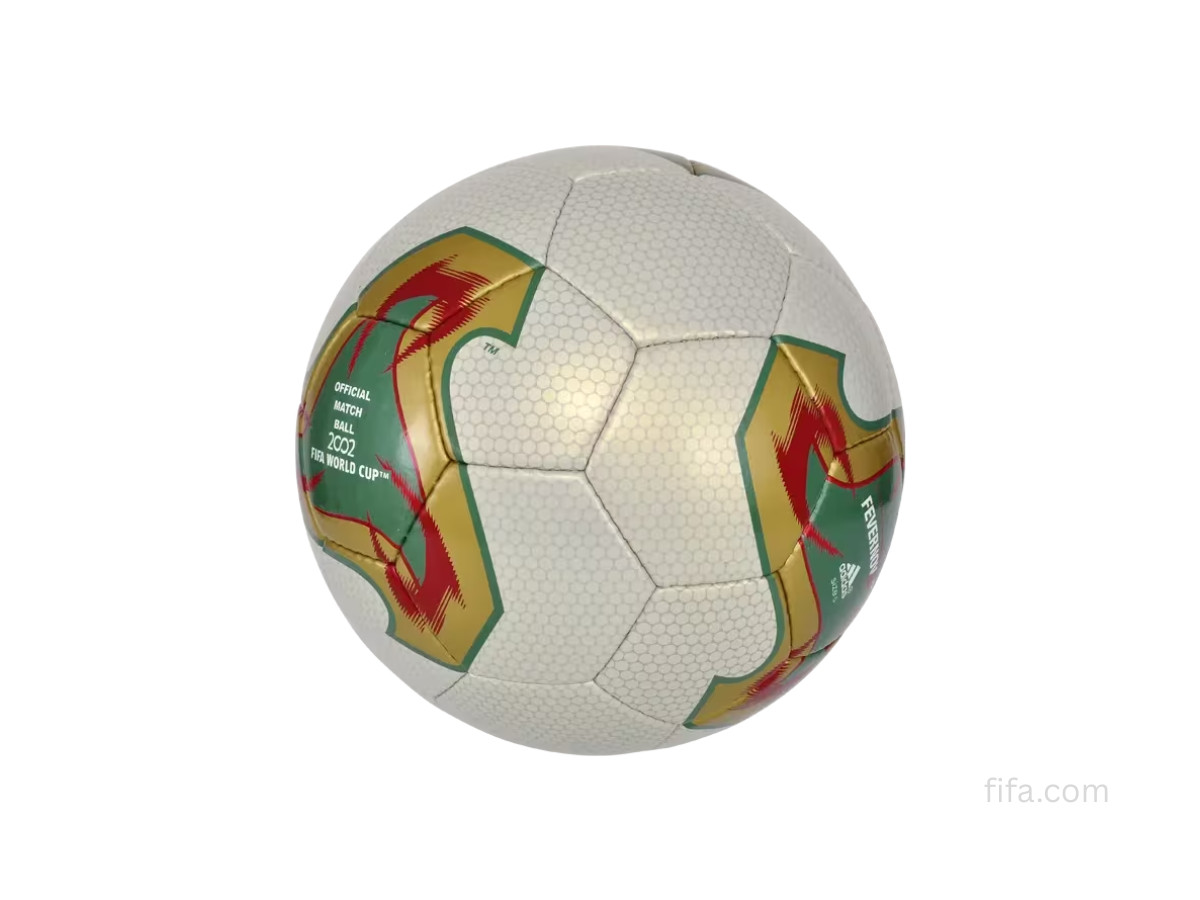
The Fevernova dropped the triad after 24 years, replacing it with four trigonal shapes inspired by wind turbines. Breaking a five-tournament design streak was a risk, and it set the precedent that every ball since has followed: each World Cup gets its own visual identity, built from scratch.
2006 Germany: Teamgeist
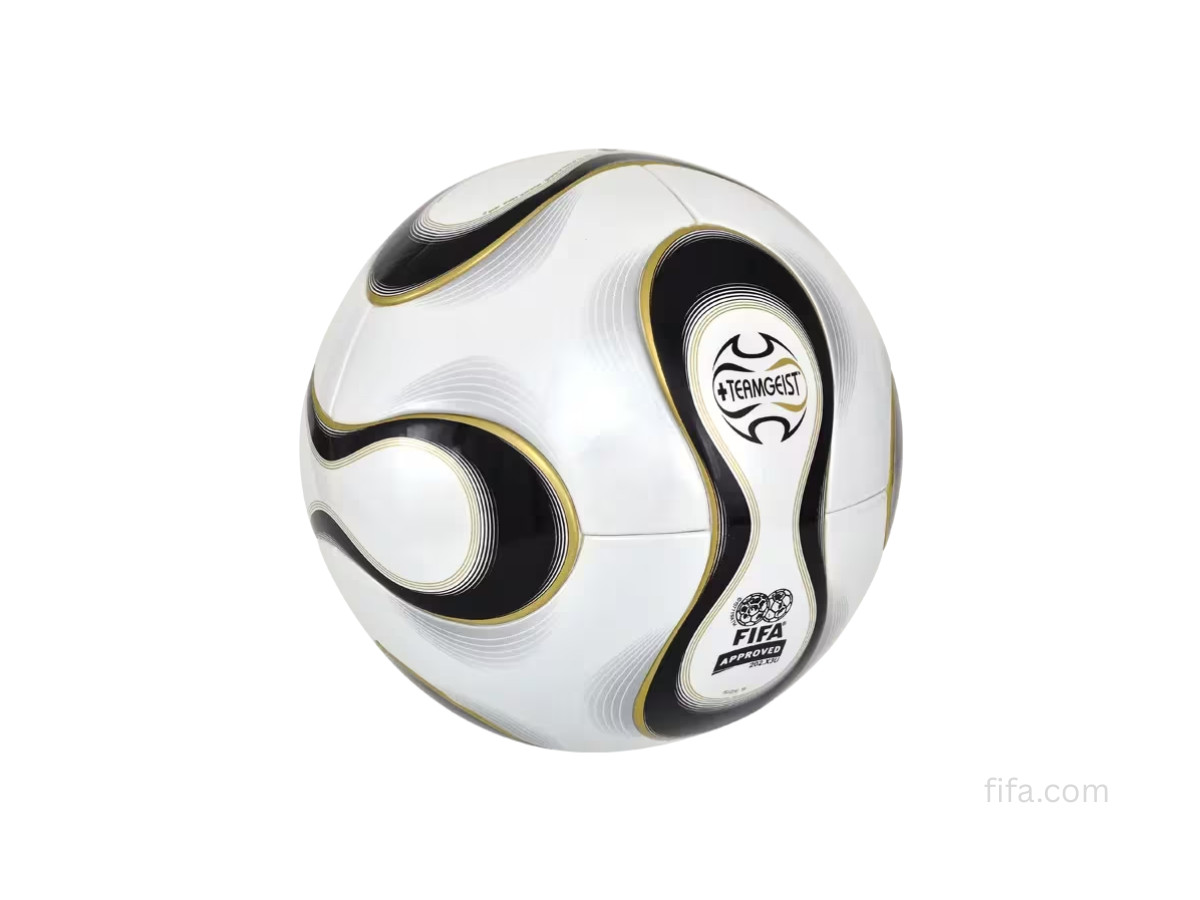
The Teamgeist cut the panel count from 32 to 14 and bonded them thermally instead of stitching them, producing a ball less than 1% off a perfect sphere. It was the biggest construction change since the laces disappeared in 1950. A gold version, the Teamgeist Berlin, was used in the final.
2010 South Africa: Jabulani
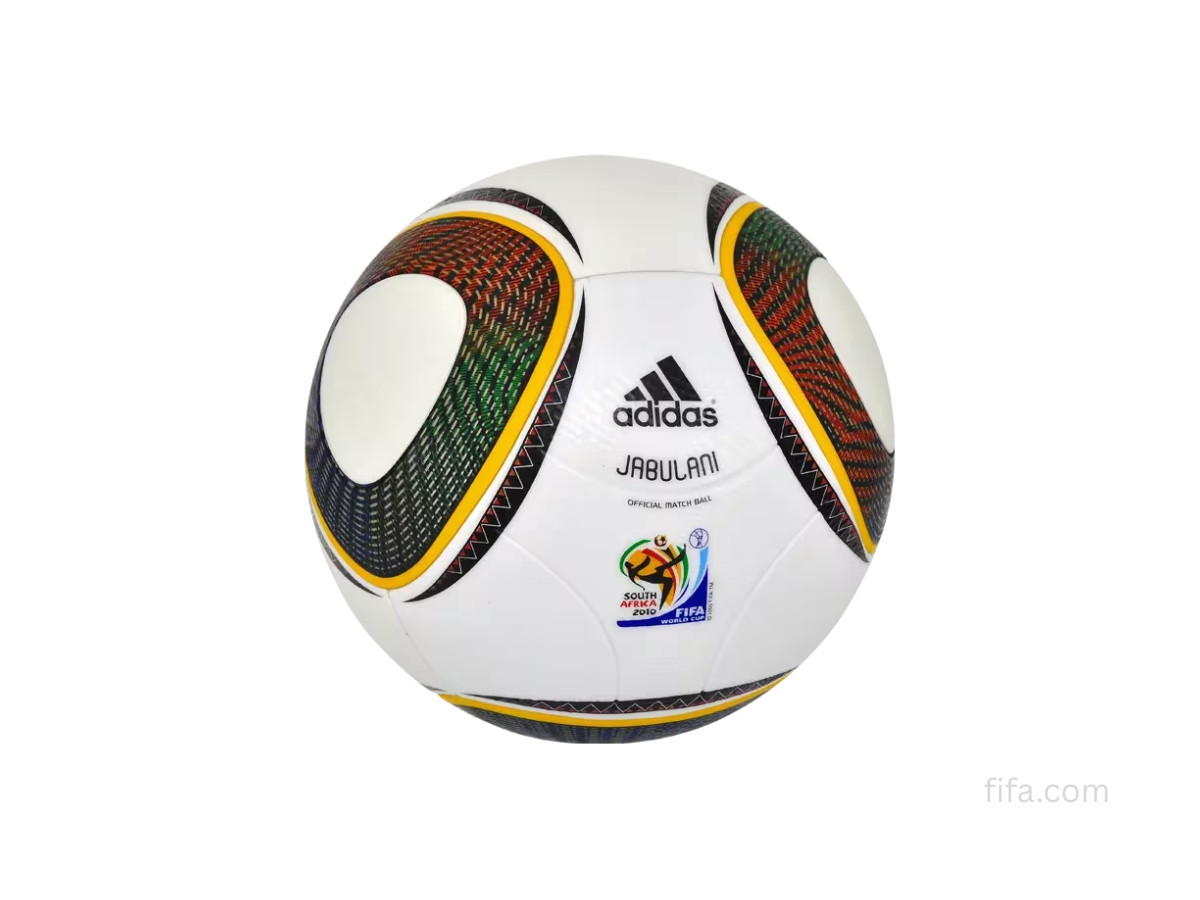
The Jabulani used eight thermally bonded, spherically molded 3D panels and 11 colors representing the players, languages, and host cities of South Africa. A gold Jo'bulani served the final.
It is also the most contested ball in tournament history. Goalkeepers complained about its unpredictable flight, and the Jabulani became the clearest example of the engineering-versus-players conflict that runs through this entire timeline: the roundest ball ever made was the one players trusted least.
2014 Brazil: Brazuca
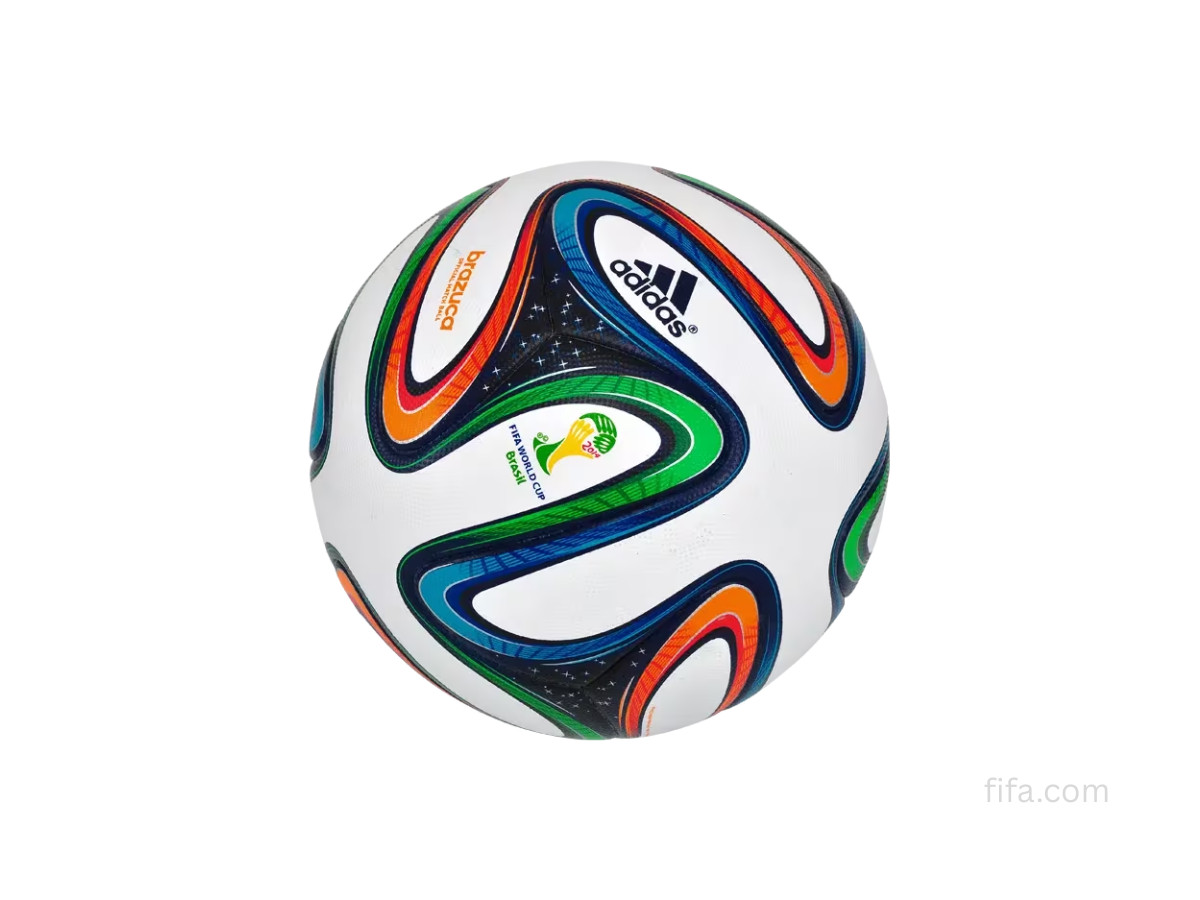
The Brazuca answered the Jabulani with the most rigorous testing program a World Cup ball had ever seen: more than 600 players and 30 science teams over two and a half years. Even its name was crowd-sourced, chosen by a public vote of more than 1 million Brazilians. After 2010, adidas needed the players back on its side, and the Brazuca was the peace offering.
2018 Russia: Telstar 18
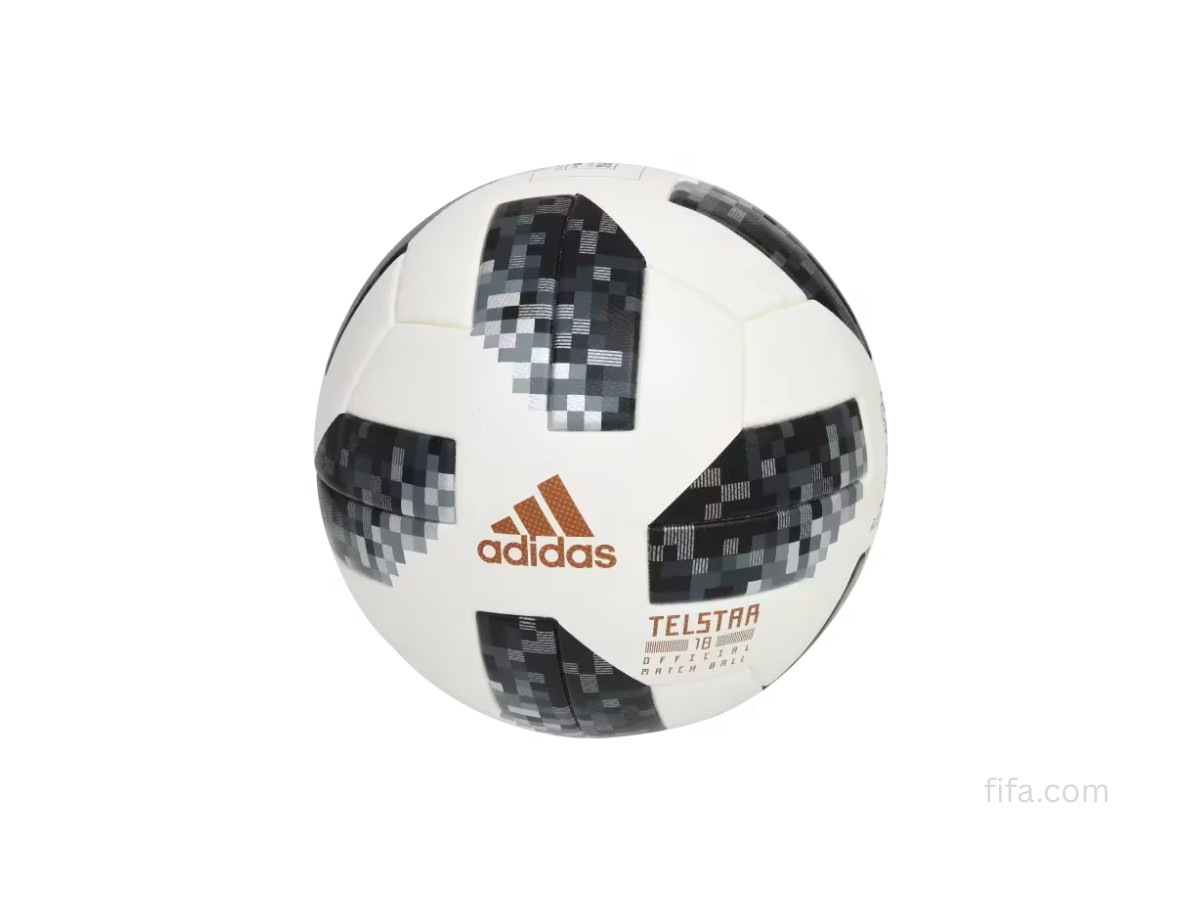
The Telstar 18 paid tribute to the 1970 original with a modern pixelated take on the black-and-white graphic. The bigger story sat under the surface: it was the first World Cup ball with an embedded NFC chip, which let fans tap the ball with a phone to access content. The technology was a novelty, but the door it opened was not.
2022 Qatar: Al Rihla
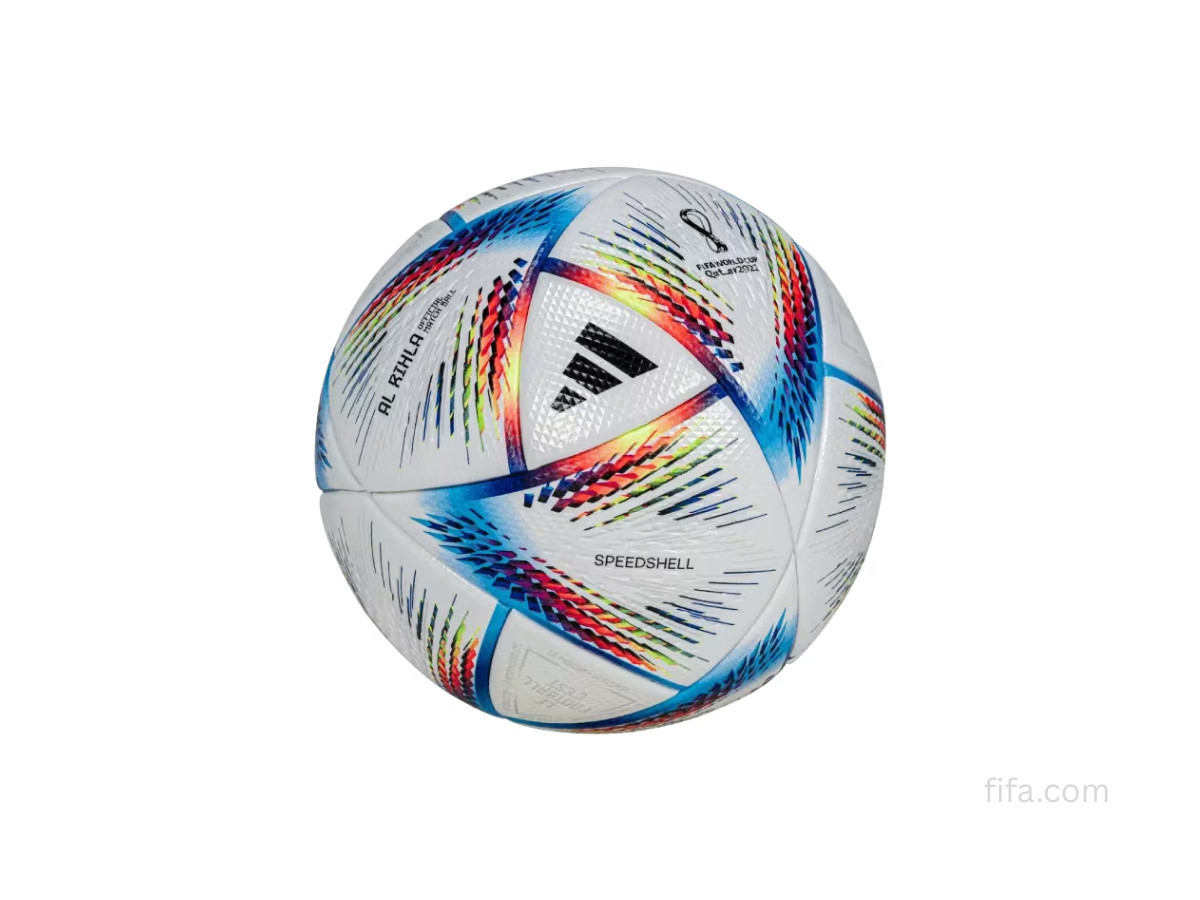
The Al Rihla was the fastest World Cup ball on record, according to adidas testing, and the first with Connected Ball technology that mattered to the match itself. A motion sensor suspended at the ball's center fed live data to officials, supporting VAR and the semi-automated offside system. The ball had become part of the officiating infrastructure.
2026 Canada/Mexico/USA: TRIONDA
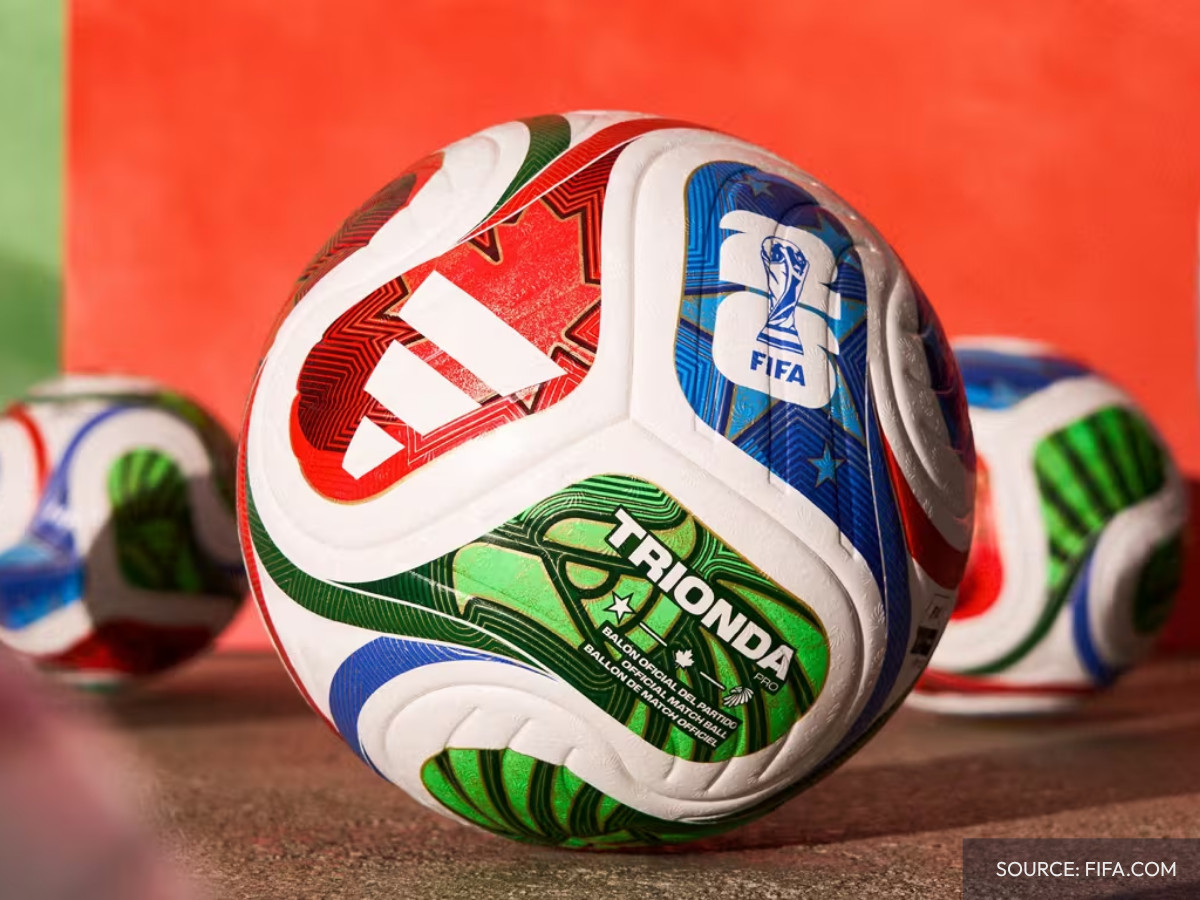
The TRIONDA is the first four-panel world cup soccer ball, the lowest count in tournament history. Its name means "three waves" in Spanish, and its red, green, and blue graphics carry an icon for each host: a red maple leaf for Canada, a green eagle for Mexico, and blue stars for the United States, all tied to the tournament identity explored in our breakdown of the FIFA World Cup 2026 logo.
The construction is built around its electronics. A 500Hz motion sensor, developed with Kinexon, sits inside one panel and reports the ball's movement 500 times per second to the officiating system, while counterweights beneath the other three panels keep the sphere balanced, as detailed in Fox Sports' reveal coverage. Deep seams and debossed surface lines manage airflow for flight stability, and the ball charges wirelessly before matches.
It is the first FIFA world cup ball whose entire physical design answers to the data system inside it. The engineers finally built the ball around the argument itself.
FAQs
What is the name of the 2026 World Cup ball? The official 2026 FIFA World Cup ball is the adidas TRIONDA. The name means "three waves" in Spanish, honoring host nations Canada, Mexico, and the United States, and the design carries a maple leaf, an eagle, and stars for each country.
Who makes the official World Cup ball? adidas has made every official World Cup ball since the Telstar in 1970. Before that, tournament organizers selected balls from various manufacturers, including Slazenger, which made the 1966 Challenge 4-Star.
How many panels does a World Cup ball have? It varies by era. Early leather balls used 12 to 25 panels, the classic 1970 Telstar used 32, and panel counts have dropped since thermal bonding arrived in 2006. The 2026 TRIONDA uses four panels, the fewest in World Cup history.
What was the first official World Cup ball? There were two. Uruguay and Argentina could not agree on a ball for the 1930 final, so Argentina's Tiento was used in the first half and Uruguay's T-Model in the second. Uruguay won 4-2.
Why does the World Cup ball change every tournament? Each tournament ball serves two purposes: it applies the newest available construction and materials technology, and it gives the host nation a visual identity on the field. Since the 2002 Fevernova broke the Tango design streak, every ball has been designed from scratch for its tournament.
What was the first synthetic World Cup ball? The 1986 Azteca, used in Mexico, was the first fully synthetic World Cup ball. It ended 56 years of leather construction and solved the waterlogging problem that had plagued matches like the 1954 final.
What was the first multi-colored World Cup ball? The 1998 Tricolore, used in France, was the first multi-colored World Cup ball. It replaced the black-and-white palette with red, white, and blue drawn from the French flag.
Nearly a century of world cup balls by year tells one consistent design lesson: the best product design advances the engineering without losing the user. The balls that failed, like the Jabulani, chased perfection past the players. The balls that succeeded, like the Brazuca, engineered with them.

Looking to apply the same approach to your growing market? We can connect you with the right creative partners.
Browse our Agency Directory to find the most capable agency that can help elevate your brand:
- Top Branding Agencies
- Top Sports Marketing Agencies
- Top Creative Agencies
- Top Graphic Design Companies
And if you’re curious for more inspiration, don’t miss our other features on standout logo designs in sports.