
A search engine marketing agency manages paid advertising on search engines, mainly through Google Ads and Microsoft Advertising. SEM services can include keyword research, campaign setup, bidding, ad testing, search-term control, conversion tracking, and reporting.
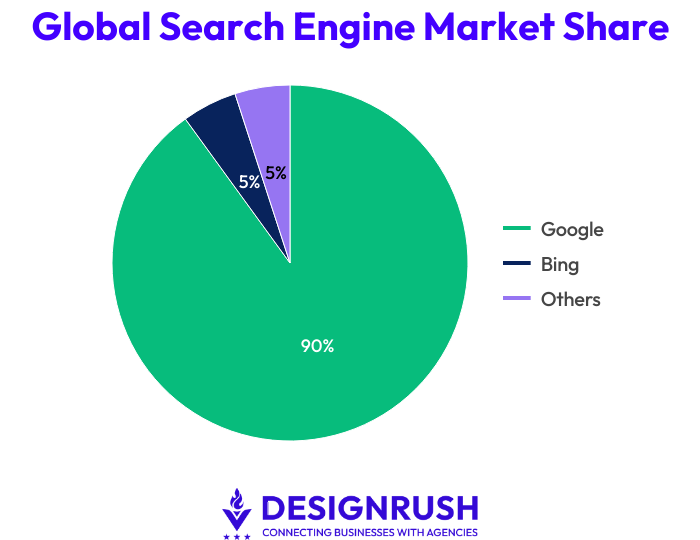
Today, global search engine adoption remains near-universal, with Google holding roughly 90% of global market share and Microsoft Bing capturing over 5%.
Search ads reach people while they are actively looking for something. That intent is what makes SEM different from most other advertising.
What does a search engine marketing company manage?
An SEM company manages the full cycle of paid search. It decides which searches should trigger your ads, what the ads say, how much to bid, and where each click lands.
The term SEM is used inconsistently across the market. On the one hand, it can mean paid search advertising, and on the other hand, providers use SEM more broadly to include both paid search and SEO. If you want both handled together, ask whether a provider works as an SEO SEM agency or focuses on paid search alone.
What services are included in search engine marketing?
Search engine marketing services share many tasks with general paid media management. The points below focus on the work that is specific to search.
Paid search strategy
A search marketing agency builds strategy by splitting your budget by search intent. It separates brand searches, which include your company name, from non-brand searches, where people look for a product or solution.
The split matters because branded searches often perform more efficiently when users already know the advertiser. Mixing brand and non-brand results can hide how well campaigns are acquiring new demand.
Keyword research and match types
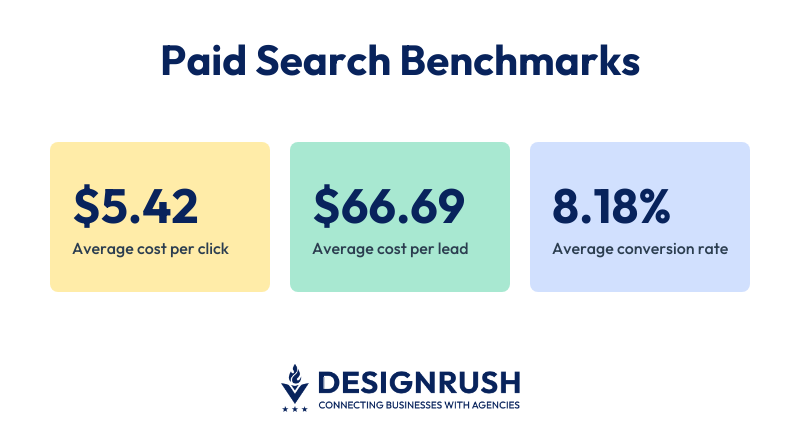
A paid search marketing agency finds the searches your buyers use and groups them by intent. It then chooses match types, which control how closely a search must match your keyword. With the average cost per click (CPC) on Google Search rising to $5.42 across industries, choosing the right match types and negative keywords is critical to avoid burning budget on broad, irrelevant queries.
What you receive: a keyword plan grouped by theme and intent, with match types and target landing pages.
Search campaign setup and structure
Setup covers campaigns, ad groups, locations, languages, schedules, and conversion goals. A clear structure keeps each group of keywords tied to relevant ads and pages.
Shopping and product feed campaigns
Shopping ads show product images and prices in search results. They run on a product feed, which in Google's case comes from Google Merchant Center.
Feed work can include product titles, categories, attributes, and resolving rejected or disapproved items. For large or complex catalogs, dedicated feed-management tools or specialist feed work may be scoped separately.
Ad copy and asset testing
The agency writes search ad headlines and descriptions and tests versions over time. It also adds assets such as sitelinks and callouts, which give searchers more reasons to click.
Bid, budget, and search-term management
The agency sets bid strategies and budgets, then reviews the actual searches that triggered ads. It adds negative keywords to block searches that waste money.
This review is ongoing. New irrelevant searches appear as campaigns run and as match types expand reach.
Conversion tracking and reporting
Tracking shows which searches led to leads, calls, or sales. Reporting should show results for brand and non-brand searches separately. Depending on your business model, baseline performance varies; for instance, First Page Sage client benchmark data puts the average pure B2B search conversion rate at 1.5%, whereas broader cross-channel datasets show much higher rates when phone calls and lead forms are combined.
What is the difference between SEM, PPC, and SEO?
These terms overlap in industry usage. The table shows how this guide distinguishes them so buyers can compare scopes consistently.
Term | What it covers |
SEM | Paid search advertising on search engines |
PPC | Pay-per-click advertising model; in agency usage, often shorthand for broader paid media |
SEO | Organic search optimization |
If you advertise across search and social,PPC agencies may cover more of your needs. If you want organic rankings, look atSEO agencies. Many businesses use paid and organic search together, so they can cover high-value searches both ways.
Which search engines and campaign types can an SEM agency manage?
Most SEM work centers on Google Ads, with Microsoft Advertising as the main alternative. The table lists common options.
Platform or type | What it does |
Google Search campaigns | Text ads on Google search results |
Google Shopping campaigns | Product ads with images and prices |
Performance Max | Automated campaigns that include search and other Google inventory |
Microsoft Advertising | Search and shopping ads on Bing and partner sites |
Performance Max reaches beyond search, including YouTube and display placements. Agencies that run it are managing more than classic SEM. Google-focused specialists are listed amongGoogle Ads agencies.
Does SEM include landing page optimization?
It partly does. Landing pages affect conversion performance and the quality of the experience after a click. According to Unbounce’s benchmark research analyzing over 400 million visits, the median landing page conversion rate across industries sits at 6.6%.
In Google Ads, landing page experience is one of the three components used to calculate the keyword-level Quality Score, alongside expected click-through rate and ad relevance. Google describes Quality Score as a diagnostic tool rather than an input to the ad auction.
An SEM scope may include landing-page review and recommendations. Building new pages, running broader CRO programs, or making substantial site changes may require additional scope from the agency, your web team, or a specialist provider.
What is usually outside the core SEM fee?
The core fee typically covers campaign strategy, setup, and day-to-day management, while feeds, landing pages, advanced tracking, tools, and media spend are often scoped or billed separately. When comparing proposals from a search marketing agency, use the breakdown below to check which items each quote includes.
Item | How it is commonly scoped |
Search strategy, setup, and keyword work | Commonly part of an SEM engagement |
Bids, budgets, and search-term reviews | Usually part of SEM services |
Conversion tracking basics and reporting | Commonly part of an SEM engagement |
Shopping feed optimization | Often scoped separately |
Landing page builds and CRO tests | Often not included in SEM |
Advanced tracking and CRM integration | Often separately scoped |
Media spend | Third-party cost, paid to the search engine |
Feed, call tracking, and testing tools | Third-party cost |
SEO | Specialist or adjacent service |
The SEM pricing guideexplains how management fees relate to search ad spend.
Which SEM services does your business actually need?
Not every business needs the full scope a paid search marketing agency offers. The right mix depends on your business model and how much of your search advertising already runs in-house, so start with the situation closest to yours:
- You are a local service business. You likely need search campaigns with tight location targeting and call tracking.
- You run an online store. You likely need Shopping campaigns and ongoing feed work.
- You sell B2B products with expensive clicks. You likely need careful keyword selection and tracking of qualified leads.
- Competitor ads appear on searches for your company name. You may want a branded-search strategy to maintain visibility, measure competitive pressure, and decide whether paid coverage is worthwhile.
- You already run search ads in-house. A one-time audit may be enough to find waste and structure problems.
To compare providers, read the guide for choosing a search engine marketing agency.