Canva Logo Design
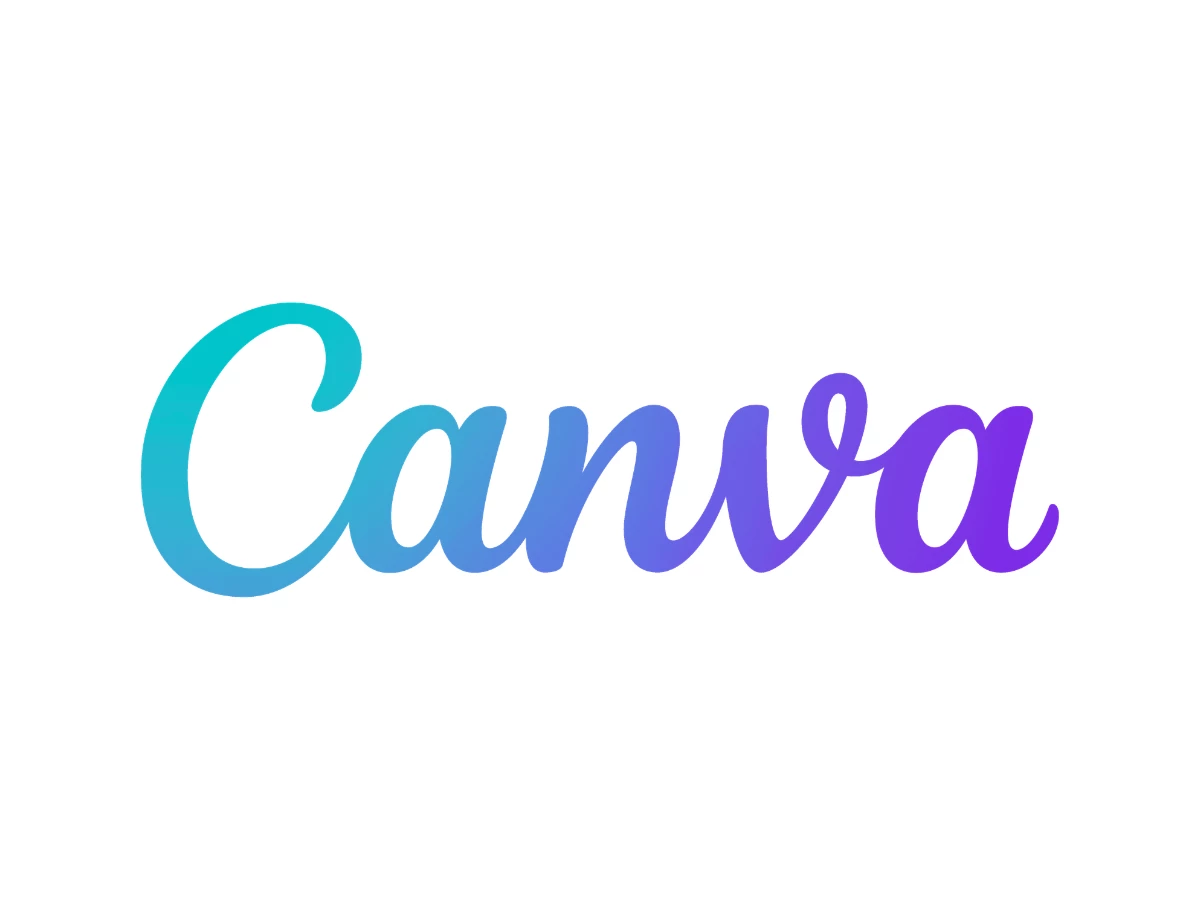
In 2021, lettering artist Rob Clarke wrote one word over and over with different pens, hunting for the spots where the letters wanted to join. The word was "Canva," and those sketches became the logo of a company that now sells AI to do the drawing for you. Canva logo design is the story of that single hand-lettered word, which Clarke refined across 75 versions and Canva left alone while the business reinvented itself four times.
Canva launched in 2013 for people who had never opened design software. Since then it has chased teams, then entire companies, then professional designers, and in April 2026 it rebuilt its platform around AI. Through every one of those turns, the same looping script has fronted the product.
That gap between a hand-drawn mark and an AI-first company runs through everything below. You'll see how Clarke built the wordmark, what Canva says it means, how to design your own logo in Canva, and where the tool falls short for a brand you plan to protect.
What To Know
- Lettering artist Rob Clarke redrew Canva's script wordmark with the company's in-house brand team in 2021, after 75 versions.
- Canva says the joined letters stand for easy creative flow, the gradient for moving from idea to finished design, and the hand lettering for the creativity in everyone.
- The logo stayed the same through Canva's 2024 workplace brand system, the 2025 Affinity relaunch, and the April 2026 launch of Canva AI 2.0.
- Canva's own help center says you can't register a logo built from its templates or stock graphics as a trademark.
Canva Logo Design: How Rob Clarke Built The Wordmark
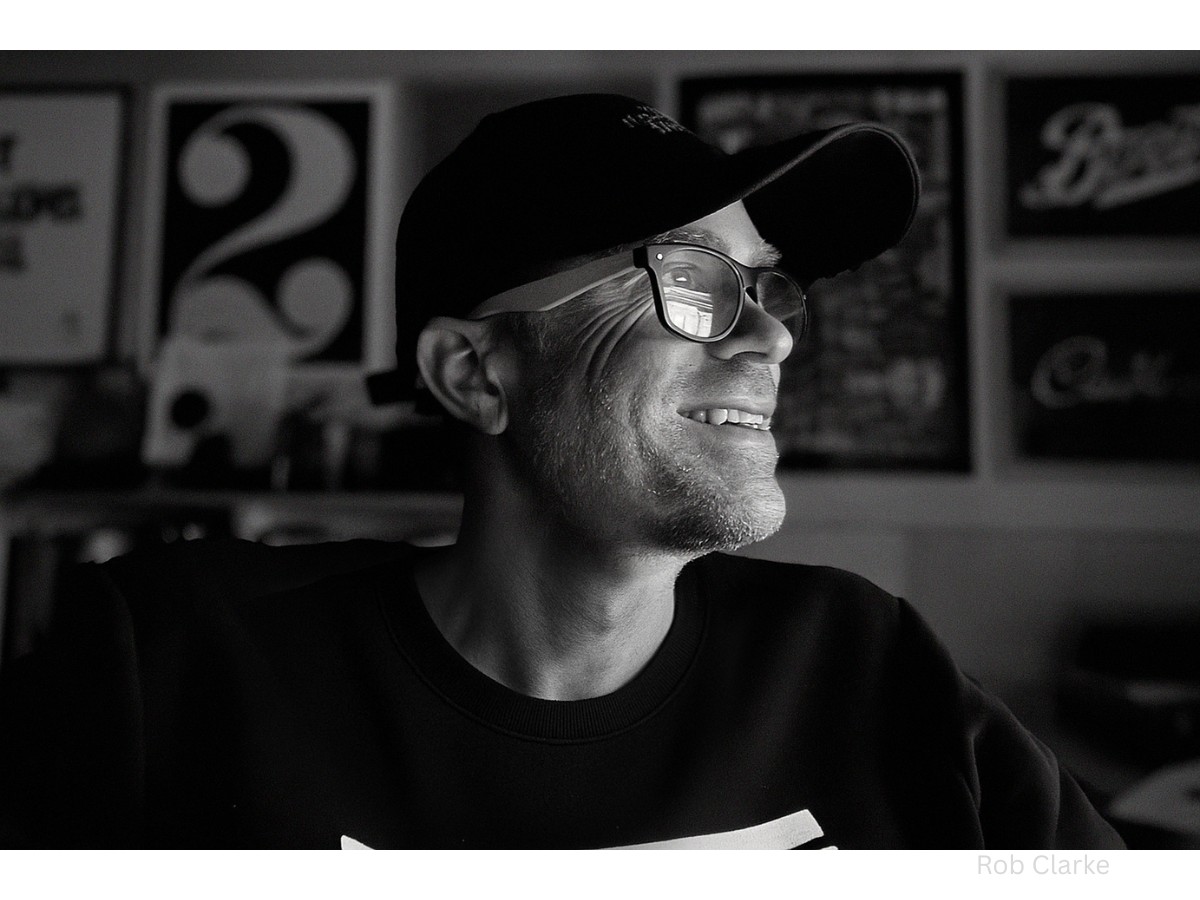
Canva's in-house brand team hired Rob Clarke, a type designer and lettering artist, to redraw its script wordmark in 2021. Clarke started with an audit. By his own account, some letters lost legibility at small sizes. Canva also needed the mark to work on everything from tiny buttons to billboards.
From there, he wrote the word over and over with different pens to find natural joins between letters. He scanned the strongest sketches and traced loose vectors on top. Weight and spacing stayed open to change until late in the process.
The team went through 75 versions before settling on a final wordmark. Canva's designers then added the gradient, built a motion version, and checked the mark across almost 100 formats. Canva unveiled the finished logo on Oct. 6, 2021, and called it a refinement of the old one.
Because the new mark kept the joined script Canva had used since launch, most users saw a familiar word with cleaner letters. Clarke reportedly paid special attention to the two a's. For contrast with how other brands handle a refresh, scan recent logo design trends.
Canva also used its own product for the rollout. The team uploaded the hand-drawn logo to Canva as an SVG, so its 2,000-plus employees could drop it into slides and social posts.
Canva Logo Meaning: What The Company Says
Canva ties the logo's meaning to three beliefs, set out in its 2021 announcement. The joined letters and the loop in the v stand for the easy flow of making something. Simplicity sits at the center of Canva's product, so the company wanted the mark to feel effortless.
The turquoise-to-purple gradient carries the second idea. Canva says the colors guide users across its editor from left to right, from a blank page to a finished file.
The third belief concerns who gets to create. Canva describes the wordmark as "human and hand-crafted, to represent the creativity within every one of us." In the company's telling, people lose creative confidence as they grow up, and easy tools help them win it back.
All three readings come from Canva itself. Symbolism written after a logo ships can sound neater than the work that produced it, so read the explanation as the company's framing.
2013 To 2021: From Yearbooks To Templates
Canva's first audience was anyone who felt shut out by professional design software. Co-founder Melanie Perkins came up with the idea at the University of Western Australia in Perth, where she taught design programs to classmates who found them hard to use.
Before Canva, Perkins and Cliff Obrecht tested the concept on a narrow market: school yearbooks. Canva says their company, Fusion Books, grew into Australia's largest yearbook business within five years and expanded into France and New Zealand.
With Cameron Adams as a third co-founder, the trio raised funding and launched Canva in 2013. Today, Canva runs its headquarters out of Sydney.
The product took the yearbook lesson and widened it. Templates and drag-and-drop editing let small-business owners, teachers, and students make posters and presentations without training. The script logo suited that pitch and looked looser than the clean sans-serif marks many apps used, Spotify's included.
That audience grew fast. By October 2021, Canva counted a community of more than 65 million people. In August 2023, it reported more than 135 million monthly users and annualized revenue above $1.5 billion.
2021 To 2026: When Canva Grew Up, Then The AI Pivot
2021 To 2024: Teams
The 2021 refresh doubled as a product demo for teams. Canva's announcement described a workflow where professional designers craft assets in their own software, then import them so a whole company can reuse them. The new wordmark took that exact route into Canva's own brand files.
2024: Organizations
By 2024, "everyone" meant entire companies. Canva launched Canva Enterprise for large organizations, and in August 2024 it released a brand system built for workplaces. Core assets, including the hand-crafted logo and custom typeface, stayed fixed while flexible elements could change for local markets.
Large companies often hand this kind of work to branding agencies, but Canva kept most of it in-house and inside its own tools. The team scaled the refresh across more than 4,000 employees in more than 40 countries, with motion from studio Vucko and custom emoji from Buck. Executive creative director Cat van der Werff said "the entire refresh was designed to put our product through its paces."
At the time, Canva reported more than 190 million monthly active users and annualized revenue above $2.3 billion.
2024 To 2026: Professionals And AI
Professional designers came next. In March 2024, Canva bought Serif, the Nottingham company behind the Affinity apps, in a cash-and-stock deal reportedly worth several hundred million pounds. That July, it added Leonardo.ai, a Sydney generative AI startup.
In October 2025, Canva relaunched Affinity as one free app with vector, photo, and layout tools. Canva and Affinity's in-house teams built the new identity with studio Twist. Rob Clarke, the letterer behind Canva's wordmark, drew the Affinity symbol and logotype, a lowercase serif a that mixes loose strokes with sharp angles.
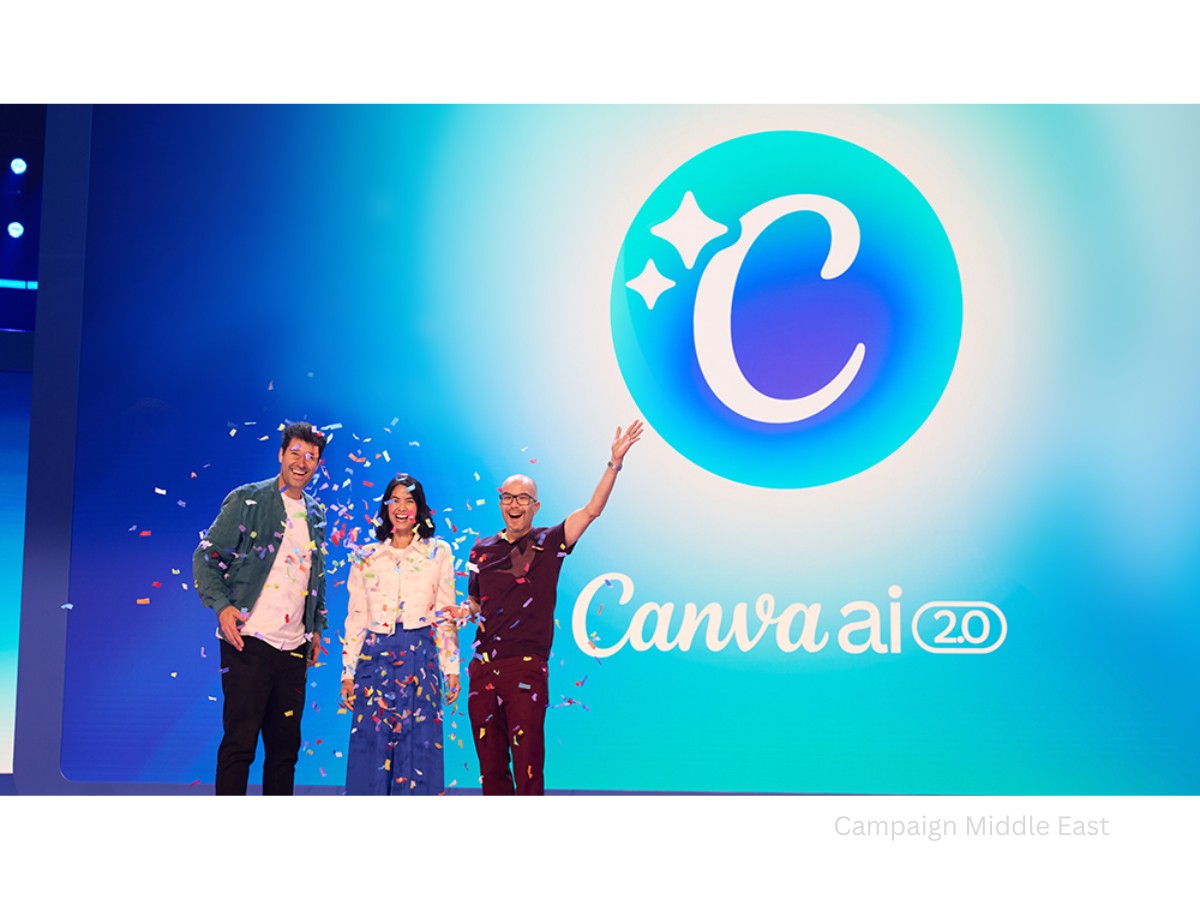
On April 16, 2026, Canva launched Canva AI 2.0 at its Canva Create event in Los Angeles. You describe a goal in plain language, and Canva builds editable designs across formats. The system can also draw on your past work and connected apps such as Slack and Gmail.
The release opened as a research preview for the first 1 million users. Behind it sits a bigger change: co-founder Cliff Obrecht says Canva is moving its business model to AI credits and away from feature-based subscription tiers. Many AI brands lean on abstract symbols, yet Canva's front door still shows a hand-drawn word.
What The Logo Promises Now
The wordmark still makes the promise Canva wrote down in 2021: design that feels human and easy for anyone. The product around it now generates whole designs from a sentence.
That shift leaves an open question for the brand. A logo Clarke drew by hand, over 75 rounds of revision, now fronts a platform that sells speed through AI. Clarke's lettering makes a case for craft, while Canva AI 2.0 makes a case for skipping much of the manual work.
Can a hand-crafted mark keep its meaning when the company's main pitch is that the software does the making? Canva hasn't touched the logo to answer that, and the wordmark now carries both stories at once. Designers tracking AI in logo design will want to watch which story wins.
How To Approach Canva Logo Design For Your Own Brand
You can make a usable logo in Canva in an afternoon if you settle the legal question first. The steps below follow the order a designer would use.
- Decide whether you need a trademark. Canva won't let you trademark a logo built from its templates or stock graphics, since any user can pick the same content. For a mark you plan to register, start from a blank design and use only simple lines, basic shapes, and Canva's fonts, which the company allows.
- Write the name before you decorate it. Set your business name in four or five typefaces and shrink each one to icon size. Clarke ran the same small-size test on Canva's own wordmark.
- Pick two or three colors, then test the mark in solid black and solid white. A logo that only works in a gradient will fail on receipts, stamps, and embroidery.
- Build the versions you'll need: a horizontal lockup, a stacked one, and a small icon for social avatars and browser tabs.
- Export the right files. Canva limits SVG and transparent-background downloads to paid plans, and you'll want both for print and web.
- Save the finished logo, colors, and fonts to a brand kit so new designs pick them up by default.
Canva's logo tools have real limits, and you should weigh them early. Templates are open to every user, so another local business can end up with a near twin of your logo. Canva doesn't sell exclusive rights to its graphics and points users to a designer instead.
For a mark that has to carry a company for years, a logo design agency can build something custom and put ownership in writing. Founders on tight budgets can compare branding agencies for startups or U.S. logo designers by rate and portfolio. If you already own a logo, you can upload it to Canva and use the tool for social posts and business cards.
Quick Answers
What Does The Canva Logo Mean?
Canva says the joined script stands for easy creative flow, the turquoise-to-purple gradient for moving from idea to finished design, and the hand lettering for the creativity in everyone.
Who Designed The Canva Logo?
Lettering artist Rob Clarke drew the current wordmark with Canva's in-house brand team in 2021.
When Did The Canva Logo Change?
Canva introduced the refined logo on Oct. 6, 2021. Its August 2024 brand system kept that logo and the custom typeface.
What Font Is The Canva Logo?
Canva's wordmark uses custom hand lettering, so no installable font matches it exactly.
How Do You Design Your Own Logo In Canva?
Canva advises starting from a blank design with simple shapes and its fonts if you want a trademark. Templates work for quick, non-exclusive logos.
Our team ranks agencies worldwide to help you find a qualified partner. Visit our Agency Directory for the Top Logo Design Companies as well as: