
A manufacturing website must now help buyers find the right product, confirm it meets their requirements, and decide what to do next.
Here are the 10 manufacturing web design trends making that easier to get right.
Manufacturing Web Design Trends: Key Findings
- Supplier preference forms early, with 94% of buying groups ranking vendors before first contact, which occurs around 61% into the journey.
- Self-service does not replace sales; it lets buyers complete routine research before involving specialists in complex decisions.
- Removing technical friction produces measurable gains, as Power Jacks increased CAD downloads 230% and website sales leads 30%.
- Manufacturing websites now support the full customer lifecycle, connecting product research and RFQs with regional sales, parts, service, and aftersales.
Understanding the Modern Manufacturing Buyer
Self-service is a growing part of the industrial buying journey. Buyers research independently where they can, then involve specialists when the decision becomes more technical, contextual, or commercially complex.
What Self-Service Means in Manufacturing
A self-serve B2B buyer uses digital channels to identify potential suppliers, compare products, verify requirements, and build a shortlist before contacting sales. They want websites to provide the specifications, tools, proof, and next steps needed to keep that process moving.
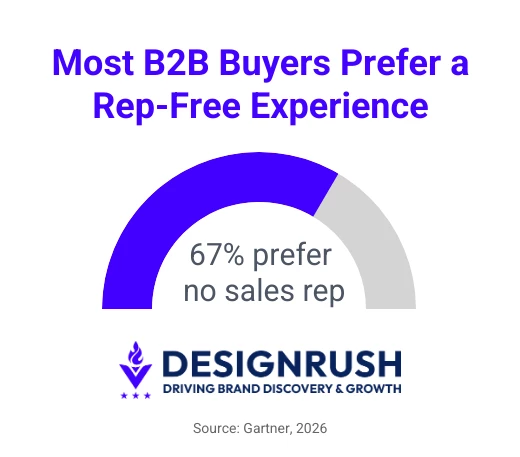 But Gartner found that while 67% of B2B buyers prefer a rep-free experience, buyers still turn to salespeople for contextual guidance and validation.
So, the website should handle repeatable questions and keep human expertise available for more complex and nuanced decisions.
Where Manufacturing Buyers Make Up Their Minds in 2026
By the time sales becomes involved, the website may already have won or lost the supplier a place on the shortlist.
6sense found that 94% of buying groups ranked their preferred vendors before contacting sales, with initial contact occurring around 61% of the way through the journey.
That makes incomplete product information like a missing drawing, buried certification, or vague application page a major problem that can remove a supplier from consideration without its sales team knowing an opportunity existed.
A buyer comparing four industrial sites built from the same stock library remembers the spec sheet, not the company behind it. The trends below are functional, but a recognizable identity still helps, and recognition established before the buyer enters a buying cycle is cheaper than trying to establish it while you're one of four open tabs.
As Coby Bush, VP of Marketing at Big Leap, puts it: "If the first time they hear about you is when they're ready to buy, you're paying money to come in second place."
4 Buyer Journeys to Design For
There are (at least) four essential buyer journeys to design for with a manufacturing website:
- Technical evaluation: Engineers and technical specialists need to find compatible products, compare specifications, download CAD files, and confirm performance, materials, tolerances, and compliance.
- Commercial validation: Procurement teams need pricing or RFQ routes, lead-time information, certifications, supplier credentials, service coverage, and evidence that the manufacturer can deliver reliably.
- Internal approval: Operations leaders and executives need quantified case studies, ROI or cost calculators, and a clear explanation of the operational problem being solved.
- Aftersales support: Existing customers need manuals, spare parts, service booking, warranty information, training, and local support without restarting the journey through a generic contact form.



Definitive Manufacturing Web Design Trends in 2026
Top industrial websites are removing friction from these. These 10 trends show how manufacturers are helping buyers navigate complex catalogs, validate solutions, secure internal approval, and access support.
10 manufacturing website design trends at a glance:
| Trend | Serves |
| 1. Use-case-led navigation replaces the product catalog | Entry point for all four |
| 2. Product selectors turn complex catalogs into decisions | Technical evaluation |
| 3. Searchable specs and CAD access | Technical evaluation |
| 4. Product demonstrations replace decorative video | Technical evaluation |
| 5. Certifications and trust signals move into the buying path | Commercial validation |
| 6. Case studies become downloadable business cases | Internal approval |
| 7. RFQ flows qualify the project before the sales call | Commercial validation |
| 8. Calculators help buyers build the commercial case | Internal approval |
| 9. Global manufacturers build regional buying journeys | Commercial validation and aftersales |
| 10. The website extends into parts, service, and aftersales | Aftersales |
1. Use-Case-Led Navigation Replaces the Product Catalog
A traditional product catalog assumes visitors already know which product or model they need. Many actually arrive with a problem like unreadable barcodes, an inefficient packaging line, or a new traceability requirement.
The strongest sites provide several routes into the same catalog:
- Product
- Industry or application
- Technical requirement
This lets experienced buyers move quickly while giving less certain visitors a logical starting point.
Exposing those routes takes some care, since three entry points can collapse into one overloaded mega menu and no catalog of real size fits in a dropdown.
- Industry and application sit as top-level items alongside Products, each with its own landing page
- Dropdown contents stay scannable, with deeper levels reached from a landing page rather than the menu itself
- Each product keeps one canonical URL however many routes lead to it, so search signals consolidate on a single page
- Site search counts as a fourth route, since buyers arriving with a model number or a competitor part number will type it before they browse
- Manufacturers selling to consumers and commercial accounts split those paths on arrival
- On mobile, the quote or RFQ action stays outside the collapsed menu
Application-Led Navigation Supports 500% Lead Growth
When rubber roller manufacturer Rol-Tec redesigned its website, it took a step beyond a product-only structure. Search data informed a new sitemap with dedicated routes for products, materials, and industries, allowing buyers to begin with the information they already had.
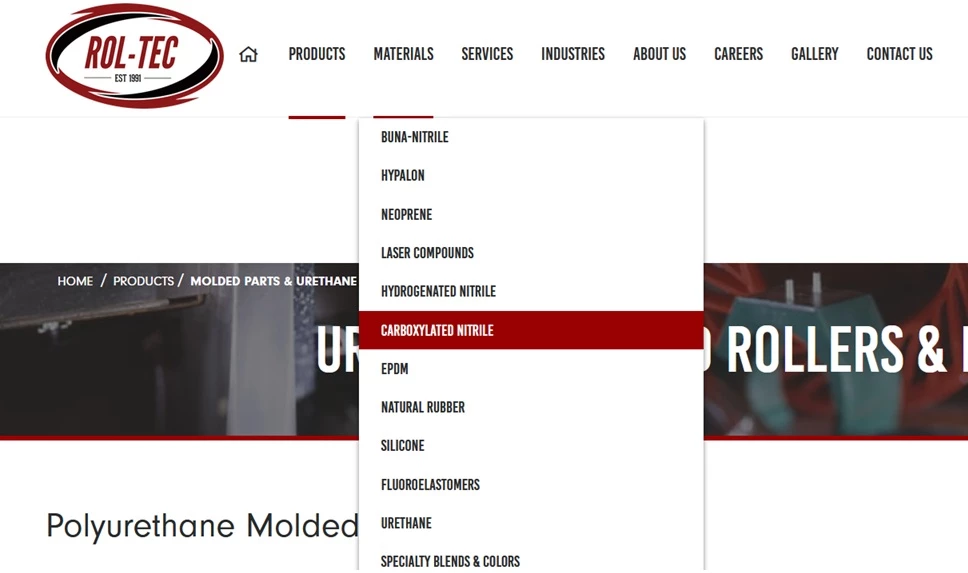
The redesign also added specifications, technical charts, relevant PDF downloads, and more visible conversion paths.
The new sitemap landed alongside the content and conversion changes above, so these numbers cover the whole redesign rather than navigation alone. Organic leads increased 1,033% in the first three months after launch and total online leads rose 500% year over year.
Taken together, the outcome shows the value of organizing an industrial website around how buyers search.
2. Product Selectors Turn Complex Catalogs Into Decisions
A catalog with hundreds of SKUs and overlapping specs puts the burden on the buyer to narrow it down. Faceted search with too many filter options can make this worse. Buyers apply a few filters but still see a wall of results, then give up before reaching a shortlist.
And once a buyer is down to two or three candidates, the comparison usually moves into a spreadsheet assembled from three open tabs.
A comparison view that aligns specs, marks where they differ, and carries through to a CAD download or RFQ keeps that work on the site. It should also export, since the engineer building the comparison rarely signs the order.
Both stages work better with fewer options that each rule something out.
Fewer, Smarter Filters Lift Form Submissions 130%
When Associated Spring, RAYMOND, a manufacturer of precision springs and gas struts, noticed users weren't narrowing down results even while using filters, TopSpot replaced its traditional faceted search with a simplified horizontal product selector built around fewer, more decisive options.
Form submissions for its Gas Strut product line increased 130.65% within six months, with the site's overall form conversion rate up 126.12% and form abandonment down 35.59%.
3. Searchable Specs and CAD Access: The Unsexy Trend That Converts
Engineers evaluate a component against their own design before they ever talk to a salesperson. If the specs, drawings, or CAD files they need to do that aren't sitting on the product page, they either wait for someone to email them or start evaluating a competitor's part instead.
The most useful product pages provide:
- Specifications in searchable HTML, not only PDFs
- Current datasheets and technical drawings
- Downloadable 2D and 3D CAD files in common formats
- Clear model numbers and revision details
This content may lack the visual impact of animation or 3D product tours, but it removes a critical delay. Once an engineer incorporates a component into a design, that product is also more likely to remain specified as the project moves toward procurement.
Power Jacks: 230% more CAD downloads and 30% more sales leads
Power Jacks, a manufacturer of lifting and positioning equipment, worked with product-data platform CADENAS to launch an online catalog and configurator that let engineers find, configure, and download CAD models on their own.
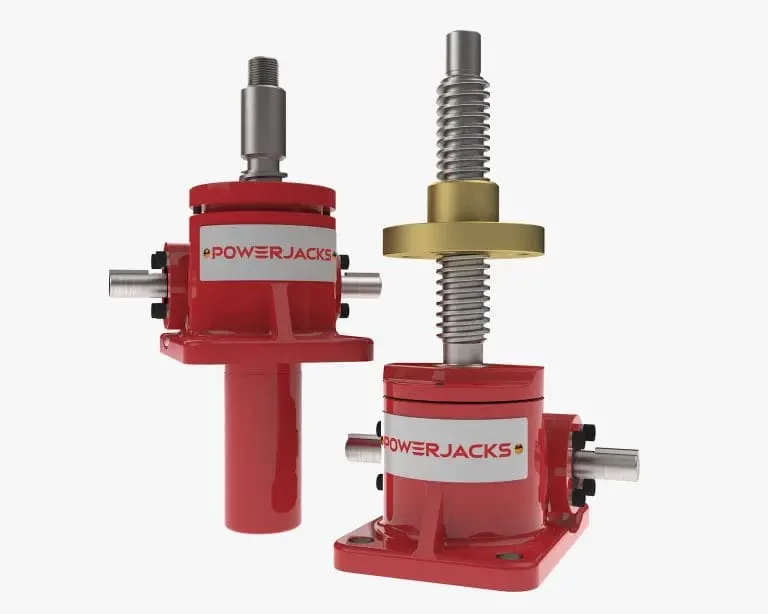
Before the launch, customers waited a full working day to receive a part in their required native CAD format, but the configurator cut that to about five minutes.
Within one year, CAD downloads increased 230% and sales leads from the website rose 30%. The catalog turned technical product data into a working sales tool: engineers could evaluate and incorporate Power Jacks components into larger assemblies without first requesting files from a representative.
4. Product Demonstrations Replace Decorative Video
The drone shot of the facility is a classic, but it’s a tired manufacturing homepage trope. So are sparks flying off a CNC machine, someone in a hard hat nodding at a colleague.
That sort of thing looks credible, but it doesn't answer a buyer’s real questions: what does this product do, and does it do it the way I need it to?
A demonstration video answers that directly by letting us see the product running, handling the material or process it's built for, in enough detail that a buyer can judge fit without a live walkthrough from sales.
This has the biggest impact when the product category is unfamiliar and buyers have no existing frame of reference for how it works.
MūL Technologies’ Demo-Led Launch Helps Generate 172 Leads
When MūL Technologies launched MARC™, it had no website, brand recognition, or qualified sales leads. Its site needed to explain the mobile autonomous robotic cart clearly enough for buyers to understand its operation and potential fit.
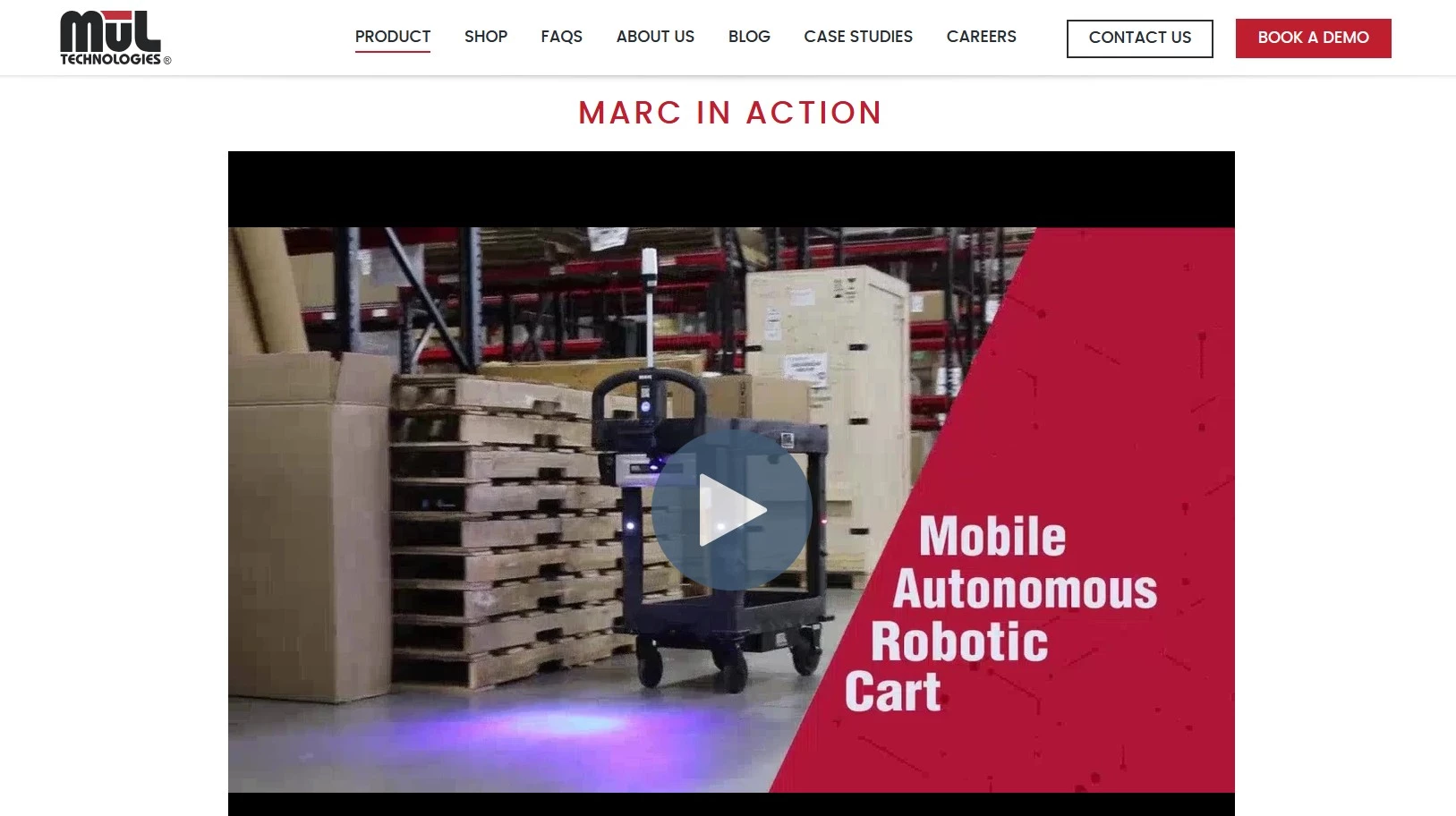
Weidert Group built detailed product pages around integrated video showing MARC in action. SEO, social content, and paid advertising brought buyers to the site, while the demonstrations helped them evaluate the unfamiliar product without requesting a live walkthrough.
Within six months of launch, the new site (with product demonstration video at its core, supported by SEO and paid advertising) had generated 172 leads for a product category that didn't exist in the buyer's vocabulary six months earlier.
5. Certifications and Trust Signals Move Into the Buying Path
A procurement team evaluating a supplier need to know the manufacturer meets the compliance bar their industry, insurer, or regulator requires.
That vetting used to happen on a call, but now it happens on the site, often before the sales team knows they're being evaluated.
In regulated industries (aerospace, medical, automotive, defense) a missing or hard-to-find certification is a disqualifier. If a buyer can't confirm the standard specific to their sector within a click or two, they'll assume the manufacturer doesn't hold it.
Strong manufacturing sites handle certifications differently than most:
- Logos are recognized at a glance, so they sit next to the products or capabilities they apply to rather than in a footer or on an About page, with each one linking to a downloadable certificate or the accrediting body
- Each standard is named and briefly explained, since buyers from outside a given industry won't always recognize the acronym
Axiom Materials: Certifications Built Into the Quality Testing Page
Axiom Materials, an aerospace composites manufacturer serving aviation, spaceflight, defense, and satellite applications, treats its certifications as a genuine part of the buying process.
Its Quality & Testing page names the specific standards it holds (AS9100D and ISO 9001:2015), identifies the accrediting body (DEKRA Certification, Inc., an ANAB-accredited registrar), and explains what AS9100D covers for aerospace suppliers.
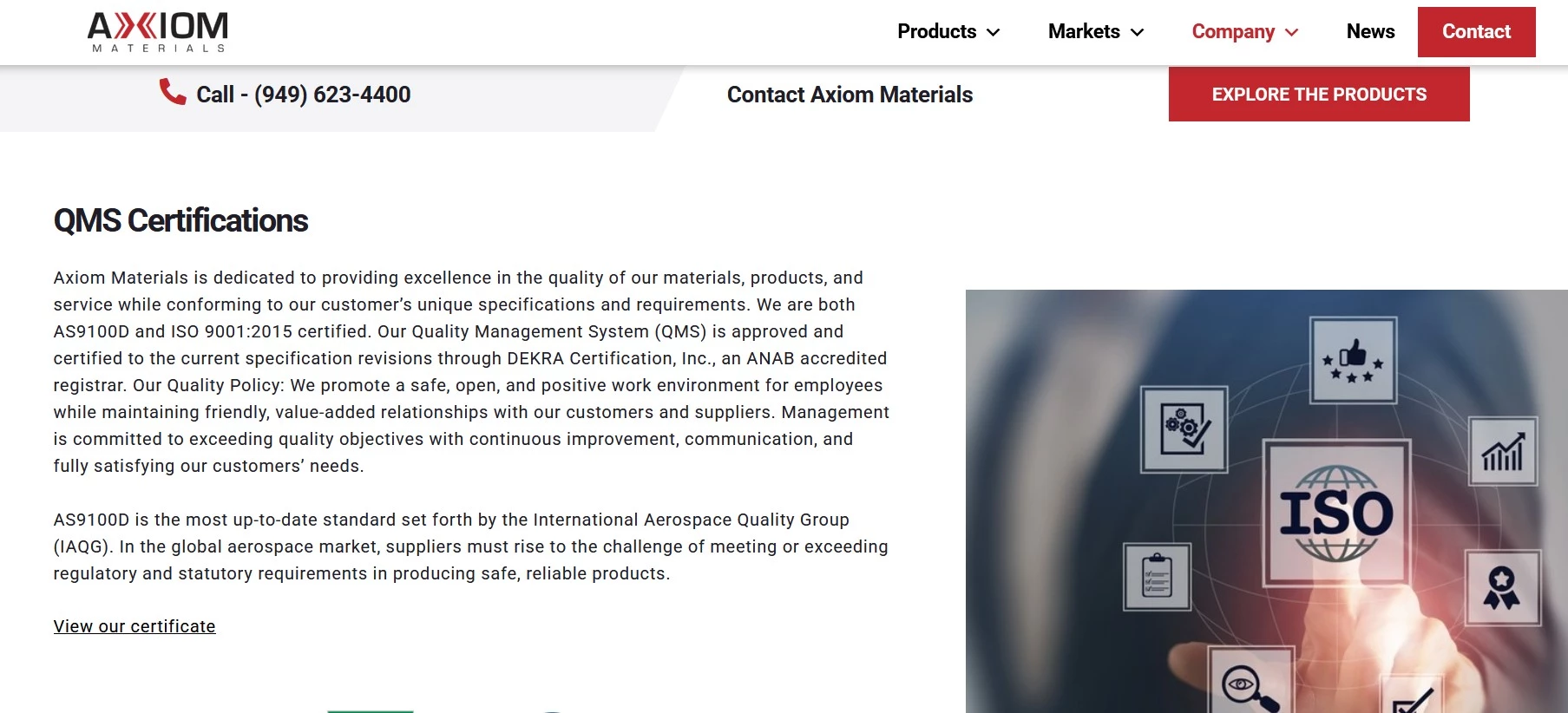
The page, which was one part of a broader SEO and site overhaul with digital agency Pixsan, reads like a procurement checklist answered up front, with all the evidence a technically informed buyer in a compliance-heavy industry needs from it.
6. Case Studies Become Downloadable Business Cases
The engineer or plant manager evaluating a supplier is often not the only person approving the purchase. They still have to make the case to operations leadership, finance, or a capital expenditure committee.
That changes what a manufacturing case study needs to provide. A satisfied-customer story is only the starting point. Internal approvers need:
- A recognizable operational problem
- Quantified before-and-after results
- The implementation timeline and disruption involved
- A format that can be shared with the buying committee
Industrial purchases are group decisions, and different stakeholders may prioritize different outcomes. Gartner found that 74% of B2B buyer teams experience “unhealthy conflict,” meaning decision-makers disagree over objectives, preferred solutions, or whose priorities should take precedence.
A concrete business case gives the group shared evidence against which to evaluate the purchase.
Atlas Copco: Case Studies Written for the Capex Committee
Atlas Copco’s Phoenicia Glass Works case study is structured for internal use. It establishes the plant’s scale (around 200 bottles per minute and nearly one million containers per day) before explaining the maintenance and energy problems created by its older vacuum pumps.
The downloadable PDF then identifies the replacement system and reports the outcome: 43% energy savings alongside lower maintenance costs. That gives an internal champion the operational context, proposed solution, and financial result needed to support a capital request.
7. RFQ Flows Qualify the Project Before the Sales Call
A generic “Contact Us” form treats every visitor the same, whether they are exploring feasibility or ready to discuss commercial terms. It also leaves the sales team without enough information to route or prepare for the inquiry.
A technical RFQ lets buyers explain what they need before committing to a detailed conversation. It should include:
- Application- or specification-first fields
- Optional uploads for drawings, specifications, or part numbers
- A clear response time and explanation of what happens next
- A lower-commitment route for buyers with early questions
Pumptec: A "Contact a Pump Expert" Flow Built for Technical Buyers
Pumptec, a manufacturer of industrial-grade high-pressure electric pumps for OEMs, replaced its generic contact form as part of a broader site overhaul with Weidert Group.
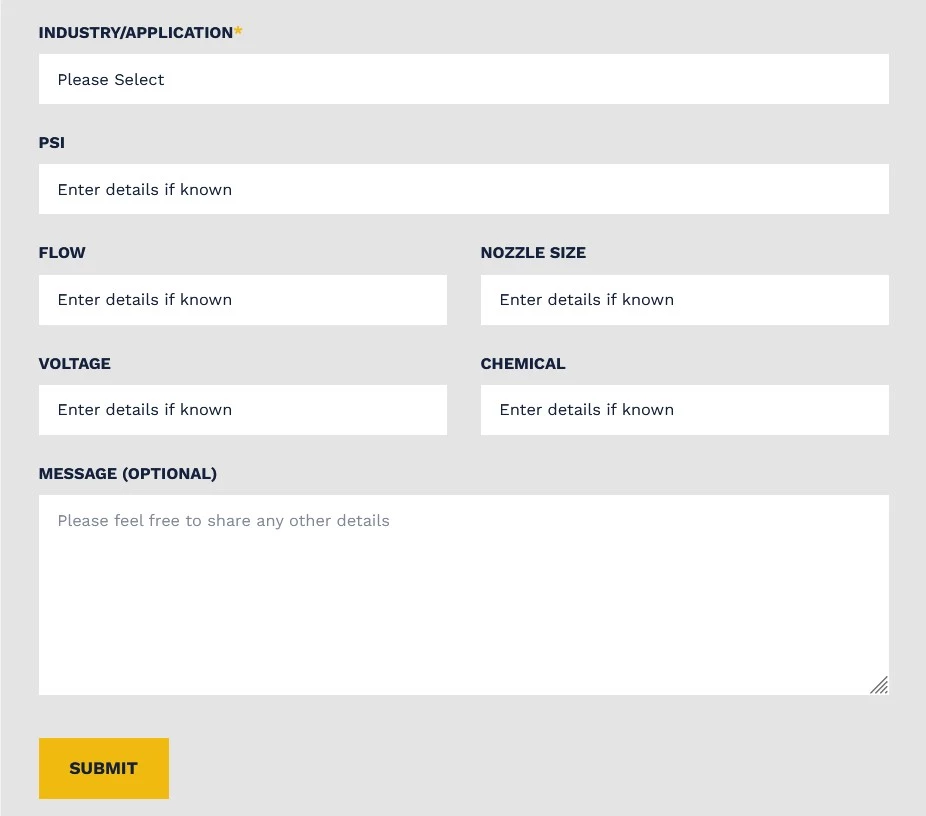
The new “Contact a Pump Expert” page asks about the application, pressure and flow requirements, and end market. It puts forward the technical qualification that once happened on a discovery call and routes the request to the right specialist before a rep makes contact.
The form does the qualifying, so reps arrive at the first call already knowing the application and the specs. In the first nine months, sales rose 39% and average new-customer value increased 89%, with onboarding and sales cycles shortening by up to 33%.
8. Calculators Help Buyers Build the Commercial Case
A well-built calculator helps buyers estimate payback, energy savings, avoided downtime, or increased throughput using the manufacturer’s own performance data. That gives them a more credible figure to take into a capex discussion and reduces the risk of the product being assessed using incomplete assumptions.
The most useful manufacturing calculators:
- Ask for the buyer's actual operating conditions (running hours, load profile, energy cost) rather than generic industry averages
- Show the calculation clearly enough that a finance team can defend it
- Produce an exportable summary the buyer can attach to an internal proposal
- Include a genuine disclaimer about the estimate's limits, which builds credibility rather than undermining it
Trend Chassis: An ROI Calculator Built Around Operating Costs
Trend Intermodal Chassis worked with Windmill Strategy to add a custom ROI calculator to its redesigned manufacturing website.
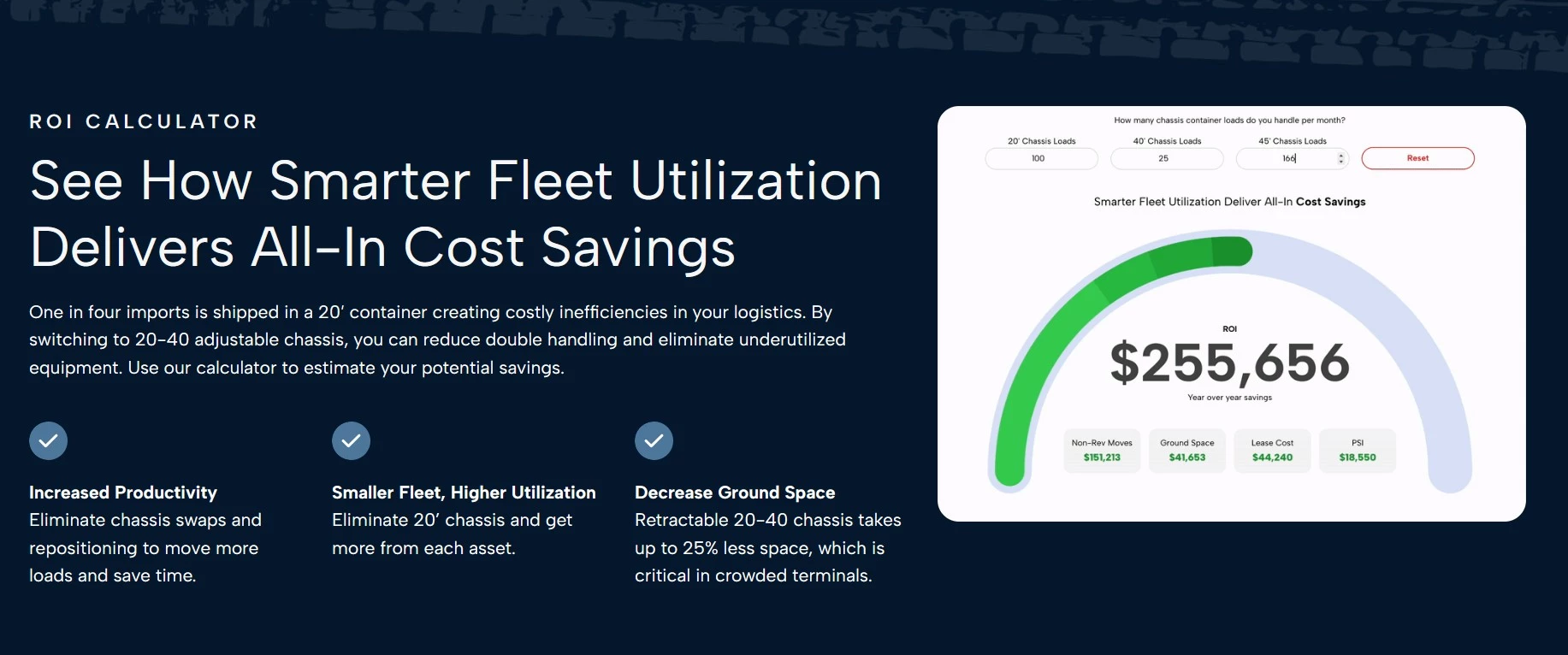
Buyers enter their monthly container loads across 20-, 40-, and 45-foot chassis. The calculator estimates annual savings across four costs:
- Non-revenue equipment moves
- Ground-space requirements
- Chassis leasing
- Tire maintenance
Each result includes the assumptions behind it and is presented as a directional estimate rather than a guaranteed return.
Windmill Strategy positions the calculator as a way to quantify the savings from dual-size chassis before a buyer contacts sales. No published figures on its performance, but the build itself shows the format working as intended: the buyer can see how each figure was calculated.
9. Global Manufacturers Build Regional Buying Journeys
A global manufacturing website needs to go beyond translations to consider product availability, technical terminology, regulations, support options, and sales contacts.
Buyers should be able to enter the site through the most relevant regional path without losing access to the wider global catalog.
- Multi-region sites earn that name when they:
- Suggest a region on arrival, but let the buyer override it
- Localize what the buyer actually uses (products, documents, contact details) not just menu labels
- Route inquiries to the right regional team
Lantech: A Multi-Region Redesign Increases RFQs by 9.4%
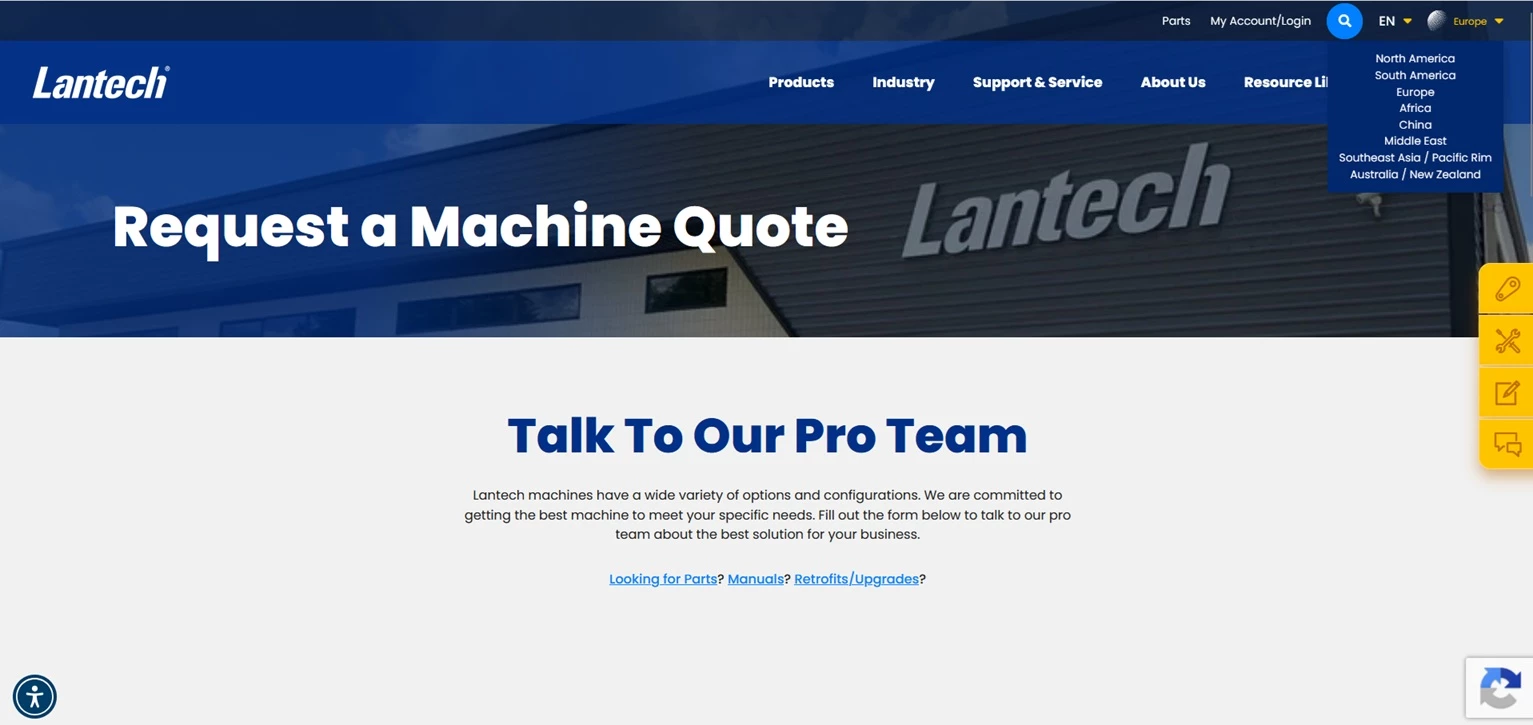
Lantech is a global packaging-equipment manufacturer with production facilities in the United States and the Netherlands, plus sales and technical support worldwide.
Lounge Lizard, the agency behind Lantech’s redesigned website, created a multilingual, multi-region platform that could serve this international customer base while maintaining a consistent global brand.
Cloudflare geo-routing helps connect visitors with the appropriate regional experience, while simplified navigation makes products and support easier to access throughout the journey.
Following the redesign, RFQs rose 9.4% and impressions climbed 22.76%. The geo-routing and the navigation changes shipped together, so the lift covers both. Impressions moving alongside RFQs is the part worth noting, since regional URLs and localized documents are indexable in a way a language toggle isn't.
10. The Website Extends Into Parts, Service, and Aftersales
For many manufacturers, the sale is the start of a decades-long relationship. Equipment needs spare parts, scheduled service, warranty support, and troubleshooting long after the purchase order clears.
When the website can't handle any of that, existing customers get pushed back through a generic contact form or phone tree, competing with new-business inquiries. Service teams waste time answering routine questions, while manufacturers miss opportunities to generate recurring parts and maintenance revenue.
Strong aftersales experiences typically offer:
- Parts lookup by model or serial number
- Manuals and warranty documents
- Regionally routed service requests
- A dedicated customer login
- Records for installed equipment
PDC Machines: A Self-Serve Aftermarket Portal Helps Lift Service Revenue 50%
With more than 2,000 compressors in the field, PDC Machines was managing fragmented equipment data and an inefficient, error-prone parts-ordering process.
The diaphragm-compressor manufacturer worked with Industrility to launch myPDCmachines.com, a self-serve aftermarket portal. It organizes manuals, spare-parts lists, 3D CAD files, dimensional diagrams, and service histories around each asset. QR codes also let customers and field teams identify compressors and access their records directly.
Service and spare-parts revenue increased by 50% annually. Industrility also reports faster service responses, less back-and-forth communication, and reduced unplanned downtime.
What to Look for in a Manufacturing Web Design Partner
A polished portfolio proves that an agency can design attractive pages, but not whether it can structure a complex product catalog, integrate technical systems, or turn an RFQ into a qualified opportunity.
Evaluate potential partners against the work the website must perform.
- Test its ability to simplify industrial complexity
- Look for evidence of meaningful business impact
- Ask how the agency would solve your problems
- Look beyond the headline price
Test Its Ability to Simplify Industrial Complexity
Look for a partner that can demonstrate:
- Product architecture: Products can be organized by model, application, industry, and technical requirement without creating duplicate or conflicting information.
- Technical content management: Specifications, CAD files, certifications, manuals, and replacement models remain accurate and easy to update.
- System integration: The agency understands how the CMS will connect with your PIM, ERP, CRM, CPQ, distributor database, or service portal.
- Conversion design: RFQs, expert inquiries, distributor searches, and service requests follow separate paths and reach the right internal teams.
- Regional scalability: Languages, regional product ranges, documentation, and sales contacts can be managed without maintaining disconnected websites.
- Lifecycle support: The scope covers migration, redirects, analytics, training, maintenance, and future product additions.
Look for Evidence of Meaningful Business Impact
Ask agencies to show projects with comparable operational complexity, not simply another industrial-looking design. Relevant evidence might include:
- Increased qualified RFQs or quote value
- Greater use of product selectors or technical downloads
- Faster product or parts identification
- Fewer routine support requests
- Improved regional visibility or lead routing
- Easier publishing for internal teams
Traffic growth is useful, but it should connect to a meaningful buyer or operational outcome.
Ask How the Agency Would Solve Your Problems
These questions reveal how well an agency understands the operations behind the website:
- How would you structure the relationship between our products, applications, industries, and technical documents?
- Which platform will be the source of truth for product information?
- How will inquiries be qualified, routed, and tracked through the CRM?
- What data and content must our team clean up before development begins?
- How will existing rankings, URLs, and downloadable resources be protected during migration?
- What will our team need to manage after launch?
- Which services are excluded from the proposal and likely to incur additional costs?
Specific answers indicate that the agency has considered the operating model behind the website.
Look Beyond the Headline Price
Two proposals might look like they cover the same website while including very different amounts of work. Confirm whether a web design quote includes:
- Product-data cleanup and migration
- Copywriting and technical-content entry
- Selectors, calculators, or configurators
- CRM, PIM, ERP, and distributor integrations
- Regional sites and translations
- SEO migration and redirect mapping
- Accessibility and performance testing
- Analytics, staff training, and post-launch support
Manufacturing Website Design Is Now an Operational Discipline
These trends all repeat the same pattern: helping industrial buyers make key decisions before contacting sales.
The manufacturers earning shortlist positions provide the specifications, proof, and next steps buyers need, then connect them to sales, service, and aftermarket workflows. Work that used to happen on a discovery call now happens on the product page.

Our team ranks agencies worldwide to help you find a qualified partner. Visit our Agency Directory for the Top Web Development Companies, as well as:
- Top B2B Web Design Agencies
- Top Backend Development Companies
- Top Front End Web Development Companies
- Top UI/UX Design Agencies
- Top San Francisco Web Development Companies
Manufacturers Website Design Trends: FAQs
1. How long does a manufacturing website redesign take?
Most projects take four to nine months. Larger builds involving system integrations, configurators, multiple regions, or substantial content migration often take nine to twelve months or longer.
Product-data cleanup, engineering input, and stakeholder reviews usually cause more delays than development, so allow time for interviews, fact-checking, and approvals.
2. What's the best CMS for a manufacturing website?
The right CMS depends on catalog complexity, internal resources, and existing systems. WordPress suits smaller manufacturers, HubSpot provides close CRM integration, and Drupal or Craft can handle structured technical content. Enterprise options include Sitecore, Optimizely, and Kentico.
Headless platforms such as Contentful, Sanity, and Storyblok make sense when a PIM controls product data and the website is one of several channels.
Choose the platform that fits your data, team, and sales infrastructure.
3. Do manufacturers need eCommerce on their website?
Not for every product. Custom equipment generally remains quote-based because its specifications, price, and lead time depend on the application. Spare parts, consumables, standard components, and service contracts are better suited to eCommerce.
Many manufacturers use a hybrid model with RFQs for primary equipment and checkout for predictable, repeatable purchases.
4. How do you measure the success of a manufacturing website?
Traffic and rankings are useful diagnostics, but stronger measures include qualified RFQ volume and value, technical downloads, selector or calculator completions, distributor searches, and fewer routine product inquiries.
CRM tracking can then connect website activity to opportunities, sales-cycle length, and closed revenue.