
Healthcare websites and apps can no longer treat accessibility as a nice-to-have.
Under HHS accessibility rules, healthcare organizations that receive federal funding are expected to make their websites, mobile apps, patient portals, digital forms, and other online services accessible to people with disabilities.
But the question is how much work may be required to get there.
Years of website updates, PDF uploads, third-party integrations, scheduling tools, and patient portal customizations can create accessibility issues that are difficult and expensive to address under a deadline.
And what happens if you miss it?
Key Findings: Healthcare Website Accessibility
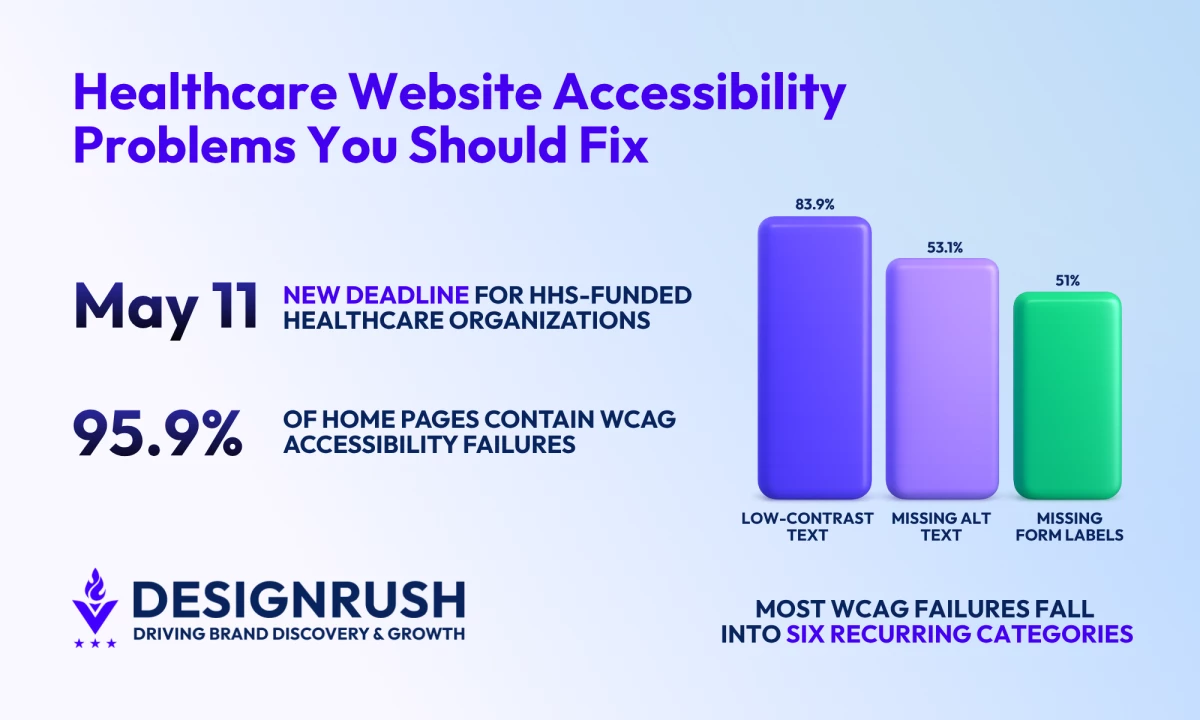
- Healthcare organizations receiving HHS funding now have until May 11, 2027 (15+ employees) or May 10, 2028 (fewer than 15 employees) to meet new Section 504 digital accessibility requirements.
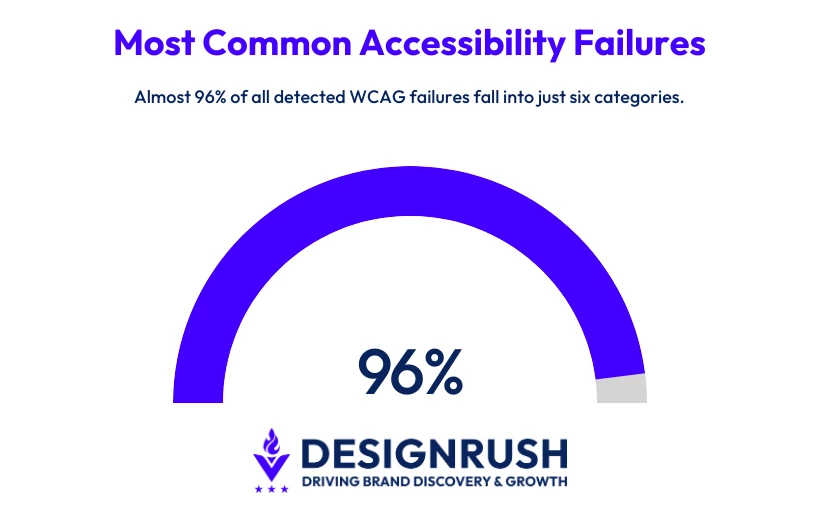
- 95.9% of home pages contain detectable WCAG accessibility failures, and 96% of all identified errors fall into just six recurring categories.
- Low-contrast text remains the most common accessibility issue, affecting 83.9% of home pages, followed by missing alternative text (53.1%) and missing form labels (51%).
What Changed in 2026?
In May 2026, HHS OCR announced a one-year extension of the compliance deadlines for the web content and mobile application accessibility requirements under Section 504 of the Rehabilitation Act.
Organizations receiving HHS funding with 15 or more employees now have until May 11, 2027, to comply, while organizations with fewer than 15 employees have until May 10, 2028.
Healthcare organizations covered by the rule must now comply according to the following timeline:
- Organizations with 15 or more employees: May 11, 2027
- Organizations with fewer than 15 employees: May 10, 2028
The extension gives healthcare organizations additional time to audit digital experiences, address accessibility barriers, and remediate legacy content.
However, this shouldn’t be viewed as a pause on accessibility efforts. Websites, patient portals, mobile apps, forms, PDFs, and third-party tools often require significant review and testing, making early preparation critical.
Important Clarification: This Article Covers the Digital Accessibility Track
The HHS Section 504 rule includes multiple accessibility requirements. This article focuses on the digital accessibility track - websites, mobile apps, patient portals, digital forms, kiosks, and other online services.
Healthcare organizations should also be aware of the medical diagnostic equipment (MDE) requirement.
HHS states that recipients using exam tables and weight scales must have at least one accessible exam table and one accessible weight scale in place by July 8, 2026. This includes equipment used for diagnostic purposes, such as exam tables, weight scales, dental chairs, and radiology equipment.
Because MDE compliance involves physical equipment, procurement, and facility-level planning, organizations should seek separate guidance on that track while using this article to address their digital accessibility obligations.
Does the Healthcare Website Accessibility Rule Apply to You?
For most healthcare organizations, the answer is yes.
The rule applies to facilities, programs, and activities that receive federal financial assistance from HHS. That includes funding and programs such as Medicare, Medicaid, the Children’s Health Insurance Program (CHIP), clinical research grants, and other forms of federal support.
Organizations that may be covered include:
- Hospitals and health systems
- Community health centers and clinics
- Dental and vision providers
- Long-term care facilities
- Mental health and behavioral health organizations
- Healthcare organizations participating in Medicare or Medicaid programs
- Research institutions and other healthcare entities receiving HHS funding
Beyond your public website, the requirements apply to patient portals, mobile apps, appointment scheduling tools, bill-pay platforms, telehealth systems, and other digital services operated directly or through third-party vendors, which may also fall within scope.
Are There Any Exceptions?
Yes, but they’re narrower than you may expect. The rule includes limited exceptions for:
- Archived web content
- Certain preexisting electronic documents
- Content posted independently by third parties
- Individualized password-protected documents
- Preexisting social media posts
However, many commonly used documents and digital resources don’t qualify for these exemptions. For example, forms, applications, and documents that patients use to access healthcare services are generally still expected to meet accessibility requirements.



What Healthcare Website Accessibility Actually Means
Healthcare website accessibility is about making sure that patients can access information, complete tasks, and use digital healthcare services regardless of disability.
Under the HHS rule, covered organizations must ensure their websites and mobile applications comply with WCAG 2.1 Level AA, a widely recognized accessibility standard designed to improve access for people with visual, auditory, motor, and cognitive impairments.
While WCAG includes dozens of technical requirements, most accessibility problems stem from a small number of recurring issues.
According to the 2026 WebAIM Million report, 95.9% of home pages had detectable WCAG failures, and 96% of all detected errors fell into just six categories:
| Common Accessibility Issue | % of Home Pages | Potential Healthcare Impact |
| Low-contrast text | 83.9%* | Patients may struggle to read instructions, appointment details, or health information |
| Missing alternative text | 53.1% | Screen reader users may miss important images and graphics |
| Missing form labels | 51% | Registration, intake, and contact forms become difficult to complete |
| Empty links | 46.3% | Navigation becomes confusing or unusable |
| Empty buttons | 30.6% | Critical actions may be inaccessible |
| Missing document language | 13.5% | Screen readers may interpret content incorrectly |
*For low-contrast text, WCAG 2.1 AA requires a contrast ratio of at least 4.5:1 for normal text and 3:1 for large text. It also requires a minimum contrast ratio of 3:1 for graphics and user interface components, such as form input borders and buttons.
The good news is that organizations don’t need to solve every accessibility issue at once. The highest priority is ensuring patients can successfully complete the digital tasks that matter most.
What To Fix First: The Patient Journeys You Should Pay Attention To
Not every page carries the same level of risk. If resources are limited, start with the digital experiences patients rely on to access care, communicate with providers, and manage their health information.
1. Appointment Scheduling
Scheduling is often the first interaction a patient has with a healthcare organization. Patients should be able to search for providers, select appointment times, and complete booking forms using a keyboard, screen reader, or other assistive technology.
2. Patient Portals
Patient portals often contain test results, medical records, prescription information, and secure messaging tools. Accessibility barriers can prevent patients from accessing critical healthcare information independently.
3. Intake Forms
Digital intake and registration forms are among the most common sources of accessibility issues. Missing labels, unclear instructions, and inaccessible form fields can make it difficult for patients to submit required information.
4. Test Results and Medical Records
Patients should be able to review health information, download documents, and navigate records without encountering issues. This includes PDFs and other downloadable files that remain actively used by patients.
5. Telehealth Access
Virtual healthcare services should be accessible to individuals with hearing, vision, mobility, and cognitive disabilities. Accessibility considerations extend beyond the website itself to the telehealth platform and supporting tools.
6. Mobile Apps and Self-Service Kiosks
Healthcare mobile apps and patient-facing kiosks used for check-in, registration, payments, or accessing services must also provide accessible experiences or equivalent alternatives for individuals with disabilities.
How Real Is the Litigation Risk for Healthcare?
Healthcare organizations operate in an environment where website accessibility lawsuits have become common.
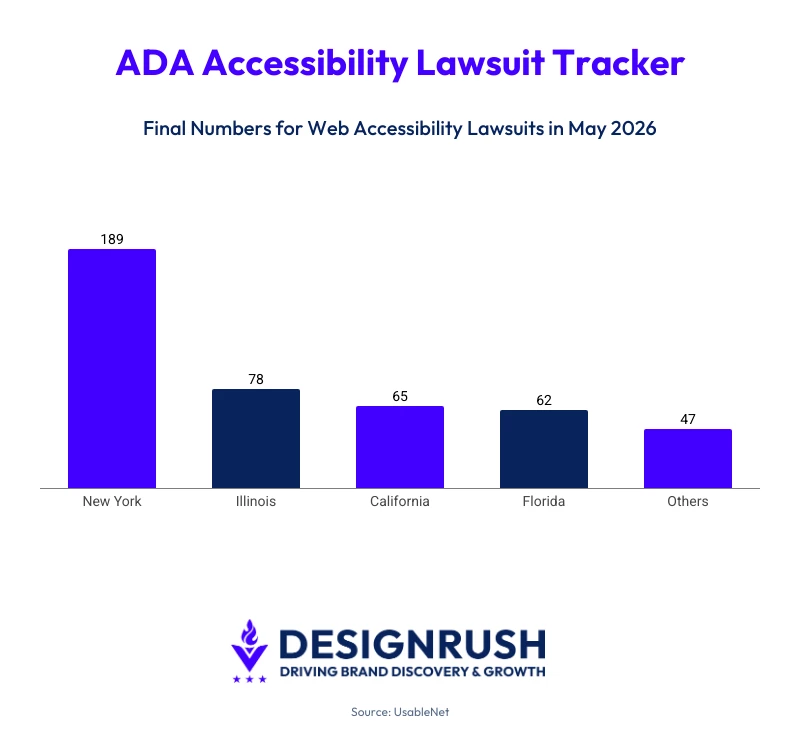
Website accessibility lawsuits have become increasingly common. According to UsableNet, plaintiffs filed 4,187 digital accessibility lawsuits in 2024 alone, and more than 25,000 lawsuits involving digital accessibility complaints have been filed since 2018.
The HHS rule increases scrutiny on healthcare organizations by establishing a clearer digital accessibility framework for recipients of federal financial assistance.
As a result, accessibility issues that may have previously been overlooked could attract greater regulatory and legal attention.
What Happens If You Ignore It?
Potential consequences wouldn’t just include a failed accessibility audit. If you’re found to be out of compliance, you may face:
- Complaints and investigations by HHS’s Office for Civil Rights (OCR)
- Enforcement actions requiring remediation
- Referrals to the U.S. Department of Justice
- Increased exposure to ADA-related lawsuits
- Risks to existing or future government contracts
- Reputational damage and loss of patient trust
If patients cannot schedule appointments, access medical records, complete intake forms, or use virtual health services independently, the result is often higher support costs, frustrated patients, and a poorer overall patient care experience.
The biggest risk is years of accumulated accessibility debt spread across websites, portals, PDFs, mobile apps, and third-party platforms, which becomes far more difficult to address under regulatory pressure.
Why Healthcare Organizations Are Moving Accessibility Earlier in the Design Process
For years, accessibility was often addressed by organizations after launch. Issues would be identified later and fixed as they appeared.
That is much more challenging now when digital experiences span multiple platforms, vendors, and patient touchpoints.
As a result, accessibility is a crucial part of planning, design reviews, procurement decisions, and vendor selection rather than something left until the end of a project.
Many of the barriers organizations discover aren't complex technical failures. They include issues such as low-contrast text, missing form labels, inaccessible PDFs, unlabeled buttons, and other problems that can make it difficult for patients to complete common healthcare tasks independently.
The risks of waiting aren’t theoretical. During Australia’s COVID-19 vaccine rollout, blind and low-vision users reported accessibility barriers in vaccine eligibility and clinic-finder tools, making it difficult to access information about vaccination services independently.
Cases like this show how accessibility issues can affect access to healthcare itself, not just website usability.
Part of the challenge is that accessibility misconceptions still exist within many organizations, particularly when teams are designing and maintaining digital products. Ana Šekerija, Product Owner and Accessibility Initiative Leader at Infinum, shares:
“There’s often a lack of internal education, and a lot of myths around accessibility still persist — like the idea that it’s only for blind users, or that it’s too expensive or time-consuming.”
For healthcare organizations preparing for the 2027 deadline, the focus should be on identifying problems before patients encounter them. Also, accessibility reviews shouldn't stop at testing existing systems.
You should also evaluate accessibility during procurement and vendor selection, and ensure accessibility requirements are reflected in contracts for patient-facing platforms and services.
Healthcare Website Accessibility Checklist
Before the new deadline, healthcare organizations should be able to answer yes to the following questions:
□ Have we audited our website against WCAG 2.1 AA requirements?
□ Have we reviewed patient portals, appointment scheduling tools, and telehealth platforms for accessibility barriers?
□ Have we tested key patient journeys using screen readers and keyboard-only navigation?
□ Have we reviewed PDFs, forms, and downloadable documents?
□ Have we assessed the accessibility of our mobile applications?
□ Have we evaluated third-party vendors and patient-facing platforms for accessibility compliance?
□ Do vendor contracts include accessibility requirements where appropriate?
□ Have we assigned ownership of accessibility efforts to a specific team or stakeholder?
□ Do content creators, designers, and developers understand their accessibility responsibilities?
□ Do we have a process for ongoing accessibility testing and monitoring?
Final Thoughts: Healthcare Website Accessibility
The extension to 2027 gives healthcare organizations more time, but it doesn't reduce the amount of work required to comply.
If you start early, you have an opportunity to address issues systematically and incorporate accessibility into future projects. Those who wait may find themselves trying to remediate multiple systems at once under tighter timelines.
Most importantly, accessibility isn't only about compliance but about ensuring patients can independently access information, services, and care when they need it.
Organizations that identify significant accessibility gaps may also benefit from working with a healthcare web design agency.
Aside from helping meet WCAG requirements, the right partner can improve navigation, patient journeys, form usability, and other digital experiences that influence how patients access and interact with care.

Our team ranks agencies worldwide to help you find a qualified partner. Visit our Agency Directory for the top healthcare website design companies, as well as:
- Best Website Designers NYC
- Top Healthcare SEO Companies
- Top Usability Testing Agencies
- Top Healthcare Website Design Companies
- Top Software Development Companies
FAQs: Website Accessibility in Healthcare
1. Did the healthcare website accessibility deadline get extended?
Yes. In May 2026, HHS OCR announced a one-year extension of the compliance deadlines for its web content and mobile application accessibility requirements under Section 504.
Organizations with 15 or more employees now have until May 11, 2027, to comply, while organizations with fewer than 15 employees have until May 10, 2028.
2. What are the most common accessibility issues on healthcare websites?
Most accessibility issues fall into a handful of recurring categories. According to the 2026 WebAIM Million report, the most common problems include low-contrast text, missing alternative text for images, missing form labels, empty links, empty buttons, and missing document language.
These issues can make it difficult for patients to navigate websites, complete forms, and access healthcare information using assistive technologies.
3. Is our organization responsible if a vendor built our patient portal?
Yes. A healthcare organization is still responsible for patient-facing digital services operated by vendors on its behalf. That includes patient portals, appointment scheduling tools, telehealth platforms, bill-pay systems, and similar third-party services.
Vendor contracts should include accessibility requirements, but contracts alone don’t replace the organization’s responsibility to verify that those tools meet the required standards.
4. What is the new Section 504 deadline?
The current deadline depends on the organization's size. Healthcare organizations receiving HHS funding with 15 or more employees must comply by May 11, 2027.
Those with fewer than 15 employees have until May 10, 2028. The requirements apply to covered websites, mobile apps, and other digital services.
5. What happens if we miss the HHS deadline?
Organizations that fail to comply may face complaints, investigations, enforcement actions, and increased exposure to accessibility-related lawsuits.
Apart from legal and regulatory risks, unresolved accessibility barriers can prevent patients from accessing services, completing forms, scheduling appointments, or managing their healthcare independently.