
Open a few tabs. Open OpenAI. Now visit Anthropic. Then Perplexity while you're at it. After a few, it’s hard not to notice that everyone seems to be using the same ingredients.
Muted colors. Minimalist layouts. Giant typography. Lots of empty space. For companies competing to build the future, they're starting to look surprisingly similar.
That's not necessarily a bad thing. The more interesting question is why it keeps happening.
Why are some of the most well-funded and influential companies in tech gravitating toward the same visual language, and what does that say about the way AI brands want to be perceived?
AI Startup Homepage Design: Key Findings
- The minimalist AI aesthetic isn't accidental. Oversized typography, restrained color palettes, generous whitespace, and messaging centered on trust rather than hype are the standard.
- AI companies are selling confidence as much as capability. Safety policies, deployment options, evaluation frameworks, and reliability claims appear more frequently on homepages.
- Quiet luxury, muted branding, and even desaturated movie color grading point to a wider preference for restraint, and AI companies have embraced it as a way to signal sophistication and trustworthiness.
The Accidental Uniform of AI
There was a time when startups tried to be loud with bright gradients, even mascots and playful illustrations. And of course, clever taglines competing for attention.
Today's biggest AI companies have taken the opposite approach.
Their homepages feel restrained. Even the visuals leave plenty of room to breathe.
It's a style that borrows more from modern art galleries, architect-designed homes, and luxury brands than traditional startup culture. The goal doesn't seem to be standing out at all costs. Instead, it's about projecting intelligence, confidence, and credibility.
Sure, OpenAI doesn't look exactly like Anthropic, and Anthropic doesn't look exactly like Mistral. But when viewed together, they share a surprisingly similar aesthetic.
The similarities become much easier to spot once you see these homepages side by side.
7 AI Startup Homepages: The Shared Design Playbook
After analyzing the homepages of OpenAI, Anthropic, Perplexity, Mistral, Cohere, xAI, and Scale AI, here are the patterns I noticed:
- The Off-White Canvas
- The Grotesque Sans + Quiet Serif Formula
- The Monochrome Palette
- The Research-Paper Tone
| Company | What Stands Out | Overall Vibe | Sameness Risk |
| OpenAI | ChatGPT's interface | Functional, restrained | The brand becomes the tool |
| Anthropic | Research and AI safety | Editorial and research-led | The homepage can feel more institutional than memorable |
| Perplexity | The search interface | Functional and search-led | Utility outweighs brand personality |
| Mistral | Pixel-art icons & bold orange | Technical with playful touches | Visual quirks do not fully break the category mold |
| Cohere | Editorial photography paired with enterprise messaging | Enterprise with a lifestyle polish | The brand blends into B2B AI language |
| xAI | Developer-first product demos & performance metrics | Startup engineering culture scaled into an enterprise platform | The homepage feels built for validation, not distinction |
| Scale AI | Real-world photography | Enterprise AI with a real-world focus | The company feels credible but less visually ownable |
The Off-White Canvas
Once you notice it, you can't unsee it.
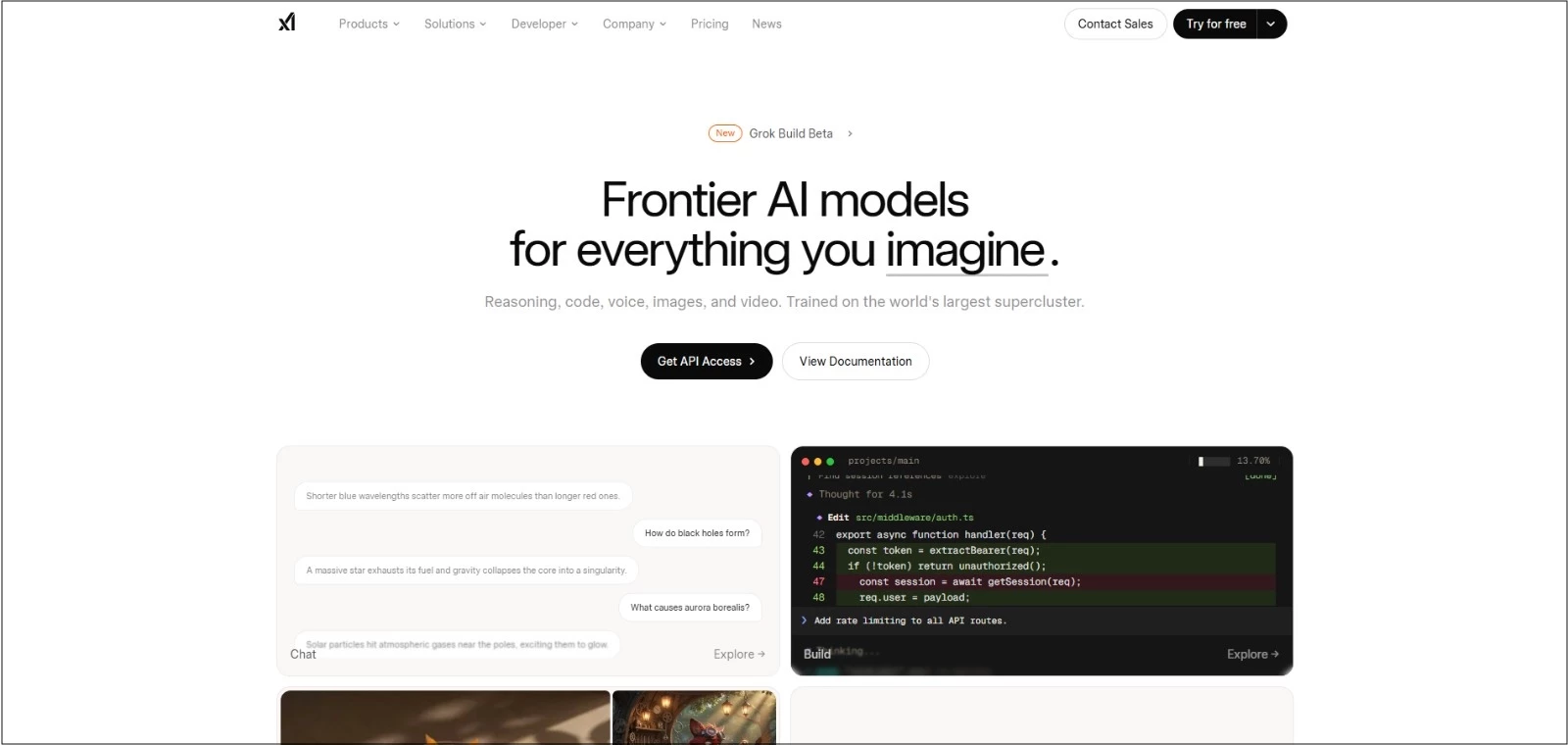
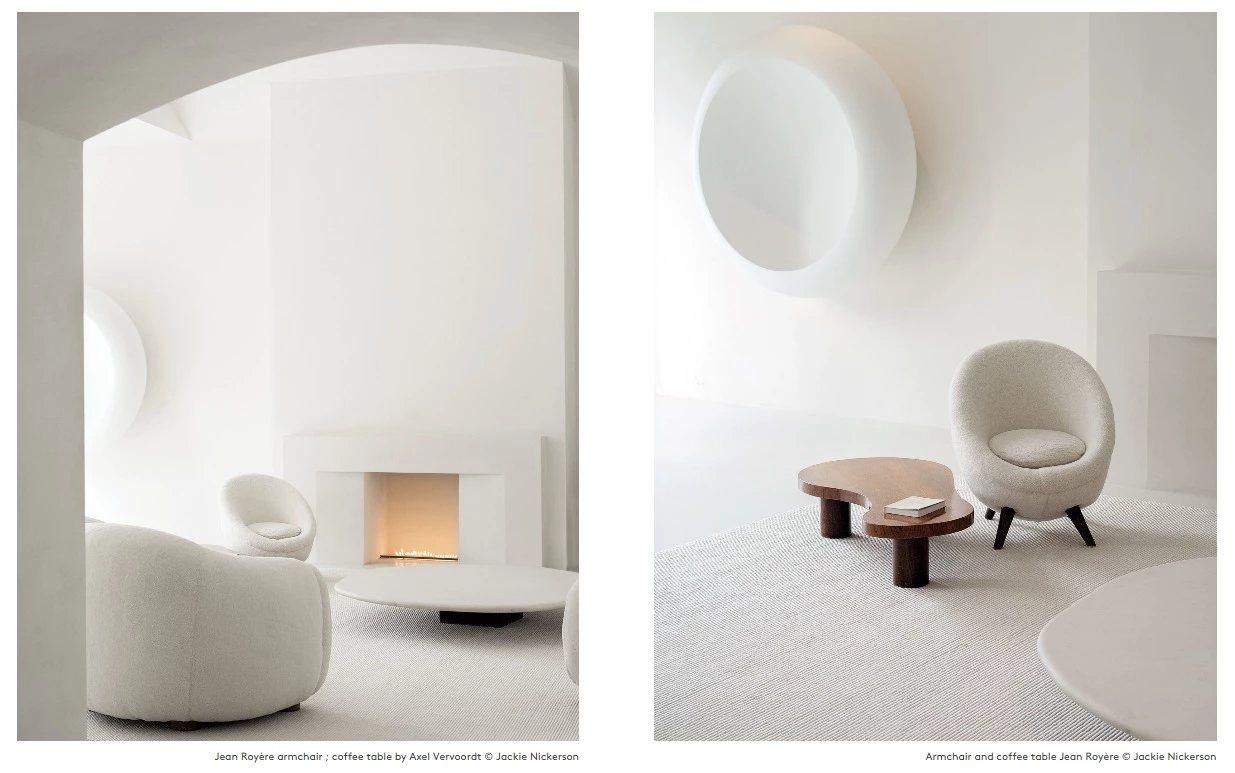
AI companies have gotten really into soft creams, warm grays, and muted off-whites. Anthropic, Cohere, xAI, and Mistral all lean into this approach.
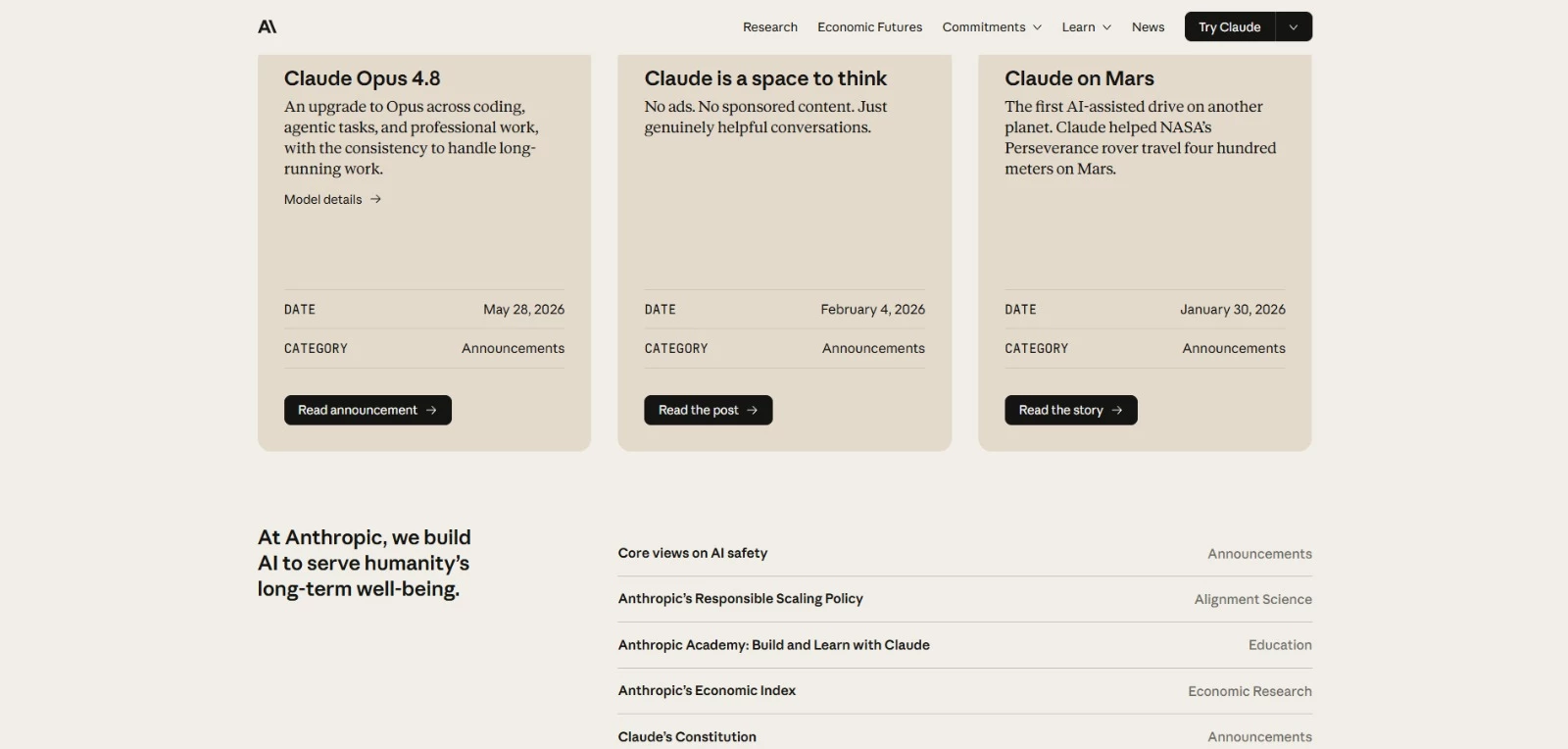
The effect feels calm, more considered, and undeniably premium. It's a style that has a lot in common with architect-designed homes, just like Kim Kardashian's famously minimalist living room and kitchen, with beige as a status symbol and the more and more popular quiet luxury.
The Grotesque Sans + Quiet Serif Formula
Across the companies analyzed, oversized sans-serif headlines dominate the experience. They're bold, direct, and simple. AI seems to have found its typographic uniform.
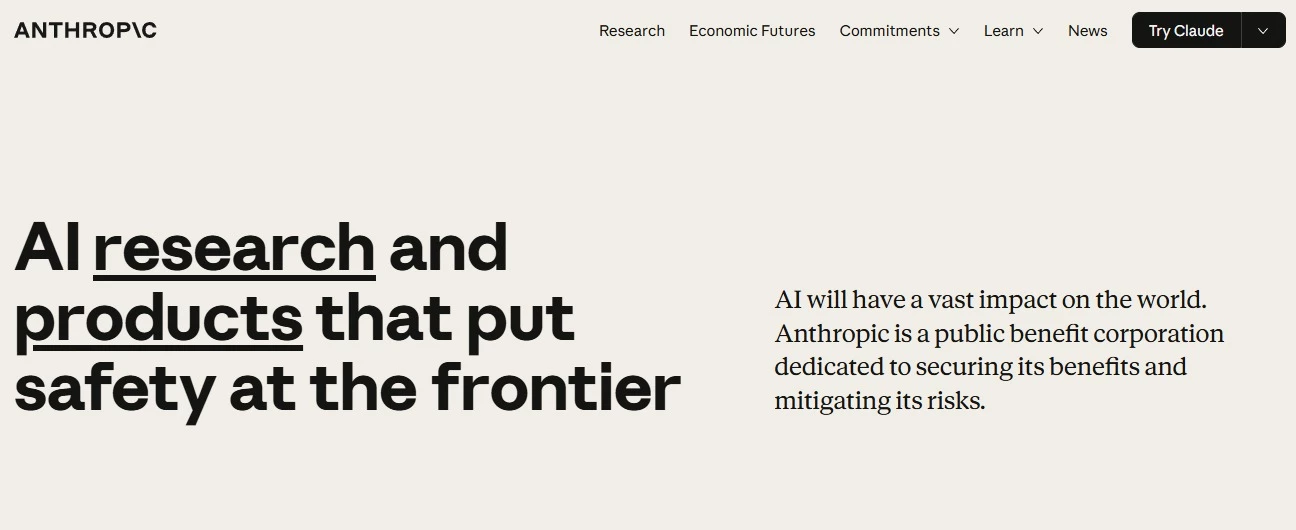
Anthropic demonstrates this most clearly, borrowing cues from publishing and editorial design to reinforce credibility and thoughtfulness. Serif accents introduce warmth and character without competing for attention.
Digital Impressionism
AI is notoriously difficult to visualize. Unlike a car or a lipstick, most people can't immediately grasp what a large language model looks like or how it works.
But still, for companies building cutting-edge technology, surprisingly few attempt to visualize the technology itself.
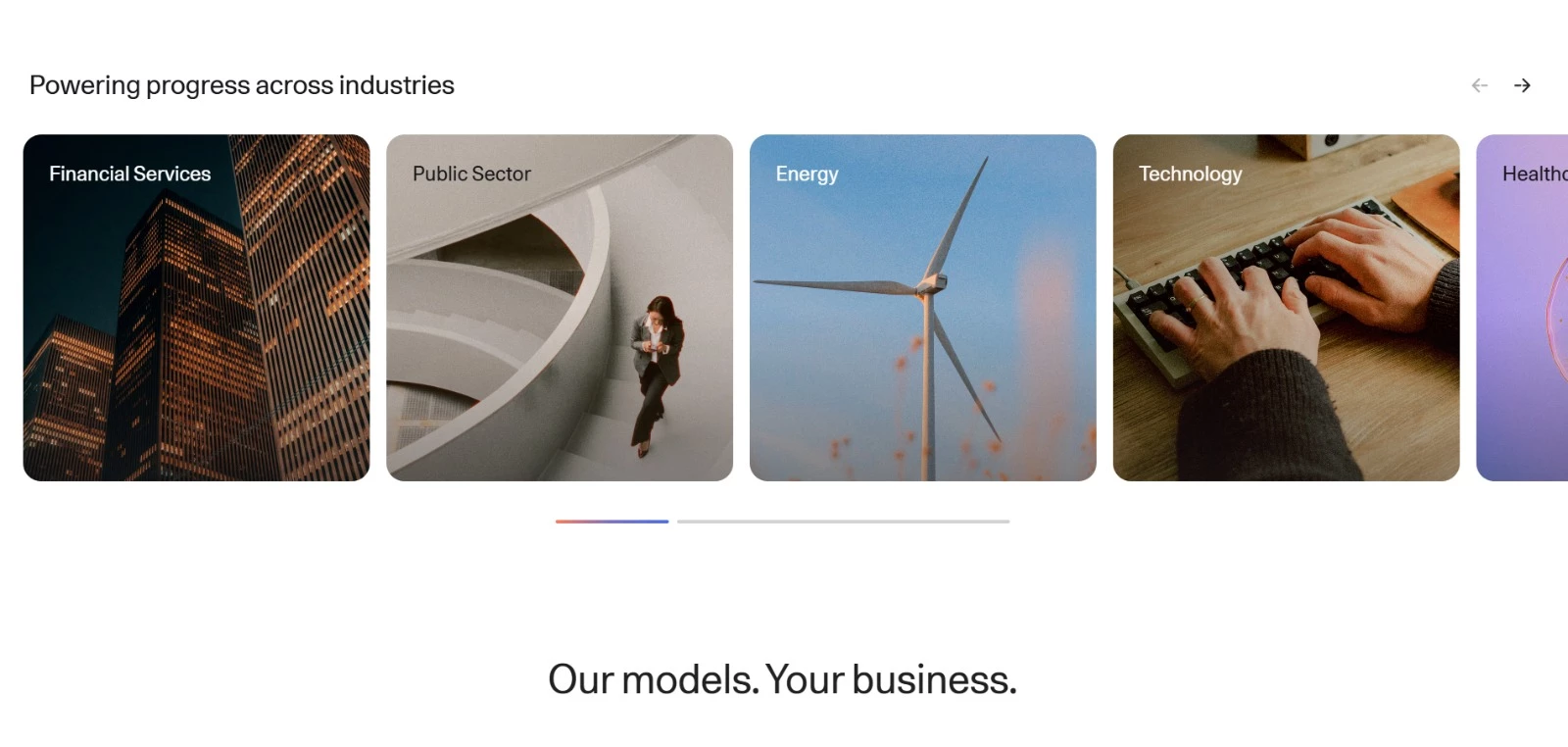
Instead, they lean into suggestion. Blurred gradients, atmospheric textures, and abstract forms. Imagery designed to evoke intelligence, possibility, and movement rather than explain exactly how things work.
It's closer to modern art than traditional product marketing.
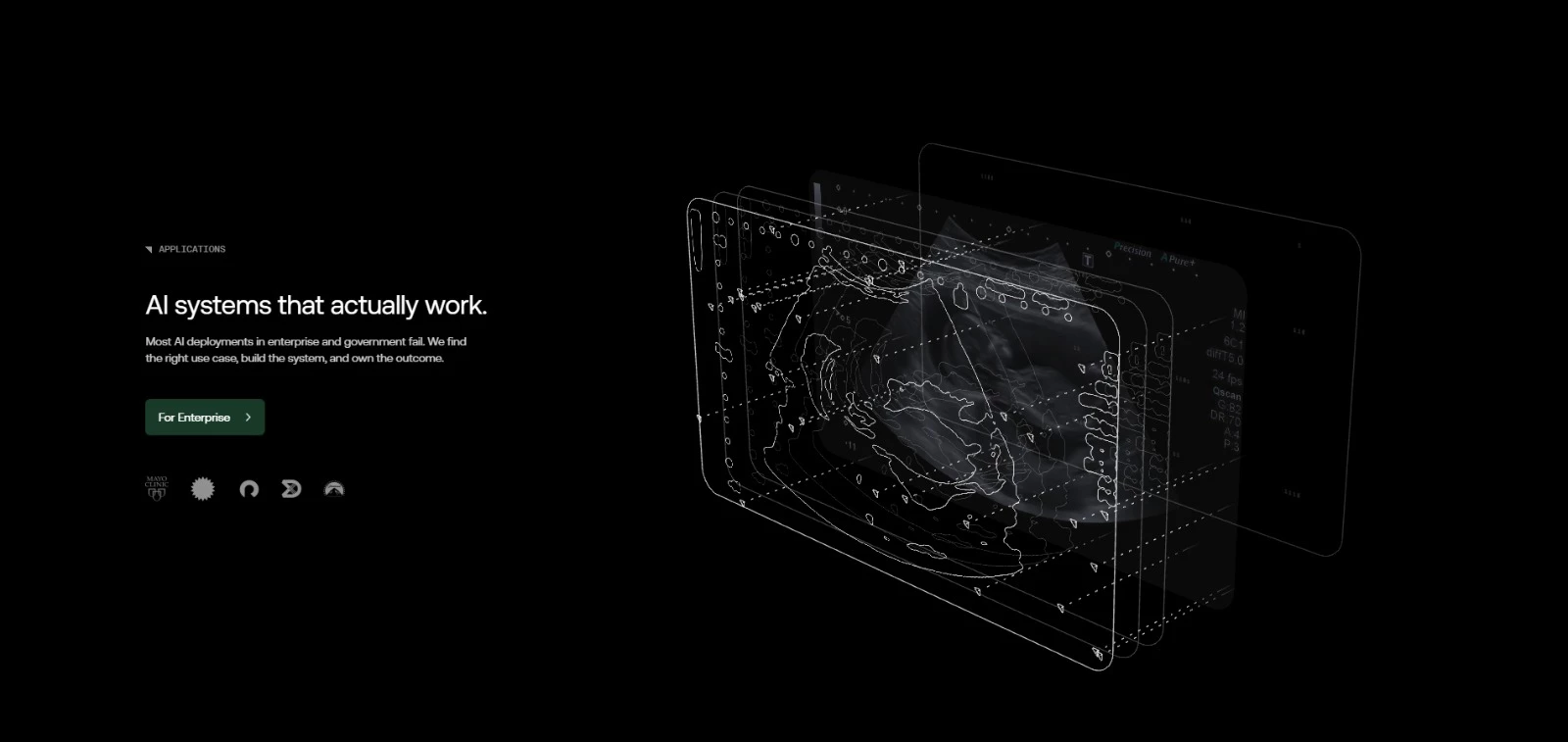
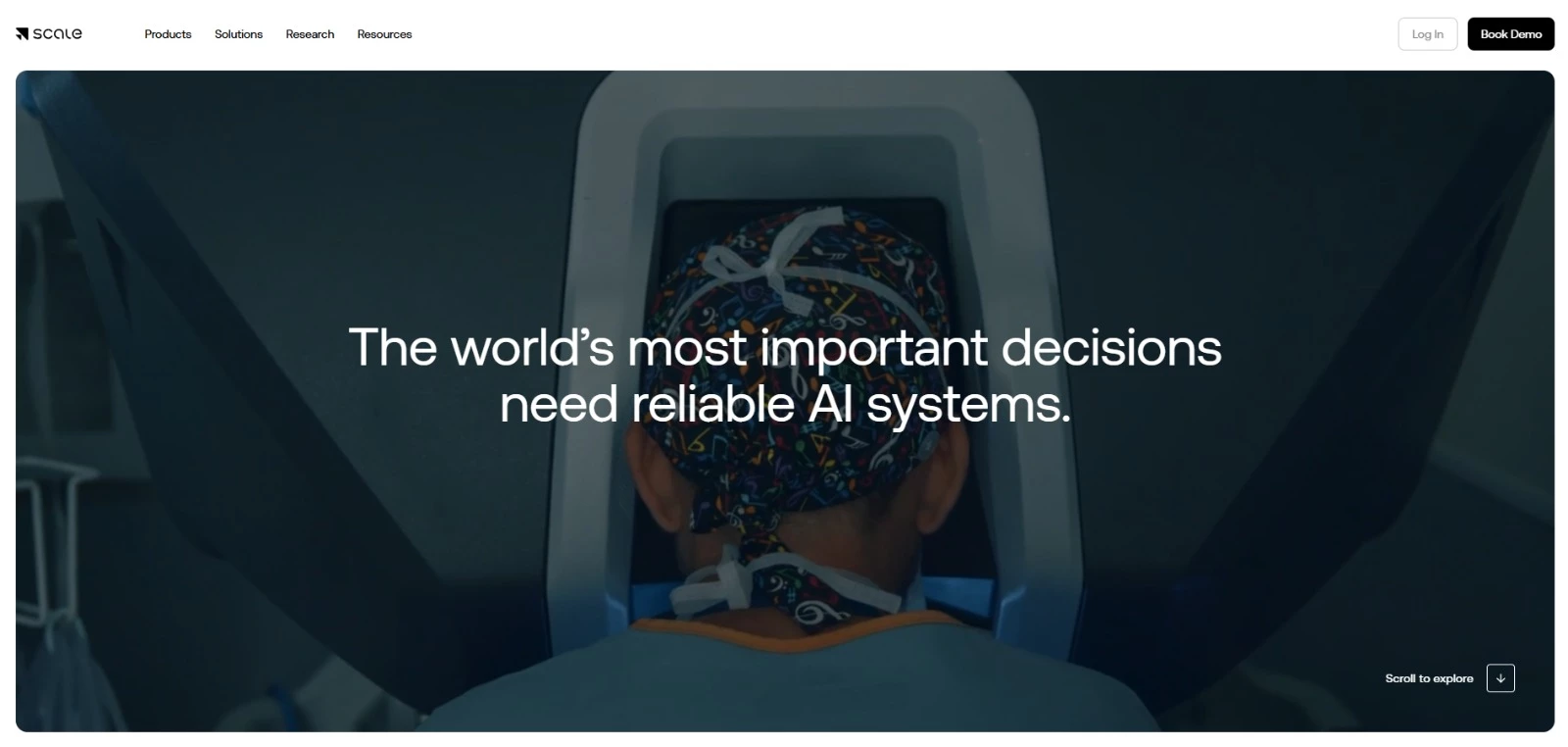
Of course, not everyone follows this playbook blindly. Scale opts for real-world photography, and xAI relies heavily on product demonstrations and developer tools. But for brands without a tangible product to photograph, abstraction is a useful shortcut.
Black, white, cream, and shades of gray dominate many of the homepages I analyzed. These brands build consistency through restraint.
The Monochrome Palette
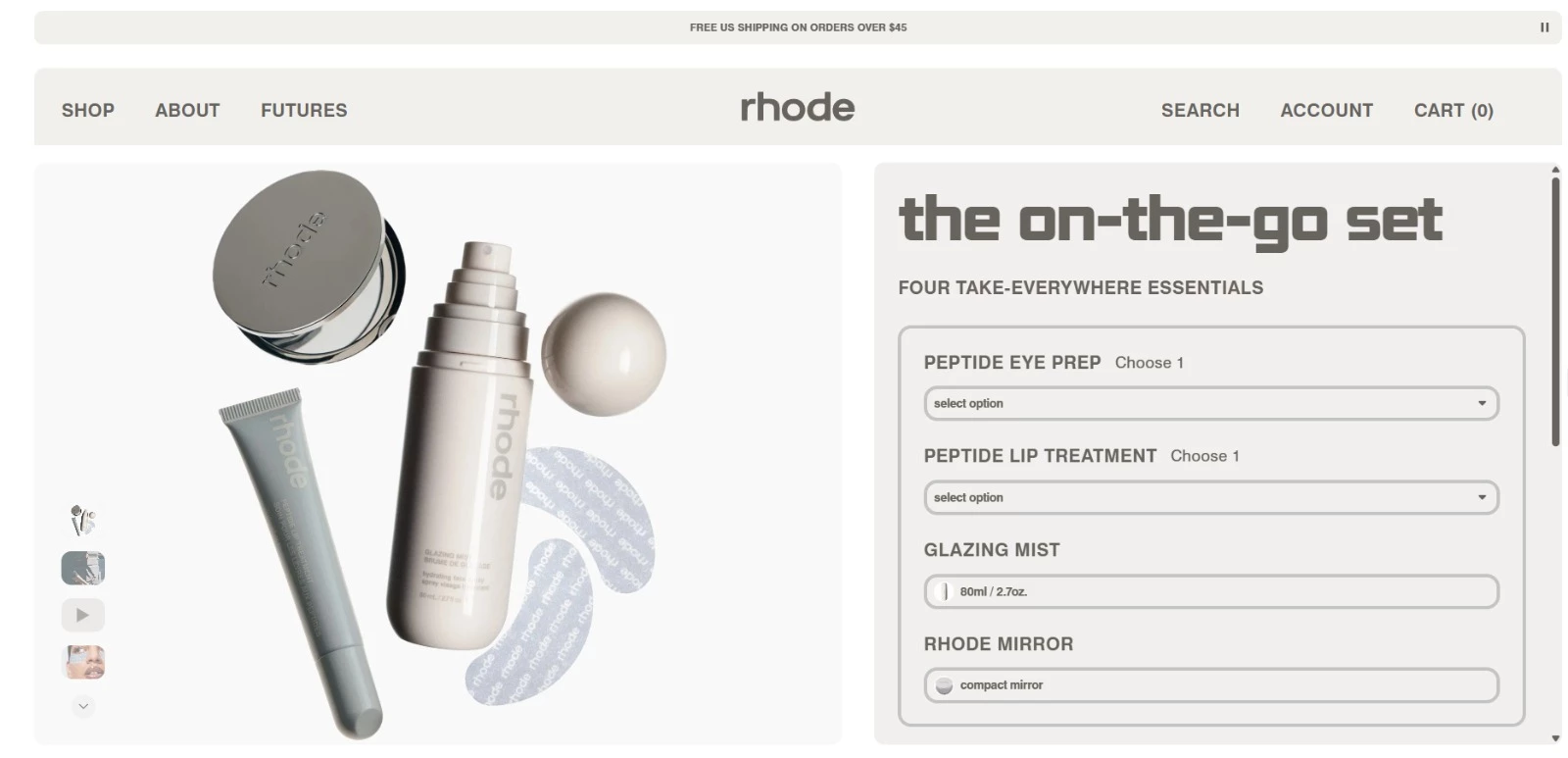
Beauty brands like Rhode have embraced a similar approach. Its muted packaging and tightly controlled color palette helped establish an instantly identifiable aesthetic, proving that simplicity doesn't have to come at the expense of distinctiveness.
When color does appear, it's used intentionally.
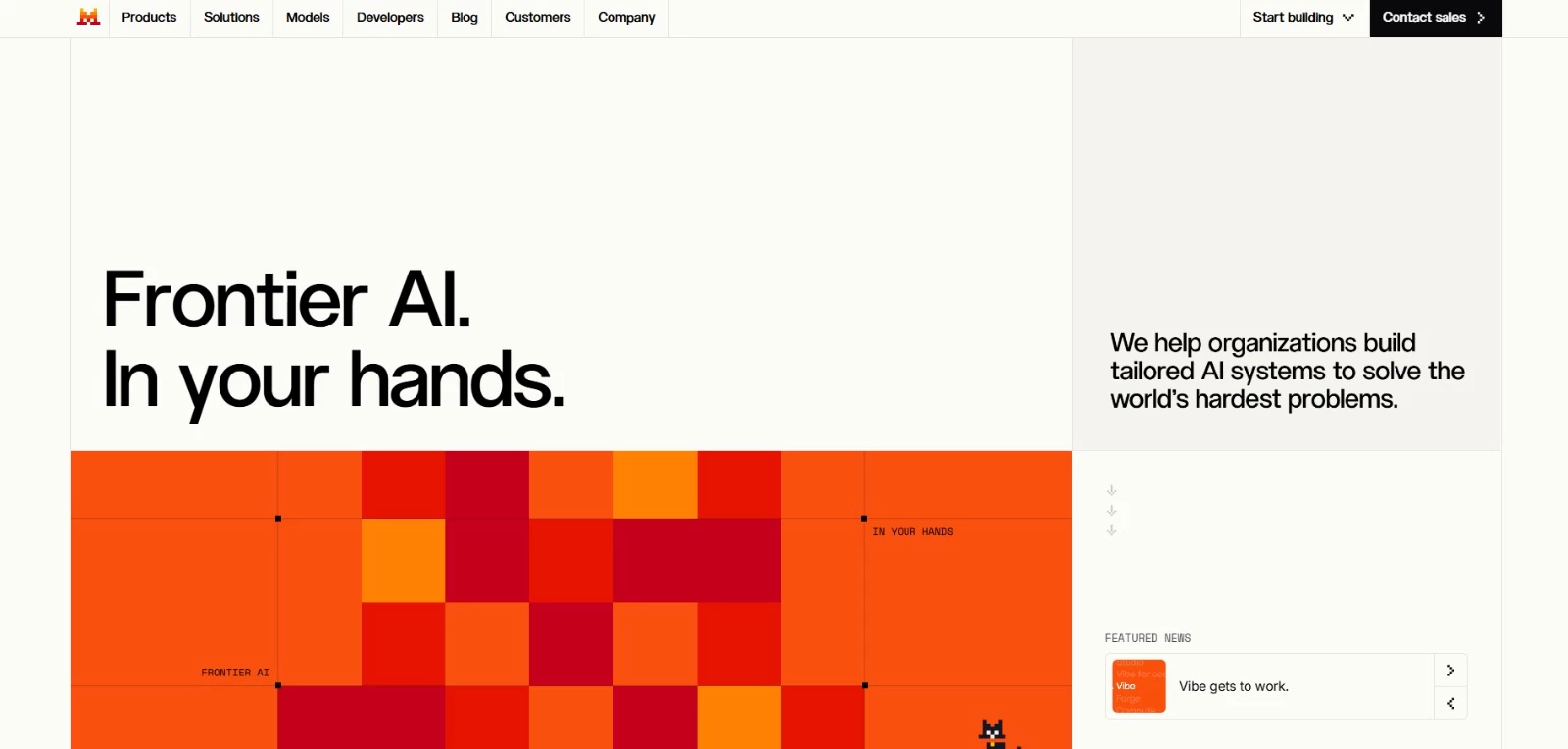
Mistral introduces bursts of orange, Cohere leans into iridescent purples, and Scale AI incorporates deep greens. Because these accents exist within an otherwise monochromatic style, they attract attention without overwhelming the experience.
The Research-Paper Tone
Safety policies. Evaluation frameworks. Deployment options. Reliability claims.
Grand promises take a back seat to specifics in the companies’ brand voice.
Anthropic dedicates significant space to responsible scaling and AI safety. Scale frames its technology around reliability and high-stakes decision-making. Cohere focuses on secure deployment and data ownership. Mistral highlights customization and control.
What's striking is how little time these companies spend trying to convince visitors that AI matters. Instead, they explain how their models work, where they can be used, and the principles guiding their development.
AI no longer needs an introduction. More and more, companies are being asked different questions: Can this be trusted? Can it be controlled? Can it be deployed responsibly?
Why AI Brands Keep Making the Same Choices
Here are a few theories behind the AI startup website design:
- This Isn't AI Slop
- Trust Is the Product
- Why Minimalism Signals Competence
- The Quiet Luxury Effect
- The Great Desaturation
- Avoid Visual Risk Like the Plague
1. This Isn't AI Slop
It's tempting to dismiss the similarities as a lack of imagination. Open enough AI homepages, and it's easy to joke that everyone copied OpenAI's homework.
That explanation only goes so far.
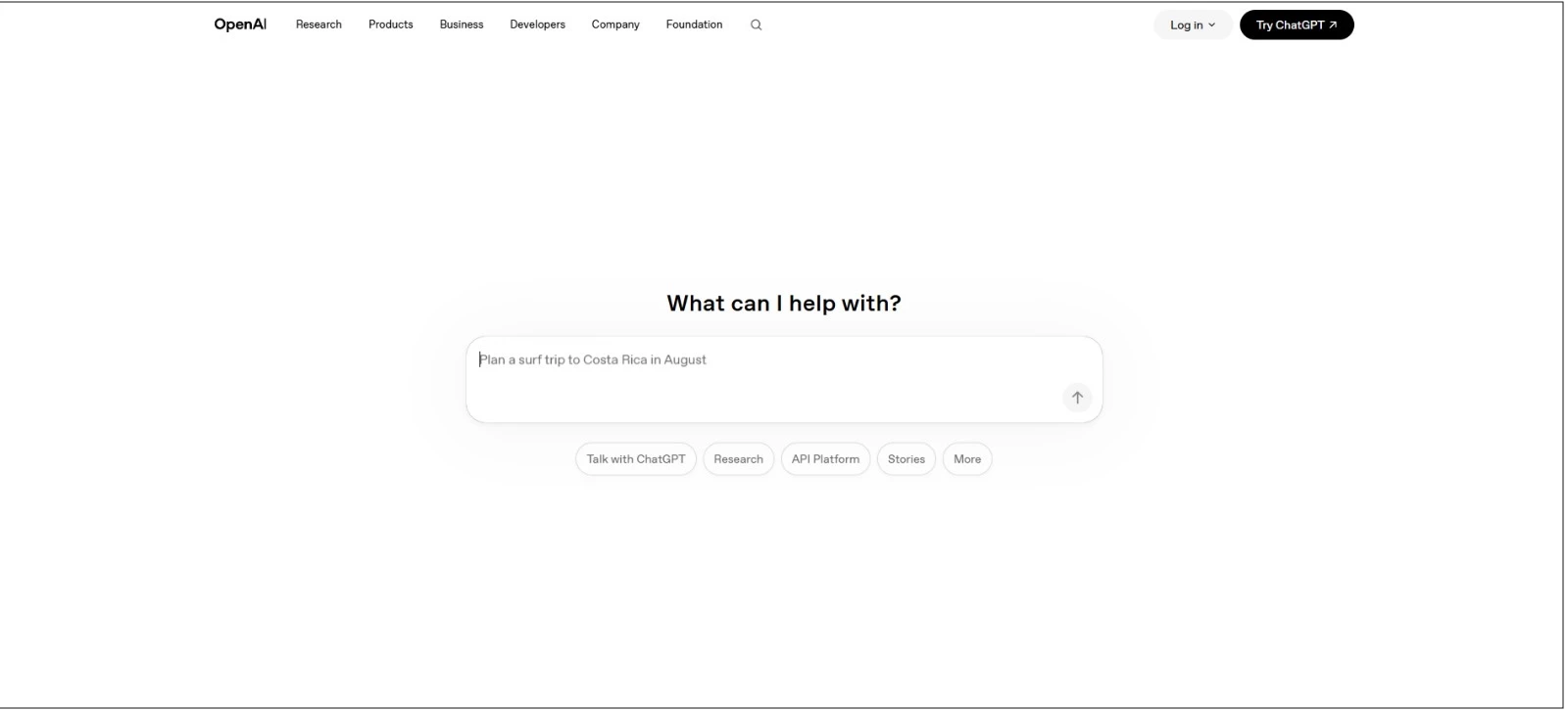
The companies we've looked at are among the best-funded in the world, working with experienced in-house teams and top agencies.
The off-whites, oversized typography, monochrome palettes, and restrained messaging aren't the result of limited resources or rushed execution. They're deliberate choices.
Whether those choices stem from shared influences, industry expectations, or similar business pressures is harder to untangle. But they point to something more interesting than simple imitation.
These companies are all trying to solve the same problem: how to make an emerging technology feel credible, useful, and safe enough for people to adopt.
Once you look at it through that lens, the similarities become easier to understand.
2. Trust Is the Product
Most products ask people to trust that they'll work. AI asks for something more.
Users are being asked to trust the outputs, training methods, data-handling methods, and decisions made by the technology itself.
Under those conditions, visual noise starts to feel risky, so simple and unassuming colors and fonts seem like the safer choice.
3. Why Minimalism Signals Competence
Part of the minimalism craze may stem from cognitive fluency. People tend to perceive information that is easier to process as more credible and trustworthy.
Simple interfaces reduce friction. Clear hierarchies make information easier to navigate. Restraint signals control.
If the underlying technology already feels complicated, the logical step is to make the interface simpler.
The restraint extends to logos, too. Most AI companies rely on simple wordmarks, subtle symbols, or minimal iconography rather than elaborate visual identities.
4. The Quiet Luxury Effect
A decade or more ago, luxury often announced itself loudly, and it was flashy and bold.
Today, status is communicated through understatement.
AI brands appear to be participating in that broader cultural movement of quiet luxury.
“In 2026, the cultural currency of restraint is higher than it has been since the 1990s. This has commercial consequences: brands associated with quiet luxury are growing faster, attracting more aspirational coverage, and performing better with the highest-income segment of the luxury market.”
The aesthetic says we don't need to convince you. Whether that's confidence or conformity depends on who you ask.
5. The Great Desaturation
AI homepages aren't the only places where color seems to have disappeared; just take a look around.
Cars are more likely to come in black, white, silver, or gray than bright reds and blues. Apartment listings are filled with beige interiors, light wood, and matte black finishes.
Fashion brands rotate through creams, taupes, and charcoal. Beauty companies like Rhode have built entire identities around soft neutrals.
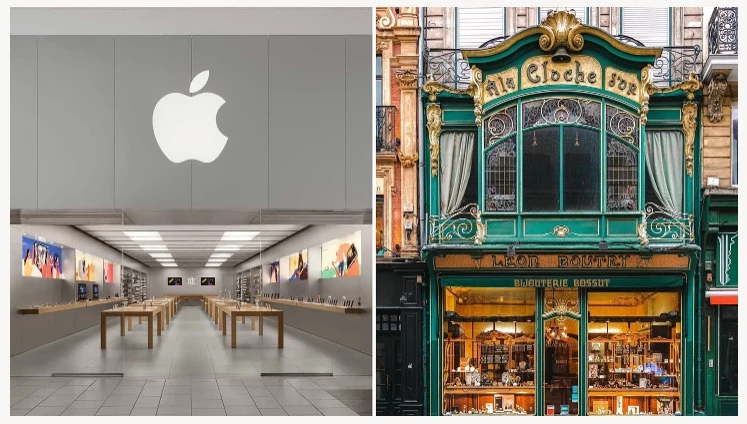
Film fans have noticed it, too. Discussions about the Netflix look frequently point to the muted color grading found in quite a few contemporary productions, especially when compared with the richer palettes of earlier decades of filmmaking.
The same qualities that make neutral palettes appealing, calm, sophistication, and timelessness, translate neatly into AI companies that want us to know they’re built around trust and credibility.
Of course, there is a trade-off. The more industries converge around the same aesthetic cues, the harder it becomes to create something visually distinctive.
6. Avoid Visual Risk Like the Plague
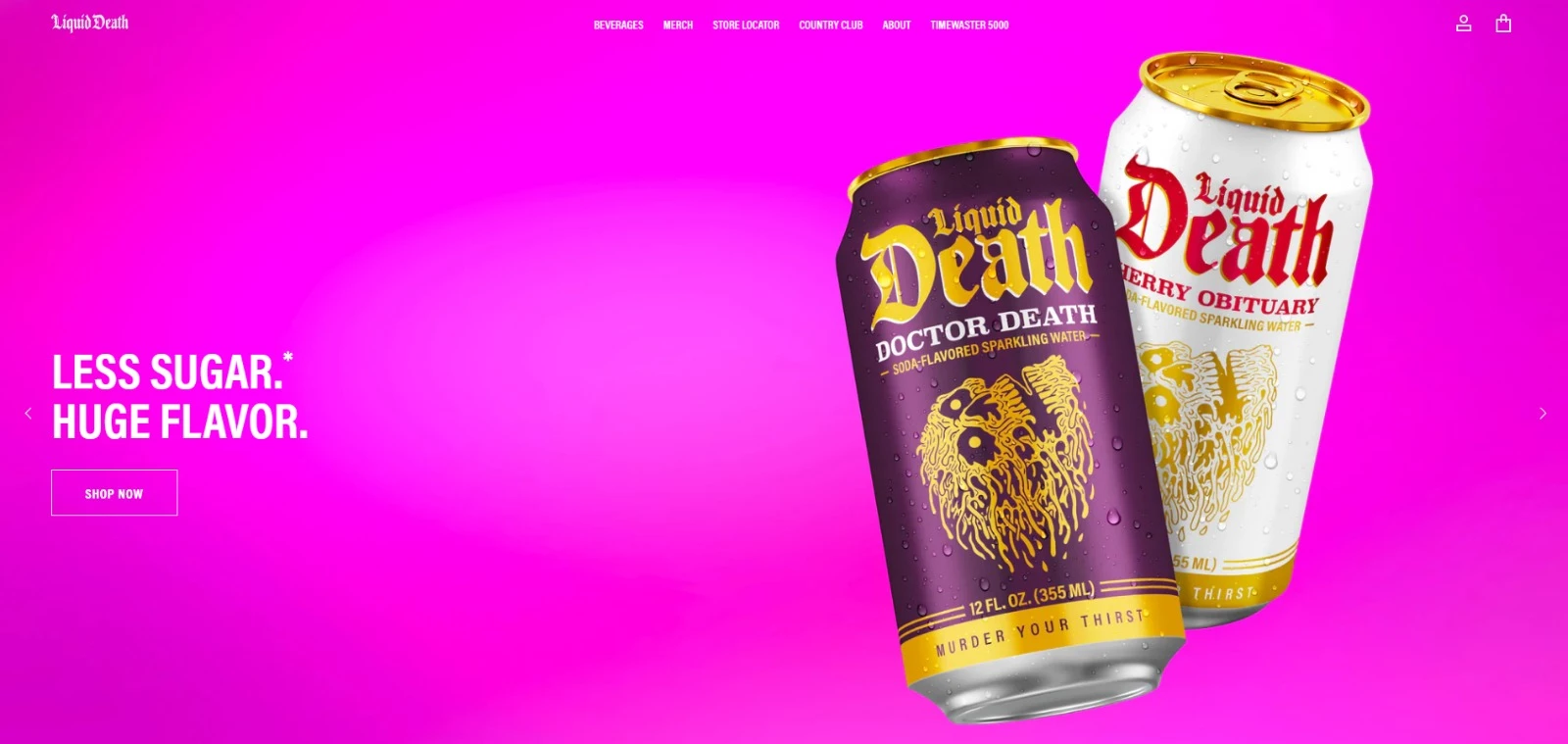
A playful mascot or an intentionally chaotic interface might work for Duolingo or Liquid Death. The same approach would feel out of place on the homepage of a company developing AI systems for hospitals, financial institutions, or governments.
That doesn't mean AI brands can't have personality. Mistral's pixel art and orange accents show there's room for individuality.
But across the category, the strongest visual signals tend to be clarity, consistency, and restraint.
The pattern isn't unique to AI, though. People generally expect different things from a bank than they do from an energy drink brand.
So it’s easier to understand why these AI startups lean toward familiarity rather than experimentation.
Beyond the AI-Lab Aesthetic: What’s the Alternative?
The similarities across AI homepages are understandable. Trust matters; simplicity reduces friction; restraint can signal confidence - we get it.
That doesn't mean every company has to reach for the same solutions.
Some brands may lean further into illustration and storytelling. Others might differentiate through motion, photography, or a unique point of view in their copy. Mistral's pixel art hints at one possibility.
The important bit is to create an identity that feels intentional.
As the industry matures, there may be more room for experimentation. The challenge will perhaps be finding ways to remain distinctive without sacrificing credibility or ease of use.
What's Next for Tech Startup Branding: Final Thoughts
The first generation of AI companies had to establish legitimacy. Their websites needed to reassure users, attract enterprise buyers, and introduce technologies that many people still found unfamiliar.
Future AI brands could inherit a different challenge. As AI is more commonplace now, credibility alone may no longer be enough to stand out.
Industries tend to diversify as they mature. Banks don't all look alike. Beauty brands don't share a single aesthetic. Streaming platforms have formed distinct personalities.
The principles that shaped the AI homepages, clarity, simplicity, and trust, aren't likely to disappear. But the ways companies express them may evolve. We’ll be keeping a close watch.
That's where thoughtful brand and web design become strategic advantages. The best AI brands of the next decade may not be the loudest, but they will likely be the ones that know exactly who they are and how to communicate it.
If you're navigating that balance, partnering with an experienced web design agency can help translate complex technologies into experiences that users understand, trust, and remember.
Our team ranks agencies worldwide to help you find a qualified partner. Visit our Agency Directory for the top web design companies, as well as:
- Best Website Designers NYC
- Top UI/UX Design Agencies
- Top Web Development Companies
- Top Branding Companies
- Top Logo Design Companies
Why Every Billion-Dollar AI Startup Has the Same Homepage: FAQs
1. Why do so many AI company websites look similar?
Most AI companies face the same challenge - introducing complex technologies that people may not yet fully understand or trust.
Minimalist layouts, restrained color palettes, and editorial tones can help communicate credibility, clarity, and competence. While some imitation is inevitable within any industry, the similarities often reflect shared business priorities.
2. Is minimalist design becoming the default for AI brands?
In many cases, yes. The preference for neutral palettes, generous whitespace, and simplified interfaces mirrors trends in luxury branding, architecture, beauty, and even product design.
However, minimalism isn't a requirement, and a bit of personality and experimentation can coexist with clarity and professionalism.
3. Does looking serious actually help AI companies build trust?
Research in psychology suggests that people tend to perceive information that is easier to process as more credible, a phenomenon known as cognitive fluency. Clean interfaces and clear hierarchies can reduce friction and make products feel more approachable.
That said, trust is ultimately earned through product performance, transparency, and responsible practices, not design alone.
4. Will AI brands continue to look the same in the future?
Possibly, but not indefinitely. Emerging industries typically go through periods of visual convergence as companies establish credibility and define shared expectations.
As AI becomes more familiar to consumers and businesses, brands may have greater freedom to experiment with more distinctive visual identities.
5. Can an AI company stand out without abandoning minimalism?
Absolutely. Distinctiveness doesn't always require louder colors or more elaborate visuals.
Mistral's use of pixel art and orange accents, Perplexity's search-first experience, and Scale AI's real-world photography all demonstrate how brands can develop recognizable identities while still maintaining simplicity and trustworthiness.
6. What is quiet luxury in branding, and why are AI companies using it?
Quiet luxury is a design approach built around restraint rather than overt displays of status. Instead of bold logos and attention-grabbing visuals, it uses muted palettes, refined typography, top-quality materials, and subtle details to communicate confidence and sophistication.
AI companies appear to be adopting a similar visual language. Neutral color schemes, minimal logos, generous whitespace, and understated messaging all signal trustworthiness to enterprise buyers, regulators, and other stakeholders who may be skeptical of hype-driven branding.
You might recognize the same sensibility in Rhode's minimalist packaging or Kim Kardashian's famously monochromatic house.