
Pricing decisions can quickly impact profit. Miss competitor moves and margins can narrow before you respond.
The best price tracking tools help eCommerce retailers and brands monitor competitor prices, promotions, stock, and marketplace activity, then turn those signals into alerts or automated pricing decisions.
The 10 platforms here cover straightforward SMB monitoring, enterprise price intelligence, and automated pricing.
Best Price Tracking Tools: Key Findings
- The right tool depends on the task: Price2Spy and Pricefy for straightforward monitoring, Bright Data and Minderest for broader intelligence, Omnia and PriceShape for rule-based repricing, and Competera for enterprise optimization.
- Product matching, market coverage, and update speed matter more than the length of the feature list. Test these using variants, bundles, promotions, and marketplace sellers. .
- Introduce automated repricing only after setting clear margin floors, stock rules, approval steps, and rollback options.
How To Choose the Best Price Tracking Tool for Your Business?
Pricing has become one of the fastest-moving competitive battlegrounds in eCommerce with retailers updating prices hourly, daily, or even every few minutes depending on market demand and competitor activity.
When evaluating platforms you should focus on five practical criteria:
- Business goal: Are you monitoring competitors, automating pricing decisions, or building long-term pricing strategy?
- Data accuracy: Refresh frequency and product matching accuracy matter more than feature lists.
- Market visibility: Strong tools track promotions, stock availability, and marketplace positioning.
- Automation level: Decide whether you need alerts, recommendations, or fully automated repricing.
- Integration fit: Pricing data should connect directly with your eCommerce platform, analytics tools, and operational workflows.
The financial impact of getting pricing right is significant. McKinsey estimates that a 1% price increase normally raises operating profit by 6% to 14%, while a 5% price cut needs about 21% more volume to break even.
The tools below represent the strongest options across different pricing maturity levels, starting from simple monitoring for growing stores to enterprise platforms built for strategic pricing decisions.
You can also compare emerging pricing technology at global eCommerce events, where vendors demonstrate new monitoring and automation capabilities.
What Type of Price Tracking Tool Do You Need?
Competitor price tracking software generally falls into four categories, although many platforms span more than one. Identify the immediate problem to avoid paying for analysis or automation your team isn’t ready to use.
| Tool type | What it does | Best for | Examples |
| Price monitoring | Tracks competitor prices, promotions, and stock | Teams replacing manual checks | Price2Spy, Pricefy |
| Price intelligence | Adds historical, assortment, reseller, and market analysis | Brands and multichannel retailers | Bright Data, Minderest, Intelligence Node, ShopGrok |
| Dynamic repricing | Changes prices using predefined rules and guardrails | Stores competing in fast-moving categories | Omnia, Prisync, PriceShape, Pricefy Pro |
| Price optimization | Models pricing outcomes using costs, demand, sales, and market data | Enterprise pricing teams | Competera |
Monitoring is usually the starting point. Price intelligence software, repricing, and optimization become more useful once you’ve verified the data and set clear margin, stock, and approval rules.
1. Bright Data
Choose Bright Data if your pricing decisions are tied to strategy, assortment planning, or retail media spend.
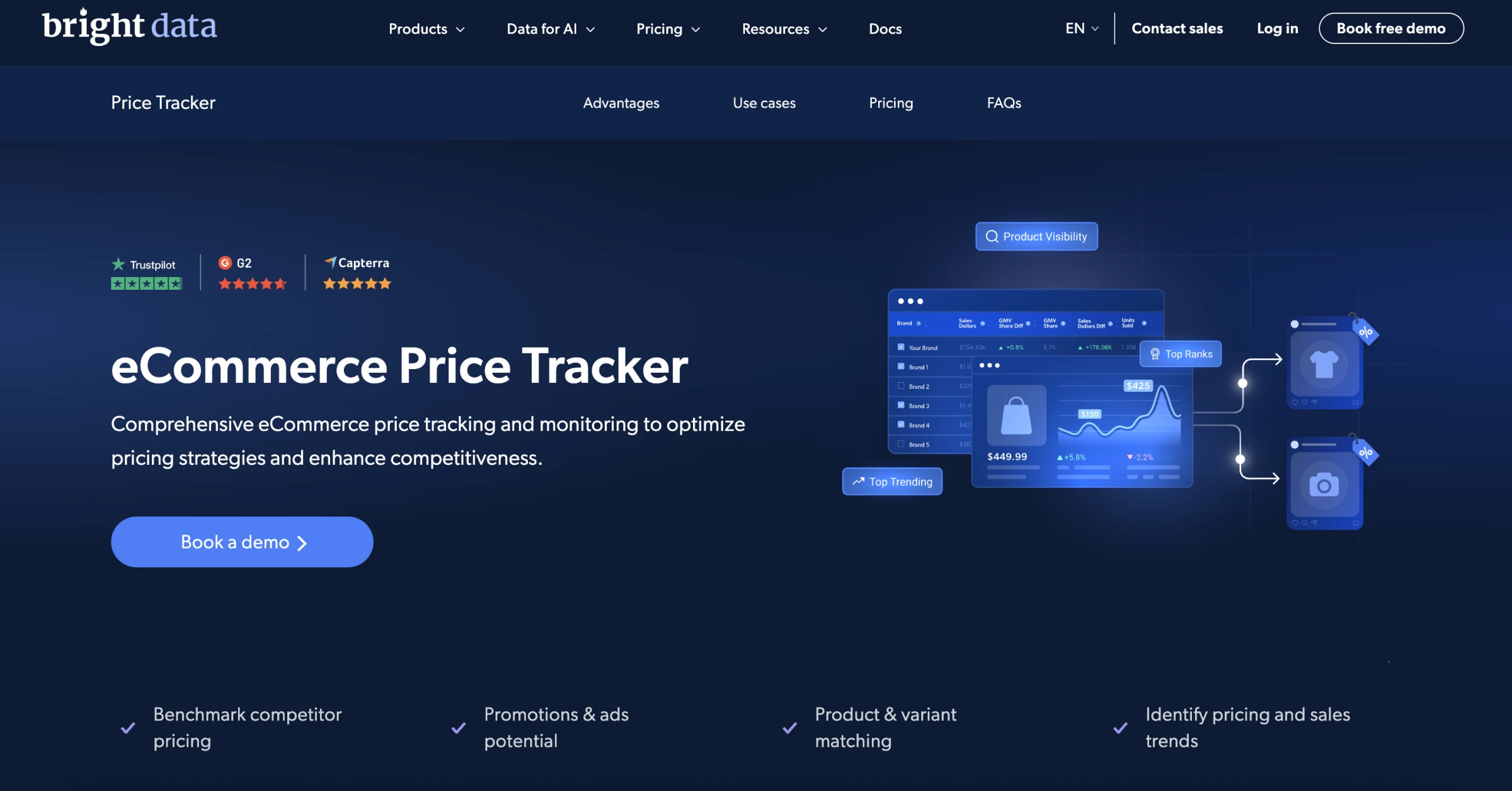
Bright Data’s Price Tracker combines real-time competitor price monitoring with comprehensive eCommerce competitive intelligence.
It covers competitor pricing, promotional activity, product matching, and trend signals, all powered by Bright Data’s AI and large-scale data infrastructure.
It also offers MAP (Minimum Advertised Price) violation monitoring and cross-device, geo-specific price capture, allowing you to see prices exactly as real users do across regions and device types.
Instead of showing isolated price changes, Bright Data helps you answer bigger questions:
- Are competitors discounting aggressively?
- Which sellers are undercutting marketplace pricing?
- Where are promotions shifting demand?
The platform continuously collects structured retail data across marketplaces and stores, turning raw market activity into pricing signals your company can act on.
Price Tracker is part of Bright Data’s broader Bright Insights suite, a complete eCommerce intelligence stack that includes tracking for pricing, promotions, visibility, and rankings, along with market share insights and sales estimation.
Pricing: Starting from $250/month (enterprise intelligence tier)
Key Features:
- Real-time monitoring of competitor prices and promotions across marketplaces
- GDPR-ready and ISO 27001-certified data collection infrastructure
- Tariff-related price volatility tracking to understand external cost impacts
- Retail media ROI optimization by linking ad spend to search rank and shelf visibility
- Conversational AI assistant to query and explore your data in natural language
- SKU/product variant matching so like-for-like comparisons are accurate
- Trend and market share insights to spot shifts early
- Dashboards and alerts to operationalize pricing decisions



2. Price2Spy
Choose Price2Spy if you’re an SMB moving from manual price checks to structured monitoring.
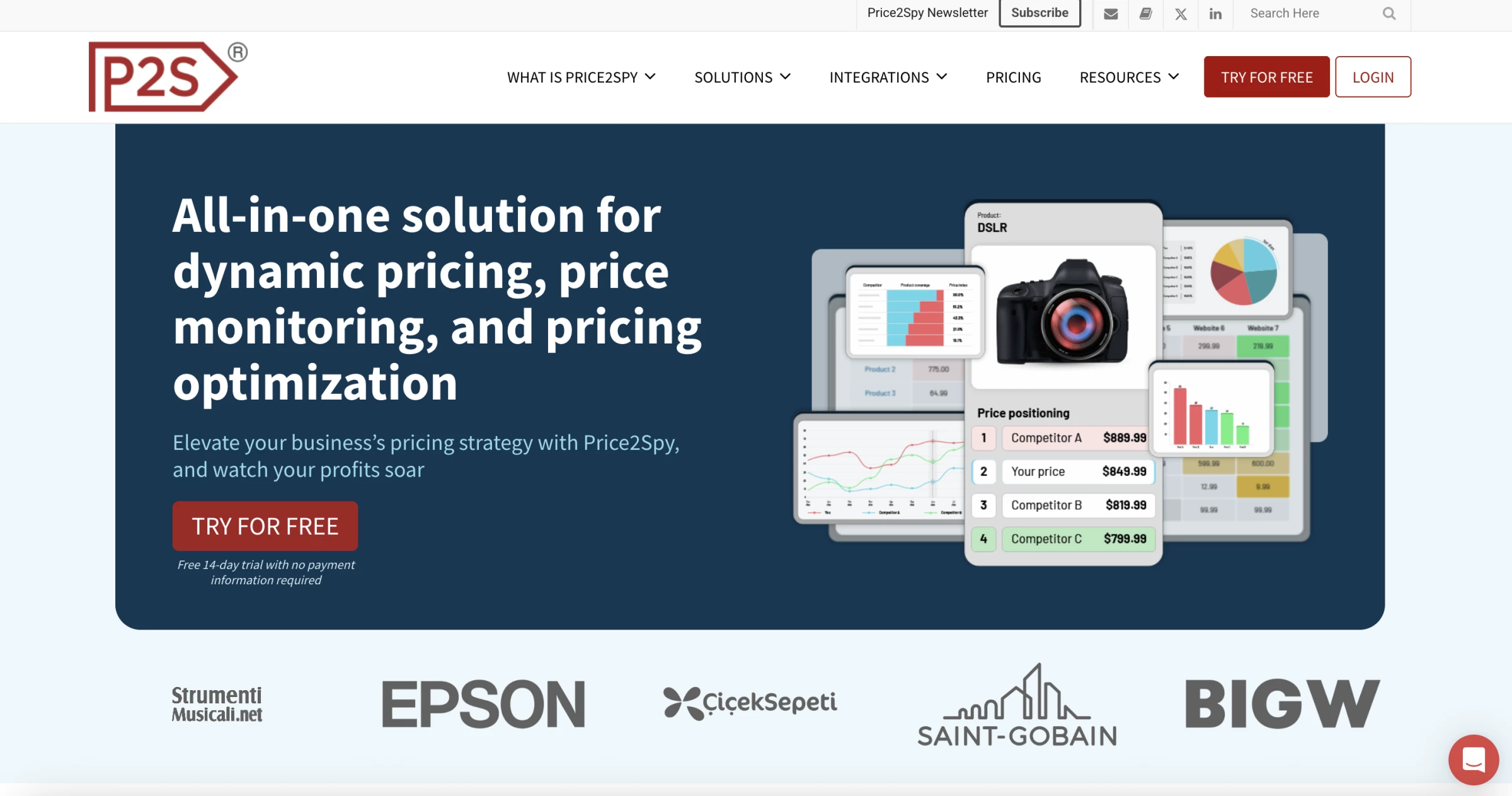
Price2Spy is all about competitor monitoring, price-change alerts, historical reporting, and optional repricing. It suits SMBs replacing manual website checks and spreadsheets.
It’s especially useful if your team currently checks competitor websites manually or relies on spreadsheets.
You upload products, connect competitors, and the system tells you:
- Who changed prices,
- When it happened,
- and How far you are from market pricing.
It keeps a straightforward focus on competitor monitoring, price-change alerts, historical reporting, and optional repricing.
Pricing: 14-day free trial available; paid plans priced on request
Key Features:
- Daily price monitoring with automated alerts
- Price change history and analytics dashboard
- Optional dynamic (re)pricing module
- Marketplace and MAP price monitoring
3. Minderest
Choose Minderest when you need answers to why performance changes, not only what price competitors set.
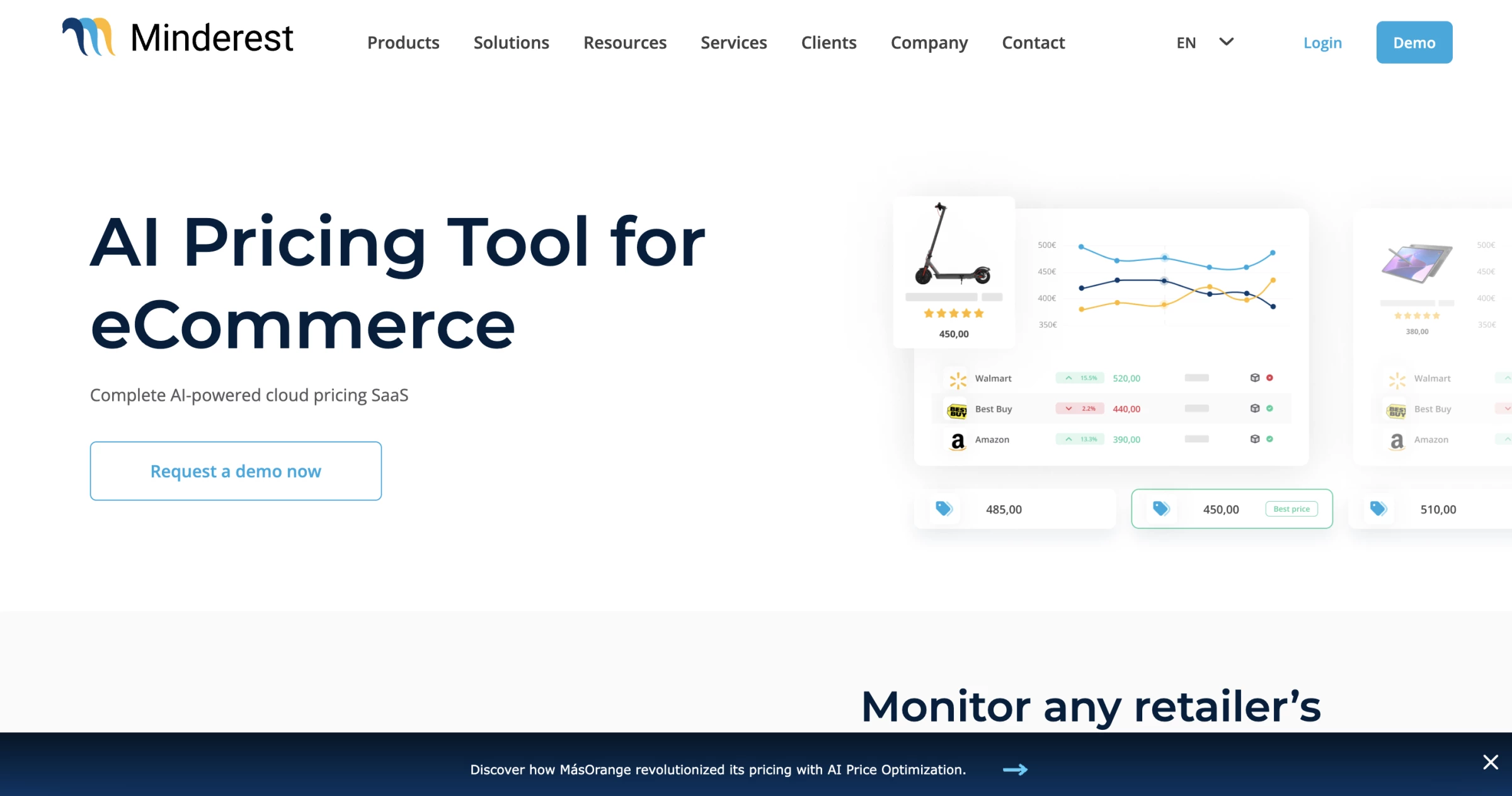
Minderest delivers AI-enhanced market and competitive intelligence that goes beyond basic price tracking:
- Prices
- Promotions
- Availability
- Catalog changes across marketplaces and comparison engines
This makes it valuable for brand manufacturers and multi-channel retailers that need visibility into how products actually compete online.
Pricing: Custom
Key Features:
- Price, promotion, and stock monitoring
- Marketplace and comparison engine tracking
- Automated data collection
- Competitive assortment analysis
4. Intelligence Node
Choose Intelligence Node if you’re managing large assortments where pricing consistency matters as much as competitiveness.
Intelligence Node’s price tracking platform blends price tracking with broader competitive and market visibility.
Large retailers struggle because pricing data lives everywhere: marketplaces, regional teams, reseller networks. Intelligence Node consolidates this into a single view of competitive pricing behavior over time.
It’s built to help enterprise price tracking and revenue teams understand competitor price movements, spot patterns and trends in real time, and feed those insights into pricing governance decisions.
You can use it to identify trends such as:
- Sustained competitor discounting
- Pricing gaps across regions
- Category-level market shifts
Pricing: Custom
Key Features:
- Real-time competitor price monitoring
- Market trend analysis
- Centralized price tracking dashboards
- Omnichannel visibility
5. Omnia
Choose Omnia when your pricing team wants automation instead of dashboards.
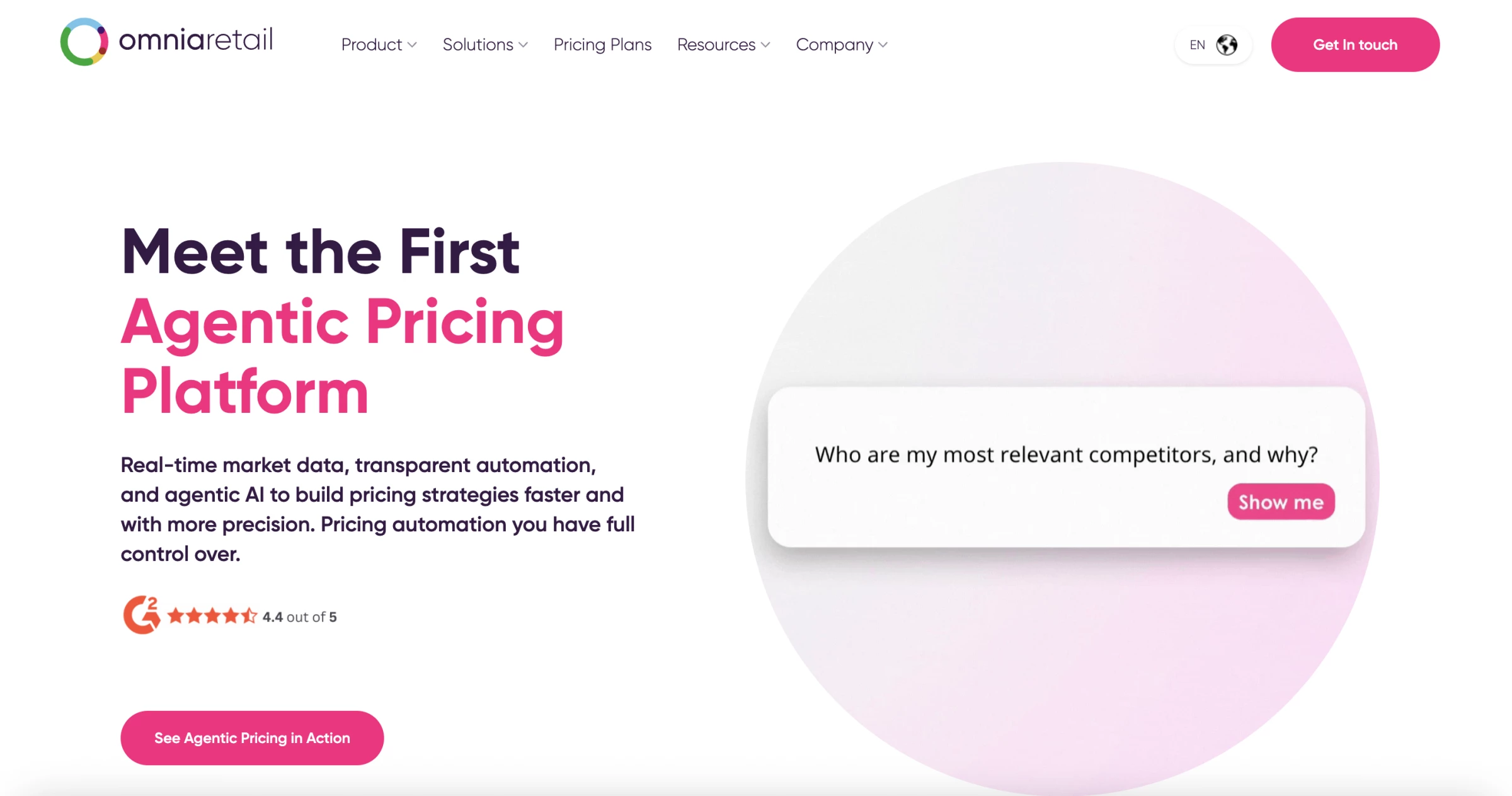
Omnia Retail combines price monitoring with strategy automation and rule-based dynamic pricing software, giving teams a way to set rules that automatically adjust prices in response to competitor moves or market shifts.
Example:
- Match competitor if margin allows.
- Stay premium if demand is strong.
- Avoid race-to-the-bottom pricing.
This cuts manual work and applies consistent pricing rules across the catalog.
Pricing: Starting at ~$462/month
Key Features:
- Real-time competitor monitoring
- Rule-based dynamic pricing
- Automated price updates
- Multi-channel pricing control
6. Competera
Choose Competera if you’re a large omnichannel retailer managing thousands of SKUs and margin pressure.
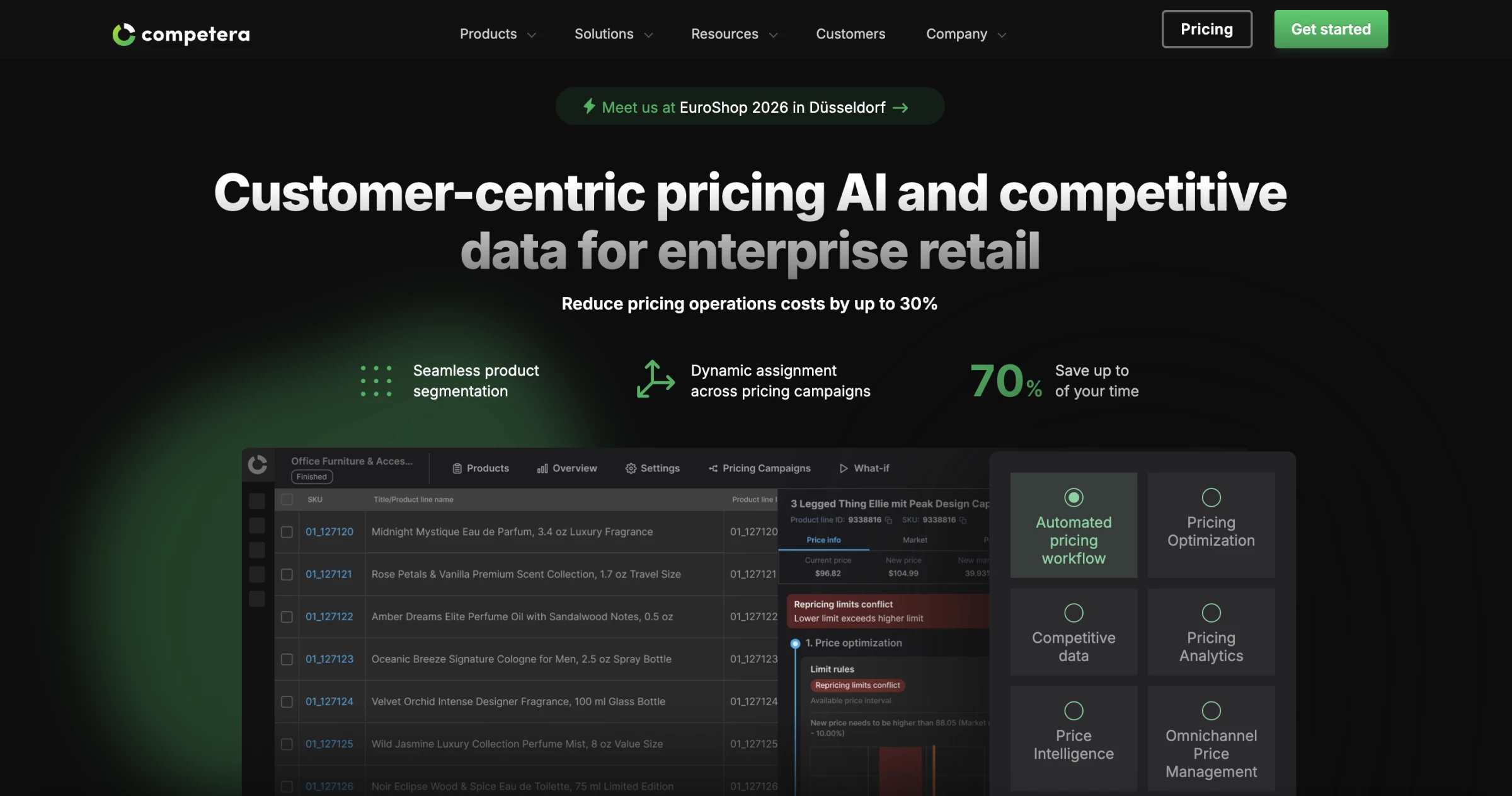
Competera pairs price monitoring with explainable AI simulations, scenario testing, and collaborative pricing workflows.
Instead of reacting to competitors, the platform models pricing outcomes before changes go live. Your team can simulate scenarios like:
- What happens if we raise prices 3%?
- Which products should lead promotions?
- How will margin vs. volume shift?
It’s essentially a pricing strategy engine supported by AI modeling.
Pricing: Custom
Key Features:
- AI pricing simulations
- Scenario testing and forecasting
- Centralized pricing workflows
- Strategy dashboards
7. Prisync
Choose Prisync if you are a scaling eCommerce brand moving beyond manual monitoring.
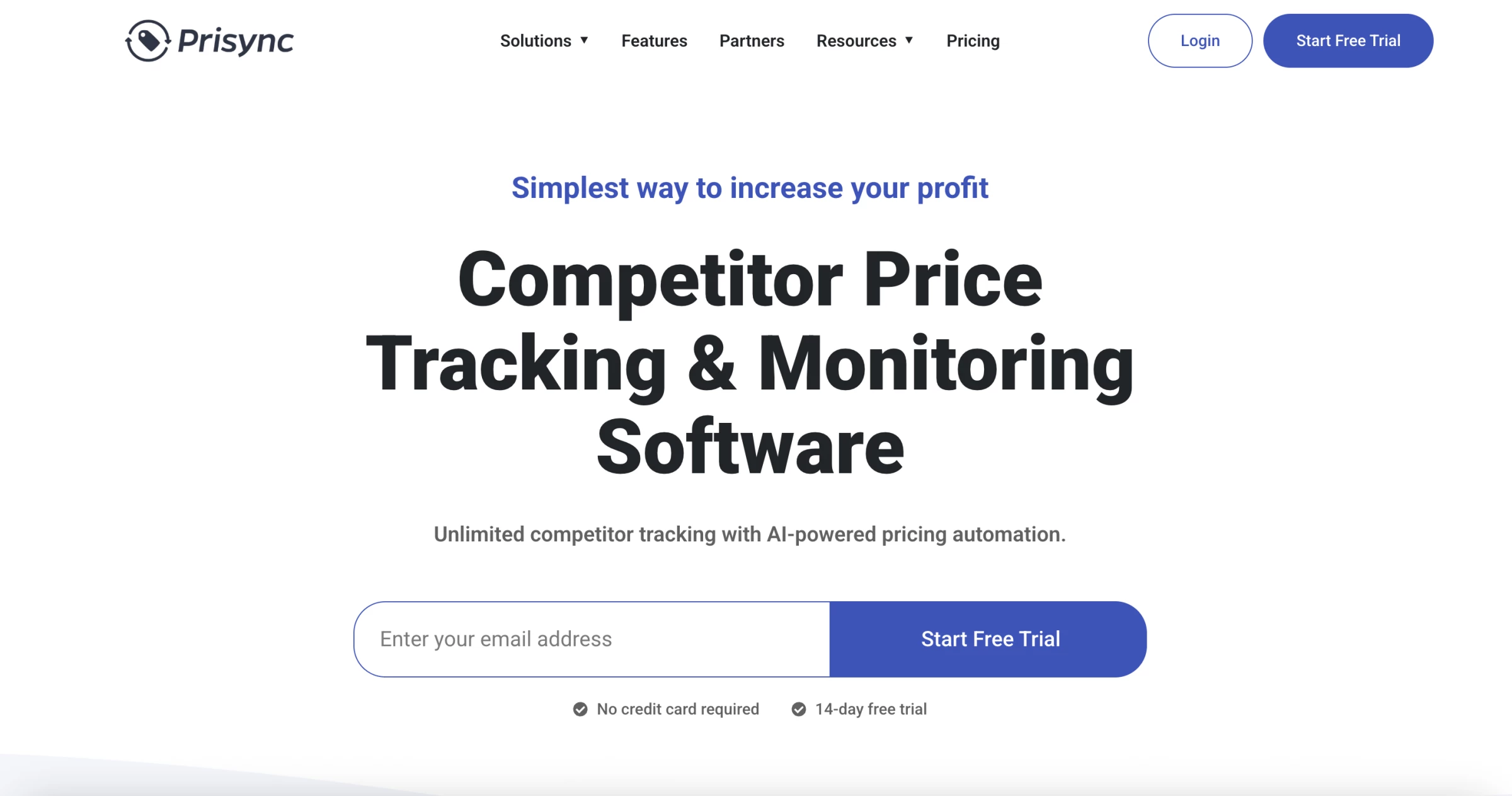
Prisync is designed for teams that want competitor monitoring and rule-based pricing without an enterprise setup.
It automatically finds competitor listings, tracks prices and stock availability, and allows teams to create pricing rules without needing analysts or data engineers.
If your team wants to stay competitive without hiring a dedicated pricing department, Prisync delivers that middle ground.
Pricing: 14-day free trial available; paid plans from $99/month
Key Features:
- Automated competitor price and stock tracking
- Dashboard for channel pricing analysis
- Basic dynamic pricing and rule-based adjustments
- MAP price monitoring
8. ShopGrok
Choose ShopGrok if your company is building a data-driven pricing function.
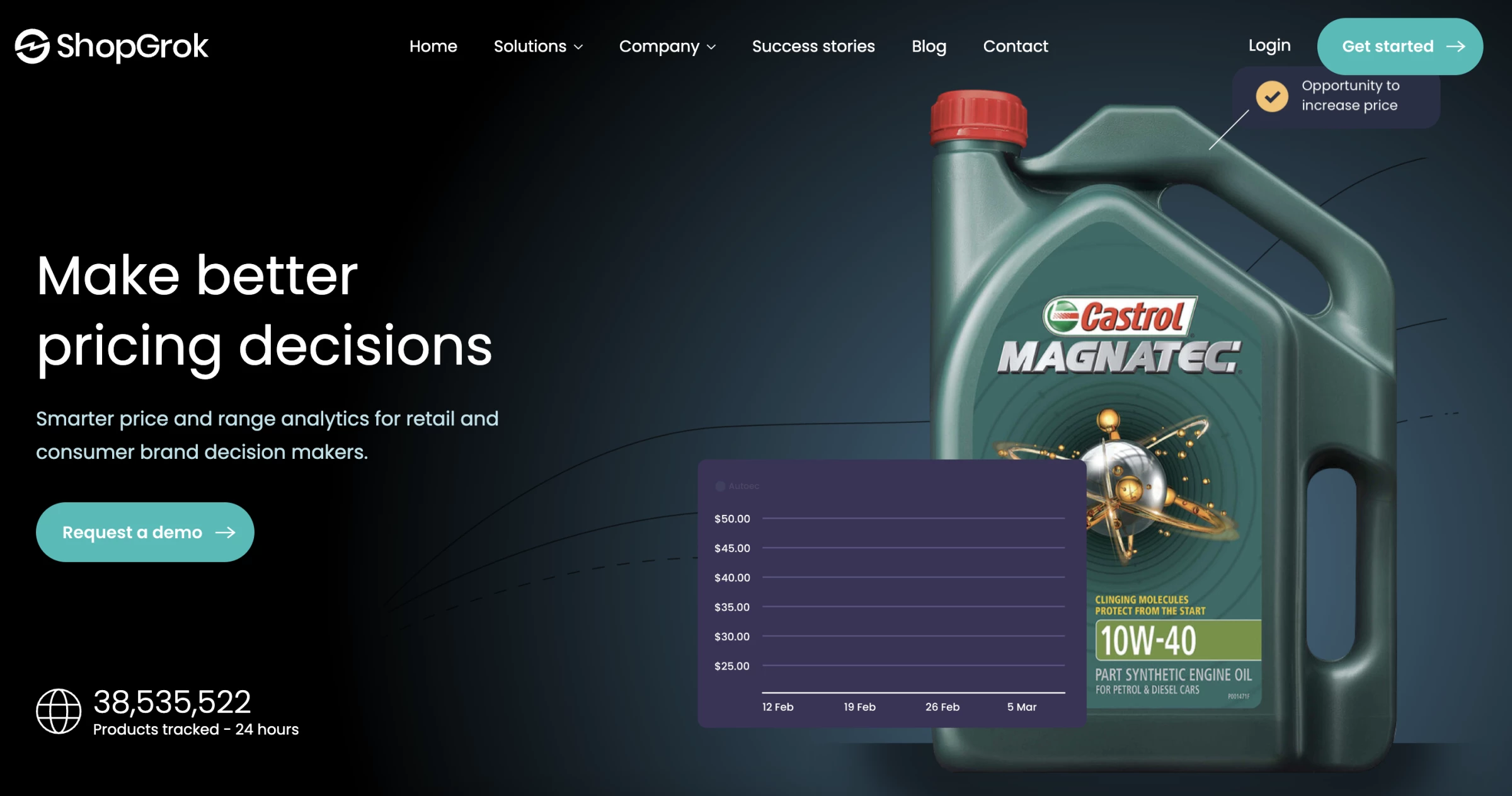
ShopGrok combines competitor price monitoring with historical analysis, price-index benchmarking, customizable reports, and rule-based pricing automation.
Instead of focusing only on alerts, it helps teams understand:
- Margin impact
- Pricing performance
- Forecasting opportunities
Companies choosing ShopGrok usually already track prices but want deeper insight into profitability and pricing effectiveness.
Pricing: Custom
Key Features:
- Real-time price and promotion monitoring
- Historical trend and price-index analysis
- Rule-based pricing automation
- Custom reports and API data access
9. PriceShape
Choose PriceShape if you’re prioritizing profitability over aggressive discounting.
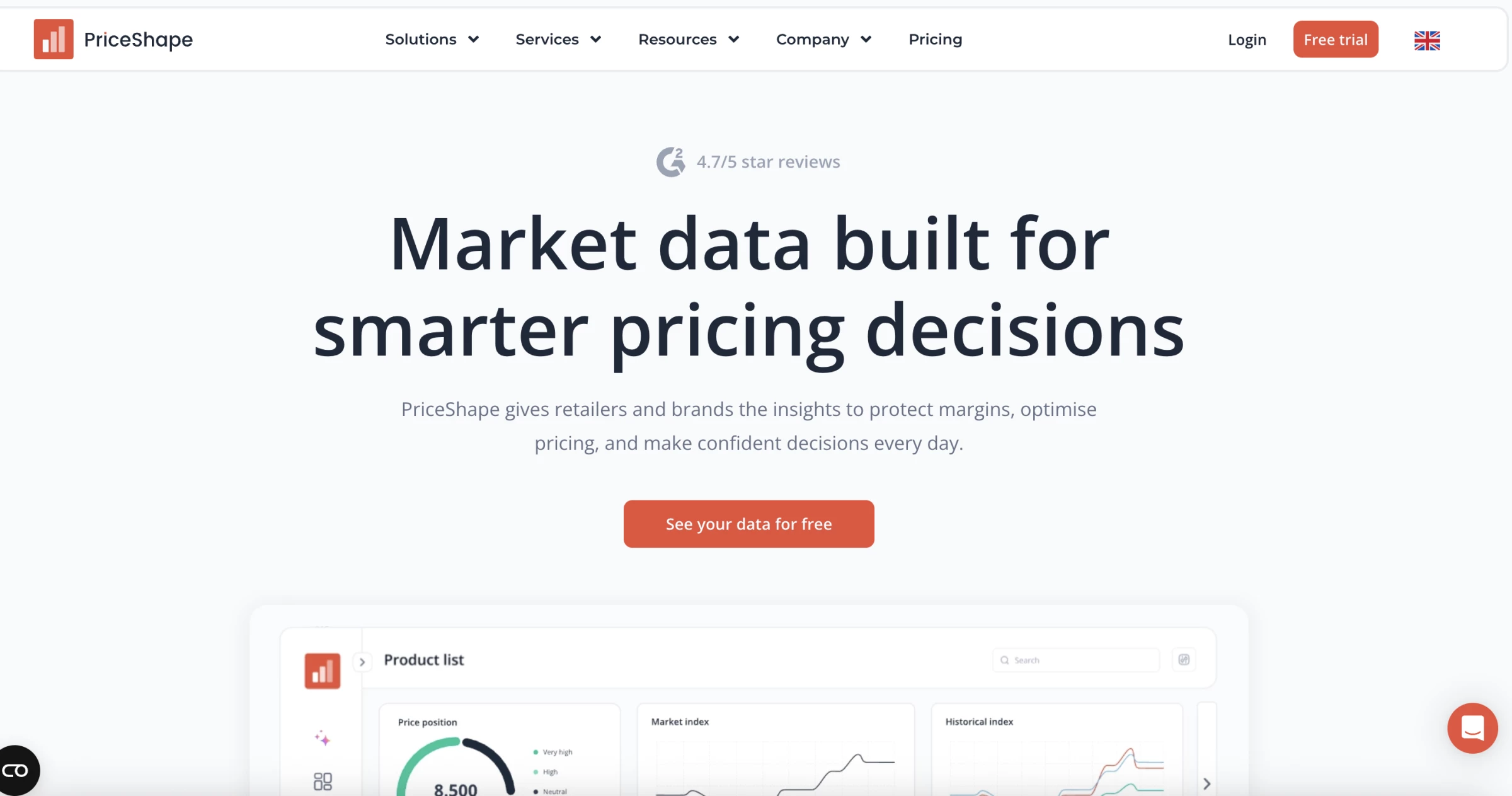
PriceShape is designed for businesses that want automation but fear uncontrolled price wars.
Rather than blindly matching competitors, it introduces pricing guardrails. The system evaluates market data and suggests whether to:
- Match
- Hold
- or Increase prices
Its strength lies in market-wide visibility combined with rule-based decision guidance.
This protects margins while keeping pricing competitive, which is a common challenge for brands selling through multiple resellers.
Pricing: 14-day free trial available; paid plans from ~$695/month
Key Features:
- Live market monitoring
- Guardrail-based pricing automation
- Competitor and reseller tracking
- Decision recommendations
10. Pricefy
Choose Pricefy if you run a smaller Shopify catalog and want competitor monitoring with rule-based repricing.
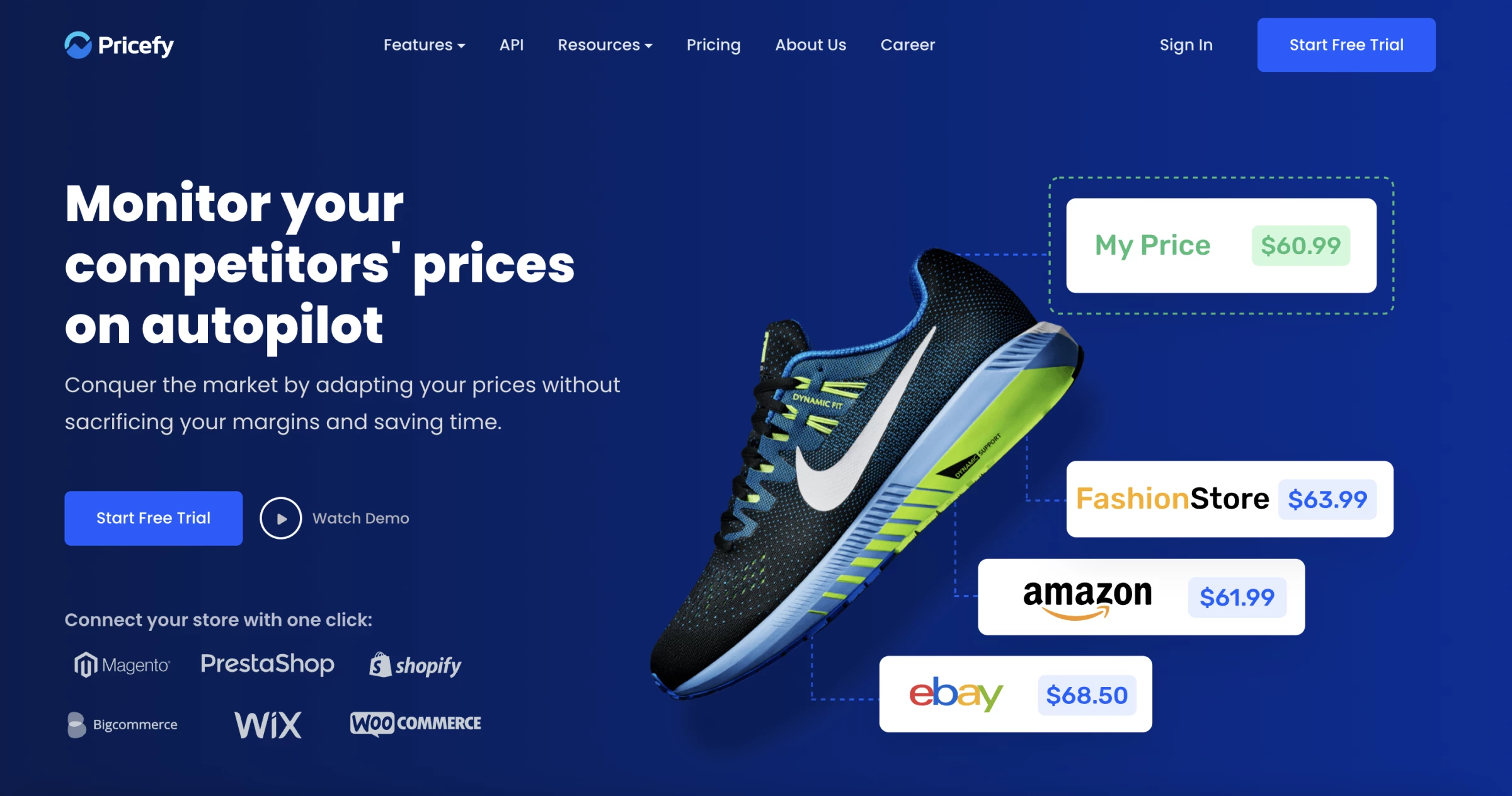
Pricefy focuses on simplicity and affordability. Small merchants often avoid price tracking because setup feels complicated, but Pricefy removes that friction.
It automatically matches competitor products, tracks daily price changes, and can adjust prices based on rules you define
Affordable entry tiers and simple workflows make it appealing for Shopify merchants and SMBs that want automated competitor awareness without complexity.
Pricing: Free plan available; paid plans from $49/month.
Key Features:
- Automatic product matching
- Daily price monitoring
- Rule-based repricing
- Alerts via email or Slack
How the Best Price Tracking Tools Compare
Most platforms can track competitor prices, but the key differences lie in the markets they cover, the product volumes they support, how accurately they match listings, what they do with the data, and how much automation the starting plan includes.
Use this comparison as a starting point, then focus on the platform that matches your current scale, operational complexity, and growth goals.
| Tool | Best for | Competitor Monitoring | Pricing Automation | Advanced Analytics | Pricing |
| Bright Data | Enterprise competitive intelligence | ✅ | ❌ | ✅ | Paid plans from $2,000/month |
| Price2Spy | Simple competitor monitoring | ✅ | ✅ | ❌ | Enquire |
| Minderest | Digital shelf monitoring | ✅ | ❌ | ✅ | Custom |
| Intelligence Node | Enterprise pricing visibility | ✅ | ❌ | ✅ | Custom |
| Omnia | Automated pricing execution | ✅ | ✅ | ✅ | Paid plans from ~$463/month (€399) |
| Competera | AI-driven pricing strategy | ✅ | ✅ | ✅ | Custom |
| Prisync | Monitoring and basic automation | ✅ | ✅ | ❌ | Paid plans from $99/month |
| ShopGrok | Pricing analytics and insights | ✅ | ❌ | ✅ | Custom |
| PriceShape | Margin-protected automation | ✅ | ✅ | ✅ | Paid plans from ~$695/month |
| Pricefy | Auto-match repricing for SMBs | ✅ | ✅ | ❌ | Paid plans from $49/month |
How We Chose the Best Price Tracking Tools
We compared official product and pricing information across coverage, product matching, update frequency, automation, integrations, and business fit. Details were checked in September 2026; unpublished rates are listed as custom or priced on request.
How To Test a Price Tracking Tool Before You Buy
A standard vendor demo won’t show how the platform handles the difficult parts of your catalog. Use a free trial, proof of concept, or live demonstration to check the following:
| What to test | What to do |
| Product matching | Upload difficult variants, bundles, multipacks, and private-label products. |
| Data completeness | Check whether the tool captures promotions, shipping costs, stock availability, and individual marketplace sellers |
| Update speed | Compare a live price change with when it appears in the platform and triggers an alert |
| Workflow fit | Test the exports, API, notifications, approval process, and eCommerce integrations your team will use |
| Automation controls | Confirm you can set margin floors, price ceilings, stock rules, manual approvals, and rollback options |
| Full cost | Request pricing based on your actual products, competitors, update frequency, users, and required modules |
Only automate price changes once you’ve checked matching and alert accuracy. Until then, use recommendations or manual approval so incorrect data doesn’t reach your storefront.
What the Best Price Tracking Tools Can’t Decide for You
Good price tracking helps teams decide which competitor moves deserve a response. A lower rival price can affect a highly visible product while carrying less weight when shoppers choose on availability, service, or brand.
Group products by strategic role and set margin and stock rules for each. Measure the effect on margin, conversion, and response time. Alert volume says little on its own.

Our team ranks agencies worldwide to help you find a qualified partner. Visit our Agency Directory for the top eCommerce companies, as well as: