
How Generative AI Works: A Strategic Guide

How Generative AI Works: A Strategic Guide
Article by David Jenkin
Published Jun 23 2025 - 9.40am EST

How Generative AI Works: Key Points

Generative AI is rapidly scaling across industries, with 65% of organizations regularly using it in at least one function as of 2024.
Business leaders must correct key misconceptions to avoid flawed decision-making, misinformation risks, and misaligned implementations.
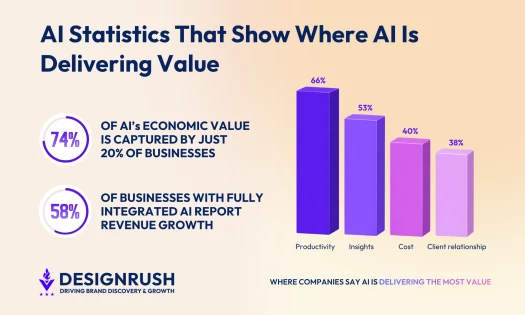
Return on investment is strong, with 74% of enterprises reporting their GenAI initiatives met or exceeded ROI expectations.
Effective integration requires strategic planning around data privacy, interpretability, bias mitigation, and workforce training

Why Understanding Generative AI Matters

Unlike traditional AI that classifies
or predicts, generative AI produces novel outputs, often with remarkable human-like fluency.

Understanding how generative AI works is essential for evaluating its capabilities, ethical implications, and strategic limitations. This article will fill you in.


Generative AI vs. Traditional Machine Learning: What's the Difference?

Traditional machine learning and generative AI are two very different entities. Each serves a distinct purpose and offers unique capabilities. If you want to make use of each technology effectively, aligning them with specific objectives and operational needs, you have to understand these differences.

Traditional Machine Learning (ML)

Traditional ML models are designed to analyze existing data to make predictions or classifications. These models require labeled data and are typically used to optimize specific business processes.

They excel in tasks like:

  • Customer segmentation
  • Fraud detection
  • Demand forecasting

Generative AI (GenAI)

GenAI, on the other hand, focuses on creating new content by learning from vast amounts of data. It can generate text, images, audio, and more, making it especially useful for applications like:

  • Content creation
  • Personalized marketing
  • Product design

Unlike traditional ML, GenAI can handle unstructured data and produce novel outputs that mimic human-like creativity.

The Engine That Sets GenAI Apart

While both traditional machine learning and generative AI utilize neural networks, generative AI’s ability to generate coherent and contextually relevant content is largely attributed to the transformer architecture, a breakthrough in neural network design.

Unlike earlier models that processed data sequentially, transformers utilize a mechanism called self-attention, allowing them to evaluate all parts of the input data simultaneously. This means they can grasp the nuances and relationships within large datasets more effectively.

Explore The Top AI Companies
Agency description goes here
Sponsored i Agencies shown here include sponsored placements.


Demystifying Generative AI: Common Misconceptions

While generative AI (GenAI) continues to gain traction across industries, it's still accompanied by a mix of enthusiasm and uncertainty. As of 2024, 65% of organizations were regularly using GenAI in at least one business function (nearly doubling from the previous year), but misconceptions about how generative AI works, its capabilities, and limitations can hinder effective adoption.

Some businesses may overestimate GenAI's abilities, expecting it to function as a fully autonomous solution, while others may underestimate its value, viewing it merely as a tool for basic tasks. This can lead to missed opportunities, misaligned strategies, and even ethical dilemmas.

“Relying on AI without adequate oversight often leads to unintended consequences,” cautions Brad Garlin, founding partner at JumpFly. He goes on to say that while it can be incredibly powerful, AI must be carefully guided to maximize its effectiveness.

These common misconceptions include:

Misconception 1: GenAI Understands Content Like Humans Do

While generative AI can produce human-like text, images, or even videos, it’s important to understand that it doesn't “think” or “understand” like a person.

Instead, GenAI analyzes massive datasets — books, websites, conversations, images — to learn patterns in how words, visuals, or ideas are typically used or combined.

Much like your phone predicts the next word in a text based on past usage, GenAI does this on a far larger and more sophisticated scale. It predicts the most likely next word, sentence, or image element not because it understands your intent, but because it recognizes patterns and structures that usually follow.

Its output is driven by statistical probabilities, not real comprehension. So while it may seem smart or creative, it’s simply connecting the dots in ways that have proven effective in its training data.

This makes GenAI highly effective for tasks like content creation, summarization, and design mockups—but human oversight is still essential to ensure accuracy, context, and intent.

Potential harm: This can lead to overreliance on its responses, resulting in flawed decision-making, especially in critical areas like legal advice or medical diagnostics.

Misconception 2: GenAI Outputs Are Always Accurate

GenAI can produce "hallucinations," generating content that appears plausible but is factually incorrect. This occurs because the model predicts outputs based on patterns, not verified information. Therefore, human oversight is essential to validate and contextualize AI-generated content.

Potential harm: Assuming GenAI outputs are always accurate may lead to the dissemination of misinformation, damaging credibility and potentially causing legal or reputational harm.

Misconception 3: Implementing GenAI Is Plug-and-Play

To work effectively, GenAI needs access to clean, organized business data, whether that’s documents, emails, or customer interactions.

It must be integrated with existing platforms like CRMs or content management systems to function within your workflow. Since GenAI doesn’t come pre-tailored, it also needs customization, using your language, rules, and tone, to produce useful outputs.

It requires ongoing oversight to ensure accuracy, relevance, and alignment with your business objectives, making it a strategic, evolving asset rather than a one-time plug-in.

Potential harm: Failing to appreciate the complexity of GenAI integration can result in misaligned implementations, leading to inefficiencies, increased costs, and potential security vulnerabilities.

Real-World Impact: Generative AI in Action

Generative AI is playing an active role in reshaping industries by enhancing creativity, personalization, and efficiency. So, what does that look like in practice? Let's look at how three industry leaders are harnessing this technology to drive innovation:

Expedia's AI-Powered Trip Planning

Expedia's AI "Trip Matching" feature
[Source: Expedia]

Expedia has introduced "Trip Matching", an innovative feature that allows travelers to transform social media inspiration into actionable travel plans. When users share travel-related Instagram Reels with Expedia's official account, they receive AI-generated itineraries, destination suggestions, and booking options tailored to the content of the shared video.

AI-driven trip planning not only enhances user engagement but also positions Expedia at the forefront of the evolving travel planning sector, where the traditional marketing funnel is collapsing into a seamless, inspiration-to-booking experience.

WPP's AI-Driven Creative Production

Multilingual copy variants produced using WPP's Production Studio
[Source: WPP]

Global advertising agency WPP has launched "Production Studio”, an AI-enabled platform developed in collaboration with NVIDIA. This tool streamlines the creation of text, images, and videos to allow for rapid and scalable content production.

Through the implementation of this platform into their operations, WPP enables brands to generate personalized marketing materials efficiently, enhancing engagement while simultaneously reducing time-to-market.

Albert Invent's AI-Accelerated Beauty Product Development

Ad creative for Albert, by Albert Invent
[Source: Albert Invent]

Oakland-based chemistry company Albert Invent is at the forefront of the AI revolution in the beauty industry as it uses generative AI to expedite cosmetic product development. Their platform, Albert, utilizes AI trained on over 15 million molecular structures to predict effective and safe ingredient combinations and accelerate the traditionally time-consuming formulation process.

In collaboration with Nouryon, Albert Invent then launched BeautyCreations™, an AI-driven formulation discovery tool tailored for the personal care industry. BeautyCreations uses Albert's capabilities to allow formulators to search through Nouryon's extensive repository of hair and skin care formulations using natural language queries.

This reduces product development time from weeks to minutes and enables brands to quickly respond to emerging market trends.

Get proposals from top-rated AI companies.
GET IN TOUCH


How To Integrate Generative AI into Your Business Workflows

GenAI has plenty of value to offer businesses across every sector and industry. In fact, Deloitte reports that 74% of organizations found their most advanced GenAI initiatives met or exceeded ROI expectations in 2024, with 20% achieving ROI that exceeded 30%.

Integrating generative AI (GenAI) into business workflows requires a structured, strategic approach to ensure effective adoption and maximize return on investment.

The following step-by-step guide outlines how to embed GenAI into your operations.

Step 1: Identify High-Impact Use Cases

Begin by pinpointing specific areas within your business where GenAI can add significant value. Common applications include content creation, customer service automation, data analysis, and product design. Assess tasks that are repetitive, time-consuming, or require processing large volumes of data. Prioritize use cases that align with your strategic goals and have measurable outcomes.

Step 2: Define Clear Objectives and Success Metrics

Establish what you aim to achieve with GenAI integration. Objectives may include improving efficiency, reducing costs, enhancing customer experience, or accelerating innovation. Set specific, measurable, achievable, relevant, and time-bound (SMART) goals to track progress and evaluate success.

Step 3: Ensure Data Privacy and Security

When implementing GenAI, particularly in areas involving customer data, you really need to comply with data protection regulations such as GDPR. Implement strong data governance practices:

  • Data minimization: Collect only the data necessary for specific AI tasks to reduce exposure risks.
  • Regular audits: Conduct periodic reviews to ensure compliance with evolving privacy laws and to identify potential vulnerabilities.
  • Employee training: Educate staff on best practices for data handling and the importance of maintaining data privacy.

Step 4: Address Model Limitations and Bias

GenAI models can inadvertently reflect biases present in their training data, leading to outputs that may not align with company values. Use the following to mitigate this risk:

  • Diverse training data: Incorporate a wide range of data sources to minimize inherent biases.
  • Bias detection tools: Utilize specialized software to identify and correct biased outputs.
  • Human oversight: Ensure that human reviewers are involved in evaluating AI-generated content, especially in sensitive applications.

Step 5: Enhance Interpretability and Transparency

If you want to build trust and facilitate troubleshooting, it's important to understand how GenAI models make decisions. Transparent AI systems ensure accountability by allowing stakeholders to understand and explain AI-driven decisions. Y You can make things easier to follow by using:

  • Explainable AI (XAI) techniques: Implement methods that provide clear explanations for AI decisions.
  • Documentation: Maintain comprehensive records of model development, training data, and decision-making processes.
  • Stakeholder communication: Regularly inform stakeholders about how AI systems function and their impact on business operations.

Step 6: Allocate Resources Effectively

Deploying GenAI requires significant computational resources and expertise. Assess your infrastructure and consider the costs associated with training and maintaining AI models for a sustainable, long-term solution. Key considerations include:

  • Scalable infrastructure: Invest in cloud-based solutions that can adapt to growing computational demands.
  • Cost-benefit analysis: Evaluate the return on investment for AI projects to ensure financial viability.
  • Talent acquisition: Hire or train personnel with expertise in AI to manage and optimize AI systems effectively.

Step 7: Pilot and Iterate

Start with a pilot project to test the GenAI integration in a controlled environment. Monitor performance, gather feedback, and make necessary adjustments. Use insights gained to refine your approach before scaling up. Continuous iteration helps in adapting to changing business needs and technological advancements.

Step 8: Scale and Monitor

Once the pilot proves successful, gradually scale the GenAI integration across other business units or functions. Implement monitoring systems to track performance, detect issues, and ensure the AI continues to meet business objectives. Regular reviews and updates are essential to maintain effectiveness and relevance.

How Generative AI Works: Final Words

Generative AI presents a new era in how businesses approach creativity and innovation. As with any game-changing technology, success lies in thoughtful implementation, continuous learning, and a willingness to adapt.

To ensure your business thrives in an AI-driven future, find the generative AI expertise your business needs today.

Our team ranks agencies worldwide to help you find a qualified partner. Visit our Agency Directory for the top AI companies, as well as:

  1. Top AI Companies in Boston
  2. Top AI Consulting Companies
  3. Top AI Automation Agencies
  4. Top Generative AI Companies
  5. Top AI Marketing Companies

Our design experts also recognize the most innovative design projects across the globe. Visit our Awards section for the best & latest in design.

Want us to find an AI company that fits your needs? It’s free.
GET IN TOUCH

How Generative AI Works: FAQs

1. What skills are needed to work with GenAI?

Skills in data analysis, prompt engineering, and a foundational understanding of AI principles are valuable. Encouraging cross-functional collaboration between technical and creative teams can help make GenAI integration smoother.

2. How can businesses prepare their workforce for generative AI integration?

Investing in employee training and fostering a culture of continuous learning are key. By upskilling staff and promoting cross-functional collaboration, organizations can ensure a smooth transition and effective utilization of generative AI technologies.

3. Can generative AI operate without human oversight?

No. Despite its advanced capabilities, generative AI lacks true understanding and can produce outputs that are misleading or biased. We still need people to double-check and make sure for accuracy, ethical alignment, and relevance.

👍👎💗🤯