Hiring Guide: How to Choose the Right Call Answering Service in the US
Table of Contents
How do I choose the best call answering service for my business?
When evaluating phone answering providers, consider the following:
Identify call volume and peak times: Understanding when your phones are busiest helps determine how much coverage you need. According to Dialzara, 85% of unanswered callers never call back, so it’s essential you know your peak hours to ensure staffing levels match actual demand.Determine operating hours: Decide whether you need evening, weekend, or full 24/7 availability. 62% of customers say they will immediately call a competitor if the call is unanswered, so coverage should align with the times at which customers are most likely to call.Clarify call types: Identify whether calls are mainly inquiries, support requests, or appointment-related. About 82% of callers won’t leave a voicemail and will contact a competitor instead, making fast and reliable pickup critical.Check industry experience: Look for providers familiar with your field and business needs. Review service metrics such as answer speed, accuracy, and consistency.Review pricing and onboarding: Compare pricing models, setup timelines, and contract terms. Also, evaluate how providers handle scripts, routing, and CRM integrations.Request demos or references: Ask to hear sample calls or speak with existing clients. This helps confirm the provider’s tone, professionalism, and brand fit.
What should I prepare before contacting a provider?
Before reaching out, it helps to prepare the core details a provider needs to set up your service accurately and efficiently:
Call scripts and instructions: Provide clear scripts so agents can deliver consistent and accurate responses. Structured scripting helps reduce errors and keeps the caller experience aligned with your expectations.Business hours and availability: Define your operating hours and any after-hours rules in advance. According to HubSpot research, 90% of customers say an immediate response is essential or very important, and 60% define “immediate” as 10 minutes or less, making aligned coverage critical. Furthermore, answering within 1 minute brings 391% higher conversion rates, according to Dialzara.Escalation rules: Outline what qualifies as an urgent call and to whom it should be directed. Clear escalation paths ensure critical issues are handled quickly and correctly.Frequently asked questions (FAQs): Share answers to common inquiries that callers are likely to ask, to help agents respond accurately and consistently across calls.Appointment rules and access: If the service will also book meetings for you, provide clear scheduling rules and calendar access to prevent double bookings and scheduling errors.CRM or system access: Prepare integration details if calls should sync with your customer database to allow call data to be captured accurately and reduce manual follow-up work.
What is the difference between live answering services and virtual receptionist providers?
The main difference lies in the depth of support they provide.
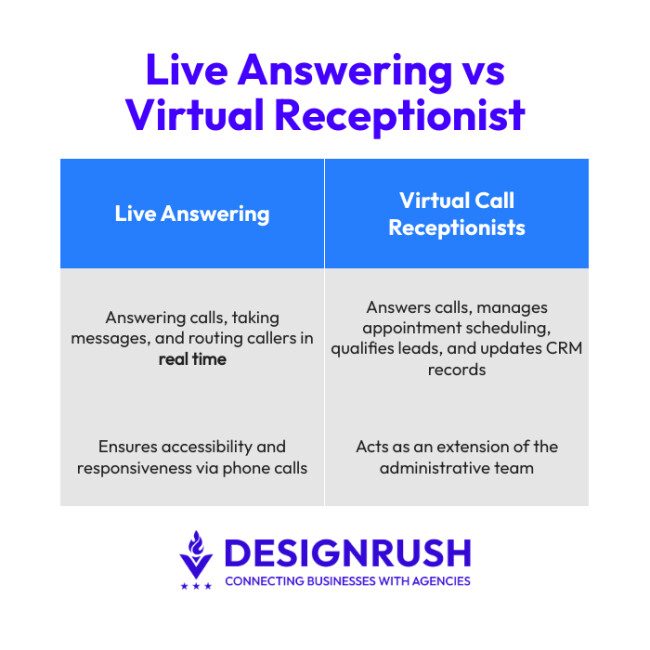
Live answering services focus on answering calls in real time, taking messages, and routing callers to the appropriate person or department, so customers always reach a human instead of voicemail.
They are designed to ensure accessibility and responsiveness, particularly for businesses that want to avoid missed calls while keeping internal workloads manageable.
Human interaction plays a significant role in customer perception, as 89% of consumers are more likely to do business again after a positive customer service experience70% say knowledgeable human providers are essential to good service.
Virtual receptionist providers, on the other hand, offer more comprehensive support that goes beyond basic call handling .
In addition to answering calls, they often manage appointment scheduling, qualify leads, update CRM records, and follow multi-step call flows tailored to specific business needs.
They function more like an extension of an internal administrative team rather than a simple answering layer, making them suitable for businesses that rely heavily on phone-based operations.
Demand for virtual receptionist services continues to grow as companies seek more hands-on assistance and higher service quality.
The virtual receptionist market was valued at approximately $3.2 billion in 2022 and is projected to reach $6.8 billion by 2030, reflecting a compound annual growth rate of about 9.8% as businesses increasingly prioritize customer experience and operational efficiency.
How do I ensure call quality and brand consistency?
You can ensure call quality and brand consistency through structured guidelines, ongoing monitoring, and regular performance reviews.
Most phone answering providers use custom call scripts that define greetings, tone, approved responses, and escalation rules, so every agent represents your business consistently on every call.
Call quality is critical because even a single poor interaction can damage retention. Research shows that 32% of customers stop doing business with a brand after just one bad experience.
To prevent this, providers rely on call recordings and quality monitoring, reviewing calls for accuracy, professionalism, and adherence to scripts.
Key performance metrics such as first-call resolution are closely tracked, as each 1% increase in first-call resolutionreduce operating costs by 1% and increase customer satisfaction by 1%.
Brand consistency is further maintained through regular reviews and updates, particularly during the first 30 to 60 days, when scripts, call flows, and escalation rules are refined.
Many answering services also use ongoing quality assurance programs and feedback loops to ensure agents continue to represent the business accurately over time.
Consistent brand presentation can increase revenue by up to 33%, according to PR Newswire, highlighting the value of uniform messaging across every customer interaction.
How do I measure whether a phone answering service is adding value?
To measure value, track both call handling metrics and business outcomes.
One clear indicator is a reduction in missed calls; many businesses see improved responsiveness when they outsource, helping capture opportunities that would otherwise be lost.
Another useful metric is customer satisfaction and retention — about 49% of companies
Real business cases show tangible results: a global travel agency that implemented a multilingual answering service reported a 20% increase in Net Promoter Score (NPS) and a 15% increase in bookings from international clients within six months, with the revenue gains outweighing service costs.
Other measures include lead capture and conversion rates, appointment bookings, and internal workflow improvements like fewer staff interruptions.
Comparing these figures before and after onboarding provides a clear view of how the telephone answering service is contributing to revenue, customer satisfaction, and operational efficiency.
Why People Trust DesignRush
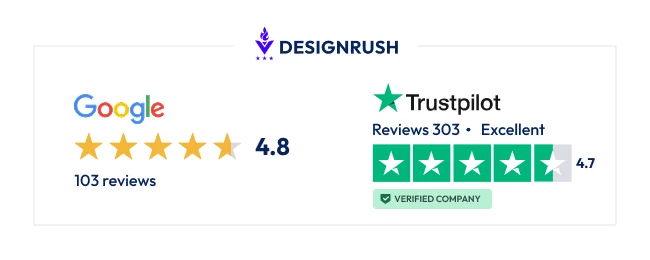
Rated 4.8 on Google and 4.7 on Trustpilot , DesignRush Agency Directory is a reliable resource for finding the best phone answering services in the United States. We owe this to our executive selection team, which follows a strict screening process when featuring agencies on the platform, assessing key performance indicators, like portfolio, client reviews, and industry reputation.
Learn more about DesignRush Agency Ranking Methodology .
Sources
DesignRush sustains a directory of over 40,000 agencies categorized by service category, location, expertise, and reviews. We build our database in two ways:
Our dedicated team of agency experts actively searches the web for top-performing companies. We then pull information from their websites, online presence, and client testimonials to verify their status and qualifications prior to listing.
The agencies listed get notified of their profiles on the website and they can choose to claim it or not, which suggests their availability for more collaborations.
Agencies can also reach out to DesignRush and must go through the verification process prior to being listed.

 Proposals