
We’ll cut through the noise to show you the best Amazon PPC tools on the market, which ones actually move the needle, what they’re best for, and how to pick the right fit for your ad spend and growth stage.
Best Amazon PPC Tools: Key Findings
- High-spend retail media teams should consider Adbrew for Amazon and Walmart ad optimization across PPC, DSP, AMC, reporting, and retail performance data.
- Astra by Sellrbox automates full-funnel campaigns across every ASIN, with one industrial seller maintaining 17.8% ACOS across 10,529 SKUs on roughly 12 minutes a week.
- Helium 10 and SellerApp are better suited to sellers who want PPC tools alongside broader research, listing, and analytics features, while Jungle Scout’s Cobalt is geared toward larger brands that use market and competitor data to guide ad optimization.
Why Your Amazon PPC Tool Choice Matters More in 2026
Amazon PPC tools are software platforms that help sellers manage and optimize paid Amazon campaigns, including bid adjustments, keyword harvesting, negative targeting, and performance tracking.
They generally fall into three groups:
- Bid automation tools: Adjust bids and keywords based on performance targets such as ACoS or ROAS.
- Retail media platforms: Manage Amazon PPC plus broader capabilities such as DSP, AMC, budget pacing, and multi-marketplace advertising.
- Research and planning tools: Support keyword discovery, competitor research, and campaign preparation rather than ongoing bid management.
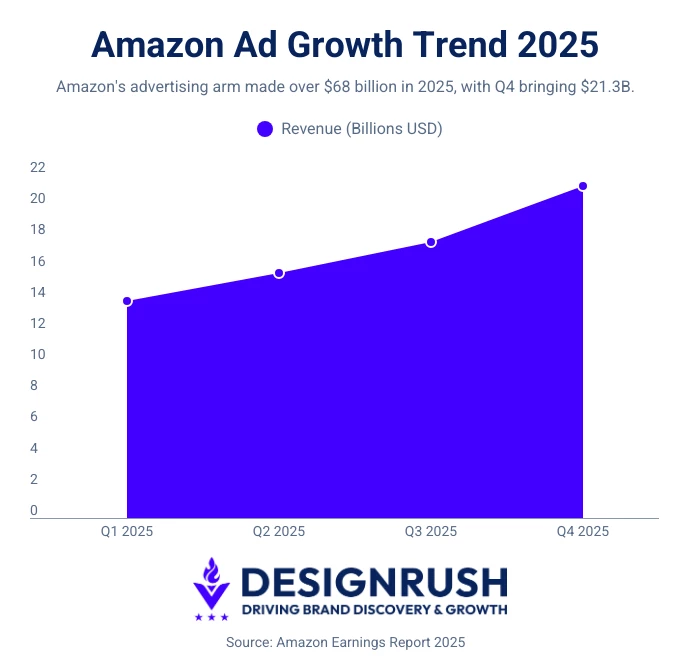
Amazon's advertising arm made more than $68 billion in 2025, and Q4 alone brought $21.3 billion, up 22% year-over-year.
That growth comes from sellers spending more to win the same placements.
And increasingly, the brands winning aren’t managing campaigns manually. They’re using Amazon PPC software to adjust bids throughout the day, shift budgets between ASINs automatically, and catch wasted spend faster than a human team realistically can.
If you're looking into PPC, you're likely after quick results; as Danielle Denman, Associate Director of PPC at SmartSites, put it:
"I wouldn't say it's immediate, but I can turn on campaigns, raise budgets, and really utilize PPC to get in front of new customers quickly.
So, getting your message in front of your prospects is going to be quicker with PPC and then businesses can utilize that to really optimize and help. You can just blast it out there."
These Amazon PPC tools help sellers bid faster, reduce wasted spend, and manage campaigns more efficiently. We evaluated them based on automation depth, bid and keyword management, analytics and reporting, usability, and pricing transparency.
| Tool | Best For | Pricing (Starting at) |
| Adbrew | Full-funnel Amazon & Walmart ad optimization | $799/mo |
| Astra by Sellrbox | Advertising every SKU in a large catalog | $119/mo + 1.75% of ad revenue, not ad spend |
| Helium 10 | PPC and research in one seller suite | $99/mo annually |
| Jungle Scout | Market intelligence + enterprise PPC automation | Catalyst from $29/mo; Cobalt custom |
| Teikametrics | AI optimization for Amazon & Walmart | $149/mo |
| Perpetua | Automated bidding across Amazon ad types | $695/mo |
| SellerApp | Rule-based PPC tools + seller research | Free plan; from $149/mo |
| Quartile | High-spend brands needing granular bid control | Custom pricing |
| Sellozo | Simple, flat-rate PPC automation | $250/mo |
| BidX | Rule-based campaign automation | €495/mo + % of ad spend |
1. Adbrew: Best for Amazon and Walmart Retail Media Optimization
For brands, agencies, and aggregators managing larger Amazon and Walmart advertising programs that need PPC, DSP, AMC, retail data, and reporting in one platform.
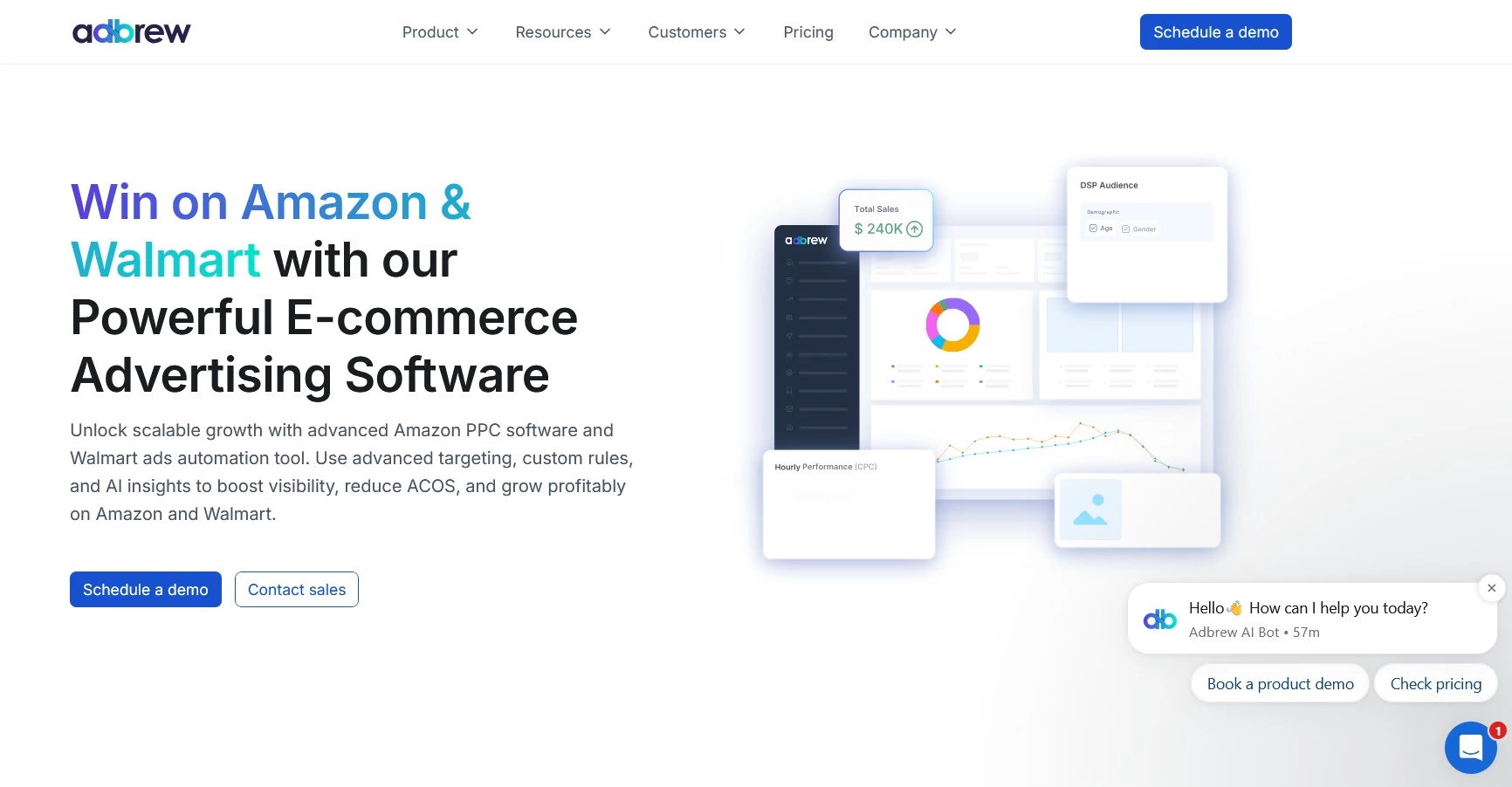
Adbrew is an enterprise-grade retail media optimization platform for Amazon and Walmart advertisers.
It combines Sponsored Ads automation, Amazon DSP access, Amazon Marketing Cloud reporting, Amazon Marketing Stream, digital shelf analytics, and Walmart advertising tools in one workflow.
Adbrew Intelligence adds a layer of AI agents that take in the full picture of an account — campaign architecture, how performance is moving, relevant marketplace indicators, and the goals driving the business.
Its value is in connecting ad performance to retail context. Instead of optimizing bids only against ACoS or ROAS, teams can factor in signals like inventory, Buy Box status, pricing, organic rank, Share of Voice, and profitability.
That’s great for teams managing large catalogs, multiple accounts, or full-funnel retail media programs.
Adbrew is less starter Amazon PPC software and more of an operating system for serious marketplace advertising. It suits teams that want automation and analysis across paid media, organic visibility, and retail performance without stitching together several dashboards.
Pricing
- Paid plans start at $799/mo or a percentage of ad spend (whichever is greater)
- Custom Enterprise pricing is available for higher-spend accounts or expanded feature needs
Pros
- Sponsored Ads, DSP, AMC, Amazon Marketing Stream, digital shelf analytics, Walmart ads, automation, and reporting in one platform
- Retail-aware automation can factor in inventory, Buy Box status, pricing, organic rank, Share of Voice, and profitability
- Supports rule-based and AI-powered automation, keyword harvesting, dayparting, bulk actions, and customizable dashboards
- AMC reporting is designed to be accessible without SQL, which can help teams use advanced measurement without relying on a dedicated analyst
- Strong fit for agencies and multi-account teams that need shared dashboards, reporting, and full-funnel oversight
Cons
- More advanced than many small sellers need
- Starting price is higher than lightweight Amazon PPC tools
- AI and automation features still need careful setup and oversight to avoid handing too much control to the platform
2. Astra by Sellrbox: Best for Advertising Every SKU in a Large Catalog
For Amazon sellers and brands whose catalog has outgrown the hours available to manage it.
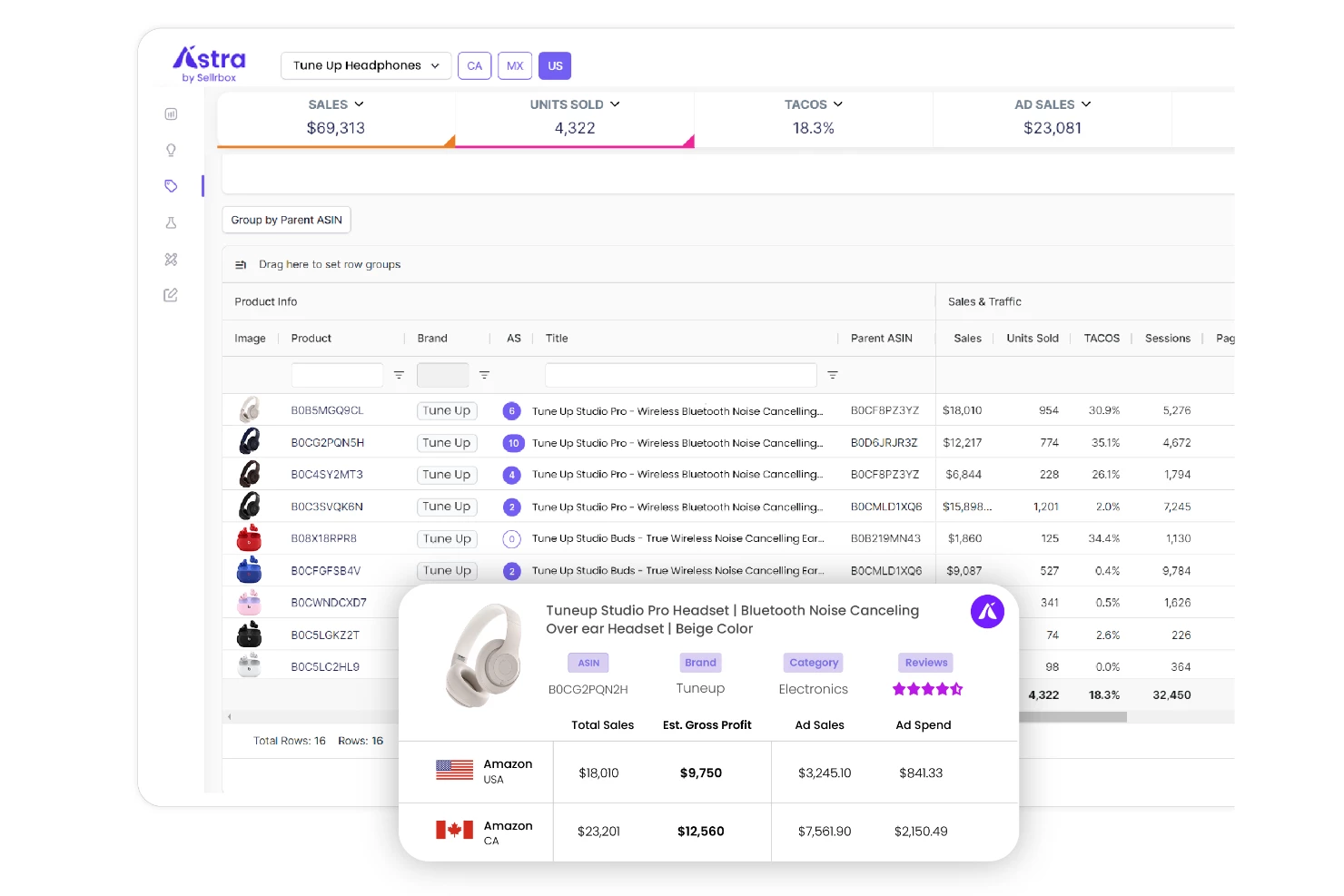
Astra by Sellrbox is Amazon PPC software that builds and runs campaigns on every ASIN in a connected account, including products with no sales history, and rebids them daily without requiring the seller to trigger any changes.
The strategy layer comes out of Sellrbox’s own Amazon practice, which manages more than $40 million in ad spend.
It assembles full-funnel structures for each product using catalog and performance data.
The software switches strategies as a product moves through launch, ranking, scaling, and competitive defense, rather than applying a single rule set throughout a product’s entire lifecycle.
It also reports sales, profit, margin, and TACOS by product rather than relying on a single account-wide ACOS figure.
CasterHQ, which sells industrial casters and wheels, runs 10,529 SKUs on Astra at 17.8% ACOS with roughly 12 minutes of owner attention a week. Across the same 12-month test, campaigns the owner kept under his own control in the same account ran at 48.6%.
Pricing
- 30-day free trial, no credit card required
- Self-Service:
- Explorer: $119/month billed annually + 1.75% of ad revenue, for up to $10K in monthly ad revenue
- Professional: $239/month billed annually + 1.65% of ad revenue, up to $30K in monthly ad revenue
- Professional: $399/month billed annually + 1.55% of ad revenue, up to $100K in monthly ad revenue
- Enterprise: custom pricing above $100K in monthly ad revenue
Pros
- Advertises the full catalog, including the long tail a manual team never reaches
- Strategy developed by operators managing more than $40 million in Amazon ad spend
- Reports profit and margin per product instead of one blended account figure
- The variable fee tracks the revenue campaigns generate, not the budget they consume
- Imports FBA inventory data and flags low stock, out of stock and restocked ASINs so spend doesn’t run on unavailable products
- Founder level access including strategy calls, with average customer retention at 10.5 months
Cons
- Explorer plan is limited to one marketplace, one Amazon account, and one user
- Inventory features provide stock alerts and days-of-cover data but not full demand forecasting
3. Helium 10: Best for Sellers Who Want PPC and Research in One
For sellers who want to run advertising alongside product research, listing optimization, and analytics without managing multiple tools.
Helium 10 is an all-in-one Amazon (and Walmart) seller toolkit with deep PPC and Ad automation baked in via Helium 10 Ads (formerly “Adtomic”).
It combines product and keyword research, listing optimization, analytics, and AI-based advertising in one platform.
For sellers who want to unify their growth and ad strategies in one dashboard, Helium 10 provides both the insight tools and automated bidding and campaign control.
Pricing
- Platinum: $99/month
- Diamond: $279/month
- Enterprise: Custom, starting at $1,499/month
Pros
- All-in-one: research, analytics, listing & PPC in one place
- AI & rules automation, dayparting, and keyword management built in
- PPC automation is included in many plans
- Strong educational resources and community support
Cons
- The broad toolset means not every component is “best in class” compared to niche specialists
- Less transparency in fine internal algorithm decisions
- Steeper learning curve for full toolset
4. Jungle Scout: Best for Scaling Campaigns With Market Intelligence Built-In
For established Amazon brands that want automated ad optimization.
Jungle Scout serves different stages of Amazon growth through its Catalyst and Cobalt plans. Catalyst focuses on product and keyword research, seller analytics, and launch tools, while Cobalt adds enterprise market intelligence and Amazon advertising capabilities.
Cobalt can automate bids, budgets, keyword harvesting, and dayparting based on campaign performance.
Its advertising tools also connect PPC decisions to market data, including Buy Box performance, search visibility, inventory, and competitive positioning.
It’s a good option for larger brands looking at Amazon PPC automation tools that include deeper market and competitor data.
Pricing
- Catalyst Starter: $29/month
- Catalyst Growth Accelerator: $49/month
- Catalyst Brand Owner: $129/month
- Cobalt: Custom pricing for businesses with $1M+ in annual revenue
Pros
- Connects Amazon advertising with market and competitor intelligence
- Automated bid and budget optimization, keyword harvesting, and dayparting
- Supports Sponsored Products, Sponsored Brands, and Sponsored Display
- Tracks ACoS, ROAS, Buy Box performance, market share, and other retail signals
Cons
- Advanced PPC automation is primarily part of the enterprise-focused Cobalt platform
- The most advanced advertising features are aimed at larger brands using Cobalt
5. Teikametrics: Best for AI-Driven Optimization Across Amazon and Walmart
For brands that want automated ad management informed by inventory, profitability, and marketplace data.
Teikametrics uses its Artificial Retail Intelligence (ARI) platform to manage ads, catalog data, inventory, and performance insights. Its advertising tools support campaigns on Amazon and Walmart, with AI used for bid optimization, budget decisions, and targeting recommendations.
Inventory data is also part of the optimization process. ARI can flag low-stock risk and help prevent ad spend from going toward products that may not be able to meet demand.
Pricing
- Essentials: $149/month for up to $10K in monthly ad spend
- Advanced: Custom pricing + 3% of ad spend over $10K
- Enterprise: Custom pricing + 3% of ad spend over $10K
- Free trial available on Essentials
Pros
- AI-powered bid, budget, and targeting optimization
- Uses inventory and profitability data to inform ad decisions
- Supports Amazon and Walmart advertising
- DSP, AMC, and managed services are available on higher tiers
Cons
- Advanced features such as DSP and AMC require higher-tier plans
- Pricing becomes less predictable once ad spend exceeds $10K/month
6. Perpetua: Best for Automated Bidding Across All Amazon Ad Types
For brands with moderate to high ad budgets who want to set target goals and let the platform handle campaign execution
View this post on Instagram
Perpetua is an AI-powered advertising optimization platform for Amazon that automates bidding, keyword harvesting, and campaign optimization across Sponsored Products, Brands, Display, and even DSP.
It aims to let sellers set high-level goals, like target ACoS or daily budget, while its engine handles the tactical execution.
Best for brands with moderate to high ad budgets wanting to offload the heavy lifting of campaign tuning to AI.
Pricing
- Essentials: $695/month for up to $10K in monthly ad spend
- Growth: $695/month + a percentage of ad spend for accounts spending over $10K/month
- Premium: Custom pricing for accounts spending over $500K/month
Pros
- Saving time and scaling optimization with AI handling routine bid adjustments
- Ability to manage SP, SB, Display, and DSP under one roof, with unified reporting
- Automated keyword harvesting, share-of-voice signals, and competitive term data
- Benchmarker tool and deep dashboards help with comparative insights
Cons
- Risk of over-automation: some sellers report it is “too automated” and lacks fine manual control
- DSP and cross-channel features may come at premium tiers or require more setup
- The quality of migrated keywords may vary
7. SellerApp: Best for Rule-Based Control With a Full Seller Toolkit
For sellers who want transparent, adjustable automation rules alongside research, listing, and profit tools in one dashboard.
View this post on Instagram
SellerApp is an all-in-one Amazon seller platform with a strong Amazon PPC and ads optimization module.
It offers rule-based automation, keyword harvesting, campaign auditing, and deep advertising insights, all alongside tools for listing optimization, product and keyword research, and profit analytics.
SellerApp is especially useful for sellers who want research, reporting, and Amazon PPC automation in the same platform.
Pricing
- Freemium: Free
- Pro: Starts at $99/month
- Smart Plan with Automation: Starts at $149/month
- Custom: Contact SellerApp for pricing
Pros
- Ads & research & listing & reporting in one ecosystem
- Good control over campaign behavior with custom rules and dayparting
- You can see which rules fired; you can adjust/override logic
- Free audit and a freemium tier help lower the barrier to entry
Cons
- Because it does many things, some modules may not be as deep as specialist tools
- The automation might not catch every nuance or extreme edge case
- For heavier ad spend, you may need to upgrade
8. Quartile: Best for High-Spend Brands That Want Granular Bid Control
For brands with significant ad volume that want keyword-level campaign structure and hourly bid optimization, with cross-channel support available.
Quartile is an AI-driven Amazon and multi-channel ad optimization platform that uses machine learning and hourly data to automate bidding, keyword expansion, and budget allocation.
It supports both fully automated single keyword campaign strategies and more flexible, rule-based campaign overrides.
For brands with sufficient ad volume, it offers a hands-off path to scaling ad performance.
Pricing
- Custom pricing; request demo
Pros
- Single keyword campaigns & hourly bidding enable very fine control and insight
- Access to Amazon’s Marketing Stream, integration with AMC, and proprietary ML
- Supports cross-channel ads (Google, Meta, DSP, Walmart, etc.)
- You can import your existing campaigns, set overrides, or use custom rules
Cons
- This structure can generate many campaigns, potentially complex to manage
- Managing cross-channel may require more onboarding or complexity
- The interplay of AI & manual rules may conflict or need tuning
9. Sellozo: Best for Sellers Who Want Simple, Predictable Automation
For sellers who want straightforward bid and keyword automation at a flat monthly rate, with the option to hand off management entirely
@sellozo.amz Sign up for free at Sellozo.com #amazon#fba#fbatips#fbaseller♬ original sound - Sellozo
Sellozo is an AI-powered Amazon PPC platform that offers both self-serve automation and fully managed ad services.
Its tools include bid optimization, keyword harvesting, dayparting, and a visual Campaign Studio UI.
With flat-fee pricing rather than percentages of ad spend, it appeals to sellers who want predictable costs and a balance between automation and control.
Pricing
- Self Serve: $250/month for one marketplace
- Agency Plan: $250/month for one seller account and one marketplace
- 30-day free trial available
- Flat-rate pricing with no percentage-of-ad-spend fees
Pros
- AI handles bid & keyword adjustments; custom scripts and overrides give flexibility
- Campaign Studio makes structuring and visualizing flows easier
- Predictable monthly cost for self-serve tier
- You can hand off PPC entirely if desired
Cons
- Automation “decisions” may sometimes conflict with manual rules
- For very large catalogs, the visual interface may become crowded
- Flat fees may become less efficient if your ad spend is small or very large
10. BidX: Best for Rule-Based Campaign Automation
For mid-market brands and agencies that want structured, auditable automation they can tune and override, rather than fully opaque AI decisions.
BidX is an Amazon and Walmart ad automation platform focused on rule-based and AI-assisted bidding, campaign creation, and optimization across Sponsored and DSP campaigns.
It emphasizes scalability, automation of repetitive tasks, and support for advanced features like budget shifting, custom rules, and tagging.
Since its acquisition by Worldeye, it’s positioned to integrate more tightly with seller tool platforms like Viral Launch.
Suitable for sellers who prefer hybrid control: relying on rules and structured automation rather than pure “black box” AI.
Pricing
- Self-Service Platform: €495/month + % of connected ad spend
- Managed Platform: €1,995/month + % of connected ad spend
- Managed Service: €4,995/month + % of connected ad spend
Pros
- Automates repetitive tasks to save time and scale campaigns
- Rule engines, custom rules, tagging, and filters allow tuning and overrides
- Custom dashboards, filters, and multi-account views make oversight easier
Cons
- As with any automation, potential for algorithm “mistakes” or unexpected bid shifts
- Requires careful rule setup to avoid conflicts
- DSP capabilities may require higher spend
Amazon PPC Tool Alternatives: Top 3 DFY Agencies
Amazon PPC tools can automate bids, harvest keywords, and surface performance data, but they still require someone internally to set up the strategy, interpret the results, and coordinate changes across advertising, listings, inventory, and operations.
The three done-for-you agencies below were selected from the DesignRush Amazon PPC directory for their expertise in managed marketplace execution:
- Olifant Digital: Best for profit-first Amazon account management
- Canopy Management: Best for scaling large Amazon and Walmart operations
- Nuanced Media: Best for expanding beyond branded Amazon traffic
1. Olifant Digital: Best for Profit-First Amazon Account Management
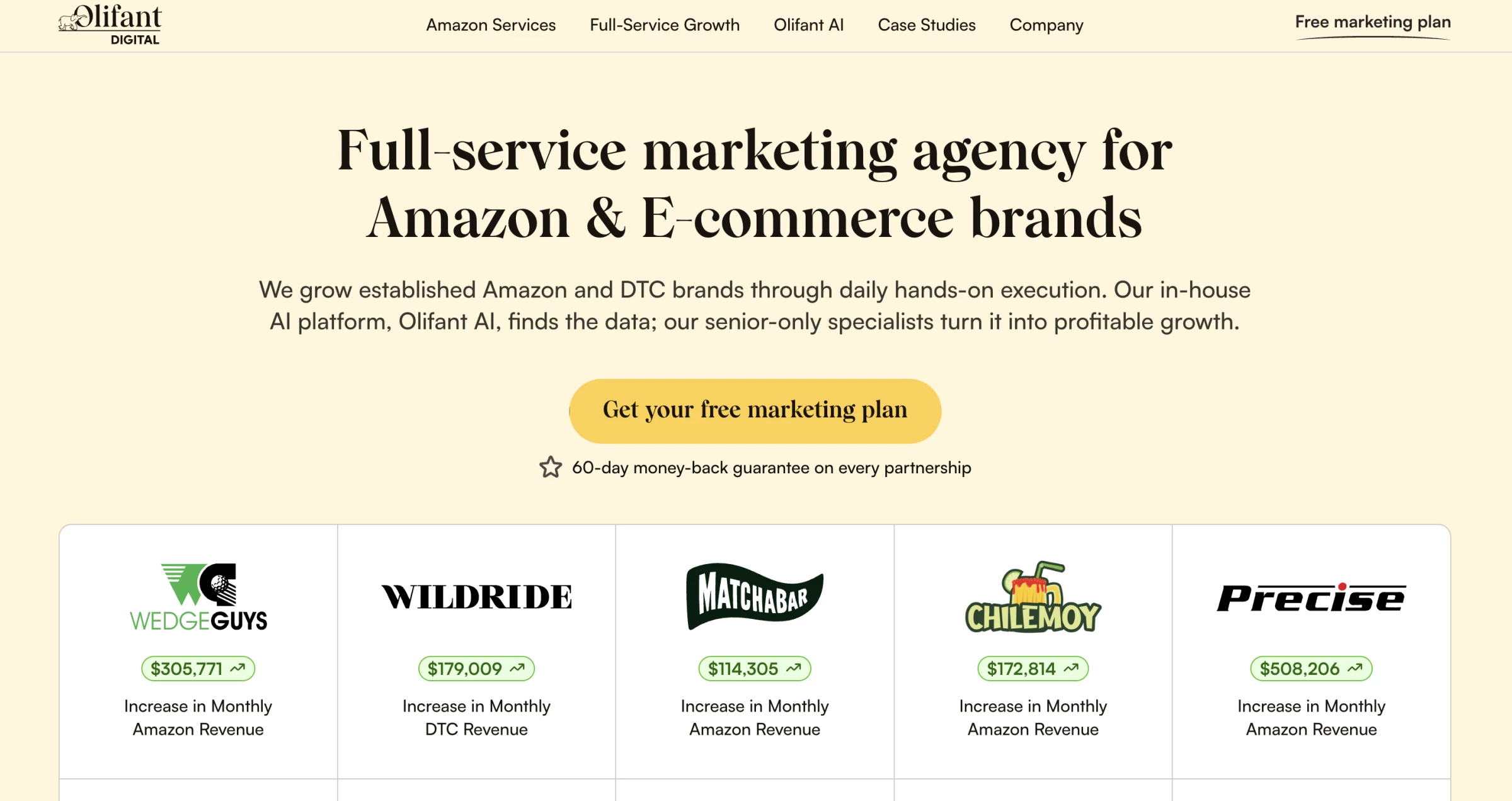
Olifant Digital is a full-service Amazon agency for established brands seeking profitable growth. One accountable team manages strategy, PPC, SEO, content, CRO, inventory, and account operations.
Every account is handled by a senior-only team with at least seven years of experience, supported by the agency’s in-house Olifant AI system.
The agency takes a profit-first approach, using TACoS-first reporting and product-level profit data rather than judging performance by attributed revenue alone.
Olifant Digital’s experts explain that decreasing TACoS can indicate that advertising is strengthening overall sales and organic performance. By contrast, rising TACoS alongside flat total sales can signal that a brand is becoming increasingly dependent on paid traffic.
Alex Stoykov explains that decreasing TACoS can indicate that advertising is strengthening overall sales and organic performance. By contrast, rising TACoS alongside flat total sales can signal that a brand is becoming increasingly dependent on paid traffic.
“Track TACoS, not just ACoS,” Stoykov advises. “If TACoS increases while total sales stay flat, your ads may simply be taking credit for sales that previously came through organic traffic.”
- Agency services:
- Full-service Amazon account management
- Amazon PPC management
- International Amazon expansion
- Minimum budget: $1,000-$10,000
- Notable clients: Wedge Guys, Ekster, MatchaBar, Bullstrap
What Clients Say
Clients praise Olifant Digital’s responsiveness, communication, organization, and hands-on approach. Reviewers also highlight the team’s Amazon expertise, strategic advice, and ability to improve PPC efficiency and sales.
Olifant Digital Increased Wedge Guys’ Amazon Sales by 391%
Golf equipment brand Wedge Guys came to Olifant Digital with unprofitable campaigns, declining organic rankings, and product listings that struggled against better-positioned competitors.
Olifant Digital cleaned up irrelevant keywords, restructured the brand’s PPC campaigns, adapted its listings for seasonal demand, and redesigned its hero images to improve click-through and conversion rates.
The campaign produced a 391% increase in Amazon sales, added $305,771 in monthly Amazon revenue, and reduced ACoS by 17%. Wedge Guys also reached Amazon’s Choice and Best Seller status for key listings.
2. Canopy Management: Best for Scaling Large Amazon and Walmart Operations
Canopy Management is a full-service Amazon and Walmart agency founded in 2018. Its team combines former Amazon employees, marketplace sellers, advertising specialists, creatives, and operational experts.
The agency handles PPC alongside listing optimization, Amazon SEO, creative production, inventory planning, customer service, and marketplace operations.
This makes it suitable for larger brands that need coordinated management across extensive catalogs or multiple retail marketplaces.
- Agency services:
- Amazon and Walmart account management
- PPC and Amazon DSP management
- Amazon SEO and listing optimization
- Minimum budget: Inquire
- Notable clients: PetMD, Prime Product Solutions, Panther Print
What Clients Say
Reviews displayed on DesignRush highlight Canopy Management’s Amazon expertise, proactive optimization, regular updates, and weekly calls.
Clients also describe the agency as an extension of their internal team that stays focused on long-term goals.
Canopy Management Increased PetMD’s Advertised Sales by 833%
Canopy’s work with PetMD shows how its advertising expertise supports brands in crowded categories.
It rebuilt PetMD’s advertising strategy to compete in the crowded pet-care market.
Over 12 months, PetMD achieved an 833% increase in advertised sales, maintained a 12% TACoS, and increased monthly website traffic by 1,300%.
3. Nuanced Media: Best for Expanding Beyond Branded Amazon Traffic
Nuanced Media is an Amazon marketing agency founded in 2010. It works with established sellers that need managed PPC, DSP, account optimization, and broader marketplace strategy.
The agency is particularly relevant to brands that generate most of their Amazon sales from branded searches but struggle to reach new customers through competitive, non-branded keywords.
- Agency services:
- Amazon PPC management
- Amazon DSP advertising
- Marketplace strategy and consulting
- Minimum budget: $1,000-$10,000
- Notable clients: Dollar Shave Club, True Citrus, +Lux Unfiltered
What Clients Say
DesignRush reviewers repeatedly highlight Nuanced Media’s Amazon expertise, transparent reporting, responsiveness, and organized project management.
Clients credit the agency with improving Amazon orders, ROAS, organic visibility, and conversion performance.
Nuanced Media Increased Lux Unfiltered’s Amazon Sales by 294.53%
For Lux Unfiltered, Nuanced Media expanded advertising beyond branded terms using Sponsored Products, Sponsored Brands, Sponsored Display, seasonal budget adjustments, and listing optimization.
The skincare brand grew Amazon sales by 294.53% in the first year, moving from six figures to seven figures. It then recorded another 89.21% increase during its second year.
How To Choose Between Amazon PPC Tools
The best Amazon PPC tool depends on more than ad spend. Alex Stoykov, CEO of Olifant Digital, recommends evaluating four factors first: product margins, evidence of incremental sales, Amazon’s role in the customer journey, and whether the listings and catalog can convert additional traffic.
Smaller sellers may only need bid and keyword automation, while larger brands may require AMC reporting, DSP access, Share of Voice tracking, and multi-market support.
“Don’t move a dollar into Amazon until you know it will find genuinely incremental demand there, not just relabel a sale that would have happened on another channel or organically,” Stoykov advises.
- Solopreneur or launch phase: under $5K/mo: Focus on simple bid management, keyword harvesting, negative keywords, and clear reporting. Avoid paying for advanced features before you have the budget or campaign data to use them.
- Growth stage: $5K–$50K/mo: Look for bulk optimization, campaign creation, rule-based automation, keyword harvesting, and stronger placement reporting. The goal is to save time while keeping control across more products and campaigns.
- Enterprise stage: $50K+/mo: Prioritize advanced measurement and full-funnel retail media tools, including AMC integration, Share of Voice tracking, DSP access, dayparting, inventory signals, profitability data, and multi-account reporting.
The common mistake is overbuying too early. Enterprise Amazon PPC management tools can be powerful, but they’re not always worth the cost if you only need basic bid adjustments and campaign cleanup.
What To Look for in Amazon PPC Tools
Compare each platform across four areas:
- Core PPC features: bid management, campaign creation, reporting, negative keywords, keyword harvesting, and ad placement controls.
- Usability: a clear dashboard, manageable learning curve, customizable views, and mobile access if needed.
- Onboarding and support: training videos, templates, live support, account guidance, and useful documentation.
- Value for money: pricing tiers, scalability, free trials, and whether the best features are included in the plan you can afford.

Our team ranks agencies worldwide to help you find a qualified partner. Visit our Agency Directory for the top Amazon PPC companies, as well as:
- Top PPC Agencies
- Top Bing PPC Companies
- Top eCommerce PPC Agencies
- Best Google Ads Agencies
- Top Real Estate PPC Companies
Our design experts also recognize the most innovative design projects across the globe. Visit our Awards section for the best & latest in eCommerce website designs.