
The best brand logos are the ones founders bring to a first design meeting as proof of what they want. Those shapes took decades to earn, but the decisions behind them work from day one. Apple added a bite so the apple reads at small sizes, and Nike drew the swoosh to fit a shoe.
The 20 below cover five industries, with two household names and two newer marks in each. Every entry names the decision that made the logo work, so you can apply it to your own brand.
Best Brand Logos: Key Findings
- Mastercard dropped its name from its logo in January 2019 after finding that more than 80% of people recognized the two circles without it, according to Mastercard's own announcement.
- Cracker Barrel switched back to its "Old Timer" logo within days of its August 2025 redesign, then guided fiscal 2026 comparable-store traffic down 4% to 7% in its September 2025 results.
- Google's 2015 logo rebuild produced a full-color version of 305 bytes, down from about 14,000, which ended the text stand-in Google had served on slow connections, according to Google Design.
How These 20 Best Brand Logos Were Selected
These 20 logos were chosen because each still works at app-icon size, carries one clear idea, and has a named designer or documented design history.
Ten are household names with decades of recognition, and ten are newer marks drawn from the more than 4,200 logo designs submitted to DesignRush in 2026, each scored by the DesignRush jury of designers and creative directors.
The DesignRush team checked each logo against five criteria:
Criterion | What we checked |
Small-size survival | Whether the mark holds at 16 pixels, in one color, and reversed on a dark background |
Distinctiveness | Whether the shape, color, or type stands apart from others in its industry |
Equity through change | Whether the core shape, color, or symbol survived each redesign |
Relevance | Whether the shape, color, or type fits what the brand sells |
Timelessness | Whether the mark relies on shapes and letters instead of effects that date it |
The 20 Best Brand Logos at a Glance
Logo | Designed by | Industry | Standout Feature |
Rob Janoff, Regis McKenna | Tech and software | Bite added for scale | |
Google's in-house design team | Tech and software | 305-byte logo file | |
Jessica Hische | Tech and software | One-stroke looping "M" | |
Zamora Design | Tech and software | Magnifying-glass symbol in orange | |
Pentagram | Finance | Name dropped in 2019 | |
Visa's in-house team and Mucho | Finance | Slanted wordmark | |
Brand Brothers | Finance | Hand-cut letter curves | |
Noetic Brands | Finance | Dandelion of 300 florets | |
Turner Duckworth | Retail and eCommerce | A-to-Z smile | |
Target's in-house team | Retail and eCommerce | Literal bullseye | |
Sophinka Design | Retail and eCommerce | Initials nested in a vessel | |
SlabPixel | Retail and eCommerce | Compass-point plus shape | |
Frank M. Robinson | Food and beverage | Spencerian script | |
Jim Schindler | Food and beverage | Arches forming an "M" | |
Studio AIO | Food and beverage | Three shapes in equilibrium | |
Debut | Food and beverage | Mountain and water drop | |
Carolyn Davidso | Fashion, sports, and lifestyle | Drawn for a shoe's side | |
Robert George | Fashion, sports, and lifestyle | Chest-height crocodile | |
Monotypo Studio | Fashion, sports, and lifestyle | Pencil-drawn rhyton | |
Copa Design | Fashion, sports, and lifestyle | Football-inspired monogram |
Best Tech Company Logos
Tech logos live on screens first, so they have to survive as a 16-pixel favicon and a square app icon before anywhere else. The four below range from a 1977 apple to a 2026 adtech mark built around a lens.
- Apple by Rob Janoff
- Google by Google's in-house design team
- Muse by Jessica Hische
- pēq by Zamora Design
1. Apple by Rob Janoff, Regis McKenna (1977)
Standout Features:
- Bite added for scale
- No wordmark needed
- Rainbow stripes until 1998
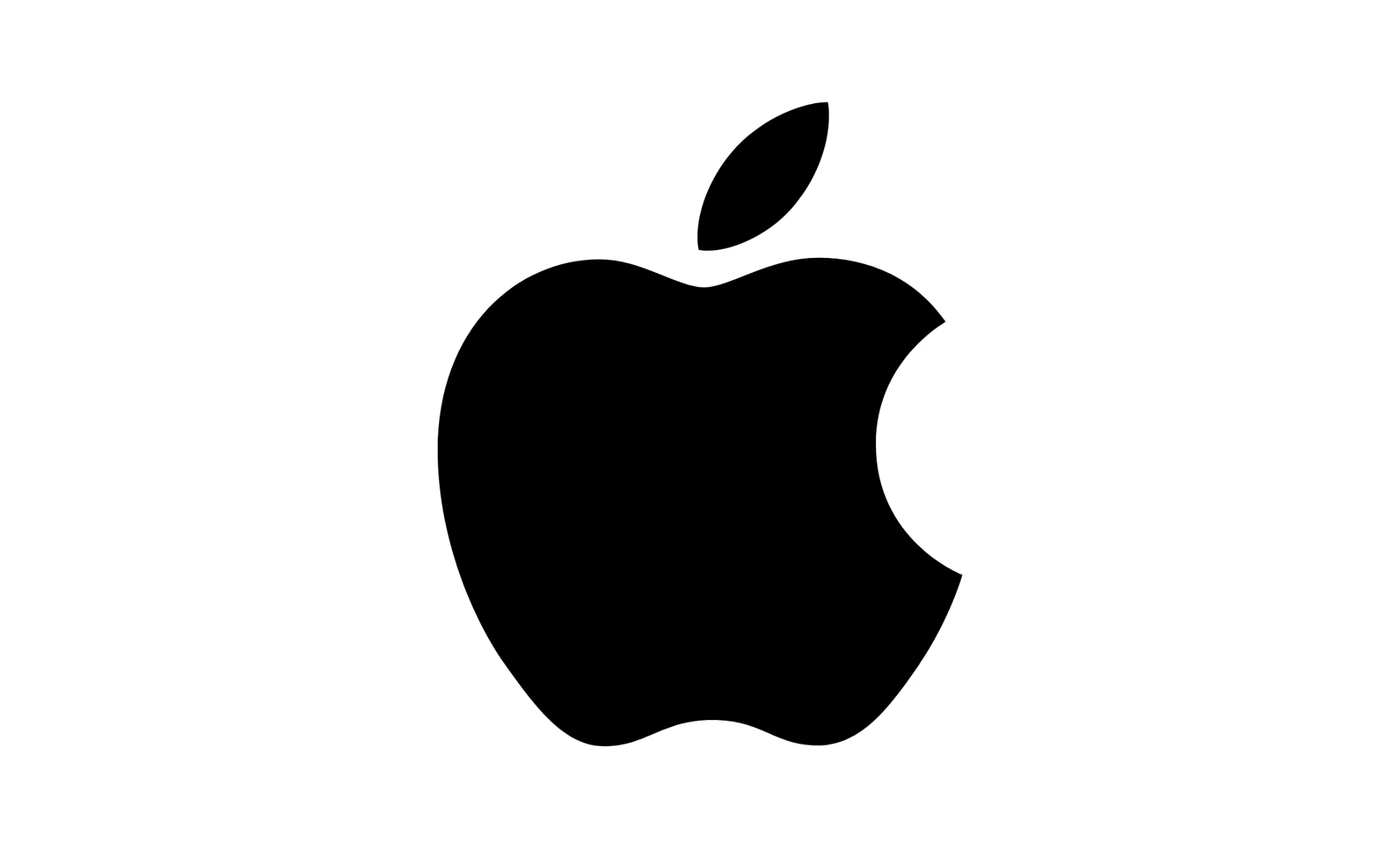
Rob Janoff, an art director at the Regis McKenna agency, drew the apple in 1977 for the launch of the Apple II. He has said the bite was there for scale, so people would read an apple and not a cherry, and the six rainbow stripes advertised the Apple II's color display.
The silhouette hasn't changed since 1977. Apple ran the striped version until 1998, then moved to a single color, which is the version that now sits alone on laptops and phones with no name beside it.
Case study: Apple needed a mark for a home computer most people had never heard of. Janoff kept the shape so plain that later readings of its meaning, from Alan Turing to Adam and Eve, could attach to it without changing it.
What to copy: A shape simple enough to outlast its first color scheme.
Why it works: The apple reads at app-icon size because it was drawn as one closed shape. The bite is the only detail, and it does a job.
2. Google by Google's In-House Design Team (2015)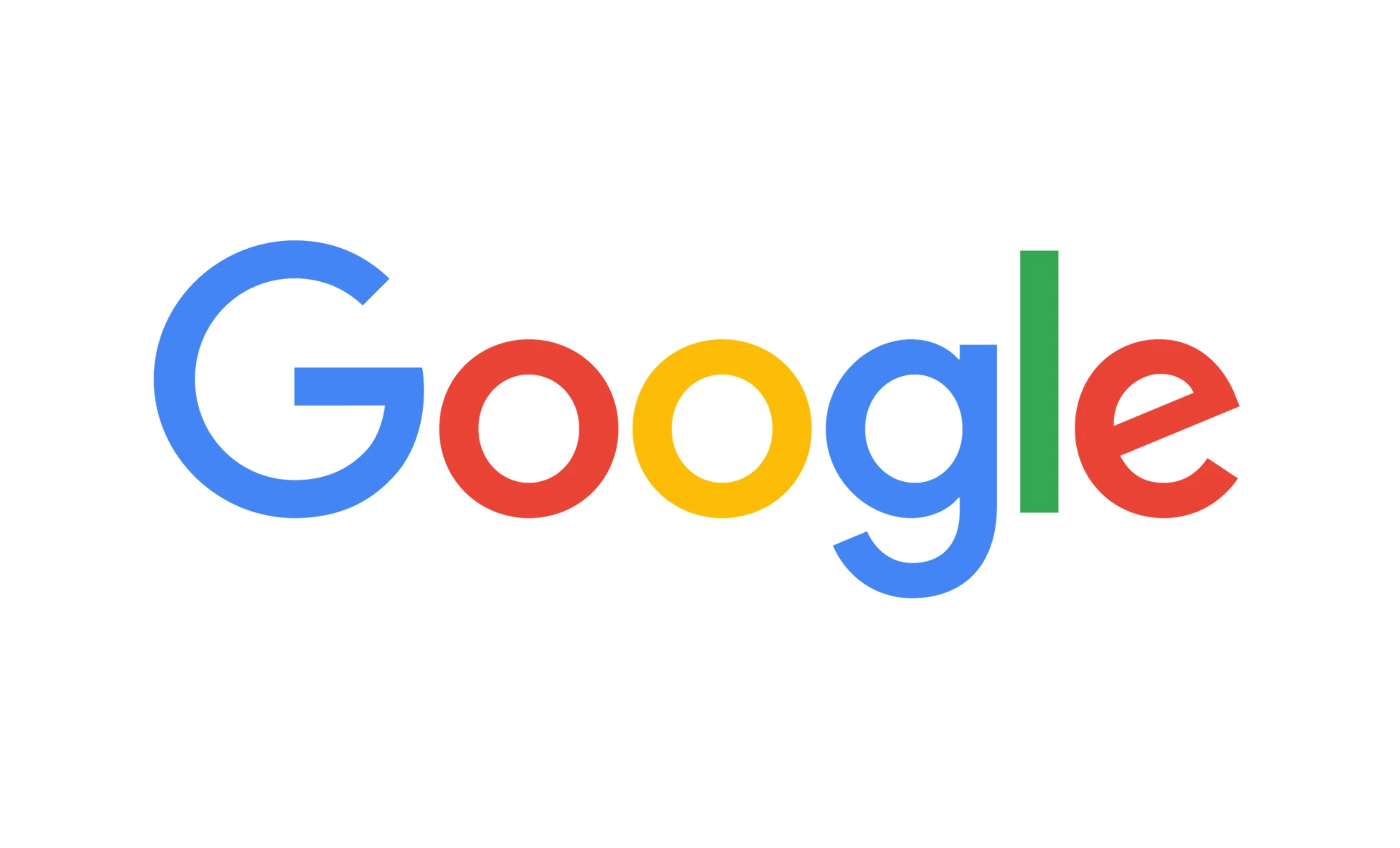
Standout Features:
- 305-byte file
- Four-color "G" icon
- Geometric sans-serif letters
Google's 2015 redesign replaced the serif wordmark with a geometric sans-serif in the same four colors: blue, red, yellow, and green. The team also drew a compact "G" for small spaces and gave it more visual weight so it holds up next to other icons.
Google Design wrote that the final letters were tested at many sizes and weights for legibility. The colors were lightened slightly too, so they wouldn't look darker once the gaps between letters closed.
Case study: The old serif logo was heavy enough that Google served a text approximation of it on slow connections. The rebuilt logo has a full-color version of 305 bytes, down from about 14,000, so every user sees the same mark, according to Google Design.
What to copy: Treat file weight as a design constraint when your logo loads millions of times a day.
Why it works: The four colors are the brand, so the letters could change without losing recognition. The "G" carries the colors into spaces too small for the full name.
For every version from the 1998 original onward, read our in-depth analysis of the Google logo.
3. Muse by Jessica Hische (2026)
Standout Features:
- One-stroke looping "M"
- Iridescent teal and magenta
- Drawn from a pen sketch
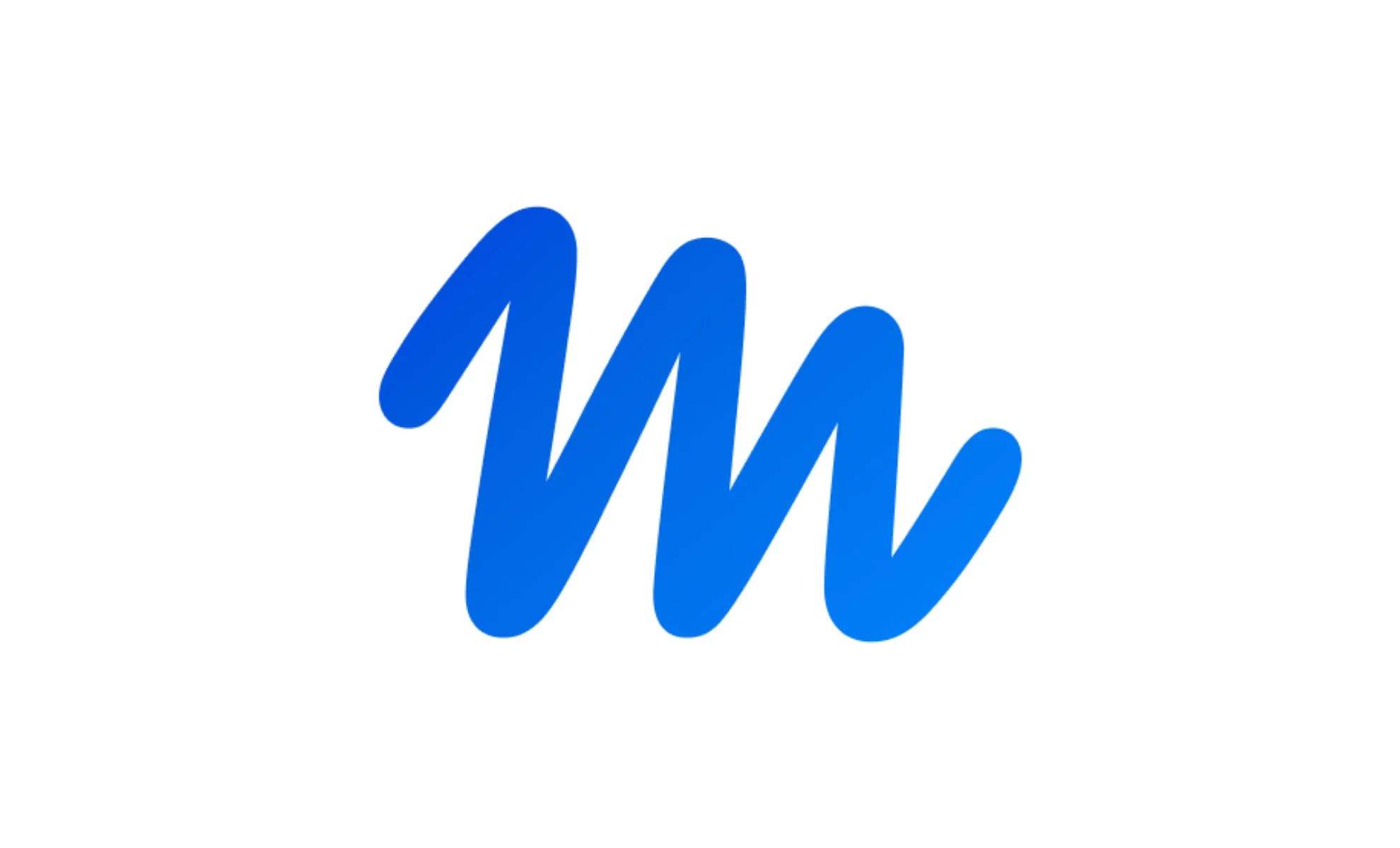
Jessica Hische, an Oakland lettering artist, drew the logo for Meta's Muse AI assistant. The mark is a looping "M" that reads as one continuous pen stroke, filled with an iridescent wash of teal, magenta, and electric blue.
Hische worked from Meta's own pen sketch through more than 30 variations, adjusting the angles, the ends of the stroke, and its vertical rhythm. The mark lands clearly as an "M" and still looks drawn by hand, which keeps an AI product from feeling cold.
Case study: The September 8, 2026 launch drew public comparisons to the logo of Mural Arts Philadelphia, reported by the Philadelphia Inquirer, and criticism from designers on Threads. In a later interview, Hische said she specializes in logo refreshes, and that Meta wanted Muse to sit in the same family as its infinity-loop logo.
What to copy: A new product inside a large brand can borrow the parent's shape language and still earn its own mark.
Why it works: The loop gives an abstract product one gesture people can remember. The color shift stands in for a tool that writes, codes, and draws.
We look at the stroke, the color, and the backlash in our full breakdown of the Muse logo.
4. pēq by Zamora Design (2026)
Standout Features:
- Magnifying-glass symbol
- Orange in a blue category
- Dyslexia-friendly system font
pēq is a San Francisco adtech measurement company, and Zamora Design rebuilt its identity around a mark it already had: a lowercase wordmark with a macron over the "e" and a round symbol that doubles as a magnifying glass. The redesign kept that symbol at its core and drew the rest of the visual language, including frosted, translucent panels, out of the lens.
Orange stays the lead color in a category of blue-to-purple gradients, and Zamora swapped the old secondary colors for cool neutrals. The team set accessibility as a starting constraint and chose Trebuchet, a typeface the British Dyslexia Association recommends for its open letters and spacing.
Case study: Adtech brands tend to look interchangeable, and pēq wanted to read as the category standard. Zamora chose evolution over a clean slate, so the recognition pēq had already earned carried into every new application, from favicon to subway posters and an embroidered cap.
What to copy: When your symbol already works, grow the system out of it.
Why it works: A lens is a literal picture of measurement, which is what pēq sells. A system font means every partner reproduces the logo correctly without buying a license.
See how the lens became a whole visual system in our in-depth look at pēq's logo.
Best Finance Logos
Finance logos sit on card faces, ATM screens, and checkout terminals, often at a size smaller than a thumbnail. The four below win on shape and color more than on lettering.
- Mastercard by Pentagram
- Visa by Visa's in-house team and Mucho
- Node by Brand Brothers
- Seshaasai by Noetic Brands
5. Mastercard by Pentagram (2016 and 2019)
Standout Features:
- Two overlapping circles
- Orange overlap, no stripes
- Name removed in 2019
Mastercard's logo is two overlapping circles, one red and one yellow, with a solid orange where they meet. Pentagram's 2016 redesign replaced the old striped overlap with that solid orange and set the name in a lowercase sans-serif below the circles, according to Dezeen.
Three years later, Mastercard removed the name from the mark in select uses. The circles now stand alone on cards, at checkout, and on sponsorships.
Case study: Mastercard wanted a mark that worked across digital payments, not only on plastic. It dropped the word "mastercard" in January 2019 after finding that more than 80% of people recognized the circles without it, according to the company's announcement.
What to copy: Measure recognition before you remove your name, and remove it only where the symbol has earned it.
Why it works: Two circles are as simple as a logo gets, and the orange overlap gives the eye one place to land. Decades of recognition let Mastercard drop the words.
6. Visa by Visa's In-House Team (2014) and Mucho (2021)
Standout Features:
- Slanted wordmark
- Single bright blue
- No symbol at all
Visa's logo is a four-letter wordmark in a single bright blue, with the letters slanted forward. In 2014, Visa's in-house designers removed the gold from the wordmark for the first time in 55 years, and in 2021 the branding firm Mucho brightened the blue and turned the blue, white, and gold bands into a separate brand symbol.
The slant gives a static name a sense of motion, which suits a company whose product is the movement of money. Four letters in one color fit on a card corner, a payment terminal, and a website checkout without a redraw.
Case study: Mucho found that Visa's acceptance mark, the wordmark inside blue and gold bars, was highly recognizable yet fell short at the point of sale, especially in digital checkout, creative director Rob Duncan told It's Nice That. The 2021 refresh freed the wordmark from the bars and added a custom typeface, Visa Dialect, rolled out across more than 200 countries and territories.
What to copy: When a mark fails at checkout size, take it out of its container.
Why it works: Four letters in one blue stay legible at any size. The slant is the only flourish.
We trace every version of the wordmark, including the gold that disappeared in 2014, in our in-depth analysis of the Visa logo.
7. Node by Brand Brothers (2026)
Standout Features:
- Hand-cut letter curves
- Custom type, no library font
- Paris finance brand
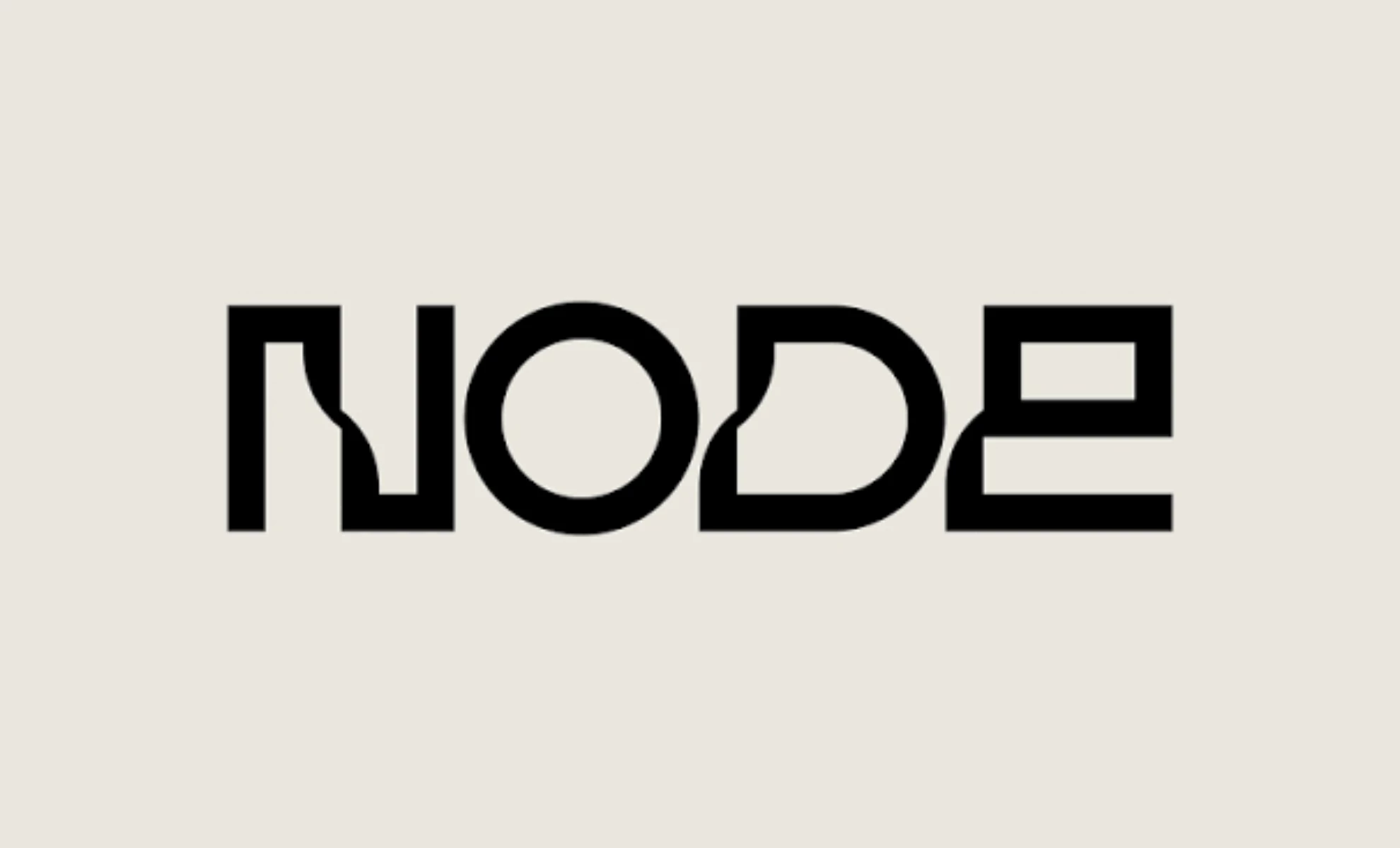
Node is a Paris-based banking and finance project, and its logo was drawn by Brand Brothers, a studio in Paris and Toulouse founded by Johan Debit and Jean-Rémi Massery. Every curve in the wordmark was cut by hand to a specification no type library sells.
Custom letters give a financial brand something its competitors can't license. A bank set in a stock typeface can be imitated in an afternoon, while hand-drawn letters have to be copied stroke by stroke.
Case study: Brand Brothers drew the mark so Node wouldn't need a redraw in five years. Clients quoted on the agency's DesignRush profile single out its craftsmanship and type design.
What to copy: In a crowded category, invest in letters nobody else can download.
Why it works: Custom letters stand out where most finance marks look alike. The plain wordmark stays legible small.
Get the full story behind every hand-cut curve in our in-depth review of the Node logo.
8. Seshaasai by Noetic Brands (2026)
Standout Features:
- Dandelion symbol
- 300 florets in one flower
- Sunrise orange with purple
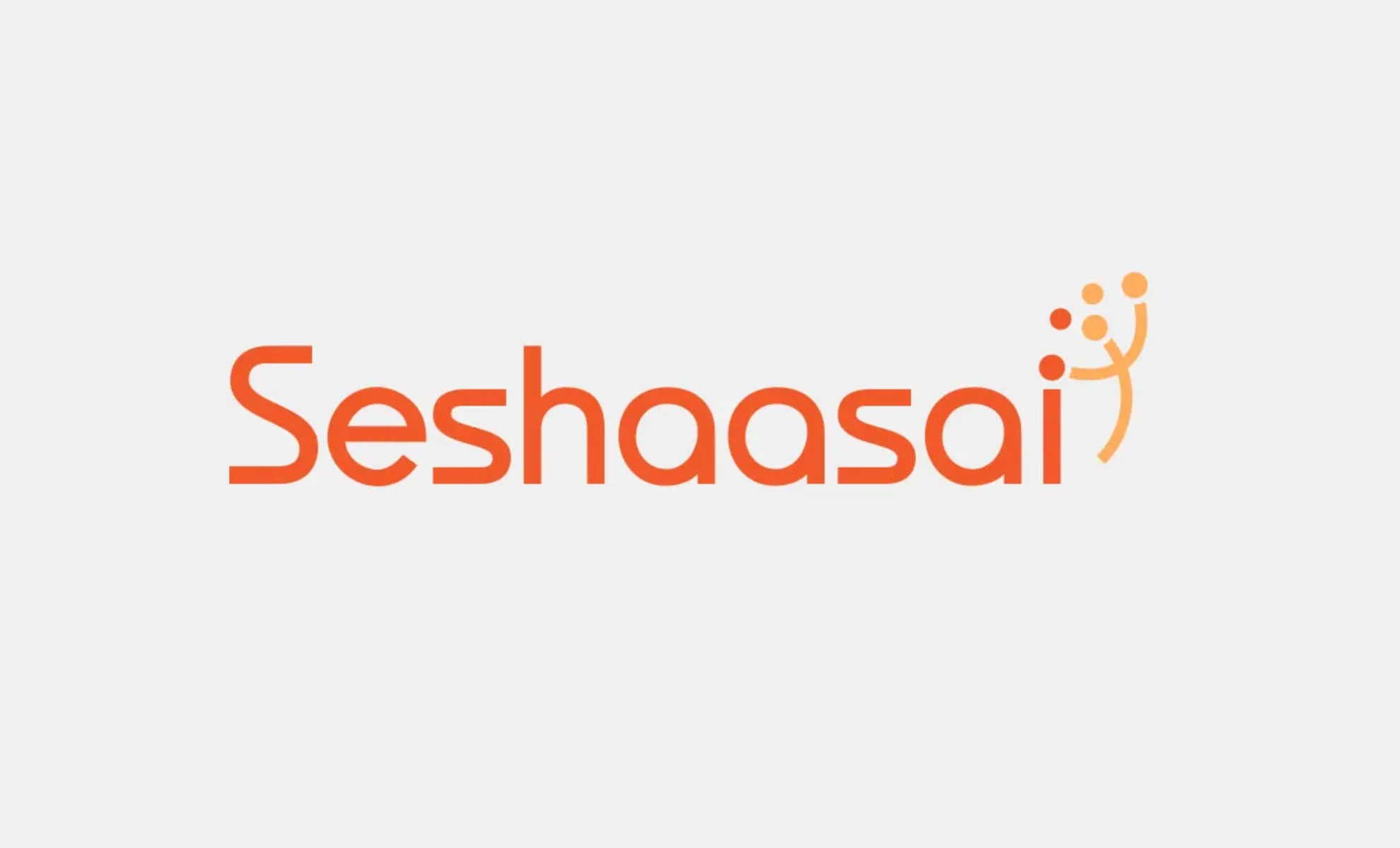
Noetic Brands, a Toronto studio, built Seshaasai's logo on a dandelion, a metaphor for a company whose products spread from one root. Seshaasai makes RFID products, smart cards, and tax technology, and the dandelion rises off the end of a custom lowercase wordmark so the name and symbol work as one unit.
The colors, Flame Orange and Rajah, come from a rising sun, with a purple accent that pairs the calm of technology with warmth. The mark runs on payment cards, station posters, and stationery in solid color or knocked out of deep purple.
Case study: Fintech logos tend to reach for the same swooshes, circuits, and globes. Noetic chose a living thing that stands for growth and dispersal, and built a single parent brand that lets a 1,200-person company's sub-brands share one visual language.
What to copy: In a category of circuits, pick a symbol from nature that explains your business.
Why it works: One dandelion holds hundreds of seeds the way Seshaasai holds many products under one name. The warm palette stands apart from fintech's blues.
We unpack the dandelion, the palette, and the brand architecture in our full breakdown of Seshaasai's logo.
Best Company Logos in Retail and ECommerce
Retail logos work hardest on bags, boxes, and delivery notifications, often seen for a second before the customer moves on. The four below each turn one simple shape into something people recognize on their doorstep.
- Amazon by Turner Duckworth
- Target by Target's in-house team
- NKeramics by Sophinka Design
- Sendit by SlabPixel
9. Amazon by Turner Duckworth (2000)
Standout Features:
- Arrow shaped as a smile
- Points from A to Z
- Printed on every box
Turner Duckworth took the brief from Jeff Bezos in 1998, when Amazon was moving from books to selling everything, and the logo launched in 2000. The studio took the curved line under the name, flipped it into a smile, and made it an arrow running from the "a" to the "z."
One curve carries three ideas: a smile, delivery, and a catalog that runs from A to Z. The arrow worked at any scale, which let it become the standalone app icon years later.
Case study: Turner Duckworth was asked only for a logo but pushed Amazon to print the smile on its shipping boxes, which had been unbranded. The studio says the change put the smile on about 23 million packages a week, and Bruce Duckworth has credited the boxes for the logo's familiarity, according to The Drum.
What to copy: Put your logo where the customer feels the promise being kept.
Why it works: The smile gives a giant retailer a human face when a package arrives. As one shape, the arrow survives without the name.
We follow the smile from the first shipping boxes to the app icon in our in-depth analysis of the Amazon logo.
10. Target by Target's In-House Team (1962)
Standout Features:
- Literal bullseye
- One red, no gradients
- Name optional
Target's logo is a red bullseye: a red dot inside a white ring inside a red ring. It's a literal picture of the company name, which makes it one of the few abstract-looking marks that's also descriptive.
The bullseye works with or without the word "Target" beside it. On store signs, carts, and the company's mascot dog, the red rings alone identify the brand.
Case study: Dayton's named its new discount store Target in 1962 and pictured a bullseye from the start, according to Target's corporate history. The first version had three red rings with the name across them, one ring came off in 1968, and the mark reached its current form in the mid-1970s.
What to copy: If your name is a picture, draw it.
Why it works: Three rings in one red read at any distance. The image and the name say the same thing, so neither needs the other.
For the full evolution from three rings to one, read our in-depth look at the Target logo.
11. NKeramics by Sophinka Design (2026)
Standout Features:
- Initials nested in a vessel
- Two hands cradling the pot
- 1970s-style wordmark
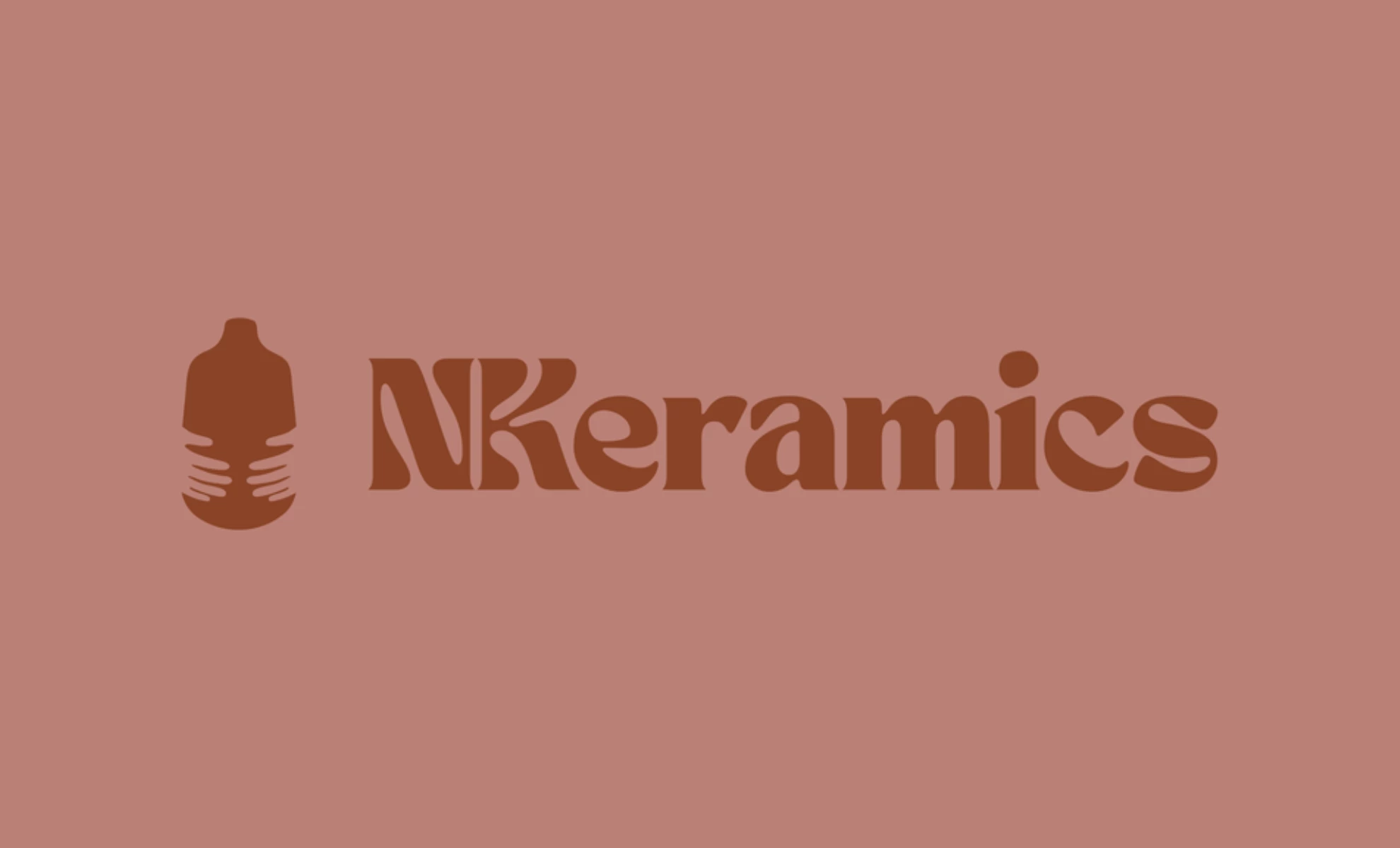
Sophinka Design, the studio of designer Sophie Hartl, built the logo for NKeramics, a ceramics maker in Lisbon. The "N" and "K" nest inside a vessel shape cradled by two hands, so the initials and a pot form one image.
The wordmark is set in Tan Nimbus, a chunky typeface with curved, 1970s-style letters. The palette pulls from clay, glaze, and studio plants: dark red, dusty pink, retro yellow, and muted greens.
Case study: NKeramics sells handmade pieces, and its logo had to say "made by a person" without looking rough. The hands under the pot carry that message, and the mark works alone on embossed business cards and as a repeating pattern on packaging.
What to copy: For a small maker, show the hand that makes the product.
Why it works: The monogram doubles as a picture of the product, and the palette ties the brand to clay.
See the full palette and packaging system in our complete review of the NKeramics logo.
12. Sendit by SlabPixel (2026)
Standout Features:
- Isometric plus shape
- Compass-point letters
- Monochrome with signal orange
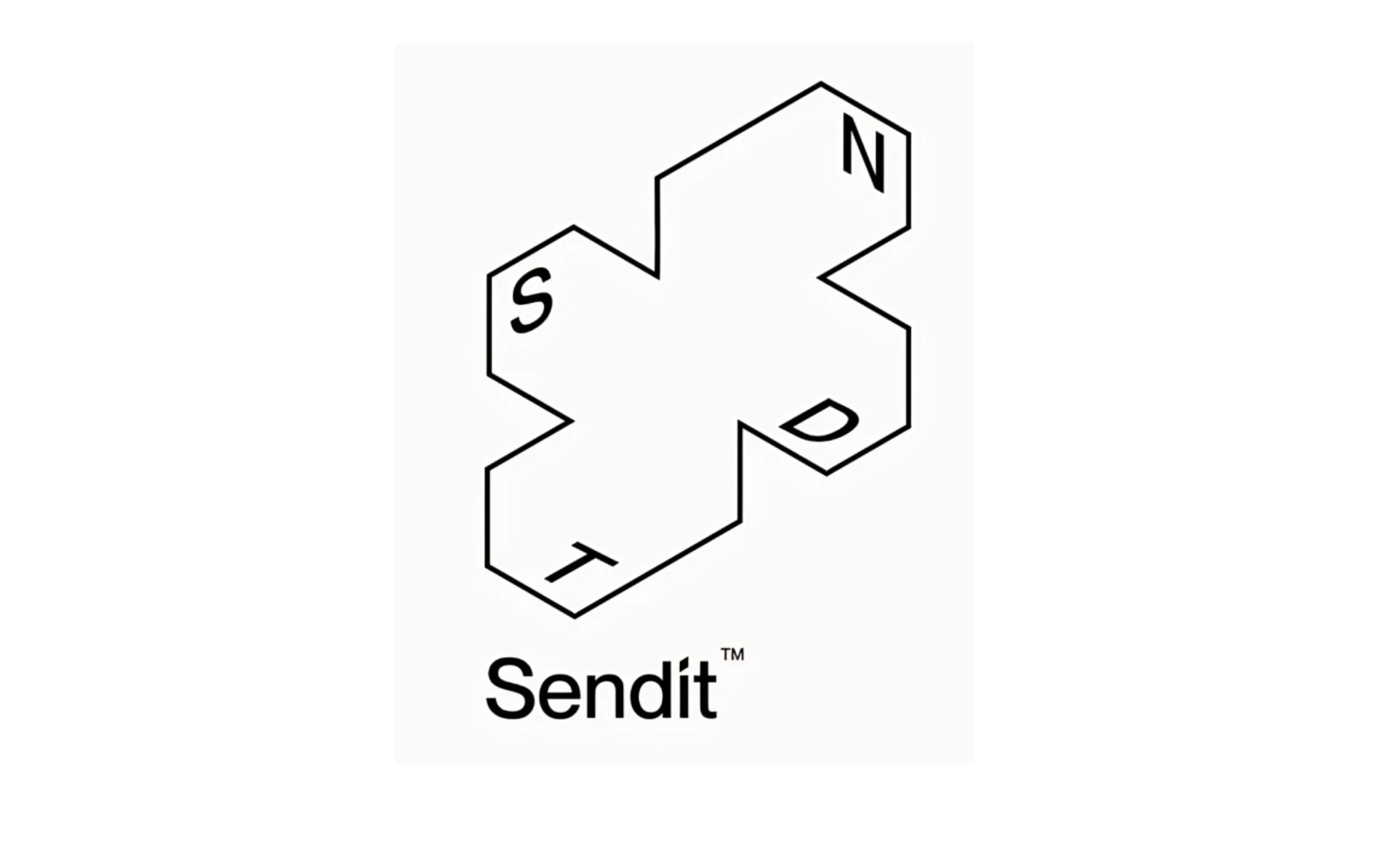
SlabPixel, a studio in Sleman, Indonesia, designed the logo for Sendit, a logistics platform that connects online businesses with courier services. The mark is an isometric plus shape with the letters N, S, T, and D set at its arms like compass bearings.
The horizontal lockup, the stacked wordmark, the favicon, and the standalone symbol all come from that one shape. The palette is mostly black and white, with a signal orange held back for posters and campaigns.
Case study: Logistics is a fragmented process of couriers, routes, and businesses, and Sendit needed to look like one connected service. SlabPixel drew a symbol that works as a map and a crossroads at once, so the idea of routing parcels in every direction sits in the shape itself.
What to copy: If your product connects many parties, draw the connection.
Why it works: A plus shape is simple enough for a favicon and specific enough to suggest directions. Holding orange back for campaigns makes it louder when it appears.
We break down every lockup and the courier map in our in-depth review of Sendit's logo.
Best Food and Beverage Logos
Food and drink logos have to work on a can, a cup, a delivery bag, and a phone screen, often within the same minute. The four below range from a 140-year-old script to a 2026 meal-subscription brand.
- Coca-Cola by Frank M. Robinson
- McDonald's by Jim Schindler
- Balance by Studio AIO
- Talamanca Water by Debut
13. Coca-Cola by Frank M. Robinson (1886)
Standout Features:
- Spencerian handwriting
- Two capital Cs
- Red and white
Frank M. Robinson, John Pemberton's partner and bookkeeper, named the drink in 1886 and wrote the name out in Spencerian script, the formal business handwriting of the day. The Coca-Cola Company credits him with choosing the name partly because he thought the two Cs would look good in advertising.
Pemberton's company adopted the script by unanimous consent. Its trademark history shows only slight changes since, and the 1890-to-1891 version was the biggest departure from Robinson's original.
Case study: Coca-Cola tried a different script for about a year in the early 1890s, then went back to Robinson's version. In 2026 the company refreshed its whole identity across more than 200 markets and still left the script untouched, as DesignRush reported at the time.
What to copy: When your lettering is the brand, protect it from redesigns.
Why it works: Handwriting is hard to copy and easy to recognize. The matching Cs give the name a rhythm that works as a shape.
For the script's full 140-year history, read our in-depth analysis of the Coca-Cola logo.
14. McDonald's by Jim Schindler (1962)
Standout Features:
- Two golden arches
- Forms a letter "M"
- Yellow on red
McDonald's logo is two golden arches that join to form an "M," usually set on a red background. The arches began as architecture: Stanley Clark Meston designed tall yellow arches for the sides of a 1953 McDonald's restaurant, and in 1962 Jim Schindler, the company's head of engineering and design, turned them into an "M" logo.
The shape works at road-sign height and at app-icon size. It needs no name, and it stays clear at a distance where a wordmark would blur.
Case study: McDonald's dropped the physical arches from most of its restaurants in the 1960s but kept them in the logo, and the 1968 version removed the roofline Schindler had drawn through them. The arches now appear alone on packaging, signs, and the app.
What to copy: If a physical feature of your business is distinctive, make it the logo.
Why it works: One letter drawn as two curves is simple and distinctive. The yellow stands out against red and sky.
We trace the arches from restaurant architecture to the app icon in our in-depth analysis of the McDonald's logo.
15. Balance by Studio AIO (2026)
Standout Features:
- Three geometric shapes
- Ice blue on forest green
- Custom serif wordmark
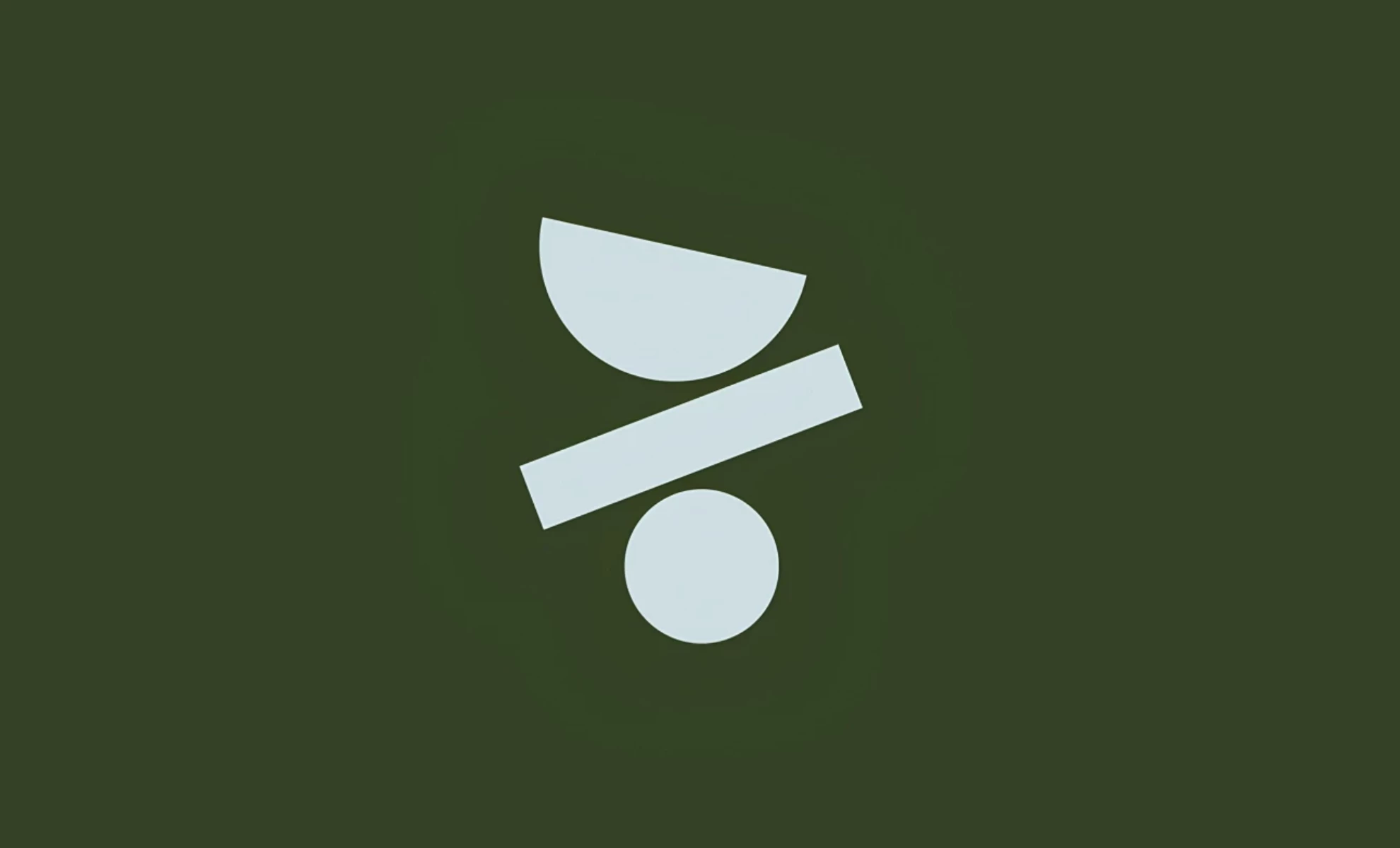
Studio AIO, a studio in Kuwait City, designed the logo for Balance, a premium meal-subscription brand. The mark sets a half-circle, a diagonal bar, and a circle in tension, so three simple shapes picture equilibrium before you read the name.
Deep forest green covers the packaging, pale ice blue carries the mark, and yellow appears only on cup carriers and seal stickers. The wordmark is a custom serif that feels stable and relaxed at once, with short lines of copy printed small across the packaging.
Case study: A meal subscription touches customers every day through bags, cups, and stickers, so the mark has to hold across all of them. Studio AIO's symbol runs from a dark green card to mustard cups and olive delivery bags without changing.
What to copy: When your brand name is an idea, draw the idea.
Why it works: Three shapes are few enough to remember and specific enough to own. The restrained palette lets the yellow do real work when it appears.
See how the mark carries from cups to delivery bags in our full breakdown of the Balance logo.
16. Talamanca Water by Debut (2026)
Standout Features:
- Mountain and water drop
- Negative-space droplet
- Two color palettes
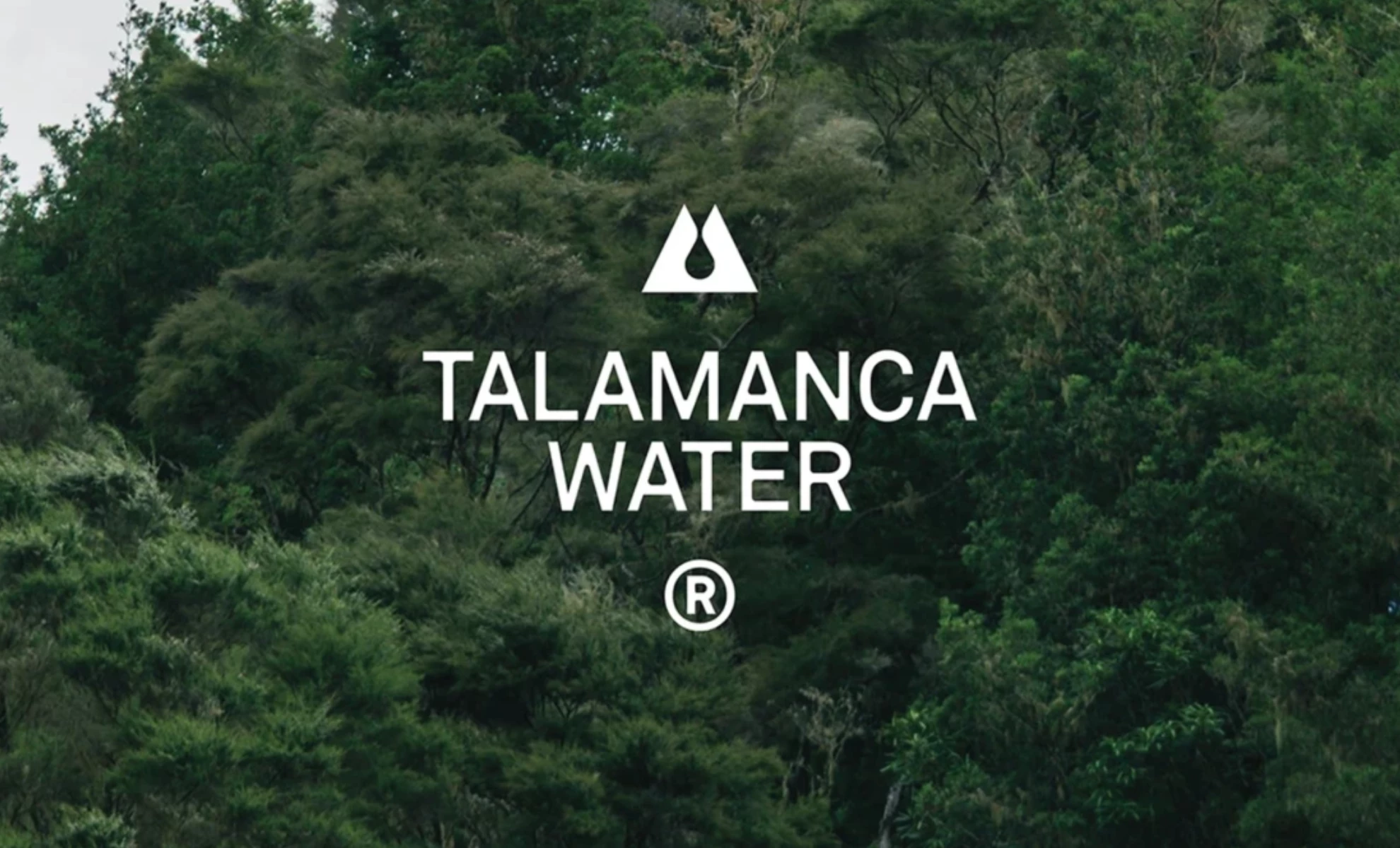
Debut, a studio in Heredia, Costa Rica, designed the logo for Talamanca Water, a bottled-water brand. The mark is a white triangle for a Talamanca mountain with a water drop cut out of it in negative space.
A bold uppercase sans-serif wordmark sits under the mark. Bottles use a blue-and-white label, while merchandise and signs use deep forest green, so the brand looks clean on the shelf and natural on a flask.
Case study: Bottled water is a crowded category where brands sell their source. Debut put the source and the product in a single shape, which holds up embossed on a travel flask and printed on a round sign.
What to copy: If your origin is your selling point, put it in the mark.
Why it works: One shape says where the water comes from and what it is. Two palettes give range without changing the logo.
We walk through the bottle, merchandise, and signage in our in-depth review of the Talamanca Water logo.
Best Fashion, Sports, and Lifestyle Logos
Fashion and sports logos are worn, which means they get seen on a moving body, stitched in thread, and copied by counterfeiters. The four below are simple enough to embroider and personal enough to wear.
- Nike by Carolyn Davidson
- Lacoste by Robert George
- Demeter by Monotypo Studio
- Vernon Davis by Copa Design
17. Nike by Carolyn Davidson (1971)
Standout Features:
- Single curved swoosh
- No name needed
- Designed for a shoe's side
Carolyn Davidson, a graphic design student at Portland State University, drew the swoosh in 1971 for Phil Knight, who taught accounting there. She tested her sketches on tissue paper laid over a drawing of a shoe, since the mark had to look right on the shoe's side.
Knight wasn't sold at first, and production deadlines forced the choice. Nike's own history dates the swoosh's first confirmed appearance in a major race to the 1972 Boston Marathon, and in 1974 Steve Prefontaine wore it alone on his tracksuit, the first time it stood without the name on apparel.
Case study: Davidson billed Nike $35 for 17.5 hours of work. In 1983, after the company went public, Knight gave her a gold Swoosh ring set with a diamond and 500 shares of Nike stock, a stake that grew to roughly $3 million after later splits.
What to copy: A logo drawn for the place it will actually live, here the side of a running shoe, fits that place for decades.
Why it works: The swoosh is one stroke, easy to stitch, print, or mold into a sole. It suggests movement without showing an athlete.
18. Lacoste by Robert George (1927)
Standout Features:
- Green crocodile
- Mouth open, tail raised
- Small, chest-height emblem
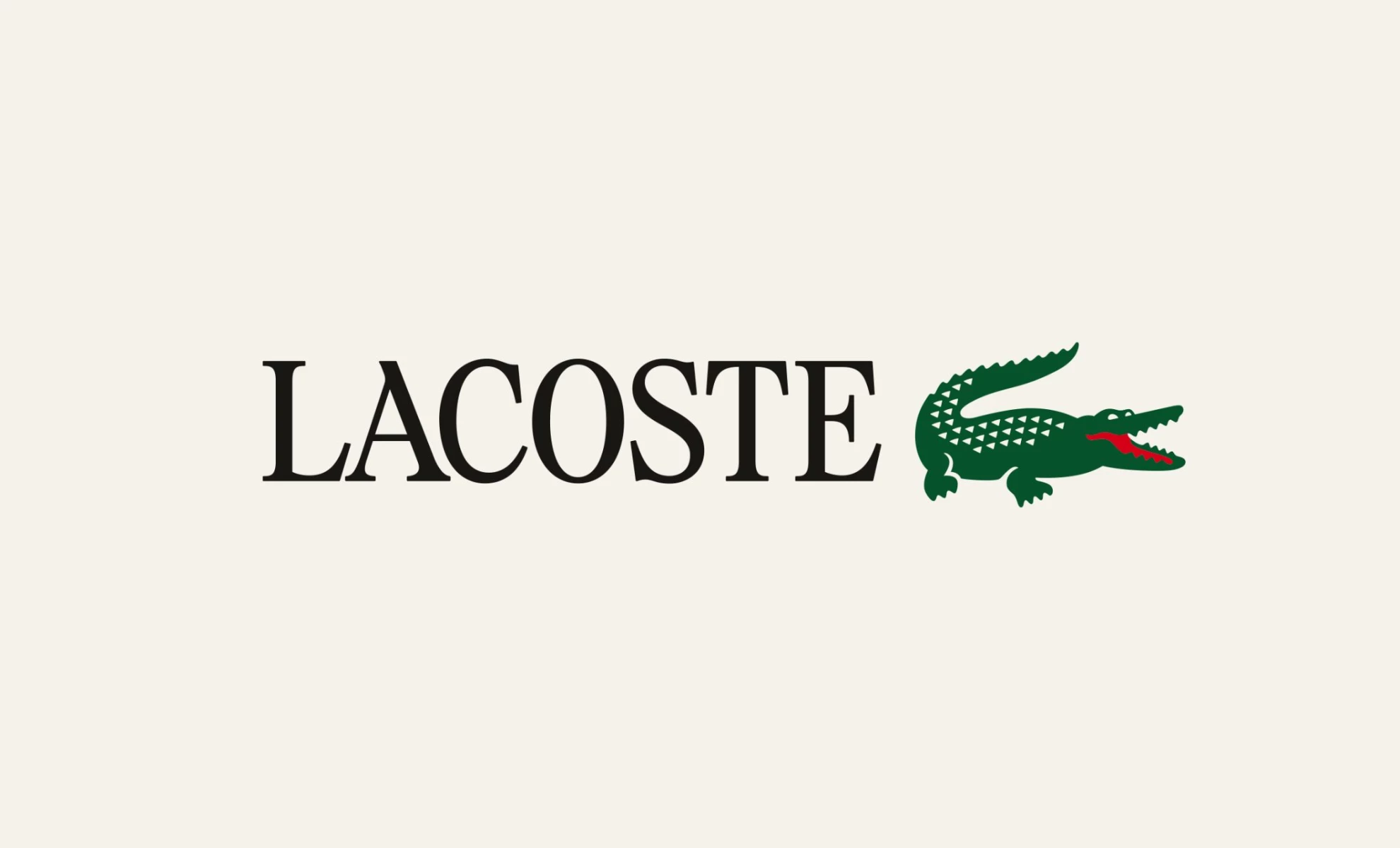
Lacoste's logo is a green crocodile with its mouth open and tail raised, usually stitched small on the chest of a polo shirt. It sits above or beside the capital-letter wordmark "LACOSTE."
The crocodile ties back to founder René Lacoste, a tennis player an American journalist nicknamed "the Crocodile" in 1923 after a bet over a crocodile-leather suitcase, as Lacoste tells it. Designer Robert George drew the animal in 1927, and Lacoste had it embroidered on his blazers.
Case study: When the company was founded in 1933, the crocodile went on the chest of its polo shirts, which Lacoste says made it the first brand to show a visible logo on clothing. The small green crocodile now identifies the brand from across a room.
What to copy: A logo people choose to wear is advertising they pay for.
Why it works: The crocodile stands out in a category of initials, and its clear outline survives embroidery.
For the crocodile's full story from blazer to polo, read our in-depth analysis of the Lacoste logo.
19. Demeter by Monotypo Studio (2026)
Standout Features:
- Pencil-drawn rhyton
- Apothecary-style serif framing
- Black ink on warm cream
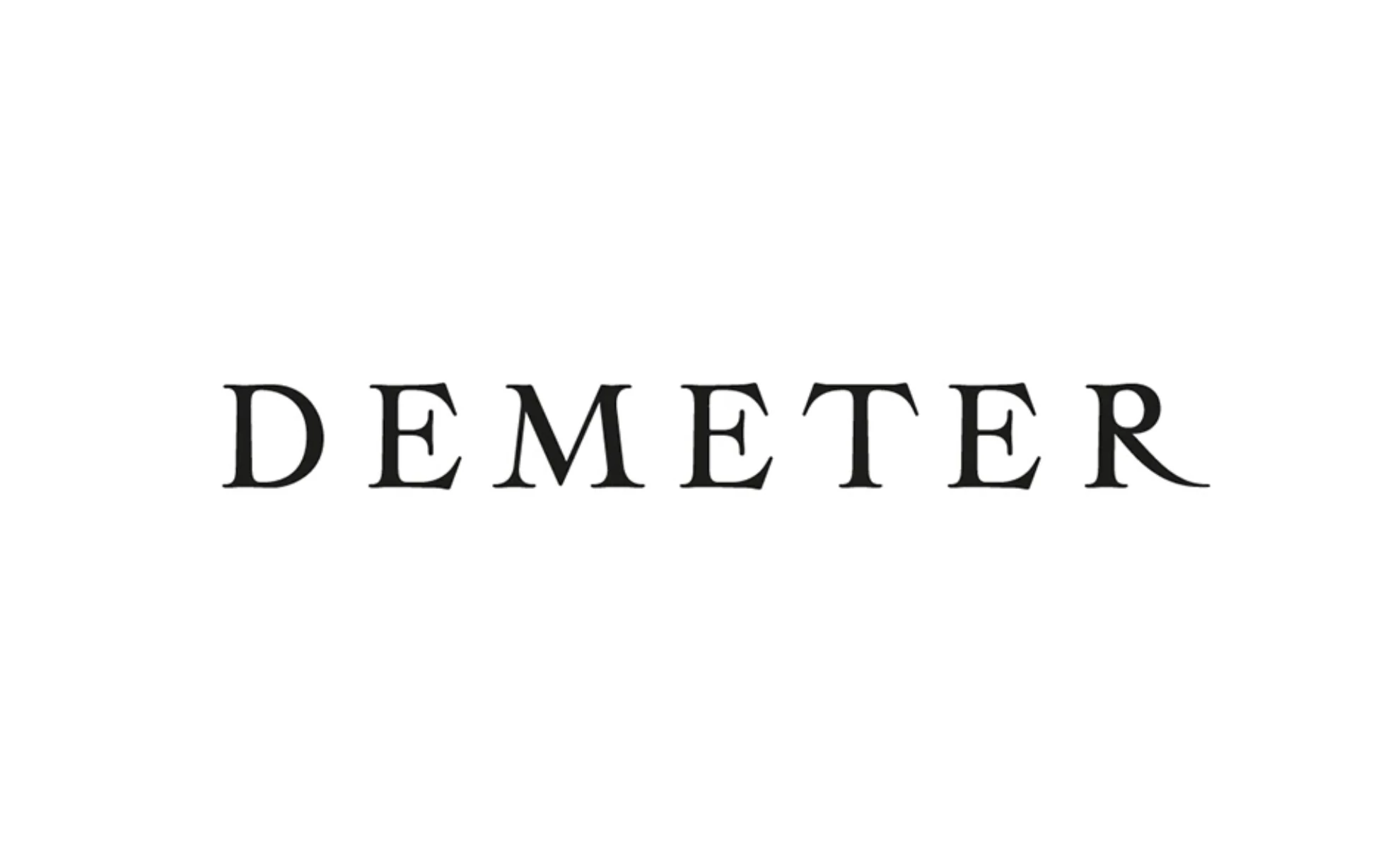
Monotypo Studio, a design studio in Guadalajara, Mexico, created the logo for Demeter, a fragrance brand built on Greek myth. The mark is a hand-drawn rhyton, an ancient drinking horn shaped like a horse's head, rendered in pencil.
Serif letters "M." and "N.Y." frame the drawing like an old apothecary label. The palette is black ink on warm cream, carried onto a magnetic keepsake box and the bottle.
Case study: Fragrance brands often reach for laurels and columns to signal Greek myth. Monotypo used one real artifact, drawn by hand, so the Greek reference comes through the drawing itself.
What to copy: In a crowded luxury category, one specific, well-drawn object beats a generic symbol.
Why it works: The rhyton is unusual enough to remember, and the restrained palette keeps attention on the drawing.
We look closely at the drawing, the type, and the keepsake box in our full breakdown of the Demeter logo.
20. Vernon Davis by Copa Design (2026)
Standout Features:
- Football-inspired monogram
- Custom typeface
- Built for sport and business
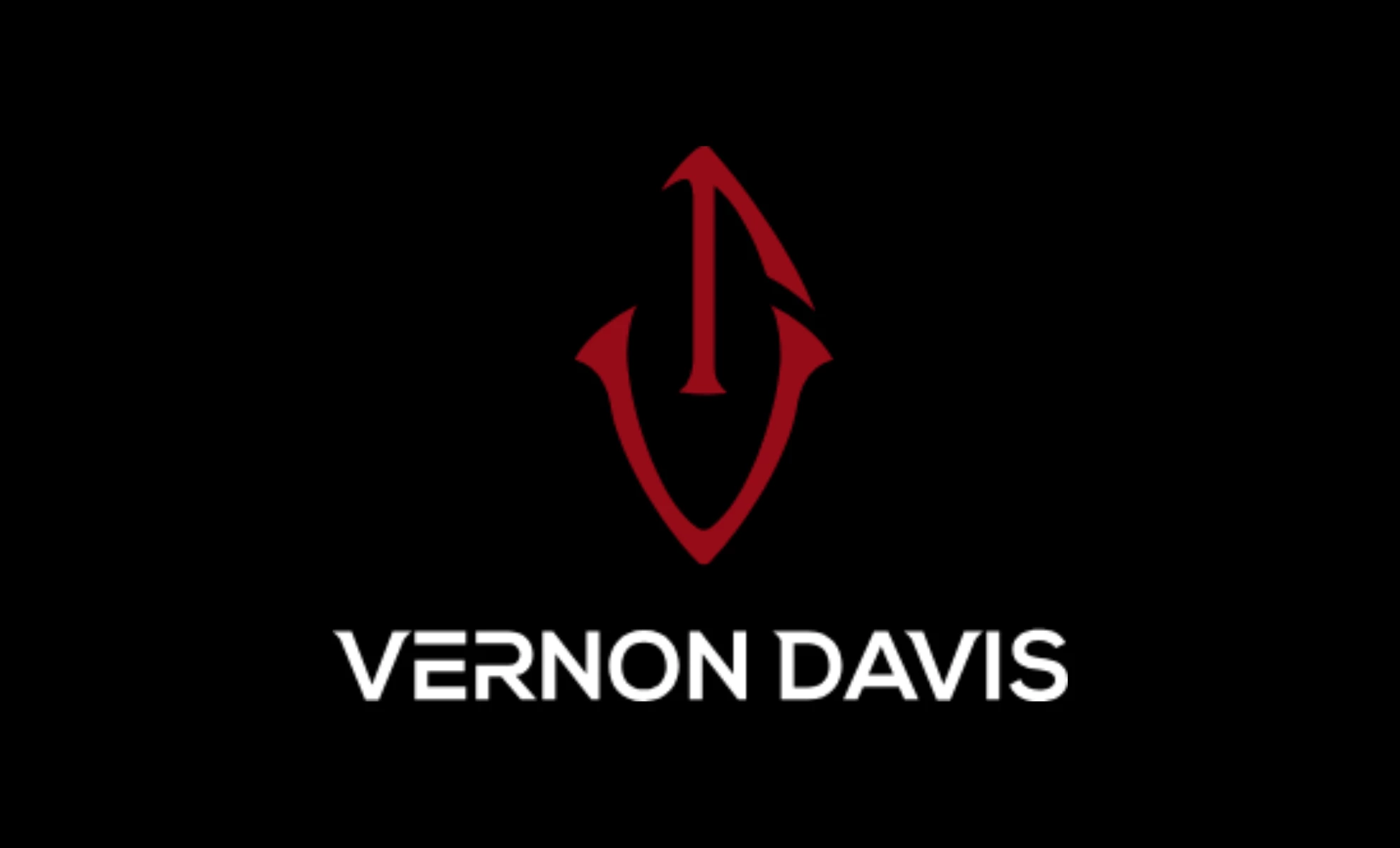
Copa Design, a creative agency in Santa Clara, California, designed the personal brand of Vernon Davis, the NFL veteran and Super Bowl champion. The project covered an official logo, a typeface, and a style guide, all built around a football-inspired monogram.
The monogram had to serve two careers. Copa's president and chief executive Jason Saldana has said Davis needed a brand that captured his athletic achievements while speaking to his future in business.
Case study: A personal brand has to outlast the career that made the name famous. Copa built one monogram to convey strength and balance and to adapt across industries, so Davis's name can move from sport to business without a new identity.
What to copy: Design a personal brand for where the person is going, not only where they've been.
Why it works: A monogram gives a person's name the compactness of a team badge. A custom typeface keeps every application consistent.
Saldana explains how the team won and built the project in our interview with Copa Design's CEO.
What Makes the Best Brand Logos Work?
The best brand logos stay recognizable at any size, in any color, and through decades of change, and each one makes a single visual statement. The five principles below explain why these 20 work.
Simplicity
Simple logos are easier to recognize at a glance and easier to reproduce on a phone screen, a shipping box, or an embroidered cap. Apple's apple, Nike's swoosh, and Target's bullseye each reduce to one shape you could sketch from memory.
There's a catch, however. Studies from the Journal of Marketing Research analyzing 597 brand logos found that descriptive logos (those illustrating what a company sells) boosted brand evaluations and purchase intent, though this advantage shrank for familiar brands.
That finding explains the gap between what famous brands do and what new ones should do. A famous brand can afford an abstract mark because its name already carries the meaning, while an unknown brand gets more from a logo that tells people what it does.
Memorability
A memorable logo has one distinctive element that people notice and repeat. Amazon's A-to-Z smile, McDonald's arches, and Apple's bite each give viewers one thing to point at.
Logos that say several things at once give viewers nothing to hold. Every logo here makes one visual statement and lets advertising supply the rest.
Versatility
A versatile logo works on light and dark backgrounds, in color and in one color, horizontal and stacked. It has to hold up as an app icon, a favicon, a billboard, and a stitched label.
Warner Bros. learned this the hard way when Pentagram's research found the studio's 1993 shield too detailed to use at small sizes and in digital settings. Newer marks plan for it from the start: pēq's logo was built to hold from favicon to transit billboard.
Relevance
A relevant logo fits the company's business, audience, and history. Seshaasai's dandelion stands for a company whose products spread from one root, and Talamanca Water puts a mountain and a water drop in one shape.
Relevance is also what lets a redesign survive. When the idea behind a mark matches the business, the details can change while the meaning stays.
Timelessness
Timeless logos are built on shapes and letters, not on the effects that date a design to its year. Coca-Cola's script has changed only slightly since 1886, according to the company's own trademark history.
Logos that chase a trend need expensive redesigns once it passes. The ones here kept their core shape and updated the details, so their recognition kept growing.
Logo Design Elements the Best Brand Logos Share
The 20 logos above use a small set of colors, typefaces, and logo types again and again. Each element works best when it matches what the brand sells.
Color in Logo Design
Color shapes how people read a brand's personality. Lauren Labrecque and George Milne, writing in the Journal of the Academy of Marketing Science, ran four studies mapping colors to brand personality traits. They found that red links to excitement and blue to competence, and that more saturated colors strengthen the effect.
Category conventions matter too. Artiom Dashinsky's 2025 analysis of 128 tech and SaaS logos found 51% were black, and that blue was the most common color among the rest at 18%.
In a category full of black and blue, pēq's orange and Seshaasai's sunrise palette stand out at a glance.
Typography in Logo Design
Typography carries a logo's voice before anyone reads the words. Dashinsky's same analysis found 93% of the tech logos he studied used sans-serif type.
- Script lettering (Coca-Cola) feels personal and handwritten, and is hard to copy.
- Sans-serif type (Google, Talamanca Water, Sendit) feels modern and stays legible on screens.
- Accessible system fonts (pēq's Trebuchet) keep a logo consistent wherever partners reproduce it.
- Custom lettering (Node, Muse, Balance, Seshaasai) gives a brand letters no competitor can license.
Logo Types
A logo type is the structure a mark takes: a name, a symbol, or both. Each has a different cost to build recognition.
- Wordmarks use the brand name alone (Google, Visa, Coca-Cola, Node). They work best when the name is short and distinctive.
- Lettermarks and monograms use initials (NKeramics, Vernon Davis). They suit long names, but the initials have to earn recognition.
- Pictorial marks use a symbol alone (Apple, Nike, Mastercard, Target). They need years of exposure before the symbol can stand without the name.
- Combination marks pair a symbol and a name (Amazon, Talamanca Water, Seshaasai, Sendit). Dashinsky found 72% of tech logos use this structure.
How Iconic Logos Evolve, and When a Redesign Backfires
The redesigns that worked in this list changed details and kept the core shape: Google's colors, Mastercard's circles, Visa's slanted name, Target's bullseye. The ones that failed replaced the shape customers recognized, and four recent cases show what that costs.
Tropicana (2009)
Tropicana replaced its orange-with-a-straw carton with a design by Arnell in January 2009. Unit sales of Tropicana Pure Premium fell 20% and dollar sales fell 19%, about $30 million, between January 1 and February 22, from Information Resources Inc. data reported by Advertising Age and quoted by Bloomberg.
Tropicana brought back the old packaging within two months. A 2009 research paper from the Florida Department of Citrus found other factors also moved sales in that period, so the redesign wasn't the only cause.
Gap (2010)
Gap replaced its blue-box logo with a Helvetica wordmark and a small blue square from Laird & Partners in October 2010. The company dropped it about a week later, after more than 2,000 comments on its Facebook page, as The Drum reported.
Marka Hansen, then president of Gap North America, said the company hadn't handled the change the right way. The cost was reputational, and it became a standard example of moving too fast on a familiar mark.
Jaguar (2024)
Jaguar replaced its leaping-cat badge with a new wordmark and abstract identity in November 2024, developed with the agency Accenture Song. European registrations fell to 49 cars in April 2025 from 1,961 a year earlier, from European Automobile Manufacturers' Association data reported by Motor1.
Most coverage blamed the rebrand, but Jaguar had stopped making most of its models while it prepared new electric cars. The figure shows a brand with almost nothing to sell. Check what else changed before you blame a logo for a sales drop.
Cracker Barrel (2025)
Cracker Barrel replaced its "Old Timer" logo, a man leaning on a barrel used since 1977, with a text-only design in August 2025. After a public backlash, the company switched back within days.
In its September 2025 results, Cracker Barrel said it had returned to the Old Timer logo and paused remodels, and it guided fiscal 2026 comparable-store traffic down 4% to 7%, per its SEC filing. Remodels and menu changes also fed that guidance, so the logo is one factor among several.
Before you change a logo customers know, see how the best logo redesigns kept their equity.
Best Brand Logos: Key Takeaways
The 20 logos above point to five habits you can apply to your own logo. Each comes from a decision a named brand made.
Start With One Idea
A strong logo says one thing. Sendit's plus shape says routing in every direction, and Talamanca Water's mountain-and-drop says where the water comes from. Write one sentence describing the single idea your logo should carry before you sketch anything.
Test at the Smallest Size First
A logo spends most of its life small, as an app icon, a favicon, or a stitched label. Google drew a separate, heavier "G" for small spaces, and Zamora Design built pēq's lockups to hold from favicon to billboard. Check your design at 16 pixels before you finalize it.
Make It Work in One Color
A logo that depends on its full palette fails on an embossed card or a single-color print run. NKeramics' mark works embossed with no color at all, since the shape carries the design. Print your logo in black on white, and if it stops working, fix the shape before the color.
Earn Abstraction Before You Use It
Abstract marks work for brands people already know. The 2019 Journal of Marketing Research study found descriptive logos help less familiar brands more, which is why newer marks like Talamanca Water and NKeramics show the product while Apple and Nike no longer need to. If your brand is new, show what you do.
Keep the Shape People Know
Redesigns that keep the core shape protect recognition, and the ones that drop it gamble with it. Coca-Cola refreshed its identity in 2026 without touching the script, while Gap and Cracker Barrel replaced their marks and reversed within days. Change the details and keep the shape customers recognize.
If you're planning a new logo, compare portfolios from logo design agencies.
Our design experts recognize the most innovative and creative designs from across the globe. Visit Design Awards to see the best logo designs.
Our team also ranks agencies worldwide to help you find a qualified agency partner. Visit our Agency Directory for the Top Logo Design Companies, as well as:
- Top Branding Agencies
- Top Graphic Design Companies
- Top Creative Agencies
- Top Design Agencies
- Top Packaging Design Companies
For logos that defined an earlier era, see the most famous logos of the 90s.