
Modern AI lead generation tools can find high-intent prospects, enrich their data in real time, personalize outreach at scale, and even flag which accounts are most likely to convert.
AI Lead Generation Tools: Key Findings
- Platforms like HubSpot, Nutshell, and Apollo.io reflect a shift toward unified GTM stacks increasingly supported by AI agents that handle research and outreach.
- Clay and Kaspr focus on cleaning, verifying, and completing lead data, ensuring sales teams work with accurate, personalization-ready records.
- GetSales.io and Seamless.ai connect prospecting to sequencing and CRM syncing, and Pipedrive’s Meeting Intelligence provides pre-call briefs and drafts CRM updates for review.
AI Lead Generation for Modern Revenue Teams
In 2026, most sales teams aren’t struggling to find leads. They’re struggling to spot which ones actually matter.
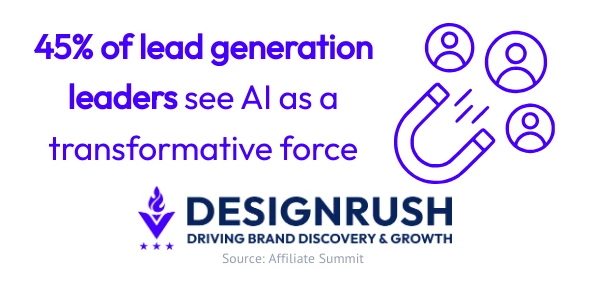
According to the State of Lead Gen Report 2025, 45% of surveyed marketers expect AI to be one of the most transformative trends in lead generation over the next three years.
Traditional lead lists provide contact data, but they offer little insight into which prospects may be ready to buy. AI tools can identify intent signals, enrich records in real time, and automate multichannel outreach.



AI vs. Traditional Lead Generation Software
Traditional lead generation tools rely on static filters and bulk exports. A rep sets criteria, downloads a spreadsheet, then cleans, verifies, and prioritizes it by hand before any outreach happens.
AI lead generation software collapses that process. It enriches records in real time, scores intent automatically, and drafts outreach from live signals.
| Dimension | Traditional Lead Gen | AI-Powered Lead Gen Tools |
| Logic | Static filters and Boolean search | Machine learning models that adapt to outcomes |
| Data usage | Bulk exports, manually cleaned by reps | Real-time enrichment and waterfall verification |
| Personalization | First-name mail merge | Message drafts based on role, signals, and behavior |
| Optimization | Manual A/B testing, if any | Continuous scoring and self-adjusting sequences |
| Scalability | Limited by rep bandwidth for research | Scales prospecting and outreach without added headcount |
In this guide, we break down the 21 best AI lead generation tools in 2026, organized by how modern GTM teams work, from prospecting and enrichment to outreach, intent data, and conversion.
CRM, Lead Management & Follow-up Automation
These platforms centralize contact and deal data, reduce manual admin work, and make it easier to track conversations, assign next steps, and follow up consistently across the sales cycle.
Teams still need a system for capturing context, prioritizing follow-up, and making sure promising leads don't stall.
- HubSpot: Best for full-funnel CRM with AI-assisted sales workflows
- Pipedrive: Best for CRM-Native Meeting Intelligence
- Nutshell: Best for CRM, lead tracking, and AI-powered follow-up
- Attio: Best for modern CRM workflows with automatic enrichment
1. HubSpot: Best for Full-Funnel CRM With AI-Assisted Sales Workflows
For sales teams that want a scalable CRM connecting lead capture, pipeline management, and AI-supported follow-up in one platform
Key Capabilities:
- Sales Hub CRM for managing contacts, deals, and pipeline activity in a single system of record
- Lead capture, routing, and assignment to keep promising leads moving through the pipeline
- HubSpot's AI tools for automating research, outreach, and support across the funnel
- Prospecting Agent that monitors accounts for buying signals and drafts personalized outreach automatically
- Customer Agent and Chatbot Builder for resolving inquiries and qualifying leads across channels
- Marketing Hub tools for capturing and nurturing leads earlier in the funnel
- Reporting, forecasting, and deal tracking that scale from small teams to enterprise
Pricing:
- Free tools: Available for up to 2 users
- Sales Hub Starter: Starts from $20/seat/month (or $15/seat/month billed annually)
- Sales Hub Professional: Starts from $100/seat/month (billed annually)
- Sales Hub Enterprise: Starts from $150/seat/month, typically with a one-time onboarding fee
Sales Team Use Case: A scaling sales team uses HubSpot to capture inbound leads, route them to the right reps, and let the Prospecting Agent identify accounts showing buying signals. The Customer Agent handles routine questions, and Marketing Hub nurtures earlier-stage leads, keeping the full funnel connected as the team grows beyond a lightweight CRM.
Limitations to Know:
- Costs can rise quickly once teams add paid seats, higher tiers, or additional Hubs
- AI agents run on HubSpot Credits with usage-based charges, which can be harder to forecast than flat per-seat pricing
- Advanced automation and forecasting are gated behind Professional and Enterprise tiers
Get started with HubSpot's AI lead generation tools for free.
2. Pipedrive: Best for CRM-Native Meeting Intelligence
For growing sales teams that want meeting preparation, call insights, and post-call CRM updates handled inside their CRM
Key Capabilities:
- Sales CRM for managing leads, contacts, deals, activities, and pipelines
- Nova pre-call briefs based on deal history, emails, and previous conversations stored in Pipedrive
- Call recording through the desktop app or a visible notetaker in Google Meet, Zoom, and Microsoft Teams
- Automatic transcripts, meeting summaries, and highlighted next steps
- Suggested CRM updates for fields such as deal stage, value, and expected close date
- Review and approval controls before Nova applies suggested changes
- Participant notifications, consent options, and admin access controls
Pricing:
- Lite: $14/seat/month
- Growth: $39/seat/month
- Premium: $59/seat/month
- Ultimate: $79/seat/month
- Free 14-day trial
- Nova’s meeting intelligence is included in every plan at no additional cost
Sales Team Use Case: A growing sales team uses Nova to review deal context before meetings, stay focused as calls are recorded and transcribed, and approve suggested CRM updates afterward.
For example, Australian property technology company Snug says Nova saves its six-person sales team 30 minutes to an hour per meeting on note-taking, transcription, and follow-up.
Limitations to Know:
- Nova’s suggested CRM updates require review and approval before they are applied
- Pipedrive’s advanced lead generation and routing tools require Premium, Ultimate, or the LeadBooster add-on
3. Nutshell: Best for CRM, Lead Tracking, and AI-Powered Follow-up
For small to mid-sized sales teams that want a CRM with built-in intelligence, lead tracking, and follow-up support
Key Capabilities:
- CRM for managing contacts, pipelines, and sales activity
- Lead tracking with centralized history across emails, meetings, and conversations
- AI-powered summaries that condense contact and deal timelines
- AI assistance for follow-ups, replies, and next-step recommendations
- Reporting, pipeline visibility, and automation for day-to-day sales management
Pricing:
- CRM plans: Starts from $13/seat/month (annually)
- Email marketing add-on: Starts from $49/month
- Engagement (SMS, chat, messaging): Starts from $16/user/month
- No contracts, cancel anytime
Sales Team Use Case: A growing sales team uses Nutshell to track leads from first touch through deal stages, summarize past interactions automatically, and generate follow-up actions without needing a more complex enterprise CRM.
Limitations to Know:
- Less suited for teams that need heavy outbound prospecting inside the same platform
- Not built for LinkedIn scraping or large-scale multichannel sequencing
- Advanced enterprise forecasting and customization may be more limited than in larger CRM systems
4. Attio: Best for Modern CRM Workflows With Automatic Enrichment
For operators that want a flexible CRM with live customer data and cleaner records
Key Capabilities:
- Modern CRM designed for collaborative customer and pipeline management
- Synced customer data to keep records updated across workflows
- Automatic enrichment to improve lead and account completeness
- Flexible structure for tracking contacts, companies, and deal activity
- Useful for teams that want a lightweight but customizable system of record
Pricing:
- Free: for up to 3 users
- Plus: $35/user/month
- Pro: $79/user/month
- Enterprise: Custom pricing
Sales Team Use Case: A startup sales team uses Attio to centralize customer records, keep account data synced automatically, and manage early-stage pipeline activity without the overhead of a traditional enterprise CRM.
Limitations to Know:
- May require additional tools for advanced outbound execution
- Reporting and forecasting depth may vary depending on team needs
- Best fit for teams that value flexibility and data cleanliness over heavyweight sales process controls
Prospecting Databases & Lead Discovery
Instead of relying on static databases alone, the best tools in this category combine large contact datasets with AI-powered search, filtering, and enrichment to help reps prioritize the right people at the right companies.
This category matters because it solves the first bottleneck in outbound lead generation: finding enough relevant prospects to keep pipeline moving.
- Seamless.ai: Best for contact discovery with real-time enrichment
- Leadzen.ai: Best for B2B prospecting
- Apollo.io: Best for large-scale prospecting
- Lusha: Best for compliance-first contact data with intent signals
1. Seamless.ai: Best for Contact Discovery With Real-Time Enrichment
For sales teams that need fast access to contact data, company details, and real-time lead enrichment
Key Capabilities:
- Access to a large B2B contact and company database
- Real-time enrichment for emails, direct dials, job titles, and firmographic data
- AI-powered search to uncover prospects that match your ICP
- Chrome extension for capturing contacts from LinkedIn and company websites
- CRM integrations for pushing leads into downstream workflows
Pricing:
- Free (50 credits/user)
- Pricing for Pro and Enterprise plans are available by request
Sales Team Use Case: An SDR team uses Seamless.AI to identify decision-makers at target accounts, enrich their contact records in real time, and export verified leads into their outreach platform for immediate follow-up.
Limitations to Know:
- Data accuracy can vary and may still require spot-checking
- Daily credit limits can restrict heavy prospecting volume
- Some advanced functionality is reserved for higher-tier plans
2. Leadzen.ai: Best for B2B Prospecting
For businesses that want targeted prospect discovery, verified lead data, and multi-channel outreach
Key Capabilities:
- AI-driven B2B prospect search across business profiles and contact records
- Verified lead data for more accurate outreach
- Audience segmentation based on demographics, interests, and behavior
- Geotargeting capabilities for localized lead discovery
- Built-in outreach support across multiple channels
Pricing:
- Standard: $2,500
- Starter: $4,800
- Growth: Inquire
Sales Team Use Case: A growth team uses Leadzen.ai to identify niche business contacts in a target region, validate lead data, and launch outreach to a more qualified segment without spending hours on manual list building.
Limitations to Know:
- Higher starting price makes it less accessible for smaller teams
- CRM integration depth appears more limited than some competitors
- Best fit for teams prioritizing lead sourcing over broader workflow orchestration
3. Apollo.io: Best for Large-Scale Prospecting
For growing sales teams that want a large prospecting database and built-in tools for list building
Key Capabilities:
- Large contact and company database with advanced ICP filtering
- Precision search by job title, company size, industry, geography, and intent criteria
- Built-in prospecting workflows and sequencing features
- AI-assisted personalization for outreach messaging
- CRM sync to keep lead and account records updated
Pricing:
- Free
- Basic: $49/month
- Professional: $79/month
- Organization: $119/month
Sales Team Use Case: A startup sales team uses Apollo.io to build segmented prospect lists for mid-market accounts, then pushes those contacts directly into outbound sequences to accelerate pipeline generation.
Limitations to Know:
- Credit-based usage can make costs less predictable at scale
- Data quality may still need additional verification
- Some of the most valuable automation features sit behind higher-tier plans
4. Lusha: Best for Compliance-First Contact Data With Intent Signals
For teams that want verified B2B contact data plus buyer intent signals without a steep learning curve
Key Capabilities:
- B2B contact database covering direct dials, emails, and firmographic details
- Buyer intent signals layered on top of contact data to help prioritize accounts
- Chrome extension for capturing contacts from LinkedIn and company sites
- Compliance-first data sourcing built around GDPR and CCPA requirements
- CRM integrations, including Salesforce and HubSpot
Pricing:
- Free: 40 credits/month
- Starter: $37.45/month
- Pro: $52.45/month
- Premium: $299.95/month
- Scale: Custom pricing
- Pricing scales with credit volume
Sales Team Use Case: A lean sales team uses Lusha's browser extension to capture verified contact details while prospecting on LinkedIn, then layers in intent signals to decide which accounts to prioritize first.
Limitations to Know:
- Annual credits expire at the end of the billing cycle, and monthly rollovers are capped at twice the plan limit.
- Phone number reveals cost five credits, compared to one credit for an email address.
- API access starts with Pro, and the number of buying intent topics varies by plan.
Enrichment, Verification & AI Research
While prospecting databases help you find potential leads, these platforms improve the quality, completeness, and usefulness of those records before they move into outreach or the CRM.
This category is especially valuable for teams that want cleaner data, better personalization, and more efficient routing across your go-to-market stack.
1. Clay: Best for Waterfall Enrichment and Research
For teams that need flexible enrichment, AI-assisted research, and custom workflows
Key Capabilities:
- Waterfall enrichment across multiple providers to maximize match rates
- AI research agents for gathering and summarizing prospect or company data
- Workflow automation for lead routing, qualification, and list building
- No-code table and workflow builder for custom enrichment logic
- Integrations with CRMs, outbound tools, and external data sources
Pricing:
- Free
- Launch: Starts at $167/month
- Growth: Starts at $446/month
- Enterprise: Custom pricing
Sales Team Use Case: A RevOps team uses Clay to enrich inbound and outbound lead lists, verify missing firmographic details, run AI research on target accounts, and automatically route qualified records into the right CRM fields and outreach sequences.
Limitations to Know:
- Steeper learning curve than simpler enrichment tools
- Requires setup time to build effective workflows
- Native CRM integrations and automatic CRM syncing require the Growth or Enterprise plan
2. Kaspr: Best for LinkedIn Data Capture
For teams that want a straightforward way to capture and enrich prospect data directly from LinkedIn
Key Capabilities:
- Contact enrichment for email addresses, phone numbers, and company details
- Chrome extension for capturing lead data while browsing LinkedIn
- Fast list building for outbound prospecting workflows
- Simple export and integration options for moving enriched records downstream
- Useful for teams that want lightweight enrichment without building complex workflows
Pricing:
- Free
- Starter: $65/user/month
- Business: $99/user/month
- Enterprise: Custom pricing
Sales Team Use Case: An SDR team uses Kaspr to pull prospect details from LinkedIn, enrich contact records with verified data points, and move leads into their outreach workflow without manual copy-pasting.
Limitations to Know:
- More useful for rep-level workflows than complex RevOps processes
- May require additional tools for advanced routing, scoring, or AI research
Intent Data & Account Intelligence
Instead of treating every lead the same, these platforms analyze behavioral signals, research activity, and account-level patterns to identify which companies are actively exploring a solution category.
When paired with prospecting and outreach tools, intent platforms add context around who is showing interest, how strong that interest appears to be, and which accounts deserve faster follow-up.
- 6sense: Best for enterprise intent signals and predictive scoring
- Bombora: Best for B2B intent signals and research data
- UnifyGTM: Best for signal-triggered outbound automation
1. 6sense: Best for Enterprise Intent Signals and Predictive Scoring
For teams that need deeper visibility into account behavior, buying stage, and pipeline prioritization
Key Capabilities:
- Enterprise-grade intent signals for identifying in-market accounts
- Predictive scoring to rank accounts based on fit and buying likelihood
- Account intelligence that helps teams prioritize outreach and ABM campaigns
- Insights into buying stage progression and engagement trends
- Integrations with CRM and go-to-market platforms to activate intent data
Pricing:
- Pricing is available by request.
Sales Team Use Case: A revenue team uses 6sense to identify accounts showing strong buying intent, prioritize them based on predictive scores, and coordinate sales and marketing outreach around the accounts most likely to convert.
Limitations to Know:
- Best suited for larger organizations with mature ABM or RevOps processes
- Implementation can be more complex than lighter-weight intent tools
- Pricing may be difficult to justify for small teams or early-stage companies
2. Bombora: Best for B2B Intent Signals and Research Data
For B2B teams that want to improve targeting, segmentation, and campaign prioritization
Key Capabilities:
- B2B intent data based on research activity across a broad content network
- Account-level insights that help identify interest in relevant topics or solution areas
- Useful for audience building, prioritization, and campaign planning
- Supports sales and marketing teams looking to focus on higher-interest accounts
- Can be layered into existing GTM workflows and analytics processes
Pricing:
- Custom pricing is available upon request.
Sales Team Use Case: A marketing team uses Bombora to identify companies researching topics related to its solution, then passes those accounts to sales for more targeted outreach and account prioritization.
Limitations to Know:
- Intent data is most powerful when combined with a broader GTM stack
- May require additional tools to turn signals into direct outbound execution
- Best used by teams that already have clear ICP definitions and account targeting strategies
3. UnifyGTM: Best for Signal-Triggered Outbound Automation
For revenue teams that want intent signals to automatically trigger multichannel outbound instead of just surfacing a dashboard
Key Capabilities:
- Aggregates intent signals from multiple third-party sources into one account view
- AI research agents that qualify accounts and draft context-aware outreach
- Automated "Plays" that trigger multichannel sequences once an account crosses a signal threshold
- Product engagement tracking that turns signups and usage events into pipeline triggers
- Integrations with CRM platforms and existing sales engagement tools
Pricing:
- Free: with limited credits and up to 3 seats
- Base: $20/seat/month with 800 monthly credits per seat
- Pro: $60/seat/month with 2,400 monthly credits per seat and a 14-day free trial
- Business: Custom pricing
Sales Team Use Case: A mid-market growth team uses UnifyGTM to consolidate signals from several intent sources, then automatically triggers a personalized multichannel sequence the moment a target account shows buying behavior, cutting the lag between signal and outreach.
Limitations to Know:
- Signal-triggered automations, product usage signals, and read-write CRM syncing require the custom-priced Business plan
- Credit use varies by action and provider, which can make usage harder to forecast
- Pro only provides read-only HubSpot and Salesforce syncing
Outbound Engagement & Sequencing
The tools in this category help teams run email, LinkedIn, or multichannel outreach at scale while improving personalization, follow-up consistency, and overall workflow efficiency.
Rather than relying on scattered tools or manual follow-ups, these platforms help structure outbound motions and keep engagement active across multiple touchpoints.
- Instantly: Best for cold email infrastructure
- Expandi: Best for advanced LinkedIn outreach
- GetSales: Best for multichannel LinkedIn and email sequencing
- Reply.io: Best for multichannel sequences with an AI agent handling replies
1. Instantly: Best for Cold Email Infrastructure
For outbound operators that want to scale cold email campaigns with stronger sending infrastructure
Key Capabilities:
- Cold email campaign management built for high-volume outreach
- Deliverability tooling to support inbox health and sending performance
- Lead search and list-building support for outbound campaigns
- AI-assisted email creation and optimization
- Campaign controls for personalization, follow-ups, and sending workflows
Pricing:
- Growth: $47/month
- Hypergrowth: $97/month
- Lightspeed: $358/month
- Enterprise: Custom pricing
Sales Team Use Case: An outbound team uses Instantly to build prospect lists, launch personalized email sequences, and manage deliverability across multiple sending accounts to improve campaign reach and reply potential.
Limitations to Know:
- Best suited for email-first motions rather than broader multichannel outreach
- Additional lead volume may require higher-tier plans or added spend
2. Expandi: Best for Advanced LinkedIn Outreach
For sales teams that want more sophisticated LinkedIn automation
Key Capabilities:
- LinkedIn automation for connection requests, follow-ups, profile visits, and messaging
- Advanced personalization using custom variables, images, and dynamic message elements
- Smart sequence builder with conditions, delays, and campaign logic
- Inbox and campaign management designed for higher-volume LinkedIn outreach
- Useful for teams that want more control over personalization without managing everything manually
Pricing:
- Business: $99/month
- Agency: Custom pricing
Sales Team Use Case: A B2B agency uses Expandi to run personalized LinkedIn outreach campaigns for multiple clients, automate connection and follow-up workflows, and improve response rates through more tailored messaging.
Limitations to Know:
- Focused primarily on LinkedIn rather than broader multichannel outbound
- Pricing may feel high for solo users or smaller teams
3. GetSales: Best for Multichannel LinkedIn and Email Sequencing
For B2B sales teams and agencies that want to combine LinkedIn and email outreach
Key Capabilities:
- Multichannel sequencing across LinkedIn and email
- AI workflow automation for message logic, follow-ups, and routing
- Personalized outreach templates powered by prospect data
- Built-in CRM functionality and lead management support
- Useful for teams that want more control over branching outbound workflows
Pricing for 10 seats:
- Send: $29/seat/month
- Enrich: $40/seat/month
- Scale: $55/seat/month
Sales Team Use Case: A B2B sales team uses GetSales to run coordinated LinkedIn and email sequences, automate next steps based on prospect behavior, and keep outreach activity organized inside a single workflow system.
Limitations to Know:
- Setup can take longer than simpler outreach tools
- Feature depth may create a learning curve for smaller teams
- May be more robust than necessary for low-volume outreach programs
4. Reply.io: Best for Multichannel Sequences With an AI Agent Handling Replies
For SDR teams and agencies that want an AI agent to handle inbound replies and book meetings, not just send sequences
Key Capabilities:
- Multichannel sequence builder spanning email, LinkedIn, calls, SMS, and WhatsApp with conditional branching
- Jason, an AI SDR agent that sources prospects, drafts messages, handles inbound replies (including objections), and books meetings in autonomous or approval-required mode
- B2B contact database with intent signals built into the platform
- Unlimited email warmup and a deliverability suite built into paid plans
- Agency-specific tiers with white-label options for teams managing outreach for multiple clients
Pricing:
- Multichannel plan: $89/user/month (billed annually)
- Jason AI SDR agent: Priced separately, starting around $500/month for the entry tier
Sales Team Use Case: An agency uses Reply.io to run branching, multichannel sequences for several clients while Jason AI handles first-line replies and books qualified meetings directly onto reps' calendars, cutting response lag outside business hours.
Limitations to Know:
- Per-seat pricing adds up for larger teams.
- LinkedIn automation runs through a Chrome extension, which carries some account-restriction risk common to the category.
- Jason AI is priced and billed separately from the core sequencing plans.
Full-Cycle AI SDR Agents
This category runs the entire outbound motion through a single autonomous AI agent built to replace or support a human SDR. One tool handles prospecting, qualification, sequencing, and reply-handling from end to end.
1. AiSDR: Best for Full-Cycle Autonomous Outbound
For teams that want an AI agent to run the entire outbound cycle, from prospecting to multichannel sending, without hiring another SDR.
Key Capabilities:
- Autonomous prospecting that finds and qualifies leads by ICP fit and intent
- Multichannel outreach across email, LinkedIn, and calls, with personalized video and voice-note options
- Native CRM sync (including HubSpot) that logs every touchpoint automatically
- Real-time buyer intent detection and website visitor tracking
- Automated email infrastructure management for deliverability at scale
Pricing:
- Entry-level plan: starts around $900/month for roughly 1,200 AI messages and lead-search credits
- Higher tiers: scale to $2,500+/month for larger volume
- Enterprise: custom pricing
Sales Team Use Case: Medisafe, a medication-management platform, used AiSDR to follow up automatically with every event attendee synced from HubSpot and to run cold campaigns aimed at recently promoted decision-makers.
Within 30 days it booked 29 meetings, reaching top pharma brands like Roche, AstraZeneca, and Pfizer, with every touchpoint logged back into HubSpot.
In a separate case, Metal used AiSDR's outbound automation to grow revenue 1.8x in its first month.
Limitations to Know:
- No free trial, and most plans run on a quarterly billing commitment.
- Message volume is metered rather than unlimited, so a typical multi-touch sequence covers fewer net-new prospects than the headline number suggests.
- Playbooks are largely pre-built, which limits deep customization of scoring logic for teams with unusual sales processes.
Website Visitor Identification & Inbound Intent
Instead of waiting for every interested buyer to fill out a form, these platforms help uncover which companies are visiting your site, what pages they are engaging with, and how strong their interest appears to be.
When used well, these tools help connect behavioral signals to real accounts, improve retargeting and outreach, and give sales teams a warmer starting point than cold prospecting.
- Customers.ai: Best for website visitor identification and identity resolution
- Leadfeeder: Best for anonymous company visitor tracking
1. Customers.ai: Best for Website Visitor Identification and Identity Resolution
For inbound-focused businesses that want to turn anonymous traffic into qualified opportunities
Key Capabilities:
- Website visitor identification to uncover who is visiting your site
- Identity resolution for turning anonymous traffic into known leads or accounts
- Behavior tracking based on on-site engagement and visitor actions
- Audience segmentation for retargeting and follow-up campaigns
- Integrations that help move identified visitors into broader marketing and sales workflows
Pricing:
- Starter: $600/month
- Grow: $900/month
- Scale: $1,500/month
- Enterprise: Custom pricing
Sales Team Use Case: A demand generation team uses Customers.ai to identify companies visiting high-intent pages on its website, segment those visitors based on behavior, and pass engaged accounts to sales for faster outreach and retargeting.
Limitations to Know:
- Best value comes from teams that already have enough website traffic to generate meaningful visitor data
- User experience may feel less intuitive during onboarding
2. Leadfeeder: Best for Anonymous Company Visitor Tracking
For B2B teams that want visibility into which accounts may be showing early buying intent
Key Capabilities:
- Anonymous company visitor tracking tied to website activity
- Insights into which businesses are viewing high-value pages
- Helpful for spotting early buying signals before form conversion
- Useful for sales prioritization, account research, and inbound follow-up
- Supports account-based marketing and sales teams that want more context on inbound interest
Pricing:
- Lite: Free for the last 100 identified companies per month
- Discover: Starts at €79/month
- Activate: Starts at €369/month
- Scale: Starts at €599/month
- Discover, Activate, and Scale include a 14-day free trial
Sales Team Use Case: A B2B sales team uses Leadfeeder to see which target accounts have recently visited product and pricing pages, then prioritizes those companies for outreach while intent is still fresh.
Limitations to Know:
- Company-level visibility is more useful than person-level identification
- Intent signals still require rep judgment and follow-up strategy
- Works best alongside CRM and outbound tools rather than as a standalone lead generation system
AI Workflow & Agent Orchestration
This newer category doesn't replace prospecting, enrichment, or outreach tools — it connects them. These platforms let RevOps and GTM teams build custom AI agents and automated workflows across their entire stack without engineering support.
1. Gumloop: Best for LLM-Agnostic AI Agent Workflows Across Your GTM Stack
For RevOps and GTM teams that want to chain together their prospecting, enrichment, and outreach tools into automated AI workflows without writing code
Key Capabilities:
- No-code, drag-and-drop builder for AI-powered workflows and agents
- Works with any LLM (GPT, Claude, Gemini, and others) rather than locking teams into one model
- Native integrations across CRMs, enrichment tools, and outbound platforms, plus MCP server support for connecting to any GTM tool
- Built-in AI assistant ("Gummie") that helps build workflows from natural-language prompts
- Usable for lead enrichment pipelines, list-building automation, and cross-tool orchestration
Pricing:
- Free (limited monthly credits)
- Pro: $37/month, 20,000+ credits, unlimited seats
- Enterprise: Custom pricing
Sales Team Use Case: A RevOps team uses Gumloop to connect its prospecting database, enrichment tool, and CRM into a single automated workflow — pulling new leads, enriching them, scoring fit, and routing qualified records into outbound sequences without manual handoffs between tools.
Limitations to Know:
- Credit-based pricing means costs can be harder to predict than flat per-seat pricing.
- Requires some hands-on setup to build effective workflows.
- Best suited to teams already running multiple GTM tools that need to be connected, rather than teams looking for an all-in-one platform.
AI Lead Generation Tools Compared
| Tool | Best For | Use Case | Pricing Starts At |
| HubSpot | Full-funnel CRM with AI agents | Capture, route, and follow up across the funnel | $20/seat/month, free tools available |
| Pipedrive | CRM-native meeting intelligence | Prepare for meetings and turn calls into CRM updates | $14/seat/month, 14-day free trial |
| Nutshell | CRM follow-up automation | Track leads and follow-up | $13/seat/month |
| Attio | Modern CRM workflows | Manage and automatically enrich customer records | $35/user/month, free plan available |
| Seamless.ai | Real-time contact discovery | Find and enrich prospect data | Custom pricing, free plan available |
| Leadzen.ai | B2B prospecting | Build targeted lead lists | $2,000/month |
| Apollo.io | Large-scale prospecting | Source leads and launch outreach | $49/month, free plan available |
| Lusha | Compliance-first contact data + intent | Capture verified contacts with intent context | $37.45/month, free plan available |
| Clay | Waterfall enrichment and research | Enrich, verify, and route leads | $167/month, free plan available |
| Kaspr | LinkedIn data capture | Capture and enrich LinkedIn leads | $65/user/month, free plan available |
| 6sense | Enterprise intent scoring | Prioritize in-market target accounts | Custom |
| Bombora | B2B intent data | Identifying researching target accounts | Custom |
| UnifyGTM | Signal-triggered outbound | Auto-launch outreach based on intent signals | $20/seat/month, free plan available |
| Instantly | Cold email infrastructure | Scale email outreach campaigns | $47/month |
| Expandi | Advanced LinkedIn outreach | Automate personalized LinkedIn campaigns | $99/month |
| GetSales | Multichannel outbound sequencing | Run LinkedIn and email workflows | $29/seat/month |
| Reply.io | Multichannel + AI reply agent | Sequences with Jason AI booking meetings | $89/user/month |
| AiSDR | Full-cycle AI SDR | End-to-end autonomous outbound | $900/month |
| Customers.ai | Website visitor identification | Turn traffic into leads | $600/month |
| Leadfeeder | Anonymous visitor tracking | Identify high-intent company visitors | €79/month, free plan available |
| Gumloop | AI agent orchestration | Automate workflows across GTM stack | $37/month, free limited monthly credits |
How To Choose the Right AI Lead Generation Tool
Start with your sales motion, team structure, and current tech stack. Those should drive the decision well ahead of any tool's headline capabilities.
A small business running founder-led outreach needs something very different from an enterprise team managing account-based campaigns across sales, marketing, and RevOps.
Below is a simple framework to help you narrow the options based on how you work today and what you need the tool to do next.
| Situation | Best Category | Recommended Tools |
| Solo founder or small team | All-in-one prospecting + CRM | Apollo.io, Nutshell, Attio |
| Outbound-heavy sales motion | Prospecting + sequencing | Seamless.ai, Instantly, GetSales, Expandi |
| Inbound-driven pipeline | Visitor ID + CRM follow-up | Customers.ai, Leadfeeder, Nutshell, HubSpot |
| Hybrid inbound + outbound | Flexible workflows + CRM | GetSales, Clay, Attio, Nutshell, HubSpot |
| Simple ICP (broad targeting) | Basic prospecting tools | Apollo.io, Instantly |
| Poor data quality issues | Enrichment + verification | Clay, Kaspr |
| Scaling outreach volume | Automation + deliverability | Instantly, GetSales |
| Need better follow-ups | CRM + automation | Nutshell, Attio, Pipedrive |
Which Tools To Pair Together
Few teams run on a single AI lead generation tool. Here are practical stacks by team type:
- Early-stage startup (1–3 reps): Apollo.io (free/low-cost prospecting) + HubSpot (free/flexible CRM) + Instantly (cold email infrastructure).
- Outbound-heavy mid-market team: Seamless.ai or Lusha (prospecting) + Clay (waterfall enrichment) + GetSales.io or Expandi (multichannel sequencing).
- ABM / enterprise revenue team: 6sense or Bombora (intent) + ZoomInfo (scoring at scale) + Nutshell or HubSpot (CRM) for account-level coordination between sales and marketing.
- Teams that want to replace or extend SDR headcount: AiSDR or Reply.io with Jason AI as the primary engine, paired with Clay for custom enrichment logic Jason or AiSDR can't configure natively.
- Signal-driven outbound teams: UnifyGTM (signal aggregation and automated Plays) + Gumloop (to route signals into tools UnifyGTM doesn't natively support).
AI Lead Generation Tools: Final Thoughts
AI lead generation tools will now define how efficiently modern sales teams operate. But the real advantage doesn’t come from choosing a single “best” tool.
It comes from building a connected system where prospecting, enrichment, intent data, outreach, and CRM all work together.
Teams that adopt this stack-based approach consistently generate higher-quality leads, shorten sales cycles, and improve conversion rates.
Our team ranks agencies worldwide to help you find a qualified partner. Visit our Agency Directory for the top lead generation companies, as well as: