
AI is getting a lot of attention in healthcare marketing for good reason. It can help you move faster, personalize outreach more effectively, and make smarter campaign decisions.
But if you’re trying to reach healthcare professionals, AI only works as well as the data feeding it.
If, for example, provider records are outdated, specialties are mislabeled, or CRM fields are incomplete, AI can automate the wrong message to the wrong audience faster than ever.
So, what do we do?
Key Findings: The Importance of Data in AI-Driven Healthcare Marketing
- AI can improve healthcare marketing performance, but results depend heavily on accurate HCP records, complete CRM data, and connected systems.
- Outdated contacts, weak segmentation, and inconsistent records can limit targeting accuracy, personalization, and reporting.
- Before investing in more AI tools, you should improve data quality, governance, and system readiness.
Healthcare Is Investing in AI Faster Than It’s Fixing Data Foundations
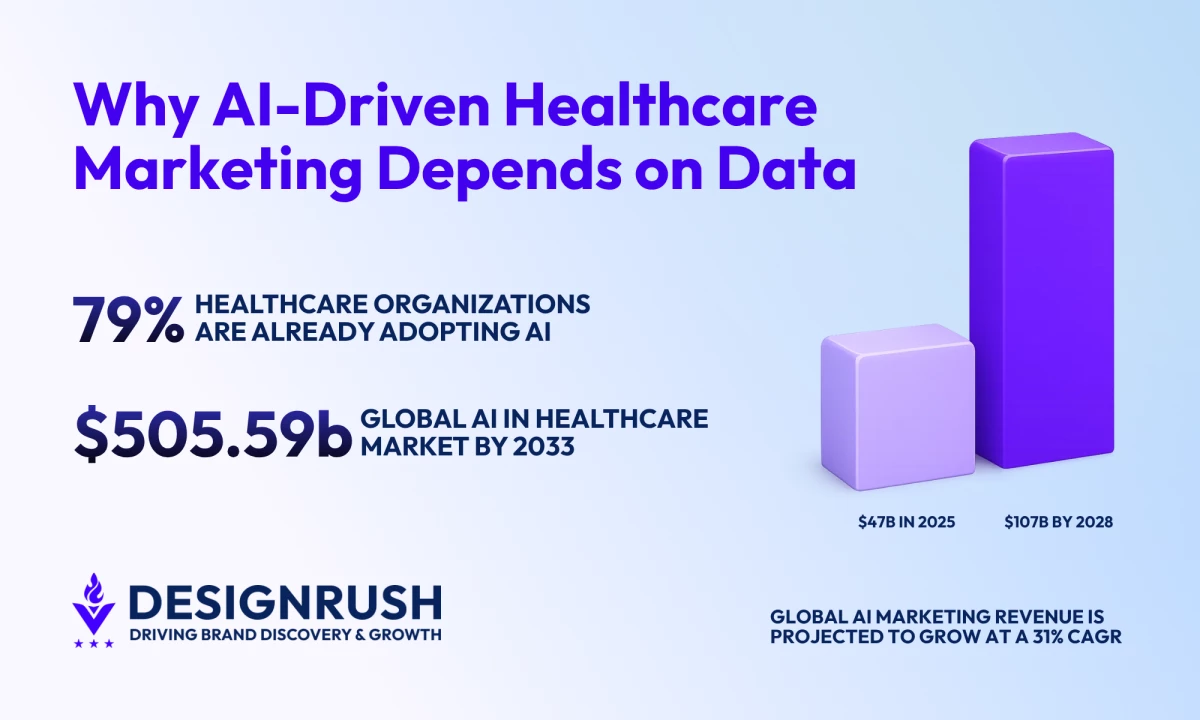
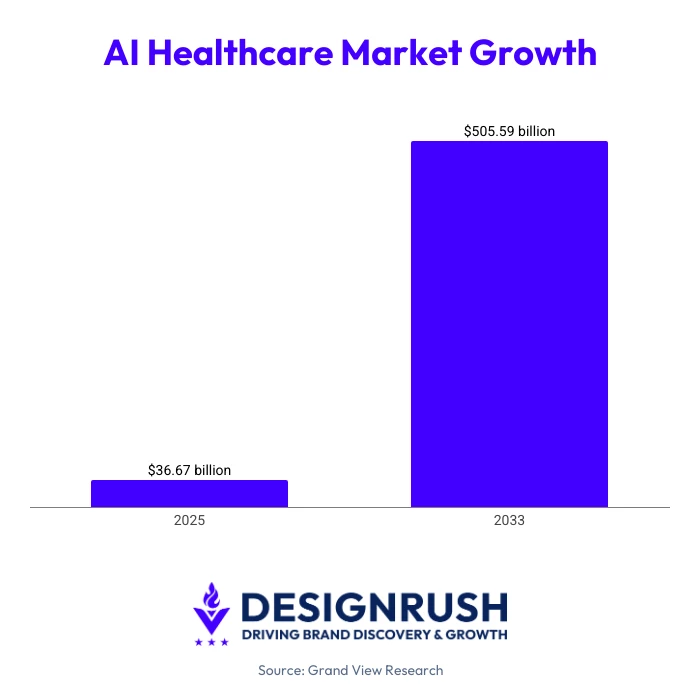
AI adoption in healthcare is already moving quickly. The global AI in healthcare market reached $36.67 billion in 2025, with projected growth to $505.59 billion by 2033.
About 79% of healthcare organizations are already using AI, with reported ROI within 14 months and $3.20 returned for every $1 invested.
But that figure applies to organizations with functional data infrastructure. For organizations running AI on stale or incomplete records, the outcome is different, as up to 30% of campaign insights can be lost when systems don't share data properly.
AI adoption is moving faster than data readiness, and that gap is where performance breaks down.
 Why Poor Data Undermines AI-Powered Healthcare Marketing
You’ll notice poor data when campaigns underperform. Let’s break down where it disrupts marketing outcomes.
1. Outdated HCP Records Waste Budget and Miss Opportunities
Imagine sending a targeted campaign to hospital administrators, only to realize that some of the contacts left their roles months ago. Without updated data, the right decision-makers never even see your message, and the budget is wasted on outdated outreach.
Healthcare is the highest-decay B2B data environment. Contacts become inaccurate at 30-40% per year, compared to a cross-industry average of around 25%. Physicians move between hospital systems, transition roles, retire, or take on new specialties.
Dirty data is more than an operational nightmare and is estimated to cost the healthcare sector around $300 billion each year, complicating analytics and CRM initiatives.
2. Weak Segmentation Makes Messaging Easy To Ignore
Think of a physician and a procurement manager. They have completely different priorities. If your data lacks detailed role or specialty information, AI can’t craft meaningful or specific messaging.
This way, you end up with one-size-fits-all campaigns that don’t resonate deeply with anyone.
3. Incomplete CRM Data Limits What AI Can Actually Do
You might have AI tools ready to score leads or recommend next actions. But when key fields, such as job title or organization size, are missing, AI decisions are guesswork.
Instead of precise recommendations, you get generic suggestions that lack the very much needed context.
4. Disconnected Systems Slow Down Decisions & Weaken Results
If your CRM, email platform, and ad systems don’t share data properly, measuring success becomes a nightmare. You may see leads coming in, but tracing what’s working and what's not becomes more difficult, delaying your ability to adapt.
Also, poor integration does more than slow reporting. When systems hold conflicting records or fail to sync properly, AI tools have less reliable context to work from.
How ready is your data for AI?Use these questions to identify where attention is needed first:
If several answers are no, improving data readiness may deliver more value than adding another tool first. |
What Better Data Makes Possible
Once your data is cleaner and easier to work with, AI becomes far more useful. Instead of correcting errors or filling in the gaps, it can focus on improving performance. Here’s how:
Smarter Audience Targeting
Better provider and organization data helps you reach the right healthcare professionals sooner.
You can build more precise audiences using criteria such as specialty, facility type, location, or job function, rather than relying on overly broad lists.
Integrated data systems can reach up to 95% accuracy in HCP profile matching, compared to around 70% with broken data. That often decides whether your campaign reaches an active specialist or a contact whose details are no longer relevant.
If you rely on well-governed and first-party data, you also achieve better commercial outcomes, including up to 2.9x higher revenue and 1.5x cost savings compared to those using outdated or third-party lists.
More Relevant HCP Messaging
When records include more detailed role and specialty information, your campaigns can reflect what different audiences really care about. Messaging is then more timely, more specific, and easier to engage with.
Smoother Campaign Activation
Clean data is easier to move into CRM systems, email platforms, and digital advertising tools. That means faster launches, audience syncs, and fewer manual fixes before your campaigns go live.


Clearer Measurement and Faster Optimization
When systems use the same records, reporting is easier to trust. You can see what’s working, adjust sooner, and make smarter budget decisions over time.
As Sarah Houghton, Senior Marketing Manager at Sony Electronics, explains:
“Coming from a B2B background, I was eager to apply AI-driven marketing strategies on a larger scale. What I've learned is that programmatic engagement relies on trusting data and using traditional methods like audience segmentation and product-centric messaging.”
What To Fix Before You Add Another AI Tool
It’s tempting to solve your performance gaps by adding another platform. However, you shouldn’t ignore improving the data already in your systems.
Before investing further, start here:
1. Audit Your Current Records
Look for missing job titles, outdated email addresses, duplicate contacts, or inconsistent organization names. Even advanced AI tools struggle with unreliable inputs.
For a team working with a 10,000-contact HCP database, healthcare’s 30-40% annual data decay rate means as many as 4,000 of those records may be unreliable by year-end.
On top of that, with marketing budgets falling from 9.1% to 7.7% of company revenue, according to Gartner’s CMO Spend Survey, there is less room for campaigns wasted on contacts that are not in the roles you are targeting.
2. Refresh Stale HCP and Organization Data
Healthcare contacts change roles, move facilities, and take on new responsibilities. Regular updates keep outreach aligned with the people who matter now.
The current standard among healthcare data providers is:
- Quarterly validation for the broader contact database
- Monthly or continuous validation for high-priority HCP segments, such as key opinion leaders, high prescribers, and therapeutic area specialists
At a minimum, any HCP list used for active campaign activation should be verified before each major campaign launch.
3. Tighten Segmentation Rules
If your audience logic is too broad, AI will only repeat that same lack of precision. More defined segments based on job function, clinical focus, location, or organization type make it easier to deliver messaging that feels relevant to each audience.
4. Connect the Systems You Already Use
A contact shouldn’t look current in your CRM and outdated everywhere else. When your email platform, ad tools, and sales systems are using different records, chaos ensues. Your audiences drift, and follow-ups get missed.
Joining those systems up helps every channel work from the same source.
5. Standardize Key Fields
One person enters Oncology, another writes Oncologist, and someone else skips the field entirely.
That kind of inconsistency weakens segmentation and creates avoidable errors in automation. You should go with unified naming rules for core fields to keep targeting far more accurate.
6. Assign Ownership and Approval Rules
Decide who is responsible for data quality, who can update records, and how major changes are reviewed.
This way, you’ll avoid duplicate work and errors that tend to build up over time.
7. Strengthen Security and Access Controls
Healthcare marketing relies on sensitive business data and trusted systems. Limit access by role and ensure the right people can use the data without unnecessarily exposing it.
8. Decide What Success Should Look Like
Before layering in more AI, be clear on the outcome you want to improve. That could be lead quality, campaign speed, engagement rates, or attribution confidence. Start with a plan.
Where a Data Partner Can Help
Some issues can be fixed internally. Others need fresher data, broader coverage, or easier access to your systems.
That is where specialist providers can add value. Partners such as MCH Strategic Data provide verified healthcare contact and organizational data, filtered by job function, specialty, location, and facility type.
They also offer API connections, CRM integrations, and customer-specific cloud databases that can be updated regularly, making it easier to keep marketing and sales systems up to date with current records.
Instead of spending internal time patching lists or manually cleaning records, you can focus more on outreach and performance.
Final Thoughts: Why AI-Driven Healthcare Marketing Starts With Better Data
AI can help healthcare marketers work faster and make smarter decisions, but results often depend on the quality of the data behind it.
If your records, segmentation, and internal systems are well managed, every tool has a clearer path to delivering value.
Explore top marketing agencies that can help refine healthcare campaigns, improve data strategy, and turn AI opportunities into growth.

Our team ranks agencies worldwide to help you find a qualified partner. Visit our Agency Directory for the Top Healthcare Marketing Agencies, as well as:
- Top Healthcare Marketing Agencies in Philadelphia
- Top Dental Marketing Companies
- Top AI Marketing Companies
- Top B2B Digital Marketing Agencies
- Top Marketing Strategy Agencies
Why AI-Driven Healthcare Marketing Starts With Better Data: FAQs
1. Why is data important in AI-driven healthcare marketing?
AI works from the information already stored in your systems. If the records are outdated or incomplete, audience targeting can slip, personalization can lose relevance, and reporting turns out to be less accurate.
2. What kind of data do healthcare marketers need before using AI?
Start with accurate HCP contact data and current organization details.
Role, specialty, location, facility type, and complete CRM fields also help AI tools make better decisions and support more precise outreach.
3. How does poor data affect healthcare marketing performance?
Poor data can send campaigns to the wrong contacts, weaken segmentation, and create gaps in attribution. It also slows decision-making because teams spend more time fixing records and questioning reports.
4. Should healthcare marketers focus on data before adding more AI tools?
In most cases, yes. If the underlying records are outdated, duplicated, or disconnected, a new AI platform may only automate existing problems rather than improve results.
5. How often should healthcare marketing data be updated?
There is no single schedule that fits every organization, but waiting too long creates risk.
Regular refresh cycles are important because healthcare professionals change roles, move facilities, and take on new responsibilities throughout the year.