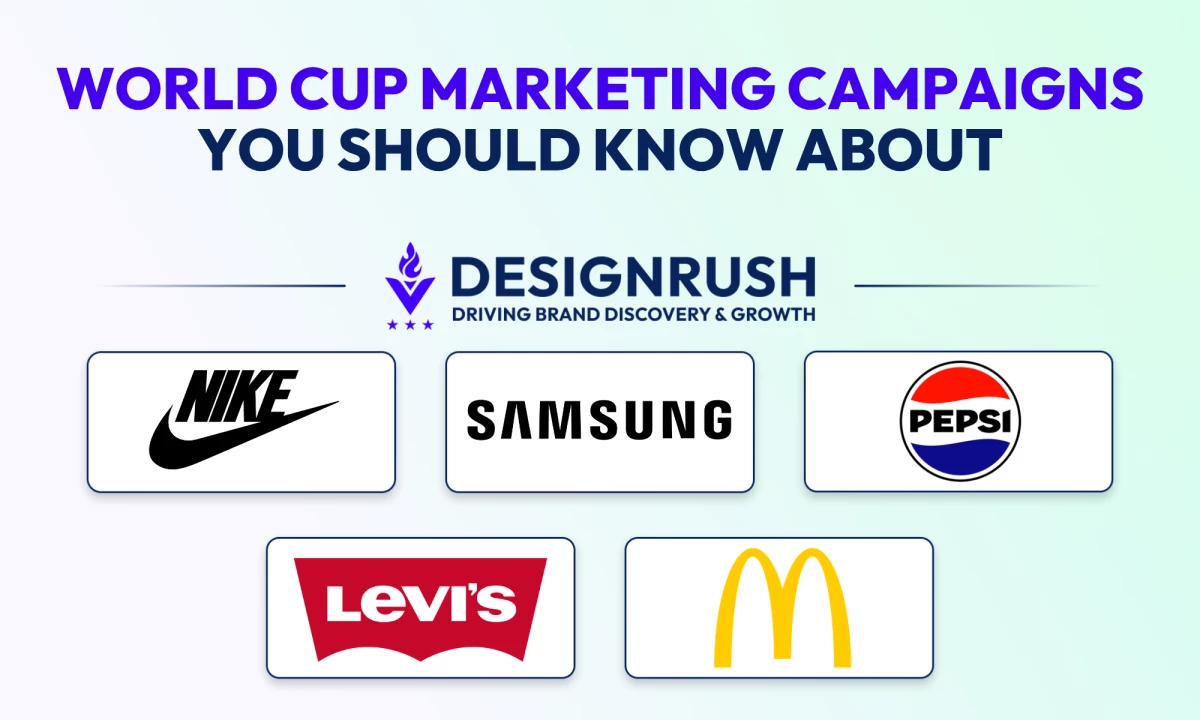

Brands will spend billions trying to claim a piece of the World Cup conversation. Getting noticed now takes more than a famous player or a logo slapped near a football.
The campaigns worth studying either earned their way into fan culture or became warnings for the next brand team with too much confidence and not enough self-awareness.
The Greatest World Cup Advertising Campaigns: Key Findings
- Nike's Write the Future generated roughly 40 million online views and 1.9 billion impressions, proving a brand could dominate World Cup conversation without an official FIFA sponsorship.
- Fan participation is a recurring theme, with McDonald's prediction game, which attracted 5.5 million players, and Coca-Cola's digital sticker album, which reached more than 27 million sign-ups worldwide.
- Mastercard pulled its Goals for Meals campaign after backlash, while Adidas learned that paying for sponsorship rights doesn't guarantee fans will associate your brand with the tournament.
Why World Cup Marketing Looks Different in 2026
The World Cup still attracts one of the largest audiences in sport, but the marketing environment around it has changed dramatically.
WARC projects the 2026 tournament will generate an additional $10.5 billion in global advertising spend. However, its analysis notes that the tournament's impact on overall ad growth is weaker than it was in 2018, when a smaller World Cup produced a larger advertising boost.
Part of the challenge is competition. Official sponsors are no longer competing only against each other. Every creator, football podcast, player account, reaction channel, meme page, and media outlet is fighting for the same attention.
The format of successful campaigns has changed as well.
The classic World Cup playbook relied on a hero commercial released just before kickoff. Today, brands need ideas that can endure for weeks, adapt to deliver results, generate conversation across multiple platforms, and remain relevant long after the final whistle.
1. Nike's $0 Sponsorship: How Write the Future Owned the 2010 World Cup
Nike entered the 2010 World Cup with a problem. Adidas was FIFA's official sponsor, and Nike wasn't. Instead of competing for logo visibility, Nike built a campaign around a bigger idea - one moment on the pitch can change everything.
The three-minute Write the Future film imagined the ripple effects of a single pass, save, or missed opportunity, turning football matches into alternate futures filled with statues, tabloid headlines, talk shows, and national celebrations.
The cast included Cristiano Ronaldo, Wayne Rooney, Didier Drogba, Ronaldinho, and several of the sport's biggest stars.
The ad became the centerpiece of a much larger campaign on YouTube, Facebook, digital experiences, outdoor activations, and real-time content. Nike's goal wasn't to appear at the tournament but to become part of the conversation around it.
The strategy worked.
According to Wieden+Kennedy, Write the Future was viewed online more than 50 million times, Nike Football's Facebook following grew 336% during the tournament, and Nike became one of the most talked-about brands despite having no official World Cup sponsorship rights.
The campaign later won the Film Grand Prix at Cannes Lions.
Nike understood that fans care more about the stories surrounding football than sponsorship status. Instead of reminding viewers that Nike existed, the campaign gave them something worth watching and sharing.
2. Messi, Ronaldo, and an Alien Invasion: Samsung's 150-Million-View World Cup Bet
Most World Cup campaigns try to borrow attention from football, but Samsung decided to build its own universe.
Launched ahead of the 2014 World Cup, Galaxy 11 imagined Earth under threat from an alien race that challenged humanity to a football match for the fate of the planet.
To save the world, legendary manager Franz Beckenbauer assembled a team, captained by Lionel Messi, featuring Cristiano Ronaldo, Wayne Rooney, Iker Casillas, Radamel Falcao, Mario Götze, and other international stars.
The idea extended far beyond a single commercial.
Samsung rolled out the story over nearly a year through teaser films, player recruitment videos, training episodes, mobile games, social content, interactive experiences, and a global tour that stopped across Europe, Asia, Africa, the Middle East, and South America.
The campaign generated more than 150 million video views, while Galaxy 11-themed games were downloaded over 1.5 million times.
Samsung also partnered with EA Sports, allowing players to challenge the Galaxy 11 team in FIFA 14, resulting in 15.5 million participants and more than 245 million matches played.
Samsung treated the World Cup as entertainment rather than advertising space. It built a story fans could follow for months. The result was a campaign that felt more like a blockbuster franchise than a smartphone promotion.
3. How Beats Turned Headphones Into a World Cup Story
Beats by Dre did not have official World Cup sponsorship rights in 2014, so it looked for a moment around the tournament that still belonged to the players.
The Game Before the Game was a five-minute film and broader content campaign centered on the moments before kickoff, when athletes prepare mentally for the biggest games of their careers.
Through a series of interconnected stories, Beats positioned music as part of pre-game preparation, such as making calls home, putting on headphones, and blocking out the noise.
Directed by Nabil Elderkin, the five-minute film featured Neymar, Mario Gotze, Chicharito, Serena Williams, and Lil Wayne, with TIME reporting that it had garnered more than 7 million YouTube views shortly after launch.
The film served as the campaign's centerpiece, supported by athlete partnerships, social content, retail activations, and earned media that extended the idea throughout the tournament.
That positioning mattered. Beats was not an official sponsor, while Sony held the official electronics and headphones category. Legal commentary at the time described the campaign as an ambush play that stole attention from Sony without using official tournament marks.
The campaign also had industry recognition beyond the view count. The One Show described it as a campaign built around authentic pre-game rituals of football players, fans, and celebrities, while Clio Music awarded it Gold in the 2015 Film, Long Form category.
Beats built its campaign around a behavior that already existed. Players were already using headphones before matches, so the product felt more genuine and like part of the story.
4. Pepsi: The World's Best Players, One Simple Trick, and a Bag of Nutmeg
Ahead of the 2022 World Cup, Pepsi launched Nutmeg Royale, a global football campaign centered on one of the sport's most satisfying moves: kicking the ball through an opponent's legs.
The campaign starred Lionel Messi, Paul Pogba, and Ronaldinho competing in an over-the-top nutmeg tournament filled with trick shots, cameos, and Pepsi's signature sense of fun.
The hero film served as the launch platform for Pepsi's new global brand philosophy, "Thirsty For More."
Unlike campaigns with winning trophies or inspiring speeches, Nutmeg Royale focused on the playful side of football. Pepsi deliberately chose a move that fans recognize instantly, whether they're watching a World Cup match or playing with friends in the park.
According to Pepsi, the campaign was designed to celebrate "fun, exciting and unexpected outcomes," with the hero film supported by global social and digital content, limited-edition Nutmeg packaging, branded merchandise, and a temporary Pepsi Nutmeg product inspired by the campaign itself.
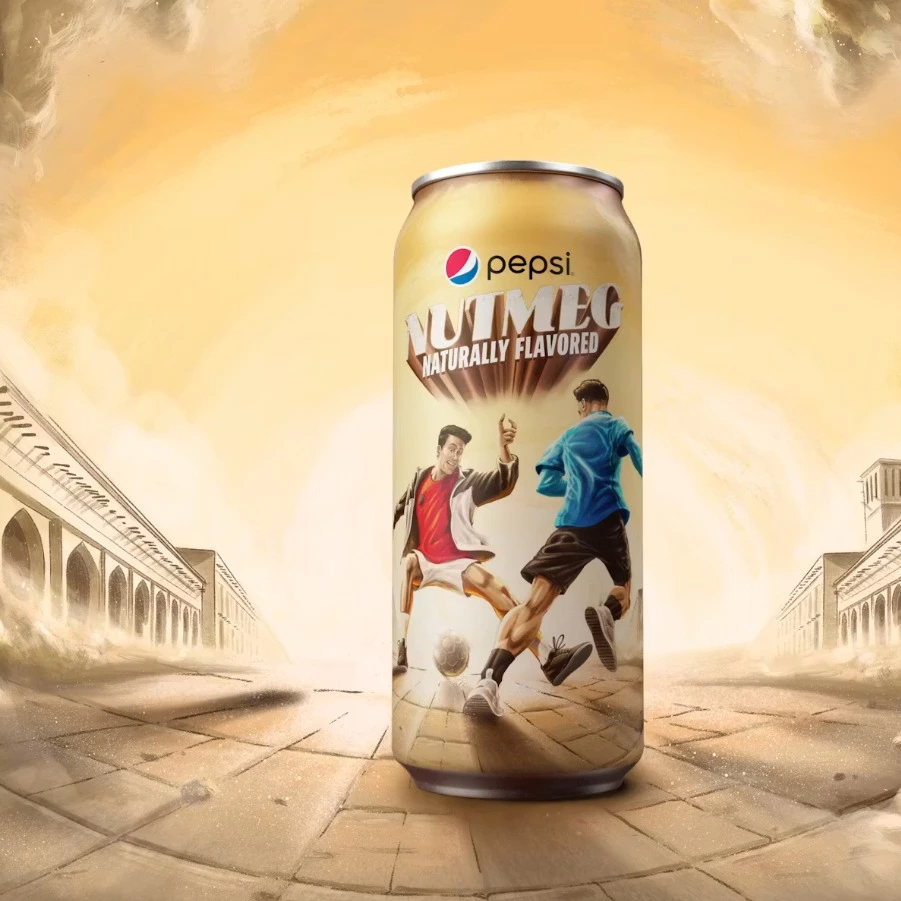
The campaign also tapped into Pepsi's long football heritage. Messi, Pogba, and Ronaldinho wore updated versions of Pepsi's iconic 2002 World Cup jerseys, linking the brand's past World Cup campaigns to a new generation of fans.
What Pepsi did right was not try to own the tournament. It picked a small but universally recognizable piece of football culture and built an entire campaign around it.
That made the idea easy to understand, share, and extend across content, packaging, retail, and social media.
5. The Campaign FIFA Accidentally Created for Levi's
Most brands spend months trying to come up with a World Cup idea. FIFA handed Levi's one.
Ahead of the 2026 tournament, FIFA's sponsorship rules required host venues to remove visible branding belonging to companies that weren't official tournament partners.
That meant Levi's Stadium temporarily became San Francisco Bay Area Stadium, while the stadium's famous Levi's logo was covered with giant white tarps.
The obvious response would have been to quietly accept the restriction. Levi's did the opposite. Rather than treating the covered logo as a problem, the company turned it into the campaign.
Levi's updated its social media profiles to match the redacted branding, created content around the now-covered stadium signage, and extended the concept to retail locations in cities including London and Paris.
The joke was simple. Even with the name hidden, almost everyone still knew exactly which brand they were looking at.
What made the idea work was that Levi's wasn't fighting FIFA's rules. It was highlighting them. Marketing and legal commentators pointed to the campaign as an example of how strong brand assets can remain recognizable even when the logo itself disappears.
One social post built around the concept attracted around 2 million likes, while the campaign generated widespread media coverage during the opening weeks of the tournament.
6. 1.5 Billion McDonald’s Fry Boxes and the World's Biggest Fast-Food Football Game
By 2014, brands were already experimenting with ways to connect physical products and digital experiences. McDonald's found an opportunity in one of the most ordinary items in its restaurants, the fry box.
For the World Cup, they launched GOL!, an augmented reality experience built into specially designed packaging. Scanning the box unlocked a mobile football game where players could attempt tricks, compete with friends, and share scores online.
The activation appeared on approximately 1.5 billion World Cup-themed fry boxes across nearly 120 countries, making it one of the largest global World Cup activations of the tournament.
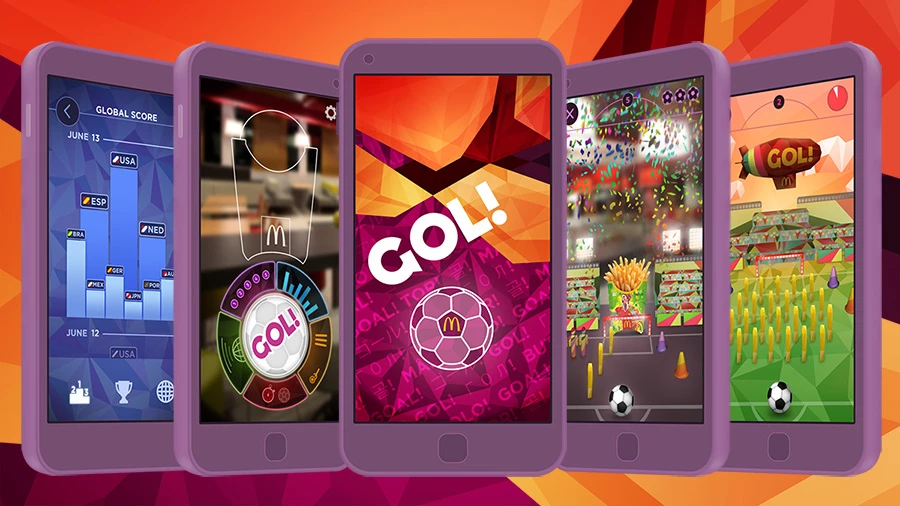
The packaging promoted the game and was part of the experience itself. Using a phone's camera, customers could turn the fry box into a virtual football pitch, bringing the tournament into restaurants, homes, and anywhere else they happened to be eating fries.
The same visual identity appeared on packaging, in restaurants, and across digital channels throughout the tournament, creating a consistent experience whether someone was playing, scrolling, or grabbing a meal.
McDonald's described GOL! as its largest augmented reality activation at the time.
7. Coca-Cola’s 51-Country Trophy Tour & the Campaign Built Around Football Superstitions
Every football fan has one. A lucky shirt, a seat they refuse to move from, or a pre-match routine that suddenly becomes sacred the moment their team starts winning.
For the 2022 World Cup, Coca-Cola built an entire campaign around those rituals.
The company’s Believing Is Magic celebrated the small habits, superstitions, and traditions that supporters carry into every tournament. The campaign put fans at the center of the story.
Coca-Cola invited supporters to share the beliefs and routines that make football fandom feel personal, whether that meant wearing the same jersey for every match or refusing to watch a penalty in real time.
Believing Is Magic included digital content, fan experiences, retail activations, social media engagement, and the FIFA World Cup Trophy Tour, which visited 51 countries before the tournament began.
The tour gave supporters around the world a chance to see football’s most famous trophy in person while connecting local events to a single global campaign theme.
One of the campaign's biggest successes was the Coca-Cola x Panini Digital Sticker Album, which attracted more than 27 million registered users worldwide.
Fans could collect and trade digital stickers throughout the tournament, giving them a reason to keep engaging with the World Cup between matches rather than only tuning in on game day.
3 World Cup Marketing Fails
The World Cup creates enormous opportunities for brands, but it also magnifies mistakes.
When billions of people are watching, a weak idea, a flawed assumption, or a poorly timed decision can become part of the story just as quickly as a winning campaign.
- Mastercard's Own Goal Before the Tournament Even Started
- Adidas Paid for the Rights, but Nike Won
- Budweiser Lost Its Biggest World Cup Activation Two Days Before Kickoff
Mastercard's Own Goal Before the Tournament Even Started
In 2018, Mastercard launched a World Cup campaign with a simple premise: every goal scored by Lionel Messi or Neymar Jr. would trigger a donation of 10,000 meals to children through the United Nations World Food Programme.
On paper, it combined football, celebrity ambassadors, and a charitable cause. In practice, it raised an uncomfortable question - why should meals for hungry children depend on whether two footballers happened to score goals?
The criticism arrived almost immediately. Fans, journalists, and public figures accused Mastercard of turning hunger into a game and making a serious issue feel like a marketing gimmick.
Why not give them the meals anyway.... https://t.co/90TkyxpsLc
— Henry Winter (@henrywinter) June 1, 2018
Others pointed out that the campaign created bizarre incentives, where missed chances or goalkeeping performances could be jokingly framed as denying meals to children.
The backlash became significant enough that Mastercard scrapped the goal-based donation pledge before the tournament began. Instead, the company replaced it with a guaranteed donation of one million meals in 2018, regardless of how many goals Messi or Neymar scored.
As far as marketing misfires go, the problem here was the idea itself. The campaign asked audiences to connect two things that felt fundamentally incompatible: childhood hunger and sporting performance.
Purpose-driven marketing works best when the cause comes first. The moment people start debating the mechanics instead of the mission, the campaign is in trouble.
Adidas Paid for the Rights, but Nike Won
Official sponsorship is supposed to buy visibility. However, it doesn’t always buy memory. For the 2018 World Cup, Adidas held one of the most valuable positions in sports marketing.
The company was an official FIFA World Cup partner, supplied the official match ball, and sponsored several teams competing in the tournament. Yet many fans came away with a different impression.
PRWeek reported research showing 30% of consumers believed Nike was an official World Cup sponsor, despite Nike holding no official FIFA sponsorship rights.
The finding highlighted one of the tournament’s biggest marketing ironies, that the brand that paid for the rights wasn’t necessarily the brand audiences associated with the event.
Nike benefited from a powerful roster of athletes, highly visible football storytelling, and years of cultural association with the sport.
This wasn’t a failure of scale or investment but a reminder that awareness and association are different metrics.
People may have seen Adidas throughout the tournament, but they still remembered Nike, so bagging the sponsorship doesn’t guarantee you’ll own the conversation if someone else is more memorable.
Budweiser Lost Its Biggest World Cup Activation Two Days Before Kickoff
Few brands are more closely associated with the FIFA World Cup than Budweiser. By 2022, the beer brand had spent decades building campaigns around football's biggest tournament and was preparing another global activation in Qatar.
Then, two days before the opening match, Qatar banned beer sales around World Cup stadiums. The last-minute decision wiped out one of the most visible parts of Budweiser's sponsorship plan and left the company with warehouses full of product originally intended for tournament venues.
The situation could have become a sponsorship disaster. Instead, Budweiser pivoted. The brand launched #BringHomeTheBud, promising to send the beer originally intended for World Cup stadiums to the country that won the tournament.
What started as a crisis-management exercise quickly became one of the event's biggest marketing stories.
According to campaign results published by Wieden+Kennedy, the initiative generated more than 4 million social mentions, reached 3.1 billion people on social media, and helped Budweiser become the most talked-about World Cup brand during the tournament.
The situation could have become a bigger sponsorship disaster.
"We thought, this disrupts our entire campaign on a global basis because beer belongs to the celebration—we belong to the celebration—and so we were disconnected from the purpose of us being there," said Marcel Marcondes, AB InBev's global chief marketing officer, reflecting on the sudden change.
The lesson is that even a well-funded global campaign can unravel if a key part of the activation depends on factors outside the brand's control.
Also, the bigger the event, the more important contingency planning becomes. And luckily, sometimes the backup plan proves more successful than the original.
What the Best World Cup Marketing Campaigns Got Right
The easiest way to lose attention during the World Cup is to remind people you're a brand.
Fans don't spend a month obsessing over football just to see more advertising. They're there for the goals, the drama, the predictions, the arguments, the superstitions, the heartbreak, and the group chat meltdowns.
The campaigns that worked understood that. They found a place inside the experience instead of trying to interrupt it.
| Campaign | Core Idea | Why It Worked |
| Nike: Write the Future | Alternate futures | Gave fans a story bigger than the tournament |
| Samsung: Galaxy 11 | Sci-fi football universe | Created an entertainment property |
| Beats: The Game Before the Game | Pre-match rituals | Felt authentic rather than promotional |
| Pepsi: Nutmeg Royale | Football skill culture | Turned a familiar move into a spectacle |
| Levi's: Redaction | Hidden logo | Made the restriction the talking point |
| McDonald's: GOL! | Match predictions | Kept fans engaged throughout the tournament |
| Coca-Cola: Believing Is Magic | Fan promises and rituals | Celebrated supporters instead of sponsors |
What mattered here was finding a role that felt natural in the tournament rather than forcing one.
By 2026, that challenge is only getting harder. Fans are split across platforms, creators compete with broadcasters for attention, and every highlight generates its own conversation.
The brands that stand out will be the ones that give people something worth bringing into that conversation.
Kevin Cale, Executive Director for Experience Strategy and Innovation at eDesign Interactive, sees the same principle behind great brand experiences:
“Exceptional brands are built on deep customer understanding and demonstrate how their offerings make everyday life better. That emotional thread makes every interaction, digital or physical, part of a bigger narrative users want to stay connected to.”
“Turning interruptions into interactions, and interactions into emotional connections. That’s how you build lasting value and true brand advocates.”
World Cup Marketing Campaigns: Final Thoughts
The best World Cup campaigns give fans a reason to join in, come back, and keep talking.
For brands planning around 2026, that takes more than a clever ad. The right digital marketing agency can help turn a campaign idea into a platform that works across content, social, search, paid media, and fan engagement.
Our team ranks agencies worldwide to help you find a qualified partner. Visit our Agency Directory for the top digital marketing agencies, as well as:
- Top Digital Marketing Agencies In Portland
- Best Video Production Companies
- Top Ad Agencies
- Top Media Buying Agencies
- Top Social Media Marketing Companies
- Top PR Firms
FAQs: World Cup Marketing Campaigns Examples
1. What is the most successful World Cup marketing campaign?
There's no single winner, but Nike's Write the Future from 2010 is widely considered one of the most influential World Cup campaigns ever.
Despite not being an official FIFA sponsor, it generated massive global attention, won the Cannes Lions Film Grand Prix, and remains a benchmark for sports marketing more than a decade later.
2. Do brands need official sponsorship to succeed during the World Cup?
No. Some of the most memorable World Cup campaigns came from brands without official FIFA sponsorship rights.
Nike's Write the Future, Beats' The Game Before the Game, and Levi's Redaction all demonstrate that a great idea can generate attention without tournament branding or stadium visibility.
3. How much does World Cup sponsorship cost?
Costs vary by sponsorship tier and rights package, but FIFA's top-tier partners typically invest tens of millions of dollars, with total activation spending often exceeding the sponsorship fee.
For many brands, media buying, content production, and fan activations represent a larger investment than the rights package.
4. Can small businesses run World Cup-themed campaigns?
Yes, but they need to avoid creating the impression of an official FIFA connection. FIFA’s IP guidelines protect official names, logos, emblems, trophy imagery, slogans, mascots, and other tournament assets, and only authorized rights holders can use them commercially.
A safer route is to build campaigns around general football culture: match-day menus, prediction games, local watch parties, fan polls, country-themed offers, or community events.
The key is to avoid official marks and wording that suggests sponsorship, partnership, or endorsement by FIFA.
5. What is ambush marketing?
Ambush marketing is when a brand tries to associate itself with a major event without paying for official sponsorship rights. Instead of using official logos or trademarks, companies often rely on football culture, star athletes, social media, or creative storytelling to join the conversation.
Some of the most famous World Cup campaigns, including Nike's Write the Future, are often cited as examples of successful ambush marketing.
The approach can generate significant attention, but brands need to avoid implying an official relationship with FIFA or the tournament itself.