
Marketing measurement has a trust problem.
Meta, Google Ads and your analytics platform all report conversions. In many cases, multiple platforms claim credit for the same customer journey. That's the problem incrementality testing was designed to solve.
Incrementality Testing: Key Findings
- Meta Conversion Lift studies have measured lifts of up to 24% in incremental paid traffic.
- Incrementality testing separates real growth from attributed growth.
- A matched-market test found that Demand Gen generated 328% more revenue than platform reporting suggested.
What Is Incrementality Testing?
Incrementality testing is a controlled experiment that measures the additional business impact created by a marketing activity by comparing outcomes in an exposed treatment group with outcomes in a comparable unexposed control group.
The key word is additional.
Many marketing channels receive credit for conversions that may have happened anyway. Incrementality testing helps separate those conversions from the ones genuinely influenced by a campaign.
It gives marketers a clearer picture of what's actually driving growth. That's especially valuable as privacy changes and tracking limitations make traditional attribution models harder to trust.
It's no surprise, then, that 71% of retail advertisers now rank incrementality as the most important KPI for their media investments, according to the Association of National Advertisers.
Why Traditional Attribution Often Falls Short
Attribution and incrementality answer different questions.
- Attribution attempts to identify which touchpoints contributed to a conversion.
- Incrementality testing asks whether the conversion would have happened at all.
Imagine a customer who already intends to buy from your company. They click a paid ad and complete a purchase.
An attribution model will likely credit the ad. But would that customer have converted anyway?
Attribution can't answer that question confidently because it measures correlation, not causation. This often leads to attribution inflation, where multiple channels claim credit for conversions they didn't meaningfully influence.
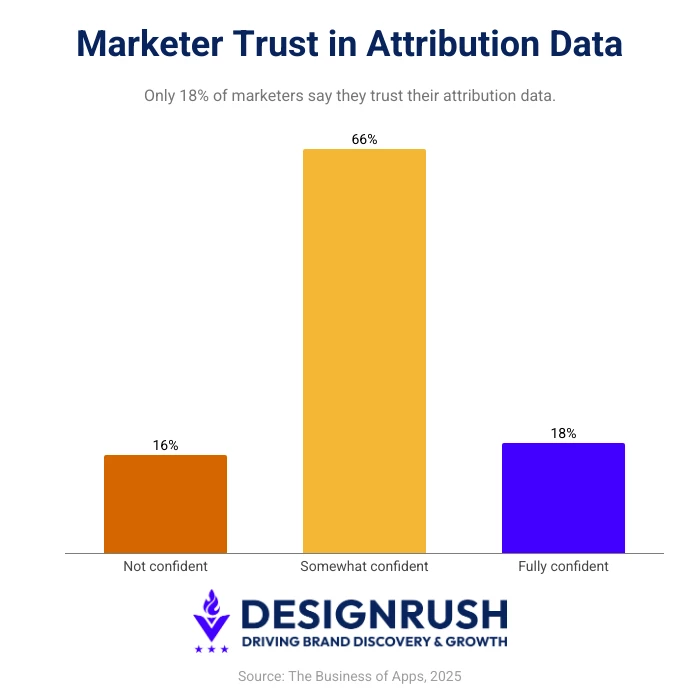 That’s why 82% of marketers aren’t fully confident in their attribution data.
Attribution models also understate the impact of upper-funnel channels that shape buying decisions long before a conversion occurs.
How Marketers Measure Incremental Impact
This additional impact is known as incremental lift, the core metric used in incrementality testing. It measures the increase in conversions, revenue, or another target outcome generated by a campaign compared to what would have happened naturally.
For example, imagine two similar audience groups:
- The treatment group sees your campaign
- The control group does not
If the treatment group converts at a higher rate than the control group, the difference represents incremental lift.
Incremental Lift Formula Incremental Lift (%) = |
Let's say the treatment group converts at 6% while the control group converts at 5%.
The result is a 20% incremental lift, meaning the campaign generated 20% more conversions than would have occurred without advertising.
Types of Incrementality Tests
There is no single way to measure incrementality.
The right testing methodology depends on your channels, audience size, available data, and business goals.
The most common approaches include:
- User-level holdout tests to measure campaign incrementality
- Conversion lift studies to validate advertising effectiveness
- Geo lift tests to measure market-level impact
- Matched market tests to evaluate channel investment decisions
1. User-Level Holdout Tests to Measure Campaign Incrementality
View this post on Instagram
A portion of your target audience is intentionally excluded from a campaign, allowing marketers to compare outcomes between exposed and unexposed users.
This approach works best for digital advertising channels with strong audience targeting capabilities, such as Meta, LinkedIn, and display advertising.
Example: Uber questioned whether Meta ads were generating truly incremental customer acquisition. After running a large-scale holdout test, the company found no measurable business impact from the channel and reallocated roughly $35 million in annual spend.
Reflecting on the project, Sundar Swaminathan, former Head of Marketing Science at Uber, said it remained one of the most rewarding analyses of his career because it demonstrated what a high-functioning, data-driven culture looks like in practice.
He added that it also delivered tangible business impact, which is ultimately what every analyst hopes to demonstrate.
2. Conversion Lift Studies to Validate Advertising Effectiveness
Conversion lift studies are platform-native incrementality tests offered by platforms like Meta and Google.
While they use the same treatment-and-control principles as traditional holdout tests, the platform handles audience assignment, measurement, and analysis to make it easier to validate incremental business impact beyond standard attribution reporting.
Example: Home goods retailer Biedronka Home used a Meta Conversion Lift study with search lift methodology and found that its campaigns drove a 24% lift in incremental paid traffic, and 20% in organic traffic. That helped to validate business impact beyond what standard attribution reporting captured.
3. Geo Lift Tests to Measure Market-Level Impact
Geo lift testing compares performance across regions with different levels of advertising exposure. Because it doesn't rely on user-level tracking, it's often used when privacy restrictions or platform limitations make audience-based testing difficult.
A closely related methodology, matched market testing, applies the same principle while using carefully selected treatment and control markets to improve the reliability of the comparison.
Example: Google developed its Geo Experiments framework to measure the incremental impact of advertising by varying media exposure across geographic regions. By comparing performance between test and control markets, advertisers can estimate true business impact without relying on user-level attribution.
4. Matched Market Tests to Evaluate Channel Investment Decisions
Matched market tests are a more controlled variation of geo lift testing. Rather than comparing any two regions, marketers select markets with similar historical performance, demographics, and competitive conditions before introducing different levels of advertising exposure.
This helps isolate the incremental impact of a channel and supports more confident budget allocation decisions.
Example: A retail advertiser used a matched-market test to evaluate the incremental impact of Google's Demand Gen campaigns after platform reporting suggested the channel was underperforming.
The team turned Demand Gen off in a group of test markets while keeping it active in carefully matched control markets, then compared revenue outcomes between the two groups.
The results showed Demand Gen generated 328% more revenue than platform reporting showed and delivered an incremental ROAS of 6.9.
As the Silverback Strategies analyst behind the experiment observed, "A channel that the platform said to cut was one of the strongest performers in the account once the real contribution was measured."
ROAS vs. iROAS: Understanding the Difference
One of the biggest reasons marketers run incrementality tests is to understand the difference between ROAS and iROAS.
- ROAS, or Return on Ad Spend, measures attributed revenue relative to advertising costs.
- iROAS, or Incremental Return on Ad Spend, measures only the revenue directly caused by the campaign.
| Metric | Measures | Potential Limitations |
| ROAS | Attributed revenue ÷ ad spend | May include conversions that would have happened anyway |
| iROAS | Incremental revenue ÷ ad spend | Requires testing and experimentation |
Since a campaign can appear highly successful in platform reporting while generating relatively little incremental value, sophisticated marketing teams use iROAS when evaluating channel performance and allocating budget.
Which Incrementality Test Should You Use?
The right approach depends on your goals, available data, audience size, and advertising channels. A B2B company evaluating LinkedIn campaigns may need a different methodology than an eCommerce brand testing Meta ads across multiple markets.
First, it's important to understand when incrementality testing makes sense and when it doesn't.
When Incrementality Testing Isn't the Right Choice
Incrementality testing can provide valuable insights, but it's not always the best measurement approach. Consider alternative methods if:
- You don't have enough traffic or conversions. Low conversion volume can make it difficult to reach statistical significance and draw reliable conclusions.
- You're running a major seasonal campaign. Testing during Black Friday, holiday promotions, or product launches can introduce unnecessary risk and distort results.
- You're changing multiple variables at once. If you're simultaneously testing new audiences, creative, offers, and landing pages, it's difficult to isolate what's driving performance.
- Your treatment and control groups overlap. If control group users are still exposed to your marketing through other channels, the test results become less reliable.
- You need answers immediately. Incrementality testing typically requires several weeks of data collection and analysis, making it better suited to strategic decisions than day-to-day optimization.
Choosing the Right Test Type
If incrementality testing is a good fit for your situation, the next step is selecting the appropriate methodology.
| If You Want To... | Consider... |
| Measure the impact of a specific audience segment | User-level holdout test |
| Evaluate advertising performance across regions | Geo lift test |
| Use platform-native experimentation tools | Conversion lift study |
| Measure large-scale channel effectiveness | Matched market test |
Top 5 Incrementality Testing Tools
Dedicated tools make incrementality testing faster and more reliable. They handle audience assignment, control group creation, statistical significance testing, and reporting, which reduces the risk of design errors that can undermine results.
The major ad platforms offer their own native options: Meta Conversion Lift and Google Conversion Lift both run randomized controlled experiments that split audiences into test and holdout groups to measure lift within their own inventory
The five tools below become worthwhile when you need to measure across channels, including offline media, without being tied to one platform's walled garden:
- Measured: Best for enterprise triangulated measurement
- Haus: Best for rigorous geo experimentation
- INCRMNTAL: Best for always-on automated incrementality
- Recast: Best for MMM-led measurement
- Lifesight: Best for mid-market unified marketing measurement
1. Measured: Best for Enterprise Triangulated Measurement
For marketing leaders at large omnichannel brands who need to prove causal impact to finance and leadership
Measured is an enterprise marketing effectiveness platform that combines automated incrementality testing with causal media mix modeling in a single system called triangulated measurement.
The platform runs geo-matched and first-party audience split tests, using machine learning to select comparable markets and handle audience splitting, test design, and calibration automatically.
Tests are designed to launch in days and results feed directly into the media mix model as causal priors, so experiments continuously sharpen broader budget forecasts.
Beyond raw lift numbers, Measured surfaces saturation points and diminishing returns to guide reallocation decisions, and it maintains 300+ managed integrations alongside a cross-channel dashboard that acts as a single source of truth.
Pricing:
- Custom pricing available on request
Pros:
- Automates market selection, audience splitting, and test design
- Feeds test results back into the model, so experiments improve ongoing forecasts
- Identifies saturation points and diminishing returns
- Holds SOC 2 Type II and ISO/IEC 27001:2022 certifications for enterprise security needs
Cons:
- Built and priced for enterprise brands
- Full triangulated value depends on adopting the broader measurement system
2. Haus: Best for Rigorous Geo Experimentation
For growth and data science teams who want economist-grade statistical rigor behind every test
Haus is a marketing science platform built around geo-based incrementality experiments. It splits geographic regions into treatment and holdout groups using random stratified sampling, then measures true lift with synthetic control methods that produce iROAS and confidence intervals.
Its Causal Intelligence layer runs placebo tests, outlier detection, and anomaly handling behind the scenes, while Haus Copilot assists with experiment design.
The platform can launch and manage tests directly inside Meta and Google via API, and specialized formats like Fixed Geo Tests and Time Tests handle campaigns that are traditionally hard to measure, such as sponsorships, TV flights, and product launches.
Pricing:
- Custom pricing available on request
Pros:
- Synthetic control methodology and confidence intervals give results credibility
- Daily incrementality reporting supports faster course correction
- Access to PhD scientists and measurement strategists
Cons:
- Geo-first approach offers limited attribution capability
- Statistical depth and experimentation may be a steep lift for beginners
3. INCRMNTAL: Best for Always-On Automated Incrementality
For performance marketers who want continuous measurement without setting up holdouts or pausing campaigns
INCRMNTAL is an always-on incrementality measurement platform that reveals the causal impact of ad spend without cookies, device IDs, or planned experiments.
Instead of holdouts or geo tests, it treats everyday operational changes, such as new channel launches, bid adjustments, creative swaps, and promotions, as micro-experiments, then applies causal AI and anomaly detection to measure their true effect.
It works on aggregated data with no SDK, pixel, or tag, connecting to sources like BigQuery, Amazon S3, or a CSV drop, and factors in external variables like seasonality, holidays, and search trends.
Pricing:
- Custom pricing available on request
Pros:
- Requires no holdouts, geo tests, or campaign pauses to produce results
- Onboards with no SDK, pixel, or tag, using data sources marketers already have
- Accounts for external factors like seasonality and search trends in every measurement
- Covers hard-to-measure channels including TV, CTV, influencers, OOH, and podcasts
Cons:
- Model-inferred results lack the controlled-experiment clarity of a true holdout
- Full transparency into modeling suits data-literate teams more than casual users
4. Recast: Best for MMM-Led Measurement
For CMOs and finance-facing teams at omnichannel brands where holdouts and geo tests aren't practical
Recast is a forecasting-first measurement platform built around a proprietary Bayesian marketing mix model that estimates the true incremental impact of spend across every channel and business driver.
The model re-estimates 40,000+ parameters weekly and uses time-varying and hierarchical structures to capture how channel performance shifts over time and how upper-funnel channels like TV drive lower-funnel results.
Because it works from spend data alone, with no pixels, clicks, or user-level tracking, it produces an apples-to-apples view across online and offline media, including hard-to-track channels.
Uncertainty intervals show a range of likely outcomes rather than a single number, and its standalone GeoLift product runs geo experiments that calibrate the model.
Pricing:
- Custom pricing available by request
Pros:
- Uncertainty intervals communicate confidence, which aids finance conversations
- Weekly model refreshes keep outputs current with marketing cadence
- Spend-only inputs avoid bias toward channels with better tracking
- Measures incrementality without holdouts, pixels, or user-level tracking
Cons:
- MMM outputs are modeled estimates, not the causal ground truth of a live test
- The statistical sophistication assumes a data-literate team to interpret it
5. Lifesight: Best for Mid-Market Unified Marketing Measurement
For growth marketers at mid-sized brands who want one affordable system instead of separate tools
Lifesight is a unified marketing measurement platform that combines marketing mix modeling, geo-based incrementality testing, and causal attribution in a single system.
Automated geo-lift experiments run in the background to prove incremental lift, while weekly MMM fills data gaps and adjusts for seasonality and halo effects to keep ROI curves current.
It connects to ad platforms, CRM, and sales data without PII, cookies, or device IDs, and layers on AI agents that build measurement strategy, generate insights in plain language, and push approved budget changes back to platforms via API.
Pricing:
- Custom pricing available by request
Pros:
- Bundles MMM, incrementality, and attribution into one platform
- Unlimited seats and experiments
- Cookieless, PII-free setup
Cons:
- Requires clean daily aggregated data and onboarding
- All-in-one breadth may exceed what a single-channel advertiser needs
How to Interpret Incrementality Test Results
Running an incrementality test is only half the job. The real value comes from understanding what the results mean and how they should influence future marketing decisions.
So, what is a good incremental lift?
The answer depends on the channel, campaign objective, customer acquisition cost, and overall profitability. A 5% lift may be disappointing for one campaign and highly valuable for another.
Instead of focusing on arbitrary benchmarks, evaluate incremental lift in the context of business outcomes.
Ask:
- Did the campaign generate profitable growth?
- Did incremental revenue exceed advertising costs?
- Did the results justify continued investment?
- How does the lift compare with other channels?
It's also important to remember that lift doesn't tell the whole story on its own.
View this post on Instagram
How to Evaluate Your Results
As a general rule:
- High lift and strong iROAS suggest the campaign is generating meaningful business impact and may justify additional investment.
- High lift but weak reported ROAS may indicate attribution is under-crediting the channel. Before cutting budget, investigate whether the campaign is influencing conversions that attribution models aren't capturing.
- Low lift but strong reported ROAS can be a sign of over-attribution. The campaign appears effective in platform reporting but may not be driving as much incremental value as expected.
- Low lift and low ROAS often indicate limited business impact. In these cases, it may be worth revisiting the targeting, creative, offer, or channel strategy before investing further.
How To Make Results Useful for Budget Decisions
Incrementality results are most valuable when they can stand up in a budget conversation. That means going beyond reported ROAS and showing:
- What was measured: Incremental revenue, conversions, or another business outcome.
- How it was tested: Treatment group, control group, duration, and confidence level.
- What changed: Whether the result supports increasing, reducing, or reallocating spend.
This is where iROAS is especially useful. It gives finance teams a clearer basis for investment decisions because it measures revenue caused by advertising, not just revenue attributed to it.
What Is Incrementality Testing: Final Words
Instead of more dashboards, marketing teams need more confidence in the decisions those dashboards support. Incrementality testing helps provide that confidence by moving the focus from attribution to causation.
No measurement approach is perfect, but those looking to understand what is genuinely driving growth, incrementality testing offers one of the clearest paths to more informed marketing decisions.

What is Incrementality Testing: FAQs
1. What are some common mistakes that undermine incrementality tests?
Common mistakes include using sample sizes that are too small, allowing treatment and control groups to overlap, testing during unusual seasonal periods, and changing multiple variables at once.
Any of these issues can make it difficult to isolate the true impact of a campaign and reduce confidence in the results.
2. How is incrementality testing different from A/B testing?
A/B testing compares two versions of a campaign, ad, or experience to see which performs better, while incrementality testing measures whether marketing activity generated additional outcomes compared to no exposure at all.
3. How long should an incrementality test run?
Most incrementality tests run for several weeks, but the ideal duration depends on traffic volume, conversion rates, and how much lift you're trying to detect.
4. What are the limitations of incrementality testing?
Incrementality testing requires sufficient data, careful experimental design, and a willingness to withhold marketing exposure from a portion of your audience, which can increase both complexity and opportunity cost.
5. How can incrementality testing help identify ad fraud?
Incrementality testing can help uncover ad fraud by revealing when a channel appears successful in attribution reports but generates little or no incremental business impact.
If a campaign receives a high volume of attributed conversions but fails to produce measurable lift in a controlled experiment, one possible explanation is fraudulent traffic, attribution manipulation, or other forms of wasted spend.
This is especially relevant in display, affiliate, and performance marketing channels.