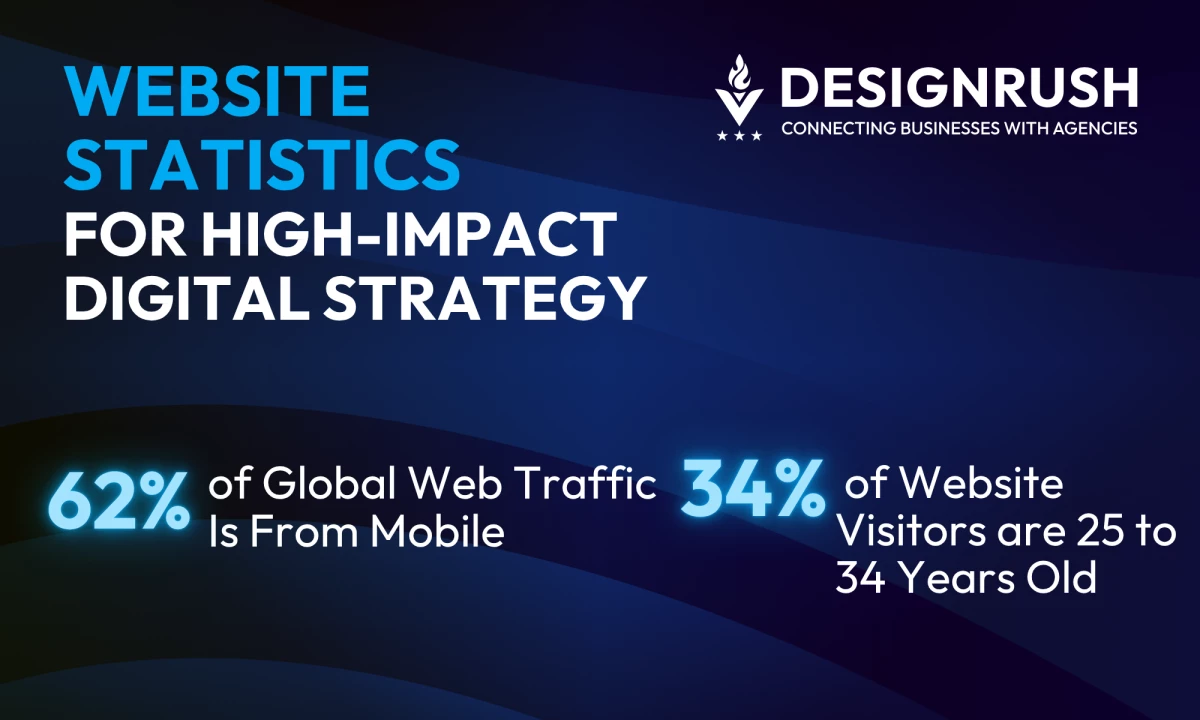

Your website isn't just a marketing asset — it's a core business engine. With nearly 5.6 billion people online in 2025 and mobile devices now responsible for over 60% of global web traffic, the stakes for delivering a fast, intuitive, and engaging online experience have never been higher.
We'll share focused, data-backed insights for CEOs, CMOs, and digital decision-makers looking to drive growth through better website performance.
Website Statistics: Key Points
- Around 68% of the global population are online as of 2025, signaling a massive opportunity for businesses to expand their digital presence.
- With 62% of global web traffic coming from mobile devices, optimizing your website for mobile is essential for reaching more users and improving SEO rankings.
- Organic search drives over 30% of website traffic, making it a crucial element for boosting visibility and attracting targeted visitors
Global Internet & Website Landscape
1. Internet Access Is Still Expanding — Fast
According to Datareportal’s Global Overview Report, nearly 5.56 billion people, or about 68% of the world’s population, are online as of early 2025.
As internet adoption continues to rise, this global growth opens new markets for digital engagement. Here’s how you can ensure your website is ready to meet this expanding audience:
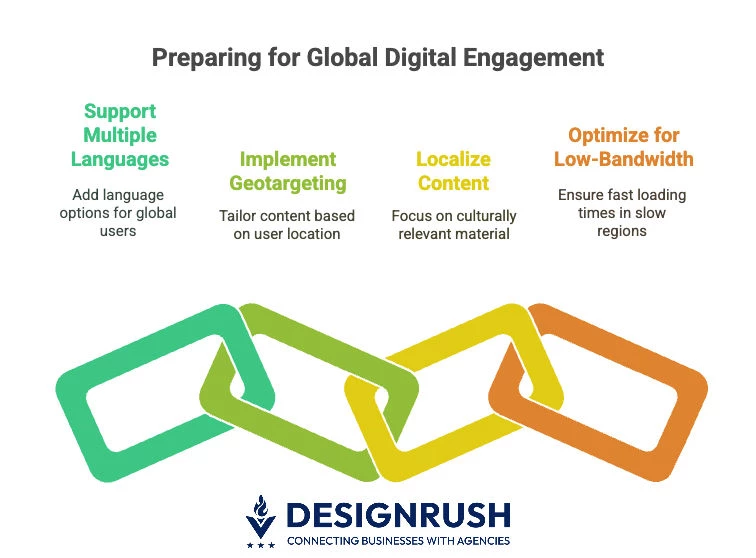
- Support multiple languages: Add multi-language options to cater to global visitors, making it easy for users from different countries to interact with your site without language barriers.
- Implement geotargeting and personalization: Use location-based data to tailor the user experience. Show relevant offers, products, or services based on where your visitors are located.
- Localize content for emerging markets: Focus on high-growth regions like Asia, Africa, and Latin America, ensuring your content speaks directly to these diverse audiences through culturally relevant material.
- Optimize for low-bandwidth connections: Make sure your website is light on heavy media files and offers fast loading times, particularly in regions with slower internet speeds.
This expanding digital reach is more than a headline — it reflects fast-moving user adoption in globally and in the US:
- Around 136 million new users joined the internet in 2024 alone.
- Global internet usage grew by approximately 2.5% from 2023 to 2024.
- According to Statista, internet penetration in the U.S. reached roughly 93% of the population, a significant rise from around 71% in 2013.
- The same report states that 322 million Americans are online. It’s clear that the US remains one of the world’s largest and most digitally connected markets.



2. Global Internet Usage and Demographics
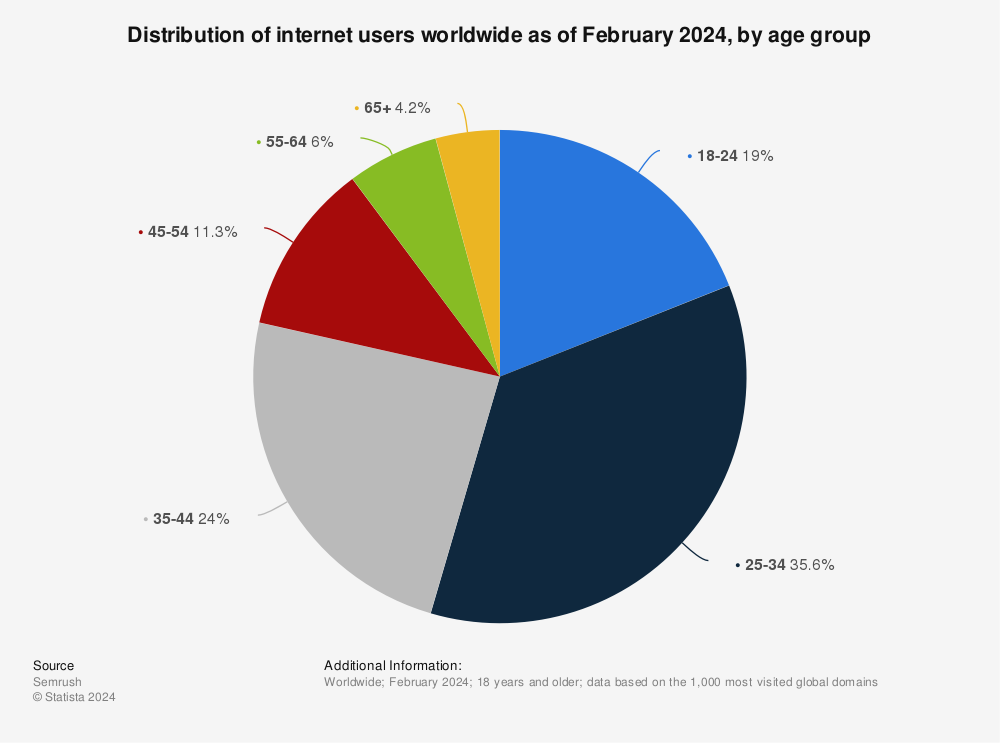
In February 2024, over a third (34%) of online users worldwide were aged between 25 and 34 years, making them the largest group of internet users.
As the dominant age group for internet activity, this demographic is crucial to your website’s success. Here’s how you can tailor your site to meet their preferences:
- Design for mobile-first: People in the 25 to 34 age range use mobile devices more frequently, so ensure your website is fully optimized for smartphones and tablets.
- Keep content dynamic and interactive: This group appreciates engaging strategies like video marketing, interactive elements, and personalized experiences. Add rich media to your pages to keep users involved.
- Simplify the user journey: Make navigation intuitive and streamline your web design elements to get from landing pages to conversion points. Millennials and Gen Z prefer quick, seamless browsing.
- Leverage social media integration: Include social sharing options and links to your business’s social profiles to make your website a central hub for brand engagement.
- Incorporate sustainability and social values: This age group cares about sustainability and corporate responsibility. Highlight your company’s values and eco-friendly practices to build trust.
Given that the 25 to 34 age group leads global internet traffic, optimizing for their habits and preferences can significantly improve engagement and retention.
Additional insights from the same Statista study include:
- 19% of global online users were aged between 18 and 24 years, indicating a strong presence of younger internet users.
- The 65+ age group makes up about 4.2% of all internet users, showing a steadily growing but still smaller audience segment.
- Young adults (18 to 34) are particularly influential in sectors like entertainment, fashion, and tech, where digital consumption is high.
By understanding and optimizing content and user experience for these key demographics, your site will be better equipped to attract and retain the most active and influential online users.
User Behavior
- Mobile is the new default for browsing
- Engagement is highest where UX is strong
- Personalization is key to driving retention and revenue growth
1. Mobile Is the New Default for Browsing
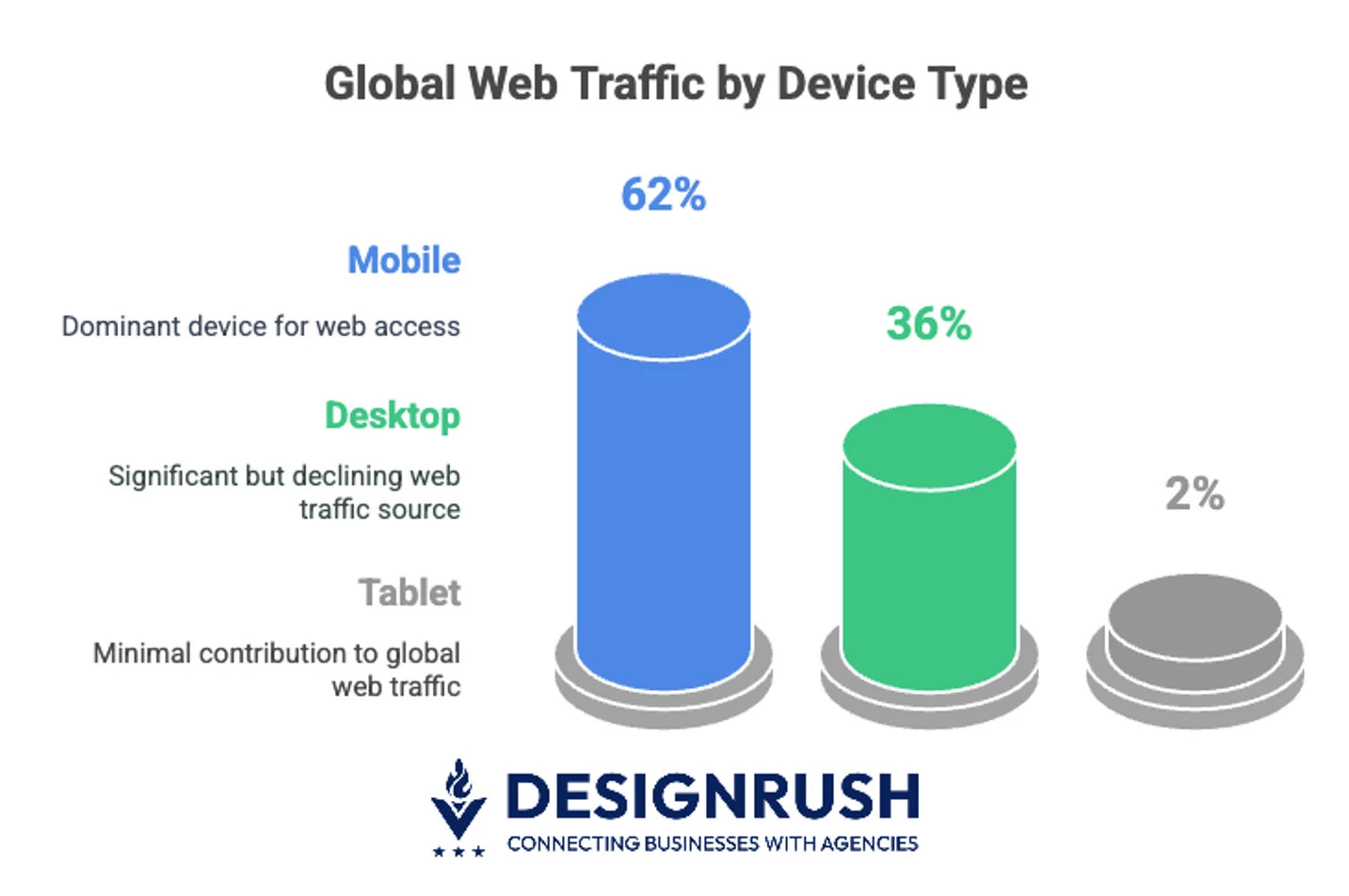
Mobile drives over 62% of global web traffic. With most users browsing via mobile, ensuring your site is optimized for these devices is no longer optional; it's essential. Here’s how you can ensure your website is mobile-friendly and performs well on all devices:
- Prioritize mobile-first design: Ensure your website is designed primarily for mobile users, with responsive layouts that automatically adjust to any screen size.
- Improve load times: Optimize images and streamline your website’s code to ensure your pages load quickly on mobile devices. Mobile users are impatient, and slow sites lead to higher abandonment.
- Simplify navigation: Create a clean, user-friendly mobile navigation system. Easy-to-click buttons and clear menus make it simple for mobile users to find what they need.
- Regularly test your site: Use tools like Mobile-Friendly Test by Sitechecker to identify and fix any emerging website issues. Regular testing ensures that your mobile site remains smooth and engaging for all users.
Optimizing for mobile isn’t just about user experience — it directly impacts visibility, engagement, and conversion. If your site isn’t mobile-friendly, you’re missing out on a massive portion of your audience. These statistics bear this out:
- Mobile users are five times more likely to abandon a site if it’s not optimized, costing you conversions and revenue.
- Google no longer indexes sites that aren’t mobile-friendly, meaning non-optimized websites won’t appear in search results, hurting visibility.
- Desktop traffic accounts for about 36% of web traffic, and tablets make up just 2% of global traffic, highlighting how crucial mobile optimization is.
2. Engagement is Highest Where UX is Strong
High-performing websites like Google average 10 minutes per visit, with users viewing 8.8 pages and a bounce rate of just 27%.
To stay competitive, your website must focus on retaining visitors and ensuring an engaging experience. Here's how you can improve user retention and reduce bounce rates:
- Optimize for fast loading times: A website that loads in 1 second converts 3x better than one that takes 5 seconds. Prioritize fast-loading pages to keep visitors engaged.
- Create engaging content: Design your pages to encourage exploration. Use internal links, related articles, and clear calls-to-action to guide users through more pages.
- Improve user experience: Keep the interface clean and intuitive to minimize confusion and enhance engagement. Simplify navigation and remove unnecessary distractions.
- Reduce bounce rates: Aim for a bounce rate below 50% by providing visitors with immediate value, such as clear CTAs, fast loading times, and engaging visuals.
Focus on making your website fast, easy to navigate, and engaging. Small improvements in these areas can lead to big gains in user retention and conversions. These numbers provide additional insights on the importance of top-notch UX:
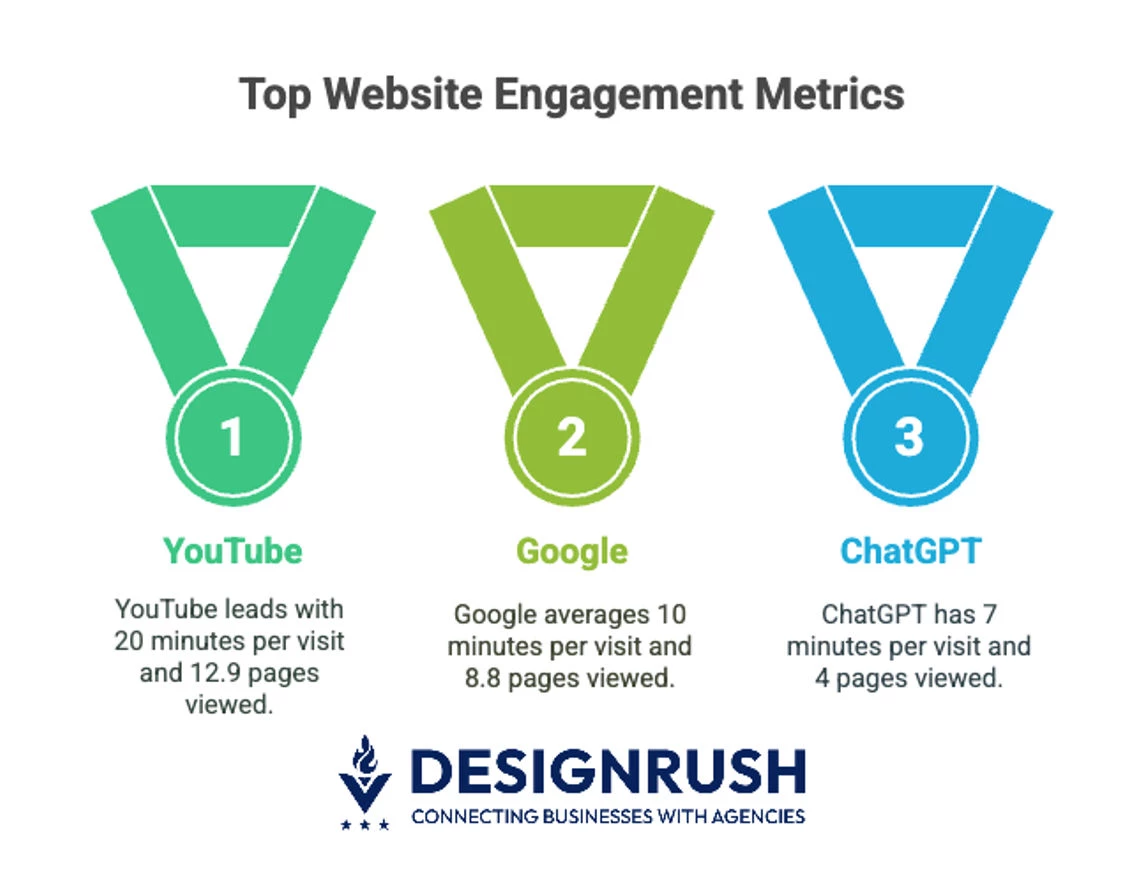
- YouTube sees users spending 20 minutes per visit, viewing an average of 12.9 pages, with a 20% bounce rate.
- Facebook/Instagram show similarly high engagement metrics, underlining the importance of content that keeps users on your site.
- ChatGPT, a rising player, ranks #5 globally, with 7 minutes per visit, averaging 4 pages and a 30% bounce rate.
- Websites that load in 1 second convert 5x better than those with a 10-second load time, underscoring the direct link between speed and conversion.
3. Personalization Is Key to Driving Retention and Revenue Growth
65% of consumers expect brands to adapt to their evolving needs, but 61% feel like they're just a number, according to Salesforce’s State of the Connected Consumer. Furthermore, McKinsey reports that companies that excel in customer intimacy experience faster revenue growth, demonstrating that personalization is more than a trend — it’s a strategy that drives financial success.
To stay competitive, your website must move beyond generic experiences and create personalized journeys that make users feel valued. Here’s how you can leverage personalization to increase retention and drive better results:
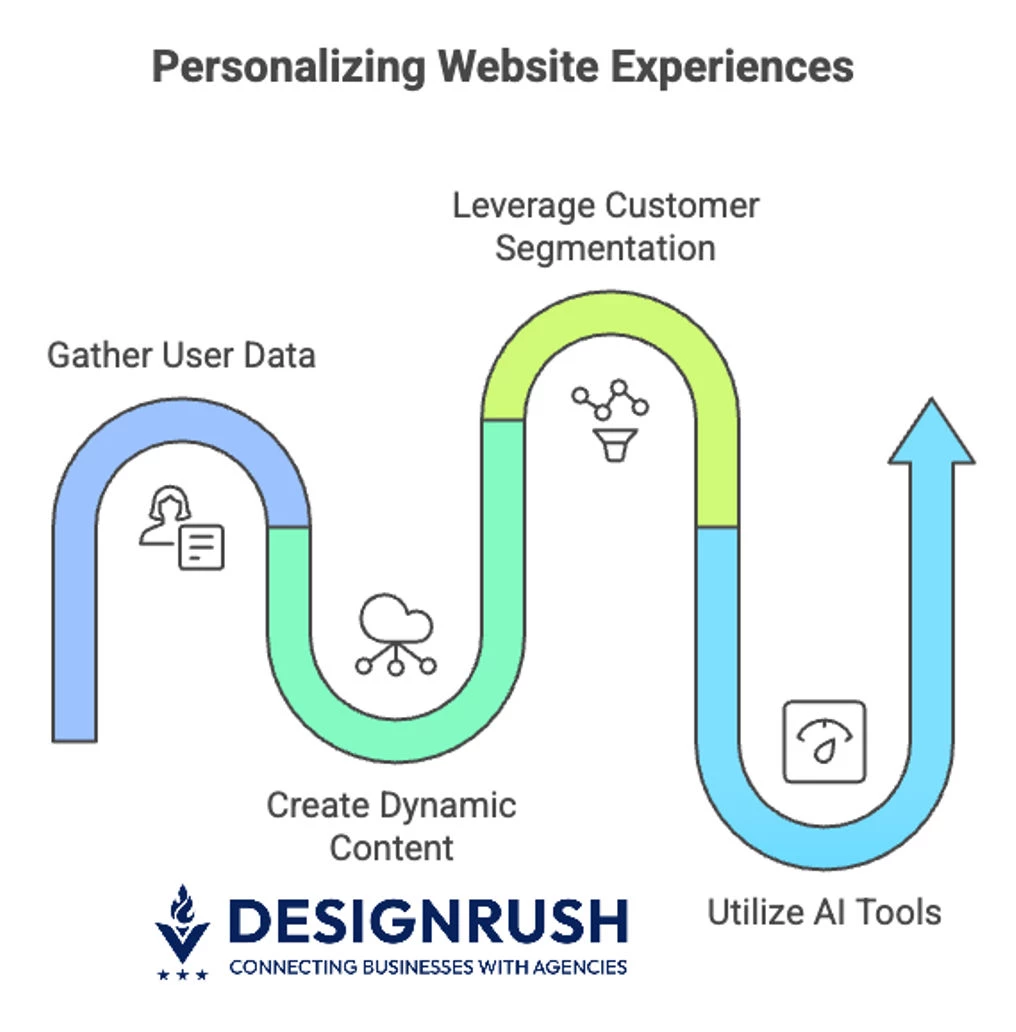
- Use data to personalize visitor experiences: Implement AI-driven personalization strategies to gather user behavior data and deliver tailored content, offers, and product recommendations based on previous interactions.
- Create dynamic content: Personalize your website’s content based on user demographics, browsing history, and preferences to keep users engaged and encourage repeat visits.
- Leverage customer segmentation: Use segmentation to target specific groups with relevant messaging, improving both engagement and conversions.
- Utilize AI-powered design tools: Invest in AI web design tools to optimize your content, make real-time adjustments based on user actions, and enhance the overall experience.
Focusing on personalization doesn’t just improve user experience; it directly impacts your bottom line, as studies show that businesses excelling at customer intimacy see faster revenue growth. Additional insights from Salesforce's report include:
- Personalized experiences boost retention, with paid search accounting for just 3% of traffic, and 96% of traffic coming from organic sources.
- 73% of customers expect further improvements in personalization through technology, creating an opportunity for businesses to stay ahead by adapting.
- The customer experience and personalization software market is projected to reach $11.6 billion by 2026, reflecting the growing demand for tailored interactions.
Web Design
- Speed & first impressions matter
- User experience is crucial to conversion rates
- Navigation & layout: Don’t lose visitors to confusion
1. Speed & First Impressions Matter
It takes only 0.05 seconds for a visitor to form an opinion about your website, emphasizing the importance of immediate visual appeal.
The first impression your site makes is critical to keeping visitors engaged. Here’s how to deploy impactful web design best practices that hit the mark right from the start:
- Ensure fast load times: With visitors forming opinions in fractions of a second, your website needs to load quickly. Optimize images, use efficient coding practices, and minimize unnecessary scripts to speed up load times.
- Create a visually appealing design: Use clean, engaging visuals and intuitive design to make a lasting impression. Keep the homepage simple and easy to navigate.
- Test your website regularly: Run performance tests to identify areas that could be slowing down the site. Regular checks ensure that your site is always fast and functional.
Your site’s speed and design play a huge role in visitor retention and conversions. In today’s fast-paced digital world, users expect websites to work perfectly from the moment they arrive. The numbers bear this out:
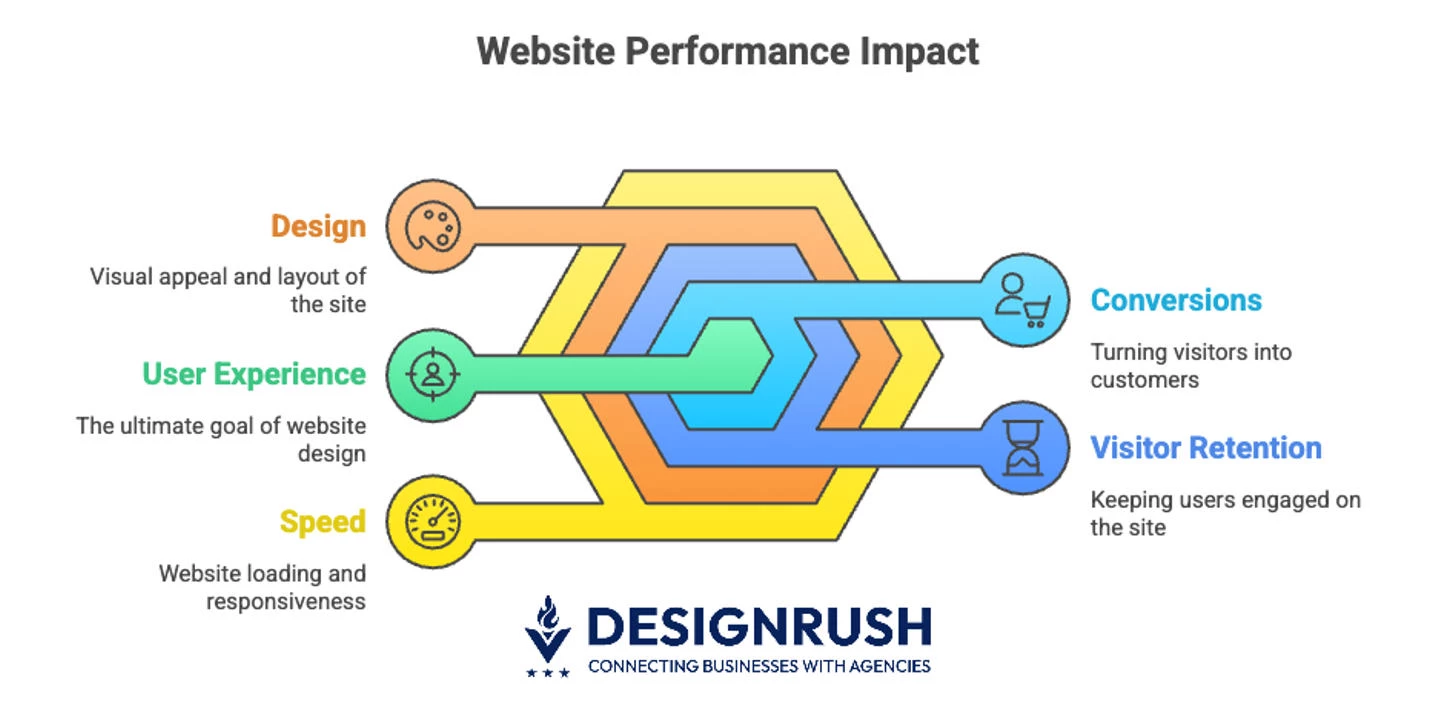
- 40% of shoppers will abandon a website if it takes longer than 3 seconds to load.
- 32% more users will bounce for every 1 to 3-second increase in page load time.
- 54% of people experience increasing frustration as the load time of a brand’s mobile site rises.
- A 1-second delay in load time can cause an 11% decrease in page views, a 16% drop in customer satisfaction, and a 7% loss in conversions.
2. User Experience Is Crucial to Conversion Rates
A seamless user experience (UX) can increase your conversion rate by up to 200%, according to Forrester Research.
UX design is one of the most powerful ways to improve conversion rates. Here’s how to enhance your website’s UX to boost your bottom line:
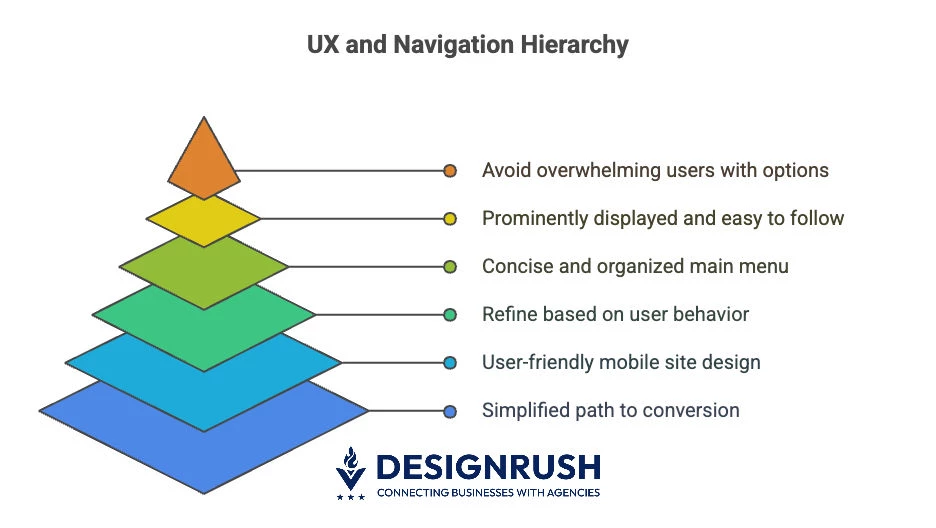
- Streamline your user flow: A simplified path to conversion is key. Reduce unnecessary steps and ensure that users can easily find what they need to make a purchase or take action.
- Optimize mobile navigation: With most users browsing on mobile, make sure your site’s mobile version is as user-friendly as its desktop counterpart. Focus on responsive web design and easy navigation.
- Test, test, test: Regular usability testing is essential. Conduct A/B tests, gather feedback, and refine your website based on user behavior to ensure that your site meets the highest UX standards.
By improving UX, you’re not just creating a more pleasant experience for your users; you’re directly increasing your chances of turning visitors into customers.
Additional Insights:
- 88% of online shoppers are less inclined to revisit a site following a poor user experience, highlighting the critical need for intuitive navigation and flawless design.
- 35% of potential revenue in eCommerce is lost due to poor UX, meaning every bad interaction can result in a missed sale. Check out our list of 95+ eCommerce statistics for more details.
- 50% of Gen Z users report dissatisfaction with current digital experiences, highlighting the need for websites to be intuitive, engaging, and frictionless.
3. Navigation & Layout: Don’t Lose Visitors to Confusion
70% of users judge a site’s quality based on its navigation and layout, making intuitive navigation a must-have for any website.
Clear, easy-to-understand navigation is critical for ensuring that visitors stay on your site. Here’s how you can create an intuitive navigation experience:
- Simplify your navigation structure: Keep your main menu concise and organized. Visitors should be able to find what they’re looking for without thinking twice.
- Use clear CTAs: Ensure your calls-to-action (CTAs) are prominently displayed and easy to follow. A well-placed CTA can guide users through your site and increase conversion rates.
- Limit choices to avoid overwhelm: Too many options can confuse users. Offer clear categories and avoid cluttering the page with excessive links or pop-ups.
Intuitive navigation doesn’t just help users find what they need faster; it’s an essential factor in building trust and keeping visitors engaged. These statistics emphasize its importance:
- 70% of shoppers will abandon a purchase due to poor user experience.
- 55% of consumers will sever ties with a company after poor experiences, according to PWC, proving that consistent and intuitive design is critical to long-term retention.
Website Traffic
According recent Databox insights, average monthly website sessions across industries was 3.93k, with users viewing an average of 8.82k pages. This data highlights the importance of driving consistent traffic and engaging visitors across your website.
To boost these numbers and maintain a strong online presence, take note of the following:
- SEO remains essential for website traffic growth
- Voice search and interactive content are on the rise
- Pay-per-click ads can boost immediate traffic
1. SEO Remains Essential for Website Traffic Growth
Organic search drives over 30% of website traffic, making it one of the most critical elements for driving visitors.
If you're not leveraging search engine optimization effectively, you're missing out on a significant portion of your traffic. Here's how you can use SEO to boost your website's visibility:
- Optimize for high-value keywords: Research and target long-tail keywords that align with your audience’s search intent. This will help you rank higher in search results and attract more relevant traffic.
- Focus on high-quality, user-intent content: Regularly publishing high-quality, engaging content is crucial, as it contributes to 23% of a website's ranking factors. Content that is useful and engaging ranks better and drives organic traffic.
SEO isn’t just about optimizing for search engines; it’s about providing value to your users, which ultimately increases engagement and site traffic. These other SEO statistics demonstrate how important it is to rank high:
- Small businesses investing in SEO averages ROI of 400% or higher.
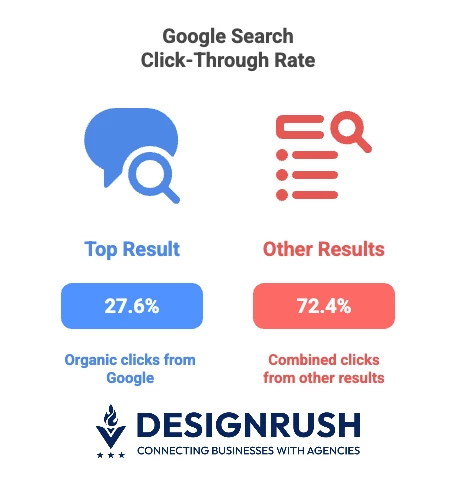
- The top organic result in Google receives 27.6% of all clicks, reinforcing the importance of ranking high on search engine results pages (SERPs).
- Google dominates the search engine market, holding 89.74% of the global share in 2025.
- Local searches make up 46% of all Google queries, underlining the significance of local SEO for businesses targeting specific regions.
2. Voice Search and Interactive Content Are On the Rise
Over 20% of people globally use voice search, with 27% of those searches conducted on mobile devices.
Voice search is becoming an increasingly important way for users to find information online. Optimizing your website for voice search can give you an edge. Here’s how you can capitalize on this growing trend:
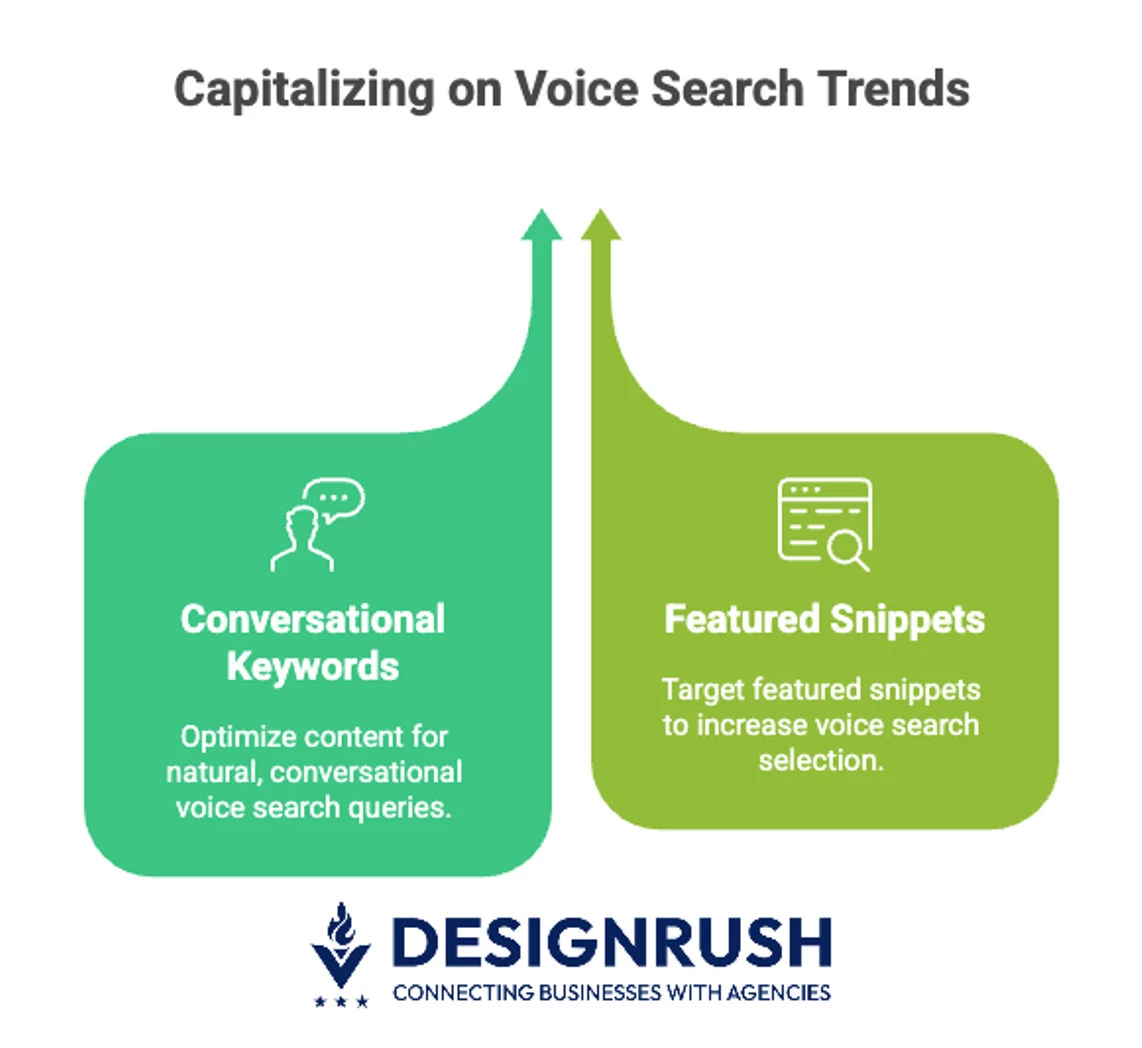
- Optimize for conversational keywords: Voice searches are often phrased as questions or commands. Ensure your content is optimized for natural, conversational language to capture these queries.
- Focus on featured snippets: Positioning your content to appear in Google’s featured snippets (often read aloud by voice assistants) will increase your chances of being selected for voice search responses.
Voice search is just one of many evolving trends in user behavior and web development. Staying on top of these shifts will help your website remain competitive and accessible across platforms. Here are some additional insights:
- Interactive content drives 52.6% higher engagement than static content, with users spending an average of 13 minutes on interactive experiences versus just 8.5 minutes on static ones.
- 49% of U.S. adults have turned to an AI chatbot for customer service in the past 12 months, indicating a strong preference for AI-driven support.
- 45% of online merchants in the U.S. want to offer one-click checkout solutions to boost conversion rates.
3. Pay-Per-Click Ads Can Boost Immediate Traffic
41% of all clicks in search results go to the top three paid ads, underlining the power of paid search to drive immediate traffic.
Pay-per-click (PPC) ads are a powerful tool for businesses seeking to boost site visibility quickly. Here’s how you can optimize your PPC campaigns for maximum impact:
- Bid on high-conversion keywords: Focus on keywords with high commercial intent to ensure your ads attract users who are ready to take action, not just browse.
- Leverage remarketing: Target users who have already visited your website but didn’t convert, bringing them back with tailored ads to complete their purchase or engagement.
- Optimize ad copy and landing pages: Ensure your ad copy is compelling and matches the content on the landing page. A seamless experience from ad to landing page boosts conversions.
PPC offers a quick way to generate traffic and immediate ROI, especially when you target the right keywords and continuously optimize your campaigns. Here are some additional insights and PPC statistics to help you take your strategy to another level:
- Global search ad spending was projected to hit $351.55 billion by the end of 2025.
- The average cost per click for Google search ads is $4.66.
- Google Ads boasts an average return of $2 for every $1 spent, offering a 200% ROI on investments in paid search.
- 45% of small businesses use PPC advertising, and around 50% of ad spending is focused on Google and Facebook, reinforcing the dominance of these platforms in paid media.
Website Statistics: Final Thoughts
Optimizing for mobile-first browsing, voice search, and personalized user experiences can significantly enhance website traffic and engagement. These web design trends are essential for maintaining a competitive edge in a rapidly changing digital environment.

Our team ranks agencies worldwide to help you find a qualified partner. Visit our Agency Directory for the Top Web Development Companies, as well as:
- AI Web Design Agencies
- Top Front End Web Development Companies
- UI/UX Design Agencies
- Web Development Companies for Small Businesses
- Top Web Development Companies in Chicago
Our design experts also recognize the most innovative design projects across the globe. Visit our Awards section to see the best in web design.
Website Statistics FAQs
1. What are the key metrics to track for website traffic?
Key metrics include the number of visitors (sessions), bounce rate, average session duration, page views, traffic sources (organic, paid, direct), and conversion rates. These provide insights into user engagement and areas for improvement.
2. How can I use analytics to improve my website’s performance?
By tracking user behavior with tools like Google Analytics, you can analyze data such as visitor demographics, session duration, traffic sources, and user flow. This helps identify areas where users drop off, optimize content, and refine marketing strategies.
3. How does SEO affect website traffic?
SEO increases visibility on search engines by optimizing content, targeting relevant keywords, improving technical aspects of your site (like loading speed), and building quality backlinks. As a result, it drives more organic traffic to your site.




-preview-webp.webp)