Discover trusted lead generation firms that attract, qualify, and nurture high-quality prospects. Compare providers by expertise and budget to find the right partner for your business.
Organic rankings are determined by five factors: top services, reviews, portfolio, awards/press, and team expertise. Sponsored listings pay for a placement that appears above organic positions. Sponsorship does not affect star ratings or review content - read more on our methodology page.
Sorry, no agency was found by that name.
Please retry your search.
Explore Digital Marketing Specializations
- Account Based Marketing
- AI Marketing
- Amazon
- App Marketing
- Automotive
- B2B
- B2B Lead Generation
- B2C
- Beauty Marketing
- Chatbot Marketing
- Construction Marketing
- Crypto Marketing
- Cybersecurity Marketing
- Dental
- Digital Advertising
- Digital Media
- DTC Marketing
- Education
- Entertainment Marketing
- Fashion
- Financial
- Fintech
- Food and Beverage
- Government
- Growth Marketing
- Healthcare
- Higher Education Marketing
- Hospitality Marketing
- Inbound Marketing
- Insurance Marketing
- Integrated Marketing
- Legal
- Loyalty Programs
- Luxury
- Manufacturing Marketing
- Marketing Analytics
- Marketing Strategy
- Martech
- Multicultural Marketing
- Music Marketing
- NFTs
- Nonprofit
- Performance Marketing
- Personal Injury
- Property Management Marketing
- Restaurants
- SaaS Marketing
- SEM
- Shopify Marketing
- Shopper Marketing
- Small Business
- SMS Marketing
- Sport
- Startup
- Travel
- Viral Marketing
- Web3 Marketing
Everything You Need to Know Before Hiring Lead Generation Agencies
What can lead generation firms do for businesses?
Lead generation firms help businesses identify, attract, qualify, and nurture potential customers. When implemented effectively, these efforts can improve conversion rates, create more sales opportunities, and contribute to revenue growth.
They do this through data-driven, personalized strategies that address customer pain points, align with buyer intent, and move prospects through the sales funnel more efficiently.
According to industry research, companies using intent data to optimize lead generation campaigns have a 3x higher lead-to-customer conversion rate and 50% lower CPL.
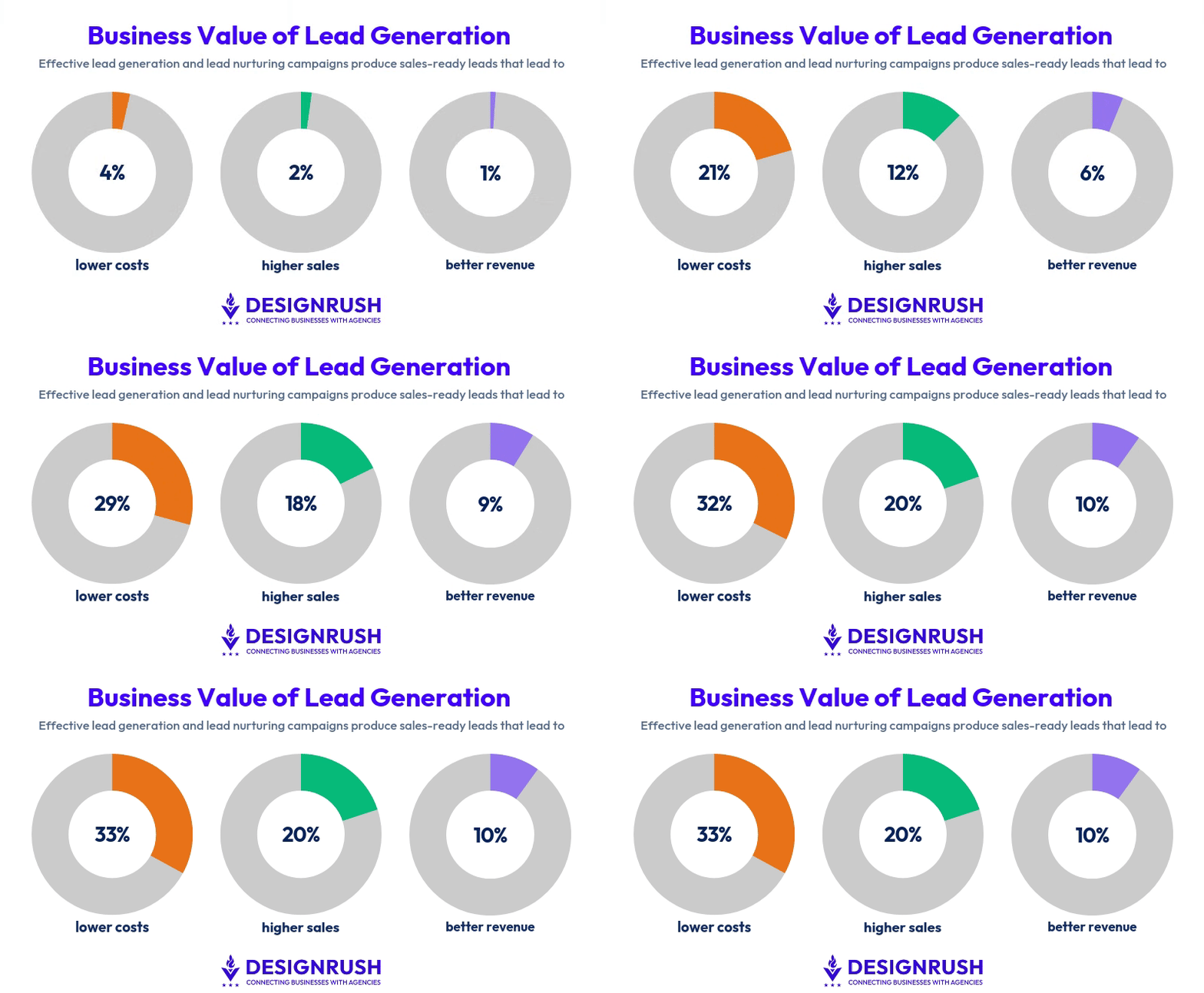
Another dataset found that nurturing sales-ready leads drives 33% lower costs, 20% more sales opportunities, and 10% higher revenue.
Moreover, Forrester reports that sales and market-aligned lead pipelines lead to 19% faster revenue growth and 15% higher profitability.
How long does it take to see measurable results from a lead generation strategy?
While there is no absolute answer to the question, many marketers observe early signs of traction within 1-3 months of their lead generation campaigns for small businesses, and 6-18 months for B2B companies with longer sales cycles.
A rough timeline of results may look like:
- Days 1-30: Campaign setup and launch. This may include audience research, list building, messaging development, content creation, landing page setup, and campaign deployment. For startups, this process might take longer, with the first few months dedicated to developing your brand strategy.
- Days 31-60: Early optimization. Teams begin testing messaging, channels, and targeting. Initial leads or responses may start to come in, but results can still be inconsistent.
- Days 61-90: Lead nurturing and performance improvement. Follow-ups, email sequences, retargeting, and ongoing optimization may begin producing more qualified leads and clearer conversion trends.
- Months 6-8: More stable performance. At this stage, businesses may start to see more consistent lead flow, stronger pipeline impact, and clearer indicators of ROI.
The actual time it takes to see measurable results depends on your current brand visibility, goals, target audience, sales cycle, marketing channels, industry competition, and campaign quality.
How to measure the success of your lead generation strategy?
To measure the success of a lead generation strategy, start by defining clear goals and KPIs based on your historical performance, sales process, and industry context. You should also use analytics, CRM platforms, and AI tools for sales teams to track lead quality, conversion performance, and pipeline impact over time.
Common lead generation success metrics include:
- Marketing qualified leads (MQLs): The number of leads who have engaged with your marketing and meet your initial qualification criteria, but are not yet ready for direct sales outreach. A good number to aim for is 30%-50% of total generated leads.
- Sales qualified leads (SQLs): The number of leads who have been vetted and are ready for sales engagement based on fit and buying intent. Effective B2B lead generation campaigns record an SQL of 25%-35%.
- Conversion rates: Track how leads move through each stage of the funnel, such as lead-to-MQL, MQL-to-SQL, SQL-to-opportunity, and opportunity-to-customer. These rates vary widely by industry and channel.
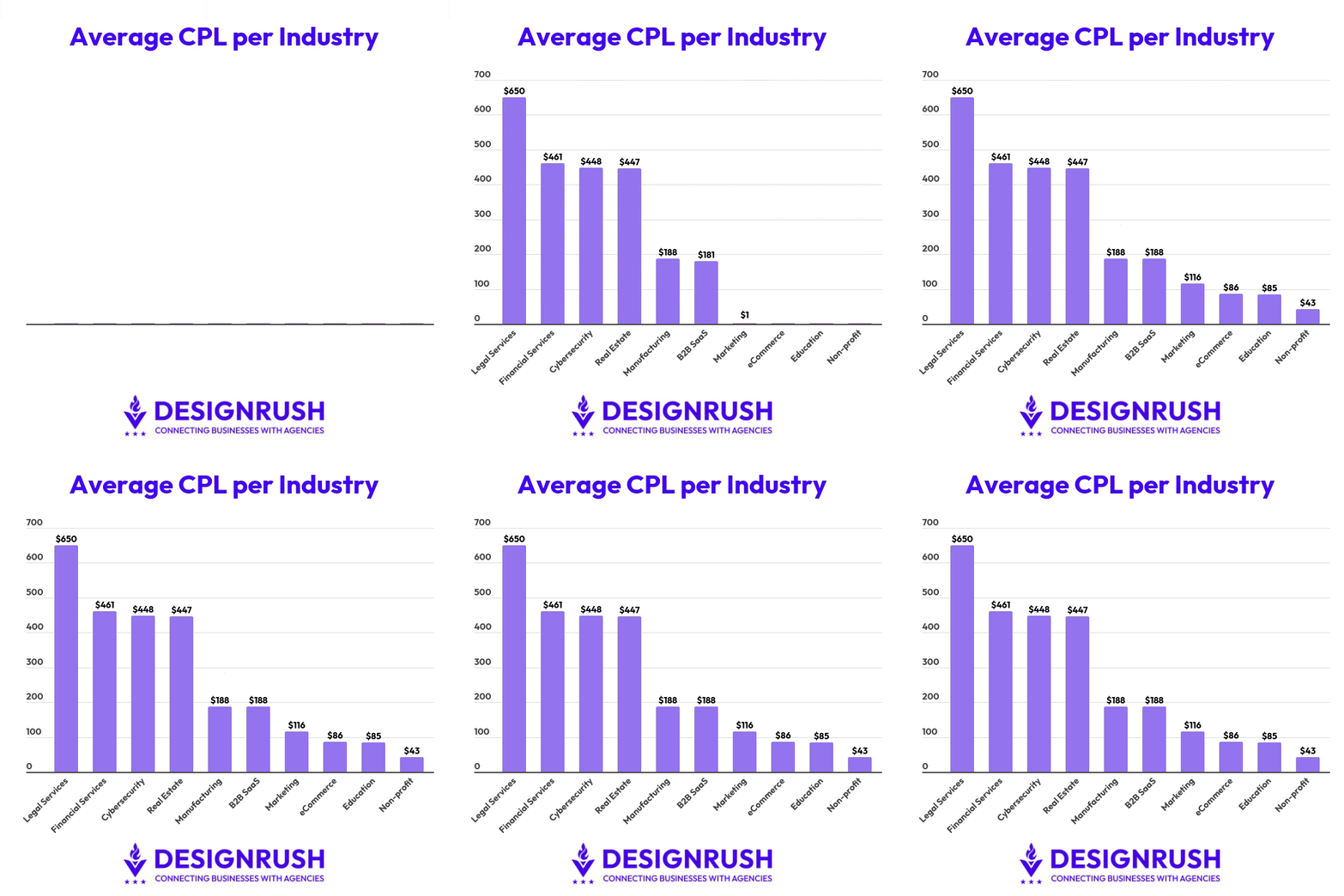
- Cost per lead: The average amount spent to acquire a lead. The average CPL is $200-$300 across industries.
- Cost per qualified lead: A stronger metric than raw CPL when evaluating agencies, because it focuses on leads that actually meet your sales criteria.
- Pipeline and revenue contribution: The most meaningful long-term measure of success is whether the campaign is generating qualified opportunities and contributing to revenue.
How do you choose the best lead generation agency for your business?
Consider following these steps to choose the best lead generation agency for your business:
- Specify your business needs and goals, including your desired outcomes, success metrics, target audiences, lead qualification criteria, preferred channels, timeline, and budget range.
- Search for companies with experience in your industry, niche, and channels. Review their case studies for evidence of lead quality, pipeline contribution, and revenue impact.
- Assess client reviews and testimonials to understand the company's project management approach, communication style, and service reliability.
- Send a request for proposal to the companies and compare their proposals based on their capabilities, strategic alignment, reporting, and overall fit with your business goals.
- Interview your top lead generation companies to learn more about their process, lead qualification methods, reporting practices, and data handling standards.
- Choose a lead generation agency with proven experience, a clear and data-driven process, transparent reporting, and a strong understanding of your brand and business needs.
What questions should you ask before hiring?
Ask these questions before hiring a B2B lead generation company:
Relevant Background
- Which lead generation channels and techniques do you specialize in?
- Can you share case studies from similar projects or industries? What results did you generate in terms of lead quality, pipeline value, or revenue impact?
- What experience do you have in my industry and target market?
- Can you provide three to five client references?
Services and Processes
- What stages of the funnel do your lead generation strategies cover?
- What technologies and AI lead generation tools do you use, and can they integrate with my existing systems?
- Where do you source your leads, and how do you define and ensure high-quality leads?
- How do you handle data hygiene, compliance, and ongoing list maintenance?
Related to Your Project
- How do you ensure alignment with our ICP, brand, and messaging?
- How will you align the campaign with our broader marketing and sales strategy?
- Which KPIs do you track and report on?
- How do you respond when campaign performance drops?
Sources
DesignRush sustains a directory of over 40,000 agencies categorized by service category, location, expertise, and reviews. We build our database in two ways:
- Our dedicated team of agency experts actively searches the web for top-performing companies. We then pull information from their websites, online presence, and client testimonials to verify their status and qualifications prior to listing.
- The agencies listed get notified of their profiles on the website and they can choose to claim it or not, which suggests their availability for more collaborations.
Agencies can also reach out to DesignRush and must go through the verification process prior to being listed.
Latest Trends Related to Lead Generation