
Packaging is the first and most effective ad for your brand. In a crowded market, it’s often the difference between a product flying off the shelf or getting ignored.
Packaging Design Costs: Key Findings
- Budget $5K–$20K for simple packaging and $50K–$100K+ for complex or regulated products.
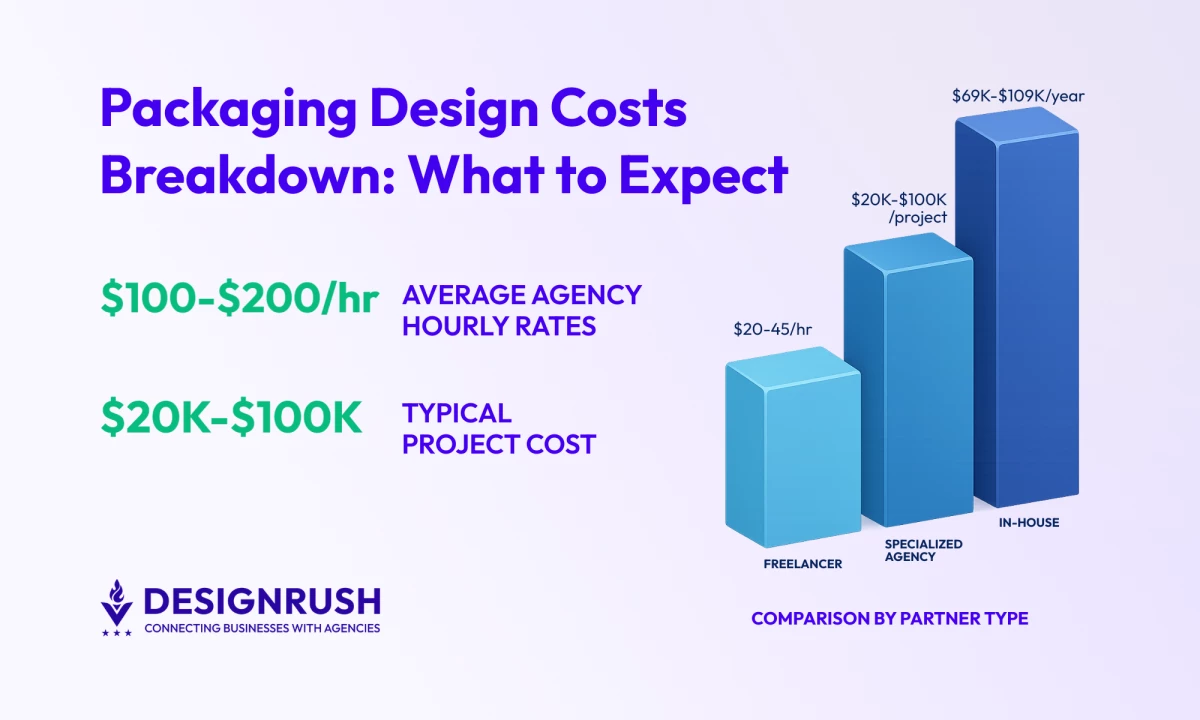
- Agencies charge $100–$200/hr, but in-house teams carry $63K–$109K+ salaries plus 20–30% overhead, making agencies cheaper unless packaging is a weekly, ongoing need.
- Smart and sustainable packaging now justifies higher upfront spend. 60% of consumers pay more for sustainable packaging.
What Packaging Design Actually Includes
1. What Is Packaging Design?
2. Creative Packaging Design Ideas
3. Best AI Tools for Packaging Design
4. Custom Packaging for Small Businesses
Before a word is spoken, your product's packaging has already begun to speak for your brand.
In fact, 72% of consumers say packaging influences their purchase decisions, and 60% have bought a product based solely on its packaging.
Packaging design is about making sure your product sells, complies, and is ready for real-world production. In practice, it spans strategy through execution.
Here’s what it really includes when done properly:
- Brand & product structure: I start by defining how the product shows up on shelf and how variants signal difference, so shoppers can quickly understand what they’re looking at.
- Market & compliance: Determining required labeling such as nutrition facts, warnings, and barcodes, and meeting local regulations. Get this wrong, and you might face relabeling, fines, or blocked distribution.
- Concept development: I push teams to explore multiple directions at the sketch stage. Brainstorming early, and creating mood boards make it far cheaper to discard ideas now than after printing or tooling.
- Digital mockups & modeling: Flat 2D mockups show how logos, text, and images sit on the packaging, while 3D models let you see the package from every angle and assess functionality.
- Prototyping & feedback: Physical prototypes are the first chance to touch and test the design. You can assess weight, durability, ease of opening, and shelf presence.
- Artwork & production prep: When the design is finalized, next is having production-ready files: color specifications and print-ready artwork, so you reproduce exactly what was approved.
- Dielines & structural design: Designing how the package is shaped and folded, or how a label wraps, so it works with filling machines, seals properly, and doesn’t cause issues in production.
- Color & print prepress: Setting color profiles, proofs, and press checks so what’s approved on screen matches what comes off the press.



What Factors Influence Packaging Design?
In my experience, the biggest cost driver of packaging costs is who you work with and how complex the job is.
- In-house vs. agencies vs. freelancers
- Industry/category
- Design complexity
- Branding requirements
- Materials & printing choices
- Number of products & SKUs
1. In-House vs. Agencies vs. Freelancers
Besides pricing, the type of partner you choose shapes how packaging moves from concept to production.
Partner Type | Average Typical Cost | Best For | Tradeoffs |
In-House | $63K–$109K+/yr | Ongoing brand support | Consistent, but fixed cost and skill limits |
Specialist Agency | $100-$200/hr | Regulated or high-stakes launches | High upfront cost, lowest execution risk |
Freelancer | $20–$45/hr | Simple designs, small runs | Affordable, but higher risk if inexperienced |
1.1. In-House Teams
Hiring a full-time packaging designer gives you full control and faster turnaround. But it only makes financial sense when packaging work is constant and predictable.
Typical cost factors I budget for:
- Salaries: In the U.S., packaging designers usually earn $63,000–$109,000+ annually, depending on seniority.
- Overhead: Benefits, software, and training often add 20–30% on top of salary.
This setup works well if you have ongoing packaging needs across many SKUs.
However, most in-house teams can’t cover every specialty, especially in regulated categories like alcohol or cosmetics. When that happenns, you're paying for ongoing salaries and external help, even during slower cycles.
If packaging isn’t a weekly operational function, in-house rarely pays off.
1.2. Specialized Agencies
Agencies come with higher upfront costs, but they’re often cheaper in reality.
When I bring in an agency, it’s for risk reduction. These teams understand regulations, printer limitations, material behavior, and what fails on press.
Typical cost ranges from DesignRush data:
- Hourly rates: $100–$200/hr
- Project fees: $20K–$100K
Agencies are worth the investment when:
- The product is highly regulated
- The packaging structure or printing is complex
- The launch spans multiple markets or retailers
- A mistake would mean reprints, relabeling, or launch delays
Senior talent costs more upfront but saves money overall. In packaging, the cheapest option is rarely the least expensive in the long run.
1.3. Freelance Designers
Freelancers usually charge $25–$45 per hour (Upwork), making it the most affordable option. I regularly recommend freelancers for simple packaging, one-off updates, or early-stage launches.
The tradeoff is scope and safety. Many freelancers are excellent visually but lack experience with print prep, compliance, or production realities. Without that expertise, small oversights can turn into costly reprints or delays.
2. Industry/Category
In my experience, the product category directly affects how much design work and risk is involved more than size or style, due to industry regulations and shelf expectations.
Based on DesignRush data:
Industry / Category | Cost Range (Estimate) | Key Considerations |
Low → Mid ($5K-$50K) | Multiple flavors/formats, nutrition/export labels | |
Low → Mid ($5K-$50K) | FDA/health claims, multi-market compliance | |
Mid → High ($20K-$100K) | Ingredient lists, legibility, required icons | |
Alcohol & Tobacco | Mid → High ($20K-$100K)
| Heavy regulation, unique bottles/closures |
High ($50-$100K) | Bespoke packaging, specialty materials, custom finishes |
- Food & beverage: Highly competitive. You’ll need strong shelf differentiation, and multiple flavors or packaging formats are common. Every variant adds layout and labeling cost.
- Health & supplements: Strict labeling like FDA or health claims is non-negotiable. Selling across markets means maintaining separate compliant versions of the same design.
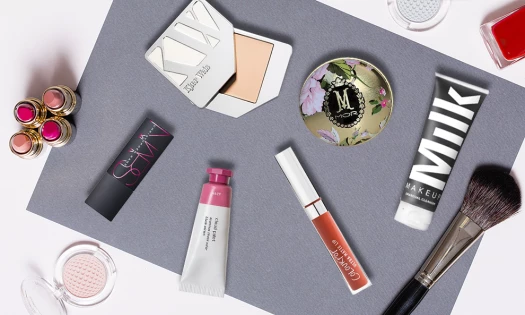
- Beauty & personal care: Ingredient lists, legibility rules, and required icons add design detail. Luxury beauty may need custom components like refill pods, raising both design and printing costs.
- Alcohol & tobacco: Very heavy regulation (COLA approvals for spirits, FDA for tobacco/hemp). Label approvals are strict, and mistakes can mean rejected shipments or forced reprints.
- Luxury products: High-end goods often require bespoke packaging, specialty materials, or custom finishes, increasing design complexity and cost.
3. Design Complexity
Simple graphics on standard packaging are relatively affordable. The moment you add custom structures, finishes, or interactive elements, the timeline, coordination, and risk all increase, and so does the price.
Our data shows where costs tend to climb:
Project Scope | Typical Cost | What’s Included |
Basic | $5K–$20K | Small brand-and-packaging projects, including custom structures (new dielines), special finishes, and custom artwork & illustration |
Standard | $20K–$100K | Multi-SKU packaging systems; Interactive or smart features like QR codes, AR, NFC, or push-up bases |
Premium | $100K–$250K | Full brand and packaging ecosystems covering all products and touchpoints |
4. Branding Requirements
Whether you’re refreshing an existing brand or building anew changes the workload:
- Existing brand system: If your brand already has design guidelines, packaging work is mostly execution like adapting the existing look to new sizes or flavors. This typically costs less and goes faster.
- Net-new positioning: Launching a new brand adds an entire strategy layer alongside packaging mockups. This can double or triple the scope compared to a simple refresh.
From my perspective, strong packaging can secure better shelf placement and support premium pricing from day one.
5. Materials & Printing Choices
Material selection and printing methods are where design meets real-world constraints. Every choice affects cost, production feasibility, and even shelf performance.
I’ve seen brands spend tens of thousands, or save just as much, because of a single material or print decision. Here’s how I break it down for clients:
Decision | Considerations | Cost Reality |
Material choice | Ink behavior, finish compatibility, and durability in transit |
|
Sustainable materials | Claims, labeling, retailer acceptance | Higher unit cost upfront due to innovation and testing but often offset by savings on waste fees or retailer programs. |
Print method | Run size flexibility, speed to market |
|
Printer specs | Color accuracy, dielines, tolerances | Late changes trigger redesigns, which are far more expensive |
6. Number of Products & SKUs
Every additional SKU, including new flavor, size, or variant, means more layouts, more legal copy, and sometimes separate print plates or tooling. That said, a strong system keeps costs from spiraling.
I always encourage clients to build a packaging style guide or component kit. This should include color rules, icons, dielines, and usage guidelines.
That documentation can dramatically cut future design time.
How To Estimate the Cost of Packaging Design
- Anchor budget to your commercial reality
- Define the packaging's purpose
- Choose the right pricing model
- Plan for production early
1. Anchor Budget to Your Commercial Reality
I always start with the numbers: current sales, margins, and growth targets. Estimate how much additional profit a packaging redesign could generate.
Example: Selling 100,000 units/year at $1 gross profit each, a 10% lift from better packaging adds $10,000. A $0.10 price bump adds another $10,000. Subtract any extra per-unit packaging cost to see net gain.
Keep design and prepress spend around 10–20% of the expected incremental gross margin in Year 1. For example, if a redesign could add $200K in profit, a $20–$40K design budget is reasonable.
2. Define the Packaging’s Purpose
Before a single dieline is drawn, I clarify what the packaging must achieve:
- Compliance update or minor facelift?
- Full brand repositioning?
- Shelf standout or mobile-first visibility?
- Premium pricing or mass-market continuity?
As Jeremy Sweeting, Owner and Director at Geographik, puts it:
"If you think of your packaging as a product in itself and design it so that your customers want to use it again and again, they become your brand ambassadors — promoting your organization far beyond a one-time purchase."
3. Choose the Right Pricing Model
Selecting how you pay for design is just as important as the budget itself:
- Hourly / time & materials: Best when exploring new formats or unknown scope. Flexible, but costs can grow if the project drifts.
- Fixed fee: Ideal for well-defined projects with set dielines, copy, and SKUs. Predictable spend but requires a detailed brief.
- Value-based: Rare, but powerful. Tie fees to performance metrics (e.g., sales lift or SKU velocity). Aligns incentives but needs accurate measurement plans.
4. Plan for Production Early
One of the mistakes I see most often: teams design first, then realize materials, printers, or compliance issues later. I always lock production details early:
- Dieline engineering: Custom folds or unique structures
- Pantone/color proofing: Accurate brand reproduction
- Press checks/mockups: Catch issues before full runs
- Dies/molds: For embossing, foil, or die-cut features
- Legal review & translations: Multi-market compliance
- QR codes/2D codes: Integration and testing
- Eco labels & reporting: How2Recycle, EPR compliance
- E-commerce testing: Ship-in-own-container or DTC requirements
Upfront effort may feel like added cost, but I’ve saved clients six-figure sums by preventing late-stage redesigns or compliance failures.
Packaging Design Trends to Watch in 2026
Packaging is evolving quickly, and these shifts affect both what you spend and what you get back.
A matte finish, a subtle foil accent, or an improved unboxing texture can modernize packaging for 2026 without a full redesign.
Here’s what I’m watching for 2026:
- Connected & smart packaging goes mainstream
- Sustainability & regulation are now baseline
- Aesthetic split: minimalist vs. maximalist
- Material innovation changes design rules
1. Connected & Smart Packaging Goes Mainstream
QR codes, NFC, and AR features are moving from optional extras to expectations in some markets.
The smart packaging industry is projected to be valued at $26.3 billion in 2025, with expectations to grow to $40.8 billion by 2035.
There’s added upfront effort in design and data setup, but they open rich post-purchase engagement that can boost loyalty.
2. Sustainability & Regulation Are Now Baseline
New rules and rising consumer expectations are pushing sustainability to become non-negotiable.
Regulations like the EU’s PPWR, such as recyclability requirements, and expanding EPR laws mean more design work around materials, labeling, and reuse systems.
Jeremy Sweeting notes that early adoption matters:
"Organizations should go for early adoption rather than playing catch-up to legislation as this creates a positive brand image and an opportunity to promote themselves as forward-thinking rather than just responding to mandates.”
In fact, 60% of consumers would pay more for a product with sustainable packaging (McKinsey and NielsenIQ).
3. Aesthetic Split: Minimalist vs. Maximalist
Minimal, clean designs are still popular for conveying trust and clarity. But playful, bold, or narrative-led designs stand out on shelves and social feeds.
Gen Z in particular treats packaging as self-expression, preferring quirky shapes and unexpected graphics for shareability.
Consider short digital for seasonal or limited-edition artist collaborations to tap into these without committing to a full brand overhaul.
4. Material Innovation Changes Design Rules
Lightweighting, recycled materials, and new substrates are rising. These shifts affect how graphics can be applied and what finish is possible.
For instance, a recycled-molded tray can take embossing differently than a smooth carton.
"As demand for this kind of packaging increases and mandates are put in place, we should also see more sustainable solutions being designed and implemented.
Brands may also have to rethink how the production and shelf life of their products is determined,” Sweeting concludes.
Packaging Design Costs: Final Words
Your packaging speaks for your brand before anyone touches the product. From my experience, good design drives sales and avoids costly reprints, while weak design leaves even strong products ignored.
Find More Agency Hiring Resources:
- Branding Costs Breakdown
- How To Onboard A Digital Marketing Agency
- Full-Service Marketing vs. Niche Marketing Agency
The key is to set clear goals, understand all cost drivers, and choose the right partner for your product. Done right, packaging often pays for itself many times over.

Our team ranks agencies worldwide to help you find a qualified partner to implement the latest packaging solutions. Visit our Agency Directory for the Top Packaging Design Companies, as well as:
- Top Design Agencies
- Top Product Design Companies
- Top Digital Design Agencies
- Top Graphic Design Companies
- Top Print Design Agencies
Our design experts also recognize the most innovative design projects across the globe. Visit our Awards section to see the best in packaging design.
Packaging Design Pricing FAQs
1. Why is packaging design more expensive than “just graphics”?
Because packaging isn’t just visual, it includes compliance, structural design, print setup, color management, and production coordination.
Getting these wrong can lead to reprints, fines, or blocked distribution. Costs that often exceed the design fee itself.
2. What’s the biggest mistake brands make with packaging budgets?
Treating packaging as a visual afterthought. The biggest costs usually come from late changes like switching materials, printers, or compliance requirements after design is finalized.
Planning production early saves the most money.
3. Can good packaging replace some marketing spend?
Yes. Strong packaging can improve shelf visibility, justify premium pricing, and boost conversion.

-preview-webp.webp)