
Choosing a PPC agency can be overwhelming, especially if you're not deeply familiar with the field. The market is crowded with firms touting unbeatable ROI and “next-level” strategies, making it hard to know who to trust.
To help you make an informed decision, we've created a step-by-step guide that walks you through the process. Let’s get started.
How To Choose a PPC Agency: Key Points
- Your search should start with well-defined PPC goals and an honest audit of internal gaps to define the agency profile that would best complement your in-house capabilities.
- Peer recommendations and trusted directories like DesignRush will aid your research and agency vetting process.
- Before signing, you should review contracts carefully for ownership rights, termination clauses, and fee structures to protect your business long term.
For busy executives, whose time is already at a premium, finding a good PPC firm means onboarding a growth partner with a direct line to your bottom line.
Beyond running paid campaigns, the right team will shape your acquisition strategy, maximize your budget, and make a lucrative asset out of your customer acquisition funnel.
So, how do you navigate that decision with confidence?
Define Your Objectives
Before you even speak to an agency, get clear on what success looks like — not in vague terms, but in metrics. Are you looking to lower your cost-per-acquisition? Drive high-intent leads? Maximize ROAS?
Each goal demands a different strategy, platform mix, and budget structure.
Defining your objectives is a crucial first step as it will help you better communicate your expectations to potential PPC agencies. Having a well-defined set of goals will enable the agency to develop a custom PPC strategy that can realize your vision.
💡Pro tip: Take the time to analyze your internal marketing capabilities and identify areas where PPC advertising can fill the gaps or provide a competitive advantage.
Understand PPC Services
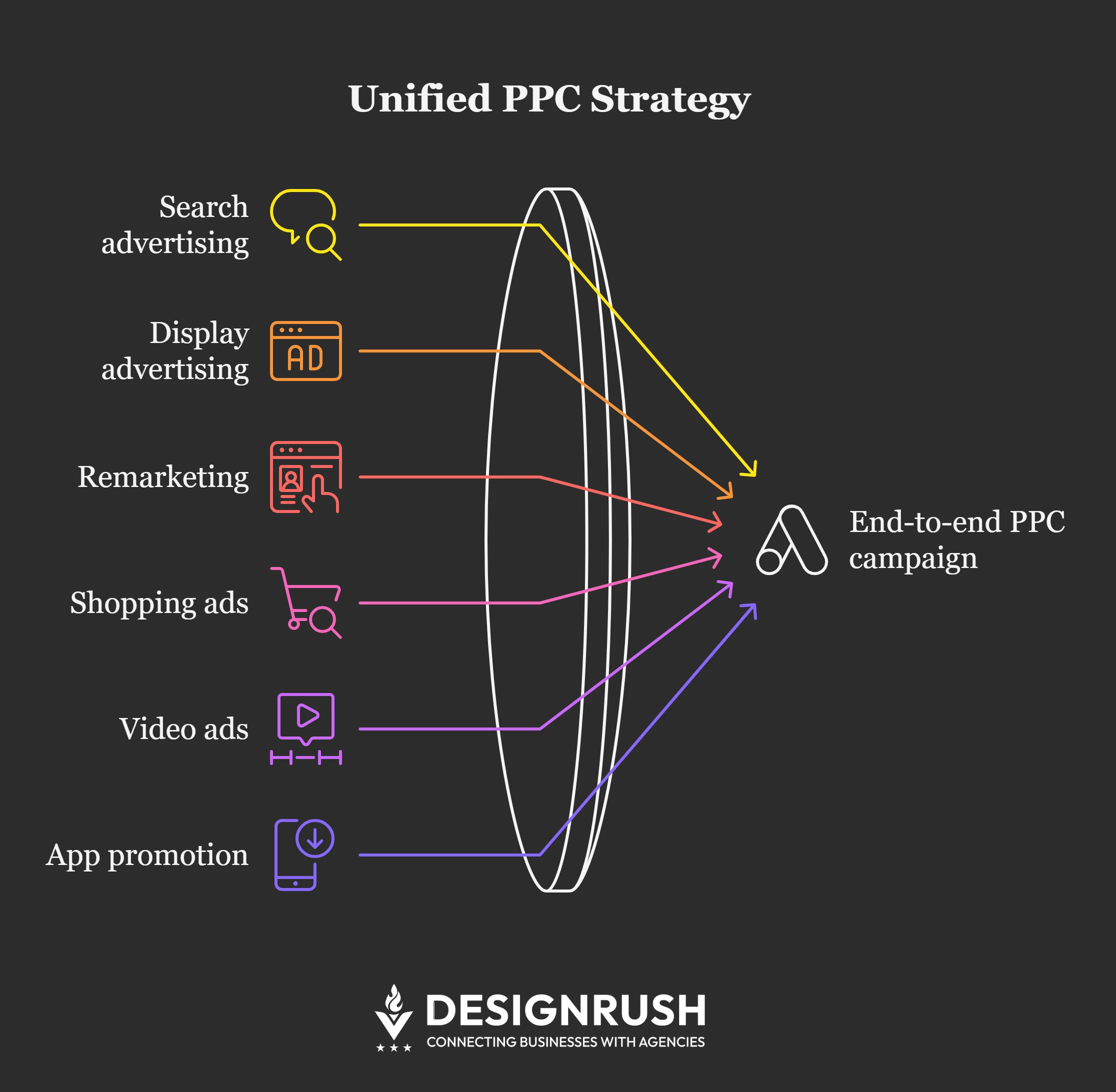
The first thing you need to know is that PPC isn’t a single service, but rather a performance marketing model that spans multiple platforms, tactics, and strategic layers.
Before engaging an agency, it’s critical to understand what the PPC umbrella includes, so you can evaluate capabilities against your actual needs. Here’s what PPC typically covers:
Core PPC services
- Search advertising: Text-based ads on platforms like Google Ads and Microsoft Ads, triggered by user search intent
- Display advertising: Banner and visual ads served across the Google Display Network and other programmatic platforms
- Remarketing: Targeting users who’ve already interacted with your brand, via pixel-based or list-based strategies
- Shopping ads: Product-based listings on Google Shopping, ideal for eCommerce and retail
- Video ads: Short-form or in-stream ads on platforms like YouTube (via Google Ads) and other OTT networks
- App promotion campaigns: Targeted ads designed to drive app downloads across iOS and Android ecosystems
Platform coverage
- Google Ads
- Microsoft Advertising (Bing)
- Meta Ads (Facebook & Instagram)
- LinkedIn Ads (especially for B2B and high-ticket services)
- YouTube
- Amazon Ads
- TikTok Ads
- X (formerly Twitter), Pinterest, and niche ad networks (depending on audience)
Segmentation
- Campaign structuring: How campaigns are segmented by product, geography, funnel stage, and intent
- Creative development: Platform-optimized assets, tested for CTR and conversion lift
- Audience targeting: Behavioral, contextual, and first-party data integrations for precision targeting
- Bid strategy: Manual vs. automated bidding, ROAS-based strategies, and smart bidding algorithms
💡Pro tip: List the platforms where your audience already engages, be it Google, LinkedIn, or Instagram. This quick audit will help you narrow which PPC channels to prioritize and prevent overspending on platforms that don’t align with your buyer behavior.
Seek Recommendations From Your Network
One thing you should know when learning how to choose a PPC agency is that word-of-mouth recommendations can be a powerful tool. Reach out to your professional network, industry associations, or colleagues who have had successful experiences with PPC agencies.
Their firsthand insights and recommendations can be invaluable in narrowing down your options and identifying trustworthy agencies. Don't hesitate to ask for specific feedback on an agency's performance.
💡Pro tip: Look beyond your immediate circle and explore online forums, social media groups, and agency directories like DesignRush that feature a curated list of PPC agencies.


Set a Budget
PPC shouldn't necessarily be a fixed-cost channel. Your budget can be determined by the results you wish to achieve.
To get a rough estimate, start by reverse-engineering from your target KPIs: customer acquisition cost (CAC), revenue goals, or ROAS targets. For example, if your sales team needs 100 qualified leads per month and each costs $80, you’re looking at an $8,000/month ad spend baseline, minus the management fees.
Ultimately, you should consider two aspects when defining a monthly PPC budget:
- Media spend (paid directly to platforms like Google or Meta)
- Agency fees (management, strategy, creative, reporting)
Businesses still comparing delivery models can review our guide on how to outsource PPC to understand the cost, control, and resource differences between agencies, freelancers, offshore specialists, and in-house teams.
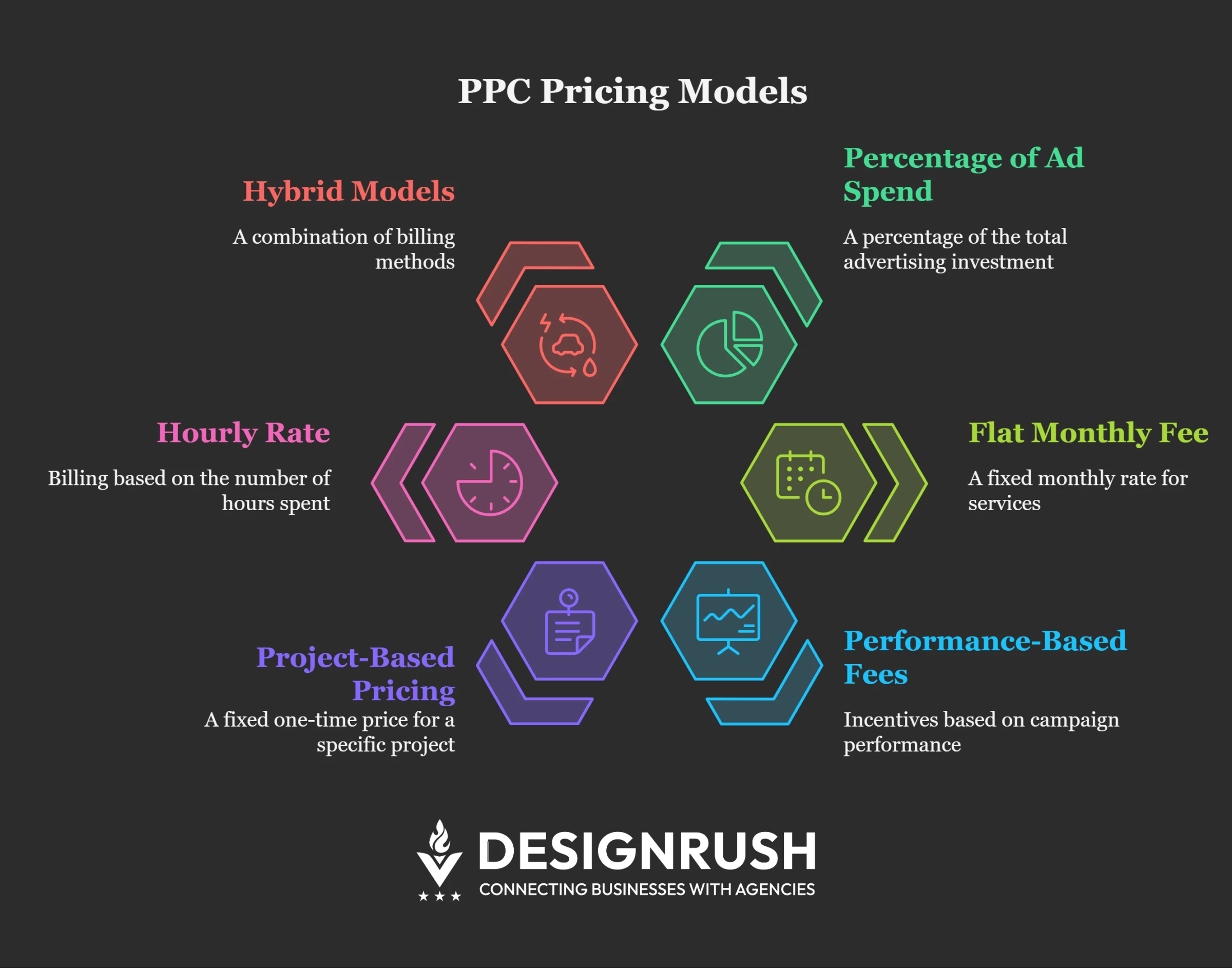
Take into account that fee models vary across the niche. Some agencies charge a percentage of ad spend, others use flat retainers or hourly rates. For reference, the top 50 PPC agencies on DesignRush charge an average of $105 per hour.
💡Pro tip: While it's important to have a budget in mind, be open to discussing it with the agencies during the selection process to receive their input and recommendations.
Assess Experience and Expertise
To get an insight into their skills, request case studies or portfolio samples of the agency's past campaigns and their outcomes. Assess the performance metrics, such as click-through rates, conversion rates, and return on ad spend, to gauge the agency's ability to generate measurable results.
You should also inquire about success stories that match your business model, be it B2B lead generation, eCommerce, or SaaS. Ask what the goals were, what wasn’t working initially, what strategy changes were made, and what the outcome was at each stage.
These discussions will give you a sense of their critical thinking and ability to adapt under pressure.
💡Pro tip: Request a post-mortem of a campaign that underperformed and what they learned from it. How an agency handles failure will tell you more about their expertise than a polished success story ever will.
Consider Industry Knowledge
While PPC expertise is crucial, you also shouldn’t overlook an agency's industry knowledge. An agency familiar with the nuances of your niche will be better equipped to create targeted campaigns, captivate your audience, and optimize your PPC strategies accordingly.
For example, ask an agency handling PPC for financial services how it manages advertiser verification, product restrictions, and tracking from the initial inquiry to an approved application or funded account.
💡Pro tip: Ask your prospects how they approach competitor benchmarking in your industry. If they can’t articulate how they analyze competitive ad spend, positioning, or keyword gaps, they likely don’t understand your market deeply enough to outperform it.
Review Campaign Management Approach and Strategies
The average return on ad spend for Google Ads is $2 for every $1 spent. However, one of the determining factors for reaching this ROI is how your PPC agency manages your campaign and strategy.
During the initial discussions, it’s important to ask how they structure campaigns. Is it by funnel stage, product category, geography, or audience intent?
Find out how often they review performance data, what triggers changes, and who’s accountable for results. If they can’t explain their testing cadence, bid strategy logic, or how they manage underperforming assets, that’s a red flag.
You can also request real examples of A/B tests they've run, what they learned, and how it translated into lower costs or higher conversions.
💡Pro tip: Ask for a 30-day snapshot of how they managed a live campaign. It’ll show you how hands-on they really are and whether they rely on strategy or autopilot.
Check Communication and Responsiveness
Effective communication is the cornerstone of a successful agency-client relationship. It’s an essential factor if you want to learn how to choose a PPC agency effectively.
You should choose an agency that prioritizes open and transparent communication, promptly responds to your queries and concerns, and provides regular updates on campaign performance.
Clear communication channels and a dedicated point of contact within the agency will ensure smooth collaboration and help you stay informed about the progress of your campaigns.
💡Pro tip: During the evaluation process, pay attention to the agency's responsiveness and communication style. Do they listen attentively to your needs and provide clear explanations? Are they proactive in offering suggestions and guidance?
Assess the Team’s Qualifications and Certifications
Behind every successful PPC agency is a team of qualified professionals. Assess the qualifications, certifications, and expertise of the team members who will be managing your campaigns.
Look for agencies that employ certified professionals that have undergone training and demonstrated proficiency in platforms like Google Ads. This ensures that your campaigns are in the hands of skilled practitioners who stay updated with the latest PPC trends and best practices.
💡Pro tip: Ask who will actually manage your account. Request to meet or be introduced to the account lead and ask how many accounts they’re currently handling to gauge focus and capacity.
Request Proposals from Your Shortlisted Candidates
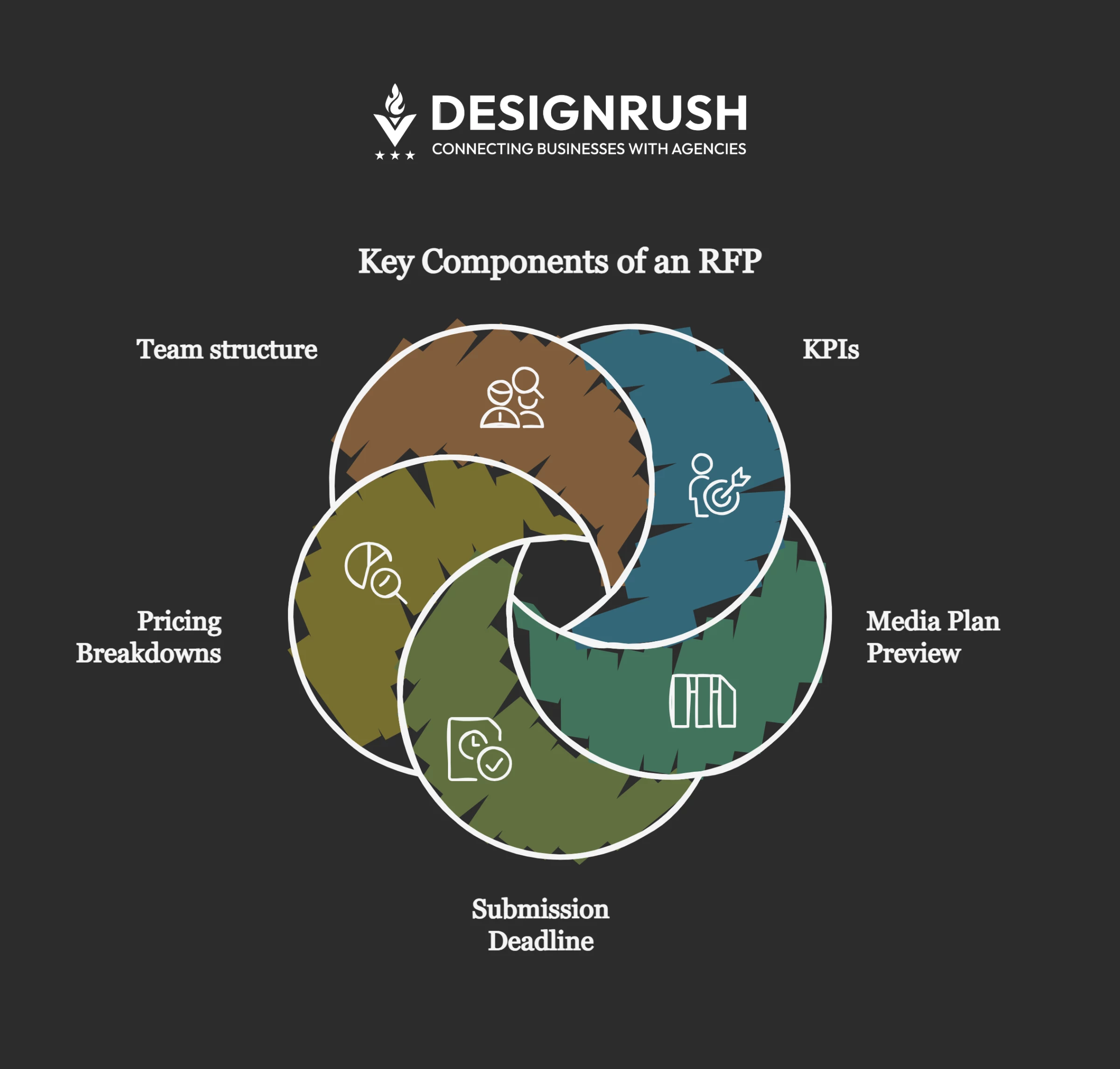
Once you've narrowed down your list of potential PPC partners, the next step is to request detailed proposals or RFPs. A well-structured proposal should include the agency’s proposed strategy, platform recommendations, optimization plan, estimated timelines, and a breakdown of projected costs.
Here’s what to ask for when requesting proposals:
- Clarify expectations: Outline your KPIs, including target CPA, ROAS, and lead volume, and request an outlined plan for reaching them.
- Request media plan previews: Ask for a rough channel and budget allocation (e.g., 60% Google Search, 30% Meta, 10% LinkedIn) with justification.
- Set a submission deadline: Specify when you want proposals delivered, ideally within 7-10 business days.
- Ask for full pricing breakdowns: Get a detailed view of ad spend vs. agency fees, including setup, creative, reporting, and any platform-specific surcharges.
- Get visibility into the team: Ask who would manage the account, what their experience is, and how much time will be allocated weekly to your campaigns.
💡Pro tip: When reviewing proposals, prioritize clarity over complexity. The best agencies make their approach understandable without buzzwords.
Review Contract Terms
Before signing with a PPC agency, examine the contract to ensure it aligns with your expectations and protects your business. It should clearly define the scope of services, including which platforms will be managed, reporting frequency, optimization responsibilities, and support levels.
Also, review the payment structure: are fees flat-rate, tiered, or percentage-of-spend? Clarify billing cycles and how ad spend will be handled (direct vs. pass-through) and discuss the minimum commitment period and any onboarding or setup fees.
Key clauses to watch out for:
- Termination terms: Is there a lock-in period? What's the notice period for cancellation?
- Ownership: Do you retain control over your ad accounts, data, and creatives?
- Revisions and scope creep: How are campaign changes, additional services, or testing beyond the original scope handled?
- Liability limits: What happens if spend errors or performance drops occur?
💡Pro tip: Make sure the contract explicitly states that you’ll retain full access and ownership of all ad accounts, campaign data, and creative assets. This gives you the freedom to scale, pivot, or switch partners without losing valuable insights.
Final Thoughts on How To Choose a PPC Agency
PPC is the epitome of “spend money to make money.” So, selecting the right digital agency is ultimately a strategic decision.
Look for a partner that instills confidence, communicates well, and knows the nuances of PPC.

Our team ranks agencies worldwide to help you find a qualified partner. Visit our Agency Directory for the top PPC agencies, as well as:
- Best Google Ads Agencies
- Top White Label PPC Agencies
- Top Small Business PPC Agencies
- Top Los Angeles PPC Agencies
- Top eCommerce PPC Agencies
How To Choose a PPC Agency FAQs
1. What are the most important KPIs in PPC to track?
Cost per acquisition (CPA), return on ad spend (ROAS), conversion rate, click-through rate (CTR), and quality score. These metrics are key indicators of campaign profitability and performance.
2. Which industry is best for PPC?
PPC services can be highly effective in various industries, but their impact is particularly prominent in the eCommerce sector.
The ability to directly track conversions and optimize ad spend makes PPC a valuable tool for online retailers, resulting in increased targeted traffic and boosted sales.