
In an environment where public perception is shaped algorithmically and virally, online reputation management (ORM) is no longer a defensive afterthought; it’s a smart way to grow your business.
Online Reputation Management Benefits: Key Points
Modern consumers form opinions via Google searches, star ratings, Reddit threads, Glassdoor reviews, and TikTok testimonials long before ever speaking to a company representative.
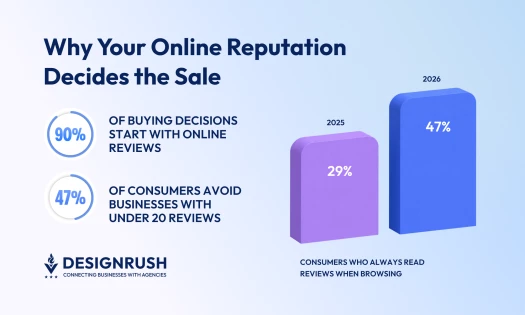
In fact, about 9 in 10 people say they have made a buying decision based on an online review or social media recommendation. This means what others publicly say about your brand is your brand.
Online reputation management (ORM) has matured from just tactically handling reviews to an essential part of operations, which is tied directly to performance metrics, “trust capital,” and brand resilience.
Whether you're scaling a B2B agency or protecting a fast-growing consumer brand, ORM is now firmly a C-suite priority.
Introducing the ORM Maturity Framework
Companies that proactively build trust with customers have been found to recover 3× faster from reputational damage than those without such initiatives.
In practice, this means a brand with an advanced online reputation management strategy can bounce back from PR hits in weeks instead of months, preserving customer loyalty and trust.
To help benchmark your efforts, we’ve developed the ORM Maturity Framework, which outlines the four evolutionary stages of ORM adoption:
| Stage | Focus Area | Indicators of Maturity |
| 1 | Reactive reputation fixes | Occasional review responses, ad-hoc brand monitoring |
| 2 | Structured reputation control | Consistent online reputation monitoring, branded content repair campaigns |
| 3 | Proactive trust building | Owned assets rank on branded queries, sentiment scoring |
| 4 | Integrated ORM strategy | ORM tied to SEO, PR, HR, and revenue KPIs |
Executive Tip: Brands that progress to Stage 3 or 4 of ORM maturity tend to get much better results from what they put into managing their reputation and become far more resilient in the face of crises.
Building Trust at Scale: Why ORM Is a Trust Engine

Modern buyers scrutinize what others say about a brand online, and they act accordingly. Research by Northwestern University’s Spiegel Center found that even a handful of reviews can escalate purchase likelihood by hundreds of percent.
High-priced products saw up to a 380% increase in conversion when reviews were displayed, versus ~190% for lower-priced items. This underscores how trust cues created by managing online reviews directly translate into sales lifts.
Here’s how ORM builds trust at scale:
- Review harmonization: Presenting a consistent, high-rated reputation across platforms like Google and Yelp builds immediate trust and credibility. Actively responding to reviews signals accountability and turns feedback into a strategic asset.
- Thought leadership amplification: Publishing authoritative content positions your brand as the voice of expertise, shaping the narrative before competitors or critics do. It builds reputational equity that compounds over time.
- Responsive transparency: Addressing issues openly and swiftly earns long-term trust and customer loyalty. In today’s market, silence during missteps erodes credibility faster than the mistake itself.
Important stats to know:
- A staggering 90% of consumers say they trust brands more when they see the brand openly admit mistakes and take steps to resolve them. In other words, transparency and accountability aren’t weaknesses in PR — they strengthen your brand in the public’s eyes.
- In fact, people are far more forgiving of companies that own up to errors. Another survey found 89% of customers will give a company a second chance after a bad experience if it has a history of transparency and admits its fault.
- Another analysis found that when companies reply to a negative review, 33% of those customers ended up posting a positive follow-up, and 34% deleted the original negative review: a powerful testament to the value of engaging with feedback.
According to Sprout Social, consumers define brand transparency through openness (59%), clarity (53%), and honesty (49%). In essence, being forthright and clear with customers — especially about any missteps — is critical to building trust.
ORM programs should prioritize genuine communication over spin, since authenticity is what audiences demand in exchange for their trust.
Measuring the Business Impact of ORM: From Search to Sales
The 2023 Edelman Trust Barometer special report noted that trust directly drives growth: trusted brands get substantially more purchase intent, loyalty, and advocacy than distrusted ones.
Effective ORM doesn’t just make you look good online; it directly moves the needles that impact your bottom line. Here are the major business performance levers that online reputation management influences:

- Sales & lead generation: A strong online reputation directly boosts your visibility in search and drives higher conversion rates across the funnel. Positive reviews, high star ratings, and trust signals improve rankings, click-through rates, and inbound lead volume.
- Customer retention & loyalty: Engaging with customer feedback signals that you value the relationship. You retain more customers, attract advocates, and reduce acquisition costs through emotional loyalty and trust.
- Crisis recovery speed: Early, transparent response within the first 48 to 72 hours prevents long-term brand damage and restores public trust more effectively.
Tools and Tactics: Building Your ORM Tech + Team Stack
Strategic ORM is technology-augmented and process-led. High-performing organizations use a cohesive stack of tools and teams to monitor and manage their reputation at scale. Here’s how to structure your ORM stack:
| Tool Type | Leading Options | Primary Value |
| Review aggregators | Podium, Trustpilot | Centralize reviews across platforms; send automated review requests; enable 1-stop responding. |
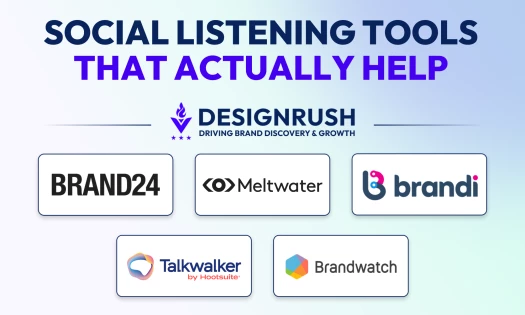
| Sentiment monitoring | Talkwalker, Brand24 | Real-time “listening” across web and social; AI sentiment analysis of brand mentions to catch shifts in tone/emotions. |
| SEO ORM services | Reputation X, NetReputation | Suppress or push down negative search results; promote positive/high-authority content for your brand keywords (online reputation SEO). |
| Internal analytics | Google Looker (Data Studio), Tableau | Connect ORM data to business KPIs; e.g. correlate star-rating trends with conversion or churn rates; measure sentiment score over time alongside NPS, etc. |
Operational Best Practices: No matter what tools you use, certain processes separate mature ORM programs from the rest:
- Respond promptly to 100% of reviews: Timely, public responses signal accountability and trust. Meeting the 24-to-48-hour response window helps reduce churn and strengthens brand credibility.
- Integrate reputation metrics into core dashboards: Track KPIs like sentiment score, response time, and average star ratings alongside sales and customer experience data to drive accountability and tie reputation directly to revenue impact.
- Make ORM a cross-functional priority: Align public relations, HR, customer service, SEO, and marketing through a dedicated reputation task force. This ensures coordinated response and visibility across all touchpoints.
- Market your reputation as an asset: Use testimonials, star ratings, and social proof across campaigns and sales materials. Reputation equity boosts conversion rates and differentiates your brand in the market.
- Prepare your crisis communication protocol: A predefined response plan can reduce recovery time by up to 50%. Crisis-ready brands preserve trust faster and gain competitive advantage during high-risk events.
Around half of US businesses don’t have a formal crisis plan. So, having one is a competitive advantage and likely a lifesaver for your brand when the unexpected hits.
Executive Action Plan: 5 Steps to Operationalize ORM
By following these steps, you can refine your ORM approach and yield tangible rewards in customer trust, growth, and resilience:
- Audit your brand footprint quarterly
- Establish ORM KPIs and tracking
- Map tools to your ORM maturity stage
- Create a crisis protocol
- Train cross-functional teams to spot and route issues
1. Audit Your Brand Footprint Quarterly
Your digital reputation begins with visibility. A quarterly audit helps you understand how your brand is perceived across search engines, review platforms, and social media, so you can proactively manage reputational risks and opportunities before they compound.
Important steps include:
- Google your brand in incognito mode and review the first two pages of results.
- Audit key review platforms (Google, Yelp, G2, Glassdoor, etc.) for ratings, sentiment, and response gaps.
- Monitor mentions and hashtags on social media and community forums.
- Scan for outdated or negative press articles still ranking high.
- Benchmark your reputation against key competitors.
- Use social listening and SEO tools for a more thorough scan.
2. Establish ORM KPIs and Tracking
By setting clear KPIs and integrating them into performance dashboards, you tie reputation efforts directly to revenue impact and executive accountability.

Here are key steps to take:
- Define KPIs like average star rating, reputation score, response time, and branded search sentiment.
- Set benchmarks (e.g., raise star rating from 4.2 to 4.5 over 12 months).
- Track reputation-linked conversion rates and NPS (net promoter score) shifts.
- Visualize ORM data on platforms like Looker, Tableau, or Google Data Studio.
- Align KPIs with financial metrics and include them in quarterly business reviews.
- Consider tying ORM performance to executive or departmental KPIs.
The key is to integrate these metrics into your existing dashboards (as noted, use tools like Looker or Tableau to blend reputation data with sales, churn, and traffic data). When ORM metrics sit alongside financial KPIs in board meetings, it signals that reputation is a strategic asset, not a fuzzy afterthought.
3. Map Tools to Your ORM Maturity Stage
Use the ORM Maturity Framework to identify your current stage and align your investments with the capabilities needed to progress:
- Determine your ORM maturity stage (Reactive, Structured, Proactive, or Integrated).
- Identify gaps in your current tech stack: monitoring, analytics, response tools, etc.
- Match tools to stage: Google Alerts for basics; sentiment analysis and SEO ORM for advanced needs.
- Conduct a capabilities audit and build a roadmap to reach the next maturity level.
- Assign ownership for exploring emerging tools like decentralized review platforms.
- Reassess tool effectiveness during quarterly ORM audits.
4. Create a Crisis Protocol
In a reputation crisis, speed and clarity matter. Having a detailed crisis playbook and a trained response team ensures your brand can act fast, maintain control, and preserve long-term trust.
When (not if) a reputation crisis occurs, you need to be able to respond in hours, not days. Here’s how you can develop a detailed plan that you can deploy immediately:
- Develop a documented crisis communication plan with defined roles and workflows.
- Pre-draft messaging templates for common scenarios (e.g., data breach, executive scandal).
- Establish an internal crisis response team with 24/7 contact protocols.
- Create decision trees for escalation thresholds and public response timing.
- Run annual simulation drills to test readiness and identify process gaps.
- Set up a “war room” environment (virtual or in-person) for real-time response coordination.
5. Train Cross-Functional Teams to Spot and Route Issues

Your frontline teams are your first line of defense. Training them to recognize and escalate reputation risks empowers faster, smarter responses, and builds a culture of brand accountability at every level:
- Teach staff to recognize reputation risks (e.g., viral complaints, repeated customer issues).
- Create escalation workflows and role-based flowcharts for handling common scenarios.
- Include ORM training in employee onboarding and refreshers for customer-facing teams.
- Encourage internal transparency so issues are raised early, not hidden.
- Share quarterly ORM reports to build company-wide awareness and alignment.
- Promote a culture where every employee sees themselves as a reputation ambassador.
What’s Next in ORM? Trends Shaping the Future of Digital Trust
Looking ahead, the next generation of trust strategy will be driven by AI technology, decentralized systems, and heightened consumer expectations for authenticity. Here are the key trends to watch:
- AI-driven brand scoring will transform proactive reputation management: Advanced AI reputation management tools will monitor sentiment across channels, detect early warning signals, and generate real-time reputation health scores.
- Decentralized review verification will restore trust in online feedback: Blockchain-based platforms will authenticate real customer reviews, reducing fraud and empowering brands to engage with verified voices in a more transparent, tamper-proof environment.
- Predictive ORM dashboards will guide data-driven decisions: Next-gen tools won’t just report issues; they’ll recommend actions, forecast reputational fallout, and automate response strategies, giving executives clearer direction under pressure.
- Ethical ORM and authenticity governance will become a competitive advantage: As consumers demand transparency, brands must move beyond spin and adopt ethical frameworks.
Online Reputation Management Benefits: Wrap-Up
Online reputation management is a strategic asset that drives trust, conversions, and long-term brand resilience. From AI-powered tools to cross-functional protocols, businesses that invest in ORM gain a measurable edge in a market where trust matters most.
To stay competitive, explore top-rated reputation management agencies and take the first step toward safeguarding and scaling your brand's credibility.

Our team ranks agencies worldwide to help you find a qualified partner. Visit our Agency Directory for the top online reputation management companies, as well as:
2. Top Crisis Management Firms
Online Reputation Management Benefits FAQs
1. What industries benefit most from structured ORM?
Any industry where consumer trust directly influences buying decisions, such as healthcare, legal services, SaaS, hospitality, finance, and education, can see immediate gains from ORM.
In these sectors, even a single negative review or media story can materially impact conversions, partnerships, or customer retention, making reputation a key business lever.
2. Can ORM be measured in ROI terms?
Yes, ORM efforts can be directly linked to measurable outcomes like increased conversion rates, lower customer acquisition costs (CAC), and shortened sales cycles. High-performing brands turn trust into tangible revenue growth and reduce brand repair costs over time.
3. How long does it take to recover from a reputation crisis?
Without a structured ORM response, reputation damage can take 6 to 12 months or even longer to repair, potentially causing lasting financial and brand equity loss.
Brands with a crisis-ready ORM strategy can often neutralize threats and begin rebuilding trust in as little as 30 days, especially when preemptive content and protocols are already in place.