



Brand voice is the unique personality and tone that businesses use to communicate with audiences. It reflects your values, sets you apart from competitors, and helps create a strong connection with customers.
In this comprehensive guide, we define brand voice and why it is important, then outline specific steps and best practices to help you create an authentic, well-defined voice that will elevate your marketing efforts.
What Is Brand Voice?
A brand voice is an integral element of your brand's distinctive character, echoing through every interaction with your target audience across various channels. A well-defined brand voice should be authentic to your core values and resonate with your customers. It can be formal, casual, playful, or authoritative, depending on what aligns best with your brand identity.
Your brand voice should remain consistent in all communications across different platforms. For instance, if your company adopts a friendly and informal tone in its marketing materials, it should uphold the same approach in all brand communications.



Brand Voice vs. Tone of Voice
Alongside establishing a distinct brand voice, it is crucial to grasp the concept of brand tone. Brand voice is your company's consistent and unchanging personality, reflecting its core values. Tone, on the other hand, is the emotional inflection applied to the voice, adapting to suit specific messages or contexts.
While voice remains constant, tone varies based on the nature of the communication, ensuring resonance with a very specific audience.
Key Elements of Brand Voice
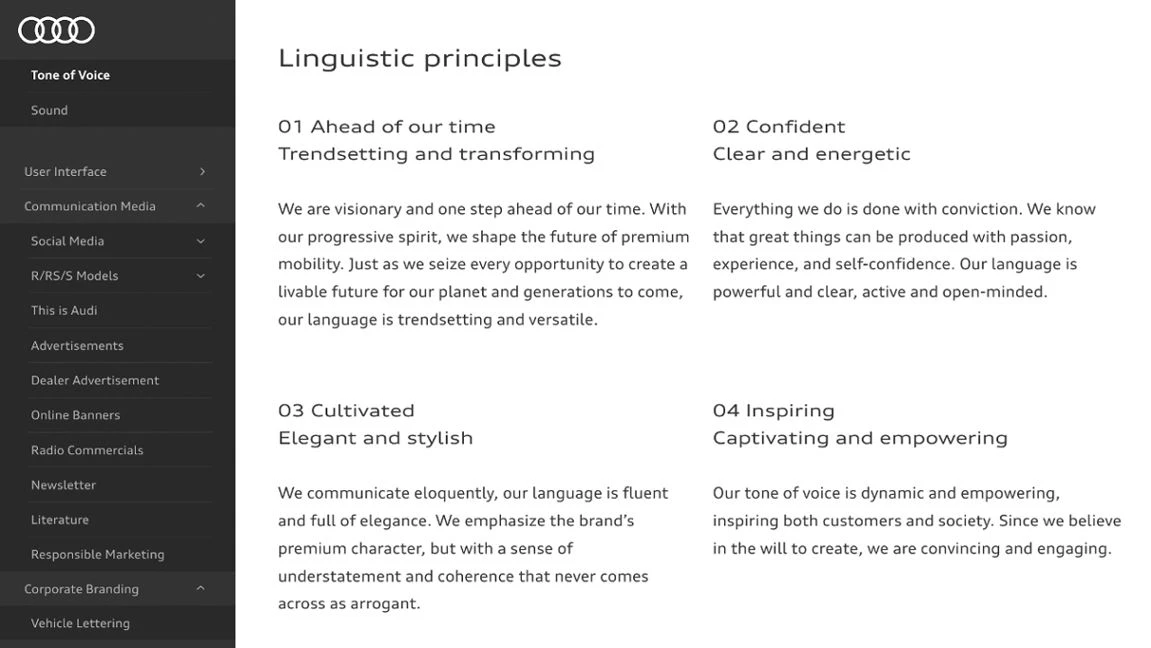
Establishing your brand voice is crucial for building your overall brand. The following key elements work together to create a cohesive and memorable voice that strengthens your brand identity and resonates with your audience:
1. Tone
Tone is the emotional quality and attitude behind your brand’s communications. This can shift depending on the mood and feeling in your messaging — your stakeholder reports will always be highly professional and authoritative, but you can be more friendly and casual on social media.
2. Language
Language encompasses the specific words and vocabulary your brand uses to communicate with your audience. Whether you use simple or complex words, industry-specific jargon, or colloquial language, it should reflect your brand’s identity and your target audience's understanding level.
3. Style
Style dictates the structural choices in your brand’s communications, including sentence length, grammar, and use of punctuation. Whether you use short, punch sentences or long, detailed paragraphs, your approach can influence how formally or informally your brand voice is perceived. Contractions and exclamation marks are more casual, while long sentences without contractions are very formal.
4. Personality
Brands often embody human qualities and personalities to be more relatable to consumers. Define whether your brand persona comes across as friendly, professional, quirky, or serious, and how these traits combine to make your messaging unique.
The Role of Brand Voice in Branding
Brand voice shapes how customers perceive, interact with, and relate to your brand. It is more than just a tool for communication; it is a fundamental part of your brand identity that influences every aspect of branding.
More than 70% of customers state that transparent and honest communication from brands is important. Here’s how a distinct brand voice can help you cultivate consumer trust and long-term brand recognition:
- Create emotional connections: The tone and language you choose can inspire, comfort, excite, or engage customers on a deeper level. This leads to trust and loyalty in the long run.
- Enhance customer experience: When you establish a friendly, approachable brand voice and respond to queries in a warm and supportive way, customers are more likely to remember these interactions and recommend your brand to others.
- Differentiate your brand from competitors: While your products or services may be similar to other companies, how you communicate with customers can make your brand more memorable.
- Build long-term brand equity: A consistent and recognizable brand voice becomes ingrained in the minds of the audience. This memorability contributes to an elevated reputation and long-term brand success.
Step-By-Step Guide To Creating a Brand Voice
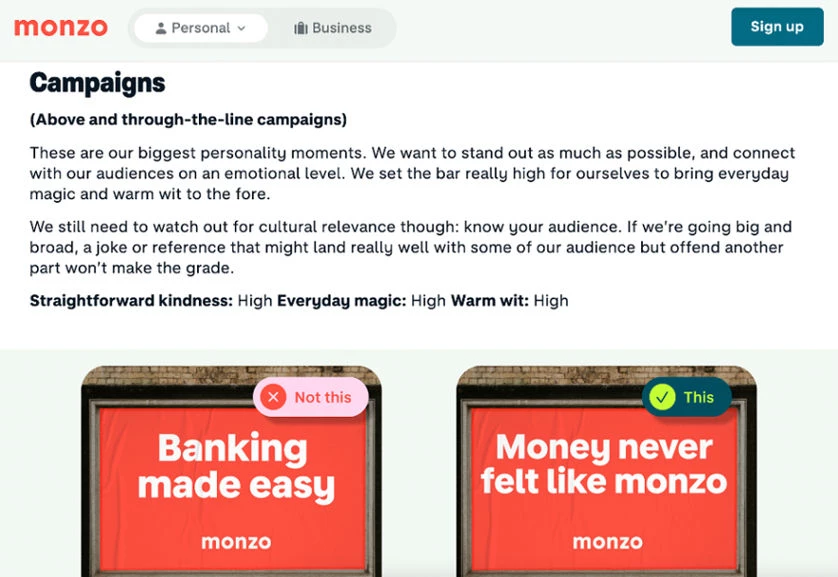
Creating a brand voice isn’t just about picking the right words; it’s about crafting a persona that aligns with your brand values and speaks directly to your target audience. Follow these steps to develop a brand voice that is unique, consistent, and adaptable across all platforms.
- Establish your brand’s core values and mission
- Understand your audience
- Audit your current content
- Define your brand personality and archetype
- Create a brand voice chart
- Set brand voice guidelines
- Monitor and refine your brand voice over time
1. Establish Your Brand’s Core Values and Mission
Your voice should reflect what your brand stands for and the principles it upholds. This alignment ensures that every piece of communication resonates with authenticity and purpose. You can also maintain consistent communication when you have clearly defined values, mission, and vision.
Why does your brand exist? What are your bigger goals beyond financial success? Defining your brand purpose will serve as the backbone for your brand voice. For example, a fitness brand may focus on empowering people to live healthier and more active lives. To align with this, its brand voice should be energetic and motivational.
2. Understand Your Audience
When your brand voice aligns with your audience’s expectations, preferences, and values, you will create a stronger bond that drives loyalty and increases trust. Customers are more likely to engage with and support brands they feel understand them.
Here’s how you can better understand your audience:
- Build audience personas: These are fictional characters that represent your ideal customers. For example, if your brand sells athleisure, your audience is primarily young to middle-aged professionals who will respond to an inspiring and motivational brand voice.
- Research customer behavior: Pay attention to the stone and style of language your customers use on social media comments, forums, and other platforms. Do they prefer simpler language, or are they comfortable with industry-specific jargon?
- Identify needs and pain points: Gather feedback through surveys, reviews, and social media comments to identify what your target customers struggle with or desire. Adapt your voice to show empathy and provide solutions.
Centering your audience when developing your brand voice will contribute to your long-term growth and success. Research shows that brands that respond to customers’ needs and prioritize positive experiences improve satisfaction and engagement by up to 30% and increase spending by up to 10%.
Furthermore, over 80% of customers state that when they consistently receive value in brand interactions, they are more likely to repurchase instead of switching to a competitor.
3. Audit Your Current Content
By analyzing your website, email campaigns, social media posts, and customer support communications, you can identify trends, inconsistencies, and areas for improvement. This will help ensure your brand’s voice is consistent and aligned with your values and goals. By evaluating what’s worked well and what hasn’t, you establish a new baseline for your brand voice and refine all future communications.
4. Define Your Brand Personality and Archetype
Your brand personality is the set of human characteristics that your brand embodies, shaping how it is perceived by your audience. These personalities coalesce into one of 12 primary brand archetypes you can adopt.
A distinct personality sets your brand apart from competitors and makes it memorable. Here's how you can develop one:
- Imagine your brand as a person: Identify traits that define their personality. Are they friendly or formal, humorous or serious, young or mature? Focus on a handful of traits that are easily remembered and reflected in all brand interactions.
- Define how traits translate to tone: For each trait, create guidelines that specify the tone and vocabulary choices that align with it. For example, a friendly personality uses a warm, conversational tone.
- Connect your audience persona to your brand persona: For example, an audience of older, business-oriented professionals may prefer an informative, respectful tone instead of a quirky and bold persona.
5. Create a Brand Voice Chart
A brand voice chart provides practical guidelines to ensure consistency in communication across all channels. It helps everyone involved in content creation understand how to embody your brand voice effectively.
Identify your core voice traits and describe them in detail. Provide dos and don’ts for each, along with sample phrases or language examples to bring each trait to life. Here is an example:
| Trait | Description | Dos | Don’ts | Sample Phrases |
| Friendly | Warm and approachable, like a helpful friend | Casual language, positive words, emojis | Overly formal language, complex jargon | “We’re here to help!” |
| Professional | Serious and respectful, best for business communications | Formal greetings, clear, respectful language | Slang, casual terms, emojis | “Thank you for reaching out.” |
| Empathetic | Kind and understanding, best for customer service interactions | Compassionate phrases that acknowledge feelings | Dismissive or indifferent language | “We understand this can be frustrating.” |
6. Set Brand Voice Guidelines
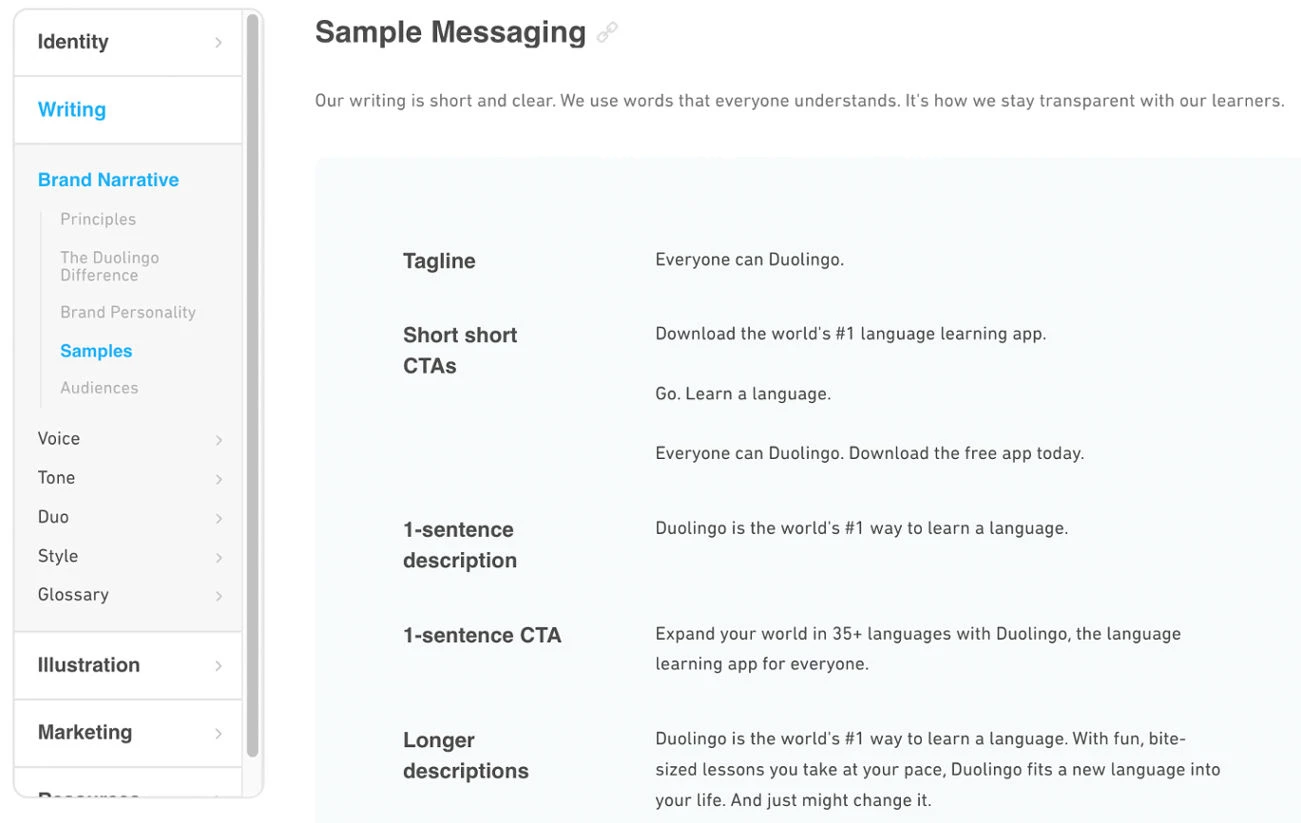
Establishing brand voice guidelines ensures that every team member, from content creators to customer service representatives, communicates consistently and authentically across all channels. These guidelines will be everyone’s primary reference in conveying your brand’s personality, tone, and language.
Provide sample messaging for key scenarios, like social media updates, blog post introductions, and responses to customer queries. Specify platform-specific tone adjustments, like a more playful and interactive tone on Instagram, compared to a formal, thought-leadership style on LinkedIn.
7. Monitor and Refine Your Brand Voice Over Time
As your brand evolves, so should your voice. Regular refinement ensures your brand voice remains relevant, resonant, and aligned with your goals. Monitor audience reactions across platforms and track metrics like comments, shares, and sentiment. These insights will reveal how your audience responds to your brand voice.
Schedule quarterly or biannual brand voice reviews with marketing, content, and customer service teams to discuss feedback and refine your brand voice as needed. Update voice guidelines to address evolving audience expectations or shifts in brand positioning.
Best Practices for Defining Your Brand Voice
When executed consistently, a strong brand voice creates emotional engagement with your audience. Follow these best practices to define a voice that sets you apart in a crowded market:
- Emphasize authenticity: Modern consumers are increasingly skeptical of insincere or overly polished messaging. An authentic brand voice demonstrates transparency and honesty.
- Highlight unique qualities: Whether it’s a quirky sense of humor, an empathetic tone, or a confident, expert approach, establishing unique traits will help make your brand distinctive.
- Use straightforward language: Overly complex language can alienate your audience. Even for professional or authoritative personas, it is best to stick to wording that is easy to understand.
- Leverage storytelling: Storytelling makes your brand more relatable and human, and audiences connect more easily with narratives than direct marketing messages. By sharing authentic stories, your brand can build a loyal, invested community.
- Train your team: Provide training to ensure that all team members understand your comprehensive voice guidelines.
Top 3 Real-World Brand Voice Examples
These brands have mastered voice consistency, relatability, and alignment with core values, making them strong examples for any brand aiming to refine its own voice:
1. Patagonia

Patagonia’s brand voice is characterized by a tone that is authentic and purposeful, with a focus on activism. It communicates with a clear sense of environmental responsibility and urgency, reflecting the brand’s deep commitment to sustainability. Patagonia speaks with conviction and authority on climate change, conservation, and ethical business practices, which resonates with environmentally conscious consumers.
Patagonia generates an estimated $1 billion in global revenue. The brand has accumulated over five million followers on Instagram, 1.8 million followers on Facebook, and 1.5 million likes on TikTok.
2. Arby’s

Arby’s brand voice is bold, unapologetic, and irreverent, which sets it apart in the highly competitive food industry. Known for its tagline, “We have the meats,” the brand embraces a direct, confident tone that celebrates hearty, carnivorous meals without hesitation. Arby’s is also known for witty social media interactions and culturally relevant campaigns, which engage a younger, social media-savvy audience.
Arby’s is one of the most popular fast-food chains in America, and its system-wide sales reached $4.5 billion in 2022. The brand has over 800,000 followers on X and over 6 million likes on TikTok.
3. Spotify

Spotify creates a sense of connection and fun for listeners with a friendly, playful, and highly personalized brand voice. It communicates like it knows each user personally, using humor, cultural references, and relatable language to make listening feel like an experience tailored just for them.
Spotify is the world’s most popular audio streaming service. It has amassed over 600 million listeners in 180 countries and generated over €13.24 billion in revenue in 2023. In 2022, more than 150 million listeners engaged in Spotify Wrapped, its most popular year-end campaign that summarizes users’ listening habits through engaging, shareable graphics.
Explore our comprehensive list of brand voice examples for more inspiration.
Brand Voice Takeaways
More than just words, brand voice encapsulates your brand’s personality, values, mission, and approach, helping it stand out in a crowded market. It guides all communications, creates a unified experience across all channels, engages audiences, and fosters trust and loyalty.
Partner with top branding agencies to ensure a strategic, cohesive, and audience-centered approach to brand voice and communications. These professionals will help you develop a memorable brand identity that will ultimately enhance loyalty and bring long-term success.

Our team ranks agencies worldwide to help you find a qualified partner to implement the latest AI solutions. Visit our Agency Directory for the Top Branding Agencies, as well as:
- Top Brand Strategy Agencies
- Top Brand Positioning Firms
- Top B2B Branding Agencies
- Top Corporate Branding Agencies
- Top Cincinnati Branding Agencies
Our team also curates standout creative work in our Awards section, where you can explore award-winning branding, web, and digital design projects to see what strong execution looks like in practice.
What Is Brand Voice FAQs
1. How to find your brand voice?
Discovering or creating a brand voice involves aligning with your mission, auditing existing content for consistency, understanding your audience through polls or customer analysis, and defining your brand by identifying what it is not. Create a brand voice chart, selecting core traits, and ensure they are represented consistently across all marketing materials for a distinctive and authentic voice.
2. What’s the difference between brand voice and tone?
Brand voice is your company's consistent and unchanging personality, reflecting its core values. Tone, on the other hand, is the emotional inflection applied to the voice, adapting to suit specific messages or contexts. While voice remains constant, tone varies based on the nature of the communication, ensuring resonance with the audience.


-preview-webp.webp)