
Datacenter proxies are a go-to option when you need fast, scalable IPs that aren’t tied to home internet providers. This guide covers the proxy providers worth your time and what each is best for.
Best Datacenter Proxy Providers: Key Findings
- Datacenter proxies are typically faster and more cost-efficient than residential proxies, but can be easier for websites to detect.
- The biggest differences between providers come down to pricing models and control, such as pay-per-GB vs. per-IP plans, as well as session and rotation options.
- Prioritize providers with clear protocol support (e.g., HTTP, HTTPS, SOCKS5, where available), solid location coverage, transparent pricing, and clear usage visibility.
Choosing the Best Datacenter Proxy Provider
If you’re doing anything at scale (market research, site monitoring, QA testing, or high-volume data collection), getting throttled, blocked, or rate-limited is a real problem.
Datacenter proxies solve that by giving you server-based IP addresses (not tied to home internet providers), built for speed, stability, and scale.
Datacenter proxies come with two notable benefits over other types of proxies:
- Cost-friendliness: They are more affordable than residential proxies while not sacrificing speed and high performance.
- Non-physicality: Datacenter proxies provide anonymity by hiding the IP address.
When performance matters and you need predictable connections, a datacenter proxy may be the answer. The main tradeoff is that some websites can spot datacenter IP ranges more easily, so provider quality and IP management matter.
View this post on Instagram
We have assembled the best datacenter proxy providers currently on the market to create the list that follows.
| Datacenter Proxy Provider | Country Availability | IPs Available | Pricing |
| Webshare | 50+ countries | 400K+ | From $0.0299/proxy (100 proxies) |
| Decodo | 195+ countries | 500K+ | From $0.60/GB (10GB) |
| Oxylabs | 188 countries | 2M+ | From $0.59/GB (20 GB) |
| Rayobyte | 29 countries | 300K+ | From $0.30/GB (1-50 GB) |
| MarsProxies | 37 countries | Not disclosed | From $0.99/proxy |
| DataImpulse | 195+ locations | Not disclosed | From $0.50/GB (10 GB) |
| SOAX | US-only | 300k+ (US datacenters) | From $0.62/GB (145 GB) |
| ProxyEmpire | 10+ countries | 210,000+ | From $0.625/GB (40 GB) |
| Storm Proxies | US-only (3 USA locations) | Not disclosed | From $10/month (5 proxies) |
| SquidProxies | 40+ data center locations | Not disclosed | From $1.50/IP (10 IPs) |
1. Webshare: Best for Flexible & Self-Serve Proxy Setup
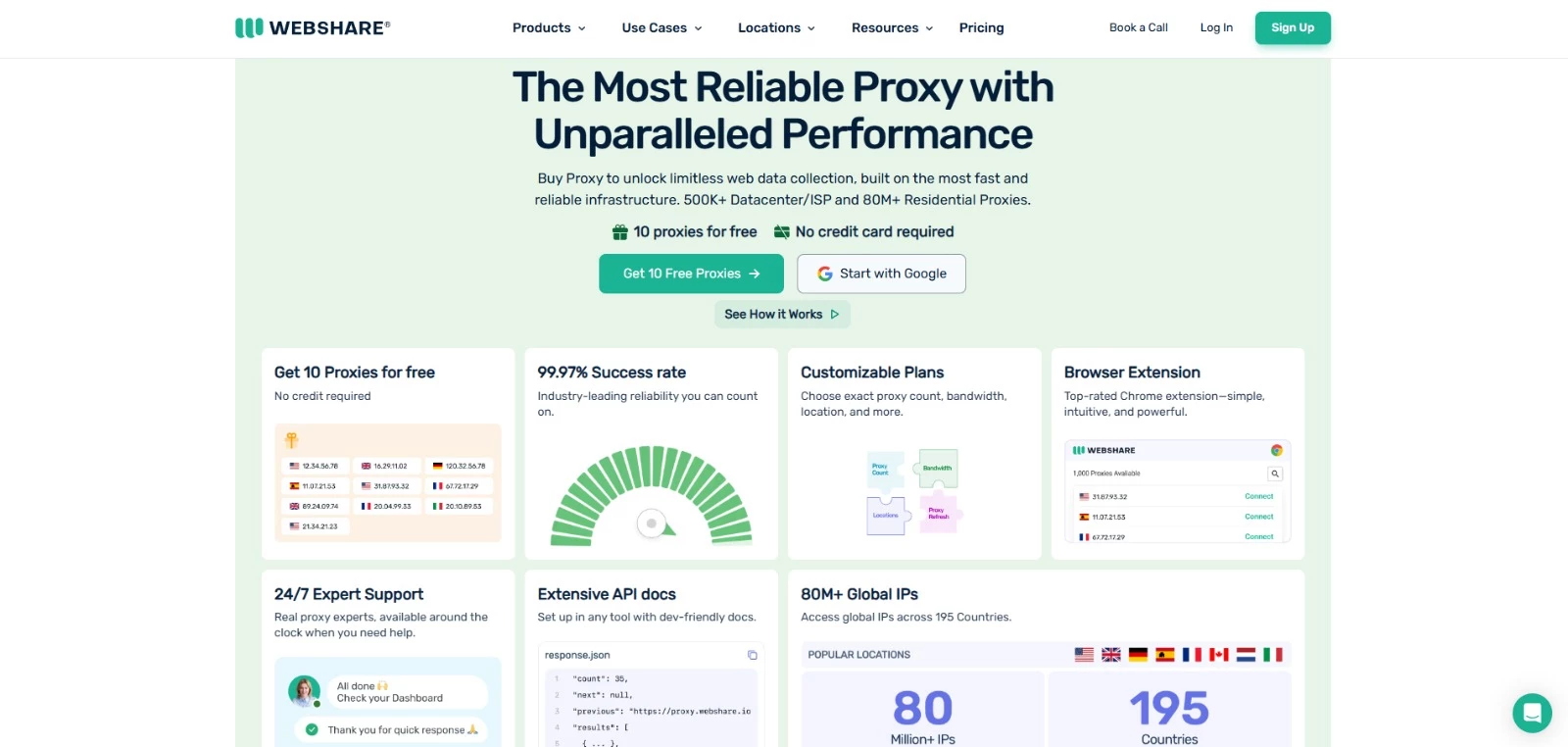
Webshare is one of the easiest ways to get started with datacenter proxies, especially if you want to test speed and compatibility before committing.
The plans are straightforward and scale predictably as you add more proxies, which is useful for teams managing multiple projects or forecasting usage over time.
You can launch proxies, select locations, and configure rotations directly from a self-serve dashboard, without relying on sales teams or a complicated setup.
It also works well for developers who want quick provisioning and simple integration without a heavy onboarding process.
The main limitation is that shared datacenter pools can hit blocks more quickly on stricter targets, so it’s better suited for testing, automation tasks, or moderate workloads rather than more aggressive scraping setups.
Still, the ability to quickly switch configurations and proxy types gives you room to adapt as requirements change.
Key features:
- 99.97% uptime guarantee
- 50+ country coverage with 400K+ datacenter IPs
- SOCKS5 and HTTP protocol support
- IP and username/password authentication
- Shared, private, and dedicated datacenter proxy plans
- High concurrency (up to 3000 threads)
- Self-serve dashboard with custom rotations and location targeting
- Free Chrome extension for quick testing and setup
Pricing:
- Free plan available (10 proxies + 1GB bandwidth)
- Proxies start at $0.0299 per proxy ($2.99/month)
2. Decodo: Best for Datacenter Proxies With Built-In AI Workflows
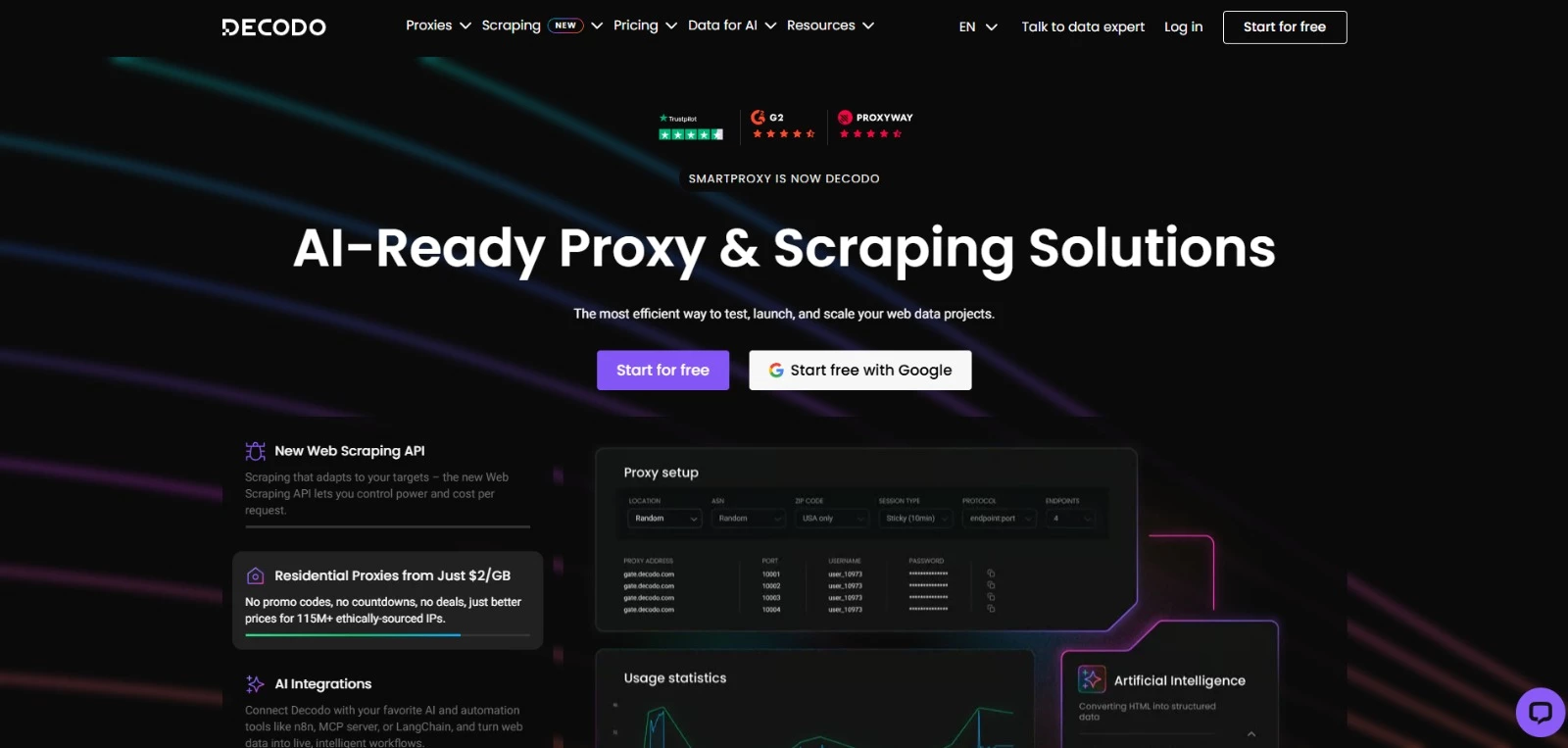
Decodo is a great pick if you want high-performance datacenter proxies featuring more flexibility in how you use and scale them.
It combines fast proxy infrastructure with multiple pricing models, so you can match your proxy-buying approach to your requirements.
That might mean bandwidth-heavy monitoring, running large batches of requests, or maintaining a pool of dedicated IPs for ongoing workflows.
It’s also useful if your usage changes month to month, since you can move between traffic-based and IP-based pricing and not switch providers.
Decodo now positions itself as an AI-ready proxy and scraping platform, which shows in how its datacenter proxies integrate with scraping APIs and automation tools. This makes it easier to handle data collection without relying on multiple services.
The tradeoff is that you’ll want basic internal tracking (traffic vs. IP counts) so your spend remains in line with the task. In practice, that flexibility also gives you more control as your usage evolves.
Right now, Decodo is offering 35% off its proxies, making it a great time to take advantage of premium IPs at a significant discount.
Key features:
- 195 countries allowed
- 500K+ IPs in global locations
- 24/7 customer support via LiveChat
- Unlimited traffic with dedicated datacenter proxy plans
Pricing:
- Pay per IP: Starting from $0.035/IP (100 IPs)
- Pay per GB: Starting from $0.60/GB (10 GB)
- Dedicated: Starting from $1.85/IP (3 IPs)
3. Oxylabs: Best for Enterprise-Scale Datacenter Proxies
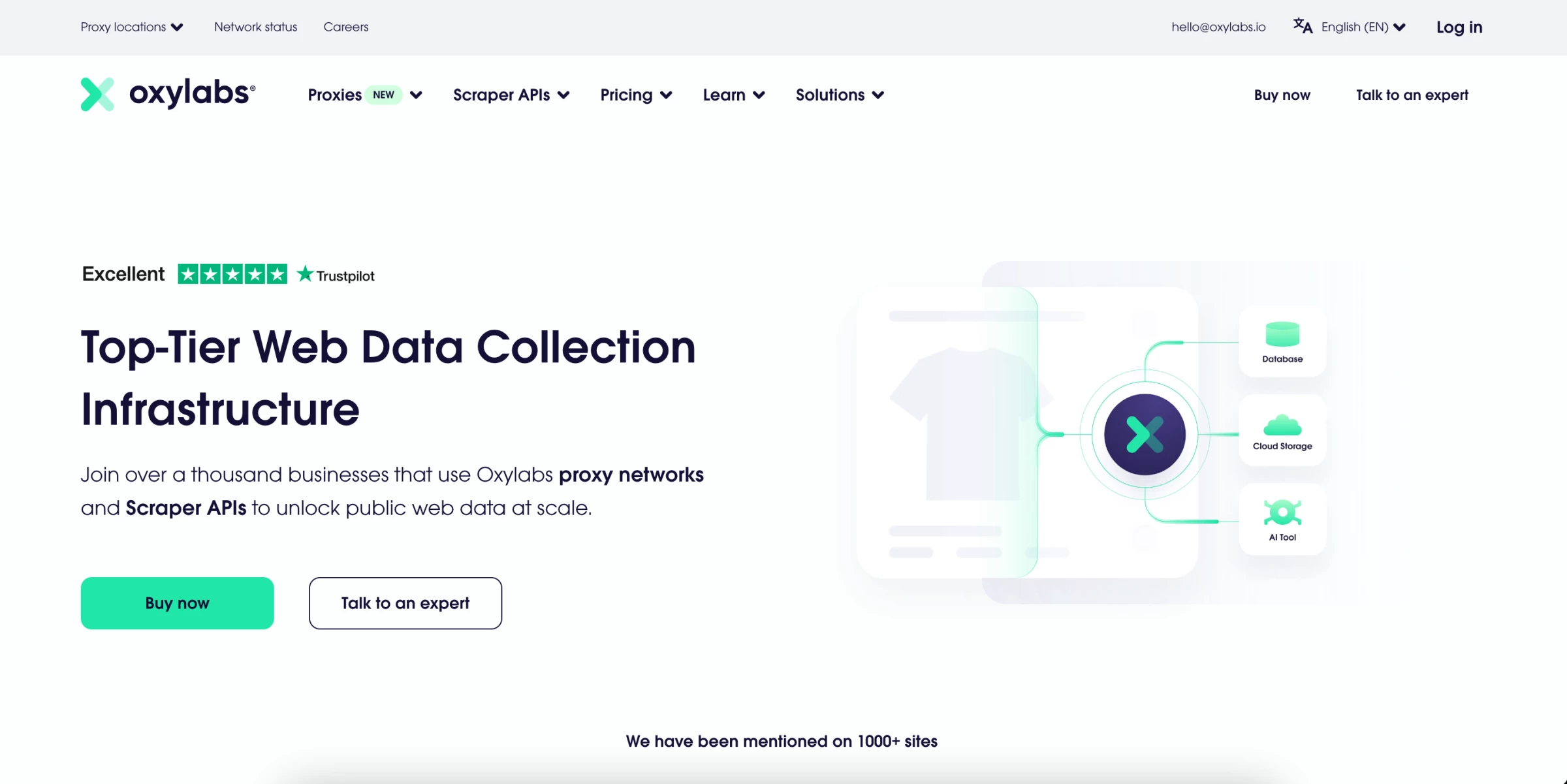
Oxylabs is ideal for businesses that need reliable datacenter proxies for high-volume or performance-sensitive tasks.
Its datacenter proxy offering supports use cases like long-running jobs, repeatable data pipelines, and multi-user environments where consistency matters.
Oxylabs also provides scraping APIs and automation tools that work with its proxies, making large-scale data collection easier to manage within one setup.
Although Oxylabs sits at the premium end of the price range, it makes the most sense when proxy performance directly affects revenue or SLAs. In those cases, the added stability and support can justify the cost.
Key features:
- Shared (rotating) and dedicated datacenter proxies
- Global coverage across 30+ locations (up to 188 at enterprise level)
- Up to 10,000 concurrent sessions
- Enterprise-grade infrastructure and support
- Integration with scraping APIs and automation tools
Pricing:
- Free trial available (5 IPs)
- Pay per IP: Starting from $1.20/IP (10 IPs)
- Pay per GB: Starting from $0.59/GB (20 GBs)
- Dedicated: Starting from $2.25/IP (3 IPs)
4. Rayobyte: Best for IP Diversity
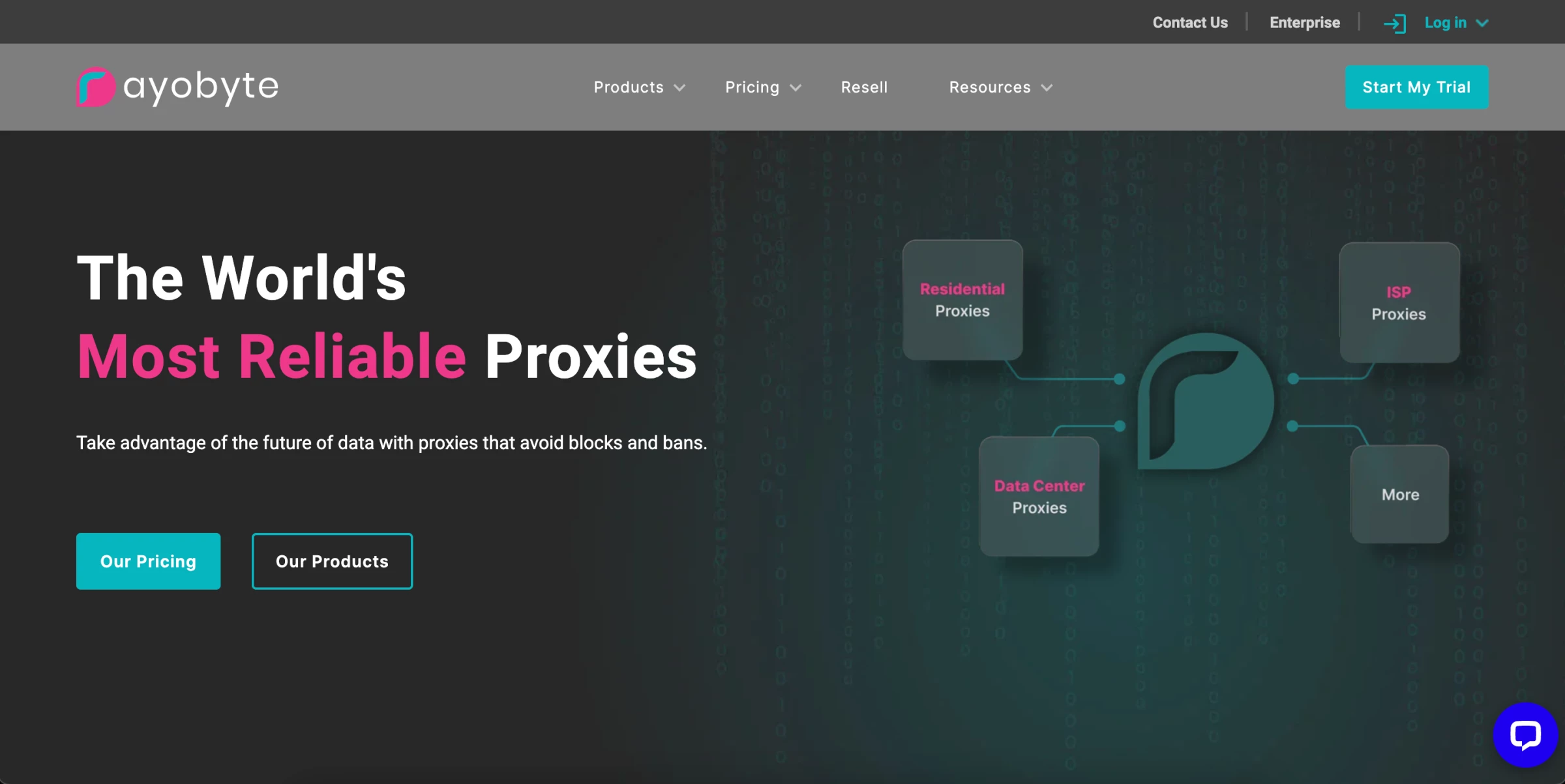
Rayobyte is a well-known datacenter proxy provider with a wider lineup that also includes residential, mobile, and ISP proxies, plus scraping tools like Web Unblocker and a Web Scraping API.
Where Rayobyte stands out most for datacenter proxies is subnet diversity.
It offers 300,000+ IPs, spread across 9+ ASNs and 20,000+ unique C-class subnets, helping reduce the risk of bans when running repeated requests.
You can choose HTTP, HTTPS, or SOCKS5 and use either IP whitelisting or username/password authentication, making it easy to integrate with common scraping tools and custom workflows.
Key features:
- 300,000+ datacenter IPs across 20,000+ C-class subnets and 9+ ASNs
- Static and rotating datacenter proxies available
- Unlimited bandwidth and connections on static datacenter proxies
- Automatic IP replacements and flexible rotation options
- HTTP, HTTPS, and SOCKS5 support
- IP whitelisting and username/password authentication
- Availability in 29+ countries
Pricing:
- Static Datacenter Proxies: Starting from $1/IP
- Rotating Datacenter Proxies: Starting from $0.45/GB
5. MarsProxies: Best for Short-Term Dedicated Datacenter IPs
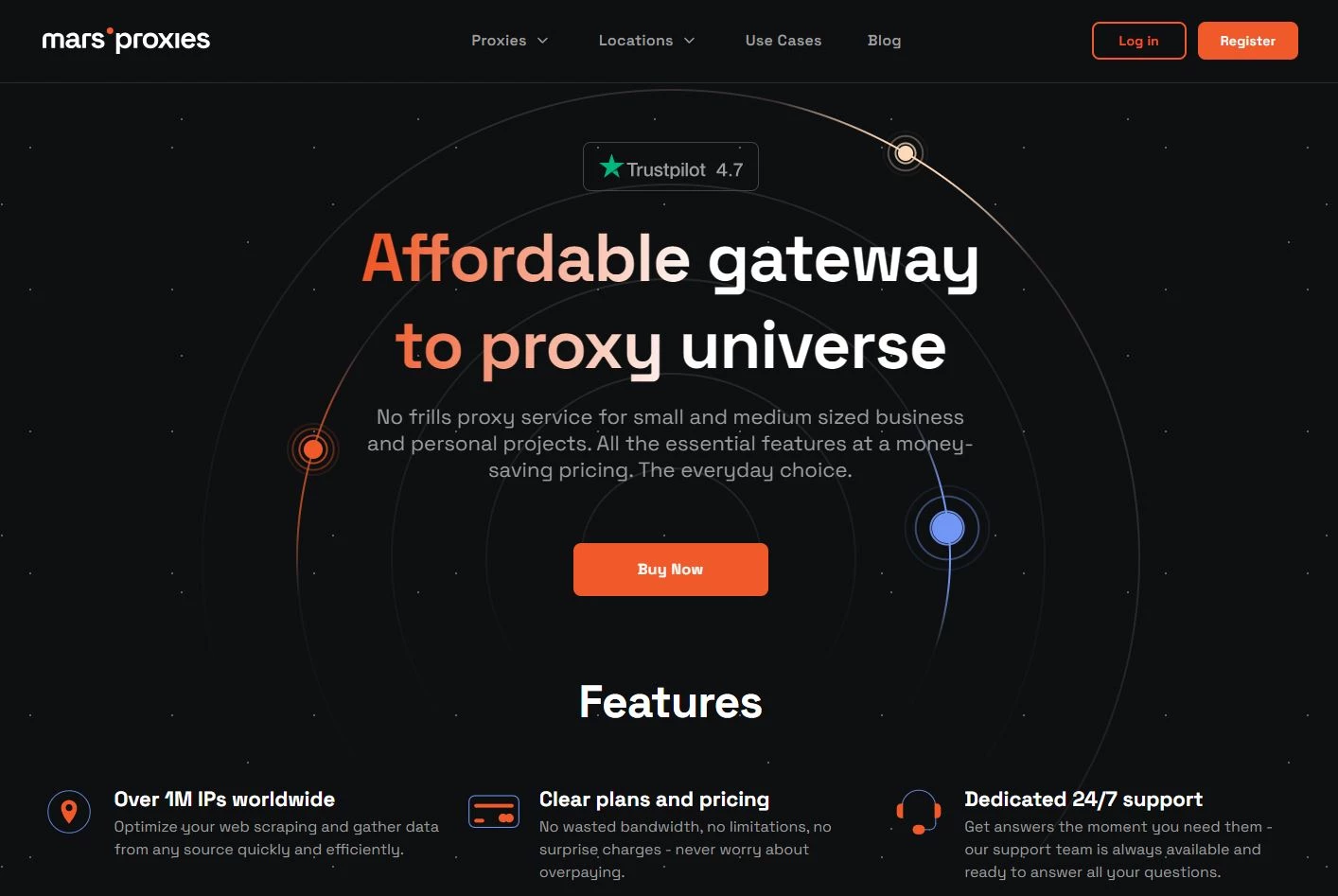
MarsProxies keeps it simple with dedicated datacenter IPs and unlimited traffic.
That makes it a sensible option for time-bound projects like audits, short-term monitoring, migration testing, or campaigns where predictable costs matter more than usage-based billing.
Protocol support is also a plus if your stack needs SOCKS5 alongside HTTP/S.
MarsProxies offers straightforward setups with dedicated IPs across 30+ countries, with plans that can be adjusted by duration and volume.
However, it’s not designed for large rotating datacenter pools, so if you need heavy rotation or wide geo distribution, other providers in this list are better suited.
Key features:
- Dedicated datacenter IPs with flexible rental durations
- Unlimited traffic and connections
- HTTP, HTTPS, and SOCKS5 protocol support
- Coverage across 30+ countries
- 99.99% uptime
- 24/7 customer support
Pricing:
- Datacenter proxies: Starting from $0.89/proxy
6. DataImpulse: Best for Flexible Traffic-Based Datacenter Proxies
DataImpulse is a solid fit for traffic-based datacenter proxies if your usage is irregular and you don’t want purchased bandwidth to expire.
It uses a pay-as-you-go model with no traffic expiration, so you can buy data when needed and use it over time.
That approach works well for projects that run in bursts, like periodic scans, market research, or short-term monitoring, where committing to monthly plans doesn’t make sense.
It also supports both rotating and sticky sessions, letting you switch between frequent IP changes and more stable connections depending on the task.
Key features:
- Pay-as-you-go/pay-per-GB pricing
- Traffic never expires
- Rotating and sticky sessions (up to ~30 minutes)
- 195+ locations with country-level targeting
- HTTP, HTTPS, and SOCKS5 support
- API access for integrations
- Broad subnet compatibility
- 24/7 customer support
Pricing:
- Starting from $0.50/GB (10GB for $5)
- Volume pricing from ~$0.45/GB at higher tiers
7. SOAX: Best for Reliable US Datacenter Proxies
SOAX’s datacenter proxy offering is built for fast and stable connections, with a focus on reliability for high-volume tasks such as data collection and monitoring.
It provides both shared and dedicated datacenter proxies, backed by 99.9%+ uptime and a 99.95% success rate.
While SOAX also offers residential, mobile, and ISP proxies, its datacenter product is the most straightforward option in its lineup, designed for users who want consistent performance without the added complexity of other proxy types.
SOAX also emphasizes ethical sourcing and compliance throughout its network, including compliance with regulations such as GDPR and CCPA.
Key features:
- Shared and dedicated datacenter proxies
- Sticky and rotating sessions
- Web Data API with built-in unblocker functionality
- HTTP, SOCKS5, UDP, and QUIC protocol support
- Unlimited proxy connections
- 24/7 multi-channel support
Pricing:
- Starting from $0.62/GB (145GB plan)
8. ProxyEmpire: Best for Budget Rotating Datacenter Proxies
ProxyEmpire offers rotating datacenter proxies for tasks that require frequent IP changes, such as scraping, automation, and geo-targeted access.
You can target specific locations, which helps vary how requests are sent.
Its datacenter proxy plans are sold on a pay-per-GB basis, with unlimited concurrent connections. This setup works well for workloads that rely on parallel requests, especially when session limits can become a bottleneck.
Monthly plans also allow unused bandwidth to roll over, which helps reduce waste for inconsistent usage.
Key features:
- Rotating datacenter proxies with unlimited concurrent connections
- Pay-per-GB pricing with rollover on monthly plans
- Sticky and rotating session control
- HTTP, HTTPS, SOCKS5, and HTTP/2 protocol support
- API access for integrations
Pricing:
- Starting from $0.625/GB (40GB plan - $25/month)
9. Storm Proxies: Best for Ultra-Budget US-Only Dedicated Proxies
Storm Proxies is a budget-friendly option for US-based dedicated datacenter proxies that offer fixed IPs, simple packaging, and low monthly costs.
It works best for basic setups where advanced controls, broad geo coverage, or SOCKS support aren’t required. Because it focuses on simplicity, it’s easy to set up and manage, especially for smaller projects or basic automation tasks.
Compared to more modern proxy platforms, Storm Proxies offers fewer features, limited location options, and fewer protocol choices.
Except for dedicated proxies, Storm Proxies also offers backconnect rotating proxies with configurable rotation intervals, including per-request and timed rotation options.
Key features:
- Private dedicated datacenter proxies with unlimited bandwidth
- US-only proxy locations (3 locations covered)
- Fixed-size proxy packages for predictable pricing
- Backconnect rotating proxies with configurable rotation (per request, 3 min, 15 min)
- HTTP and HTTPS support (no SOCKS)
- Up to 100 concurrent threads per plan
Pricing:
- Starting from $10/month (5 dedicated proxies)
10. SquidProxies: Best for Predictable Dedicated Performance
SquidProxies is a dedicated datacenter proxy provider focused on stable IPs, simple per-IP pricing, and uncomplicated setup. It’s a good fit when you want a consistent proxy identity and minimal configuration.
That makes it suitable for long-running tasks, including monitoring, account-based workflows, or tools that perform better with fixed IPs.
It’s also a practical option when you want predictable costs without tracking bandwidth usage. The drawback, though, is that dedicated IP models aren’t ideal for heavy rotation, so large-scale crawling setups may require a rotating proxy solution.
Key features:
- Dedicated datacenter IPs (per-IP monthly plans)
- Unlimited bandwidth
- Instant setup
- High-throughput, performance-focused proxies
- Elite anonymity
- 99.9% uptime
Pricing:
- Starting from $1.50/IP (10 proxies - $15/month)
How To Choose the Right Datacenter Proxy Provider
We selected top datacenter proxy providers using five practical criteria that matter most in real-world use: IP pool size, performance, pricing, security, and support. Here’s what you should look for.
- High IP pool size
- Excellent performance
- Reasonable pricing
- Great security features
- Quality customer support
1. High IP Pool Size
A provider’s IP pool is the number of IP addresses you can use, and a larger pool gives you more flexibility to rotate IPs, reduce repeat usage, and lower the chances of blocks.
This is especially necessary for workflows like web scraping, monitoring, and market research.
What to watch for:
- Pool size in the locations you actually need (not just an inflated global number)
- Options for rotating vs. sticky sessions (switch frequently vs. keep one IP for a session)
- IP freshness and availability during peak demand
2. Excellent Performance
Performance is the main reason many teams choose datacenter proxies, because faster speeds and lower latency make automation and data collection smoother.
Reliability matters just as much, since unstable connections lead to failed requests, retries, and wasted time.
What to watch for:
- Consistent speeds and low latency (not just “up to” claims)
- Strong uptime and stable connections under load
- Any throttling, concurrency limits, or peak-time slowdowns
3. Reasonable Pricing
Pricing should match how you use proxies, because an affordable plan that fits your traffic patterns can save a lot at scale. Unclear pricing or hidden limits, on the other hand, can turn a good deal into an expensive one.
What to watch for:
- Pricing model fit: pay-per-GB, pay-per-IP, or predictable monthly tiers
- Clear limits (bandwidth caps, concurrent sessions/threads, request ceilings)
- Transparent add-ons (geo-targeting, premium IPs, dedicated resources)
4. Great Security Features
A proxy should protect your traffic and reduce risk, not introduce new problems. Strong security and transparent practices are needed to keep sessions private, prevent misuse, and avoid compliance headaches.
What to watch for:
- Protocol support, HTTPS and SOCKS5
- Authentication controls (IP allowlisting, username/password, token access)
- Clear sourcing and compliance policies that show the provider is operating responsibly
5. Quality Customer Support
Proxy setups can be simple until they aren’t, and when something breaks (blocks, configuration issues, sudden scaling needs), responsive support is what keeps your workflow running instead of stalling for hours.
What to watch for:
- Availability that matches your operations (ideally 24/7 for critical use)
- Multiple channels (live chat, tickets, and sometimes phone/Slack for enterprise)
- Useful docs, dashboards, and onboarding that reduce the need for support in the first place
Best Datacenter Proxy Providers: The Bottom Line
Datacenter proxies are the first choice when you want fast, scalable IPs at a lower cost than residential. But some sites detect datacenter IPs more easily, so the best choice is the provider that performs most reliably on your toughest target.
Pick dedicated per-IP for stable, long-lived sessions, and rotating pay-per-GB for bursty volume, then run a small pilot and compare success rate, latency, and block frequency before scaling.

Our team ranks agencies worldwide to help you find a qualified partner. Visit our Agency Directory for the top IT services companies, as well as:
- Top IT Services Companies in Dallas
- Top IT Services for Startups
- Top Managed IT Service Providers
- Top IT Consulting Companies
- Top IT Services for Financial Industry
- Top Cloud Consulting Companies
Best Datacenter Proxy Providers FAQs
1. Are datacenter proxies legal to use for business?
Yes, datacenter proxies are generally legal, but compliance depends on how you use them. That means respecting applicable laws, terms of service, and privacy rules, and avoiding unauthorized access or collection of sensitive personal data.
2. How do you reduce blocks and CAPTCHAs with datacenter proxies?
Start with request discipline. Throttle concurrency, rotate IPs when you see rising challenge rates, keep sessions/cookies consistent when needed, and avoid “bot-like” spikes. Then choose dedicated/static IPs for login flows and rotating pools for broad, non-authenticated crawling.
3. When should you use datacenter proxies instead of residential proxies?
Datacenter proxies are typically chosen for speed, lower cost, and the ability to handle large request volumes. They work well for monitoring, testing, and broad data collection.
Residential proxies are better suited to websites with a higher detection risk.
4. What’s the difference between dedicated and rotating datacenter proxies?
Dedicated proxies provide fixed IPs that stay consistent over time, which helps with login sessions and account-based tools.
Rotating proxies automatically rotate IPs, making them better suited for high-volume requests where repeated use of the same IP can trigger blocks.
5. How do you choose the right pricing model for datacenter proxies?
The right model depends on usage patterns. Per-IP plans suit steady, ongoing activity, while pay-per-GB pricing matches variable usage.
Some providers also offer rollover or non-expiring bandwidth, which helps avoid paying for unused data.