
In 2026, basic email newsletters won’t cut it. To stand out, you need smarter segmentation, AI-driven automation, and lifecycle strategies that turn subscribers into loyal customers
Email Marketing Tips: Key Findings
- Brands that personalize emails see significantly higher transaction rates, and even simple segmentation can dramatically lift CTR and conversions.
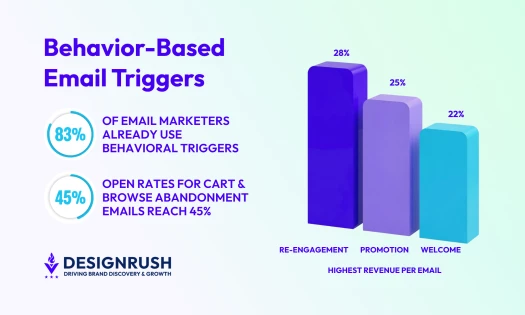
- AI-powered automation turns email into a self-optimizing engine. Implement behavior-based automation and let AI optimize timing and content.
- High-performing brands treat email, SMS, and paid retargeting as one orchestrated conversation. Sync email with ads and follow-ups for promotions and high-intent subscribers.
Why You Need to Win With Email Marketing in 2026
As algorithms change and ad costs climb, brands are prioritizing channels they actually own.
Email gives you direct access to your audience: you have full control, clear ROI, and powerful personalization options.
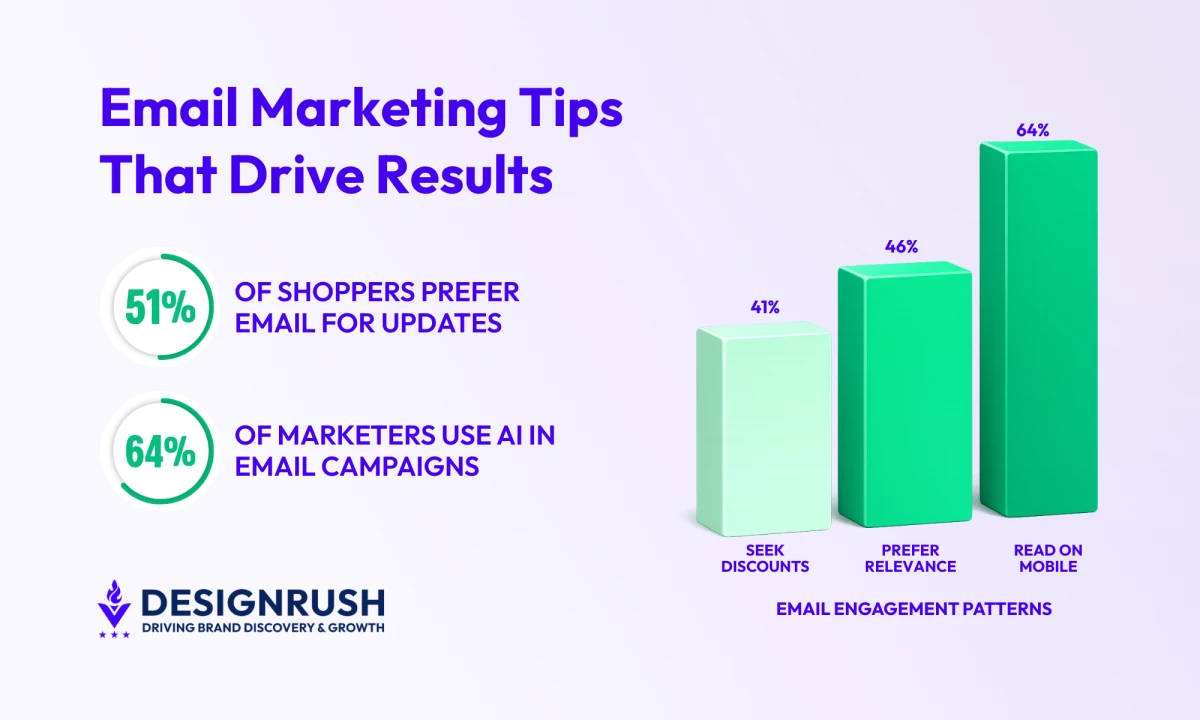
In fact, more than half of consumers (51%) say email is still their preferred way to hear from brands, ranking it above social media and other digital touchpoints.This makes email not just relevant, but essential for building long-term customer relationships and driving repeat revenue.
To win in 2026, brands must go beyond batch-and-blast and apply smarter email marketing strategies using AI, personalization, and lifecycle automation to turn email into a true growth engine.


1. Know Your Customer
Understanding your audience is the foundation of successful email marketing campaigns.
Sending generic emails to your entire list won’t drive engagement — but segmenting your subscribers and tailoring content to their needs will.
How to better understand and segment your audience:
- Analyze customer behavior: Track past purchases, browsing history, and email interactions to personalize content using email marketing tools like Klaviyo.
- Segment your list strategically: Group subscribers based on demographics, purchase history, or engagement level. Tools like ActiveCampaign can help you easily segment audiences — for instance, into first-time shoppers, repeat customers, and inactive subscribers.
- Use surveys & feedback: Ask subscribers about their preferences to improve future campaigns. Tools like SurveyMonkey can help you seamlessly gather actionable insights.
- Leverage dynamic content blocks: Customize email body text, images, and offers based on user data (e.g. personalized product recommendations). Tools like Campaign Monitor enable scalable dynamic personalization.
Brands often start segmentation with demographics, purchase history, or basic engagement data, but that only gets you so far.
Will Gordon, Senior Director of Marketing at Nutshell, says the bigger mistake is treating email as separate from sales.
In his view, the strongest segmentation signal is often where a prospect actually sits in the pipeline, because “knowing someone moved to a demo stage is far more valuable than tracking simple email opens.”
He adds that when teams use CRM data to trigger journeys based on deal movement, they are much more likely to send the message a person actually needs next.
2. Create High-Converting Subject Lines
Subject lines significantly impact your email open rates, so make every word count. The best subject lines spark curiosity, create urgency, or clearly promise value, prompting subscribers to open and read further.
How to write subject lines that drive opens:
2.1 Spark curiosity
Use intriguing phrases or questions that make readers want to click.
For example, "Guess what’s back in stock?" (for retail) or "Ready to unlock your productivity?" (for SaaS).
2.2 Create urgency
Scarcity triggers urgency by tapping into our natural fear of missing out, which is a deeply rooted psychological survival response.
When something appears limited or time-sensitive, we instinctively perceive it as more valuable, driven by emotions such as anticipated regret if we miss out.
Use scarcity strategically in subject lines to encourage immediate action. For example, "Hurry! 40% Off Ends Tonight!" (eCommerce) or "Only 24 Hours Left To Register!" (webinar).
2.3 Promise clear value
Clearly communicate what the reader will gain by opening your email. Subscribers are more likely to engage when they see immediate value relevant to their interests or goals.
Examples: "Your Donation Can Save Lives Today" (non-profit) and "Boost Your ROI With These 3 Strategies" (B2B services).
2.4 Keep it concise
Short and clear subject lines perform better, especially on mobile devices. Limit subject lines to about 6-9 words to ensure readability across devices.
For instance, "5-Minute Meals for Busy People" or "Easy Ways to Cut Monthly Expenses."
Tip: A/B test different subject lines to see what resonates best with your audience. You can use tools like CoSchedule Headline Studio or Send Check It to analyze readability, sentiment, and spam triggers before sending.
2.5 Leverage pre-headers

Your pre-header (also called preview text) is the short snippet that appears next to or below your subject line in the inbox.
You can use this to expand on your message and reinforce the reason to open. Think of the subject line as the hook, and the pre-header as the supporting detail that seals the click.
Add context, highlight benefits, or introduce urgency. For example, if your subject line is “Hurry! 40% Off Ends Tonight,” your pre-header could say, “Plus free shipping on orders over $50.”
3. Optimize Email Content for Engagement
Getting your emails opened is just the first step; now you need to hold your reader’s attention. Effective email content combines compelling visuals, personalized messaging, and clear calls-to-action to drive clicks and conversions.
Here are actionable email content optimization tips you can use today:
3.1 Keep it concise and scannable
Subscribers engage with emails that feel directly relevant to their needs, goals, or pain points. If your content doesn’t quickly communicate clear value, it’s likely to be ignored or deleted.
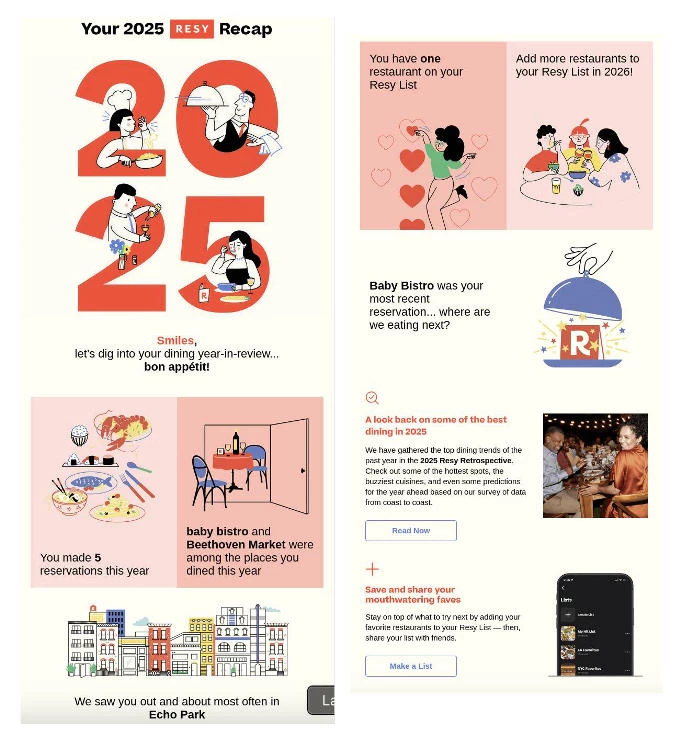
Focus on delivering information that solves a problem, answers a question, or offers a tangible benefit. Personalization, segmentation, and timely messaging can significantly increase perceived relevance.
Example: Instead of sending a generic promotional email to your entire list, tailor content by segment, like product recommendations based on past purchases or resources aligned with a subscriber’s interests.
3.2 Use engaging visuals strategically
A well-structured email improves readability and guides readers toward your CTA. Visual hierarchy, white space, and scannability all play a role in keeping your content engaging.
Place the most important elements (headline, key message, CTA) at the top of your email for immediate visibility.
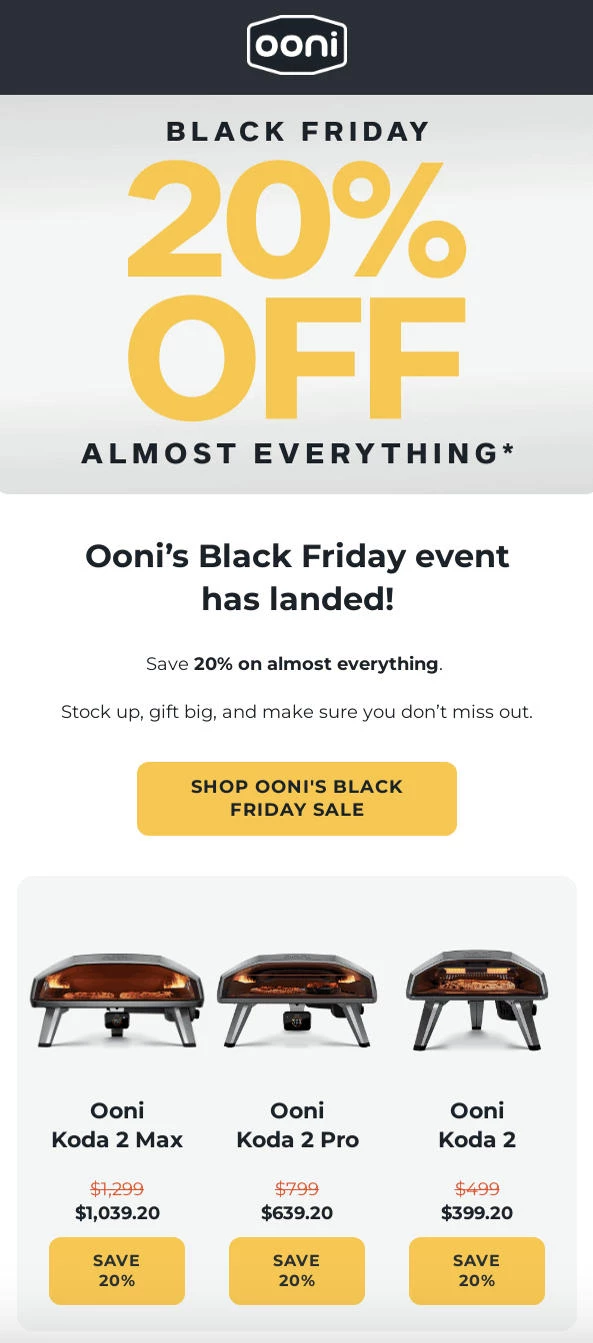
Use bold headings, bullet points, and short paragraphs to help readers absorb key takeaways quickly. Avoid cluttered designs by spacing out text and images.
3.3 Personalize beyond just the name
Personalized emails can boost sales by 22%, proving that relevant, data-driven messaging directly impacts revenue.
But basic personalization — like inserting a recipient’s first name — is no longer enough to stand out. Today’s subscribers expect emails that reflect their behaviors, preferences, and where they are in the customer journey.
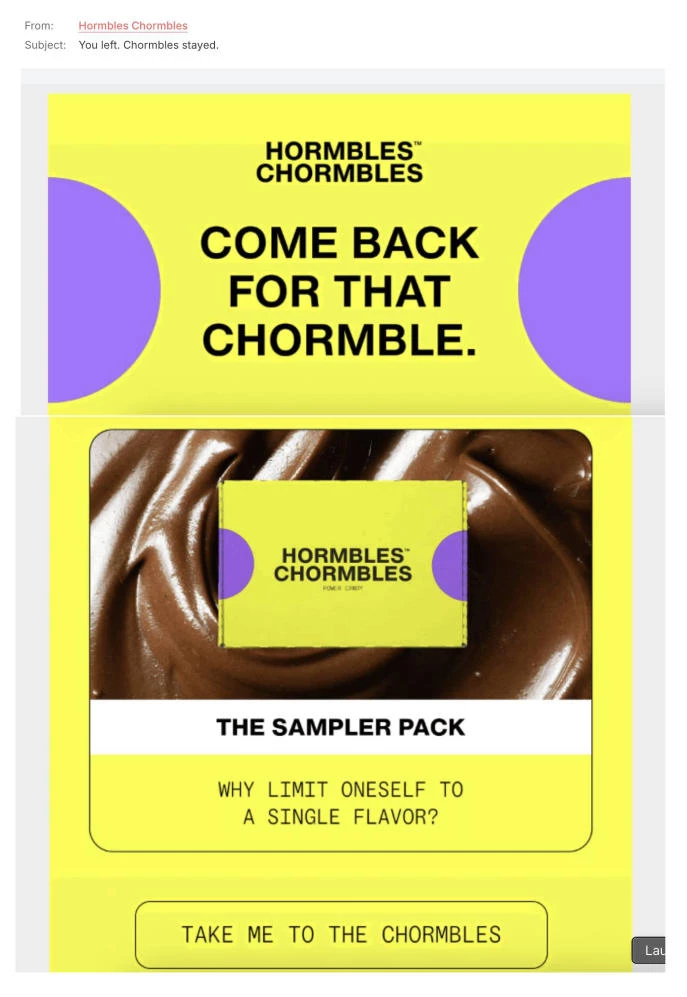
Leverage behavioral data, purchase history, browsing activity, and engagement patterns to deliver content that feels genuinely tailored. Use dynamic content blocks to show personalized product recommendations, relevant blog posts, renewal reminders, or loyalty rewards.
Just as importantly, align messaging with each stage of the journey. A new subscriber may need educational content and brand introduction, while a repeat customer may respond better to upsell offers or exclusive perks.
3.4 Write clear and action-driven CTAs
A strong call-to-action (CTA) directly impacts your click-through rate (CTR), leading to more website visits and conversions. Your email should guide the reader toward a single action, whether it’s making a purchase, signing up, or downloading a resource.
Use actionable language like "Shop the Sale," "Claim Your Spot," or "Download Now" to drive clicks and improve CTR.
Example: Instead of a vague "Learn More" button, try "Get 20% Off Now" for a promotional email.
4. Prioritize Mobile Optimization & Accessibility
More than 60% of emails are opened on mobile devices, so you risk losing engagement if your email isn’t mobile-optimized (ZeroBounce). Poorly designed emails can lead to frustration, low engagement, and higher unsubscribe rates.
A mobile-first design approach ensures emails are created with mobile users as the priority, rather than adapting a desktop version later. This means designing for smaller screens first while ensuring content remains clear, interactive, and accessible across all devices.
4.1 Prioritize readability for smaller screens
A mobile-friendly email should be structured for easy scanning while maintaining clarity.
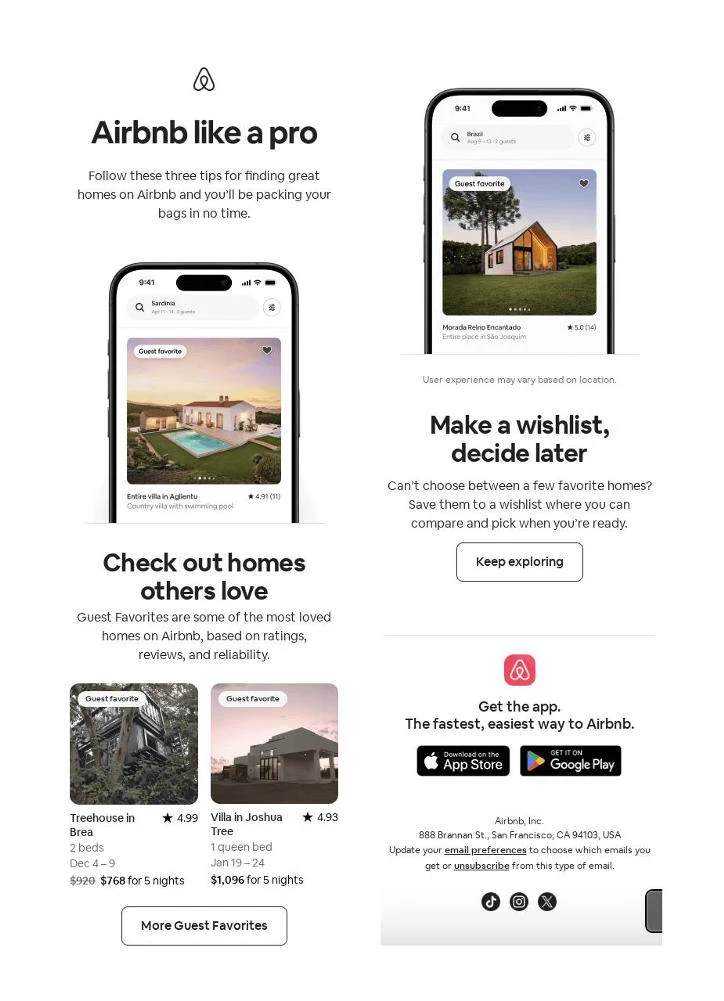
- Use single-column layouts, large font sizes (14px+), and touch-friendly CTA buttons (at least 44x44px).
- Keep email width under 600px to prevent horizontal scrolling.
- Limit paragraphs to 2-3 sentences to avoid walls of text.
- Use contrast-friendly colors to improve visibility in different lighting conditions.
4.2 Ensure effortless navigation and interaction
Subscribers should be able to tap, scroll, and engage without frustration.
- Position the primary CTA prominently to be seen immediately.
- Use well-spaced clickable elements to prevent mis-clicks on small screens.
- Optimize images for fast loading to avoid slow email performance.
4.3 Improve accessibility for all users
Inclusive design ensures a better experience for everyone, including users with visual impairments.
- Add alt text to images so screen readers can describe them.
- Write meaningful link text instead of vague “Click Here.”
- Ensure dark mode compatibility for users who prefer reduced brightness.
4.4 Aim for platform-perfect emails
Different email clients (Gmail, Outlook, Apple Mail) render code differently, which can break layouts or distort visuals.
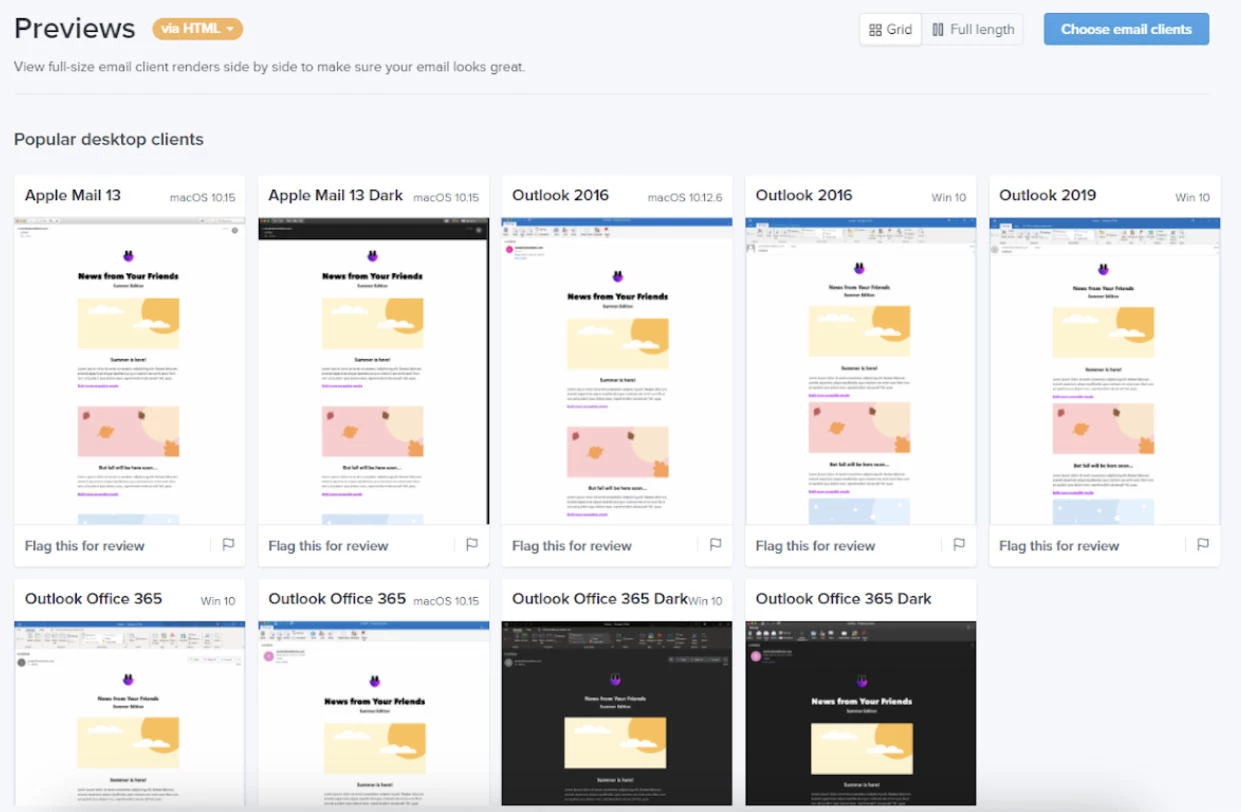
Use responsive coding, inline CSS, and thorough cross-client testing to ensure your design displays consistently across devices and platforms.
5. Improve Email Deliverability & Avoid Spam Filters
Even the best-crafted email won’t drive results if it never reaches the inbox. Poor email deliverability leads to low open rates, lost revenue, and a damaged sender reputation.
How to improve email deliverability:
5.1 Authenticate your emails to build trust
Email authentication protocols verify your sender identity and reduce the chances of emails being marked as suspicious. Implement:
- SPF (Sender Policy Framework): Ensures your emails come from an authorized server.
- DKIM (DomainKeys Identified Mail): Adds a digital signature to confirm email integrity.
- DMARC (Domain-based Message Authentication, Reporting & Conformance): Aligns SPF and DKIM policies for better security.
5.2 Avoid spam triggers in your content
Certain words, formatting, and email structures can trigger spam filters.
- Limit excessive capitalization and punctuation (e.g. “FREE!!! BUY NOW!!!”).
- Use a balanced text-to-image ratio (spam filters flag image-heavy emails).
- Ensure all links match your domain and come from reputable sources.
5.3 Monitor & maintain a clean email list
Sending emails to inactive or fake addresses hurts your sender reputation.
- Regularly clean your list by removing unengaged subscribers.
- Use double opt-in to ensure subscribers provide valid emails.
6. Use Email Analytics To Continuously Improve Performance
Tracking the right email marketing metrics helps you understand what’s working — and what needs improvement. Without data-driven insights, you risk making decisions based on guesswork instead of actual performance trends.
Key email metrics to track & improve:
6.1 Open rate
The open rate is the percentage of recipients who open your email. Average email open rates are around 42% across industries, though exact percentages vary widely depending on the sector.
A low open rate means fewer people are seeing your message, which reduces engagement and conversions. It typically signals issues with:
- Weak subject lines that fail to capture attention.
- Unfamiliar or untrusted sender names that cause hesitation.
- Poor send timing that doesn’t align with when subscribers check emails.
How to improve it:
- Test subject line variations to find what resonates best.
- Personalize the sender name (e.g. “Emma from [Brand]” instead of “Marketing Team”).
- Optimize send times based on audience behavior and past engagement trends.
6.2 Click-through rate (CTR)
CTR is the percentage of recipients who click a link in your email. A low CTR means your content or CTAs are not compelling enough to drive engagement. It typically signals issues with:
- Unclear or weak CTAs that don’t encourage action.
- Poor email design that makes links hard to find or click.
- Irrelevant content that doesn’t align with subscriber interests.
How to improve it:
- Use high-contrast CTA buttons that stand out visually.
- Make CTAs clear and action-driven (e.g. “Download Your Free Guide” instead of “Click Here”).
- Incorporate engaging visuals to break up text and guide the reader’s attention.
Tip: Platforms like Litmus allow you to test email rendering and design for better engagement.
6.3 Bounce rate
Bounce rate is the percentage of emails that couldn’t be delivered. A high bounce rate can damage your sender reputation and increase spam risks. It typically signals issues with:
- Invalid or outdated email addresses on your list.
- Spam filters blocking your emails due to poor sender reputation.
- Technical misconfigurations like incorrect authentication settings (SPF, DKIM, DMARC).
How to improve it:
- Regularly clean your email list by removing inactive or fake addresses.
- Use double opt-in to ensure subscribers provide valid emails.
- Monitor bounce reports in tools like Google Postmaster to identify recurring issues.
6.4 Conversion rate
Conversion rate is the percentage of recipients who complete a desired action, such as making a purchase, signing up, or downloading a resource.
A low conversion rate means your email is not effectively driving action. It typically signals issues with:
- Weak CTAs that don’t align with subscriber intent.
- Mismatched landing pages that don’t deliver on the email’s promise.
- Lack of personalization that makes the content feel generic.
How to improve it:
- Personalize product recommendations based on past interactions.
- Align CTA buttons with the email’s goal (e.g. “Claim Your Exclusive Offer” for a promo email).
- Ensure landing pages are optimized to provide a seamless transition from email to conversion.
6.5 Unsubscribe rate
Unsubscribe rate is the percentage of recipients who opt out of your emails. A high unsubscribe rate indicates that your content, frequency, or targeting may not be meeting subscriber expectations. It typically signals issues with:
- Overwhelming email frequency that causes inbox fatigue.
- Irrelevant or overly promotional content that doesn’t provide value.
- Lack of segmentation leading to mismatched messaging.
How to improve it:
- Offer email frequency preferences instead of forcing an all-or-nothing unsubscribe.
- Ensure content is relevant by segmenting subscribers based on behavior and interests.
- Balance promotional emails with educational or value-driven content.
Tip: A/B testing tools like Unbounce can help optimize landing pages for higher conversions.
But email performance should not stop at opens and clicks.
Gordon says the metrics that matter most are the ones that connect email to revenue, including “email-to-reply, email-to-meeting, and campaign-attributed deals.”
When that engagement data flows into the CRM, sales can see which campaigns are driving qualified interest and act on those signals faster.
As he puts it, the real shift happens when marketing and sales share a dashboard and measure pipeline impact rather than just email activity.
7. Use AI-Powered Email Automation
AI-powered automation streamlines communication, ensuring subscribers receive the right message at the right time, without manual effort.
64% of marketers now use AI in their email campaigns, highlighting how quickly it has become a standard tool for improving engagement, productivity, and results.
How to leverage AI-driven automation for better results:
- Set up AI-powered welcome sequences: AI can analyze subscriber behavior and adjust onboarding emails dynamically to increase engagement.
- Trigger behavioral emails based on predictive analytics: AI can anticipate customer needs, automatically sending emails for abandoned carts, restocks, or personalized product recommendations.
- Automate content personalization: AI-driven tools can tailor subject lines, email body content, and product suggestions based on past interactions.
- Optimize send times with machine learning: AI can analyze subscriber behavior to determine the best time to send emails for higher open and click-through rates.
How To Leverage AI for 3x Sales
Spark Joy New York worked with ActiveCampaign to transform its email program using AI-powered automation, turning sporadic, manual send-outs into a consistent growth engine that feels personal at scale.
By combining AI-generated workflows with behavior-based journeys and seamless tagging, the business was able to increase both the frequency and relevance of its messaging, driving more engagement with less manual effort.
Results:
- 3× more booked sales calls thanks to AI-assisted, frequent email campaigns
- 10× revenue growth after scaling to online coaching and digital services
- 85% faster campaign creation, going from one email per week to multiple per week
- Consistent $10K+ months driven by more regular, personalized communication
8. Develop a Seamless Email Campaign Workflow
A well-structured email campaign ensures consistency, maximizes engagement, and reduces errors. Without a clear workflow, emails may be sent irregularly, contain mistakes, or fail to reach the right audience at the right time.
To streamline your email campaign workflow for efficiency and effectiveness:
8.1 Use a pre-send checklist to avoid mistakes

✅ Pre-Send Email Checklist
☐ Check subject line length (6–9 words for best visibility).
☐ Test mobile compatibility on different devices and email clients.
☐ Verify all links and CTAs to prevent broken redirects.
☐ Ensure images load correctly and contain alt text for accessibility.
☐ Review personalization elements (e.g. names, dynamic content, segmentation).
☐ Check for spam triggers (avoid excessive caps, exclamation marks, or misleading phrases).
☐ Confirm a balanced text-to-image ratio (spam filters may flag image-heavy emails).
☐ Ensure compliance with email regulations (include unsubscribe links, company details, GDPR/CAN-SPAM compliance).
☐ Preview in light and dark mode to ensure proper contrast and readability.
☐ Send a test email to a colleague or different inboxes to catch errors before launch
Before hitting send, ensure your email is optimized for clarity, functionality, and deliverability.
If you’re a retailer sending a limited-time sale email, for example, you should double-check that all discount codes and promo links work correctly.
- Check subject line length (6 to 9 words for best visibility).
- Test mobile compatibility to confirm proper formatting on all devices.
- Verify all links and CTAs to prevent broken redirects.
8.2 Plan emails with a content calendar
A structured calendar ensures emails are sent at the right time and align with marketing goals. Schedule emails around key events (holidays, product launches, seasonal trends).
Also, rotate email types (newsletters, promotions, educational content, re-engagement campaigns).
8.3 Optimize timing for higher engagement
When and how often you send emails directly impacts customer engagement, deliverability, and long-ter retention. Sending too frequently can lead to fatigue and unsubscribes, while inconsistent outreach can cause your audience to disengage or forget your brand altogether.
Test different send times (morning vs. evening, weekdays vs. weekends) to identify when your audience is most responsive.
At the same time, establish a predictable cadence (weekly, biweekly, or monthly) so subscribers know what to expect.
9. Align Email Marketing With Other Digital Channels
Email marketing is most effective when it works alongside your other digital channels, creating a seamless customer journey.
A disconnected approach can lead to inconsistent messaging, missed engagement opportunities, and lower conversions.
How to integrate email with your other marketing efforts:
- Sync email and social media campaigns: Promote exclusive email-only offers on social media to grow your list. Add social sharing buttons in emails to encourage engagement.
- Connect email with paid ads: Use email retargeting to send personalized follow-ups to website visitors who didn’t convert. Platforms like Facebook Custom Audiences and Google Ads Customer Match allow you to target subscribers across channels.
- Reinforce email messaging with content marketing: If you publish blogs, guides, or video content, repurpose them in email campaigns to nurture subscribers and provide ongoing value.
- Integrate email with SMS marketing: For urgent promotions or time-sensitive updates, combine email with SMS for a higher response rate. Platforms like Omnisend allow for cross-channel automation.
Jackie Palmer, ActiveCampaign’s VP of Product Marketing, says cross-channel intelligence will define best-in-class email marketing in 2026:
“The highest-performing programs we see no longer treat email, SMS, and WhatsApp as separate channels — they treat them as a single, orchestrated conversation.
Email still carries the narrative and the depth, but real-time signals from SMS, transactional events, and messaging apps feed back into one autonomous system that decides where and how to follow up next.”
10. Implement Re-Engagement Campaigns for Inactive Subscribers
Not all subscribers stay engaged forever. Some lose interest, stop opening emails, or forget why they subscribed.
A re-engagement campaign helps bring them back, reducing churn and improving overall email performance.
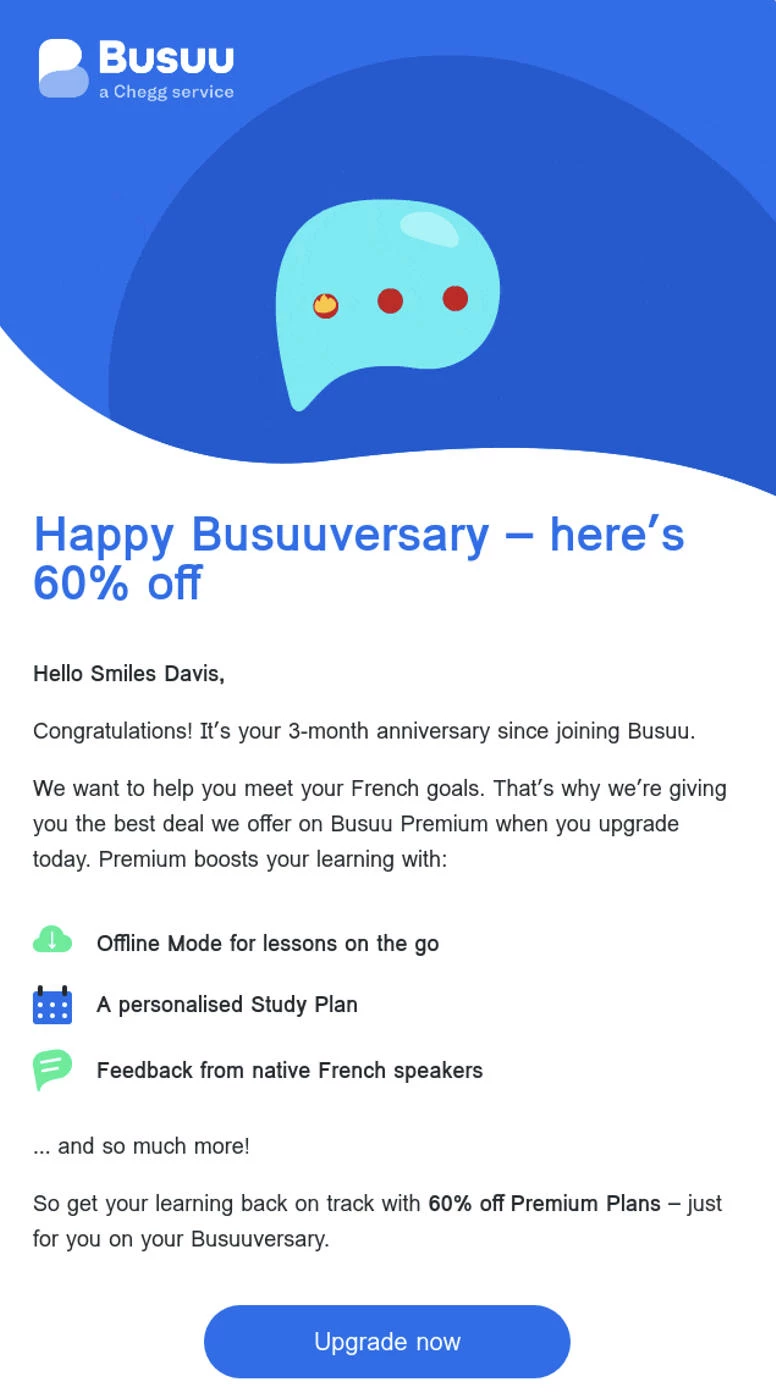
How to re-engage inactive subscribers:
- Send a “We Miss You” email: Remind subscribers of the value they signed up for and offer an incentive (e.g. discounts, exclusive content).
- Ask for feedback: Use a short survey to understand why they became inactive and what type of content they’d like to receive.
- Allow subscribers to update preferences: Give them options to adjust email frequency instead of unsubscribing.
- Remove unresponsive contacts: If a subscriber remains inactive after multiple attempts, clean your list to protect deliverability.
When subscribers start disengaging, the fix is not always sending less.
Gordon says brands should look at what people stopped engaging with before jumping straight to a frequency reduction.
As he explains, “if they ignored three product update emails but clicked on an industry insights piece, you should shift them to more educational content.”
That makes re-engagement more intelligent because instead of offering a simple stay-or-unsubscribe choice, you are adjusting the content mix based on actual behavior before the subscriber tunes out completely.
Email Marketing Ideas: Final Thoughts
Brands that combine personalization, automation, mobile-first design, and cross-channel orchestration will turn the inbox into their most reliable growth engine.
To achieve that level of performance, brands usually partner with experienced email marketing agencies to plan, build, and optimize campaigns.
Our team ranks agencies worldwide to help you find a qualified partner. Visit our Agency Directory for the top email marketing companies, as well as:
- Top Event Marketing Agencies
- Top Direct Marketing Agencies
- Top Advertising Agencies
- Top Video Marketing Agencies
- Top Content Marketing Agencies
Email Marketing Ideas FAQs
1. How often should businesses send marketing emails?
There’s no universal frequency. Start with a consistent schedule and test engagement levels. Prioritize delivering value in every send, and let audience behavior guide adjustments over time.
2. How long should marketing emails be?
Keep emails concise and focused on one primary goal. Use short paragraphs, clear headings, and scannable formatting. Educational content can be longer, but every section should serve a clear purpose.
3. What metrics matter most beyond open rate?
Focus on click-through rate, conversion rate, revenue per email, unsubscribe rate, and bounce rate. These metrics reveal engagement quality, deliverability health, and actual business impact.
4. How do you reduce unsubscribe rates?
Improve segmentation so subscribers receive relevant content. Offer email frequency options, personalize messaging, and maintain a healthy balance between promotional, educational, and value-driven emails to prevent fatigue and disengagement.