
Email marketing can be a top revenue driver, but only if you understand what it really costs. Many teams overspend on tools, underestimate labor, or choose the wrong support and lose revenue they should be earning.
Let me show you how much does email marketing cost, the common budget traps, and what to consider before deciding how much to invest.
Email Marketing Cost: Key Findings
- DesignRush data shows that email projects start under $5K for 2-6 months and scale to $20K–$100K and 12-24 months as complexity increases.
- Most in-house roles range from ~$50K to ~$100K+ per year while agencies bring automation, design, copy, and deliverability support in one place.
- Tools cost between $6.50 and $3,250 per month but ongoing work on flows, testing, and segmentation is where teams overspend.
What You Must Know Before Setting an Email Marketing Budget
Before you set an email marketing budget, you need to understand the return potential. Most companies ask how much does email marketing cost before they've established what a good return looks like, which is a mistake.
For every $1 spent, 35% of companies see returns of $10-36, 30% see $30-50, and 5% see more than $50.
Our own 2026 email marketing benchmark survey found the same pattern: automation flows now drive 50%+ of total email revenue for most teams.
This range tells you two things. First, email can deliver exceptional ROI when strategy, segmentation, and automation are aligned. Second, even small inefficiencies can cost you real revenue.
A clear budget helps you invest in the areas that directly influence these returns.
How Much Does It Cost To Hire an Email Marketing Agency?
According to DesignRush data, email marketing budgets and timelines follow clear patterns across small businesses and B2B programs:
- Most small and early-stage engagements begin below $5K and run 2-6 months, typically covering audits, foundational setup, and initial campaigns.
- Once budgets rise above $5K, project timelines extend to 12-24 months, reflecting the shift toward full lifecycle builds, CRM integrations, automations, and long-term optimization.
- B2B email programs cluster in the $20K-$100K range with 12-month cycles, driven by the need for lead nurturing, intent scoring, and deeper reporting frameworks.

Email Marketing Campaign Cost: In-House vs. Hiring an Agency
When businesses ask me whether they should hire an email agency or build an internal team, the real question is always the same: What will give me the most ROI for the lowest operational burden?
To answer that, I break email costs into three buckets: in-house, freelancers, and agencies.
- In-house email marketing costs at a glance
- How much running email marketing in-house really costs
- Email marketing freelancers hourly rates and cost
- Why many brands choose an email marketing agency instead
- How agencies structure email marketing pricing
In-House Email Marketing Costs at a Glance
Running email marketing internally means investing in both talent and software. If you're weighing how much does email marketing cost in-house versus outsourcing it, the answer almost always starts with the platform and the person running it.
Your platform determines how complex your workflows become, and your specialist determines how well that complexity is managed.
Below is how I evaluate in-house cost using the three most widely adopted email marketing tools in 2026:
- ActiveCampaign: Best for automation-driven email marketing
- Mailchimp: Best for small businesses and beginners
- Klaviyo: Best for eCommerce and data-driven brands
1. ActiveCampaign: Best for Automation-Driven Email Marketing
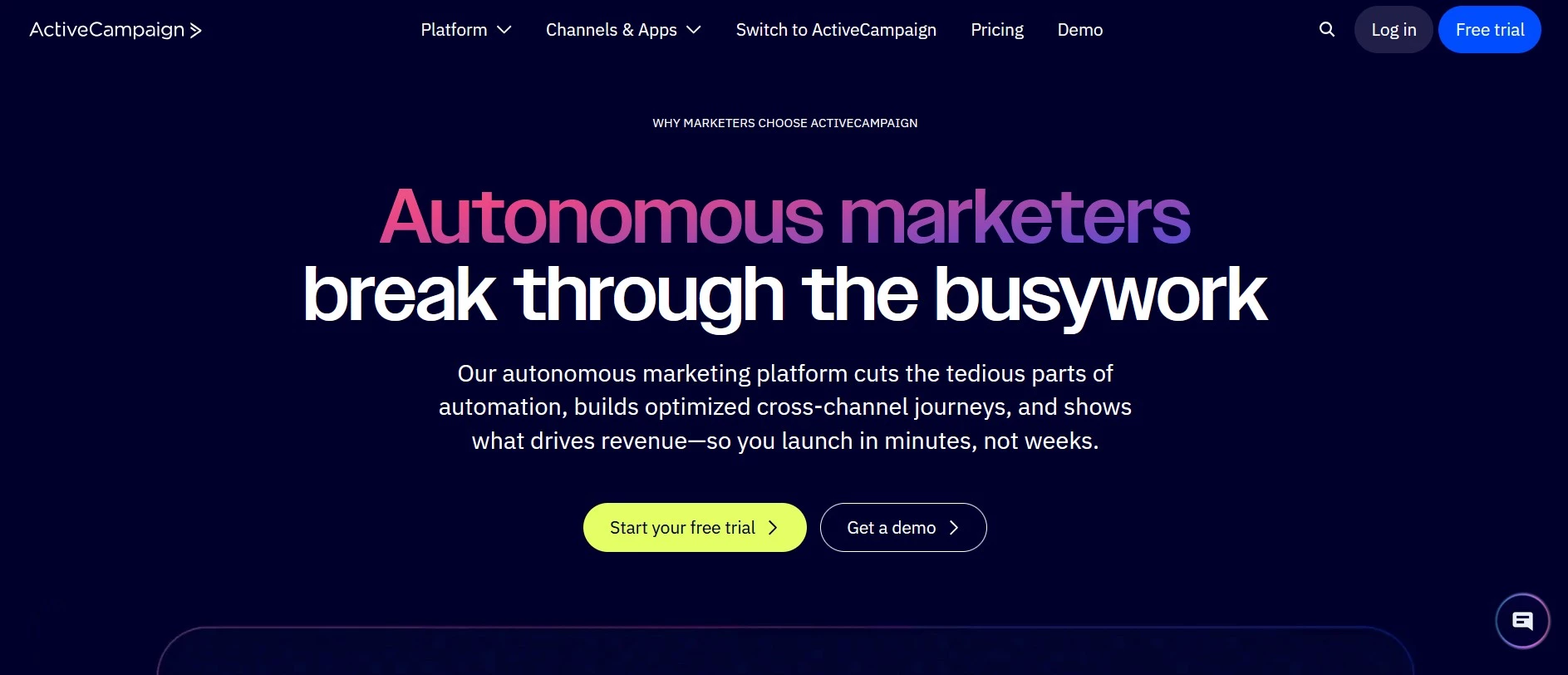
ActiveCampaign is an email marketing and automation platform made for growing businesses that need advanced workflows, segmentation, and CRM integration without moving into enterprise-level pricing.
Pricing:
- 14-day free trial
- Starter: From $15/month (billed yearly)
- Plus: From $49/month (billed yearly)
- Pro: From $79/month (billed yearly)
- Enterprise: From $145/month (billed yearly)
Key features:
- Advanced automation and customer journeys
- Built-in CRM and lead scoring
- Email + SMS marketing capabilities
- Dynamic segmentation and personalization
- Ecommerce, CRM, and app integrations
2. Mailchimp: Best for Small Businesses and Beginners
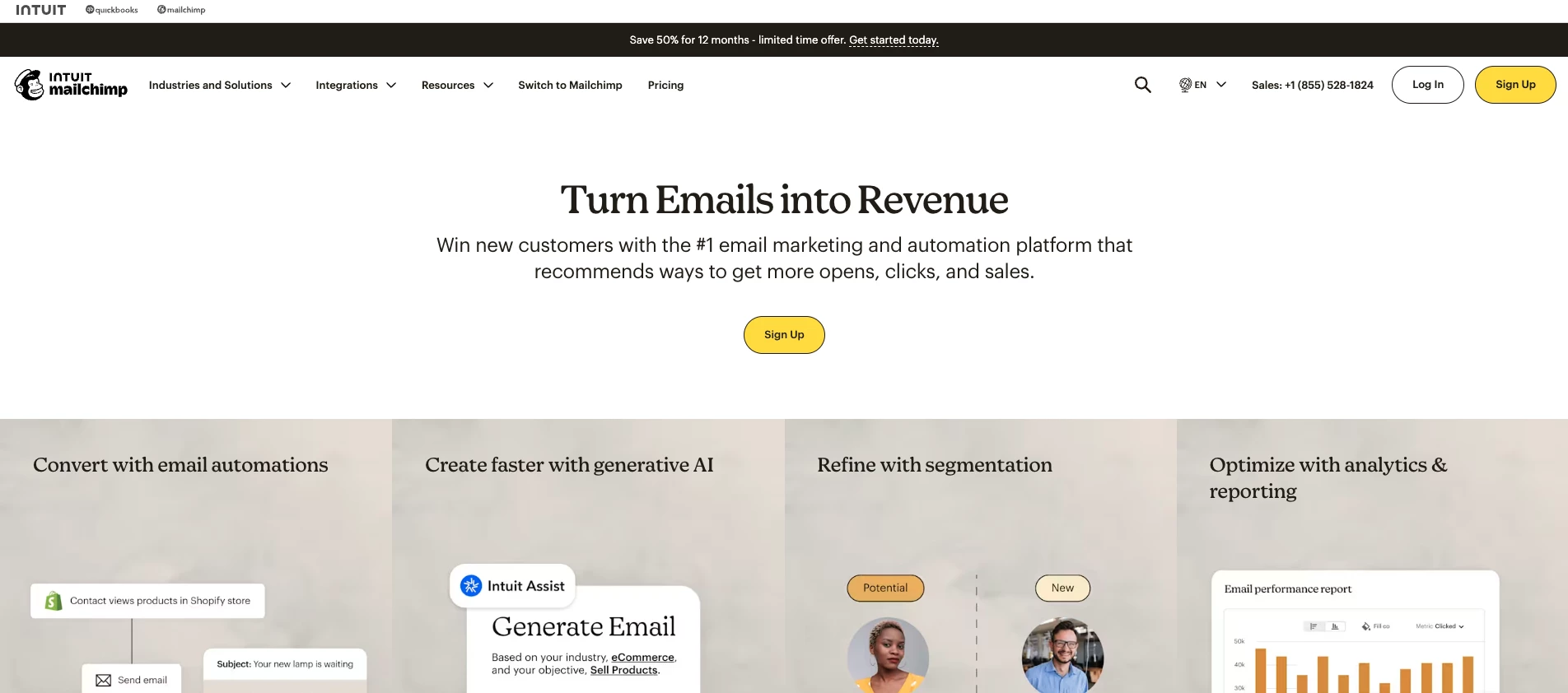
Mailchimp is a widely used email-marketing and automation platform, suitable for startups, small businesses, or growing teams that want an easy-to-use but scalable tool.
Pricing:
- Limited free tier
- Essentials: $6.50/month (billed yearly)
- Standard: $10/month (billed yearly)
- Premium: $175/month (billed yearly)
Key features:
- Drag-and-drop email builder with prebuilt templates
- Audience segmentation, tags & basic CRM capabilities
- Automation workflows and scheduled campaigns (on paid plans)
- A/B testing, reporting
- Landing pages, signup forms, and basic marketing-automation tools
If Mailchimp's pricing curve or feature set isn't right for your team, we've aslo reviewed 10 Mailchimp alternatives worth considering before you commit.
3. Klaviyo: Best for eCommerce and Data-Driven Brands
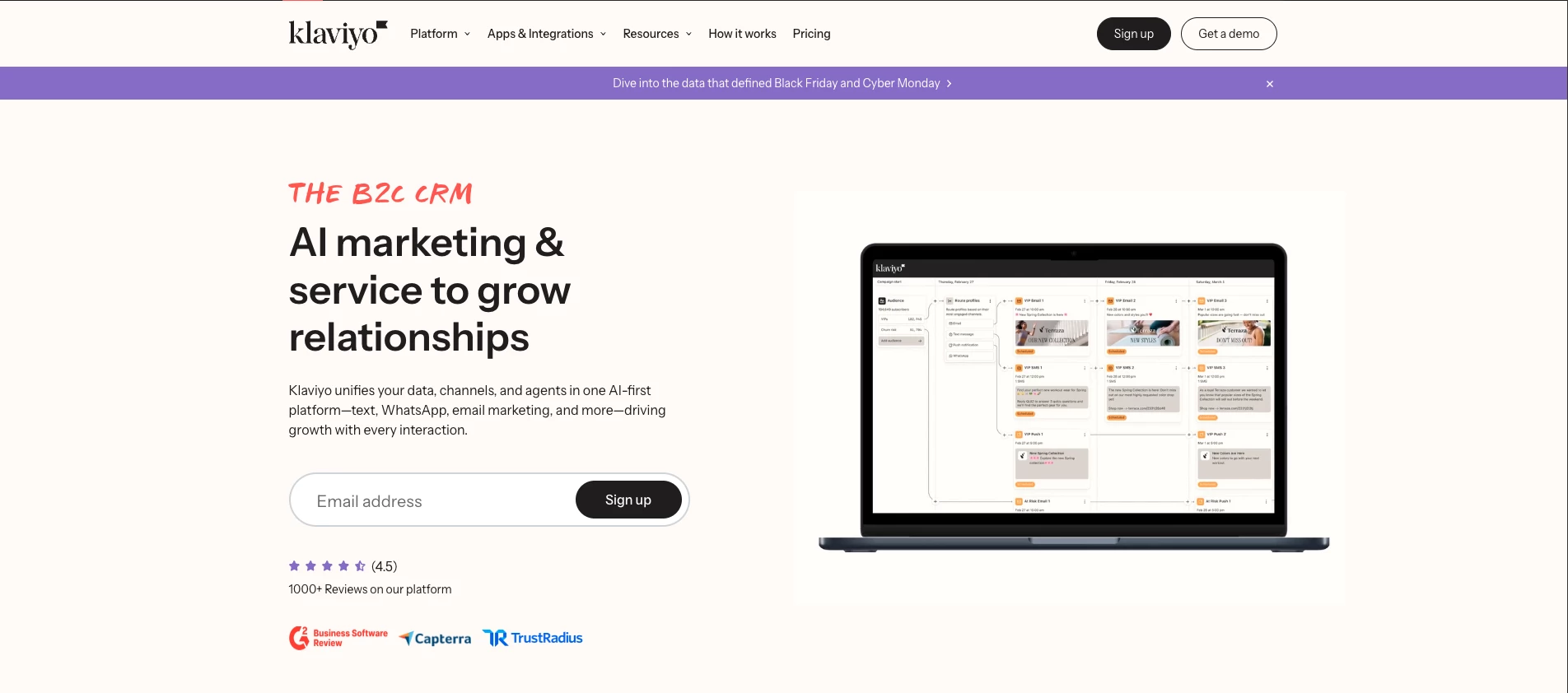
Klaviyo is an email + SMS marketing platform built especially for eCommerce and data-driven brands, combining automation, segmentation, and customer data in one tool.
Pricing:
- Limited free tier
- Email: From $45/month
- Email + mobile messages: From $60/month
Key features:
- Advanced automation workflows and flows
- Deep segmentation and personalization based on behaviour, purchase history, and customer data
- Email + SMS/MMS support
- Prebuilt templates, drag-and-drop builder, subscription forms
- Built-in analytics, customer profiles, revenue attribution and eCommerce integrations
What Full-Time Email Marketers Typically Earn
If you choose the in-house route, salary becomes the biggest cost factor.
Based on the latest Glassdoor data:
- Total pay range: $49K-$88K
- Median pay: $65K
By experience:
- Less than 1 year experience: $59K
- 15+ years experience: $82K
By industry:
- Education industry: $75K
- IT industry: $68K
Geo influence:
- New York specialist: $82K
- Atlanta specialist: $81K
How Much Running Email Marketing In-House Really Costs
To show how quickly in-house costs add up, I’ll walk you through a simple scenario.
Let’s assume a mid-size company wants to run weekly campaigns, build basic automations, manage segmentation, and handle reporting internally.
This requires at least one full-time email specialist and one widely used email platform.
Staffing Costs Behind In-House Email Marketing
A competent in-house hire usually falls between Email Marketing Specialist and Email Marketing Manager.
- Email Marketing Specialist: $77K/year
- Email Marketing Manager: $103K/year
For this example, let’s use the midpoint: $90K/year fully loaded (once you factor benefits, taxes, equipment, and overhead).
Software and Platform Costs for In-House Email Marketing
Many mid-size companies choose ActiveCampaign because it offers strong automation, segmentation, and CRM capabilities without enterprise-level pricing.
- ActiveCampaign Starter: $15/month → $180/year
- ActiveCampaign Plus: $49/month → $588/year
Let’s use the Plus plan for this example.
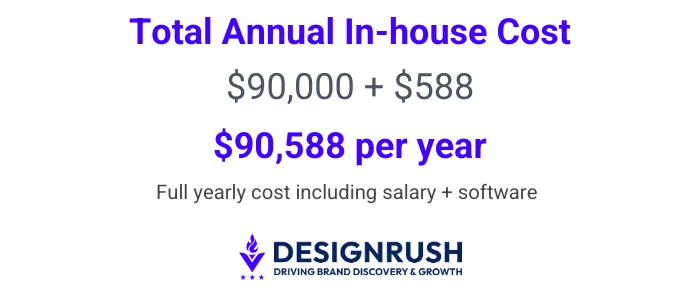
This covers weekly campaigns, basic lifecycle flows, list management, and reporting but does not include design, copywriting, data analysis, or deliverability expertise, which often require additional freelancers or staff.
Let's check on the email marketing freelancer hourly rates.
Email Marketing Freelancers Hourly Rates and Cost
These email marketing freelancer hourly rate shift based on experience and specialization:
- Junior freelancers:$15-$40/hour
- Mid-level:$33-$50/hour
- Senior automation experts: $70-$150/hour
Most brands end up paying:
- Light monthly support: $600-$1,500
- Campaigns + automations: $1,500-$4,000
- Full program management: $4,000-$7,000 per month
Why Many Brands Choose an Email Marketing Agency Instead
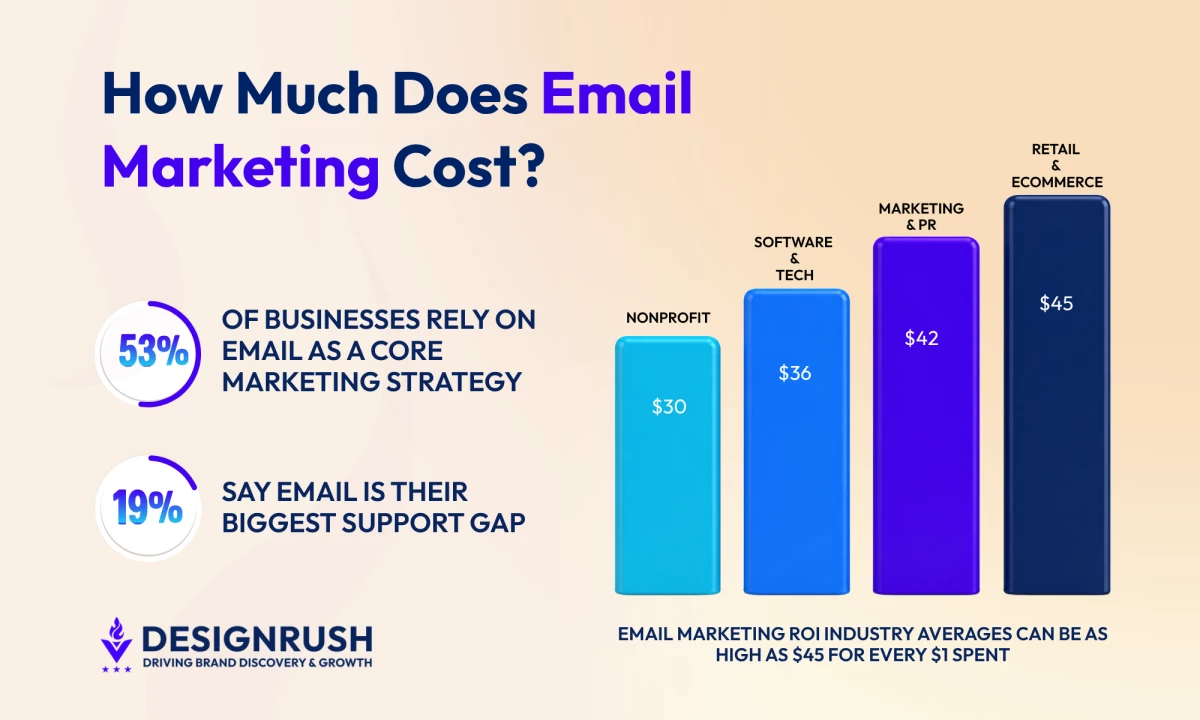
Email remains one of the most widely used marketing channels, with 53% of companies relying on it as a core part of their strategy.
At the same time, 19% say email is the area where they need the most help. This gap highlights how demanding email has become for brands that want consistent performance.
Agencies fill that gap by bringing strategy, design, automation, copywriting, analytics, and deliverability expertise into one operation.
This makes them the most turnkey option for brands that want predictable execution and measurable growth without having to build a full in-house lifecycle team.
How Agencies Structure Email Marketing Pricing
Agency pricing can vary just as much as platform pricing, especially since agencies structure their services in different ways.
Some charge ongoing retainers for full lifecycle management, while others bill hourly, price by project, or tie compensation to performance outcomes.
The structure usually depends on the scope of support, level of strategic involvement, and whether the brand needs one-time execution or long-term email marketing management.
Most email marketing agencies structure pricing using one of four common models:
- Retainer pricing for ongoing lifecycle marketing
- Hourly pricing for specialized email support
- Project-based pricing for one-time email initiatives
- Performance-based pricing tied to marketing results
Each model works best for different business goals, timelines, and levels of operational complexity.
1. Retainer Pricing for Ongoing Lifecycle Marketing
Retainer pricing is the most common structure for ongoing email marketing management.
Under this model, brands pay a fixed monthly fee in exchange for a defined scope of work that usually includes:
- Campaign planning and execution
- Automation management
- Segmentation and testing
- Copywriting and design
- Reporting and optimization
- Deliverability monitoring
Most retainers range from several thousand dollars per month for smaller brands to much higher for complex lifecycle programs.
I see retainers used most often when companies need continuous support rather than one-time execution, especially with eCommerce, SaaS, and subscription businesses where email performance depends on ongoing testing, customer journeys, and retention flows.
This is one reason retainer agreements remain one of the most common forms of email marketing services pricing for brands investing in long-term lifecycle marketing.
2. Hourly Pricing for Specialized Email Support
Some agencies charge hourly rates instead of monthly retainers.
This model is usually used for:
- Consulting
- Deliverability troubleshooting
- Technical audits
- ESP migrations
- Strategy sessions
- Short-term support
Based on a sample of 12 U.S.-based digital marketing agencies listed in DesignRush's agency directory (with email marketing as a named service) we see a divide between generalist or smaller agencies under $75/hour, and established or specialist firms at $100–$199/hour.
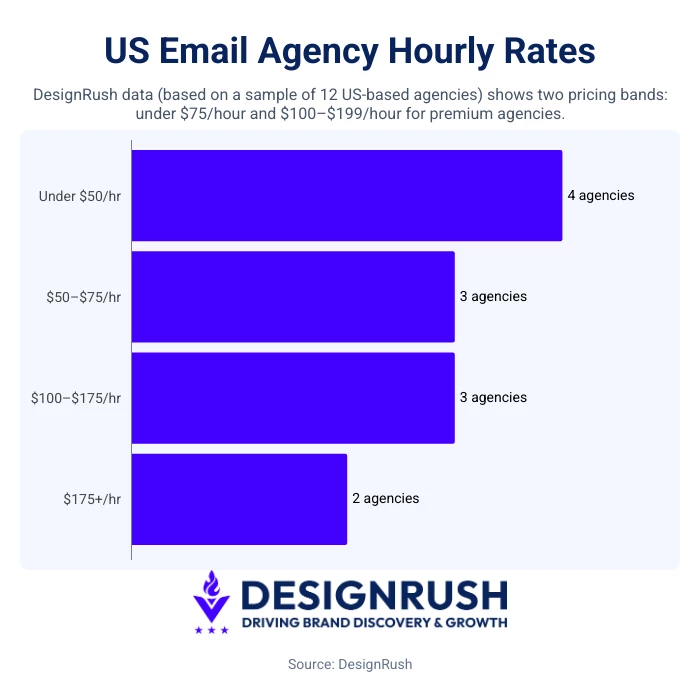 Hourly pricing works best when businesses need expert guidance without committing to a long-term engagement. However, it becomes less efficient for ongoing lifecycle marketing because recurring campaign work, testing, and optimization can quickly exceed predictable monthly costs.
3. Project-Based Pricing for One-Time Email Initiatives
Project-based pricing is usually tied to a clearly defined deliverable with a start and end date.
Examples include:
- Building automation flows
- Designing email templates
- Migrating to a new ESP
- Creating onboarding sequences
- Running seasonal campaign launches
Pricing is determined by scope, timeline, and technical complexity.
I usually see this model used by companies that already have an internal team but need outside expertise for a specific initiative. It’s also common for early-stage brands that want foundational email infrastructure before committing to long-term agency support.
4. Performance-Based Pricing Tied to Marketing Results
Some agencies offer performance-based pricing where compensation is tied to measurable outcomes such as:
- Revenue generated
- Lead volume
- Conversion improvements
- Subscriber growth
This model is less common because attribution in email marketing can become difficult across multiple channels and touchpoints.
Performance agreements also require strong tracking infrastructure and clear benchmarks before work begins.
In most cases, agencies still combine performance incentives with a base retainer to ensure operational costs are covered while aligning incentives around growth.
How Email Marketing Costs Scale by Industry
In my experience, email performance varies widely by industry, and those differences influence how much companies typically invest.
Sectors that see higher returns usually allocate more to segmentation, automation, and ongoing campaign work because the payoff supports the spend. For the formula side of that payoff, here's how to measure email automation ROI properly across each flow.
Here is how ROI shapes cost expectations across key industries:
- Retail and eCommerce brands with high purchase frequency
- Marketing and PR firms focused on audience engagement
- Software and technology companies running lifecycle nurturing
- Nonprofits driven by fundraising and donor retention
Retail and eCommerce Brands With High Purchase Frequency
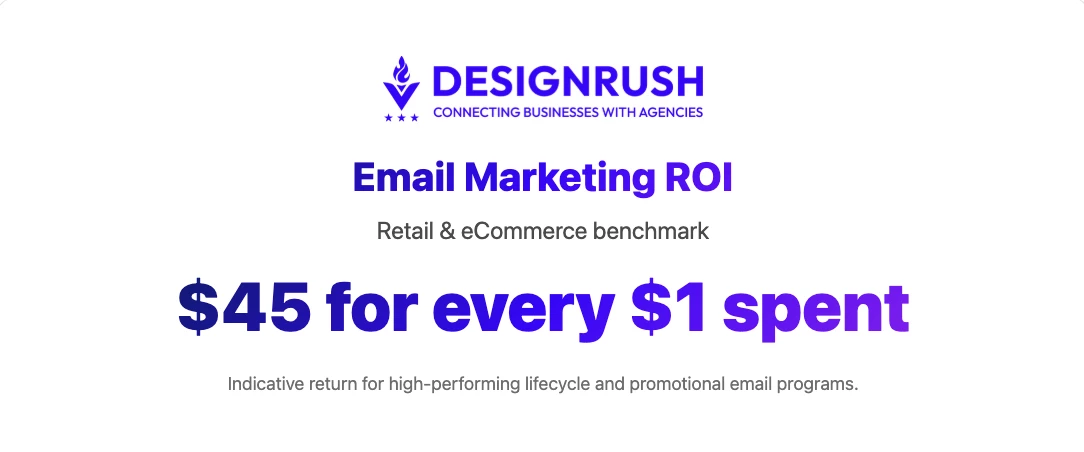 I see the strongest returns in retail, averaging $45 for every $1 spent, per Umbrex.
These brands invest heavily in personalization engines, promotional workflows, and frequent campaigns because targeted offers and behavior-based triggers convert at higher rates.
Marketing and PR Firms Focused on Audience Engagement
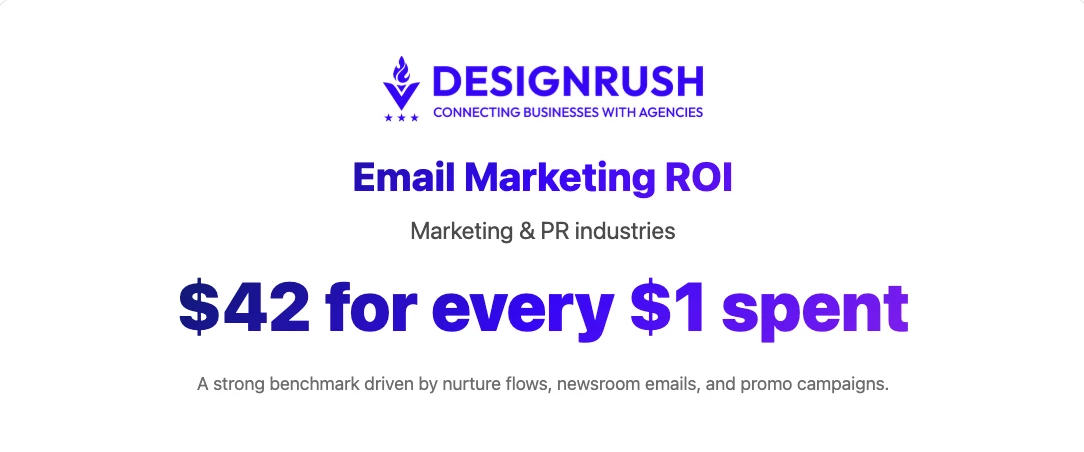 ROI in these industries averages $42 for every $1 spent, supported by disciplined segmentation, optimized content cycles, and continuous testing.
Their costs scale with multi-client operations, deeper automation, and reporting requirements.
Software and Technology Companies Running Lifecycle Nurturing
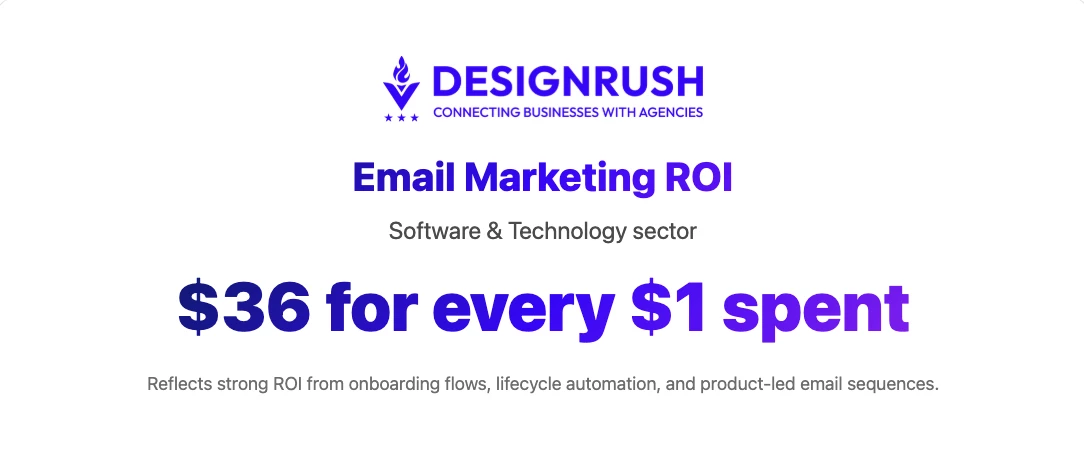 SaaS and tech companies generate about $36 for every $1 spent, driven by educational sequences, product updates, and lifecycle nurturing.
Their budgets rise with CRM integrations, feature-driven automation, and onboarding flows.
Nonprofits Driven by Fundraising and Donor Retention
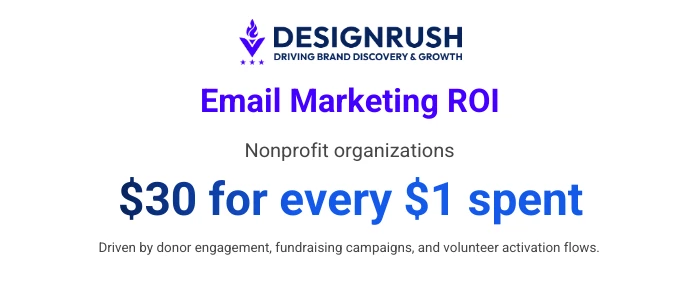 Nonprofits also see around $30 for every $1 invested, per Umbrex, shaped by fundraising cycles, donor nurturing, and event campaigns.
Their budgets tend to prioritize segmentation and periodic high-volume sends.
Where Email Marketing Budgets Go Off-Track
Even the most sophisticated automation or expensive platform cannot generate ROI if emails do not reach the inbox.
As Folderly CEO Vladyslav Podoliako explains:
“Even an email from someone you know can end up in the junk folder. Without proper authentication protocols like SPF, DKIM, BIMI, and DMARC, email service providers cannot verify your identity, increasing the likelihood of emails being marked as spam.”
The same operational gaps and overlooked costs repeatedly cause email budgets to go off-track.
Beyond software and labor, I regularly see brands underestimate secondary costs that directly affect performance and deliverability.
These often include:
- Email list cleaning and verification tools
- Template development and QA testing
- CRM and ecommerce integrations
- Deliverability monitoring software
- Subscriber acquisition costs
- ESP migration support
- Reporting dashboards and attribution setup
- Compliance management for consent and privacy regulations
Individually, these expenses may seem minor, but together they can significantly increase the true operational cost of running a high-performing email program.
In addition, I see the same recurring execution issues surface, namely:
- Underestimating how long automation flows take to build
- Assuming the software will “run itself”
- Ignoring segmentation, testing, and deliverability
- Splitting work across people who are not trained in lifecycle marketing
- Spending heavily on software but not on talent
1. Underestimating How Long Automation Flows Take To Build
The problem:
- Brands think automation is a one-time setup.
- They overlook the time needed for maintenance, testing, and optimization.
- Flows stay outdated for months and performance drops.
My solution:
- I map every flow quarterly and update it based on performance data.
- I assign clear ownership so someone is always accountable.
- I budget time for ongoing testing, not just setup.
2. Assuming the Software Will “Run Itself”
The problem:
- Companies buy top-tier tools and expect them to drive results without operator input.
- Features stay unused.
- Advanced capabilities turn into sunk cost.
My solution:
- I run a monthly feature audit to identify unused options.
- I simplify the stack so every tool serves a purpose.
- I match the platform to the actual skill level of the person using it.
3. Ignoring Segmentation, Testing, and Deliverability
The problem:
- Teams focus on sending campaigns instead of optimizing them.
- Lists decay, deliverability suffers, and results drop without warning.
- Testing is inconsistent or not done at all.
My solution:
- I schedule segmentation and list maintenance twice a month.
- I run consistent A/B tests with only one variable at a time.
- I monitor deliverability weekly and fix issues before they become expensive.
Track consent freshness alongside engagement, as email marketing compliance in 2026 treats inactive contacts as a compliance risk, not just a hygiene one.
4. Splitting Work Across People Who Are Not Trained in Lifecycle Marketing
The problem:
- Tasks get passed between multiple roles.
- No one owns the data structure.
- Mistakes happen and performance becomes unpredictable.
My solution:
- I centralize lifecycle work to one trained specialist or one agency.
- I document every process so nothing depends on tribal knowledge.
- I use clear SOPs that define how campaigns, flows, and data should be handled.
5. Spending Heavily on Software but Not on Talent
The problem:
- Brands invest in expensive platforms.
- Execution gets handed off to junior staff.
- The gap between tool complexity and operator skill creates weak results.
My solution:
- I align platform choice with the skill level of the team.
- I bring in freelancers or an agency when a junior hire cannot support automation.
- I prioritize expert support over unnecessary platform upgrades.
Find More Agency Hiring Resources:
- Questions To Ask a Digital Marketing Agency
- In-House Marketing vs. Agency: Key Pros and Cons
- Digital Marketing Objectives That Drive Real Business Outcomes

Our team ranks agencies worldwide to help you find a qualified partner. Visit our Agency Directory to find top-rated email marketing companies, as well as:
- Top Digital Marketing Agencies
- Top Content Marketing Agencies
- Top SEO Agencies
- Top PPC Agencies
- Top Digital Marketing Agencies In Chicago
Email Marketing Cost FAQs
1. What is the biggest hidden cost in email marketing?
The biggest hidden cost is poor deliverability. If your emails do not reach the inbox, everything else becomes irrelevant. Fixing deliverability issues can take significant time and expertise.
2. How do I know if I am overpaying for email marketing
You are overpaying if your agency or freelancer cannot show measurable improvements in revenue, retention, repeat purchases, or conversion rates within the first ninety days.
The cost of email marketing services should always align with measurable business outcomes, not just campaign volume or software usage.
3. Is free or low-cost email software enough?
It is enough if you only send simple campaigns. It is not enough if you need segmentation, revenue attribution, advanced automation, or CRM integration.