
Video editors used to split into “professional” or “free.” Not anymore. Free video editing apps now offer 4K exports without a watermark, browser tools run multi-track timelines, and captions, background removal, and silence trimming are now standard.
What differs now is the friction between you and a finished cut. So, we compared the 15 best video editing apps in 2026 by the work they're built for: short-form social, professional post, mobile editing, branded templates, and footage sourcing.
Best Video Editing Apps: Key Findings
- Professional editors still rely on tools like Adobe Premiere Pro and DaVinci Resolve, while teams increasingly adopt simpler platforms aligned with specific production needs.
- Platforms like Descript shift video creation away from traditional timelines by allowing teams to edit video through text, significantly reducing production friction.
- Footage sourcing has become part of the editing stack. Shutterstock's AI video generator and Adobe Firefly (inside Premiere Pro) now fill b-roll and cutaway gaps directly, while Canva, Filmora, and Clipchamp Premium bundle stock libraries into the editor itself.
What Should You Weigh Before Choosing a Video Editor?
When comparing video editing apps, users consistently focus on workflow fit rather than feature lists.
Based on expert reviews and real editor discussions, these factors matter most:
- Define your main use case: Social media videos, marketing content, tutorials, and cinematic production require different tools.
- Match the learning curve to your team’s skill level: The best editor is the one you and your team can use efficiently, not the one with the most features.
- Prioritize time-saving workflows: AI tools, templates, captions, and presets help reduce manual work, with generative AI improving content productivity by up to 40%
- Check collaboration capabilities: Teams benefit from shared projects, feedback tools, and brand asset management.
- Make sure performance fits your hardware: Smooth playback and reliable exports matter more than advanced features you rarely use.
- Consider ecosystem and integrations: Choose software that works well with your existing design, audio, or marketing tools.
- Evaluate long-term value: Compare subscriptions, one-time licenses, and feature limitations before committing.
15 Best Video Editing Apps Compared
To compare the best video editing apps in 2026, we looked at how each one performs in the areas that matter most to creators and video teams, including editing controls, platform support, free-tier limitations, AI features, export quality, and long-term cost.
The table below makes it easier to see which are best for short-form social videos, professional post-production, mobile editing, and branded content with ready-made templates.
Tool | Best For | Platforms | Free Version | Starting Price |
All-in-one video and podcast Editing | Web, Windows, macOS | ✅ (limited) | $16/user/mo (annual billing) | |
Stock footage and AI-generated assets | Web | ✅ (limited) | $15/month (annual billing) | |
TikTok, Reels, and Shorts | iOS, Android, Windows, macOS, Web | ✅ | Free; Starts at $19.99/mo | |
Professional post-production | Windows, macOS | ❌ (Trial only) | $22.99/mo | |
Color grading and advanced editing | Windows, macOS, Linux | ✅ | Free; Studio: $295 one-time | |
Mobile video editing | iOS, iPadOS, macOS, Android, ChromeOS | ❌ | $29.99 one-time | |
Mac-based professional editing | macOS | ❌ (Trial only) | $299.99 one-time or $12.99/month via Apple Creator Studio | |
Windows and Android editing | Windows, macOS, iOS, Android | ✅ | $59.99/yr | |
Beginner-friendly desktop editing | Windows, macOS, iOS, Android | ✅ | $19.99/mo | |
Branded marketing videos | Web, iOS, Android, Desktop | ✅ | Free; Canva Pro: $15/mo/user | |
Free, watermark-free editing | iOS, Android, macOS | ✅ | Free | |
Simple editing on Apple devices | macOS, iOS, iPadOS | ✅ | Free | |
Windows users and Microsoft 365 teams | Web, Windows | ✅ | Free; Premium: $9.99/mo | |
First-time mobile editors | iOS, Android | ✅ | Free; Paid plan: $4.99/mo | |
Template-driven content creation | iOS, Android | ✅ | $7.99/mo or $51.99/yr |
1. Descript: Best for All-in-One Video and Podcast Editing
Try Descript if you are a marketing or content team producing podcasts, demos, and explainers, and your editors are writers rather than video specialists.
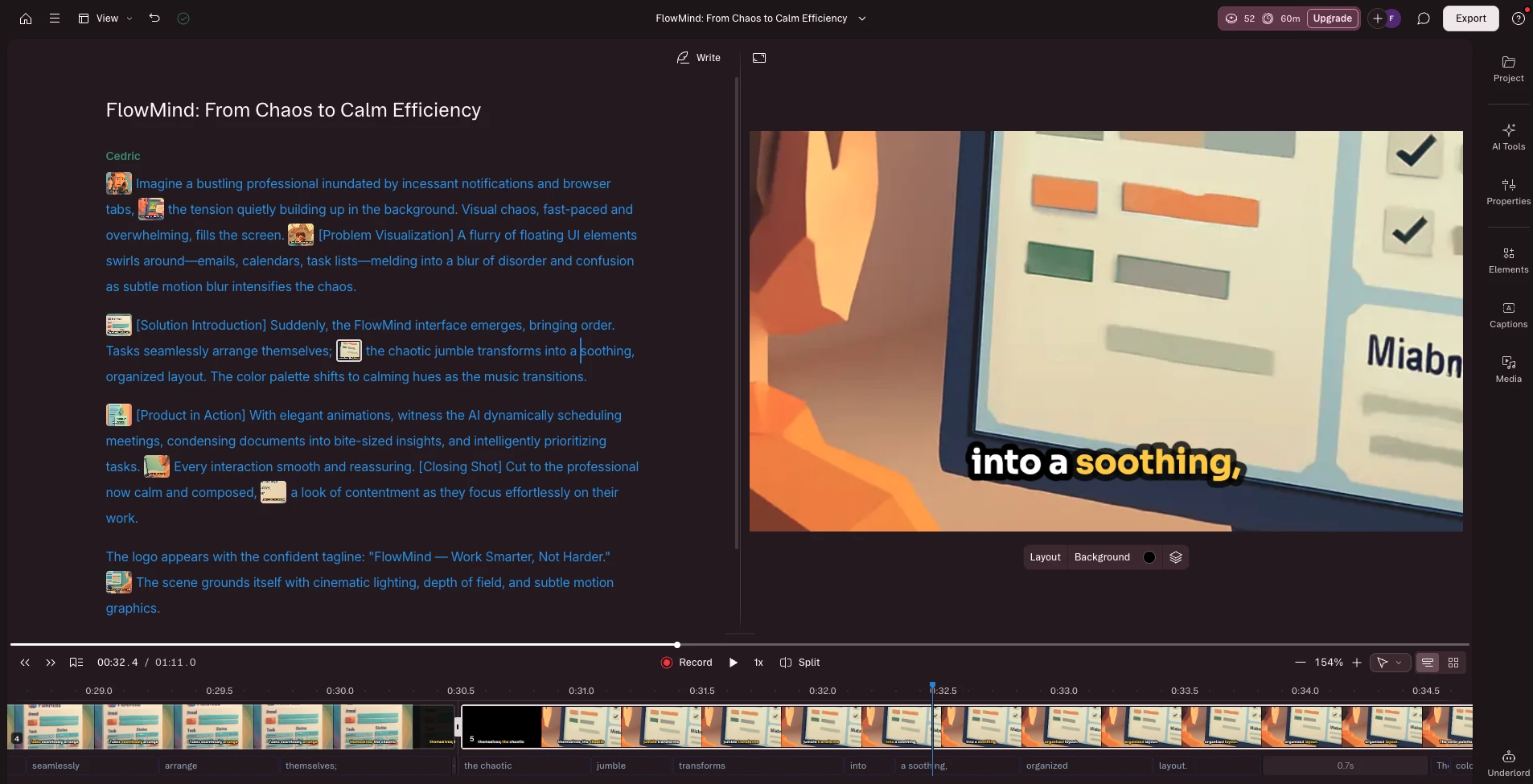
Descript is an all-in-one video and podcast editor built for marketing and content teams. The platform focuses on simplicity and speed by replacing complex timelines with a familiar workflow.
Descript lets you edit video the same way you would edit a Google Doc, turning video production into a writing and editing process instead of a technical task.
From recording to publishing in one workflow, teams can create polished content without juggling multiple tools or relying on specialized editing skills.
Key Features
- Edit video by editing text through transcription-based editing
- Built-in screen recording and webcam capture
- AI cleanup tools including filler word removal and Studio Sound
- Overdub voice correction for fixing narration without re-recording
- Automatic captions and short-form clip creation
- Shareable drafts and collaborative review workflows.
Pricing
- Plans starting at $16/month for the annual billed monthly plan.
Pros
- Edit video like a document
- True all-in-one video and podcast editor
- Ideal for demos, explainers, and educational content
- Built for collaboration and fast iteration
- AI tools reduce editing and cleanup time
- Faster turnaround from recording to publishing
Cons
- Not intended for cinematic or advanced visual effects editing
- Precise cuts and detailed timeline work restrictive
- Occasional AI mistakes
Get started with Descript for free.
2. Shutterstock AI Video Generator: Best for Sourcing and Generating Footage to Edit
Try Shutterstock if your bottleneck is footage, including the b-roll, establishing shots, and cutaways you need to finish an edit, with a clear route to commercial use.
While Shutterstock is not a video editor, it sits one step earlier in the process, where you need footage, generated or licensed, that you can publish.
Shutterstock is the largest licensed footage library in the category, and its AI video generator also generates video from a prompt or a reference image.
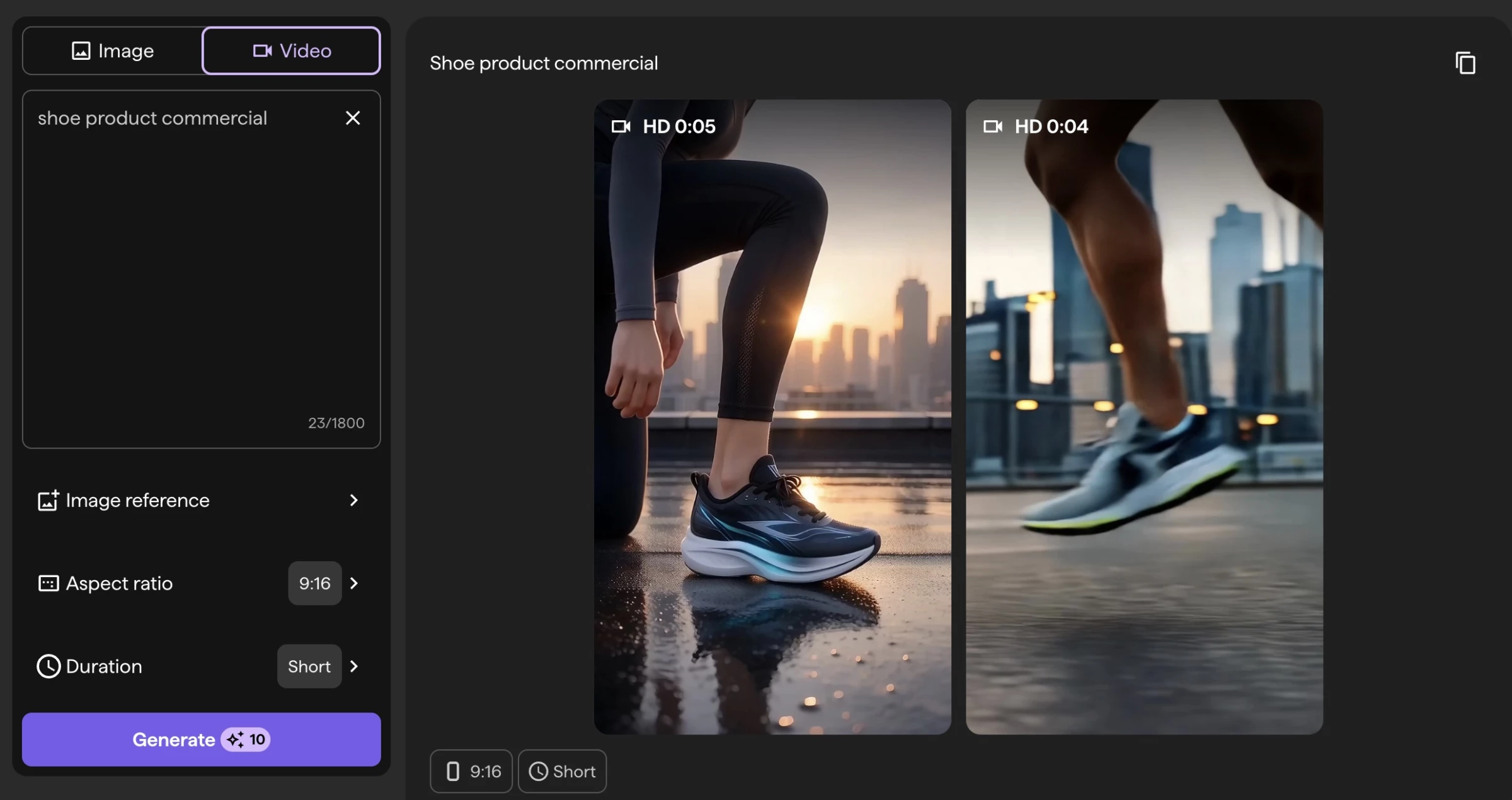
Image-to-video is the most immediately useful path for brand work. Take a product shot, a campaign still, or a frame you already own, set it as the first frame, and describe how it should move.
On commercial use, the detail matters. Shutterstock confirms that licensing for commercial use is available for GenAI content, but it comes with an activated licensing product rather than being bundled into generation access itself.
Shutterstock is ideal for agencies and brand teams that need to pitch, storyboard, or previsualize video concepts quickly, and that already rely on licensed stock for finished work.
Other Notable Features
- Content Reference carries a specific person or object across multiple generated shots
- Enhance Prompt refines a rough description before generating
- Preset styles and visual reference inputs to guide look and feel
- AI search assistant for finding library footage using natural language
- AI image generation across GPT Image 2, Gemini 3 Pro Image, Imagen 4, Flux 2, and DALL·E 3
- Image Editor for stills: Magic Brush, background and object removal, smart resize, border extension
Pricing (billed annually)
- GenAI Subscription: $15/month
- Unlimited Plus: $69/month (100 AI generation credits per month)
- Teams and Enterprise: Custom pricing
Pros:
- Fills edit gaps: b-roll, establishing shots, and cutaways
- Image-to-video animates existing product/brand stills
- Aspect ratio control (vertical to widescreen)
- Multiple models (Seedance 2.0, Runway, Veo) auto-selected per prompt
- Clear commercial licensing pathway via Shutterstock
Cons:
- Not a traditional editor – no timeline or clip assembly; the editing tools are built for stills
- Quality varies by prompt/model and iterating eats your prompt allowance
Get started with Shutterstock.
3. CapCut: Best Video Editing App for TikTok, Reels, and Shorts
Try CapCut if you are a social team publishing daily short-form video and speed to post matters more than granular control.
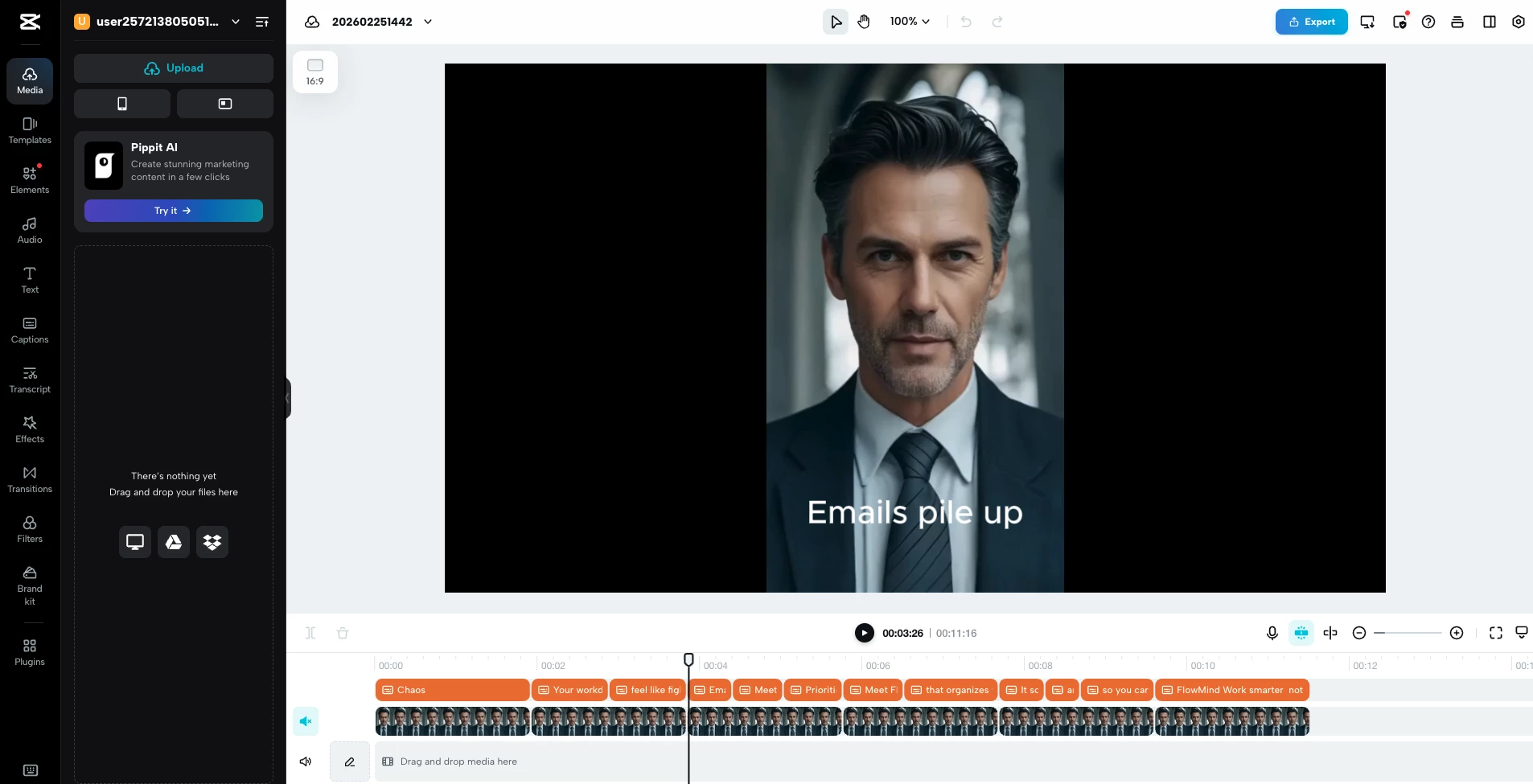
CapCut focuses on one thing extremely well, and that is helping people turn raw clips into engaging social videos fast.
Built alongside TikTok, it removes much of the technical friction of traditional editing and replaces it with templates, automated captions, effects, and AI tools designed for short-form storytelling.
Marketing teams often choose CapCut because it delivers polished results quickly, even without editing experience, making it one of the most widely adopted tools for modern social video production.
Key Features
- Template-based editing for Reels, Shorts, and TikTok videos
- Automatic captions and text animation tools
- AI background removal and smart effects
- Built-in music, transitions, and visual effect libraries
- Mobile, desktop, and browser editing workflows
- Direct export optimized for social media platforms
- Drag-and-drop editing with a beginner-friendly interface
Pricing
- Free Plan with most editing features included
- CapCut Pro: Starting at $19.99 per month for individual users.
Pros
- Powerful free version with surprisingly advanced tools
- Extremely easy learning curve for beginners
- Designed specifically for social media content workflows
- Large library of templates, music, and effects
- Fast editing ideal for high-frequency posting
Cons
- Limited advanced editing control
- Not ideal for long-form or complex projects
- Less export and format control than professional editors
4. Adobe Premier Pro: Best Video Editing Software for Professionals
Try Premiere Pro if you are an agency or in-house team with a dedicated editor who needs deep timeline control and a path into After Effects and Frame.io.
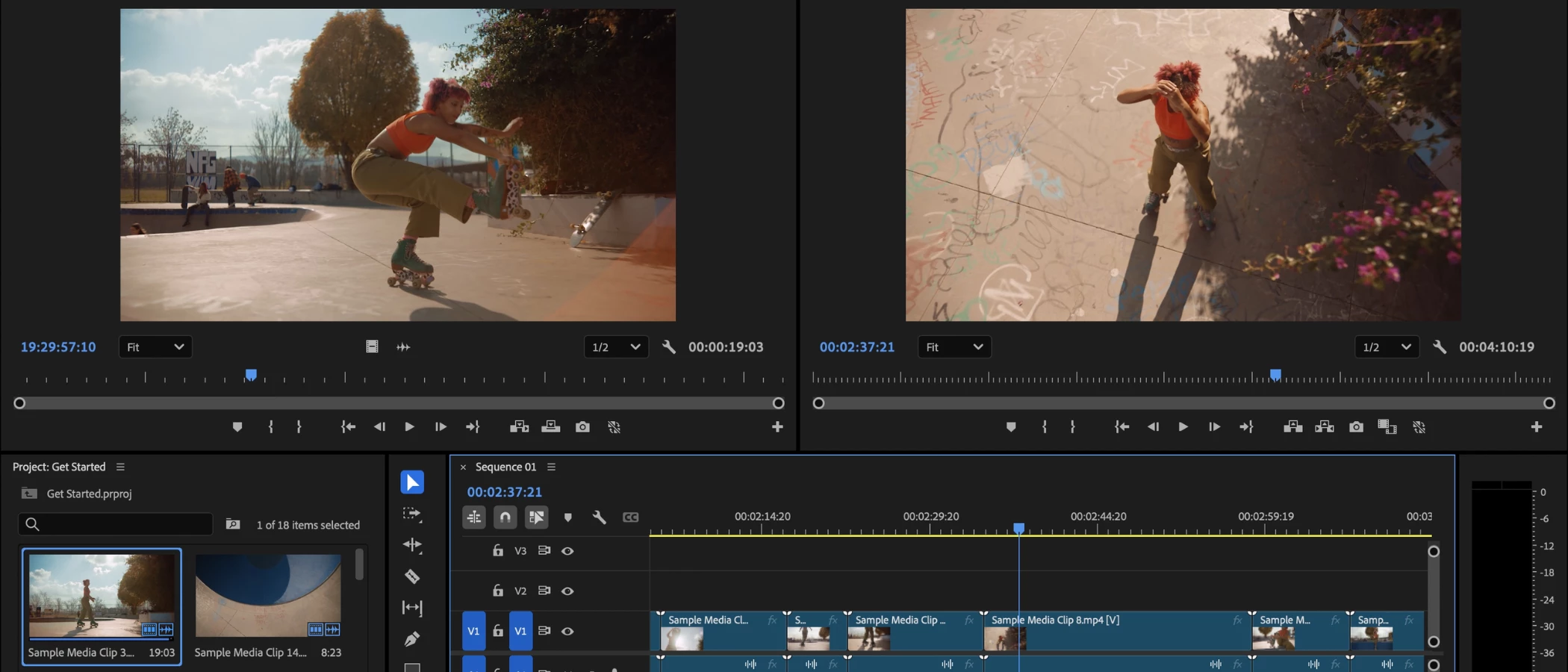
Adobe Premiere Pro is the industry-standard video editing software used by filmmakers, agencies, YouTubers, and production studios worldwide.
Teams like it because it adapts to how they work, handles almost any format you throw at it, and connects smoothly with other Adobe apps when projects get more demanding.
Adobe also offers Adobe Premiere on iPhone. It’s a separate, free, mobile-first app, with its wn multi-track timeline with frame-accurate trimming, unlimited 4K exports with no watermark, auto-generated captions, speech enhancement, and one-tap Auto reframe for turning landscape footage vertical.
Projects transfer from the phone into Premiere Pro on desktop when a cut needs finishing, though the handoff only runs in that direction. It is iPhone and iPad for now, with an Android version in development.
Key Features
- Advanced color correction and audio mixing
- AI tools like Generative Extend and visual clip search
- Automatic captioning and translation for over 27 languages
- Multi-camera editing and motion graphics workflows
- Seamless integration with After Effects, Photoshop, and Audition
- Cloud collaboration via Frame.io and Creative Cloud storage
Pricing (billed annually)
- Plans starting at $22.99/month
Pros
- Industry standard used in professional production
- Extremely flexible and customizable workflow
- Powerful AI editing features improving speed and automation
- Strong ecosystem with other Adobe Creative Cloud apps
- Regular updates included in subscription
Cons
- Subscription-only pricing model
- Steep learning curve for beginners
- Requires a powerful computer for smooth performance
- Can feel complex for simple social media editing
Start a 7-day free trial of Premiere.
5. DaVinci Resolve: Best for Color Grading and All-in-One Post-Production
Try DaVinci Resolve if you are a production team that wants editing, color, VFX, and audio post in one application without a subscription.
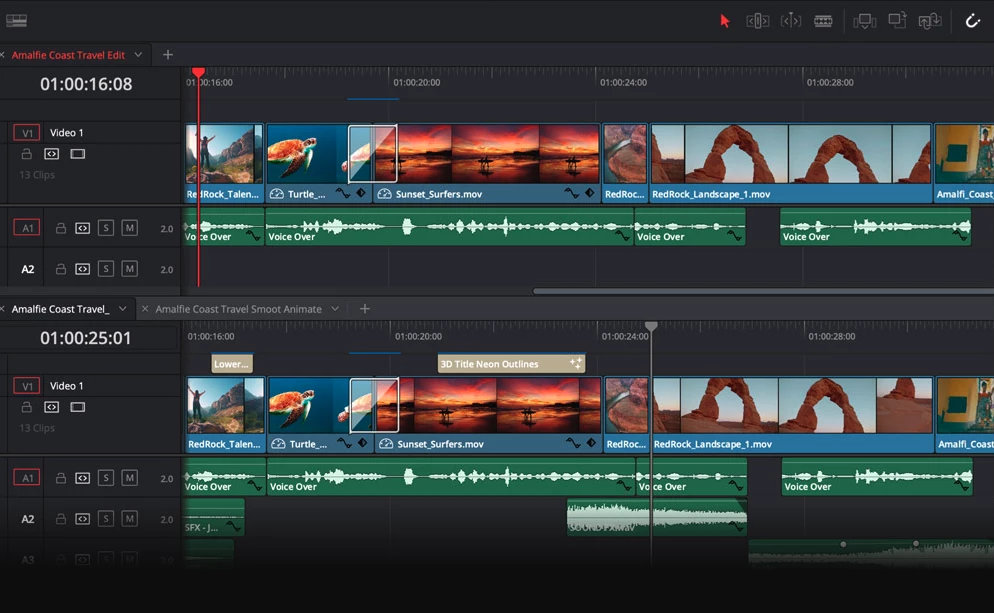
DaVinci Resolve is the rare video editor that combines professional editing, Hollywood-level color grading, visual effects, and audio post-production into a single application. On top of that, it offers most of it for free.
Resolve removes the need to jump between multiple programs, making it especially powerful for production teams who want a complete post-production workflow in one place.
Key Features
- Industry-leading color grading tools
- Built-in VFX and motion graphics through Fusion
- Advanced audio production suite through Fairlight
- Dual timeline editing workflow
- AI-assisted tools and HDR grading support
- Multi-user collaboration capabilities
Pricing
- DaVinci Resolve 20: Free
- DaVinci Resolve Studio 20: Starting from $295
Pros
- Powerful free professional editor
- Best-in-class color correction used in film and TV
- No subscription required
- Complete post-production workflow in one app
- Stable performance praised by editors switching from other tools
Cons
- Steeper learning curve for beginners
- Requires strong GPU performance for smooth editing
- Interface can feel complex because multiple professional tools are combined
- Overkill for quick social media edits
Download DaVinci Resolve for free.
6. LumaFusion: Best Mobile Video Editing App Overall
Try LumaFusion if you are editing on a phone or tablet and want desktop-style control without moving to a desktop.
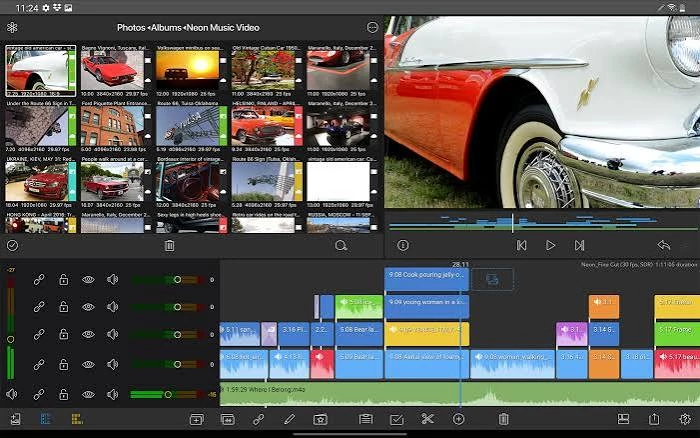
LumaFusion is the app that closed the gap between mobile and desktop editing.
It's a genuine multi-track editor with keyframing, real audio tools, and frame-accurate trimming, built touch-first rather than ported down from a desktop interface.
It's also the only tool in this list that runs across iPhone, iPad, Mac, Android, and ChromeOS, which makes it the practical answer for teams whose editors aren't all on the same platform.
LumaFusion is ideal for mobile-first editors, iPad-based creators, and teams that need real editing control on location before finishing on desktop.
Other Notable Features
- Multicam Studio for syncing and switching between multiple camera angles (iOS only)
- Editing directly from external drives without importing
- Six configurable interface layouts, portrait or landscape
- SVG shape import and preset shape library
- Storyblocks royalty-free library access via Creator Pass
Pricing:
- One-time purchase: $29.99
Pros:
- Multi-track timeline with frame-accurate editing
- Runs on iOS, iPadOS, macOS, Android, and ChromeOS
- Core app is a one-time purchase, not a subscription
Cons:
- No free tier or free version – trial-free purchase
- Steeper than template-led apps for casual users
7. Final Cut Pro: Best Video Editing App for Mac
Try Final Cut Pro if you are a Mac-based team producing video regularly and you want fast exports and a one-time purchase instead of a subscription.
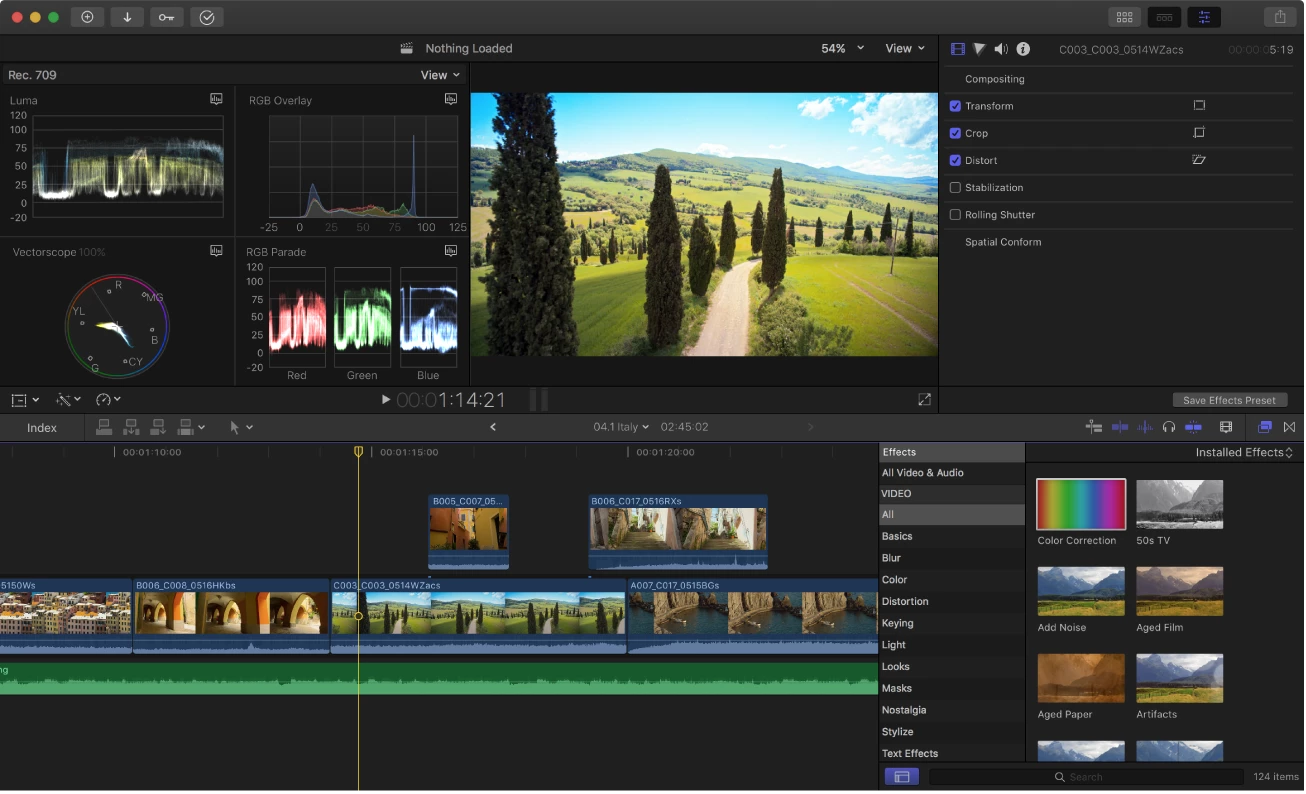
Final Cut Pro stands apart because it approaches editing differently from traditional video software.
Instead of managing dozens of tracks like traditional video software, its Magnetic Timeline automatically keeps clips organized as you work, so you spend less time fixing the timeline and more time actually editing.
Because Apple built it specifically for Mac hardware, playback stays smooth and exports finish quickly, which makes Final Cut Pro a popular choice for teams producing video regularly and trying to keep projects moving.
Apple has also introduced Apple Creator Studio, a new subscription bundle that includes Final Cut Pro alongside other professional creative tools such as Logic Pro, Motion, Compressor, Pixelmator Pro, and MainStage.
The bundle also adds premium templates and content across Apple productivity apps like Keynote, Pages, Numbers, and Freeform.
Key Features
- Native optimization for Apple Silicon performance
- Advanced color grading and stabilization tools
- Multicam editing for syncing multiple camera angles
- Automatic transcription and caption generation
- High-speed rendering and background exporting
- Integrated motion graphics and plugin ecosystem
Pricing
Final Cut Pro remains available as a one-time purchase for $299.99 on the Mac App Store, which includes ongoing updates.
Apple also offers access through the Apple Creator Studio subscription, which bundles Final Cut Pro with other Apple professional creative tools.
- $12.99 per month or $129 per year (after a one-month free trial)
- $2.99 per month or $29.99 per year for students and educators
Pros
- Exceptional performance on Mac hardware
- One-time purchase with no subscription
- Clean interface reduces project management friction
- Reliable playback with high-resolution footage
Cons
- Mac-only software restricts cross-platform collaboration
- Magnetic Timeline requires adjustment for editors used to track-based systems
- Smaller integration ecosystem than Adobe Creative Cloud
- Advanced compositing and VFX workflows often require third-party tools
Download Final Cut Pro from App Store.
8. PowerDirector: Best Prosumer Video Editor for Windows and Android
Try PowerDirector if you have outgrown a free or template-led editor, want multi-track control on Windows or Android, and don't want a professional subscription.
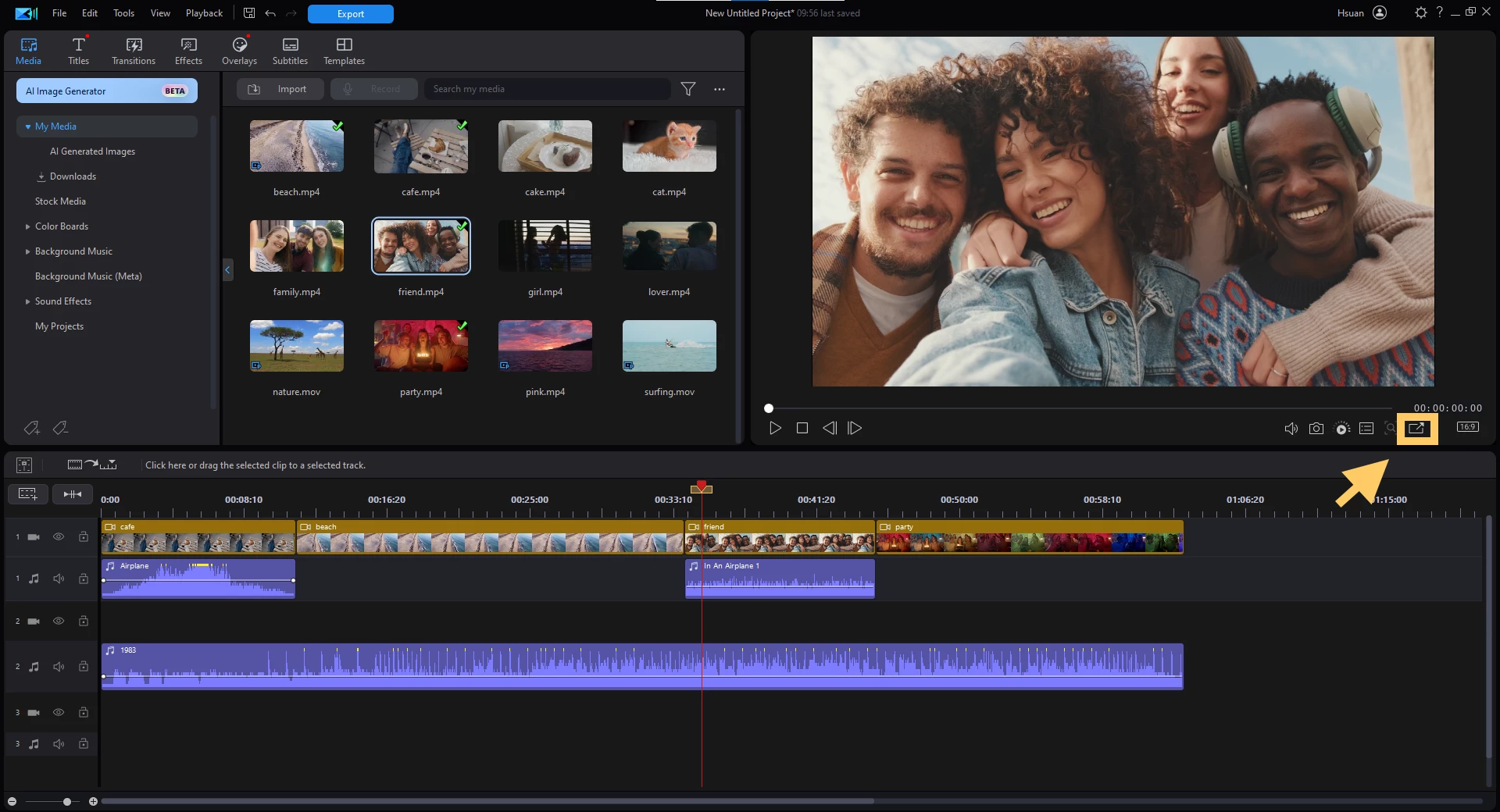
CyberLink PowerDirector sits in the gap most growing teams get stuck in: the middle ground between free, beginner-level editors on one side and professional software on the other.
It gives you powerful editing tools, AI automation, and a large effects library without the steep learning curve of traditional pro editors.
Instead of spending hours fine-tuning every detail, your team can assemble, refine, and export professional-looking videos quickly, which makes it especially appealing for those producing content on tight timelines.
Key Features
- Multi-layer timeline editing with guided workflow tools
- AI-powered video enhancement and automation features
- Large built-in library of effects, transitions, and templates
- 4K and 8K video editing support
- Motion tracking, stabilization, and scene detection
- YouTube and marketing-ready export presets
- Cross-device editing across desktop and mobile
Pricing
- Free version available (with watermark)
- PowerDirector 365: $59.99/year
Pros
- Good balance between ease of use and editing control
- Faster learning curve than professional editors
- Large built-in effects and template library
- Smooth performance for most editing workflows
- Strong option for recurring content creation
Cons
- Performance slowdowns on large or complex projects
- Limited customization compared with professional software
- Some AI tools require additional credits
Download PowerDirector for free.
9. Filmora: Best for Template-Led Branded Content Production
Try Filmora if you are a small team on Windows that wants polished-looking video from templates without learning a professional editor.
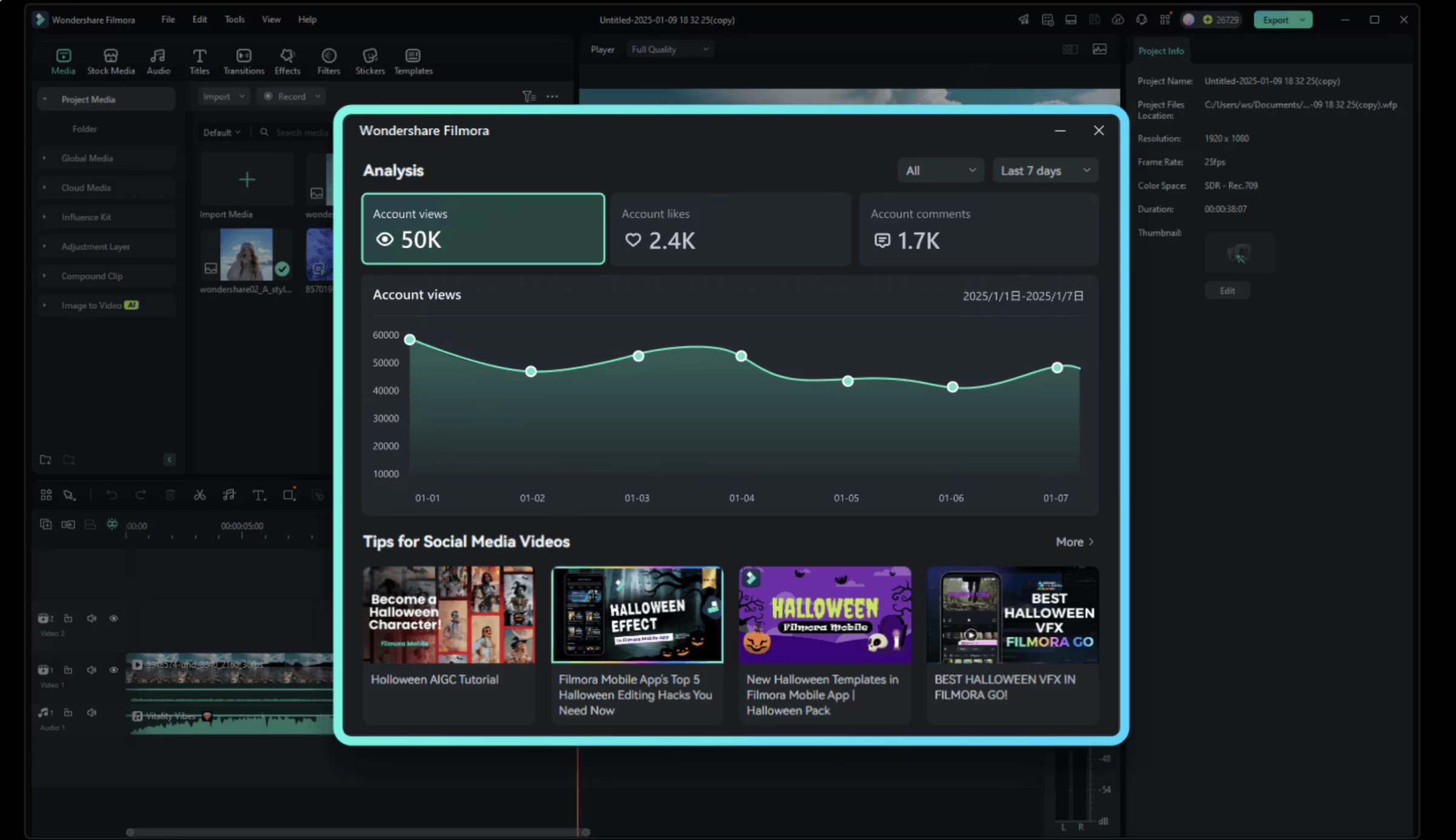
Wondershare Filmora stands out as a creativity-first video editor. It gives you ready-made visual styles, effects, titles, and motion elements that help videos look designed from the first edit.
The interface keeps editing approachable, but the real appeal comes from how quickly teams can turn basic footage into visually polished content without building graphics or animations from scratch.
Filmora also automates the assembly itself. Instant Mode takes your clips, drops them into a chosen template, and auto-creates the edit for you to refine. It’s useful when the output is a recurring format rather than a one-off, and available on Windows, macOS, and mobile.
Key Features
- Drag-and-drop timeline editing with a simplified interface
- AI tools including auto captions, background removal, and smart editing
- Motion tracking, keyframing, and chroma key effects
- Instant Mode for auto-generating an edit from a template and your clips
- Ready-made templates and visual presets for fast styling
- Cross-platform editing on Windows, macOS, and mobile
Pricing
- Free version available (with watermark)
- Pricing plans start at $49.99/year
Pros
- Extremely easy interface for new editors
- Huge creative asset and effects library
- Helps beginners create polished videos quickly
- Runs well even on average computers
Cons
- Limited advanced control compared with professional editors
- Processing and export speeds can feel slow on larger projects
- Free version exports include a large watermark
- Interface customization remains limited
10. Canva Video Editor: Best for Brand-Consistent Marketing Content
Try Canva if you are a marketing team that already manages brand assets in Canva and needs non-designers to produce on-brand video.
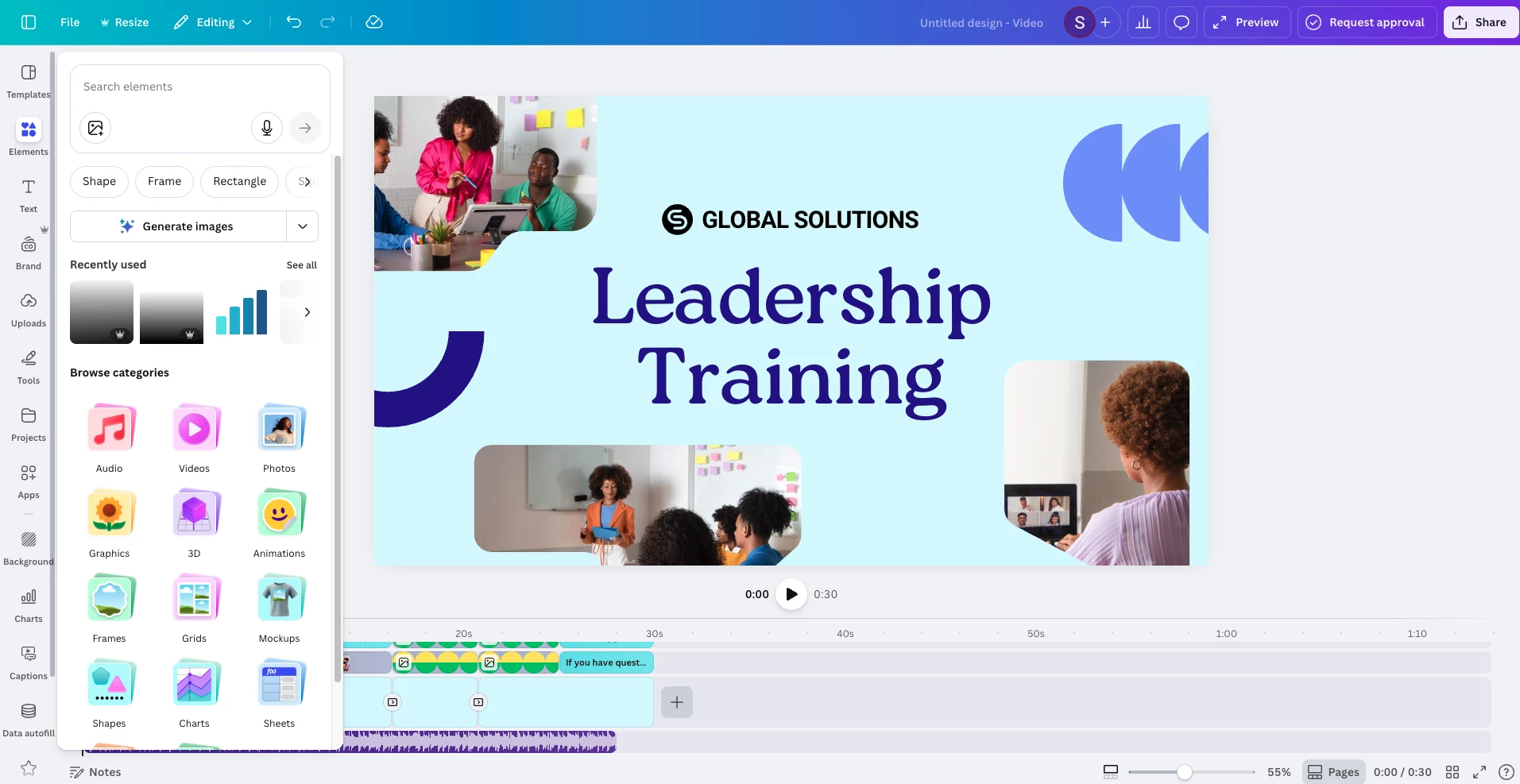
Canva Video Editor makes video creation feel like a natural extension of everyday marketing work. You can build videos using the same templates, brand assets, and drag-and-drop tools they already use for presentations, social posts, and design projects.
Instead of learning traditional editing software, your team can assemble scenes visually, apply branding instantly, and publish content quickly, which makes Canva especially useful when video becomes part of daily campaign production.
Key Features
- Drag-and-drop video editing inside Canva’s design workspace
- Large template library for ads, presentations, and social videos
- Built-in stock video, music, images, and graphics library
- Brand kits for colors, fonts, and visual consistency
- Browser-based editing with no software installation
- Direct publishing to social platforms and presentations
Pricing
- Canva Free available with core video editing features
- Canva Pro: $120/year/user
Pros
- Extremely easy to learn with minimal training required
- Massive template and stock media ecosystem
- Strong collaboration features for teams and marketing workflows
- Enables fast production of branded content
- Works across web, desktop, and mobile without setup
Cons
- Limited advanced editing control compared to dedicated video editors
- Minimal control over export settings like bitrate or codec
- Performance may slow with larger video projects
- Many premium templates and assets require a paid plan
Start for free or check the Canva Pro Free Trial.
11. VN Video Editor: Best Free Video Editing App With No Watermark
Try VN if you need genuinely free, watermark-free exports and you're editing on iPhone, Android, or Mac.
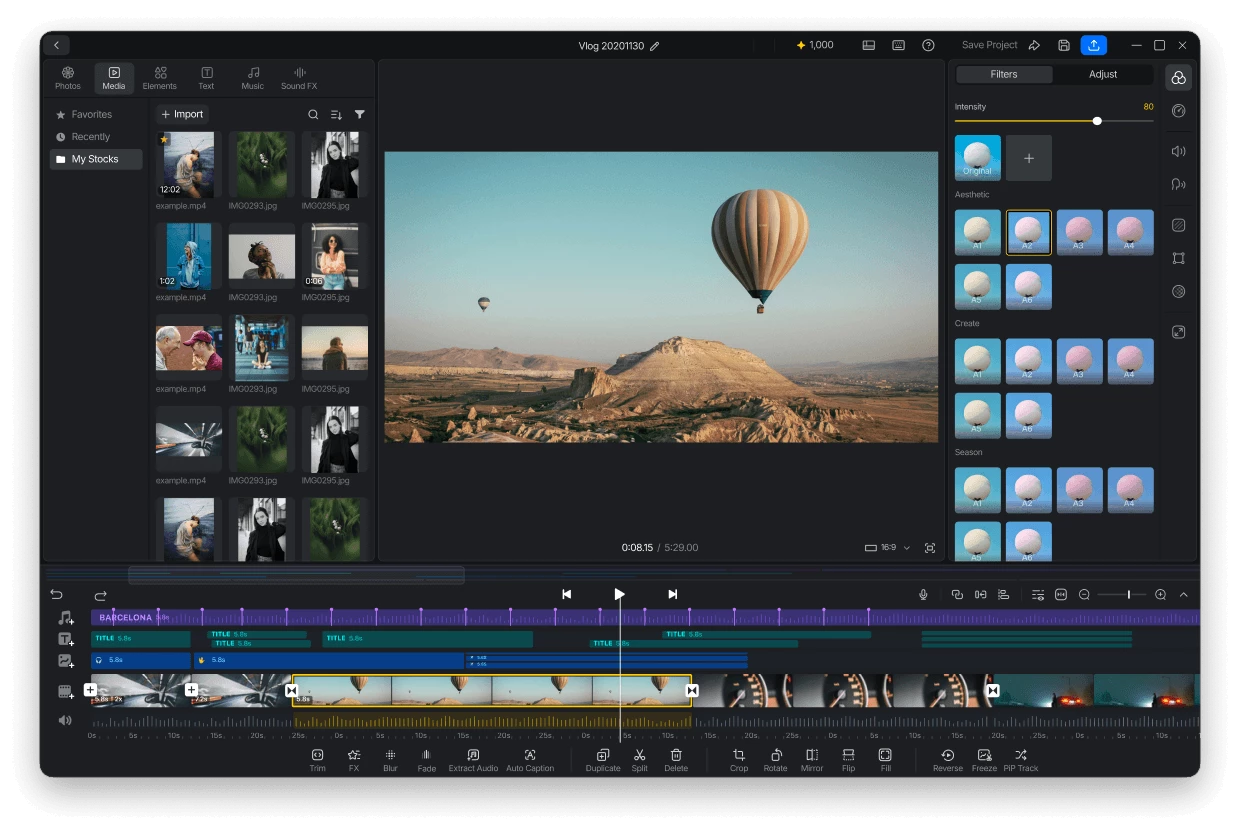
VN, also known as VlogNow, occupies a position almost nothing else in this category does. It's free, it doesn't watermark exports, it doesn't gate core features behind a subscription, and it still offers a real multi-track timeline.
VN offers a multi-track timeline where video, audio, text, stickers, and overlays layer with precision, and the timeline zooms to fine increments for frame-accurate work, which are features usually reserved for desktop software.
VN is ideal for creators and small teams publishing across several platforms daily, where a watermark or a per-export paywall would be an ongoing cost.
Other Notable Features
- Timeline zoom to fine sub-second increments for frame-accurate trimming
- Six speed-ramp presets comparable to desktop editors
- Chroma key for green-screen work at no cost
- Cross-device project continuity across iOS, Android, and Mac
- Community-published filters and effects
Pricing
- Free
Pros
- Genuinely free with no watermark on exports
- Picture-in-picture, masking, and blending modes
- Multi-track timeline
Cons
- No native Windows version
- Fewer trend-matched templates than CapCut
Get started with VN Video Editor for free.
12. iMovie: Best Free Video Editing App for Mac and iPhone
Try iMovie if you are on Apple hardware, want a free editor with nothing to pay for, and would like the option of letting the app assemble a first cut for you.
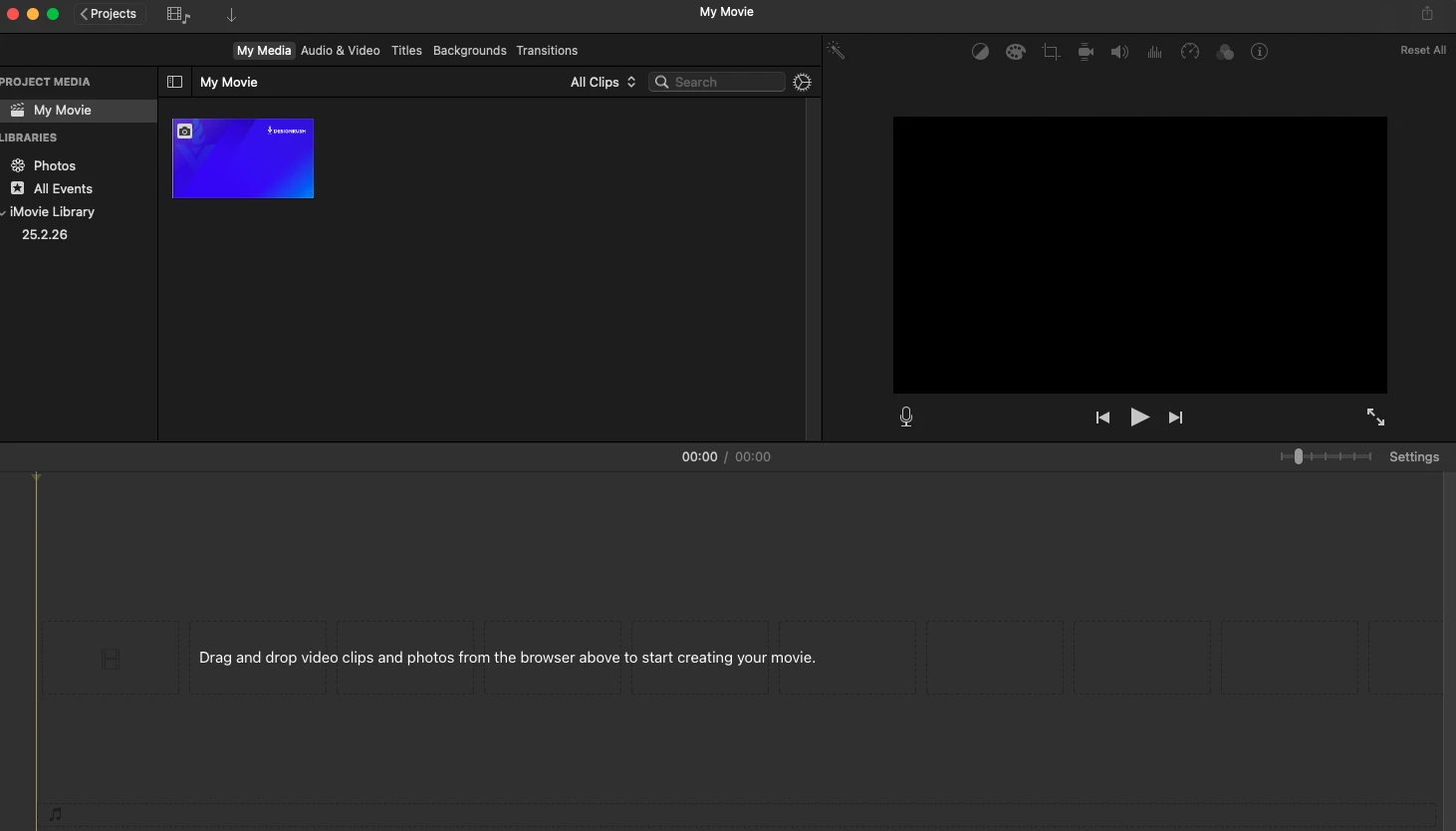
iMovie works because it removes almost every barrier to starting video editing. Apple designed it to feel simple from the first launch, with drag-and-drop editing, ready-made trailers, and automatic styling that helps you turn clips into finished videos quickly.
iMovie is also the only free tool here that will make the cutting decisions for you.
Magic Movie, on iPhone and iPad, identifies the usable parts of a selected album or group of clips and automatically builds an edit with titles, transitions, and music in one of more than 20 styles, then hands you a simplified shot list you can rearrange, trim, or take further.
Key Features
- Simple drag-and-drop timeline editing
- Magic Movie for automatic edits and Storyboards for guided shot lists (iPhone and iPad)
- Built-in trailer templates and automatic video styles
- Seamless editing across Mac, iPhone, and iPad
- Direct sharing to social platforms and Apple apps
- Integration pathway into Final Cut Pro workflows
Pricing
- Free with all Mac, iPhone, and iPad devices
Pros
- Completely free on Apple devices
- Extremely easy learning curve for beginners
- Stable performance optimized for macOS and iOS
- Magic Movie assembles a watchable first cut with no timeline work
- Smooth transition into professional Apple editing tools
Cons
- Limited advanced editing controls and customization
- Mac-only software restricts cross-platform use
- Slow feature updates compared to modern editors
- Export and performance issues reported on larger projects
Start with iMovie for free on your Apple device.
13. Clipchamp: Best Free Video Editor for Windows
Try Clipchamp if you are on Windows or already pay for Microsoft 365 and need a straightforward editor with nothing to install.
Clipchamp is Microsoft's video editor, built into Windows 11 and available through any browser. Its distinguishing feature is a free tier that most competitors don't match: unlimited exports at up to 1080p with no watermark.
The free tier also offers unlimited projects and exports, all basic editing tools, AI features including subtitles, voiceovers, and silence removal, and export at up to 1080p with no watermarks.
Clipchamp is ideal for Windows teams, Microsoft 365 subscribers, educators, and small businesses producing straightforward marketing or internal video without installing software.
Other Notable Features
- Screen recording with webcam capture built in
- Auto-captions and text-to-speech at no cost
- OneDrive, Teams, and PowerPoint integration
- Brand kit for saving colors, fonts, and logos (Premium)
- Replaced Windows Video Editor and Movie Maker as the default Windows editor
Pricing
- Free version available
- Paid plans starting from $9.99/month; included in Microsoft 365

Pros
- Built into Windows 11
- AI subtitles, text-to-speech voiceover, and silence removal on the free tier
- Runs in the browser on any platform, including Mac
Cons
- 4K export requires Premium
- Premium stock assets block export on the free plan until removed or upgraded
- No mobile app - browser and Windows only
Start video editing with Clipchamp for free.
14. InShot: Best Video Editing App for Beginners
Try InShot if you have never edited video before and want something you can produce a finished clip in on the first attempt.
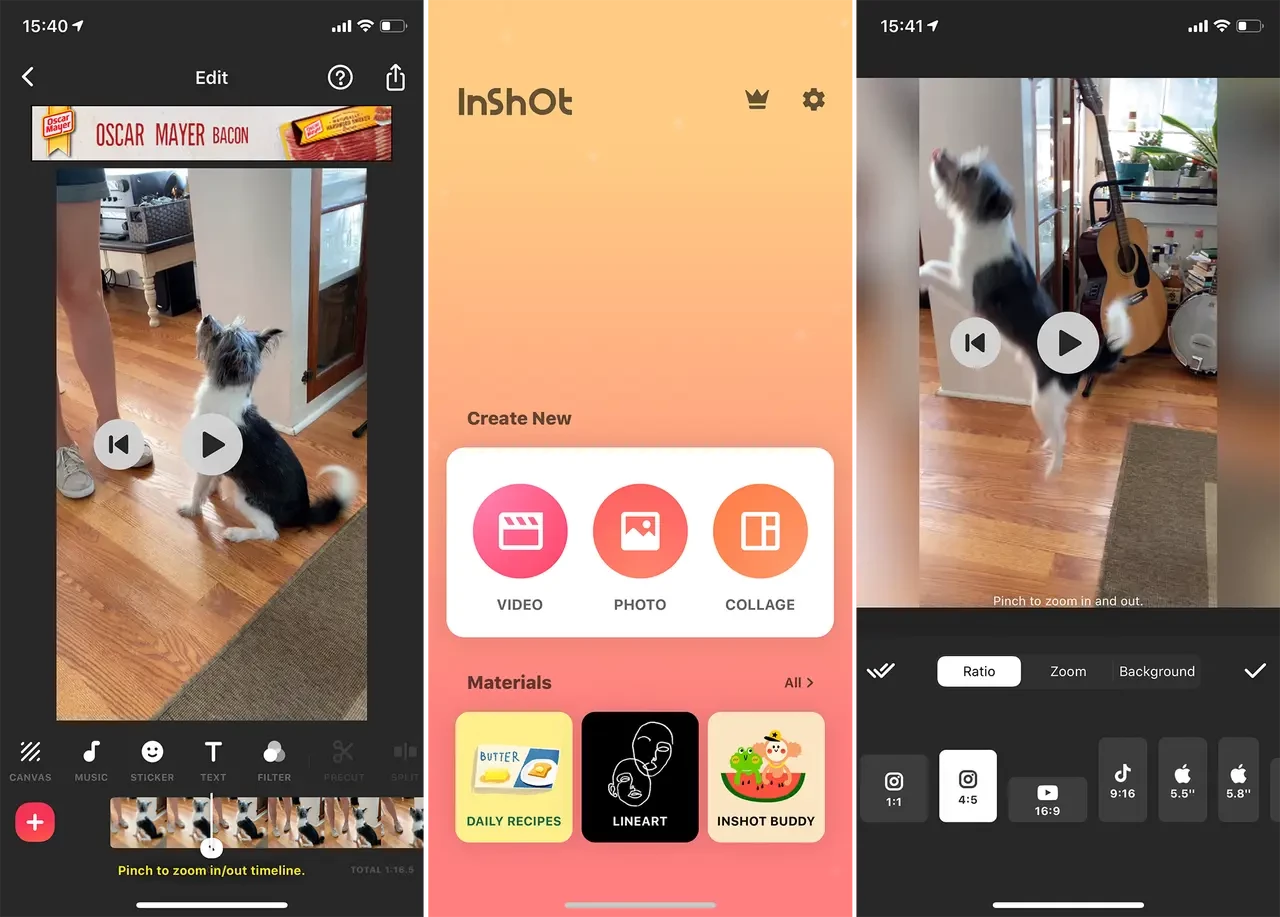
InShot's value is the absence of a learning curve. Where CapCut can overwhelm a first-time editor with templates, effects, and AI tools, InShot presents a short list of obvious controls and gets someone to a finished video quickly.
InShot is ideal for individuals and small teams new to video editing, and for anyone whose output is simple enough that the ceiling won't matter.
Other Notable Features
- Photo editor bundled alongside the video editor
- Aspect-ratio presets for each major social platform
- Background and canvas customization for vertical formats
- Music and sound effect library
- Frame-by-frame trimming for short clips
Pricing
- Free version available
- Paid plans starting from $4.99/mo
Pros
- Among the easiest editors to learn; usable within minutes
- Fast and reliable for simple trim, caption, and music workflows
- Works offline once assets are local
Cons
- Free version watermarks every export and shows ads
- AI tools are paywalled
- Feature ceiling arrives quickly on complex projects
Download InShot for free today.
15. KineMaster: Best Video Editing App for Templates
Try KineMaster if you need to produce a high volume of similar-looking videos quickly and want a large asset library to pull from.
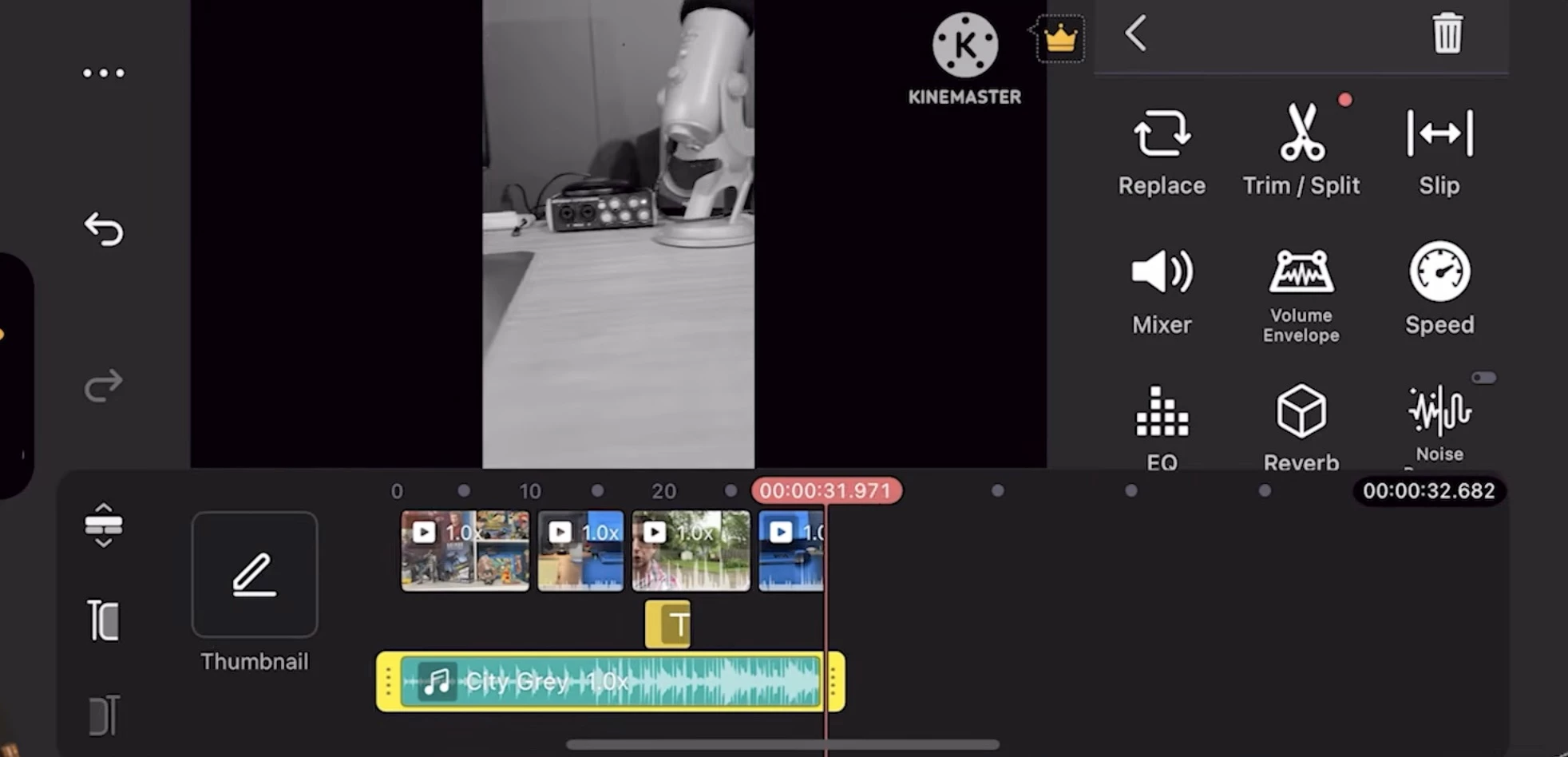
KineMaster is built for output volume. Its Asset Store, a continually updated library of effects, transitions, sound effects, music, fonts, and templates, means most of the visual work is selection rather than construction.
For a business producing recurring content, the asset library removes the hours otherwise spent sourcing royalty-free elements.
KineMaster is ideal for mobile-first creators and small marketing teams producing more than a handful of videos a month who value manual control alongside templates.
Other Notable Features
- Asset Store with continually refreshed effects, fonts, and audio
- Chroma key for green-screen work
- Keyframe animation with manual control
- Multi-layer video, image, text, and sticker compositing
- Precise volume envelope and audio mixing controls
Pricing
- Paid plans starting from $7.99/mo or $51.99/yr
Pros
- Large, regularly updated template and asset library
- Most core editing tools are free
- Polished, easy-to-learn interface
Cons
- Free version watermarks all exports
- Template-led output risks visual sameness across a brand's content
Get started with Kinemaster today.
Use Cases Behind 2026's Video Editing Features
Video editing apps in 2026 do a lot more than cut and trim. Most of what's new is automation, like captions, background removal, reframing, and even generated b-roll, built directly into the timeline.
Here's how you can match the tool to the task in front of you.
Capability | Tools That Support It |
Transcript-based editing | Descript; Final Cut Pro (Transcript Search) |
Auto-captioning | CapCut; Adobe Premiere on iPhone; Clipchamp; Descript; Canva; VN; KineMaster |
Background removal | CapCut; Descript; Canva; InShot (paid) |
Speech enhancement | Adobe Premiere on iPhone; Descript; Adobe Premiere Pro |
Generative B-roll | Shutterstock; Adobe Firefly (inside Adobe Premiere Pro) |
AI reframe & auto crop | Final Cut Pro for iPad (Auto Crop); Adobe Premiere Pro |
Template systems | CapCut; KineMaster; Canva; Filmora; Clipchamp |
Silence & filler removal | Descript; Clipchamp |
Upscaling | InShot (paid); Adobe Premiere Pro |
Cloud review & approval | Descript; Frame.io (with Adobe Premiere Pro) |
Best Video Editing Apps: Final Words
There's no single best video editing app in 2026; only the one that removes the most friction from the way your team already works.
Before you commit, check two things: whether your hardware can play the footage back smoothly, and whether the free tier's export limits or watermarks apply to the work you're doing.
Most of these tools are free to try. Start with the one that matches your use case.
Our team ranks agencies worldwide to help you find a qualified partner. Visit our Agency Directory for the top video production companies, as well as:
- Top Video Marketing Agencies
- Top Audio Production Companies
- Top Creative Agencies
- Top Graphic Design Companies
- Top Chicago Video Production Companies
Best Video Editing Software FAQs
1. Are free video editing apps good enough for professional use?
Some free video editing apps provide powerful features and high-quality exports. However, paid versions often include better collaboration tools, expanded asset libraries, and more export control, which can matter for business or commercial projects.
2. Is it better to choose a subscription or a one-time purchase video editor?
Subscriptions often include ongoing updates and cloud features, while one-time purchases offer long-term cost predictability. The better option depends on how frequently you edit and whether you need continuous feature upgrades.
3. Which video editing apps export 4K for free?
Several. VN exports 4K at 60fps for free with no watermark. KineMaster and InShot both allow 4K export on their free tiers but watermark the result.
Clipchamp's free tier caps at 1080p. DaVinci Resolve exports without a watermark on the desktop free version.
4. What's the best video editing app that doesn't require a subscription?
LumaFusion's base app and Final Cut Pro for Mac are both one-time purchases. DaVinci Resolve, VN, and Clipchamp's free tier are free without a subscription for core editing.
Note that LumaFusion's advanced features and DaVinci Resolve Studio each cost extra, though both offer one-time purchase routes.
5. Can I move a rough cut from a mobile app to desktop editing software?
Sometimes, and it's worth checking before starting a long project. Adobe Premiere on iPhone transfers projects to Premiere Pro on desktop.
LumaFusion exports FCPXML to Final Cut Pro on iOS. Final Cut Pro for iPad transfers to Final Cut Pro on Mac. Most template-led social editors export only a flattened video file, not a project.
6. Do I need a separate tool for footage and editing?
Often, yes. Editing apps supply timelines and effects; they don't supply commercially cleared footage.
Some tools bundle a library like Canva, Filmora, and Clipchamp Premium, while dedicated sources like Shutterstock offer larger libraries with explicit commercial licensing.
If you're producing paid media or client work, confirm the license on every asset regardless of where it came from.
7. What's the difference between Premiere Pro, Premiere on iPhone, and Premiere Elements?
They are three separate Adobe products:
- Premiere Pro is the professional desktop application: subscription-only, Windows and macOS, from $22.99/month.
- Premiere Elements is Adobe's consumer desktop editor, priced at $99.99 as a three-year term licence, with Quick, Guided, and Advanced editing modes. It is not a cut-down Premiere Pro; it is a different application with its own interface.
- Premiere on iPhone is a free, standalone mobile app with its own multi-track timeline, unlimited watermark-free 4K exports, and one-way project handoff into Premiere Pro on desktop. An Android version is in development.
8. What should I use if I've outgrown free editors but don't need Premiere Pro?
Look at the prosumer tier:
- Movavi Video Editor 2026 is the gentlest step up and runs on both Windows and macOS.
- Pinnacle Studio 26 gives you the most capability on Windows without a subscription.
- Adobe Premiere Elements 2026 suits teams that want Adobe's guided on-ramp with the option to grow into Premiere Pro later.
- PowerDirector sits at the entry point of the same tier if you also need Android editing.
All of them give you a real multi-track desktop timeline and wider format support than a beginner tool, and none require a Creative Cloud subscription.
9. Is there a video editor that edits footage automatically?
Yes, though it is a narrow category. GoPro Quik analyzes raw footage, picks the usable moments, and assembles a beat-synced highlight reel with transitions and no timeline work.
Adobe Premiere Elements offers a desktop version of the same idea through Highlight Reels. These tools are best used to get to a rough cut fast, not to deliver a finished brand video.
10. Can AI generate a whole video from a script instead of editing footage?
Yes, and it is a separate category from the editors here. Shutterstock generates individual clips you drop into an edit; script-to-video tools generate the finished video.
Fliki is another example: paste a script, a blog URL, or a PowerPoint file and it returns a scene-by-scene video with AI narration, matched stock visuals, and captions, drawing on more than 2,000 voices across 80-plus languages and dialects, with optional AI avatars and voice cloning on higher tiers.