How to Hire Media Buying Companies
Table of Contents
What do top media buying agencies do?
Media buying companies plan, purchase, and manage advertising across different channels to help businesses reach the right audience and get the best return on their ad spend.
They start by understanding your goals, whether you want brand awareness, leads, or sales. Based on that, they decide where your ads should appear, including Google, social media platforms, websites, streaming services, and even TV and billboards.
Once the strategy is set , they handle the actual buying process. Media buying firms negotiate prices, place ads, set up campaigns, and make sure everything runs smoothly. On digital channels, they also manage bidding systems that buy ad placements in real time.
After campaigns go live, media buying firms continuously monitor performance. They track metrics like clicks, conversions, and cost per result, then adjust budgets, targeting, and placements to improve outcomes. Agencies pause or stop poor-performing ads and scale high-performing ones.
They also use tools and data to test different approaches, such as audiences, messaging, and formats, to find what works best. Over time, this optimization helps lower costs and increase results.
In short, media buying firms make sure your advertising budget is spent in the right places, reaches the right people, and delivers measurable business results.
What information should I prepare before hiring a media buying company?
You should prepare clear goals, a budget, audience details, and access to past performance data so the media buying agency can plan and execute effectively from day one.
Prepare:
Business goals : What you want to achieve (increase sales, leads, awareness)Budget range : Monthly or campaign budget for ads and managementTarget audience : Demographics, locations, interests, and behaviorsProducts or services : What you are promoting and key selling pointsPast campaign data : Results, metrics, and insights from previous adsMarketing channels used : Platforms you have already testedConversion tracking setup : Website analytics, pixels, and tracking toolsCreative assets : Existing ads, visuals, videos, and brand guidelinesTimeline : Campaign start date and any key deadlinesCompetitors : Main competitors and how you position yourself against them
What can media buying agencies do for your business?
B2B media buying agencies use tools, data, and industry relationships to make sure your ads appear in the right places in front of the right people.
The key benefits they provide for your business include:
1. Lower costs through better buying power
Media buying firms manage large budgets across many clients, which gives them stronger negotiating power than a single business. They often get better pricing and access to rates that are not available publicly.
Media buying costs can vary by up to 40% between agency-negotiated deals and direct buying. A media buying company can secure 10% to 20% lower costs on traditional channels like radio and billboards.
2. More precise targeting with programmatic technology
Agencies use automated platforms that buy ad space in real time. These systems use data to show your ads only to people who are likely to be interested.
Around 90% of digital display ads are expected to be bought programmatically . Businesses using this approach have seen about 25% better efficiency
3. Better ROI through continuous optimization
Agencies do not set campaigns and leave them. They constantly track performance and move budget to the channels that bring the best results. They use data to understand which ads lead to actual conversions.
Multi-channel campaigns drive about 39% more engagement than single-channel campaigns. Well-managed campaigns, including influencer marketing, can return $5.20 to $6.50 for every $1 spent.
4. Access to new and fast-growing channels
Media buyers stay ahead of trends and test new platforms before they become crowded and expensive. This gives your business an early advantage.
Demand for Connected TV advertising grew by 120% in early 2025 . Digital video ads are expected to reach $72.4 billion , with short-form video delivering up to 70% higher engagement .
What metrics should I track in a media buying campaign?
Track metrics into three groups to understand profit, performance, and long-term efficiency.
Primary KPIs (Profitability and results)
These show if your campaigns actually make money.
ROAS : Tells you if revenue is higher than ad spendCPA/CPL : Shows how much you pay for each resultConversion rate : Reveals how well traffic turns into customersLTV : Defines how much you can afford to spend to acquire a customer
If these numbers work, your campaign is profitable and scalable.
Performance metrics (Ad effectiveness)
These explain why campaigns perform the way they do.
CTR : Shows if your ad is appealing enough to get clicksCPC : Tells you how expensive it is to bring in trafficImpressions/Reach : Measures how many people you are exposing to your brand
These metrics help you fix weak ads, targeting, or messaging.
Quality and growth metrics
These protect efficiency and long-term growth.
New vs returning customers: Confirms if you are acquiring new demand, not just retargetingAd relevance/quality score : Impacts costs and ad deliveryPlacement quality/brand safety : Ensures ads appear in the right environments
Together, these groups show a full picture: whether you are profitable, what drives performance, and whether your growth is sustainable.
How do I choose the right media buying agency for my business?
Choosing the right media buying agency comes down to finding a partner that can manage your budget responsibly, understand your audience, and consistently deliver measurable results. A good agency does not just run ads. It builds a system that turns spend into predictable growth.
Define your goals and success metrics Check relevant experience in your industry Review case studies Evaluate their channel expertise Understand their strategy and optimization process Check reporting, transparency, and communication Review pricing structure and expectations Sign contract
Why Companies Trust DesignRush
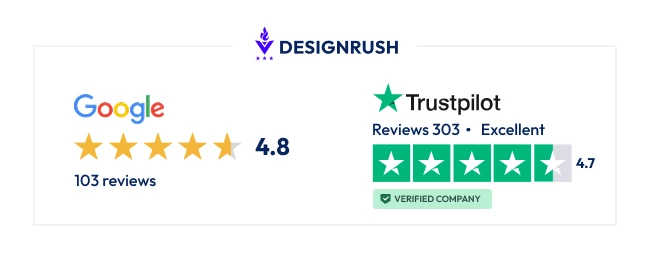
Rated 4.8 on Google and 4.7 on Trustpilot , DesignRush Agency Directory is a reliable resource for finding media buying agencies. We owe this to our executive selection team, which follows a strict screening process when featuring agencies on the platform, assessing key performance indicators, like portfolio, client reviews, and industry reputation.
Sources
DesignRush sustains a directory of over 40,000 agencies categorized by service category, location, expertise, and reviews. We build our database in two ways:
Our dedicated team of agency experts actively searches the web for top-performing companies. We then pull information from their websites, online presence, and client testimonials to verify their status and qualifications prior to listing.
The agencies listed get notified of their profiles on the website and they can choose to claim it or not, which suggests their availability for more collaborations.
Agencies can also reach out to DesignRush and must go through the verification process prior to being listed.

 Proposals