Finding the right virtual and augmented reality company takes more than comparing portfolios. Browse vetted VR and AR firms, and filter your options by budget, team size, technical capabilities, industry focus, and immersive technology expertise.
Our Verified Agencies are Trusted by Top Brands:
Best Augmented & Virtual Reality Companies
67 Companies-Rankings updated: September 04, 2026
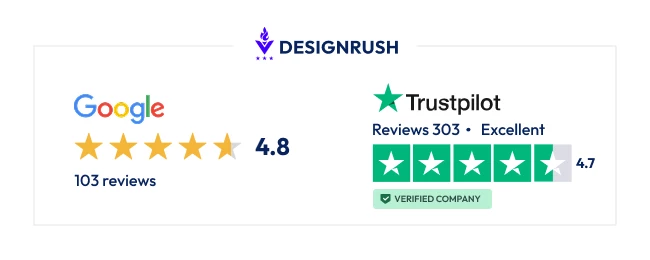
DesignRush evaluates each virtual and augmented reality company based on its industry expertise, portfolio quality, technical capabilities, and client feedback. Some listings may be sponsored.
ZiniosEdge specializes in delivering innovative digital solutions, including custom software development, cloud services, and AI-powered applications for diverse industries...
Agilistry is a leading software development company that utilizes the latest development methodologies, tech and industry best practices to deliver world-class mobile applications with embedded quality and DevOps infrastructure on time and within budget...
Our team consists of experienced IT specialists. We are focusing on those innovative IT projects that help users improve everyday lives. We deliver beautiful digital products, providing high quality software development and IT knowledge services...
Right Information is an applied software engineering company. We cover the full spectrum of custom software development services, from end-to-end platform development, engineering consultancy, through specialized professional services, to ongoing support and maintenance of the software systems...
Rocket Systems is focused on producing high-quality code, we take extra precautions to ensure that our technological approach is congruent with the ambitions of our customers. Additionally, we strive to create code bases that are both scalable and easily maintained. In order to construct a digital product...
We love telling visual stories that turn heads and build brand equity.
We're storytellers at the intersection of art, commerce, creativity, and technology. Deep Vibe transforms complex ideas into captivating narratives through advanced technologies like VP/XR, Unreal, and Generative AI. We're not just a vendor we're the partner who turns your 'what if?' into done...
A multidisciplinary studio, we carefully produce memorable stories down to the smallest detail, covering all areas of business: identity creation, website, e-commerce, brand content, augmented reality...
Goodwin System is an Australian software delivery partner helping businesses, founders, and product teams build custom software, mobile apps, AI systems, and scalable digital experiences across both B2B and B2C use cases...
Smile MEDIA is a website design, software development and digital marketing agency aimed at improving business performance through technology efficiencies and analytics. We digitally enable a company's products and services through cyber, mobility, cloud, social business and analytics...
We Manage Digital Marketing in Context. Award-winning full-service agency delivering results.
We are a full-service digital marketing agency. We manage all aspects of the advertising process from the initial idea, strategy, creativity and data analytics to the execution of performance and branding campaigns.We focus on developing brand and company strategies in the digital environment. Our core focus...
STS Software is a leading software development company in US, delivering innovative, scalable, and cost-effective technology solutions to businesses worldwide. With a focus on quality, agility, and customer success, we specialize in web, mobile, and enterprise software development tailored to meet diverse...
We provide data, cloud, product, and quality engineering services for enterprises that need to transform with predictability. We partner with our customers on high-priority, high-visibility projects where failure is not an option. And we only work with customers who want a partner that is invested in the same...
Calculated risks are the only course of action. Playing it safe is the fastest way to fail at digital.At the current pace of innovation, slow and steady isn't even in the race. We help you go beyond the playbook...
Since our inception in 2014, We have delivered Enterprise applications and Consumer products used by millions of users. As a young organization, we strive to exceed client expectations to achieve high standards of excellence through strategic planning and execution...
We specialize in a wide range of web and mobile application development technologies, including Laravel, PHP, MERN | AN Stack, and Shopify. Additionally, we offer outsourcing services for project management and have a dedicated quality assurance team that includes graphic designers for UI/UX design. Our...
We offer end to end solutions as a creative innovation agency, specializing in interactive installations, multi-sensory brand experiences, retail branding solutions and immersive storytelling agency work...
Appfodev is a forward-thinking software development company.
Appfodev is a forward-thinking software development company that transforms ideas into innovative digital solutions. With expertise in cutting-edge technologies, we specialize in building custom apps, intelligent systems, and scalable platforms tailored to drive growth and enhance user experiences. Our...
Frequently Asked Questions about Virtual & Augmented Reality Companies
What are the red flags when evaluating VR & AR agencies?
The biggest red flags when evaluating AR and VR companies are a portfolio full of demos with no real-world deployments, vague answers about device compatibility, and case studies that emphasize visual impressiveness rather than business outcomes.
Watch for these specifically:
No deployed work: Prototypes and concept demos are not the same as experiences that went live, scaled, and held up. Ask whether the work is still in use.
Can't name the hardware: A serious augmented reality or virtual reality development company will immediately tell you which devices they've built for and which they haven't. Evasiveness here usually means shallow expertise.
They haven't pushed back on your brief: Good AR/VR agencies will tell you if your use case doesn't need immersive technology. If they're just agreeing with everything, they're selling, not advising.
No post-launch references: Building is one thing; what happened six months after launch is the real test. If they can't connect you with a client past the delivery stage, that's a problem.
How do I know if my use case actually needs VR or AR, or if a simpler solution would perform better?
Your use case requires VR or AR when the experience depends on spatial interaction, physical simulation, or the placement of digital content in a real environment. If a video, standard app, or 3D model on a screen can deliver the same result, the simpler option is usually better, faster, and cheaper.
A few useful checks:
Does the user need to interact with the environment or just watch?
Is physical scale or spatial context important?
Would the experience lose value on a normal screen?
If the answer is mostly no, you probably do not need VR or AR yet. Strong virtual and augmented reality companies will tell you that early instead of forcing immersive tech into the project.
What do VR & AR agencies charge that most buyers don't expect?
Most buyers budget for the initial build and underestimate the ongoing costs. A VR or AR agency usually prices the experience itself, not everything needed to maintain it long term.
The costs that surprise buyers most often:
Hardware: VR headsets, AR devices, device management tools, replacements, and upgrades add up quickly.
Content updates: Environments, training scenarios, and product visuals need regular updates to stay useful.
Platform maintenance: Updates from companies like Meta or Apple can break compatibility, and fixes are usually billed separately.
User onboarding: Employees or customers often need training, support materials, and setup help that were not included in the original scope.
What's a realistic timeline to go from a brief to a deployable VR/AR experience?
Building an AR/VR app usually takes between 3 and 12 months, depending on the complexity, features, integrations, graphics quality, and team size.
Simple AR apps: Around 3–6 months
More advanced VR platforms with custom integrations and high-end graphics: 6–12+ months
The timelines increase when the project includes:
Custom 3D modeling and animations
Cross-device optimization
Real-time interactions
Enterprise integrations
Extensive testing and post-launch support
What's the difference between a good VR/AR agency and an average one, and how do I spot it before signing?
A good VR or AR agency focuses on the problem first, not just the technology. Average agencies talk mostly about what is possible. Strong ones explain what actually makes sense for your goals, budget, and users.
Before signing, look for these signs:
They ask about your target device early and design around its limits
They have a real process for testing the immersive experience with users
They can talk openly about projects that went wrong and what they learned
They clearly explain asset ownership, file access, and what happens if you switch vendors later
If an AR or VR company avoids these conversations, push harder before committing.
What's the difference between a good VR/AR agency and an average one, and how do I spot it before signing?
A good VR or AR agency focuses on the problem first, not just the technology. Average agencies talk mostly about what is possible. Strong ones explain what actually makes sense for your goals, budget, and users.
Before signing, look for these signs:
They ask about your target device early and design around its limits
They have a real process for testing the immersive experience with users
They can talk openly about projects that went wrong and what they learned
They clearly explain asset ownership, file access, and what happens if you switch vendors later
If an AR or VR company avoids these conversations, push harder before committing.
How do I evaluate VR/AR work if I have no technical background?
You do not need a technical background to evaluate VR or AR agencies well. Focus on business outcomes and user experience, not the underlying technology.
A few things to look at:
Ask them to explain a past project in simple terms: the client’s goal, how success was measured, and what results they achieved.
Try a real product they built, not just a polished demo. Pay attention to comfort, usability, and how natural the interaction feels.
Ask how they test experiences with real users before launch.
Speak to a past client and ask one question: Would you hire them again? The answer usually tells you more than a formal reference.
What happens when the technology evolves mid-project? Who absorbs the cost of changes?
Technology changes during VR and AR projects are common. New device releases, platform updates, and SDK changes can all affect the build. If the contract does not clearly define responsibility, expect to pay for the extra work.
Before signing, clarify:
How the agency handles platform or device changes during development
Which costs are covered by the original scope, and which are billed separately
Whether they include a post-launch compatibility or support window
What happens if companies like Meta or Apple release updates that require rework
A strong VR or AR agency will separate technology-driven changes from client-requested scope changes and explain both clearly upfront.
How do I know if a VR/AR experience is actually driving business results vs. just looking impressive?
A VR or AR experience delivers real business value when it improves a measurable result that existed before the project started, not just when it looks impressive.
The right metrics depend on the use case:
Enterprise VR: training completion, error reduction, faster onboarding
Retail AR: dwell time, conversions, purchase confidence
What matters is comparison. You should be able to measure performance before and after launch.
When evaluating VR or AR agencies, ask for examples where they tracked a business metric from deployment to results. If they can only show visuals and demos, that is not proof of impact.
How do I know if a case study in VR/AR actually proves what the agency claims it does?
Most VR and AR case studies show that a project was built and looked impressive. Far fewer prove that it actually delivered results.
To evaluate a case study properly, look for four things:
What was the business goal before the project started?
How was success measured?
What were the actual results and over what timeframe?
What was the baseline or alternative without VR/AR?
If a case study cannot answer those clearly, it is mostly a portfolio piece, not strong evidence.
The best VR and AR agencies can walk through at least one project end-to-end with real numbers, measurable outcomes, and clear business impact.
ReceiveProposals
For your project
1
Specify your budget, timeline and project requirements
2
Our experts curate a list of up to 5 most qualified candidate agencies
3
We connect you with them so you can choose the most suitable partner