Our industry experts identified the leading Sunnyvale educational app developers that can make learning more fun through technological innovation and enlightenment. Compare listings by budget, size and reviews to choose the best fit for you.
Best Educational App Development Company In Sunnyvale
3 Companies - Rankings updated: April 02, 2026
Every agency featured on DesignRush is vetted for expertise and client satisfaction to support your decision-making. Some listings may be sponsored.
Guaranteeing a 5 star experience!
Innofied is an award-winning B2B AI software development company with 600+ successful projects since 2012, helping businessesincluding Fortune 500 companieswith modern AI and SaaS solutions. With a global presence, our game-changing automated solutions continue to drive success across industries. [... see all Innofied Solution reviews ]- Location
- Sunnyvale, California
- Number of Employees
- 50 - 99
- Average Hourly Rate
- $25/hr
- Minimal Budget
- $1,000 - $10,000
- Portfolios Count
- 20 Projects Listed
Data sourced from the agency's DesignRush profile, its website, and other relevant accountsInnofied Solution Services
Comprehensive analysis done by DesignRush Agency Experts.Clients and Projects
View Full Portfolio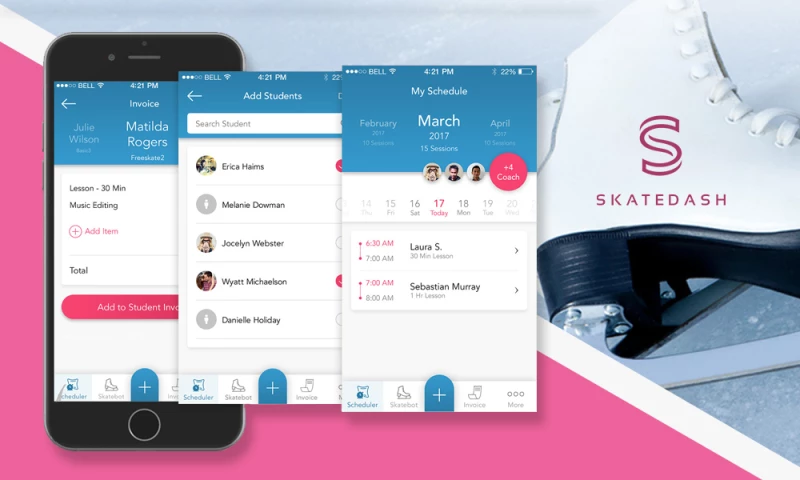
Educational App Development Project Skatedash - Sports Learning App 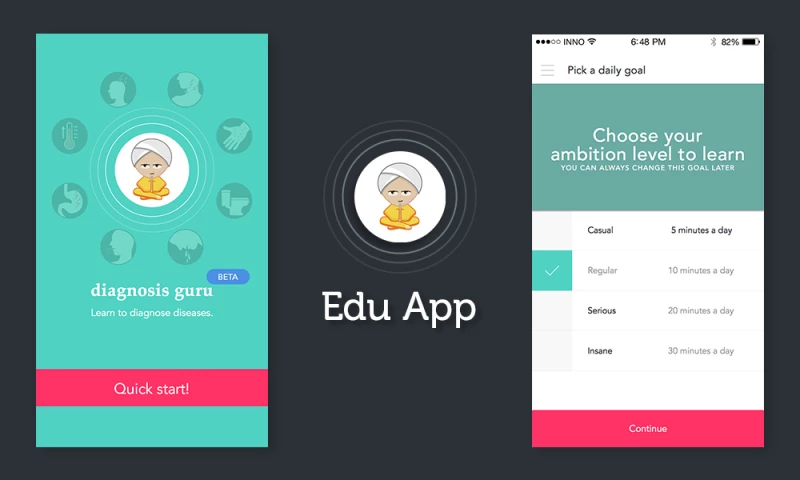
Educational App Development Project EduApp - Medical Diagnosis App 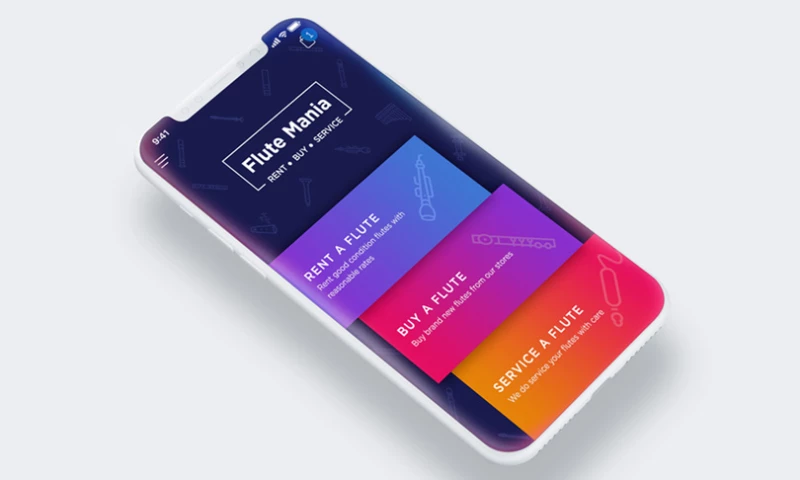
App Development Project Flute Mania 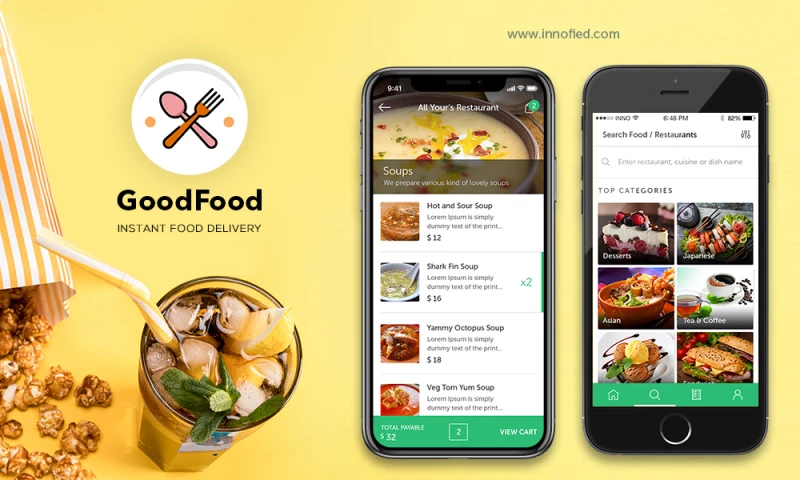
App Development Project GoodFood – Food Delivery App 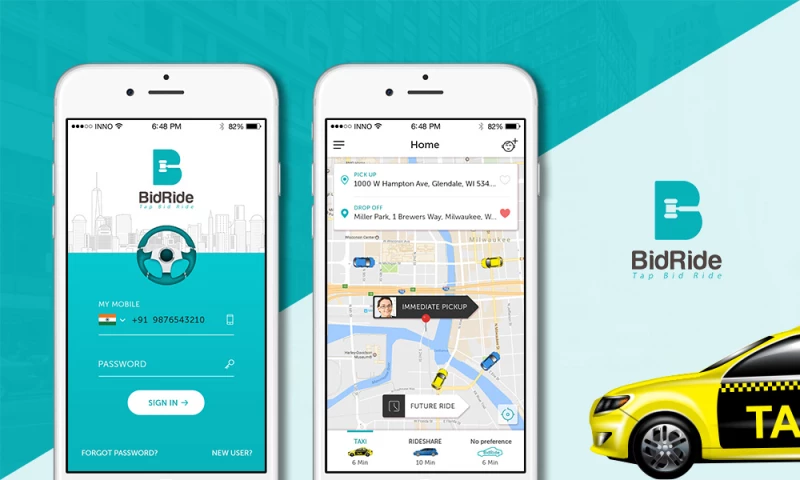
App Development Project BidRide - Ride app with bidding features 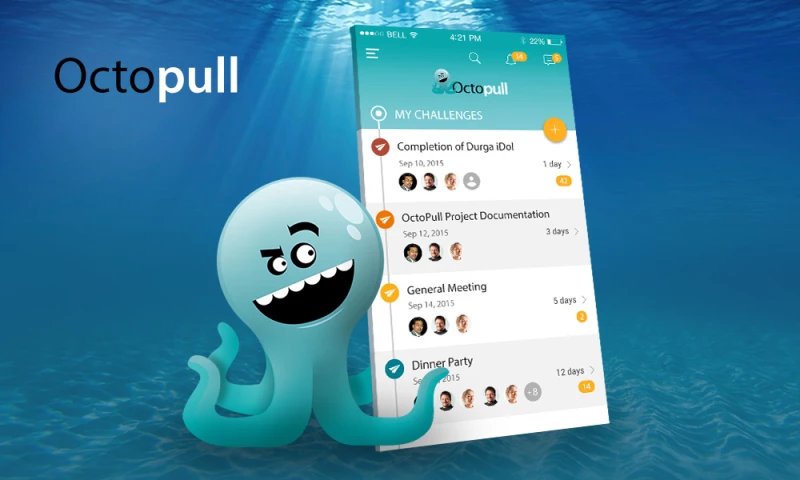
App Development Project Octopull - team coordination
Reviews verified by DesignRush and sourced from the agency's profileInnofied Solution Reviews & Testimonials

Software Development Review from Gianfranco Williams
To date, Innofied has produced high caliber work on a timely delivery schedule. Working in 15-day sprints, the team has facilitated a smooth, fast, and productive workflow. Their services have exceeded expectations and secured customer satisfaction. The app is expected to perform well, thanks to Innofied's commitment to excellence. Their fluid communication and problem-solving skills fostered a positive collaboration. I would recommend Innofied to anyone.
Show moreSohitri Sen's Review Sourced from Google
Joined here at the starting of my career. Not a good place to work. The environment was toxic and didn’t suit me at all.
Show moreManosh Patra's Review Sourced from Google
Not professional at all, delivery of the application and website were not what they promised.. Bad service and worst Development of website and application. The funny part is that when a person post a genuine review they say they have not worked for them and all the good reviews are from the people who works in this company or rather they are forced .Please do not think of giving a big project to them as they are not capable of it.
Show more
Data sourced from the agency's DesignRush profileBestbuy VSP Nuvoco KwikKopy IMD Lixil Viapool Taxi 10 SnappOrder Cordial
Deploy Dream Applications From Scratch
Our team of over 200 IT experts and engineers harness the power of contemporary technologies, advanced frameworks, and innovative methodologies to deliver unmatched and top-notch outsourced services from India. [... view ThinkSys profile ]- Location
- Sunnyvale, California
- Number of Employees
- 100 - 249
- Minimal Budget
- $1,000 - $10,000
- Portfolios Count
- 4 Projects Listed
Data sourced from the agency's DesignRush profile, its website, and other relevant accountsThinkSys Services
Comprehensive analysis done by DesignRush Agency Experts.Clients and Projects
View Full Portfolio
App Development Project Applied Mobile APP((Native in iOS and Android)) 
App Development Project Nomad Adblocker Browser 
App Development Project Match Dating App 
App Development Project Zynbit
Data sourced from the agency's DesignRush profileMatch Perion American Greetings Shutterstock Just Pharma Playtika Angies List Allegro Atlas Financial Holdings Delightme
Top Mobile App and Web Development Company in Canada, USA and UK
We design highly polished iPhone, Android and Web Apps for startups and Enterprise clients. [... view MobMaxime profile ]- Location
- Sunnyvale, California
- Number of Employees
- 50 - 99
- Average Hourly Rate
- $15/hr
- Minimal Budget
- $10,000 - $25,000
- Portfolios Count
- 3 Projects Listed
Data sourced from the agency's DesignRush profile, its website, and other relevant accountsMobMaxime Services
Comprehensive analysis done by DesignRush Agency Experts.Clients and Projects
View Full Portfolio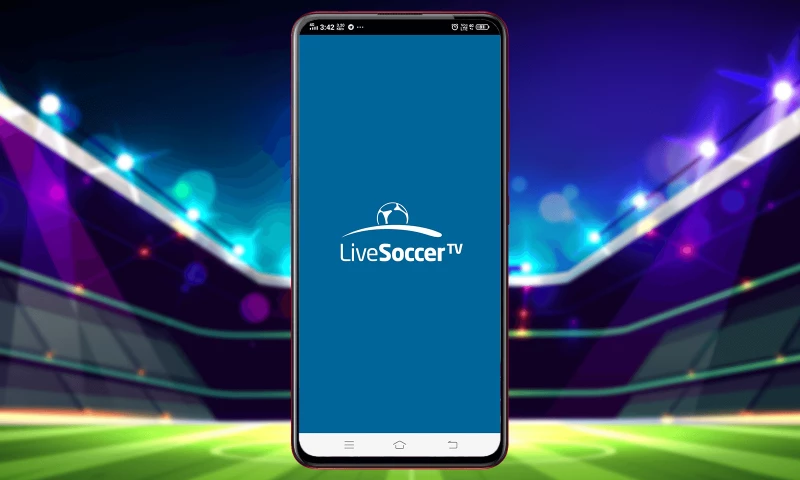
App Development Project Live Soccer TV 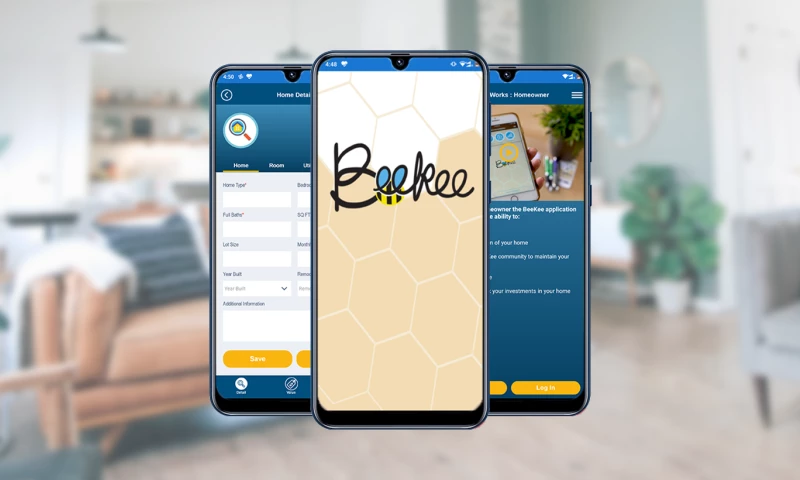
App Development Project BeeKee 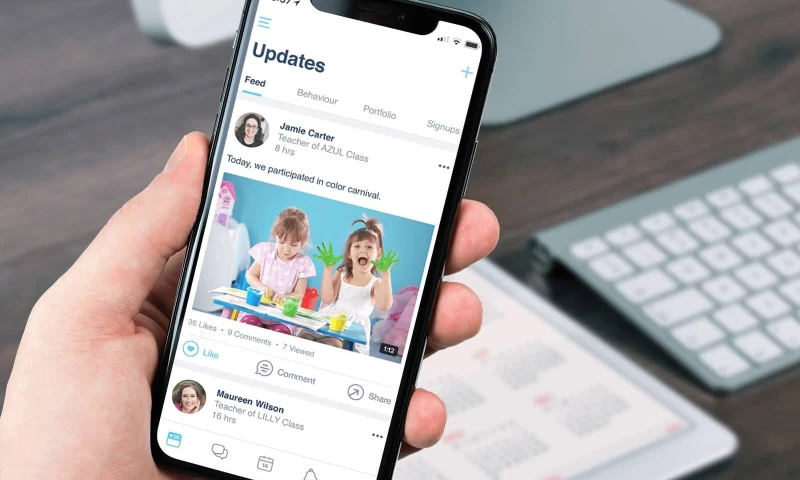
App Development Project Bloomz
Data sourced from the agency's DesignRush profileBacsoft Ziptask Clementine


Frequently Asked Questions
What is an educational app development company?
An educational app development company builds scalable programs and platforms to facilitate virtual learning. It does this by using modern technology and tools, such as:
- Augmented reality (AR)/virtual reality (VR)
- Cloud computing
- Artificial intelligence (AI)/machine learning (ML)
- Video streaming
- Voice recognition
- Blockchain
The educational app market has been rising for the past 10 years, with an expected annual growth rate of 10% from 2022-2027. Moreover, data shows that its market volume will reach $10 billion by 2027. The factors affecting its growth are:
- Demand for STEM-based applications
- Adoption of digital solutions in schools
- Government regulations and initiatives
In 2022, the language learning app Duolingo was the most downloaded education application worldwide with 98 million downloads. Ranking second was the educational worldbuilding app Toca Life World with 72 million downloads.
What do educational app developers do?
Educational app developers create, modify, test, optimize, and maintain applications for online learning. Some even provide IT training and in-house support. Generally, educational app development companies offer the following services:
Custom web and app design and development
- Minimum viable product (MVP) development
- UI/UX design
- Prototyping
- Wireframing
- Data architecture and analytics
- User testing and quality assurance
- Software maintenance and optimization
The range of services you will need depends on your project scope. For example, a brain training mobile app might only need custom app development and maintenance. Meanwhile, a learning management system will require more comprehensive services and support, as it must have different dashboards for the student, teacher, and parent. It will also need to comply with your country’s educational regulations.
Here are common types of educational apps with examples:
- Learning management systems (LMS): Canvas, Edmodo, Adobe Learning Manager
- Classroom apps: Class Dojo, Seesaw, Prodigy Education
- Test preparation apps: SAT Flashcards, IELTS Prep App, Professional Pocket Prep
- Reading and writing apps: AdaptedMind, Writing Wizard, HOMER
- Language learning apps: Duolingo, Babbel, Rosetta Stone
- Online courses: Coursera, edX, LinkedIn Learning
- Brain training apps: Elevate, Lumosity, Wordle
- Multipurpose learning apps: Khan Academy, Kahoot!, Skillshare
- Onboarding and Orientation apps: BambooHR, Absorb LMS, Rippling
- Corporate training apps: EduBrite, Udemy, Hoopla
How long does it take to develop an educational app?
It takes at least 519 hours to develop an educational app. However, the process can take longer, depending on your product scope, features, and platform. Below is a breakdown of the developmental hours for an EdTech app per stage of the development process.
| Stage | Estimated number of hours |
| Wireframing | 32 |
| Designing | 40 |
| SRS | 17 |
| Test case | 10 |
| App development | 220 |
| Backend development | 160 |
| App testing | 40 |
The timeline for education app development can also vary depending on the features you want to incorporate:
| Features | Estimated number of hours |
| Sign up/login page | 43 |
| Navigation/search filters | 23 |
| Profile page/dashboard | 41 |
| Course | 17 |
| Payment portals | 36 |
| Menu | 95 |
| Push notifications | 14 |
| Student management system | 56 |
| Course text/examination | 55 |
These estimates cover only one platform or operating system. A cross-device educational app will require more hours.
What is the difference between education and eLearning apps?
The difference between an education app and an eLearning app is the structure. Although some use the terms interchangeably, eLearning applications are often tied to educational institutions, making them more formal in structure and scope. On the other hand, educational applications are broader in scale, as they can encompass anything from word games to LMS.
Here is a table, showing the differences and similarities between eLearning and education apps:
| Education applications | eLearning applications | |
| Requires teacher-student interactions | Not always | Yes |
| Follows a set curriculum or learning module | Not always | Yes |
| Has to comply with educational regulations and policies | Not always | Yes |
| Enables online learning | Yes | Yes |
| Examples | Duolingo, Coursera, Evernote | Google Classroom, Edmodo, Zoom Education |
How much do educational app developers charge for their services?
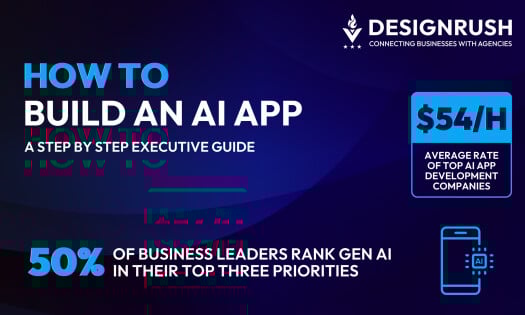
An educational app developer charges at least $10,000 for an MVP. Meanwhile, the top 50 educational app developers on DesignRush charge an average of $54/hour. 6.3% of education app developers on DesignRush accept projects with a minimum budget under $1,000, and 4% accept a minimum budget over $50,000.
The cost of developing an educational app varies depending on the agency’s location and level of expertise as well as the complexity of your app. Here’s how much educational app developers charge per region:
| Region | Hourly rate | Cost of developing an MVP | Cost of developing a full-scale app |
| US | $95 - $150 | $90,000 - $110,000 | $160,000 - $200,000 |
| Europe | $45 - $80 | $40,000 - $95,000 | $75,000 - $160,000 |
| Canada | $90 - $130 | $34,000 - $80,000 | $136,000+ |
| Australia | $90 - $130 | $34,000 - $80,000 | $136,000+ |
| Asia | $25 - $500 | $7,000 - $27,000 | $30,000+ |
[Aimprosoft / Space-O Technologies]
While creating an educational app can be costly, it can also be profitable. In 2022, Chegg Study earned $766 million in revenue, making it the highest-earning education app globally. Additionally, the US education app industry generated $274 million in revenue in 2022. This is expected to increase further as the market grows.
Why should you hire educational app developers?
You should hire educational app developers because they have the expertise and technology to produce high-quality apps within a reasonable timeline and budget. They also help ensure your app's long-term growth by making it scalable, improving the user experience, performing quality assurance, and implementing security measurements.
Below are the specific benefits of hiring educational app developers:
1. Specialized expertise
An educational app requires more than technical expertise, it also requires in-depth industry knowledge of the education sector. This can range from knowing the different learning levels to understanding the technological capabilities of teachers. While this may come as readily available knowledge for experienced educational app developers, general app developers may have to conduct time-consuming industry research.
Moreover, educational app developers may also hold instructional design certificates and other accreditations that allow them to tailor solutions to meet the unique requirements of educational institutions, learners, and instructors.
For example, the educational app development company Appiventiv has over six years of experience in the education industry. So, when Vodafone India Foundation partnered with the agency to build the online learning platform Gurushala, it knew that the app should not only focus on students. The app also needed to engage teachers.
That is why Appiventiv also included games and reward systems for both students and teachers when it created Gurushala. As a result, Vodafone India Foundation received $2.1 million in funds for the app and onboarded 150,000+ teachers and students onto Gurushala.
2. Compliance with the latest policies
Educational apps need extra security and accessibility measures compared to regular apps because children and people with specialized needs often use them. For example, compliance with the COPPA, ADA, and User Agent Accessibility Guidelines (UAAG) may be necessary.
Educational apps must also follow the latest teaching and developmental learning principles, like the ISTE Standards. General app developers can easily miss these compliance measures.
In contrast, educational app developers follow these guidelines and policies daily. Moreover, they often collaborate with educational institutions, industry partners, and accessibility to stay updated on the best practices. As such, you can be certain that your educational app complies with the latest educational technology policies and guidelines.
For instance, X2 Mobile is part of the European EdTech Alliance and EIT Urban Mobility. Because of this, its educational apps have the advantage of using the latest educational and accessibility guidelines and being registered in the European EdTech ecosystem.
3. Cross-platform development
Small in-house app development teams have limited skills and often specialize in one platform or operating system. On the flip side, educational app development agencies will provide you with a wide range of talents.
They’re also certified Android, iOS, and Windows developers. As such, they can ensure that your app functions on Android and iOS operating systems as well as on the desktop and website.
One such example is Techugo. With expertise in Android, iOS, and web development, the educational app developer helped Sterkla become an accessible coaching platform. It developed intuitive mobile and web app platforms so customers can easily use the app from their mobile, tablet, and desktop. As a result, Sterkla gained 30,000+ downloads.
4. Cost efficiency
Having an in-house educational app development team can be more expensive than hiring an agency. That’s because you will have to invest in employee salary and training. Additionally, you will also need to buy the necessary technology, software, credentials, and other tools to build an educational app. For example, Apple requires an annual fee of $99 - $299 to distribute an app on its store.
This can be quite expensive for an educational institution, as information technology makes up merely 4.9% of its annual spending. Plus, a community college’s IT department has less than 38 full-time staff members on average.
When you hire an educational app developer, you do not have to worry about all these expenses, as they often offer a packaged rate for all their services. Their prices might be more affordable due to their supplier discounts. Other educational app developers can even scale their teams as your demands for IT services grow.
5. Speed to market
An in-house IT team may need a longer timeline to develop your app because they have other responsibilities. This includes maintaining your enrollment and financial systems and helping students, staff, and teachers with their daily IT issues.
Meanwhile, educational app developers have streamlined the end-to-end process. They will also provide you with a dedicated team of experts. As such, you can experience faster development cycles and reduced time-to-market.
How do you choose the best educational app developers?
You can choose the best educational app developer by following the steps below:
- Project scope: Identify your educational app type, target audiences and their learning levels, features, and budget.
- Technology: Understand the different technologies and platforms used for learning apps and choose the ones that best suit your target audiences. For example, educational institutions often use one type of operating system for the entire school. However, if you’re targeting more general audiences, you will need a multi-platform educational application.
- Educational policies: Research on educational guidelines and policies that affect your target audiences. For example, Australia has national guidelines for screen time for children under the age of 17.
- Experience: Search for educational app developers with the skills, experience, and tech stack that match your project scope. Educational app developers who have worked with projects like yours can give you valuable advice on how to improve your product.
- Educational app developer location: Consider the educational app developer’s location. It is important to note that while offshore agencies have more affordable rates, they might not be as familiar with the educational laws in your country as inshore agencies.
- Due diligence: Verify their credibility by checking their portfolio, case studies, and client testimonials and reviews.
- Verification: Set up interviews with your shortlisted educational app development companies to see if they’re compatible with your team.
- Budget: Send a request for a proposal (RFP) together with your project scope and timeline to your shortlisted educational app developers.
- Selection: Choose the educational app development company and establish your project management process.
For a tailored list of educational app developers, contact us. Our team will help you find the most suitable agency based on your list of requirements. You can browse our Marketplace for more details.
What questions should you ask educational app developers before you hire one?
You can ask educational app developers the following:
Its Relevant Background
- What is your educational app development expertise?
- Do you have experience developing educational apps for my specific target audience and their learning levels?
- How familiar are you with my country’s educational guidelines and policies? Do you have certificates and accreditations to prove it? For instance, are you familiar with the Common Core State Standards?
- Do you have experience developing cross-platform apps? How do you ensure that my apps can be used by learners at home, school, and other environments?
- Have you built and grown apps like my educational app? If so, can you share your experiences?
Company Services and Processes
- What technology, methodologies, and coding languages do you specialize in?
- What UI/UX best practices do you use that are specific to my target audience’s learning level?
- How do you test for quality, usability, and accessibility? How do you comply with the Web Content Accessibility Guidelines (WCAG), Human Interface Guidelines, ADA, and UAAG?
- How do you ensure that my educational app will comply with data security and privacy regulations like the General Data Protection Regulation (GDPR) and Children’s Online Privacy Protection Rule?
- Do your services come with a warranty?
- Do you offer continued support and maintenance after product launch?
- What’s your process for fixing bugs and issues?
The Project
- How do you ensure that my product aligns with current teaching practices?
- Can you provide integrations with other educational apps? For example, can you integrate my educational app with the different LMS?
- How do you set project milestones, timelines, and KPIs?
- How do you update clients on current project progress?
- How much involvement will I have during the product’s development?
- What flexibility do you offer in adjusting resources, timelines, and budgets when project scope changes?
- What’s your turnover process? Do you provide skills training and workshops to both my team and future users, like schools and colleges?
- Who owns the source code after development?
- How will you help grow my app? How will you monetize my educational app?
What are the best educational app developers in the US?
The top 10 educationnal app developers in the US are:
- Techugo
- 4.6 stars on Google (9 reviews)
- Top clients: Milkbun, Prince Mohammad bin Fahd University, Lifology, Byju
- SoluLab
- 3.0 stars on Google (2 reviews)
- Top clients: Cambridge, Georgia Tech, Goldman Sachs, Instaclass
- Hidden Brains Infotech
- 5.0 stars on Google (3 reviews)
- Top clients: DHL, Caterpillar Inc, StudyGate, ATP STAR
- Innowise Group
- 4.9 stars on DesignRush (19 reviews)
- 3 stars on Google (2 reviews)
- Top clients: Deloitte, Accenture, BMW, VOKA
- Designli
- 4.9 stars on DesignRush (20 reviews)
- 5.0 stars on Google (73 reviews)
- Top clients: Rotary, Goodwill, Michelin, Bank of London
- Zazz
- 5.0 stars on DesignRush (95 reviews)
- 5.0 stars on Google (12 reviews)
- Top clients: Harvard Innovation Labs, Citibank, BBC News, JP Morgan
- Admios
- 4.7 stars on DesignRush (6 reviews)
- Top clients: Converse, Salesforce, Invoca, Business Talent Group
- ELEKS
- 4.9 stars on DesignRush (27 reviews)
- Top clients: Aramex, Blackboard, KukaTree, Autodesk
- TechAvidus
- 4.9 stars on DesignRush (28 reviews)
- 5.0 stars on Google (2 reviews)
- Top clients: Pfizer, EShopBox, Origin, GateKeeper Press
- Diffco
- 4.9 stars on DesignRush (26 reviews)
- 5.0 stars on Google (22 reviews)
- Top clients: Nokia, International Business Times, Nimbus Web Inc, LE Solutions
Scroll up and find out more about these agencies and uncover additional leading educational app development agencies. All of them have been chosen based on successful projects, industry reputation, customer reviews, and team expertise. And if you want to further personalize your search, you can sort companies by location, budget size, hourly rates, and reviews.
About The Author and Expert Reviewer

Selina Garcia has authored 500+ articles and edited 50+ published books in economics, law, and history. Her unique blend of experiences allows her to approach content creation from a well-rounded perspective. Currently, Selina applies her expertise to producing insightful articles on IT, software, and applications for DesignRush.

Sergio is a technology leader with over six years of experience managing global teams and delivering projects across fintech, sportstech, and B2B platforms. At DesignRush, he drove product growth and development execution, building tools that speed up processes by 95% and cut costs by 35% while maintaining full uptime.
Latest Trends Related to Educational App Development