
Outsourcing QA: Key Points
- Outsourcing QA can slash upfront costs and provide flexible billing — unlike in-house teams that demand major investments in recruitment, training, and infrastructure.
- Nearshore QA outsourcing hits the sweet spot, offering agile-friendly time zone overlap and cultural compatibility at a significantly lower price than onshore teams.
- Running a pilot project and assessing process maturity are proven tactics to avoid QA vendor misfires and ensure long-term quality alignment.
Whether you're scaling fast or simply tightening the belt, this guide unpacks everything you need to know about outsourcing QA without sacrificing quality.

QA Outsourcing vs. In-House Testing
Deciding between outsourcing software quality assurance (QA) and building an in-house team is a strategic decision. Each approach comes with its own set of trade-offs that can impact project timelines, team dynamics, expenses, and ultimately, product quality.
Here’s a detailed breakdown to help you make the best call:
- Cost and budget control
- Domain knowledge
- Communication and collaboration
- Speed and scalability
- Quality ownership and control
- Long-term strategy
1. Cost and Budget Control
Outsourced QA offers cost predictability and flexibility: pay by the hour, by project, or via subscription. It scales with your needs — meaning you only pay for what you use, when you need it.
Rimpal Mistry, Co-Founder of Testscenario, emphasizes the strategic advantages of outsourcing QA from a business perspective. According to Mistry, outsourcing allows companies to significantly reduce costs by lowering overhead expenses related to tools, training, and infrastructure.
“It also gives access to expertise that’s not usually available in the workforce,” he notes, “and enables companies to manage fluctuations in work volume more effectively.”
In-house QA? Think salaries, recruitment, hardware, benefits, and the ever-evolving training needs. If you're starting from zero, be ready to invest heavily.
2. Domain Knowledge
Your internal team lives and breathes your product — they’re part of planning, sprint retros, and roadmap reviews. That context pays off when identifying subtle issues.
Outsourced testers are effective but may need help understanding product nuances unless included early and often. The more integrated they are, the better the results.
3. Communication and Collaboration
In-house testers usually speak your language — literally and culturally. They’re in your time zone, maybe even your office.
Offshore or remote QA teams? Communication can lag if hours don’t overlap. That said, nearshore or well-managed offshore vendors can close that gap with agile-ready teams and shared tools.
4. Speed and Scalability
Do you need to move fast? Outsourced QA teams can ramp up quickly. Vendors usually have ready-to-go resources with experience across various software development tools and frameworks. If your development cycles are tight, access to large, highly specialized teams can be a game-changer.
In-house QA testers may progress slower, especially if you’re limited in headcount or if hiring takes time. But once established, they can deliver consistent output and are more embedded in your workflow.
5. Quality Ownership and Control
In-house QA = full control. You shape the tools, standards, culture.
Outsourcing requires trust — and that means clear documentation, vetting, and good project management. It’s a trade-off between oversight and agility.
6. Long-Term Strategy
If your product lives or dies on quality — say fintech, medtech, or a complex SaaS — internal QA might make the most long-term sense.
But if you’re in growth mode or need short-term flexibility, outsourcing gives you room to maneuver.
| Factor | Outsourced QA | In-House QA |
| Cost | Lower upfront expenses, scalable | Higher upfront costs, ongoing fixed expenses |
| Domain knowledge | Limited unless deeply integrated | Strong understanding of product context |
| Communication | May face time zone and language barriers | Real-time collaboration and seamless alignment |
| Speed | Fast, as resources are readily available | Slower, as productivity depends on team size, hiring, and training |
| Control & Oversight | Shared responsibility with vendor | Full ownership of quality standards and practices |
| Scalability | Highly scalable for short- or long-term needs | Less flexible, especially for fast changes |
| Best For | Fast-growing, budget-conscious teams, MVPs, non-core QA needs | Complex products, long-term projects, IP-sensitive environments |
Comparing QA Outsourcing Models
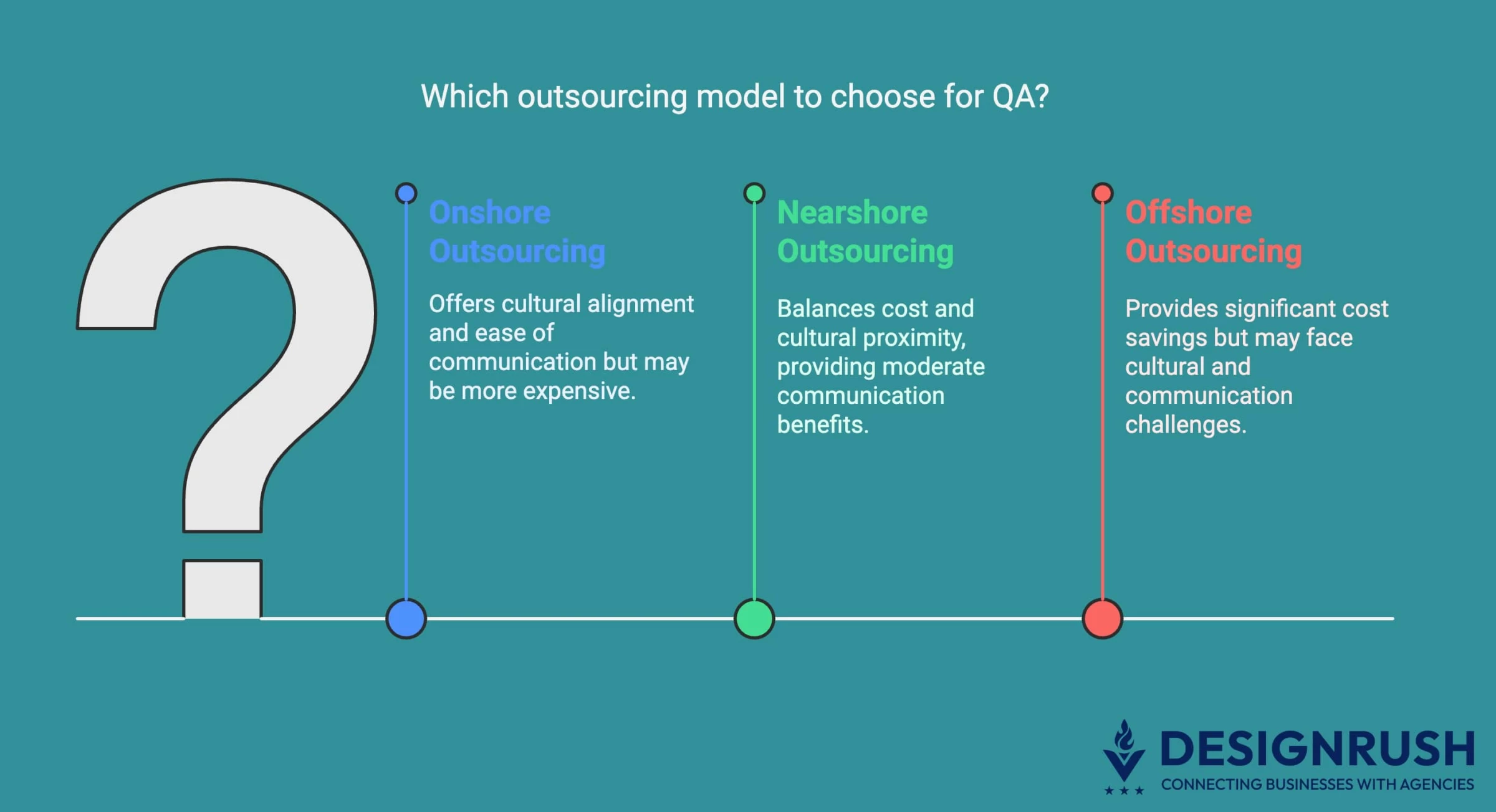
Once you’ve committed to outsourcing QA, location becomes the next big question. Here’s how the three main models stack up:
1. Onshore Outsourcing
Same-country vendors = smoother collaboration, no language barriers, and easier compliance. Ideal for highly sensitive or regulated projects.
But it’s pricey — often more expensive than hiring in-house.
2. Nearshore Outsourcing
With nearshore vendors (1–3 time zones away), you get real-time overlap, shared cultural norms, and a good price-performance balance.
Perfect for agile teams needing regular check-ins and fast turnarounds.
3. Offshore Outsourcing
Offshore vendors (often in Asia, Eastern Europe, Africa) offer the lowest costs and large QA talent pools.
The flip side? Big time zone gaps and more structured communication needs. Best for clearly scoped work and strong documentation.
| Outsourcing Model | Location | Pros | Cons | Best For |
| Onshore | Same country | Strongest alignment, real-time collaboration, easier compliance | Highest cost, relatively limited talent pool | Regulated industries, high-sensitivity projects, enterprise apps |
| Nearshore | Neighboring or similar time zone regions | Good balance of cost and collaboration, cultural compatibility | Slightly higher cost than offshore, occasional communication hurdles | Agile teams, mid-size companies that require cross-functional collaboration |
| Offshore | Distant countries (often the other side of the world) | Lowest cost, access to broad QA talent pool | Time zone gaps, potential cultural/language barriers | Startups, budget-conscious teams with well-scoped testing work |
Best Practices for Choosing a QA Outsourcing Partner
Pick the wrong QA vendor, and you’ll ship bugs instead of features. Pick the right one, and they’ll feel like an extension of your own team.
Here’s how to make sure you pick a QA outsourcing partner that delivers results:
- Define your QA goals
- Vet technical expertise
- Check process maturity and documentation
- Prioritize security and IP protection
- Evaluate communication style
- Run a pilot project
1. Define Your QA Goals
Don’t start vendor hunting until you’ve mapped out your QA needs. Are you testing for performance under load? Do you need end-to-end coverage for mobile apps? Are you looking for fast manual testing for sprint cycles?
Clarify your testing scope, tech stack, and goals. This includes development platforms, testing types, and target timelines. When you know what you’re looking for, you’ll instantly filter out unqualified vendors and partner with ones who specialize in your domain.
2. Vet Technical Expertise
Any vendor can list buzzwords on their website to attract potential clients. Don’t just trust their pitch; instead, ask about their actual projects, resources, and approach to solving testing challenges:
- What frameworks do they use for automation?
- How do they handle flaky tests or shifting requirements?
- Do they have experience with your tech stack?
For example, fintech partners should understand transaction workflows and compliance requirements, while those in healthcare must be familiar with patient safety standards and data privacy laws.
3. Check Process Maturity and Documentation
Can they explain their test strategy? Do they document clearly? A solid QA partner has structured workflows:
- Test planning
- Bug tracking
- Coverage reporting
- Priority handling
The QA team should be able to show structured documentation, including how they log bugs, what info is captured, how they prioritize issues, and what tools they use to manage the pipeline. Process drives consistency, and test case templates will tell you a lot about the quality of their output.
4. Prioritize Security and IP Protection
You’re handing over more than test cases — you’re sharing code, user data, and proprietary logic.
Make sure your QA partner:
- Signs NDAs
- Follows encryption standards
- Complies with data regulations (e.g., GDPR, HIPAA)
Ask how they manage access control, data sharing, and code storage.
5. Evaluate Communication Style
Every step of the software testing life cycle requires easy collaboration and clear communication among all team members. Ask how often they report, which tools they use (Slack, Jira, etc.), and who your point of contact will be.
Regular standups? Shared dashboards? Clarity prevents chaos.
6. Run a Pilot Project
A pilot project is your QA partner’s real-world test — not just of their technical skills, but of their ability to integrate with your workflow, communicate clearly, and deliver quality under pressure. It’s the safest, most effective way to validate a vendor before committing to a long-term project or partnership.
Use that pilot to:
- Evaluate bug reporting clarity
- Assess collaboration cadence
- Test tool compatibility
It’s the safest way to gauge fit before making a long-term commitment.
Common QA Outsourcing Challenges and How To Mitigate Them
Even with a solid QA outsourcing partner, challenges will pop up. Fortunately, most issues are fixable with the right systems in place. Here are some of the most common pitfalls and how to stay ahead of them:
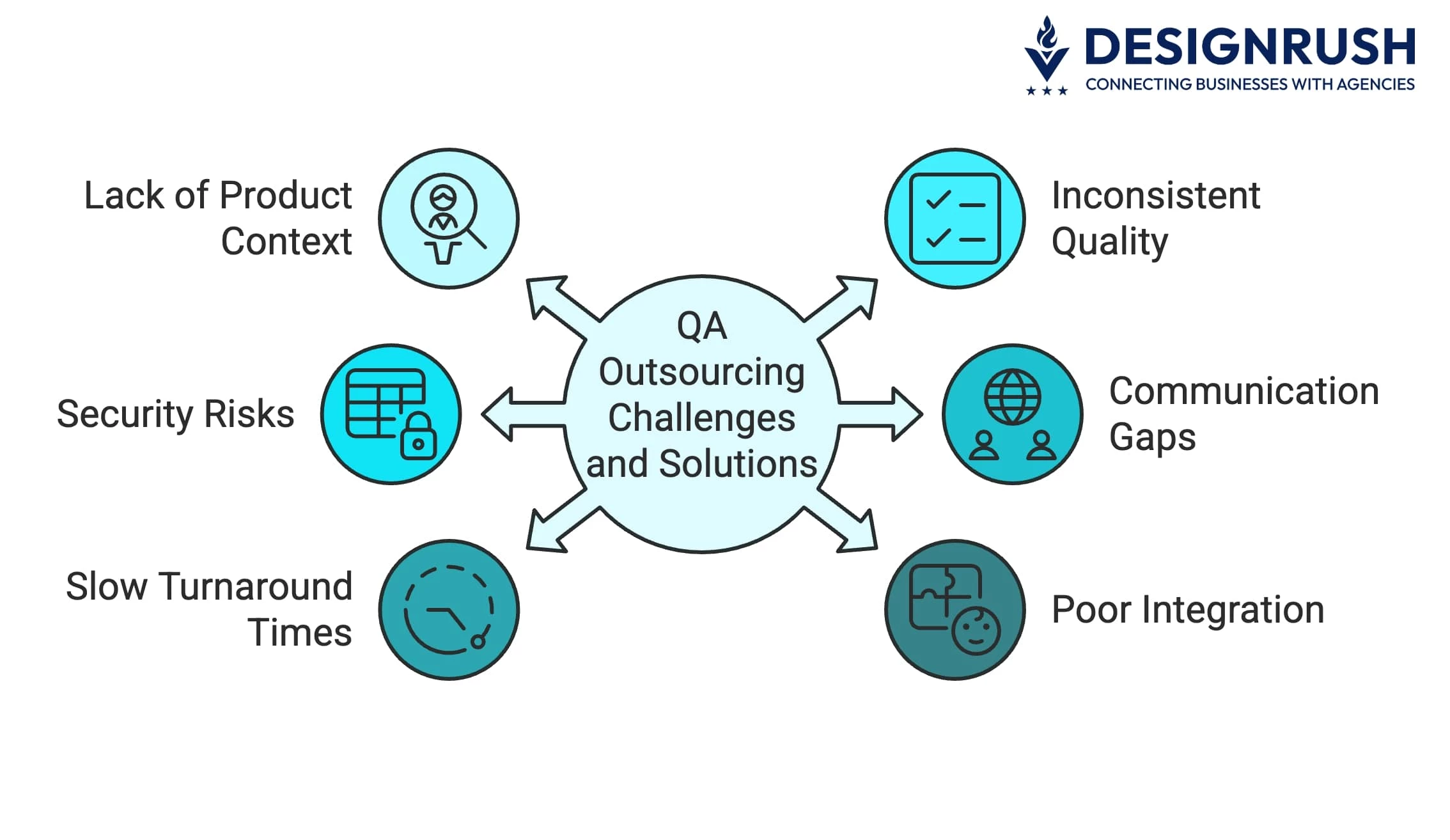
- Lack of product context: External testers might miss edge cases if they don’t fully understand your project or target users. Onboard QA teams like you would internal hires. Share user stories, personas, business goals, and have them attend sprint demos or planning sessions.
- Inconsistent quality: If QA standards aren’t defined upfront, results will vary between testers or teams. Create a detailed QA playbook that outlines test case structure, bug severity levels, reporting formats, and tools. Review deliverables regularly with a lead QA contact.
- Security risks: Outsourcing means sharing sensitive data with third parties. Use NDAs, enforce role-based access, and require secure infrastructure. Clearly outline your security protocols so your QA partner can follow them too.
- Communication gaps: Time zone differences or unclear handoffs can lead to misunderstandings. Establish overlapping working hours, set daily syncs or async check-ins, and use shared tools to keep all team members aligned.
- Slow turnaround times: Missed deadlines can bottleneck your release cycle, especially if there’s poor prioritization. Set clear SLAs for test cycles and bug resolution. Use sprint-based workflows and make sure blockers are escalated early.
- Poor integration with your team: QA works best when it’s tightly woven into the dev pipeline, not siloed. Involve team members during planning and use tools that enable shared visibility into bugs, tasks, and progress.
Top Outsourced QA Testing Providers
The global software testing market was worth over $87 billion in 2024. With so many options out there, finding the right partner can feel overwhelming. Here are some of the best outsourced QA testing companies trusted by startups and enterprises alike:
1. a1qa
- Location: 160 Clairemont Ave, Suite 200, Decatur, Georgia 30030, United States
- Average hourly rate: $25/hr
- Expertise: Custom frameworks, custom languages, managed services, software development
a1qa is a global leader in quality assurance and software testing services with over 20 years of experience and more than 1,500 projects successfully delivered. Backed by a team of 1,100+ QA specialists, the company supports over 800 clients in 39 countries, providing manual and automated testing solutions around the clock.
Known for its ISO-certified processes and deep expertise in functional testing, the agency works with a wide range of organizations, helping startups to Fortune 500 enterprises launch high-quality software products and enhance user experiences. It provides a full-cycle QA service suite, adapting seamlessly to any software development cycle and methodology, including Agile, Scrum, Kanban, and SAFe.
With 10 R&D hubs and Centers of Excellence, in-house training programs, and a proven track record in industry-specific QA, a1qa positions itself as a reliable long-term partner for businesses seeking scalable, efficient, and secure solutions.
2. Mercury Development
- Location: 901 SW Martin Downs Blvd, Suite 321, Stuart, Florida 34990, United States
- Average hourly rate: $50/hr
- Expertise: Application platforms, blockchain, CMS, custom frameworks, and custom languages
Mercury Development brings over 25 years or experience in building and testing high-performance applications across mobile, web, and desktop platforms. With a team of 500+ experts, including 50+ QA professionals, the agency has helped launch more than 1,500 mobile apps used by over 50 million users worldwide.
Mercury Development’s QA services go beyond bug-fixing; it specializes in building systems that prevent defects from the start, emphasizing strong documentation, continuous integration, and proactive planning. Equipped with a testing lab of 200+ real devices, it ensures that every app is tested across a broad range of operating systems, screen sizes, and hardware configurations. Its mature processes and deep technical expertise make it a trusted QA partner for long-term success.
3. TestMatick
- Location: 276 5th Ave Suite 704, New York City, New York 10018, United States
- Average hourly rate: $14/hr
- Expertise: Software testing
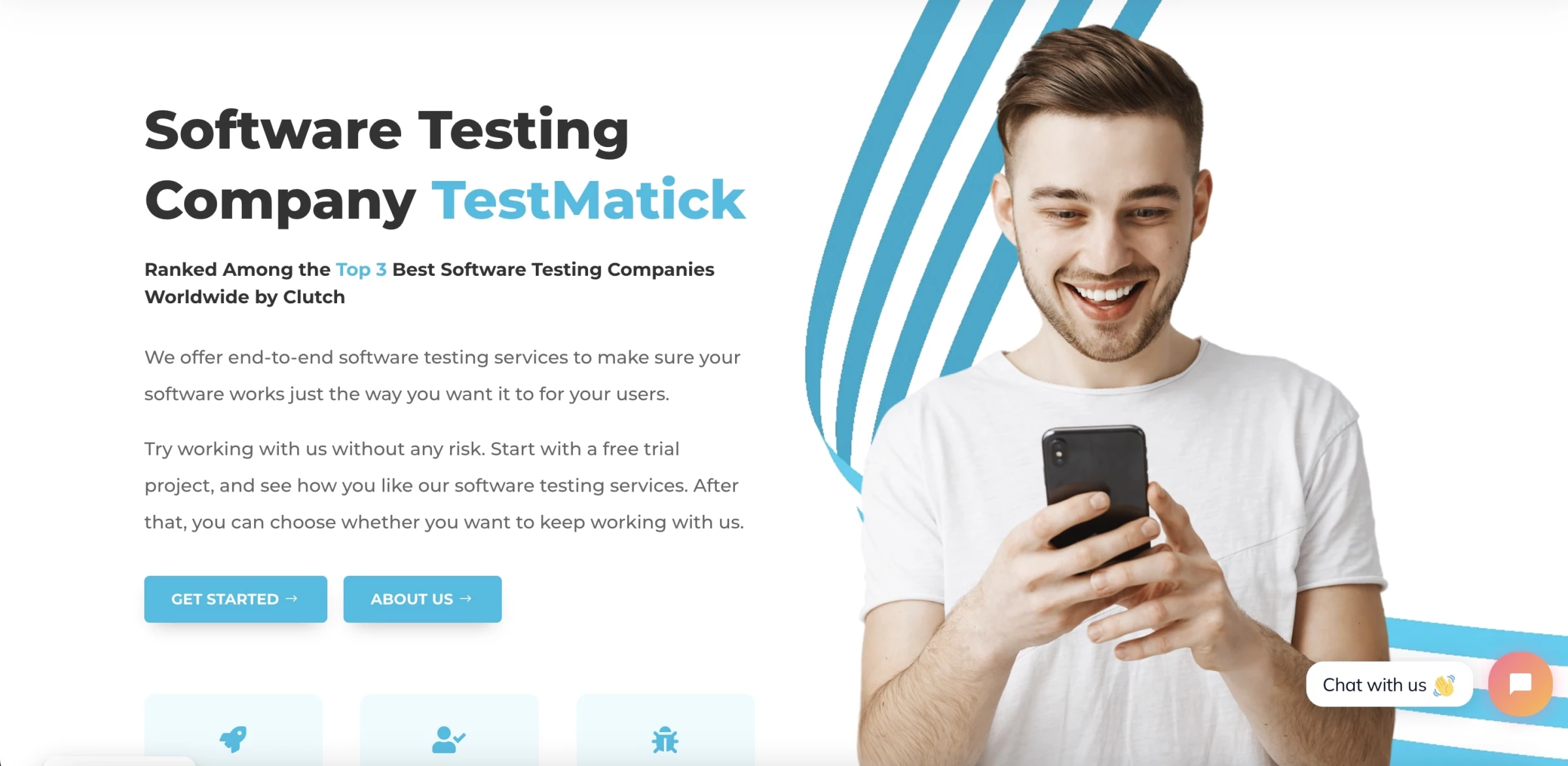
TestMatick is a dedicated software testing company that has completed over 1,500 projects for 150+ global clients, with more than 1 million bugs reported across a wide range of applications. With a team of 150+ experienced QA engineers, it offers comprehensive testing services, including performance, usability, and automation testing.
TestMatick stands out with its quick response time, making it a reliable partner for fast-paced development environments. You can benefit from its risk-free trial project, flexible engagement models, and cost-effective pricing made possible by its regional delivery structure.
4. Azumo
- Location: 60 Francisco St, San Francisco, California 94133, United States
- Average hourly rate: $55/hr
- Expertise: AI, application platforms, big data, blockchain, and CMS
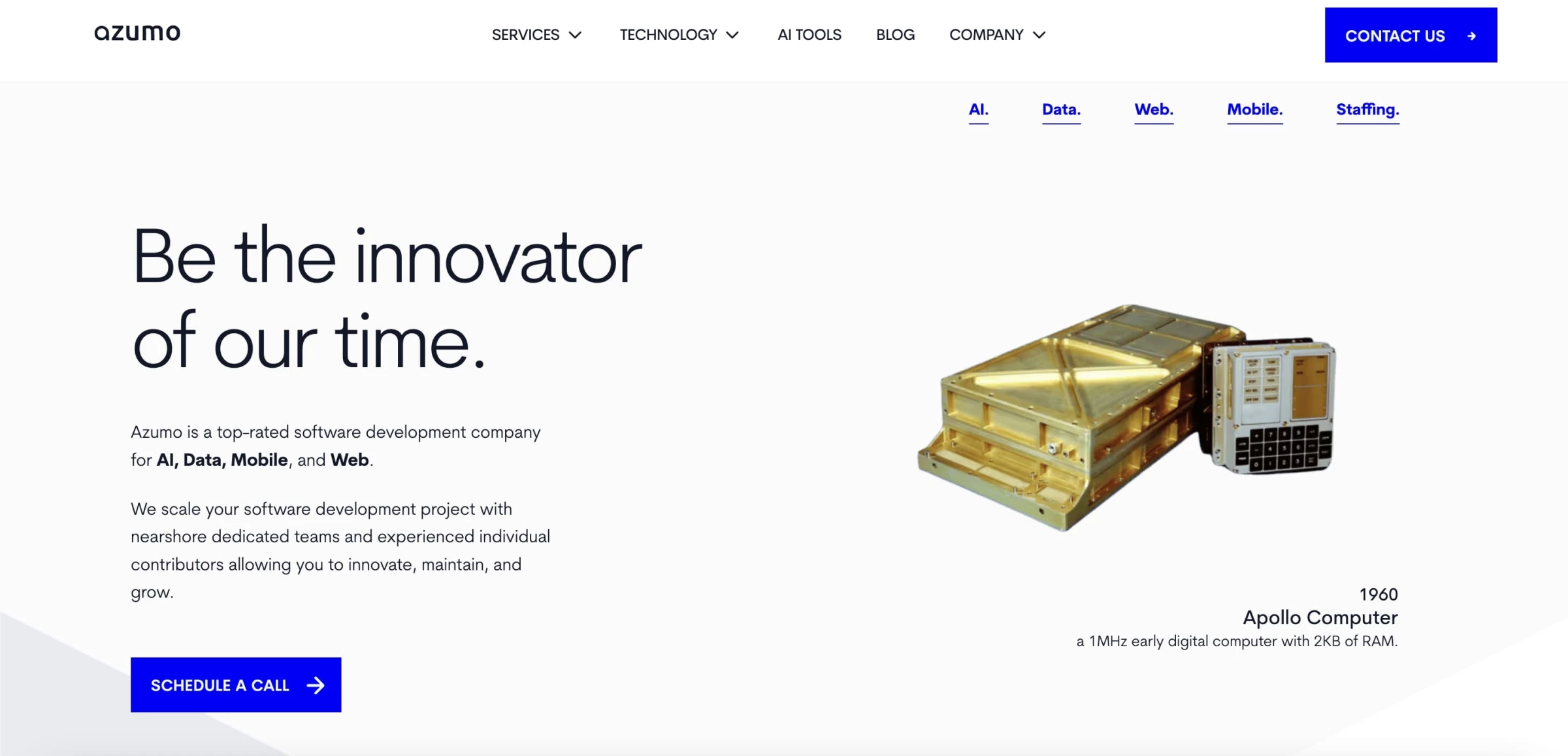
Azumo is a fast-growing nearshore software development company with over 8 years of experience delivering high-quality solutions in AI, web, mobile, data engineering, and DevOps. With a proven track record supporting major clients like Facebook, Omnicom, and United Health, it has completed hundreds of successful projects and built long-term partnerships.
Azumo’s nearshore model ensures real-time collaboration, with engineers who are time zone aligned and fluent in English. Its services are built around transparent communication and a strong internal QA process.
5. ELEKS
- Location: 625 W. Adams, Chicago, Illinois 60661, United States
- Average hourly rate: $50/hr
- Expertise: AI, application platforms, big data, blockchain, and CRM
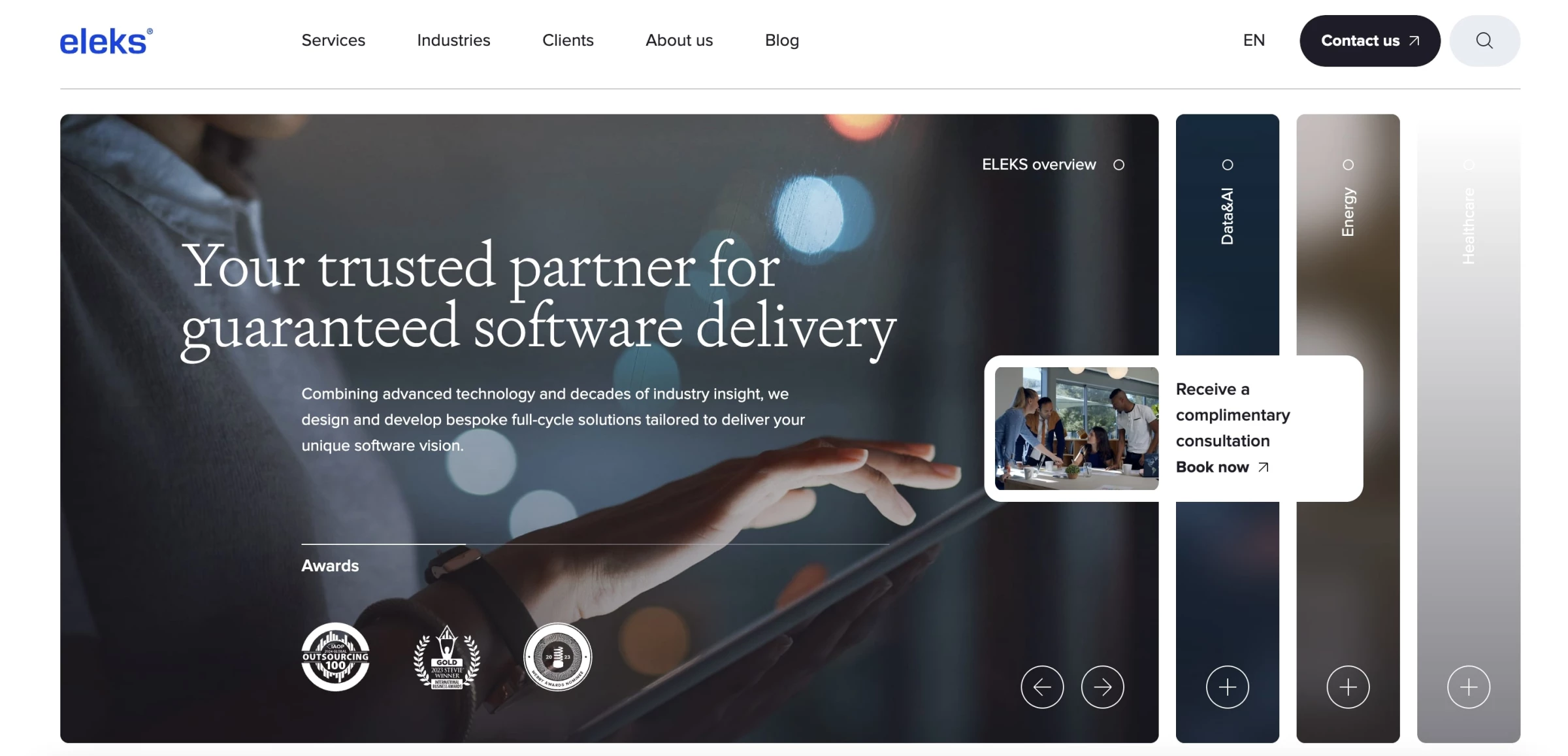
ELEKS is a global software development and QA partner with over 30 years of experience and more than 1,000 successful projects delivered to 120+ active clients. With 20 offices and delivery centers worldwide, it offers full-cycle, custom-built solutions that combine deep expertise with industry-specific insight.
Through advanced performance and test automation services, ELEKS helps reduce time-to-market by up to 80% and testing costs by 20%, thanks to early issue detection and minimal manual effort. Its frameworks comply with global quality standards like ISO 29119 and IEEE 829, ensuring that each product meets the highest benchmarks for security, stability, and usability.
Outsourcing QA: Final Words
Outsourcing QA can be a strategic win — if done right. The trick? Define your goals, vet partners deeply, and always start with a pilot.
Nearshore outsourcing offers the best middle ground for most businesses, balancing cost with communication.
Our team ranks agencies worldwide to help you find a qualified partner. Visit our Agency Directory for the Top Software Development Companies, as well as:
- Top Software Outsourcing Companies
- Software Consulting Agencies
- Top Software Testing Companies
- AI Development Companies
- Top Software Companies in Nashville
Our design experts also recognize the most innovative design projects across the globe. Visit our Awards section for the best & latest in app designs.
Outsourcing QA FAQs
1. What types of QA services can be outsourced?
You can outsource manual testing, test automation, performance testing, security testing, mobile app testing, and more.
2. Will outsourcing QA compromise product security?
Not if you choose a trustworthy, ISO-certified partner with strict NDAs, secure infrastructure, and clear data handling policies.
3. Can outsourced QA teams work in my time zone
Yes, many providers offer nearshore or onshore models or assign teams with overlapping hours to match your working schedule.