
Key Findings
- Refactor when your system works but needs security or scalability improvements without disrupting operations.
- Rebuild if your software can’t support new features, poses security risks, or relies on outdated, costly tech.
- Whether refactoring or rebuilding, start with a system audit, align with business goals, and create a clear modernization plan, including tech stack selection, phased rollouts, and well-tested data migration strategies.
Outdated software slows your business, increases security risks, and drives up costs. As you grow, these inefficiencies drain productivity and frustrate users, making an upgrade essential. Your options? Refactor or rebuild.
Each has its trade-offs, and the right choice depends on your goals, technical debt, and long-term vision. Let’s break it down.
Why Legacy Software Becomes a Business Risk
Legacy software doesn't only look old — it’s often plagued by performance problems, vulnerabilities and a variety of other issues that make it increasingly difficult to scale and support software development and evolving business needs.
Some of the most common problems include:
- Outdated technology leads to developer shortages: Older programming languages and frameworks make it challenging to find developers with the right expertise, leading to higher hiring costs and slower development cycles.
- Security risks increase cyber threat exposure: Without the latest security updates, legacy software becomes an easy target for cybercriminals, increasing the likelihood of data breaches and compliance violations.
- Scalability issues limit growth: As your business expands, outdated systems struggle to handle increased traffic and demand, creating bottlenecks that slow down operations and hinder competitiveness.
- High maintenance costs drain resources: Maintaining aging software requires constant patches and fixes, diverting valuable time and budget away from innovation and strategic business improvements.
- Lack of integration blocks efficiency: Older systems often don’t work well with modern third-party tools, APIs, or cloud solutions, forcing teams to rely on inefficient manual processes and limiting automation capabilities.
Four in ten CIOs surveyed by Expereo cited legacy connectivity and management systems as the biggest barriers to growth. Jim Tiller, CISO at Nash Squared, highlights the difficulty of securing aging technology, explaining that while keeping legacy systems operational is one challenge, ensuring they remain protected is an entirely different struggle.
As these systems demand increasing time and resources to maintain, they divert focus from innovation and long-term scalability.
How To Decide Between Rebuilding or Refactoring
When upgrading your software, there’s no one-size-fits-all solution. The best approach depends on your business needs, budget, and long-term goals. Evaluating your current pain points and future scalability requirements will help you determine the right path forward.
When To Refactor
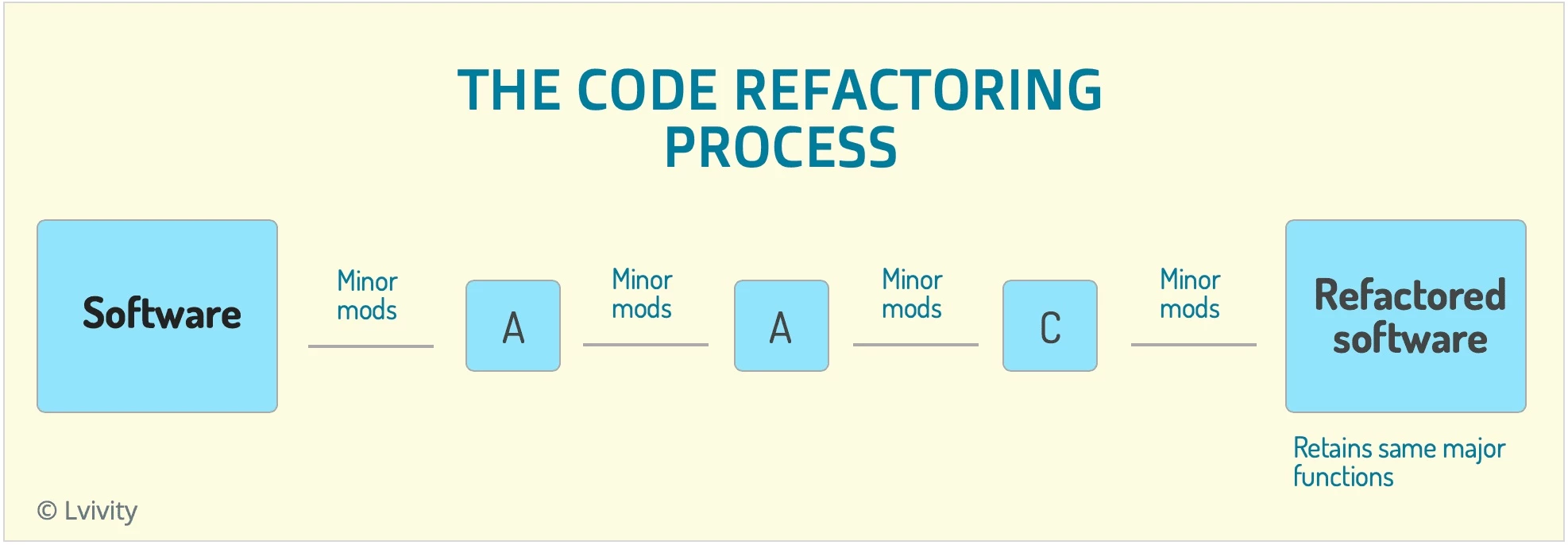
Refactoring is the best choice when:
- Your core system is still functional but needs performance and security upgrades.
- You need to modernize gradually without disrupting daily operations.
- Budget constraints make a full rebuild unrealistic in the short term.
Example: Netflix

Netflix continuously refactors its platform to enhance streaming performance and scale with demand. After a major database corruption incident in 2008, the company realized its monolithic system was a liability. Instead of rebuilding from scratch, Netflix incrementally migrated to a cloud-based microservices architecture, improving efficiency while maintaining service reliability.
By breaking its system into over 700 microservices, Netflix enabled independent development, testing, and deployment, reducing bottlenecks and accelerating innovation. To coordinate these microservices, Netflix developed Conductor, an open-source orchestration engine that streamlines workflows and ensures seamless integration.
When To Rebuild
Rebuilding is the better option when:
- Your legacy system can’t support new features or business needs.
- Security and compliance risks are too high to patch.
- The system is based on obsolete technology that’s expensive to maintain.
Emerging technologies like cloud, AI, and microservices are often better suited to fresh builds rather than retrofitting outdated systems. According to Fabricio Defilippe, CEO of Tuxdi, legacy systems can struggle to support modern architectures, making rebuilding the smarter move.
“Rebuilding lets us fully embrace scalable, efficient solutions,” he explained. At Tuxdi, Fabricio said they use these technologies to future-proof their clients’ systems — ensuring they're not just keeping up, but staying ahead.
Example: Walmart Canada

Walmart Canada undertook a comprehensive overhaul of its eCommerce platform to enhance user experience and manage increased online traffic. Partnering with NashTech, they rebuilt their backend using Scala and the Akka Platform, leading to impressive performance improvements.
The updated system efficiently handled approximately 400,000 page views per hour during peak times and managed millions of simultaneous frontend requests. These enhancements resulted in a 36% reduction in page load times, a 20% boost in web traffic conversions, and a staggering 98% increase in mobile orders within four weeks post-launch.
Refactoring and Rebuilding Strategies
Whether you choose to refactor or rebuild, the key is to align the process with business goals, user needs, and technical feasibility. A well-planned modernization strategy should focus on incremental improvements, careful risk management, and seamless data migration to prevent disruptions.
- Assess business needs and define Scope
- Choose the right tech stack
- Phased rollout vs. Big bang launch
- Data migration and integration challenges
1. Assess Business Needs and Define Scope
Before choosing between refactoring or rebuilding, align your decision with long-term business objectives and technical constraints. A clear scope ensures that modernization efforts support growth, enhance efficiency, and minimize disruptions.
“It really depends on the size and the features the legacy system has,” says Igor Stamatovski, CEO of IBORN.NET. “If it is quite complex and feature-rich, rebuilding it will require a significant amount of time and resources.” He recommends breaking the system down into logical modules and assessing each one individually — “some of them might not even be used by customers anymore.”
In such cases, analytics on feature usage can help prioritize what to rebuild first, ensuring your modernization strategy is both targeted and efficient.
Consider the following key factors:
- Performance and security: Is your current system lagging, causing frequent downtime, or struggling with security vulnerabilities?
- Scalability: Will your software be able to handle increased users, data, and transactions in the next 3–5 years?
- Feature development: Do you need to integrate new capabilities like AI, automation, or real-time analytics, or just improve existing functions?
- Budget and timeline: Can your business afford a full rebuild, or does an incremental refactoring approach better align with cost constraints?
- Risk tolerance: How much downtime can your business handle? A full rebuild often requires a longer transition period, while refactoring allows continuous operations.
A comprehensive audit of your software architecture, dependencies, and user requirements will help determine whether refactoring or rebuilding is the most cost-effective and sustainable approach.
2. Choose the Right Tech Stack
Whether refactoring or rebuilding, future-proof technologies ensure long-term efficiency, security, and maintainability. The right stack should support modern development practices and integrate seamlessly with third-party tools. Consider:
- Cloud computing solutions: Enable better scalability, security, and cost efficiency with the likes of AWS, Azure, or Google Cloud
- Modern frameworks: Ensure easier maintenance, developer support, and improved performance with the likes of React, Angular, Node.js, or Python.
- API-first development: Facilitates smoother integrations, data sharing, and modular software architecture.
- DevOps and CI/CD pipelines: Automates deployment, testing, and updates, reducing manual intervention and enhancing reliability.
Choosing the right stack helps reduce technical debt, improve system performance, and future-proof your software.
3. Phased Rollout vs. Big Bang Launch
A phased rollout minimizes risk with gradual updates, while a big bang launch replaces the system all at once, requiring thorough testing and preparation.
Phased Rollout (ideal for refactoring):
- Updates are introduced incrementally, reducing the chance of failures.
- Allows for real-time user feedback, making it easier to adjust as needed.
- Suitable for businesses that can’t afford extended downtime.
- Common in SaaS platforms, where gradual feature rollouts are crucial.
Big bang launch (common in rebuilding):
- A completely new system replaces the old one all at once.
- Requires extensive pre-launch testing to avoid system failures.
- Best suited for businesses where the existing system is no longer viable.
- Often used in industries where compliance or security upgrades require full-scale transitions.
4. Data Migration and Integration Challenges
Data migration is often the most complex aspect of modernizing legacy software, and poor planning can lead to data loss, inconsistencies, or system failures. Whether refactoring or rebuilding, follow these best practices:
- Comprehensive data backup: Before migration, create secure backups to prevent data loss.
- Use extract, transform, load (ETL) tools: Solutions like Apache NiFi, Talend, and Informatica help automate and streamline data migration while ensuring data consistency.
- Test extensively: Verify data integrity before going live, ensuring there are no missing records, broken dependencies, or corruption issues.
- Establish real-time data syncing (if needed): If your system needs to remain operational during migration, set up real-time data syncing to avoid inconsistencies.
A structured data migration plan prevents operational disruptions and ensures a smooth transition to the upgraded system.
Rebuild or Refactor: Key Takeaways
Modernizing legacy software is a critical decision that impacts your business's efficiency, security, and scalability. Whether you choose to refactor or rebuild, the right approach depends on your business needs, technical debt, and long-term goals.
| Refactor | Rebuild | |
| Best For | Systems that need performance, security, or maintainability improvements while keeping core functionality intact | Outdated, costly systems that limit growth and require a fresh start |
| Time Investment | Faster, as changes are made incrementally | Longer, as it involves developing a new system from scratch |
| Cost | Lower upfront costs, but ongoing updates may be needed | Higher initial investment, but a future-proof solution |
| Business Disruption | Minimal, since updates are deployed gradually | Higher, as it requires migrating to a completely new system |
| Technical Debt | Reduces technical debt over time while keeping the existing system intact | Eliminates technical debt, creating a clean, modern codebase |
| Scalability & Modernization | Improves scalability, but may have limitations due to legacy constraints | Optimized for scalability, allowing for future innovations and integrations |
| Risk | Lower risk, as changes are gradual and can be rolled back if needed | Higher risk, as it requires a full transition and extensive testing |
Modernizing your legacy software goes beyond simply keeping up. The aim should be to create a stronger, more efficient foundation for growth.
Both refactoring and rebuilding offer clear advantages, whether you need gradual improvements with minimal risk or a long-term investment in innovation.
The key is to align your strategy with business priorities, ensuring that your software not only supports operations today but also drives success in the years ahead.

Our team ranks agencies worldwide to help you find a qualified partner. Visit our Agency Directory for the Top Software Development Companies, as well as:
- Software Consulting Agencies
- Top Software Testing Companies
- AI Development Companies
- Top Mobile App Development Companies
- Top Software Companies in Nashville
Our design experts also recognize the most innovative design projects across the globe. Visit our Awards section for the best & latest in app designs.
Rebuild or Refactor FAQs
1. How do I determine if my software has too much technical debt to refactor?
If your software requires constant fixes, frequent crashes, or struggles to integrate with modern tools, it may have excessive technical debt. Assess the code complexity, documentation quality, and maintainability — if developers find it difficult to modify without causing new issues, refactoring may not be cost-effective. Additionally, if your system is built on an outdated language or framework with shrinking developer support, a rebuild may be the better option.
2. How long does it typically take to refactor vs. rebuild legacy software?
Refactoring is an incremental process and can take weeks to months, depending on the complexity of the system and the depth of changes needed. Since it happens gradually, it minimizes disruptions. Rebuilding, however, requires extensive planning, development, and testing and can take anywhere from several months to a few years, depending on the size of the application and migration challenges. The larger and more integrated the system, the longer the rebuild process.
3. How do regulatory and compliance requirements affect modernization decisions?
If your industry has strict compliance requirements (e.g., healthcare, finance, government), refactoring might be preferred as it allows you to modernize without disrupting existing compliance measures. A full rebuild requires careful planning to ensure the new system meets all regulatory standards, including data security, encryption, and record-keeping protocols.
Additionally, compliance frameworks like GDPR, HIPAA, or PCI DSS may dictate how data is migrated, stored, and accessed, which could impact whether refactoring or rebuilding is the better choice.
4. What are the long-term maintenance implications of refactoring vs. rebuilding?
Refactoring reduces technical debt over time but may require ongoing adjustments to keep up with modern standards. While it extends the lifespan of your existing system, you might still run into scalability limitations later on.
Rebuilding eliminates legacy constraints and creates a cleaner, more maintainable codebase, but it requires a higher upfront investment. A properly rebuilt system should reduce long-term maintenance costs by being more modular, scalable, and aligned with modern development practices.