


- Agency: Chop Dawg
- Client: Kitchen Stage
- Category: App Design — Food & Beverage
- Location: Philadelphia, Pennsylvania, United States
- Project Brief: Design a mobile app that unifies recipe discovery, grocery delivery, restaurant recommendations, and user-generated cooking content into a seamless, community-driven food experience
Most food and beverage apps pick one job and do it: find a recipe, order groceries, or book a table. Kitchen Stage bets that the reason people bounce between four apps is that no one stitched those jobs into a single cooking session.
Juror Sharon Braude called the bet correctly placed: "Bringing all the elements of inspiring, sourcing and creating meals from start to finish is a genius move by Kitchen Stage. It removes barriers and simplifies the experience."
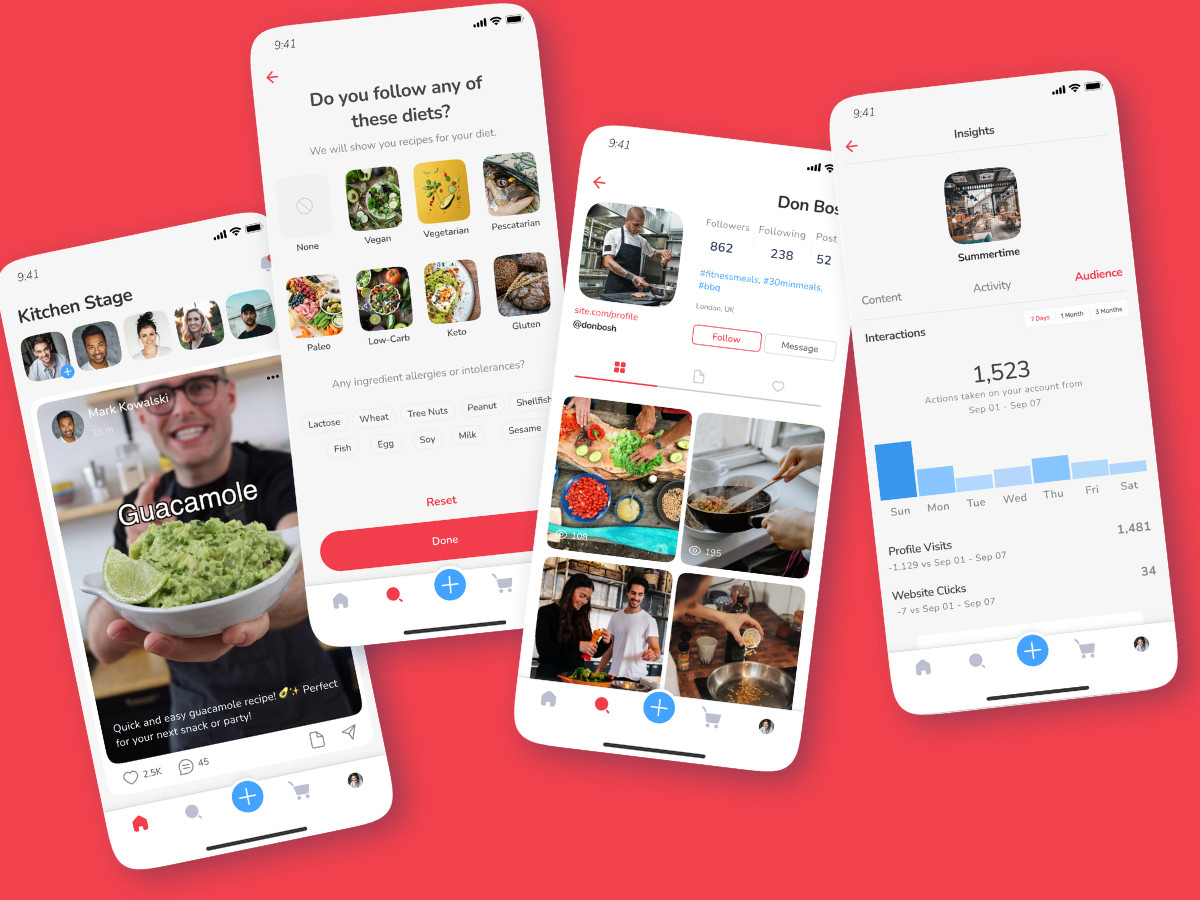
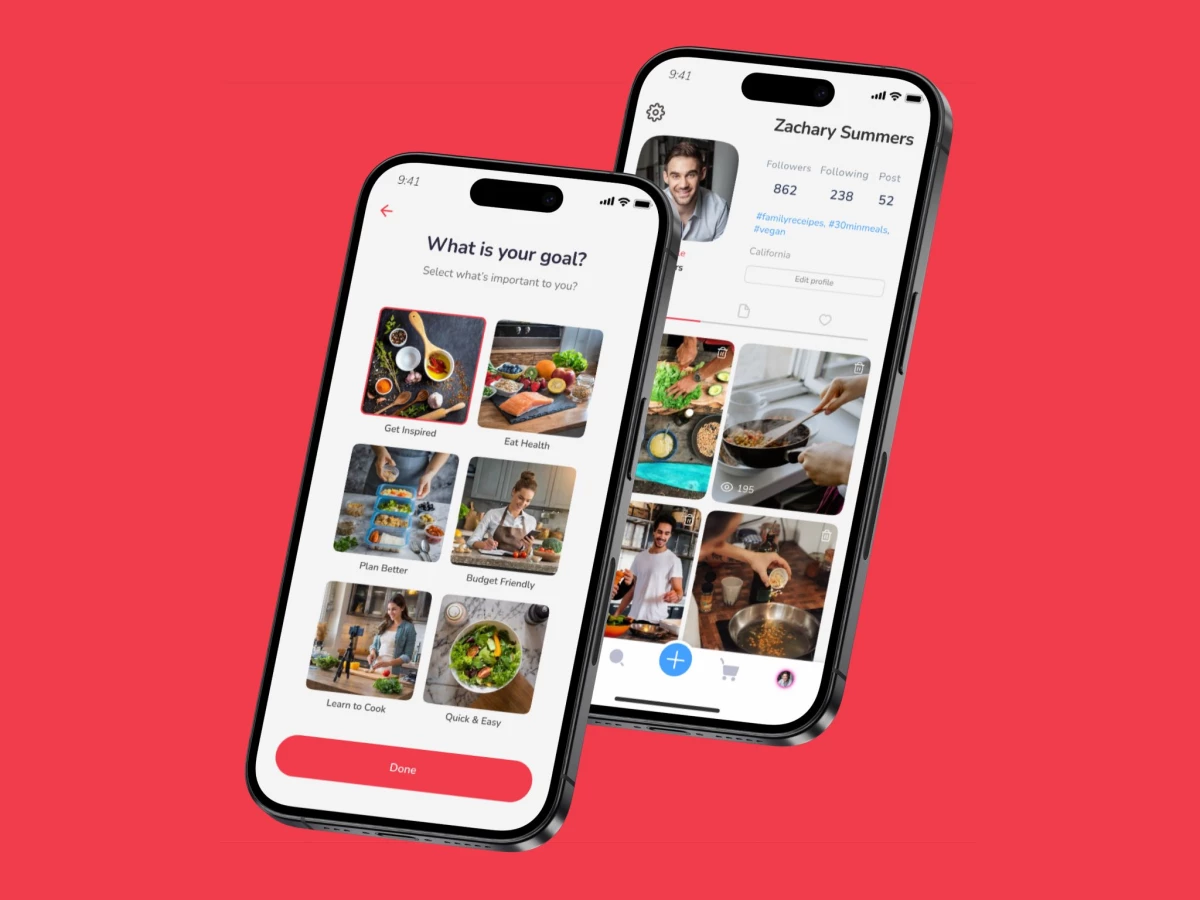
The onboarding asks intent before it shows anything. A "what is your goal" grid lets users pick Get Inspired, Eat Healthy, Plan Better, Budget Friendly, Learn to Cook, or Quick & Easy. That one screen sorts a nervous beginner and a bored home cook into different feeds, so the app stops guessing who it is talking to.
The recipe page closes the gap most apps leave open. A step-by-step for Beef Asparagus lists every ingredient with an add button right there, so the missing-item problem gets solved at the recipe, not at a second app. Walmart+ delivery turns "I don't have avocados" into a cart line instead of a scrapped dinner. Braude flagged the business logic hiding inside that convenience: the grocery link with real-time availability "creates stickiness plus a trackable revenue stream."
The build screen treats cooking as content worth making. A creator films clips, trims them at 2x to 4x speed, and layers voiceover or music, all inside the app. Recipe demos are mostly watched sped up anyway, so baking that speed control into the editor matches how people actually consume the format.
Discover borrows the logic of a social feed rather than a cookbook index. Top Search, Close To You, and Chef Spotlight surface dishes by proximity and popularity, and a map view plots nearby restaurants by distance. The app reads cooking and eating out as the same appetite, not two separate modes, and city guides extend that logic to travel.
The profile makes every user a potential creator, not just a browser. Follower, following, and post counts sit up top, hashtags like #familyrecipes and #30minmeals organize a personal grid, and a view count rides each clip. The layout tells a casual cook they are one upload away from an audience.
Every screen chases the same idea: keep the whole loop in one place. Goal-based onboarding, in-recipe delivery, the built-in editor, the proximity feed, and the creator profile all work to stop the app-hopping that breaks a cooking habit before it forms.
Juror Andrea Owsinek-Brucker named the risk and the result in one breath: "Combining so many features may be overwhelming, yet this app creates a seamless expectation and delivery user experience, from discovery to delivery to delight!"
The launch backed the bet:
- More than 500,000 recipes and videos uploaded in the first 90 days
- A 35% lift in grocery delivery conversions
- Session times roughly three times longer than standard recipe apps