Everything You Need to Know Before Hiring an Accounting Firm in Boston Table of Contents
Why should I hire a Boston-based agency instead of a national remote service? A Boston firm offers accounting services that include hyper-local tax insight, tangible support during compliance or audits, personal relationships, community connections, and tailored pricing.
They also support private equity-backed companies with due diligence, financial reporting, and post-transaction integration.
Some Boston firms offer international tax services, supporting companies with foreign subsidiaries, cross-border transactions, and global compliance .
With Massachusetts small businesses employing approximately 1.5 million people and Boston’s metro economy valued at $610 billio n, firms that know Boston banks, lenders, and economic groups can be valuable connectors for capital, financing, and local opportunities.
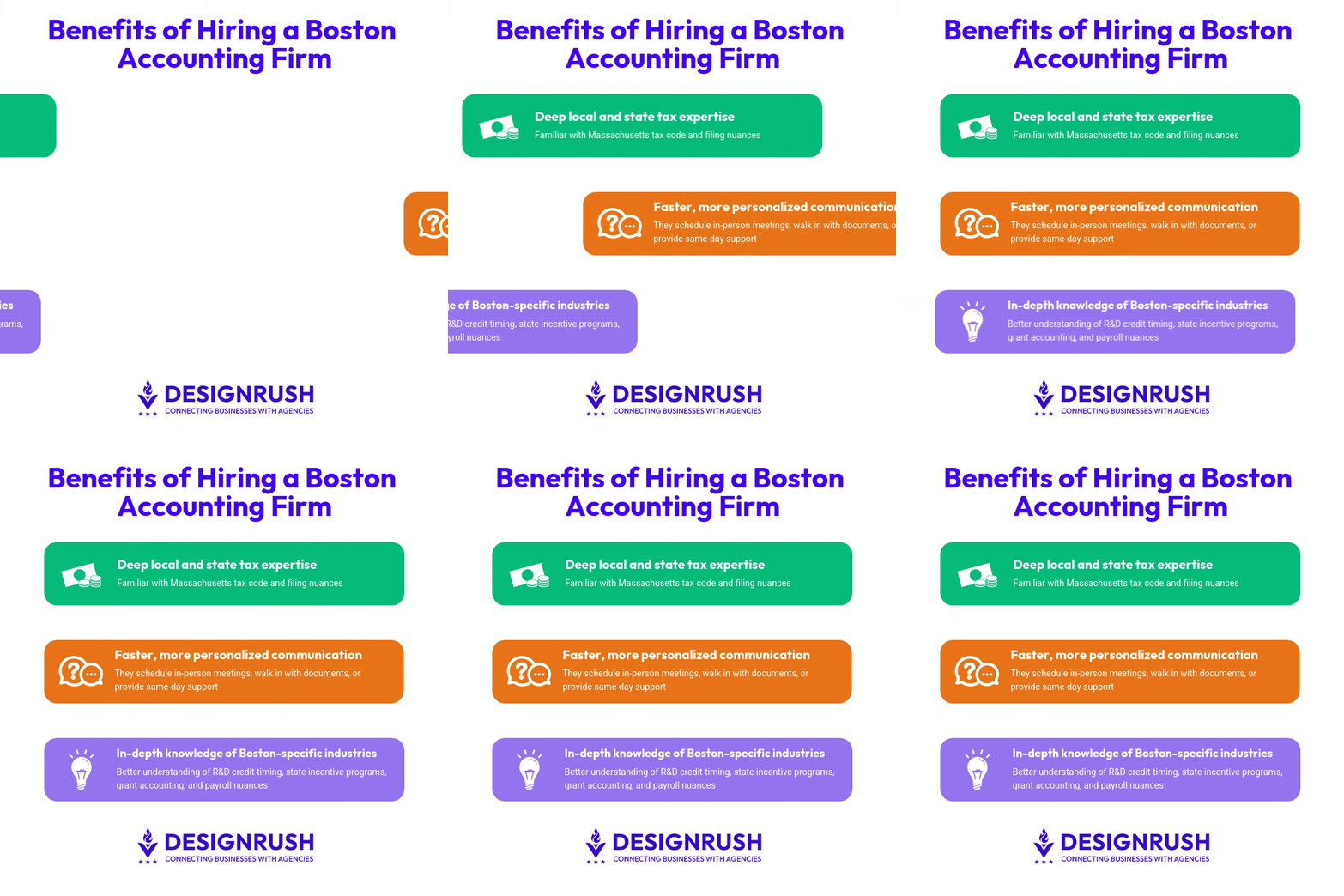
Deep local and state tax expertise Boston and Massachusetts have unique tax and regulatory requirements, from Massachusetts corporate excise tax rules to local business certificates, city fees, and specific state credits like R&D incentives.
A local Certified Public Accountant knows each Massachusetts tax code and filing nuances that remote national services may overlook, reducing compliance risks and costly errors.
National or remote accountants may be excellent with federal rules, but they often lack hyper-local insight that can save a small business owner a significant amount of money.
Massachusetts income tax and surtax planning MA taxes most earned/unearned income at 5.0% . If your taxable income exceeds $1,083,150 (tax year 2025), the state adds an extra 4% surtax on the amount above that threshold (often called the “Millionaire’s Tax”). Corporate excise (C-corporations and some S-corporations) has multiple components Massachusetts corporate taxes for general business/manufacturing corporations include:
8.0% on net income, plus$2.60 per $1,000 of tangible property or net worth (non-income measure), with a minimum excise of $456. A Boston accounting firm will be sharper on how your entity type and receipts level drive what’s due in MA and ensure financial success.
Sales tax is statewide (6.25%), with MA-specific nexus rules Massachusetts’ sales/use tax rate is 6.25% If you sell remotely into MA, you generally must collect/remit once MA sales exceed $100,000 in a calendar year Remote services can miss MA nexus triggers, taxability edge-cases, and how MA rules intersect with Boston-based operations and customer footprints.
Massachusetts payroll rules are expensive if you get them wrong Paid Family & Medical Leave (PFML) for 2026:
Employers with 25+ covered individuals: total PFML contribution rate is 0.88% of eligible wages Employers with fewer than 25 covered individuals: 0.46% . The maximum weekly PFML benefit is $1,230.39 starting Jan 1, 2026 Faster, more personalized communication With a local firm, you can schedule in-person meetings, walk in with documents, or get same-day support, which is helpful during year-end closes, audits, or state tax filings.
Remote providers, on the other hand, may operate in different time zones or require scheduling delays via Zoom or email.
A local CPA builds institutional knowledge of your business over time.
In-depth knowledge of Boston-specific industries Boston’s economy leans heavily on biotech, higher education, healthcare, and tech startups.
According to the latest reports, Greater Boston supports 1,000+ biotech companies with $2.75B in VC funding in H1 2025. In such a business environment, local accountants understand R&D credits and sector incentives better than national services.
Boston accounting agencies better understand industry patterns, including R&D credit timing, state incentive programs, grant accounting, and region-specific payroll nuances .
What should I prepare before I hire an agency? Before you choose an accountant, prepare the following documentation and help Boston accounting firms deliver accurate pricing, faster onboarding, and better Massachusetts-specific tax and payroll compliance from day one:
Business and legal information : EIN and legal business name, entity documents (LLC, S-Corp, C-Corp, partnership), Massachusetts business registration, Boston business certificate (DBA), if requiredFinancial statements from the last 1-3 years : Profit and loss statements, balance sheets, cash flow statements, bank and credit card statementsTax history and filings : Federal and Massachusetts tax returns (23 years), Sales & use tax filings (MA nexus at $100K in annual sales), IRS or MA Department of Revenue notices, if anyPayroll and employment records (Critical in MA) : Employee list and compensation details, payroll tax filings, Massachusetts paid family and medical leave (PFML) recordsAccounting, payroll, and payment systems: Accounting software access (QuickBooks, Xero, NetSuite), payroll provider access, payment processor reports (Stripe, PayPal, Square)Industry and tax credits : Industry classification (tech, biotech, healthcare, education, real estate), R&D activity documentation (MA R&D credit 10% of qualifying spend)Contracts and obligations: Loans, leases, and financing agreements, major vendor or customer contractsFinancial goals, scope, and budget : Services needed (bookkeeping, tax, advisory, CFO support), budget expectations, growth plans (hiring, fundraising, expansion, exit)Should my accountant be using Generative AI for my books? Your accountant should be using Generative AI as part of efficient, modern bookkeeping and reporting because it improves speed, granularity, and productivity .
However, AI must be paired with professional CPA judgment, data governance, and human oversight to avoid errors, misreporting, or compliance gaps.
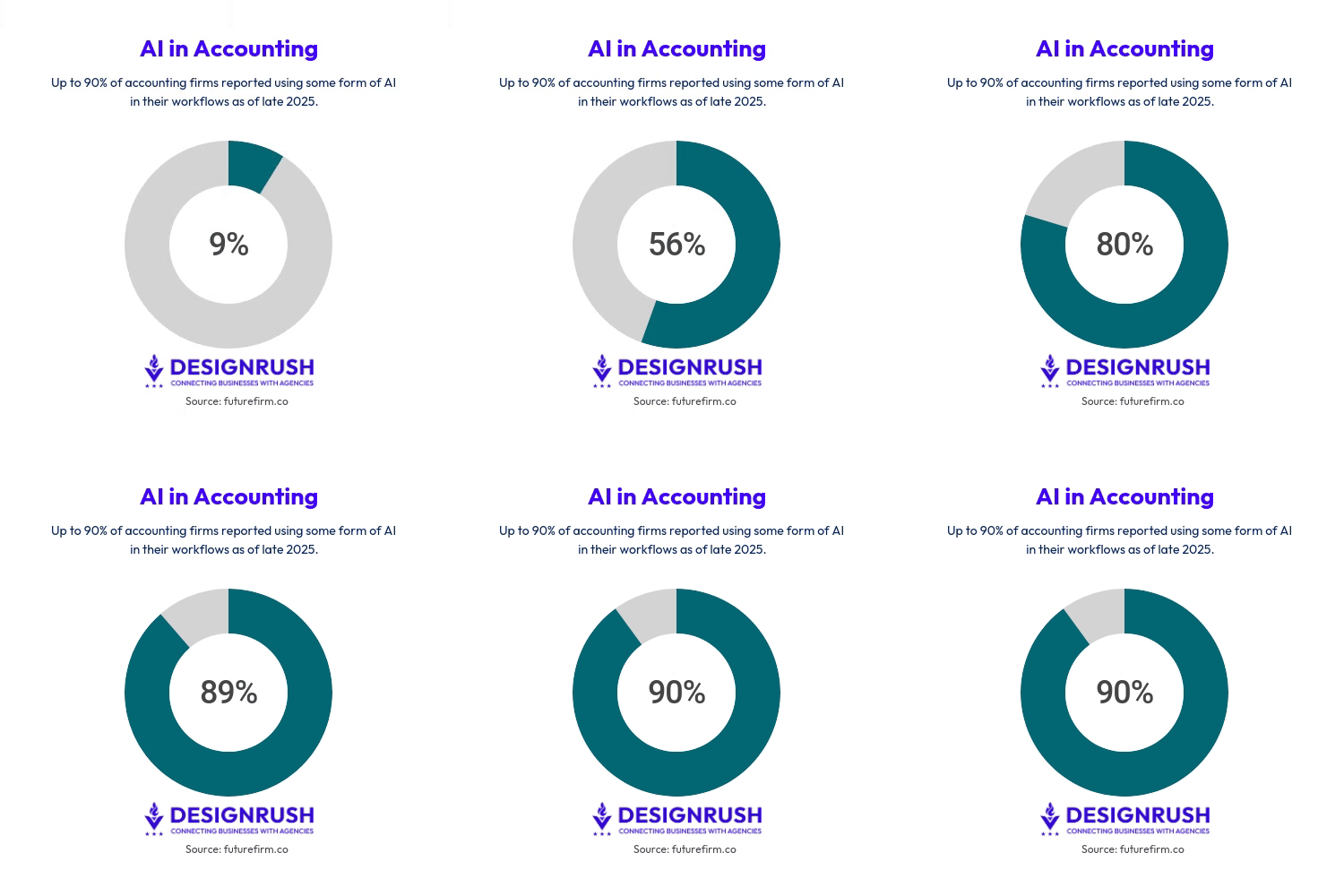
Up to 90% of accounting firms
AI improves speed and productivity , helping Boston accountants summarize data, draft narrative reports, and accelerate monthly close processes , often much faster than manual workflows.
Studies show that firms using AI tools see higher reporting granularity (e.g., 12% more detailed categorization) and stronger record accuracy.
Thanks to AI, accountants in Boston can repurpose the time saved toward advisory services , planning , or business strategy .
Your accounting partner should be using AI as a tool, not a substitute for CPA expertise:
Automating routine processes like categorization, reconciliation, and data ingestion Producing draft insights or summaries to speed the month-end close Spotting anomalies or compliance risks in large datasets Supporting advisory work by freeing human time for strategy What red flags should I watch out for when choosing an accounting firm in Boston? Watch out for the following red flags when you start interviewing potential partners for your accounting services:
Lack of professional credentials (CPA/EA/licensing) Vague or unclear pricing structure Poor communication or slow responses Limited or no industry experience Avoids in-person meetings Overly aggressive promises What questions should I ask agencies before signing a contract? Before signing a contract with a Boston accountant, ask potential candidates the following questions:
Relevant Background Are your CPAs licensed in Massachusetts, and who will be responsible for my account? How many clients like us do you currently serve (size, industry, complexity)? What percentage of your work is Massachusetts-based vs national or remote? How long do your average client relationships last? Services and Processes What services are included in your base fee, and what triggers additional charges? What is your month-end and year-end process, and who reviews the work? How do you handle Massachusetts-specific requirements (PFML, MA DOR filings, sales tax)? What technology and security controls do you use to protect financial data? Relevant to Your Project What does success look like for this engagement in the first 6-12 months? What risks or issues do you see based on what you know about our business so far? How do you support growth events like hiring, fundraising, audits, or exits? How often will we meet, and how proactive will you be with planning and advice? Sources DesignRush sustains a directory of over 40,000 agencies categorized by service category, location, expertise, and reviews. We build our database in two ways:
Our dedicated team of agency experts actively searches the web for top-performing companies. We then pull information from their websites, online presence, and client testimonials to verify their status and qualifications prior to listing. The agencies listed get notified of their profiles on the website and they can choose to claim it or not, which suggests their availability for more collaborations. Agencies can also reach out to DesignRush and must go through the verification process prior to being listed.



 Proposals