
Your support team is overloaded, costs are rising, and customers expect instant answers. What can you do to meet demand without expanding your team?
Benefits of Chatbots: Key Points
- IBM reports that bots can handle 60–80% of routine inquiries without escalation, slashing support loads and enabling 24/7 service without expanding headcount.
- Retailers using chatbots report a 23% sales increase and a 36% rise in repeat purchases.
- Klarna’s AI assistant reduced issue resolution time from 11 minutes to 2 minutes, performing work equivalent to 700 employees and boosting revenue per employee by 73%.
Why AI Chatbots Are a Smart Investment for Your Business
Keeping up with customer expectations isn’teasy, but AI chatbots are changing the game.
Below, we break down the top business benefits of chatbots, with real-world use cases showing how they deliver measurable results.
Related articles:
1. What Is a Chatbot?
2. 5 Types of Chatbots for Business
3. Best AI Chatbots for Automation
4. The Future of Chatbots
1. Slash Support Costs Without Sacrificing Service Quality
AI chatbots can handle simple, repetitive tasks that typically consume your support team’s time, such as answering FAQs, checking order statuses, or resetting passwords.
Using natural language processing (NLP) technology, they can chat with thousands of customers at once and pull real-time info from your systems. This frees up your human agents to focus on complex issues that require empathy, critical thinking, or a personal touch.
But how reliable are they when it comes to handling customer interactions?
AI Chatbots Deliver 96.7% Accuracy in Real-World Healthcare Use
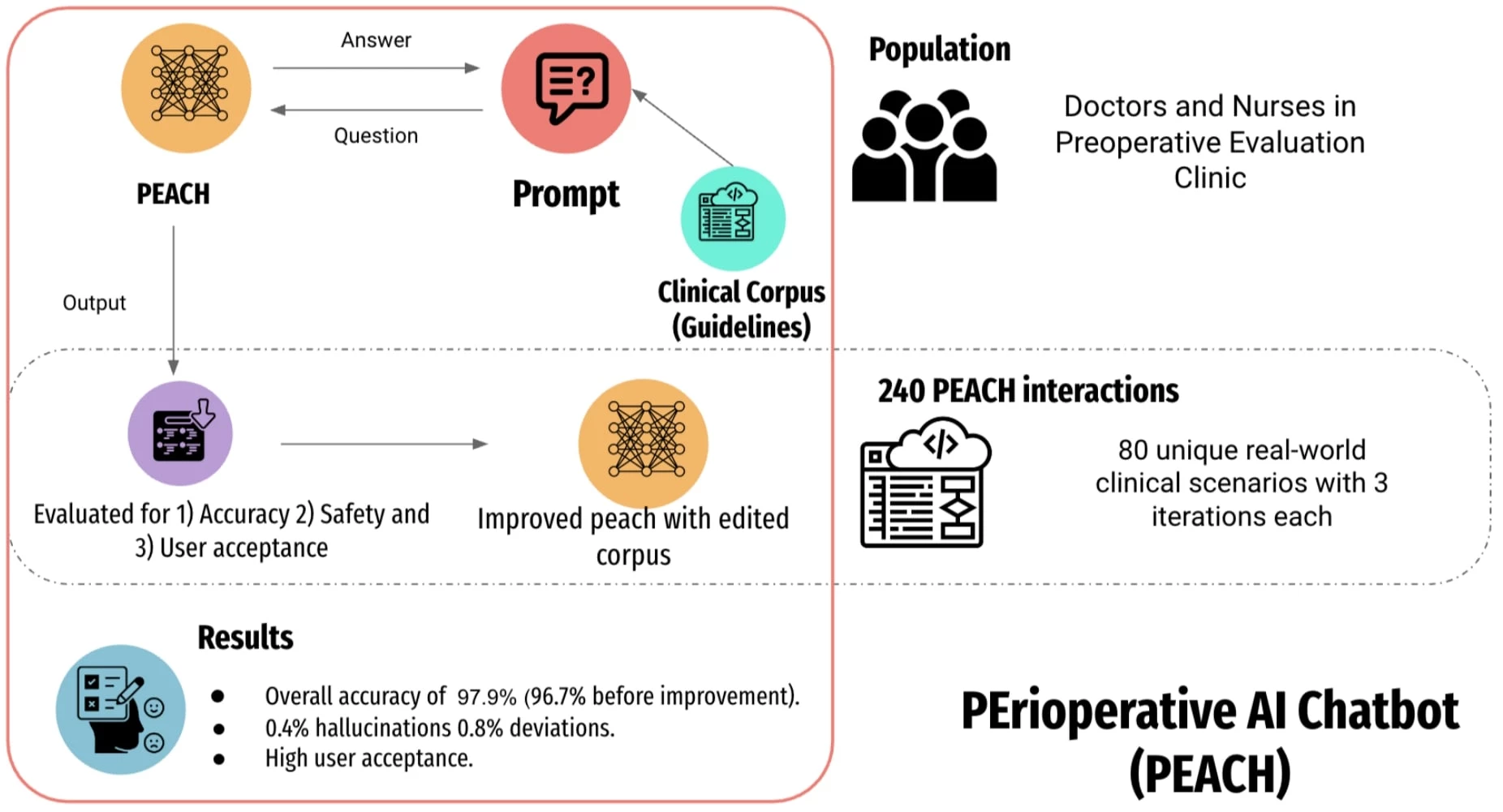
AI chatbots have proven to be highly accurate.
In a real-world deployment, the PErioperative AI CHatbot (PEACH) achieved an overall accuracy of 96.7% across multiple iterations showing that bots can deliver consistent results even in high-stakes industries like healthcare.
This level of reliability also brings significant financial benefits. IBM reports that virtual agents can handle 60-80% of routine inquiries without escalation, reducing customer support costs by up to 30%.
By lowering the cost per query from $5–12 with human agents to just $1 with chatbots, businesses can scale their support operations efficiently. In fact, every second shaved off call handling time can translate into over $1 million in annual savings.
How To Unlock This Benefit
Start by identifying the top 10 most common customer inquiries, then train your chatbot to handle those first. This quick-win strategy can automate a large chunk of your support volume without a complex rollout.


2. Drive More Sales Without More Staff
 You don’t need a bigger sales team to close more deals. AI chatbots can also sell.
They connect with your customer relationship management (CRM) or eCommerce platform to track what visitors are doing on your site — like what they’re viewing or adding to their cart. Using that context, they surface relevant product suggestions, answer questions that might delay a purchase (like shipping or availability), and nudge users who are about to leave without checking out.
And it’s not just theory.
Sephora’s AI Chatbots Drove an 11% Boost in Conversions and Repeat Sales
Sephora offers a compelling example of how AI can enhance the customer experience and drive sales. By using AI-powered chatbots to recommend products and support virtual try-ons, the brand provides personalized, real-time assistance that led to an 11% increase in conversion rates. This highlights how tailored interactions can directly influence buying decisions.
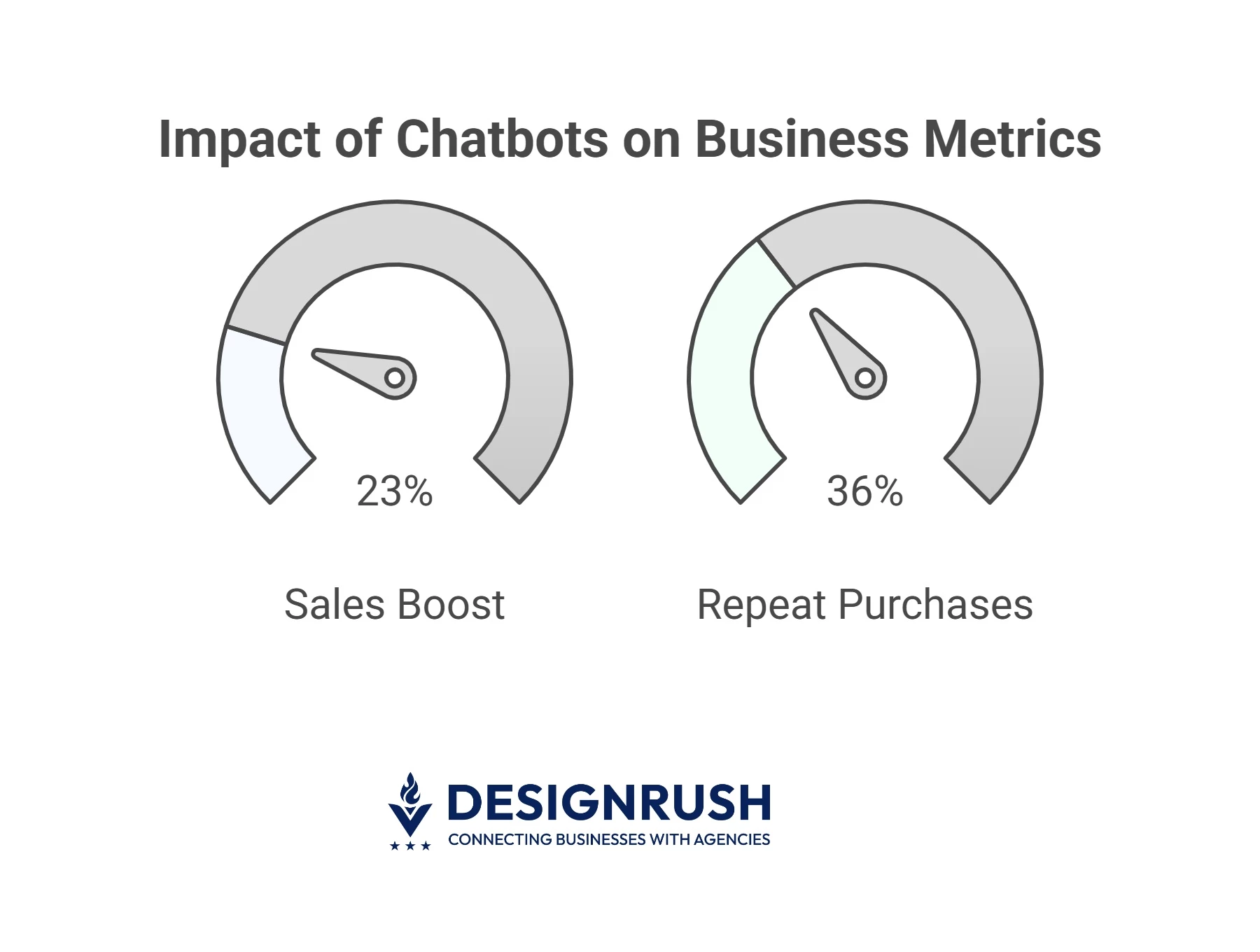
More broadly, AI tools streamline the customer journey by delivering fast, accurate responses and removing friction from the purchasing process. In retail, chatbots have boosted sales by 23% compared to businesses that don’t use them.
Companies using chatbots for automation have also seen a 36% increase in repeat purchases — proving that these tools not only close sales but also encourage customer loyalty.
How To Unlock This Benefit
Start with low-effort, high-impact opportunities, like using a chatbot to recommend bestsellers or answer common pre-purchase questions on your product pages. These simple tweaks can immediately reduce drop-offs and increase conversions without requiring major integration.
3. Elevate Customer Experience Without Overextending Your Team
When support queues grow and responses slow down, customer satisfaction takes the hit. AI chatbots fix that by stepping in instantly to resolve everyday requests.
Instead of waiting in a queue or navigating confusing menus, users get quick, clear help the moment they need it. That kind of responsiveness improves satisfaction, reduces frustration, and makes people more likely to return.
And customers are clearly on board.
Klarna’s AI Assistant Resolves Issues 5x Faster and Boosts Revenue per Employee by 73%
A real-world example of chatbot impact comes from Swedish fintech company Klarna, which introduced an AI assistant capable of handling work equivalent to 700 employees. This integration reduced average issue resolution time from 11 minutes to just 2 minutes and led to a 73% increase in revenue per employee over the past year.
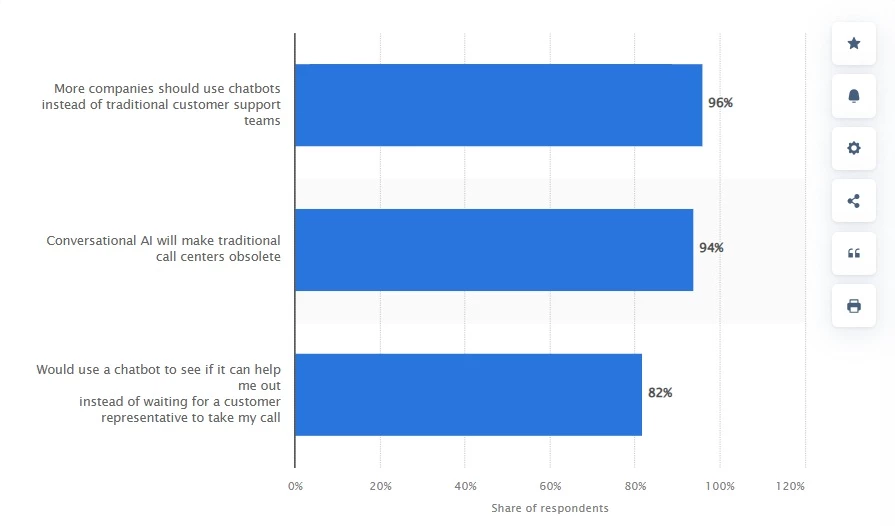
Supporting this trend, a 2024 Statista survey found that 82% of consumers prefer using a chatbot over waiting for a customer service representative. Even more striking, 96% believe more companies should adopt chatbots in place of traditional support teams—highlighting strong consumer demand for faster, AI-driven service.
How To Unlock This Benefit
Don’t just train your chatbot to answer questions; teach it how to respond in the right tone. Add helpful, human-sounding replies and build smart escalation paths. When chatbots know when to step back and hand things to a real person, your customer satisfaction scores will reflect it.
4. Make Operations More Efficient
AI chatbots also help teams work smarter behind the scenes. Need to check PTO balances, locate the latest HR policy, or troubleshoot a VPN issue? A chatbot can handle it instantly, so your employees spend less time waiting and more time working.Pinterest Handles 4,000+ Internal Queries Monthly With AI Chatbot
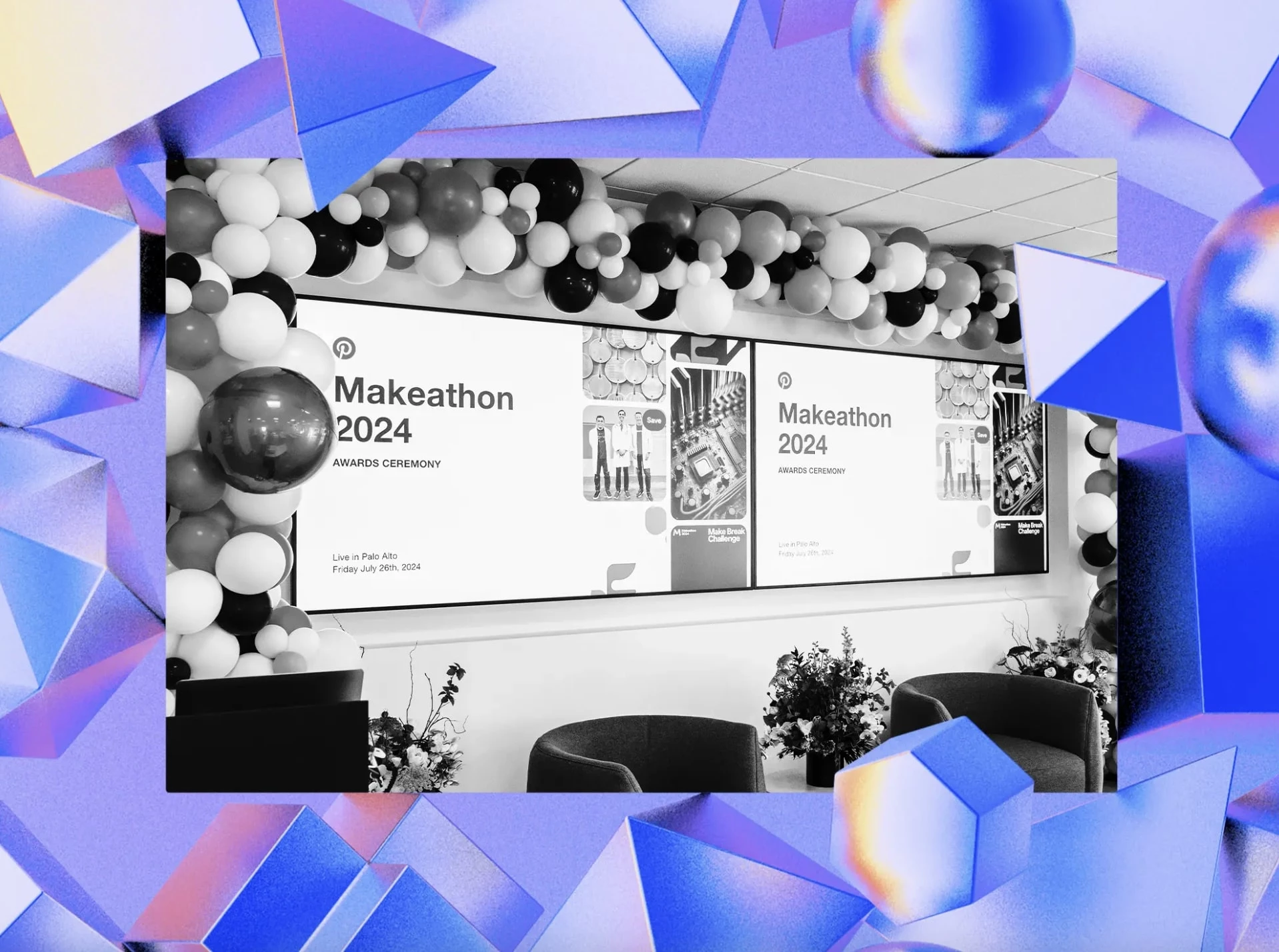
For instance, Pinterest developed an internal document-search chatbot through its annual Makeathon. This AI tool now handles approximately 4,000 employee queries monthly, streamlining access to internal knowledge and saving significant time across teams.
This example illustrates the tangible benefits AI chatbots bring to internal operations — enhancing efficiency, reducing bottlenecks, and allowing employees to focus on higher-value tasks rather than administrative queries.
How To Unlock This Benefit
Look at where your teams lose time chasing information. Is it HR policies, IT help, or onboarding steps? That’s where a chatbot can make an immediate impact.
5. Get More Return From Every Dollar You Invest 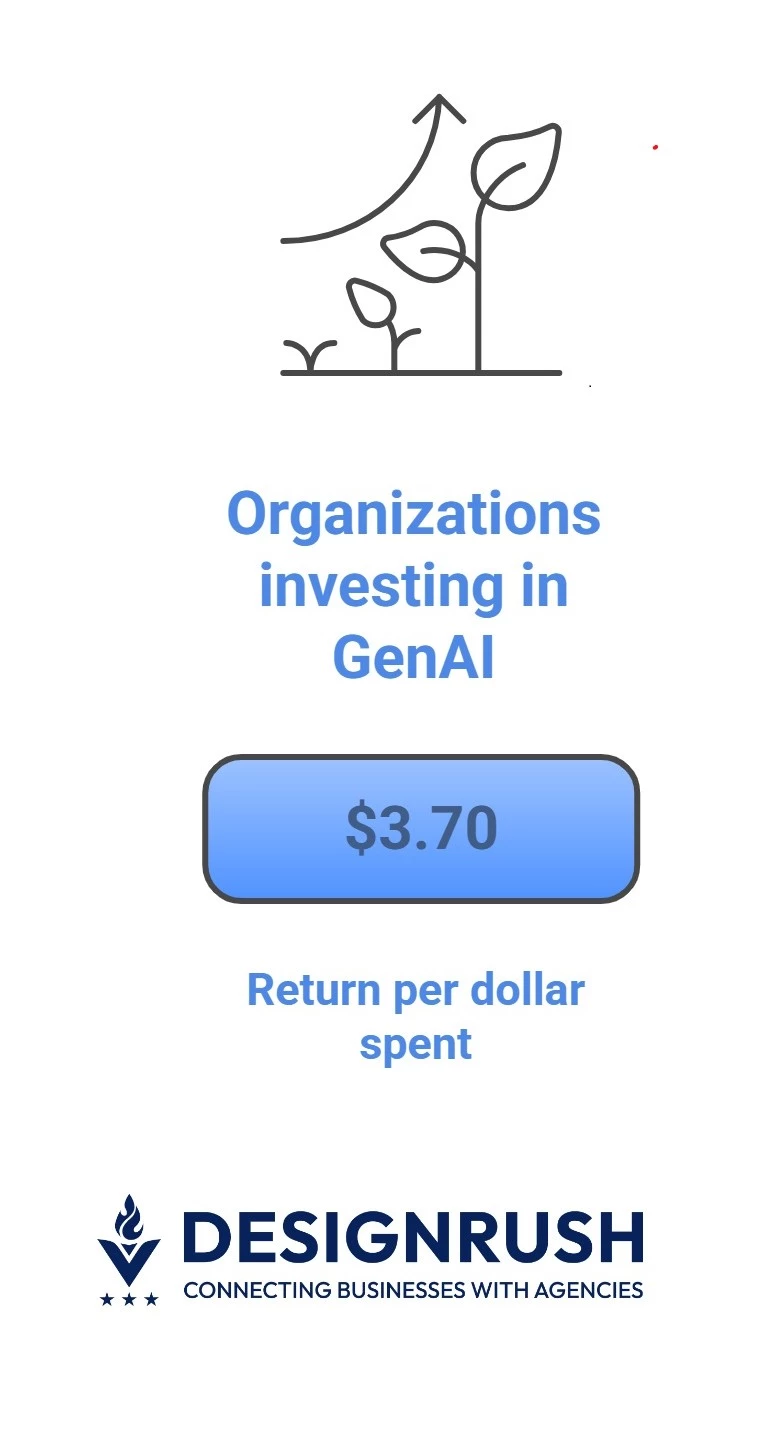
AI chatbots are one of the few tools that cut costs and increase output at the same time. Businesses that deploy them often recover their investment within months, thanks to lower support costs and improved efficiency.
Microsoft and IDC Report $3.70 ROI for Every $1 Invested in AI
One study by Microsoft and IDC revealed that organizations investing in generative AI are realizing an average return of $3.70 for every dollar spent. Top-performing companies are seeing returns as high as $10.30 per dollar invested. These figures underscore the substantial value AI tools can deliver across various industries.
The study also highlighted that 43% of organizations identified productivity use cases — such as automating routine tasks and enhancing employee efficiency — as providing the greatest ROI. Moreover, AI deployments are becoming more efficient, with most taking less than eight months to implement and delivering value within 13 months.
These insights demonstrate that AI chatbots are not only cost-effective but also instrumental in driving significant business value swiftly.
How To Unlock This Benefit
Track chatbot ROI beyond cost savings. Include metrics like ticket deflection, faster resolution times, and revenue per employee. These broader indicators show how AI impacts both your bottom line and your team’s performance.
6. Accelerate Response Times
 Customers value getting fast answers, and they now expect it.
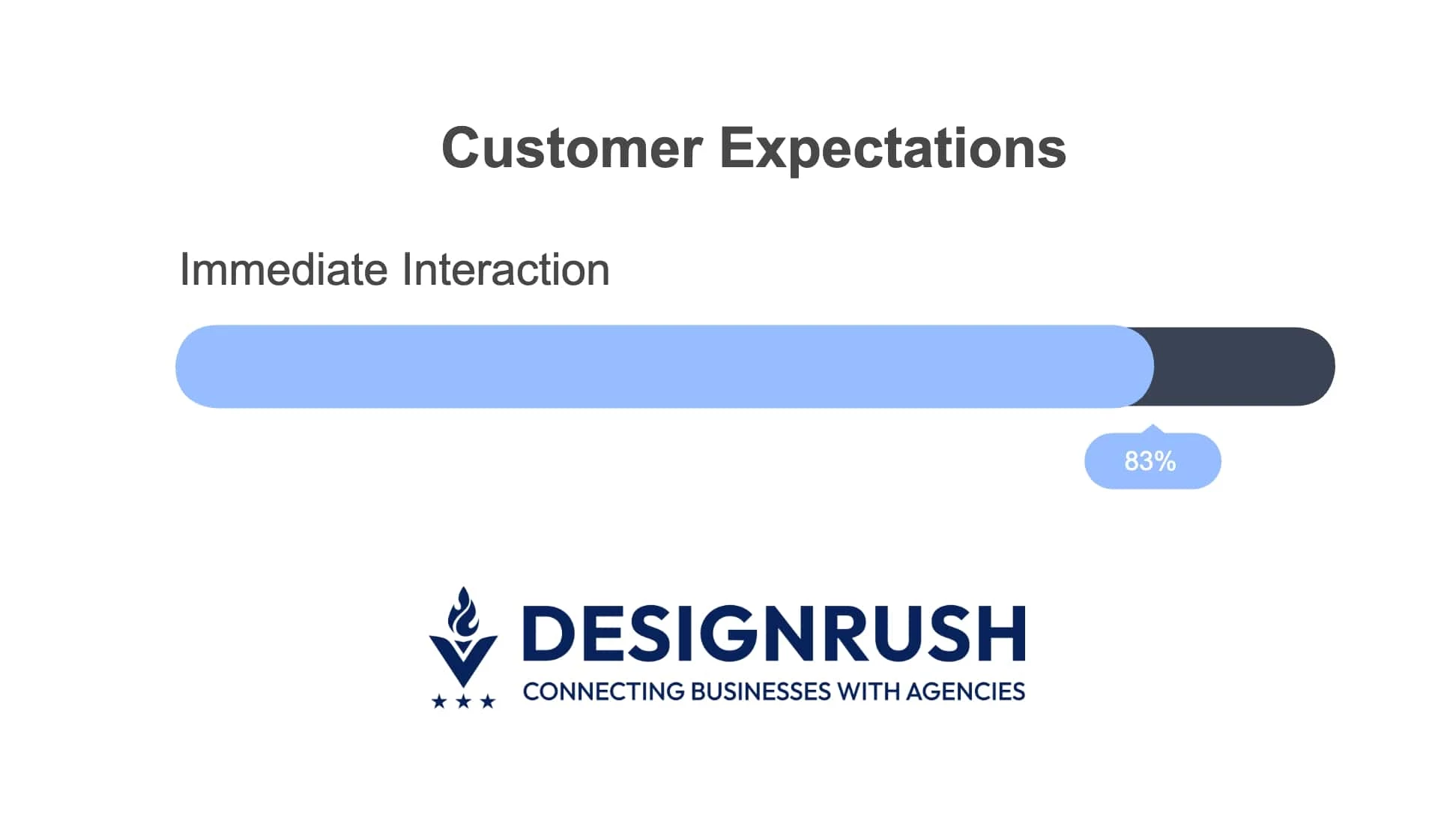
According to Salesforce, 83% of customers expect to interact with someone immediately when they contact a business, making speed a critical part of the experience. Chatbots respond in seconds, making them ideal for time-sensitive support.
Beyond speed, they also reduce friction in emotionally sensitive interactions.
A study published in the Journal of Consumer Psychology found that customers feel less embarrassed speaking with chatbots than with human agents, especially when self-image is at stake. This ease leads to more direct conversations, which helps resolve issues even faster.
How To Unlock This Benefit
Implement chatbots to handle frequently asked questions and routine inquiries. This strategy ensures that customers receive prompt responses, improving satisfaction and freeing up your support team to address more nuanced concerns.
7. Improve Lead Generation and Qualification
Chatbots are proving their value at the top of the funnel. They can greet visitors with personalized messages, guide them to the right content, qualify leads in real time, and even initiate transactions.
Roughly 55% of companies using chatbots report generating more high-quality sales leads. In some industries, chatbot-driven interactions convert as high as 70%, far outperforming generic forms or email campaigns.
Even for B2B, 36% of companies are adopting chatbots specifically to improve lead generation. For eCommerce, the impact is direct — using chatbots on platforms like Facebook Messenger to re-engage abandoned cart shoppers has boosted revenue by 7–25%.
How Endeksa Boosted Leads by 138% With a Chatbot
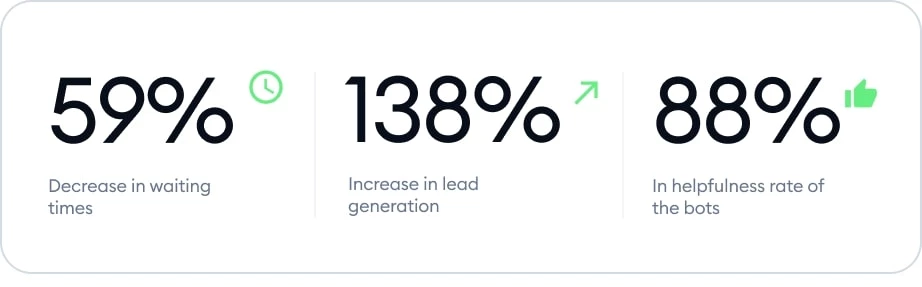
Endeksa, a real estate analytics platform operating across Turkey, Spain, and Portugal, added a Tidio chatbot to its website to boost lead capture. Instead of using static forms, the chatbot engaged visitors in conversation, asked relevant pre-sales questions, and gathered contact details in context. This change helped the company increase lead volume by 138%.
How To Unlock This Benefit
Don’t just drop a chatbot on your homepage and hope for the best. Place it on high-intent pages such as pricing, demo, or product comparison, and script it to ask qualifying questions naturally. That’s where it can capture the most valuable leads.
How To Choose the Right Chatbot Platform for Your Business
Not every chatbot platform fits every business. Some are optimized for fast lead capture, while others focus on deeper integrations or navigating complex regulatory landscapes. “The right tool depends on what problems you're trying to solve — and how your teams plan to use it,” says Jordan Brown, Founder of Omnie.
According to Brown, chatbots are not only cost-effective but can also deliver immediate results, making them a smart first step for businesses looking to boost efficiency without overhauling their entire tech stack.
Here are five types of chatbot platforms to consider, based on real-world use cases and needs:
- No-code builders
- Generative AI chatbots
- Industry-specific solutions
- Enterprise-grade platforms
- Voice and multimodal assistants
1. No-Code Builders
Best for: Small teams and marketers
Platforms like Tidio, Landbot, or ManyChatlet you build and deploy bots with drag-and-drop interfaces. They're ideal for handling FAQs, lead capture, or routing tasks — no developers needed.
2. Generative AI Chatbots
Best for: Natural, complex conversations
Tools built on large language models (LLMs), like ChatGPT, Claude, or Perplexity, enable chatbots to understand nuanced queries and respond more like humans. They’re great for dynamic support, content assistance, and long-form interactions.
3. Industry-Specific Solutions
Best for: Regulated or complex environments
Platforms like Ada, Kore.ai, or Watson Assistant offer tailored bots for sectors like finance, healthcare, or insurance. These tools are trained on domain-specific data, improving accuracy and compliance.
4. Enterprise-Grade Platforms
Best for: Large organizations with complex workflows
Solutions such as Salesforce Einstein Bots or Google Dialogflow support deep integrations, omnichannel deployment, and advanced analytics. These are built to handle scale, security, and back-end orchestration.
5. Voice and Multimodal Assistants
Best for: Brands offering phone or smart device support
Chatbots like Amazon Lex and Voiceflow support voice input/output and visual assets. They’re ideal for creating seamless interactions across web, mobile, and smart speakers.
Before choosing a platform, map out the core tasks you want your chatbot to handle — support tickets, sales inquiries, internal IT, etc. Then prioritize tools that integrate well with your CRM or helpdesk, and support guardrails like human handoff, fallback logic, and data compliance.
Benefits of Chatbots: Final Notes
The pressure to do more with less isn’t going away. AI chatbots meet that challenge head-on — helping teams respond faster, spend smarter, and deliver better service without burning out. With the right strategy, chatbots can transform both your customer experience and your bottom line.
Ready to build yours? Take a look at vetted chatbot development agencies to find the right fit.

Our team ranks agencies worldwide to help you find a qualified partner. Visit our Agency Directory for the top AI companies, as well as:
- Top AI App Development Companies
- Top AI Product Development Companies
- Top AI Web Design Companies
- Top AI Marketing Companies
- Top AI Companies in San Francisco
Our experts also recognize the most innovative projects across the globe so make sure to visit our Awards section.
Benefits of Chatbots: FAQs
1. Are chatbots worth it for small businesses?
Yes. With low-code tools (like Chatfuel, ManyChat, or Tidio), even small teams can launch effective chatbots for lead capture, appointment booking, or FAQ handling. These bots save time, improve customer responsiveness, and create a more professional brand experience.
2. What’s better, AI chatbots or rule-based bots?
AI chatbots (especially those using large language models) handle complex, unpredictable conversations better. Rule-based bots are simpler, faster to build, and work well for structured tasks (e.g., booking forms, static menus). Many businesses start with rule-based bots and later upgrade to AI-enhanced versions.
3. Are there risks to chatbot adoption?
Common pitfalls include lack of a clear handoff to human agents, overly rigid or generic responses, andp rivacy concerns if data isn’t properly secured.
These issues can frustrate users and damage trust. To avoid them, businesses should build in human fallback options, monitor chatbot performance regularly, and ensure the system complies with data regulations like GDPR or HIPAA.