
Discover top AI companies in Michigan that can help you innovate and grow your business. DesignRush connects you with agencies trusted by Fortune 500 brands like IBM and Volkswagen. With over 40,000 vetted agencies and over 100,000 client-agency matches monthly, you can trust our platform to find the right partner for your needs. Compare providers by industry expertise, client type, budget, reviews, team size, and portfolio.
Best Flint Artificial Intelligence Company Rankings
1 Companies - Rankings updated: April 01, 2026
DesignRush assesses agencies using expertise standards and verified client experiences to help you make better decisions. Certain agencies have paid placements.
Over 500+ mobile apps and websites launched since 2011. We help create awesome software.
"Grand Apps is a leading app development company providing the following services: native Android and iPhone apps, UX/UI services, web apps, hybrid applications, web design, and project flow and management services. Grand Apps has completed over 500 projects globally and has continued to expand their services [... see all Grand Apps reviews ]- Location
- Flint, Michigan
- Number of Employees
- Under 49
- Average Hourly Rate
- $100/hr
- Minimal Budget
- $1,000 - $10,000
- Portfolios Count
- 28 Projects Listed
Data sourced from the agency's DesignRush profile, its website, and other relevant accountsGrand Apps Services
Comprehensive analysis done by DesignRush Agency Experts.Clients and Projects
View Full Portfolio
App Development Project Haworth 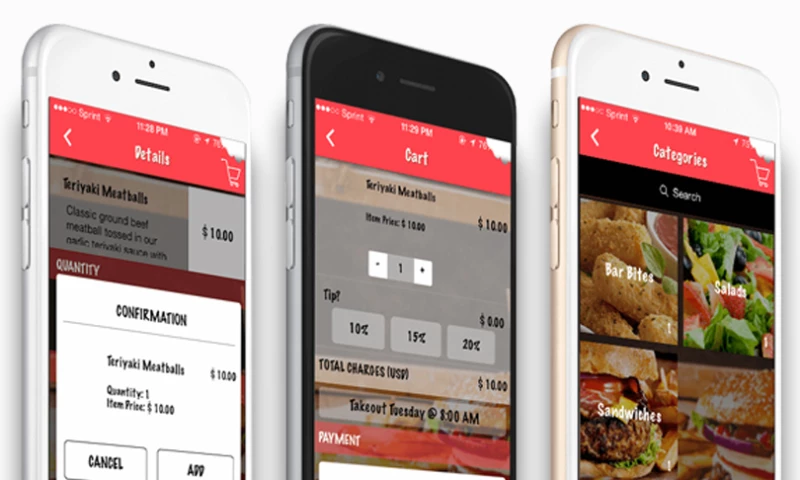
App Development Project Jaspare's Pizza 
App Development Project Ashley Horner Fitness 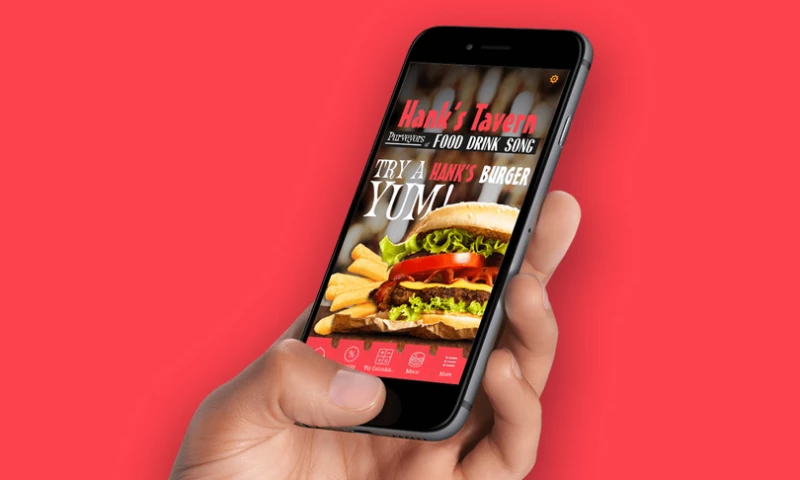
App Development Project Hanks Tavern 
App Development Project Sharon Polsky Fitness 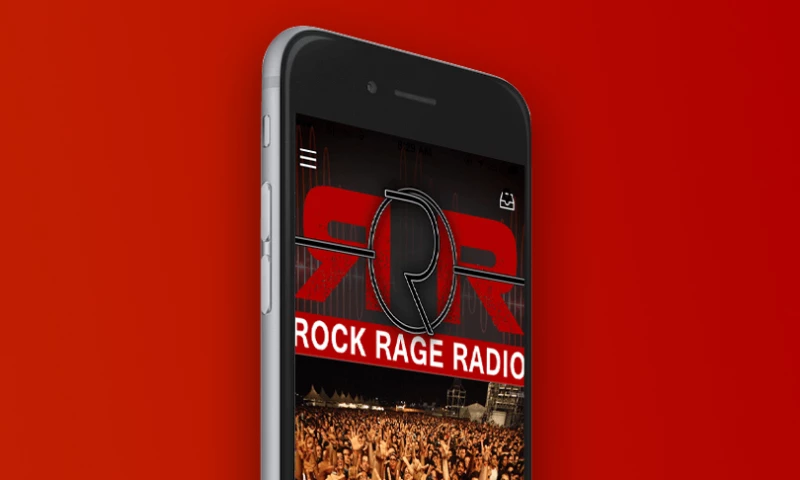
App Development Project Rock Rage Radio
Reviews verified by DesignRush and sourced from the agency's profileGrand Apps Reviews & Testimonials

Web Development Review from Stephen Wierenga
Great team with unique perspectives and flexible solutions.
Show more
Mobile App Development Review from Nicole Geldersma
In a saturated salon industry it’s so important to make every transaction (and experience) as seamless as possible. The Grand Apps Team took my logo, color palette and made the brand come to life in our own app!Our guests are over the moon to be able to collect rewards, shop our store, watch tutorials and schedule reservations all in one central location. Bravo Grand Apps, it continues to be a pleasure working with you!Nicole Flier Launch salon
Show more
Web Design Review from Noah Gonyon
Timely and creative. Our website looks like nobody elses out there and got us a TON of organic traffic. Will be using them again when we update!
Show more
Data sourced from the agency's DesignRush profileBesser Haworth VanAndel Arena Snap Fitness New Holland Brewing Brann's Steakhouse

Frequently Asked Questions
What is the total cost of AI development?
The total cost of AI development ranges from $50,000 to over $1 million, depending on whether you are buying an off-the-shelf artificial intelligence solution or hiring a custom AI development company.
Typical ranges are:
| Project Scope | Typical AI Use Cases | Cost Range (USD) | Expected Timeline |
| Pilot or Proof of Concept | Simple chatbots, internal assistants, early prototypes | $15,000–$40,000+ | 1–2 months |
| MVP or Mid-Level Build | Automation tools, analytics systems, small GenAI solutions | $50,000–$150,000+ | 2–4 months |
| Advanced Custom AI | NLP pipelines, computer vision, multi-agent workflows | $150,000–$500,000+ | 4–6 months |
| Enterprise-Scale AI | Platform-level AI, regulated systems, high-volume GenAI | $200,000–$1,000,000+ | 6–12+ months |
Usual cost drivers include:
- AI model complexity: 30% to 40%
- Data collection and preparation: 15% to 25%
- Infrastructure and tech stack: 15% to 20%
- Tools choice (open-source vs proprietary): 5% to 15%
- Long timelines and extended engagement: 5% to 10%
- Regulatory and compliance work: 5% to 10%
- Testing, validation, maintenance: 10% to 15%
What is the timeline from signing the contract to the first live use case?
The timeline from contract signing to the first live AI use case typically ranges from 2 to 18+ months, depending on project scope and complexity. Most AI agencies deliver value in phases, starting with a live pilot before expanding.
AI development timeline from contract to first live use case:
| Project Type | Typical Use Case | Time to First Live Use Case |
| Proof of Concept (PoC) or MVP | Simple chatbot, internal assistant, RAG prototype | 4–8 weeks |
| Mid-sized custom AI solution | Invoice automation, CRM agent, analytics tools | 4–6 months |
| Enterprise AI platform | Multi-agent systems, regulated workflows, supply chain AI | 9–18+ months |
The first live use case is usually a limited but real deployment, not a full rollout.
Top AI development companies start with a PoC or MVP to validate data, workflows, and adoption. Enterprise AI takes longer due to security, compliance, integration, and operational readiness.
What is the typical ROI for AI solutions?
Across enterprise and B2B use cases, studies consistently show an average return of about 3.5× for every $1 invested, with top performers reaching up to 8× returns.
Most organizations see meaningful ROI within 12–18 months, and many deploy their first production AI use case within 6–12 months, which is when returns usually begin.
What is the difference between Generative AI and non-GenAI?
Generative AI (GenAI) uses the patterns it has learned to create something entirely new that didn't exist before. In contrast, non-gen AI is designed to analyze, classify, and predict based on existing data.
- Use GenAI when you need innovation and synthesis. If you need to brainstorm marketing copy, summarize a 50-page transcript, or generate a prototype logo, you want the "creator."
- Use Non-GenAI when you need accuracy and consistency. If you are predicting stock prices, diagnosing a disease from an X-ray, or calculating the fastest route home, you want the "judge" who focuses on facts and patterns.
Take a look at their main differences:
| Area | Generative AI (GenAI) | Non-GenAI (Traditional / Discriminative) |
| Core function | Generates new content | Analyzes or predicts from existing data |
| Typical output | Text, images, audio, video, code, or summaries | A label, a number, or a probability |
| Flexibility | High | Medium to low |
| Predictability | Lower | Higher |
| Risk profile | Hallucinations, data leakage | Model bias, data quality |
| Best use cases | Assistants, copilots, content, exploration | Fraud detection, forecasting, optimization |
| Governance needs | High | Moderate |
Are there regulations on AI?
As of 2026, there is no single U.S. federal AI law. AI studios operate under a mix of existing federal rules enforced by agencies like the FTC, SEC, EEOC, and CFPB, which apply consumer protection, privacy, and anti-discrimination laws to AI systems.
Federal policy is currently shaped mainly by Executive Orders and agency guidance rather than a comprehensive statute.
States are moving faster. Colorado has passed strict rules for high-risk AI systems used in hiring, lending, healthcare, and housing, while California focuses on transparency and algorithmic bias.
Because state and federal rules often clash, many companies simply adopt the strictest state standards to ensure nationwide compliance.
Key regulations to watch:
- Executive Order 14365: Pushes toward a unified national AI framework and limits conflicting state AI laws.
- Colorado AI Act (SB 24-205): Sets compliance duties for high-risk AI systems starting February 1, 2026.
- TAKE IT DOWN Act: Requires removal of non-consensual and harmful AI-generated deepfake content, enforced at the federal level.
About The Author and Expert Reviewer

Selina Garcia has authored 500+ articles and edited 50+ published books in economics, law, and history. Her unique blend of experiences allows her to approach content creation from a well-rounded perspective. Currently, Selina applies her expertise to producing insightful articles on IT, software, and applications for DesignRush.

Sergio is a technology leader with over six years of experience managing global teams and delivering projects across fintech, sportstech, and B2B platforms. At DesignRush, he drove product growth and development execution, building tools that speed up processes by 95% and cut costs by 35% while maintaining full uptime.
Latest Trends Related to Artificial Intelligence
Artificial Intelligence
How Multimodal AI Is Redefining Business Strategy, Customer Experience, and Growth
3,196
Artificial Intelligence
How Enterprises Can Apply Generative AI To Scale Innovation, Efficiency, and Revenue
3,525