Finding the right virtual and augmented reality company takes more than comparing portfolios. Browse vetted VR and AR firms, and filter your options by budget, team size, technical capabilities, industry focus, and immersive technology expertise.
Our Verified Agencies are Trusted by Top Brands:
Best Augmented & Virtual Reality Companies
97 Companies-Rankings updated: September 03, 2026
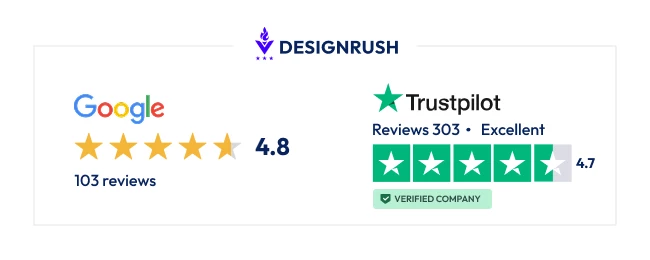
DesignRush evaluates each virtual and augmented reality company based on its industry expertise, portfolio quality, technical capabilities, and client feedback. Some listings may be sponsored.
ZESIUM mobile is a high-tech company offering complete tailor-made and cost-effective software solutions. With more than 18 years experience in various industries, ZESIUM ensures new value, competition advantage and improved business for worldwide clients...
Being one of a select group of iOS app developers with a presence on the iTunes App Store since Day One, as well as being early adopters of the Android ecosystem, we have consistently stayed on the cutting edge of app technology and trends over the past ten years...
Visartech Inc. is a software solution provider that helps businesses solve challenges and reach specific goals using technology. We focus on delivering intelligent cloud IT infrastructure, digital ecosystems, and VR/AR3D solutions...
Enterprise Software Development & IT Consulting Company
At Hidden Brains, we specialize in delivering state-of-the-art solutions meticulously tailored to our clients' specific requirements. Our comprehensive services include software development, IT consulting, wearable app development, and digital transformation, among others...
VR Vision is a XR (Extended Reality) company that provides immersive technology solutions for business. We provide virtual reality, augmented reality, 3D 360 video, and web and mobile apps!...
NCube builds technology teams in Kiev, Ukraine for companies worldwide. We source engineers based on specific requirements – Java, Scala, Python; iOS, Android, Angular, React, Node.js, and more...
Our development and consulting studio was founded by three passionate computer engineers who share a love for software and hardware development. We relish the opportunity to tackle complex, secure, and scalable technological projects from inception to completion. In fact, we thrive on technical challenges!...
We are Applaunch. We are a multicultural Mobile App development company. We have done 150+ projects in the last 5 years. We are based in Munich, Germany. Also, We have an office in Bangalore, India...
we build your project in virtual world and help business to grow
Creativity, Innovation, Digital brand communication is what make our agency unique It's time to surprise your clients, your competitors, and why not, the world by building your business in virtual world...
If Your Goals Don't Sound Crazy, They're Not Big Enough.
A360Z is a brand strategy and design agency helping future-forward companies launch faster and grow revenue. We partner with startups and enterprises building complex products in competitive markets, where clarity and differentiation drive performance...
Algosoup is a London-based software development company that provides AI-native, forward-deployed engineering services by embedding software engineers into client teams. It supports startups, scaleups, enterprises, and agencies with rapid MVP development, product engineering, AI integration, legacy...
NetBramha is a global award-winning UX strategy and design studio with 18+ years of experience, impacting 1B+ users through outcome-driven digital products for 250+ clients across 20+ countries...
Tesuji is a dynamic team of software design and development experts committed to bringing IT products to life, from augmented reality pet games to social platforms for live streaming. As a creative engineering and design agency, Tesuji prioritizes pragmatic construction, employing proven yet modern...
Intuition SofTech is been in the business of crafting affordable, responsive, engaging, beautiful and easy-to-use mobile phone applications and responsive websites.
Intuition SofTech was founded with a simple objective – to develop quality, professional software business solutions at an affordable price...
Datashrine is a dynamic multi-disciplinary design studio dedicated to catapulting businesses into the extraordinary realm through intelligent product design and strategy. Specializing in Digital Product Design, UX, VR + AR, AI + Data, we seamlessly blend creativity with cutting-edge technology to deliver...
Temy is a leading software development company that offers comprehensive and convenient services to full-fledged companies and startups. Established in 2014, Temy has become a fast-growing and successful Ukrainian company with two development offices in Lviv and Kyiv. Our individualized approach to clients...
Transforming the Technological Landscape of the World
We provide customized technological solutions to increase business efficiency & growth across industries. Our services include Software as a Service (SaaS), Mobile Apps & Websites, Blockchain Development, Big Data, Technical Consultancy, and Artificial Intelligence...
Fan Studio UK: Experts in Mobile Game Development, London UK
At Fan Studio UK, we are a top mobile game development company located in London, specializing in developing mobile games and gamification strategies for startups and enterprise clients. Our expert designers and developers are available to help you research, find the best solutions, launch your project, and...
Virtual Technology Office - An extended execution arm of a CTO.
Facing challenges to scale up tech? Have a biz/tech requirement but no bandwidth to execute? Too many tech projects eating up your time to focus on core business? Connect with us. We provide fractional CTO services in build-operate-transfer models...
Creating exceptional commerce experiences with passion
SNOW.DOG is a digital studio specializing in commerce and mobile solutions, with a team of certified Magento experts, passionate creatives, and talented individuals. We prioritize accessibility and value innovation and time-to-market. Our exceptional commerce experiences come from our genuine passion for our...
Urban Emu has been assisting businesses and organizations in problem-solving and improving their systems, services and products through a human-centered approach for over 10 years...
We’re a video production company crafting beautiful and impactful films.
Your prospects (and salespeople, for that matter) are craving relevant, engaging and impactful sales content – content that’s easy-to-digest, smart and driven from the heart. That’s where we come in...
Bit Space Development Ltd. is a Winnipeg born and raised interactive digital media company. Our focus is to build the best, most innovative and creative interactive learning experiences we possibly can. Bit Space has been working with organizations from all over world who have a common goal to make their...
Since 2006, X-Team has helped companies scale high-performing engineering teams by connecting them with elite remote developers from around the world...
The Shepherds Studios builds bold, immersive brands that thrive across film, TV, games, publishing, and products. Our elite team transforms stories into connected, market-ready universes that engage audiences and drive lasting value...
PointClear Solutions offers strategic and innovative solutions to the healthcare industry.
PointClear Solutions offers strategic and innovative solutions to the healthcare industry. The company creates programs and apps to address operational, technological, and financial challenges facing their clients, who range from doctors and hospitals to insurance agencies...
Years Of Experience Building Highly Original Software
Tomorrow Media is a software development studio based in Montevideo, Uruguay. Founded in 2014 by Agustín Abreu and Ignacio Platas, the studio has over 15 years of experience in building award-winning software and games. They have collaborated with a variety of startups and brand partners, including Conde...
First Person is a creative partner that embraces your business challenge to create a direct connection with your audience that strikes at the essential, emotional and expandable core of a brand story...
Dragon Army is a digital engagement agency that grows admired brands through web, mobile, AR, VR, content, and games. We've been delivering digital product solutions for the world's biggest brands for over 11 years, across a variety of technology platforms and third-party services...
Outpost4 is a multimedia design studio that builds apps, provides QA consulting, and design support for your brand. We build games and apps that surprise and delight. We have an eye for quality and a disciplined approach to design. We don't believe in shortcuts or AI, we are artisans and we have a...
Prolincur Technologies stands at the forefront of technological innovation, specializing in spatial technology, geometric modeling (CAD), 3D Visualization VR, AR, metaverse, Digital Twins, computer vision, digital image processing, and associated cloud technologies. Our mission is to empower businesses by...
Digital technology transformation and customer experience management firm
EvolutionCo is a digital & interactive consultancy and services organisation. Our innovation based DNA helps our clients in transforming their business using the power of the digital ecosystem. Our 360° marketing approach creates the traction of an intuitive and enhanced user engagement reality...
Frequently Asked Questions about Virtual & Augmented Reality Companies
What are the red flags when evaluating VR & AR agencies?
The biggest red flags when evaluating AR and VR companies are a portfolio full of demos with no real-world deployments, vague answers about device compatibility, and case studies that emphasize visual impressiveness rather than business outcomes.
Watch for these specifically:
No deployed work: Prototypes and concept demos are not the same as experiences that went live, scaled, and held up. Ask whether the work is still in use.
Can't name the hardware: A serious augmented reality or virtual reality development company will immediately tell you which devices they've built for and which they haven't. Evasiveness here usually means shallow expertise.
They haven't pushed back on your brief: Good AR/VR agencies will tell you if your use case doesn't need immersive technology. If they're just agreeing with everything, they're selling, not advising.
No post-launch references: Building is one thing; what happened six months after launch is the real test. If they can't connect you with a client past the delivery stage, that's a problem.
How do I know if my use case actually needs VR or AR, or if a simpler solution would perform better?
Your use case requires VR or AR when the experience depends on spatial interaction, physical simulation, or the placement of digital content in a real environment. If a video, standard app, or 3D model on a screen can deliver the same result, the simpler option is usually better, faster, and cheaper.
A few useful checks:
Does the user need to interact with the environment or just watch?
Is physical scale or spatial context important?
Would the experience lose value on a normal screen?
If the answer is mostly no, you probably do not need VR or AR yet. Strong virtual and augmented reality companies will tell you that early instead of forcing immersive tech into the project.
What do VR & AR agencies charge that most buyers don't expect?
Most buyers budget for the initial build and underestimate the ongoing costs. A VR or AR agency usually prices the experience itself, not everything needed to maintain it long term.
The costs that surprise buyers most often:
Hardware: VR headsets, AR devices, device management tools, replacements, and upgrades add up quickly.
Content updates: Environments, training scenarios, and product visuals need regular updates to stay useful.
Platform maintenance: Updates from companies like Meta or Apple can break compatibility, and fixes are usually billed separately.
User onboarding: Employees or customers often need training, support materials, and setup help that were not included in the original scope.
What's a realistic timeline to go from a brief to a deployable VR/AR experience?
Building an AR/VR app usually takes between 3 and 12 months, depending on the complexity, features, integrations, graphics quality, and team size.
Simple AR apps: Around 3–6 months
More advanced VR platforms with custom integrations and high-end graphics: 6–12+ months
The timelines increase when the project includes:
Custom 3D modeling and animations
Cross-device optimization
Real-time interactions
Enterprise integrations
Extensive testing and post-launch support
What's the difference between a good VR/AR agency and an average one, and how do I spot it before signing?
A good VR or AR agency focuses on the problem first, not just the technology. Average agencies talk mostly about what is possible. Strong ones explain what actually makes sense for your goals, budget, and users.
Before signing, look for these signs:
They ask about your target device early and design around its limits
They have a real process for testing the immersive experience with users
They can talk openly about projects that went wrong and what they learned
They clearly explain asset ownership, file access, and what happens if you switch vendors later
If an AR or VR company avoids these conversations, push harder before committing.
What's the difference between a good VR/AR agency and an average one, and how do I spot it before signing?
A good VR or AR agency focuses on the problem first, not just the technology. Average agencies talk mostly about what is possible. Strong ones explain what actually makes sense for your goals, budget, and users.
Before signing, look for these signs:
They ask about your target device early and design around its limits
They have a real process for testing the immersive experience with users
They can talk openly about projects that went wrong and what they learned
They clearly explain asset ownership, file access, and what happens if you switch vendors later
If an AR or VR company avoids these conversations, push harder before committing.
How do I evaluate VR/AR work if I have no technical background?
You do not need a technical background to evaluate VR or AR agencies well. Focus on business outcomes and user experience, not the underlying technology.
A few things to look at:
Ask them to explain a past project in simple terms: the client’s goal, how success was measured, and what results they achieved.
Try a real product they built, not just a polished demo. Pay attention to comfort, usability, and how natural the interaction feels.
Ask how they test experiences with real users before launch.
Speak to a past client and ask one question: Would you hire them again? The answer usually tells you more than a formal reference.
What happens when the technology evolves mid-project? Who absorbs the cost of changes?
Technology changes during VR and AR projects are common. New device releases, platform updates, and SDK changes can all affect the build. If the contract does not clearly define responsibility, expect to pay for the extra work.
Before signing, clarify:
How the agency handles platform or device changes during development
Which costs are covered by the original scope, and which are billed separately
Whether they include a post-launch compatibility or support window
What happens if companies like Meta or Apple release updates that require rework
A strong VR or AR agency will separate technology-driven changes from client-requested scope changes and explain both clearly upfront.
How do I know if a VR/AR experience is actually driving business results vs. just looking impressive?
A VR or AR experience delivers real business value when it improves a measurable result that existed before the project started, not just when it looks impressive.
The right metrics depend on the use case:
Enterprise VR: training completion, error reduction, faster onboarding
Retail AR: dwell time, conversions, purchase confidence
What matters is comparison. You should be able to measure performance before and after launch.
When evaluating VR or AR agencies, ask for examples where they tracked a business metric from deployment to results. If they can only show visuals and demos, that is not proof of impact.
How do I know if a case study in VR/AR actually proves what the agency claims it does?
Most VR and AR case studies show that a project was built and looked impressive. Far fewer prove that it actually delivered results.
To evaluate a case study properly, look for four things:
What was the business goal before the project started?
How was success measured?
What were the actual results and over what timeframe?
What was the baseline or alternative without VR/AR?
If a case study cannot answer those clearly, it is mostly a portfolio piece, not strong evidence.
The best VR and AR agencies can walk through at least one project end-to-end with real numbers, measurable outcomes, and clear business impact.
ReceiveProposals
For your project
1
Specify your budget, timeline and project requirements
2
Our experts curate a list of up to 5 most qualified candidate agencies
3
We connect you with them so you can choose the most suitable partner