Finding the right virtual and augmented reality company takes more than comparing portfolios. Browse vetted VR and AR firms, and filter your options by budget, team size, technical capabilities, industry focus, and immersive technology expertise.
Our Verified Agencies are Trusted by Top Brands:
Best Augmented & Virtual Reality Companies
67 Companies-Rankings updated: August 29, 2026
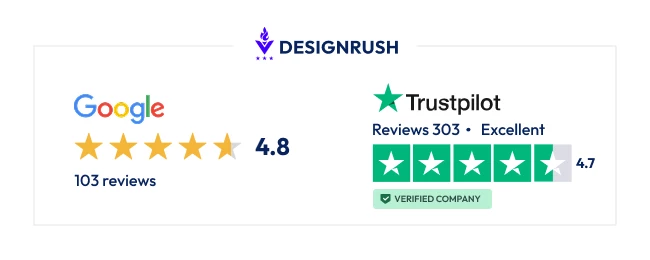
DesignRush evaluates each virtual and augmented reality company based on its industry expertise, portfolio quality, technical capabilities, and client feedback. Some listings may be sponsored.
Goodwin System is an Australian software delivery partner helping businesses, founders, and product teams build custom software, mobile apps, AI systems, and scalable digital experiences across both B2B and B2C use cases...
3D Advertisers is a creative technology studio in Kuala Lumpur, Malaysia, known for blending design and innovation to craft immersive brand experiences. Our work spans digital storytelling, interactive installations, and A-powered campaigns. We serve clients across Southeast Asia in retail, tourism, and...
Nolwenture is your adaptable service creation and software development partner. We have a track record of delivering end-to-end solutions for customers ranging from industry disruptors to established market leaders. We provide technological and business consulting as well as the creation of digital goods and...
Emmeatech is a technology partner for global enterprises, SMEs, and innovation-driven organizations looking to accelerate digital transformation and improve operational performance. We specialize in custom software development, artificial intelligence, IoT, automation, AR/VR, and technology consulting...
#1 Reliable Digital Agency.
The world's most efficient digital marketing agency, providing a wide range of exclusive services.
Tafol Technologies is ranked as one of the best digital marketing agencies in Asia...
From enterprise software solutions and innovative custom maps featuring intuitive wayfinding, to cutting-edge AR and VR experiences, we specialise in crafting transformative technology...
Nomans Land Creative aligns business goals with behavioral and strategic design to solve real user problems through a collaborative, hands-on approach. The agency delivers data-driven design solutions ranging from conversion funnels and AI platforms to dashboards, apps, and websites that balance user needs...
Dragon Army is a digital engagement agency that grows admired brands through web, mobile, AR, VR, content, and games. We've been delivering digital product solutions for the world's biggest brands for over 11 years, across a variety of technology platforms and third-party services...
Transforming Ideas into Immersive Gaming Experiences.
AppRoarr Studios is a leading game development studio with a passion for creating immersive & captivating gaming experiences. We specialize in providing end-to-end game development services, covering everything from concept ideation to post-production support...
Excellence In Animation, Design And Video Production
Nypunya Studios is a specialized animation company based in India, focused on creating high-impact 3D, 2D, video technical training content for the manufacturing, automotive, oil & gas, pharmaceutical, and engineering sectors...
Your Partner in Intelligent, Scalable Web and Mobile App Solutions with AI
Shri Genesis Software Solutions provides customized web design, web development, software, and mobile application development services at competitive prices. They believe in delivering the best possible value to their clients without compromising on quality, and offer full after-sales support. They are a...
Company ProfileFor over a decade, we have been delivering innovative, reliable, and quality-driven software development solutions that empower organizations to achieve sustained growth and competitive advantage. By combining deep technical expertise with the latest industry trends, we provide tailored...
RemoteState is dedicated to revolutionizing digital technology solutions by offering innovative approaches and unique problem-solving strategies tailored to meet the diverse needs of our clients. With a commitment to delivering unparalleled results, our team combines exceptional business insight with...
Solvebyte delivers IT Software Solutions & iGaming platforms worldwide. We specialize in Web & App Development, Casino, Sportsbook, Lottery, API, CRM & PAM systems. 50+ global brands trust us to build, launch & scale...
Our objective is to digitally transform small and medium-sized businesses with modern tools and technology for increased visibility and business drive...
Frequently Asked Questions about Virtual & Augmented Reality Companies
What are the red flags when evaluating VR & AR agencies?
The biggest red flags when evaluating AR and VR companies are a portfolio full of demos with no real-world deployments, vague answers about device compatibility, and case studies that emphasize visual impressiveness rather than business outcomes.
Watch for these specifically:
No deployed work: Prototypes and concept demos are not the same as experiences that went live, scaled, and held up. Ask whether the work is still in use.
Can't name the hardware: A serious augmented reality or virtual reality development company will immediately tell you which devices they've built for and which they haven't. Evasiveness here usually means shallow expertise.
They haven't pushed back on your brief: Good AR/VR agencies will tell you if your use case doesn't need immersive technology. If they're just agreeing with everything, they're selling, not advising.
No post-launch references: Building is one thing; what happened six months after launch is the real test. If they can't connect you with a client past the delivery stage, that's a problem.
How do I know if my use case actually needs VR or AR, or if a simpler solution would perform better?
Your use case requires VR or AR when the experience depends on spatial interaction, physical simulation, or the placement of digital content in a real environment. If a video, standard app, or 3D model on a screen can deliver the same result, the simpler option is usually better, faster, and cheaper.
A few useful checks:
Does the user need to interact with the environment or just watch?
Is physical scale or spatial context important?
Would the experience lose value on a normal screen?
If the answer is mostly no, you probably do not need VR or AR yet. Strong virtual and augmented reality companies will tell you that early instead of forcing immersive tech into the project.
What do VR & AR agencies charge that most buyers don't expect?
Most buyers budget for the initial build and underestimate the ongoing costs. A VR or AR agency usually prices the experience itself, not everything needed to maintain it long term.
The costs that surprise buyers most often:
Hardware: VR headsets, AR devices, device management tools, replacements, and upgrades add up quickly.
Content updates: Environments, training scenarios, and product visuals need regular updates to stay useful.
Platform maintenance: Updates from companies like Meta or Apple can break compatibility, and fixes are usually billed separately.
User onboarding: Employees or customers often need training, support materials, and setup help that were not included in the original scope.
What's a realistic timeline to go from a brief to a deployable VR/AR experience?
Building an AR/VR app usually takes between 3 and 12 months, depending on the complexity, features, integrations, graphics quality, and team size.
Simple AR apps: Around 3–6 months
More advanced VR platforms with custom integrations and high-end graphics: 6–12+ months
The timelines increase when the project includes:
Custom 3D modeling and animations
Cross-device optimization
Real-time interactions
Enterprise integrations
Extensive testing and post-launch support
What's the difference between a good VR/AR agency and an average one, and how do I spot it before signing?
A good VR or AR agency focuses on the problem first, not just the technology. Average agencies talk mostly about what is possible. Strong ones explain what actually makes sense for your goals, budget, and users.
Before signing, look for these signs:
They ask about your target device early and design around its limits
They have a real process for testing the immersive experience with users
They can talk openly about projects that went wrong and what they learned
They clearly explain asset ownership, file access, and what happens if you switch vendors later
If an AR or VR company avoids these conversations, push harder before committing.
What's the difference between a good VR/AR agency and an average one, and how do I spot it before signing?
A good VR or AR agency focuses on the problem first, not just the technology. Average agencies talk mostly about what is possible. Strong ones explain what actually makes sense for your goals, budget, and users.
Before signing, look for these signs:
They ask about your target device early and design around its limits
They have a real process for testing the immersive experience with users
They can talk openly about projects that went wrong and what they learned
They clearly explain asset ownership, file access, and what happens if you switch vendors later
If an AR or VR company avoids these conversations, push harder before committing.
How do I evaluate VR/AR work if I have no technical background?
You do not need a technical background to evaluate VR or AR agencies well. Focus on business outcomes and user experience, not the underlying technology.
A few things to look at:
Ask them to explain a past project in simple terms: the client’s goal, how success was measured, and what results they achieved.
Try a real product they built, not just a polished demo. Pay attention to comfort, usability, and how natural the interaction feels.
Ask how they test experiences with real users before launch.
Speak to a past client and ask one question: Would you hire them again? The answer usually tells you more than a formal reference.
What happens when the technology evolves mid-project? Who absorbs the cost of changes?
Technology changes during VR and AR projects are common. New device releases, platform updates, and SDK changes can all affect the build. If the contract does not clearly define responsibility, expect to pay for the extra work.
Before signing, clarify:
How the agency handles platform or device changes during development
Which costs are covered by the original scope, and which are billed separately
Whether they include a post-launch compatibility or support window
What happens if companies like Meta or Apple release updates that require rework
A strong VR or AR agency will separate technology-driven changes from client-requested scope changes and explain both clearly upfront.
How do I know if a VR/AR experience is actually driving business results vs. just looking impressive?
A VR or AR experience delivers real business value when it improves a measurable result that existed before the project started, not just when it looks impressive.
The right metrics depend on the use case:
Enterprise VR: training completion, error reduction, faster onboarding
Retail AR: dwell time, conversions, purchase confidence
What matters is comparison. You should be able to measure performance before and after launch.
When evaluating VR or AR agencies, ask for examples where they tracked a business metric from deployment to results. If they can only show visuals and demos, that is not proof of impact.
How do I know if a case study in VR/AR actually proves what the agency claims it does?
Most VR and AR case studies show that a project was built and looked impressive. Far fewer prove that it actually delivered results.
To evaluate a case study properly, look for four things:
What was the business goal before the project started?
How was success measured?
What were the actual results and over what timeframe?
What was the baseline or alternative without VR/AR?
If a case study cannot answer those clearly, it is mostly a portfolio piece, not strong evidence.
The best VR and AR agencies can walk through at least one project end-to-end with real numbers, measurable outcomes, and clear business impact.
ReceiveProposals
For your project
1
Specify your budget, timeline and project requirements
2
Our experts curate a list of up to 5 most qualified candidate agencies
3
We connect you with them so you can choose the most suitable partner