
Find blockchain development companies that build secure, scalable solutions for real business use. Choose from vetted experts in smart contracts, dApps, and enterprise blockchain integration.
Tech That Adds Value
At Quantumz, we take you to realms of possibilities by crafting groundbreaking solutions powered by disruptive technology and sophisticated tools. Explore the world beyond reality with our out-of-the-box ideas backed by data-driven analysis. All our solutions culminate in an enchanting experience called The [... view Quantumz profile ]Top Services:
- Blockchain
- Location
- Lahore, Pakistan
- Number of Employees
- Under 49
- Average Hourly Rate
- $49/hr
- Minimal Budget
- $10,000 - $25,000
Engineering Software That Powers Business Success
Softean is a software development company delivering scalable, secure, and intelligent digital solutions for startups and enterprises worldwide. [... view Softean Technologies profile ]Top Services:
- Blockchain
- Location
- Madurai, India
- Number of Employees
- 100 - 249
- Average Hourly Rate
- $25/hr
- Minimal Budget
- $10,000 - $25,000
DigiOxide Technologies Private Limited | Custom & AI Software Development Company
Digioxide Technologies Private Limited is a custom software development company specializing in enterprise software, SaaS platforms, AI-powered systems, and scalable digital transformation solutions. The company focuses on building secure, cloud-native applications for startups, SMEs, and enterprises [... view Digioxide Technologies Private Limited profile ]Top Services:
- Blockchain
- Location
- Noida, India
- Number of Employees
- Under 49
- Average Hourly Rate
- $35/hr
Giving Edge To Your Vision.
Brineweb is a leading mobile and web development company specializing in on-demand app development solutions. We help startups, enterprises, and entrepreneurs launch scalable, customizable, and fully white-labeled platforms tailored to their business needs. [... view Brineweb profile ]Top Services:
- Blockchain
- Location
- Gondal, India
- Number of Employees
- Under 49
- Average Hourly Rate
- $20/hr
- Minimal Budget
- $1,000 - $10,000
- Portfolios Count
- 1 Project Listed
We Engage & Deliver
NiviData Consultancy specializes in open-source programming and mobile app development. We leverage the best programmers in the industry with over 15+ years of experience to provide high-quality services in Python, Django, Flask and mobile app development. We have expertise in programming languages and mobile [... view NIVIDATA CONSULTANCY profile ]Top Services:
- Blockchain
- Location
- Ahmedabad, India
- Number of Employees
- Under 49
- Average Hourly Rate
- $25/hr
- Minimal Budget
- $10,000 - $25,000
Scale your business to new heights
Blackcurrant is a full-stack application development company that delivers web, mobile, and AI products with a focus on hyper-scaled cloud-based solutions on AWS. [... view Blackcurrant Labs profile ]Top Services:
- Blockchain
- Location
- Mumbai, India
- Number of Employees
- Under 49
- Average Hourly Rate
- $49/hr
- Minimal Budget
- $10,000 - $25,000
Innovative solutions for your digital growth.
SoftQuake Systems delivers quality services and innovative solutions that exceed customer expectations. Their team leverages IT knowledge and best practices, including agile methodology and continuous improvement, to optimize complex operations and help businesses grow. [... view SoftQuake Systems profile ]Top Services:
- Blockchain
- Location
- New Town, India
- Number of Employees
- Under 49
- Minimal Budget
- $1,000 - $10,000
Grow with Technology.
We have a Team of 100+ Skilled App Developers who thrive on rolling up their sleeves and solving your IT problems and meeting your business needs like APP Development, Software Development, Cloud Consulting, Generative AI Development, Cyber Security Services, Custom ERP Software Development, and Web [... view NextOlive profile ]Top Services:
- Blockchain
- Location
- Lucknow, India
- Number of Employees
- 50 - 99
- Average Hourly Rate
- $25/hr
- Minimal Budget
- $10,000 - $25,000
Let The Innovation Flow
Clarisco Solutions is a full-stack technology development company with deep expertise in AI, blockchain, and fintech engineering. We work with startups, scale-ups, and enterprises to build products that work to top industry standards. [... view Clarisco Solutions PvtLtd profile ]Top Services:
- Blockchain
- Location
- Madakkulam, India
- Number of Employees
- 50 - 99
- Average Hourly Rate
- $50/hr
- Minimal Budget
- $1,000 - $10,000
We Architect Enterprise-grade Software Solutions
Kriti Digital Solutions is one of the best software company in Agra. We provide reliable and innovative custom web & app development services for startups, small businesses, and enterprises. [... view Kriti Digital Solutions profile ]Top Services:
- Blockchain
- Location
- Agra, India
- Number of Employees
- Under 49
- Average Hourly Rate
- $50/hr
- Minimal Budget
- Under $1,000
- Portfolios Count
- 1 Project Listed
Creating responsive website and app
Our opinion is that your company's website and mobile app serve as an online representation of your brand. So, our goal is to create a fantastic responsive website and app. [... view MPIRIC WEB SERVICES profile ]Top Services:
- Blockchain
- Location
- Ahmedabad, India
- Number of Employees
- Under 49
- Average Hourly Rate
- $49/hr
- Minimal Budget
- $1,000 - $10,000
Design Develop Deliver
Siliconplex is a full-service tech company offering mobile app development, web solutions, AI services, and team augmentation. We build smart, scalable, and budget-friendly digital products that align with your goals. [... view Siliconplex profile ]Top Services:
- Blockchain
- Location
- Karachi, Pakistan
- Number of Employees
- Under 49
- Average Hourly Rate
- $40/hr
- Minimal Budget
- $1,000 - $10,000
Engineering Done Right
We turn ideas into powerful digital solutions, with expertise in 50+ technologies that drive innovation and scale for industry leaders. [... view ElasticDevs profile ]Top Services:
- Blockchain
- Location
- Bengaluru, India
- Number of Employees
- Under 49
- Average Hourly Rate
- $35/hr
Let's Build Your Digital Future Together
Alive Inc. is a creative tech powerhouse delivering tailor-made digital solutions from smart websites and sleek apps to branding, UI/UX, and enterprise tools empowering brands to thrive in a connected world. [... view Alive Inc. profile ]Top Services:
- Blockchain
- Location
- Navi Mumbai, India
- Number of Employees
- Under 49
- Average Hourly Rate
- $75/hr
- Minimal Budget
- Under $1,000
Matching Technology To Business Needs
At Code Wrap Solutions, we don't just develop software we create solutions that empower your business. Whether you're launching a new product, enhancing an existing system, or looking for reliable development support, we're here to help you succeed. [... view Code Wrap Solutions profile ]Top Services:
- Blockchain
- Location
- Vadodara, India
- Number of Employees
- Under 49
- Average Hourly Rate
- $25/hr
- Minimal Budget
- $1,000 - $10,000
Your Destination for Cloud Solutions
One of the trusted Staff Augmentation service provider. CloudVandana has a considerable pool of remote developers from which organizations can select their best of remote developers. [... view CloudVandana Solutions profile ]Top Services:
- Blockchain
- Location
- New Delhi, India
- Number of Employees
- 50 - 99
- Average Hourly Rate
- $50/hr
- Minimal Budget
- $1,000 - $10,000
Transforming Vision Into Reality
We make your vision a reality by utilizing cutting-edge and innovative technology. We offer solutions to help your business grow such as web development, mobile development, cloud solutions, devops solutions, AI solutions, blockchain solutions, internet of things solutions, big data solutions, and startup [... view Techvizon profile ]Top Services:
- Blockchain
- Location
- Indian Telephone Industry, India
- Number of Employees
- Under 49
- Average Hourly Rate
- $25/hr
- Minimal Budget
- $1,000 - $10,000
Transforming Digital Experiences with NextGen Tech
Autviz Solutions stands as a global leader in bespoke software and mobile app development, renowned for its innovative solutions tailored to meet the unique needs of clients worldwide. With a commitment to excellence and cutting-edge technology, we empower businesses to thrive in the digital age. [... view Autviz Solutions profile ]Top Services:
- Blockchain
- Location
- Mohali, India
- Number of Employees
- 50 - 99
- Average Hourly Rate
- $22/hr
- Minimal Budget
- $1,000 - $10,000
We Build Smarter Software With AI Powered by Claude AI
Web App, Mobile App, AI Integration & Automation, Reliability Modeling & Simulation Solutions for Pulp Mills, MVP & Rapid Prototyping [... view Mindssoft Technology profile ]Top Services:
- Blockchain
- Location
- Madurai, India
- Number of Employees
- Under 49
- Average Hourly Rate
- $30/hr
- Minimal Budget
- $1,000 - $10,000
Best Mobile and Web Development agency in surat
Brihati Softech is a distinguished global IT solutions provider based in India, boasting over 4 years of unwavering expertise in catering to diverse industries. We specialize in delivering tailored web and mobile app design and development solutions, robust backend development, top-notch enterprise services [... view Brihati Softech profile ]Top Services:
- Blockchain
- Location
- Surat, India
- Number of Employees
- Under 49
- Average Hourly Rate
- $25/hr
- Minimal Budget
- Under $1,000
One Stop Solutions for all your development needs.
Hire full stack developers from a top-notch tech company called Hire FullStacks & get next-gen web and mobile app development solutions. [... view Hire FullStacks profile ]Top Services:
- Blockchain
- Location
- Noida, India
- Number of Employees
- Under 49
- Average Hourly Rate
- $25/hr
- Minimal Budget
- $10,000 - $25,000
Appfodev is a forward-thinking software development company.
Appfodev is a forward-thinking software development company that transforms ideas into innovative digital solutions. With expertise in cutting-edge technologies, we specialize in building custom apps, intelligent systems, and scalable platforms tailored to drive growth and enhance user experiences. Our [... view Appfodev profile ]Top Services:
- Blockchain
- Location
- New Delhi, India
- Number of Employees
- 50 - 99
- Average Hourly Rate
- $49/hr
- Minimal Budget
- $10,000 - $25,000
Innovative Software Solutions For Smarter Tomorrow
SN Softwares is a progressive IT company focused on creating innovative technology solutions that empower businesses to evolve and grow. With a commitment to digital transformation, the company helps organizations stay ahead in a fast-changing tech landscape. Their tailored approach ensures every solution [... view SN Software profile ]Top Services:
- Blockchain
- Location
- Faridabad, India
- Number of Employees
- Under 49
- Average Hourly Rate
- $10/hr
- Minimal Budget
- Under $1,000
IT Outsourcing Company
Bigscal is a Software Development Company based out of India. Our team has worked on various projects ranging from mobile apps to web applications. [... view Bigscal Technologies Pvt. Ltd. profile ]Top Services:
- Blockchain
- Location
- Surat, India
- Number of Employees
- 100 - 249
- Average Hourly Rate
- $30/hr
We Don't Just Create, We Innovate !!!
Technothinksup is a leading IT solutions provider, renowned as the Best Web Development Company in Kolhapur. With a customer-first approach, we deliver top-notch services including web development, software development, UI/UX design, mobile app development, and SaaS application development. [... view Technothinksup Solutions profile ]Top Services:
- Blockchain
- Location
- Kolhapur, India
- Number of Employees
- Under 49
- Average Hourly Rate
- $100/hr
- Minimal Budget
- Under $1,000
Perfect Technology Service, Contribute to your Business Growth.
Custom Software Solutions with consistently high-quality results, reasonable prices, dedicated QA practices that match specific business needs, budget, and time. [... view Piizu Network Technology profile ]Top Services:
- Blockchain
- Location
- Changsha, China
- Number of Employees
- Under 49
- Average Hourly Rate
- $50/hr
- Minimal Budget
- $10,000 - $25,000
Transforming Ideas into Digital Realities
StudioKrew are creative technologists specializing in Mobile App, React App, Custom ERP, Chatbot, and Game Development. [... view StudioKrew profile ]Top Services:
- Blockchain
- Location
- Delhi, India
- Number of Employees
- Under 49
Leave IT on us
Sterling Technolabs is the leading software development company based in India serving acorss the globe. [... view Sterling Techno Labs profile ]Top Services:
- Blockchain
- Location
- Pune, India
- Number of Employees
- 50 - 99
- Average Hourly Rate
- $20/hr
- Minimal Budget
- Under $1,000
Creative Tech Studio.
Zethic is a creative studio that loves to learn, collaborate and create. We are a team of individuals with a passion for innovation, technology, and donuts! With more than 6 years of experience in software design and development, we bring quality and reliability to the table. [... view Zethic Technologies profile ]Top Services:
- Blockchain
- Location
- Bengaluru, India
- Number of Employees
- Under 49
- Average Hourly Rate
- $25/hr
- Minimal Budget
- $10,000 - $25,000
Synextic is a leading software development and IT consulting company.
Synextic is a leading software development and IT consulting company with 8+ years of expertise dedicated to providing innovative solutions that drive business growth. With a focus on delivering exceptional results, Synextic partners with businesses across various industries to streamline operations, enhance [... view Synextic Global Business Solution Pvt. Ltd. profile ]Top Services:
- Blockchain
- Location
- Pune, India
- Number of Employees
- 50 - 99
- Average Hourly Rate
- $20/hr
Think AI Build Bold Analyze Deep
At Siffrum, we don't just build technology we craft intelligent solutions that drive smarter, faster growth. As a full-stack IT and Software company with a dedicated Data Science wing, we blend innovation with strategy to deliver measurable results. From AI-powered analytics and custom software to scalable [... view Siffrum profile ]Top Services:
- Blockchain
- Location
- Srinagar, India
- Number of Employees
- Under 49
- Average Hourly Rate
- $20/hr
- Minimal Budget
- $1,000 - $10,000
Driven by Innovation
AR Tech Solutions we believe in Innovation, customer-centricity, integrity & sustainability. We work tirelessly to stay ahead of industry trends and deliver cutting-edge solutions that help our clients succeed in a rapidly changing world. Our service range includes Implementation, Support, Training, Upgrade [... view AR Tech Solutions profile ]Top Services:
- Blockchain
- Location
- Ameerpet, India
- Number of Employees
- Under 49
- Average Hourly Rate
- $25/hr
- Minimal Budget
- $1,000 - $10,000
Trusted By Industry Leaders Worldwide
Rank2AI is an AI-native growth agency helping brands win in modern search. We combine advanced SEO, performance marketing, and AI-led strategies to drive visibility, qualified leads, and scalable revenue across global markets [... view Rank 2 AI profile ]Top Services:
- Blockchain
- Location
- Mohali, India
- Number of Employees
- 100 - 249
- Average Hourly Rate
- $25/hr
- Minimal Budget
- $1,000 - $10,000
Your Remote Team.
RemoteState is dedicated to revolutionizing digital technology solutions by offering innovative approaches and unique problem-solving strategies tailored to meet the diverse needs of our clients. With a commitment to delivering unparalleled results, our team combines exceptional business insight with [... view RemoteState profile ]Top Services:
- Blockchain
- Location
- Noida, India
- Number of Employees
- 50 - 99
- Average Hourly Rate
- $30/hr
Digital Marketing Agency | App Development - Big Ladder
BigLadder Technologies is a leading IT solutions provider, specializing in web & mobile app development, eCommerce, SEO, PPC, custom CRM, AI integrations, and chatbots [... view BigLadder profile ]Top Services:
- Blockchain
- Location
- New Delhi, India
- Number of Employees
- Under 49
- Average Hourly Rate
- $25/hr
- Minimal Budget
- $1,000 - $10,000
Ignite Yo͏ur Iconi͏c Games ͏With GameIgnis
GameIgnis is a full-service game development company creating immersive experiences across mobile, PC, console, casino, AR/VR, and metaverse. From concept to launch and live ops, we deliver scalable, engaging, and revenue-driven games. Our expertise spans multiplayer, cross-platform, esports, and monetization [... view GameIgnis profile ]Top Services:
- Blockchain
- Location
- Madurai, India
- Number of Employees
- 100 - 249
- Average Hourly Rate
- $25/hr
Turning Ideas Into Impact Through the Power of Code
Whether you're looking to develop custom web and mobile applications from scratch or enhance your existing system with unique features and functionalities, Codegrin Technologies offers all the solutions you need under one roof. [... view Codegrin Technologies profile ]Top Services:
- Blockchain
- Location
- Rajkot, India
- Number of Employees
- Under 49
- Average Hourly Rate
- $10/hr
Sculpt your Thoughts to Reality.
At Tronixinfo, our philosophy is rooted in understanding the unique needs of our clients' businesses and providing state-of-the-art software solutions tailored to meet those needs. Our mission is to stay ahead of the curve in both Time and Technology, ensuring we deliver world-class IT solutions that give our [... view Tronixinfo profile ]Top Services:
- Blockchain
- Location
- Ahmedabad, India
- Number of Employees
- Under 49
- Average Hourly Rate
- $20/hr
- Minimal Budget
- Under $1,000
Empowering Real-Time Insights and Innovation in Web, App, and AI Development for Smarter Decisions.
We are Glorious Insight, a Microsoft and AWS partner, specializing in AI Development, Data & Analytics, Web & App Development, SaaS, and Digital Marketing. We empower businesses by transforming data into actionable insights, driving smarter decisions, and enhancing ROI. Our expertise in Big Data, Power BI [... view Glorious Insight profile ]Top Services:
- Blockchain
- Location
- Noida, India
- Number of Employees
- 100 - 249
- Average Hourly Rate
- $25/hr
We Make The Creative Solutions For Business.
Vavensoft Pvt Ltd leverages advanced technologies to create new opportunities for our clients. We ensure the availability of cutting-edge solutions for collaborative goals, aiming to revolutionize the global economy. By partnering with our innovative team, you can drive new developments in your industry. [... view Vavensoft Pvt. Ltd. profile ]Top Services:
- Blockchain
- Location
- Mohali, India
- Number of Employees
- 50 - 99
- Average Hourly Rate
- $25/hr
- Minimal Budget
- $10,000 - $25,000
Your AI Tech Partner
Tron AI is a USA-based software development company with an R&D team in Eastern Europe. Founded by experienced developers from Fortune 100 corporations, we deliver custom software solutions using cutting-edge technologies and end-to-end development practices. [... view Tron AI profile ]Top Services:
- Blockchain
- Location
- Lahore, Pakistan
- Number of Employees
- Under 49
- Average Hourly Rate
- $35/hr
- Minimal Budget
- $1,000 - $10,000
We Provide Services For The Innovators
TechDevise is a modern technology agency providing web development, software solutions, cloud services and digital support for businesses of all sizes. We focus on creating reliable, scalable and cost-effective solutions that help companies grow faster in the digital world. [... view TechDevise profile ]Top Services:
- Blockchain
- Location
- Mohali, India
- Number of Employees
- Under 49
- Average Hourly Rate
- $20/hr
- Minimal Budget
- Under $1,000
Your Partner In Expert iGaming Solutions
Solvebyte delivers IT Software Solutions & iGaming platforms worldwide. We specialize in Web & App Development, Casino, Sportsbook, Lottery, API, CRM & PAM systems. 50+ global brands trust us to build, launch & scale. [... view Solvebyte profile ]Top Services:
- Blockchain
- Location
- Indore, India
- Number of Employees
- 100 - 249
- Average Hourly Rate
- $50/hr
- Minimal Budget
- $10,000 - $25,000
We Engineer Products That Define Industries
NavikX Technologies is a consulting-led software and digital systems company building custom solutions for startups, SaaS platforms, and growing businesses globally. We specialize in custom software development, AI integration, automation systems, mobile apps, IoT platforms, CRM/ERP tools, and cloud-native [... view NavikX Technologies Private Limited profile ]Top Services:
- Blockchain
- Location
- New Delhi, India
- Number of Employees
- Under 49
- Average Hourly Rate
- $25/hr
- Minimal Budget
- Under $1,000
- 2M Infotech Private Limited is a bespoke mobile and web development company and we try to incorporate innovative ideas into the sophisticated applications so that our client businesses never miss out any of the opportunities and always stay updated with the latest advanced technology. [... view 2M Infotech Private Limited profile ]
Top Services:
- Blockchain
- Location
- Jaipur, India
- Number of Employees
- Under 49
- Average Hourly Rate
- $20/hr
We're a Cloud-First Company.
Flentas specializes in assisting startups, SMEs, and enterprises in harnessing the complete capabilities of cloud technology. As AWS advanced consulting partners, our team of certified cloud engineers guides you through every phase of your Digital Transformation journey, ensuring optimal return on investment. [... view Flentas profile ]Top Services:
- Blockchain
- Location
- Pune, India
- Number of Employees
- 100 - 249
Discover | Build | Grow
Cloudastra Technologies specializes in innovative software development, delivering custom solutions that drive efficiency and growth. Our expertise spans web, mobile and cloud-based applications. [... view Cloudastra Technologies profile ]Top Services:
- Blockchain
- Location
- Noida, India
- Number of Employees
- 50 - 99
- Average Hourly Rate
- $25/hr
Your Reverie, Our Technology.
At App Builders Hub, we understand the significance of harnessing the power of technology to propеl your business forward. [... view App Builders Hub profile ]Top Services:
- Blockchain
- Location
- Hubballi, India
- Number of Employees
- Under 49
- Minimal Budget
- $1,000 - $10,000
Innovating Digital Solutions For Businesses Of All Sizes.
Code Driven Labs your partner for innovative IT solutions. With a passion for technology and commitment to excellence, we offer a wide range of services. Specializing in cutting-edge solutions, we empower businesses in the digital landscape. [... view Code Driven Labs profile ]Top Services:
- Blockchain
- Location
- Hyderabad, India
- Number of Employees
- Under 49
- Average Hourly Rate
- $30/hr
- Minimal Budget
- $10,000 - $25,000
Transform Ideas Into Digital Excellence
From a bold vision to reality, Saprohs journey is fueled by innovation and a commitment to redefining industries. Through robotics, AI, SaaS, and IT services, we empower businesses to achieve more with smarter, scalable, and secure solutions. Here's a glimpse into our evolution and our drive for excellence. [... view Saproh Private Limited profile ]Top Services:
- Blockchain
- Location
- Patna, India
- Number of Employees
- Under 49
- Average Hourly Rate
- $45/hr
- Minimal Budget
- Under $1,000


























Blockchain Specializations
Services Related to Blockchain
How to Hire a Blockchain Development Agency
What information should you prepare before hiring a blockchain developer?
Before hiring blockchain development firms, you should define clear business goals, technical requirements, and budget expectations so developers can accurately scope the project and avoid delays.
Key information to prepare:
- Define your goal: Explain the problem you want to solve and why you need blockchain
- Outline the project scope: List core features, users, and how the system should work
- Choose blockchain type (if known): Decide between public, private, or hybrid
- List platform preferences: Mention any platforms or technologies you want to use
- Set your budget range: State how much you plan to invest
- Set a timeline: Share your expected launch or deadlines
- Explain integrations: List systems, tools, or APIs that must connect
- Note compliance needs: Include any legal or data requirements
Clear input helps the developer give accurate timelines, costs, and solutions.
Which industries benefit most from blockchain development?
Blockchain development firms deliver the most value in industries that depend on secure data sharing, multiple stakeholders, and high trust, with finance, supply chain, and healthcare leading adoption. The global blockchain market is projected to reach $393 billion by 2030, showing rapid growth across sectors.
- Banking and finance see some of the biggest gains. Blockchain reduces cross-border payment transaction times from 3 to 5 days to seconds, while lowering fees by removing intermediaries. It also improves fraud detection, compliance, and auditability.
- Supply chain and logistics benefit from transparency and coordination. With 500,000+ trucking companies in the U.S. alone, fragmented systems create inefficiencies. Blockchain introduces a single, verifiable source of data, which can streamline operations and save billions of dollars annually.
- Healthcare uses blockchain to securely store and share patient data. Records are encrypted and controlled by patients, reducing errors, improving coordination among providers, and protecting sensitive information.
- Insurance relies on blockchain to reduce fraud and automate claims. Fraud currently costs the industry over $308 billion per year, and smart contracts help prevent duplicate or invalid claims while speeding up payouts.
- Real estate improves transaction speed and trust. Blockchain-based systems can reduce property transaction times by over 90%, while enabling tokenization that allows partial ownership and broader access to investment.
Across these industries, a blockchain development company can reduce manual work, increase trust, and replace fragmented systems with shared, reliable data.
What can blockchain development companies do for your business?
Blockchain development companies help your business move from traditional, centralized systems to decentralized ones that improve security, transparency, and automation.
In 2026, the global blockchain market is expected to reach $47.96 billion (up from $31.18 billion in 2025), indicating that these companies are no longer just for crypto startups but are now important to modern enterprises.
Here are four key ways a custom blockchain development company can transform your business:
1. Reduction in operational costs
Blockchain developers remove the need for intermediaries by replacing them with automated systems. This is especially useful in global transactions and internal audits.
- Blockchain can reduce transaction costs by up to 70% by removing bank fees and third-party processing
- Large logistics companies have saved around $12 million per year by using shared ledgers that eliminate data mismatches
- Automating Anti-Money Laundering (AML) processes can lower compliance costs by 45% in financial services
2. Stronger data security and breach protection
A blockchain company builds systems that store data in a way that cannot be changed and distribute it across multiple locations, reducing the risk of a single point of failure.
- Blockchain-based identity systems with Multi-Factor Authentication (MFA) can block 99.9% of account takeover attacks
- In 2026, 46% of companies use blockchain to protect supply chain data from fraud and tampering
- Companies using advanced automation and decentralized security save an average of $2.22 million in data breach costs compared to traditional systems
3. Full supply chain visibility
Blockchain developers can connect IoT sensors to a shared ledger, allowing real-time tracking of goods that cannot be altered. This is critical for industries like pharma, food, and manufacturing.
- Blockchain tracking can cut global supply chain fraud by 50%, saving over $120 billion per year
- Companies can identify exactly which batches are affected, reducing product recall scope by up to 85%
- Clear product tracking increases customer trust and can boost sales of premium products by up to 30%
4. Automation through smart contracts
By embedding business rules into blockchain systems, smart contracts automatically trigger actions such as payments or approvals when conditions are met.
- Smart contracts automate up to 60% of manual reconciliation tasks in banking and finance
- Blockchain reduces settlement times by 78.3%, turning multi-day processes into near-instant transactions
- Companies see a 42.6% drop in manual processing errors, reducing the need for corrections
How do I choose the right blockchain development company?
Check experience by looking for direct proof that the blockchain development firm has already built and delivered solutions similar to yours, not just general development claims.
What to verify:
- Relevant project types
Look for the same category as your project. If you need a DeFi app, check if a blockchain development firm has delivered DeFi work. If you need an enterprise system, check private blockchain projects. A generic blockchain experience is not enough. - The platforms they used
Confirm the blockchain development agency has worked with the exact platforms you need, such as Ethereum, Hyperledger, or others. Each platform has different rules, tools, and limitations. - Smart contract experience
Ask if they have built and deployed smart contracts in production. Check if those contracts are still running without issues. - Live products, not just prototypes
Prioritize companies that launched real apps with active users. Avoid teams that only show demos or test projects. - Security track record
Check if their past projects had audits and whether they avoided major exploits or failures. Security history matters more than design. - Complexity of past work
Look at how advanced their projects were. Multi-user systems, integrations, and high transaction volume show stronger capability. - Client results and outcomes
Ask what impact their solutions delivered. Faster processes, reduced costs, or improved performance show real value. - Team depth
Verify who from a blockchain development agency actually worked on those projects. Senior blockchain engineers and architects matter more than large but junior teams.
What questions should you ask a blockchain development agency before signing a contract?
Asking the right questions before signing a contract with a blockchain development firm helps you avoid risks, validate expertise, and ensure it can deliver a secure, scalable solution.
Relevant background
- What blockchain projects have you delivered that are similar to ours?
- Which platforms and technologies does your team specialize in?
- Can you share case studies or references from past clients?
- What experience do you have with security audits and compliance?
Services and processes
- What is your development process from planning to deployment?
- How do you handle smart contract testing and security reviews?
- How do you manage communication, timelines, and project updates?
- What post-launch support and maintenance do you provide?
Related to your project
- What approach would you take for our specific use case?
- Which blockchain platform do you recommend and why?
- What risks or challenges do you foresee in this project?
- What timeline and budget range should we realistically expect?
Why Companies Trust DesignRush
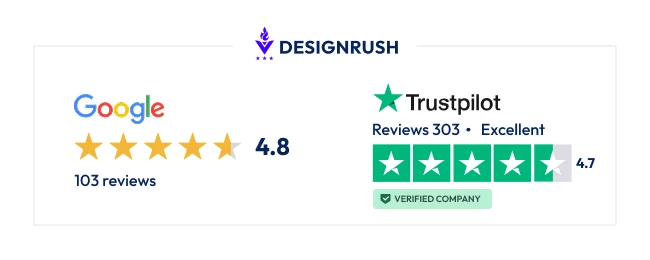
Rated 4.8 on Google and 4.7 on Trustpilot, DesignRush Agency Directory is a reliable resource for finding blockchain development companies. We owe this to our executive selection team, which follows a strict screening process when featuring agencies on the platform, assessing key performance indicators, like portfolio, client reviews, and industry reputation.
Learn more about DesignRush Agency Ranking Methodology.
Sources
DesignRush sustains a directory of over 40,000 agencies categorized by service category, location, expertise, and reviews. We build our database in two ways:
- Our dedicated team of agency experts actively searches the web for top-performing companies. We then pull information from their websites, online presence, and client testimonials to verify their status and qualifications prior to listing.
- The agencies listed get notified of their profiles on the website and they can choose to claim it or not, which suggests their availability for more collaborations.
Agencies can also reach out to DesignRush and must go through the verification process prior to being listed.
7 Frequently Asked Questions About Blockchain Development Companies
What services do blockchain development agencies offer?
Blockchain development agencies design, build, and support blockchain-based solutions that automate processes, improve transparency, and enable secure digital transactions.
Common services include:
- Smart contract development and auditing: Writing self-executing code and reviewing it to prevent bugs, exploits, or costly failures
- dApp development: Building decentralized apps that run on blockchain networks instead of centralized servers
- Token development and NFT platforms: Creating digital tokens, cryptocurrencies, and marketplaces for trading assets
- Blockchain integration: Connecting blockchain with existing systems like web apps, enterprise software, or cloud platforms
- Private and enterprise blockchain solutions: Setting up custom networks for businesses that need control, privacy, and scalability
- Blockchain consulting: Advising on use cases, architecture, and whether blockchain is the right fit
- Wallet development: Building secure wallets for storing and managing digital assets
- Maintenance and support: Monitoring performance, fixing issues, and updating systems after launch
What platforms do blockchain developers use?
Blockchain development firms use a mix of public networks, enterprise platforms, and developer tools to build, deploy, and manage blockchain solutions. They choose platforms based on speed, cost, scalability, and whether the project needs a public or private network.
Key platforms and networks:
- Ethereum: The most widely used platform for smart contracts and decentralized applications
- Solana: Built for high speed and low fees, often used for scalable dApps and marketplaces
- Avalanche: A flexible platform that supports custom blockchain networks and fast transaction finality
- Hyperledger Fabric: Designed for private, permissioned systems used by enterprises
- Corda (R3): Common in finance and regulated industries where data privacy is critical
- IBM Blockchain: Enterprise-grade solution built on Hyperledger for secure business use cases
Development tools and infrastructure that blockchain development agencies use:
- Node providers (e.g., Alchemy, Infura, QuickNode): Give developers access to blockchain networks without running their own nodes
- Smart contract tools (e.g., Remix IDE): Used to write, test, and deploy contract code
- Frameworks and CLIs (e.g., Ignite CLI): Help set up and manage blockchain projects faster
How much do blockchain companies charge for their services?
Blockchain development companies typically charge from $40,000 to $300,000+ for a full solution, depending on complexity, features, and security requirements.
Cost by project complexity
The biggest cost driver is the solution's complexity, from basic smart contracts to full-scale platforms.
- Simple blockchain apps: $40,000 to $60,000
Basic features like simple smart contracts or payment functionality - Mid-level applications: $60,000 to $150,000
dApps with user roles, integrations, and moderate decentralization - Complex blockchain systems: $150,000 to $300,000+
Enterprise platforms, advanced security, custom architecture
Cost by solution type
Different blockchain products have different price ranges based on functionality.
- dApps: $35,000 to $150,000
- NFT marketplaces: $55,000 to $125,000
- Crypto wallets: $125,000 to $200,000
- Crypto exchanges: $135,000 to $190,000
- DAO platforms: $10,000 to $30,000
Cost breakdown across the project
Your budget is split across multiple phases, not just development.
- Consulting and planning: 5%
- UI/UX design: 10%
- Core development: 45%
- Testing and QA: 25%
- Deployment and maintenance setup: 15%
Final pricing depends on scope, security level, integrations, and whether you build on an existing blockchain or create a custom one.
What are the ongoing costs of maintaining a blockchain solution?
Ongoing blockchain costs typically range from 15% to 25% of the initial development cost per year, depending on system complexity and usage.
Key ongoing costs include:
- Maintenance and updates: Bug fixes, performance improvements, and feature upgrades
- Infrastructure: Node providers, cloud services, and storage as usage grows
- Security: Regular audits, monitoring, and protection against vulnerabilities
- Transaction fees: Ongoing network or gas fees for processing transactions
- Support and operations: Technical monitoring, DevOps, and user support
- Compliance: Legal, regulatory, and data protection requirements
Costs increase as the system scales, handles more transactions, or requires higher security.
How long does it take to build a blockchain solution?
The best blockchain development company typically needs 3 to 9+ months to build a blockchain solution, depending on complexity, features, and security requirements.
Typical timeline by complexity:
- Simple solutions: 1 to 2 months
Basic wallets or simple smart contract apps - Mid-level projects: 2 to 4 months
dApps with integrations and user functionality - Complex systems: 4 to 9+ months
DeFi platforms, marketplaces, or enterprise solutions
Blockchain development agencies build products in stages, and each is adding time:
- Planning and requirements: 1 to 2 weeks
- Architecture and design: 2 to 4 weeks
- Development: 1 to 6 months
- Testing and QA: 2 to 4 weeks
- Deployment: 1 to 2 weeks
Factors that affect the timeline include scope and feature set, choice of blockchain platform, team experience, and whether you build from scratch or use existing tools.
What is the difference between public and private blockchains?
Public blockchains are open to anyone, while private blockchains are restricted to approved users and controlled by an organization.
You can see the main differences in the following table:
| Feature | Public blockchain | Private blockchain |
| Access | Anyone can join | Permission required |
| Control | Decentralized | Controlled by one entity or group |
| Transparency | Fully transparent | Limited visibility |
| Speed | Slower | Faster |
| Cost | Higher (transaction fees) | Lower |
| Security | High through decentralization | High, but depends on governance |
| Use cases | Crypto, DeFi, NFTs | Enterprise systems, internal operations |
How do blockchain development agencies ensure security?
Blockchain development firms ensure security by combining secure coding, testing, and continuous monitoring to prevent vulnerabilities and protect data and transactions.
Key security practices include:
- Smart contract audits: Reviewing code to detect bugs, exploits, and logic flaws before deployment
- Secure development practices: Using proven frameworks, code standards, and peer reviews
- Encryption and key management: Protecting data with cryptography and secure storage of private keys
- Testing and simulation: Running stress tests and attack scenarios to identify weaknesses
- Access control: Limiting permissions and enforcing authentication for users and systems
- Ongoing monitoring: Tracking activity, detecting threats, and applying updates or patches quickly
Security is built into every stage, not added after deployment.
About The Author and Expert Reviewer

Selina Garcia has authored 500+ articles and edited 50+ published books in economics, law, and history. Her unique blend of experiences allows her to approach content creation from a well-rounded perspective. Currently, Selina applies her expertise to producing insightful articles on IT, software, and applications for DesignRush.

Sergio is a technology leader with over six years of experience managing global teams and delivering projects across fintech, sportstech, and B2B platforms. At DesignRush, he drove product growth and development execution, building tools that speed up processes by 95% and cut costs by 35% while maintaining full uptime.
Latest Trends Related to Blockchain Development
Artificial Intelligence
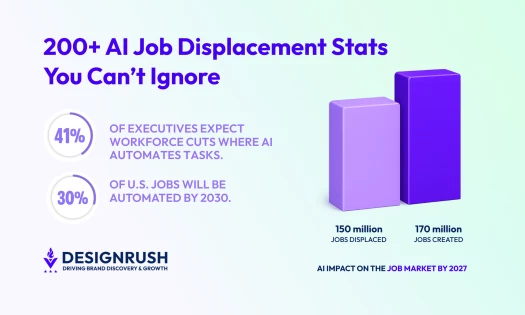
Who’s Most Vulnerable to AI? 200+ Job Displacement Stats and What to Do About It
11,920