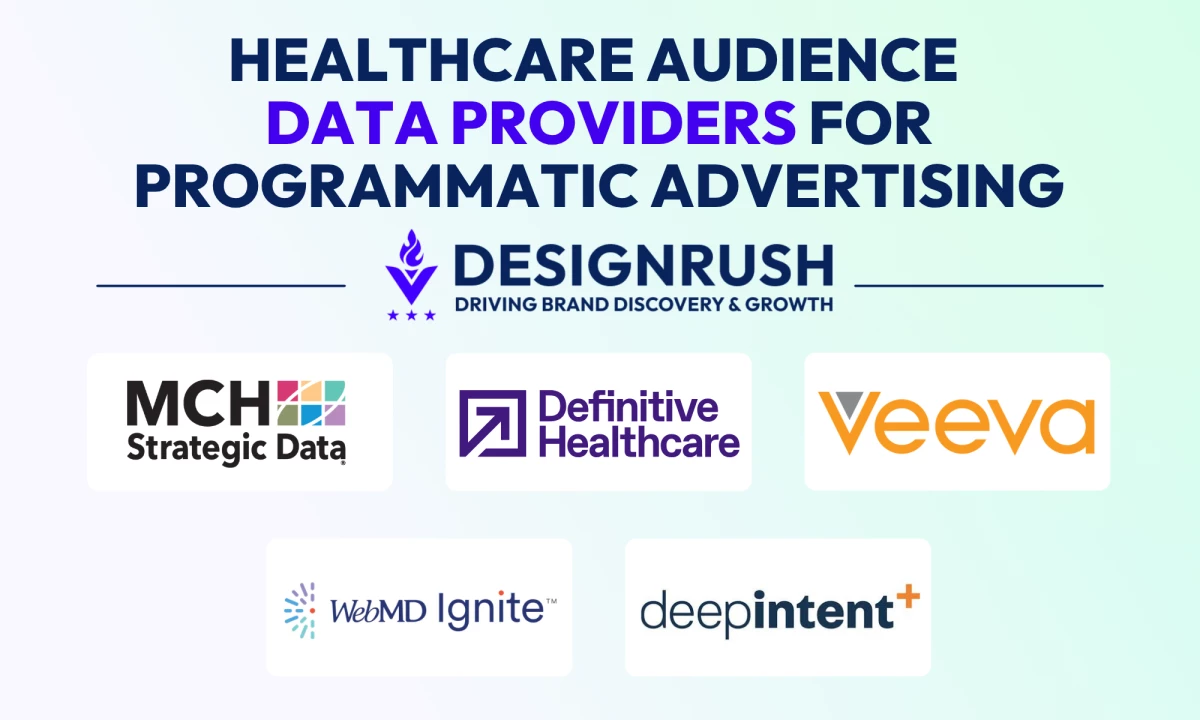

The providers in this guide determine whether your programmatic advertising campaigns will reach credentialed clinicians, influence buying groups, and drive measurable revenue.
Healthcare Audience Data Providers for Programmatic Advertising: Key Findings
- Validate data freshness before spending. Even a 10% to 20% outdated rate can significantly reduce campaign efficiency due to frequent role and facility changes among HCPs.
- Use facility-intelligence platforms for account targeting, and identity-driven datasets for activation. Mixing these incorrectly leads to wasted impressions.
- Choose providers with native DSP integrations. Direct pipes into platforms like LiveRamp or The Trade Desk can improve match rates by 30% to 50% vs. manual onboarding workflows.
Why Data Quality Determines Campaign Reach for HCP Marketers
Companies catering to hospitals, health systems, and physician groups increasingly rely on programmatic advertising to scale outreach.
However, generic audience data simply doesn’t include verified healthcare professionals (HCP) at the level that actually matters.
Without that level of precision, even well-funded campaigns end up delivering impressions to the wrong people, or no meaningful decision-makers at all.
Whether you’re targeting clinicians, administrators, or operational leaders, success depends on having access to reliable, compliant, and activation-ready HCP data for programmatic environments.
We’ve evaluated healthcare audience data providers based on five criteria that directly impact campaign reach and performance:
- HCP contact coverage: Depth and accuracy of provider records, including specialty, role, and facility-level mapping
- Programmatic activation readiness: Seamless integration with demand-side platforms (DSPs) and the ability to push audiences into live campaigns without heavy manual work
- Data freshness: How frequently records are updated to reflect job changes, affiliations, and credentials
- Compliance: Alignment with healthcare data regulations and responsible data sourcing practices
- Multi-channel capability: Ability to activate B2B healthcare contact data across display, email, CTV, and other channels, not just one environment
In programmatic advertising for healthcare professionals, reach is about verified access.
The quality of your underlying data ultimately determines whether your campaigns connect with real decision-makers or disappear into irrelevant impressions.


Best Healthcare Audience Data Providers for Programmatic Advertising
1. MCH Strategic Data: Best for Verified HCP Data with Programmatic Activation
For B2B healthcare marketers that need deterministic HCP identity data and seamless activation across DSPs
Why Choose MCH Strategic Data
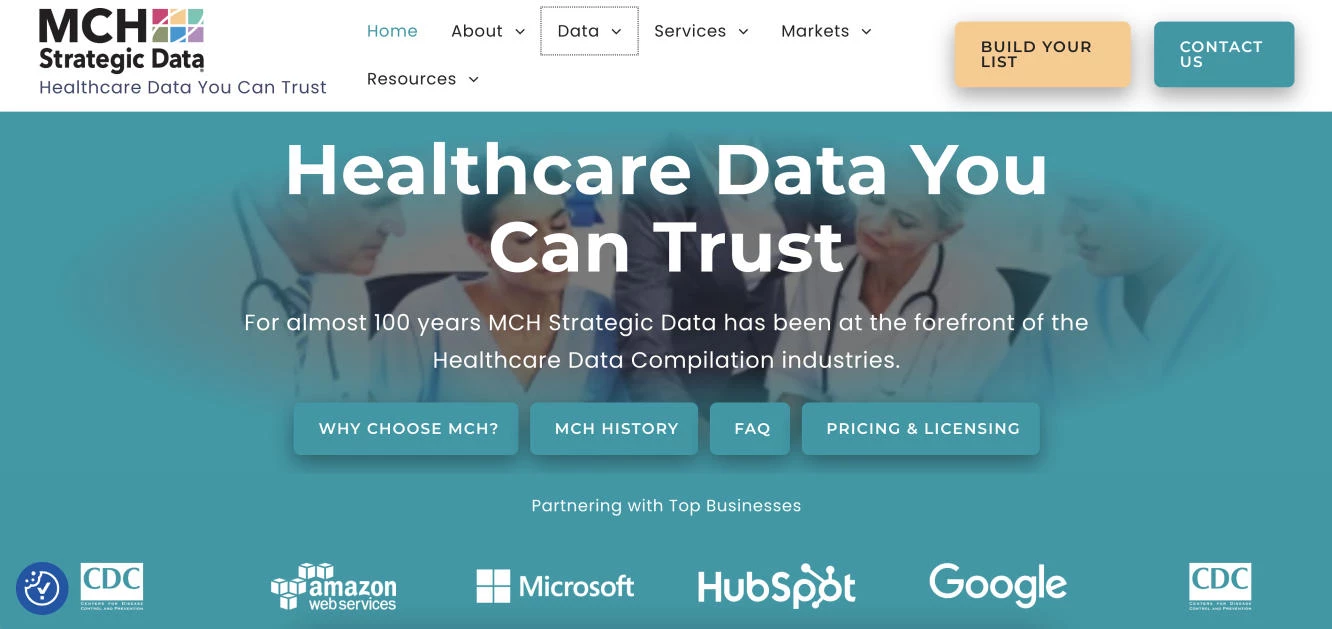
- 100 years of healthcare data compilation, with 6M+ verified HCP contacts linked to 25M+ digital devices
- Trusted source for programmatic-ready audience data with integrations into major DSPs and identity frameworks
- Strong email coverage and identity linkage to support deterministic matching across devices and channels
- HCP records mapped to specialties, roles, and affiliated healthcare facilities for precise targeting
- Cloud-based data delivery, including API and custom audience file support for CRM and marketing platforms
MCH Strategic Data’s healthcare division offers one of the most comprehensive B2B contact databases available for marketers targeting healthcare professionals.
It spans physicians across dozens of specialties, nurses, allied health professionals, dentists, and facility-level decision-makers including department heads and hospital administrators.
For organizations that need their HCP data inside a CRM or marketing automation platform, MCH also offers cloud-hosted databases and API delivery options. Most pure-play HCP data vendors don't support this natively.
Who’s It For?
MCH is the right fit for B2B companies that need to run coordinated, multi-channel campaigns targeting healthcare professionals, not just pull a one-time list.
It's particularly well-suited for organizations that have outgrown basic list brokers and need a data partner that can scale with a full omnichannel go-to-market motion.
Potential Limitations
- Not designed as a standalone outbound sales engagement platform (no built-in sequencing or outreach automation)
- Best fit for organizations prioritizing data accuracy and programmatic activation over basic contact list building
2. HealthLink Dimensions: Best for NPI-Verified Programmatic Segments
For marketers that need highly accurate, NPI-verified HCP audiences

Why Choose Healthlink Dimensions
- 4x-verified HCP data using multiple validation layers, including NPI and proprietary verification processes
- Pre-built and custom audience segments by specialty, enabling faster campaign launches
- Identity linkage across MAIDs and CTV IDs for cross-device and omnichannel targeting
- Programmatic onboarding via LiveRamp and Throtle for strong match rates
- Integrated email capabilities that allow trigger-based follow-up alongside programmatic campaigns
HealthLink Dimensions is a specialist HCP data provider built around a single focus: getting verified healthcare professional audiences into programmatic campaigns with high match rates and minimal friction.
The company has built its reputation on data verification depth to produce one of the more accurate HCP contact files available in the market.
Who’s It For?
HealthLink Dimensions is a strong choice for healthcare marketers whose primary audience is clinical physicians, specialists, and other licensed providers identified at the NPI level.
It works especially well for teams that run programmatic as their primary channel and need reliable identity resolution to maximize match rates and minimize waste.
Potential Limitations
- Primarily focused on clinical HCP audiences, with limited coverage of administrative or non-clinical decision-makers
- Less emphasis on deep facility-level or health system organizational data
3. Definitive Healthcare: Best for Facility-Level Intelligence
For B2B healthcare companies that need deep hospital, health system, and facility insights
Why Choose Definitive Healthcare
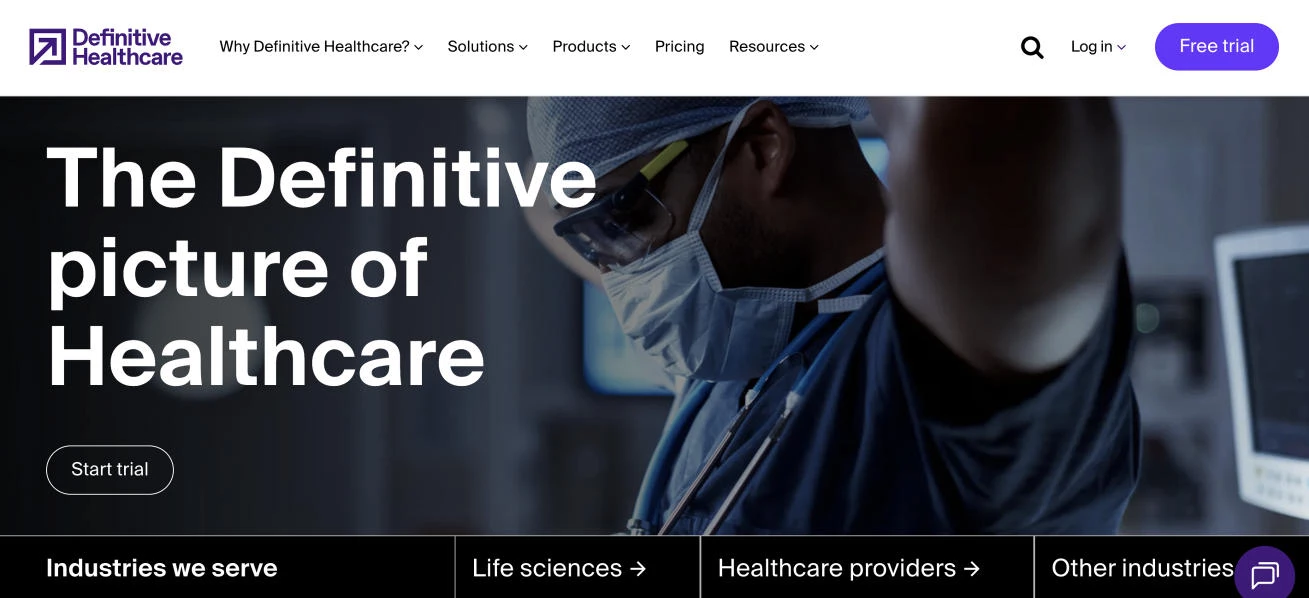
- Comprehensive healthcare database covering providers, hospitals, and integrated delivery networks (IDNs)
- Detailed facility-level intelligence, including hospital size, service lines, ownership, and organizational hierarchies
- HCP contact data enriched with affiliations to hospitals, group practices, and health systems
- Advanced segmentation and analytics tools for market mapping, territory planning, and account targeting
- CRM and marketing platform integrations to support sales, marketing, and programmatic audience workflows
Definitive Healthcare sits in a distinct category among healthcare data providers: it's as much a market intelligence platform as it is a data provider.
For B2B companies doing territory planning, account prioritization, or market sizing before they ever run a programmatic campaign, this depth of facility intelligence is hard to find elsewhere.
Its data can feed audience builds that flow into campaign execution through partner platforms and data onboarding workflows.
Who’s It For?
If your go-to-market requires understanding the full organizational context of a health system before outreach begins, or if your sales team needs to map HCP contacts to specific facilities and decision-making hierarchies, Definitive Healthcare provides the intelligence layer to do that.
It's a particularly strong fit when sales and marketing are working from the same account intelligence data.
Potential Limitations
- Not a programmatic-first platform, so activation may require additional onboarding
- Not focused on deterministic device-level identity matching
4. IQVIA: Best for Pharma-Grade Healthcare Data and Claims-Driven Insights
For organizations that require deep NPI, prescription, and healthcare claims data
Why Choose IQVIA
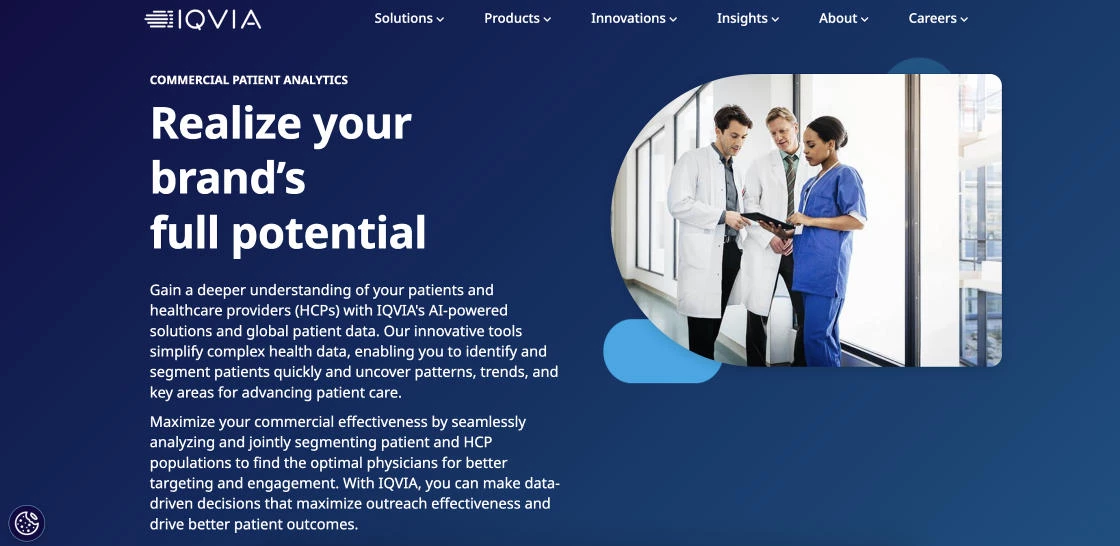
- One of the world’s largest healthcare data ecosystems, combining clinical, claims, and prescription (Rx) data at scale
- NPI-linked healthcare professional data enriched with longitudinal patient journey and prescribing behavior insights
- Advanced analytics for life sciences research, market access, and commercial strategy development
- Global-scale data infrastructure supporting complex segmentation across therapeutic areas and healthcare systems
- Integrated analytics and data science tools designed for enterprise pharmaceutical and healthcare organizations
IQVIA is one of the largest healthcare data organizations in the world, operating a data infrastructure that spans clinical records, prescription data, longitudinal patient journeys, and NPI-linked HCP profiles across global markets.
Its data ecosystem is extraordinary in its depth, particularly for organizations that need to understand prescribing behavior, therapeutic area dynamics, or market access patterns at scale.
Who’s It For?
For large organizations that need rigorous data science infrastructure alongside their marketing activation, IQVIA's analytics and segmentation capabilities are genuinely best-in-class.
Potential Limitations
- High cost and complexity can be over-engineered for teams focused on straightforward programmatic advertising
- Less suitable for lean marketing teams needing plug-and-play audience activation workflows
Best-fit note: IQVIA is often best viewed as a strategic data layer rather than a direct programmatic activation tool for most B2B healthcare marketers.
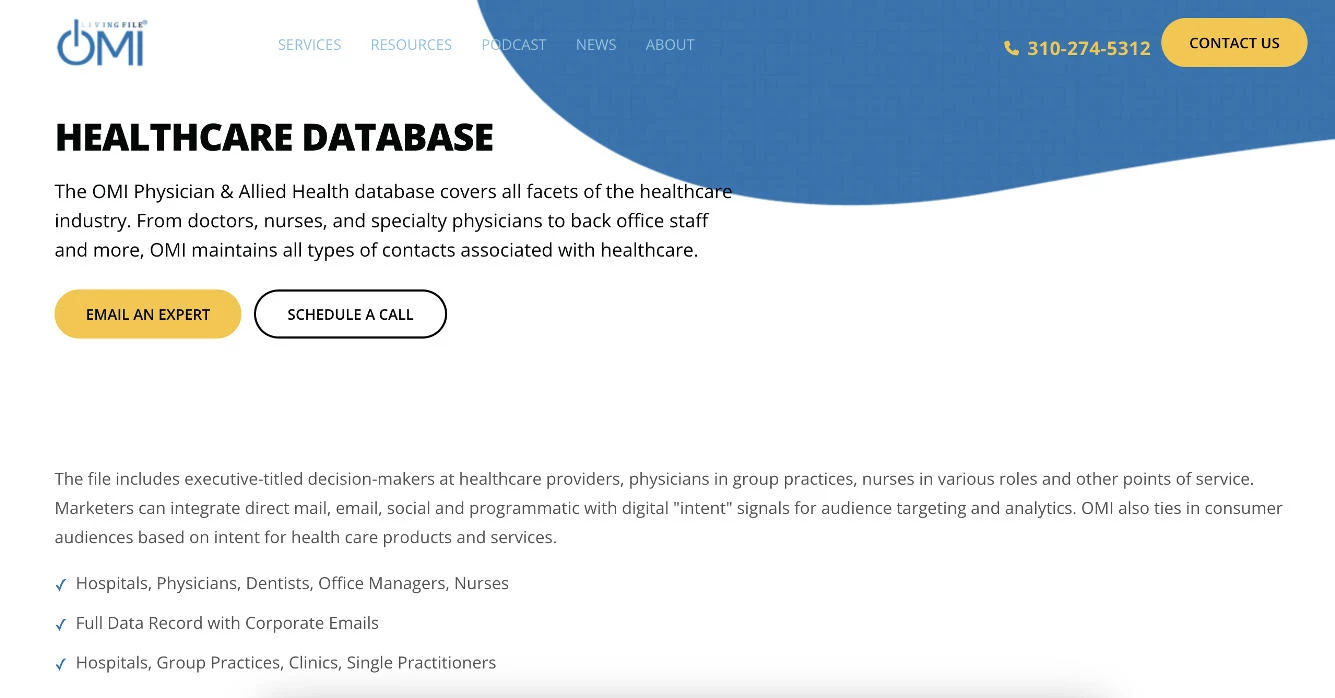
5. Outward Media: Best for Intent-Enriched HCP Multichannel Activation
For marketers that need large-scale capabilities across email, programmatic, and social
Why Choose Outward Media
- B2B healthcare database covering over 1M+ healthcare professionals, including physicians, dentists, and nurse practitioners
- High-accuracy physician-level data with strong residential and contact linkage coverage (including reported 90%+ address matching)
- Multi-channel activation capabilities spanning email marketing, programmatic display, and social advertising
- Segmentation options across specialty, geography, and practice type for more targeted outreach
Outward Media (OMI) enriches its base HCP contact data with behavioral and research signals. This means marketers can identify healthcare professionals who are actively searching or consuming content related to specific clinical topics, products, or categories.
While its database is smaller than some competitors in raw contact volume, the quality of its intent signals and the flexibility of its activation paths make it a practical option for marketing teams that want to go beyond simple list-based targeting and factor in behavioral context.
Who’s It For?
OMI is particularly well-suited for companies running email-first or social-plus-programmatic campaigns and looking to improve response rates by targeting HCPs in an active research or consideration phase.
Mid-market B2B healthcare marketers who need a capable, multi-channel data partner without enterprise-level overhead will find OMI a practical fit.
Potential Limitations
- Strongest in email-first and intent-driven campaigns, with programmatic activation often requiring additional integration layers
- Best suited for campaign activation rather than full healthcare market intelligence
6. WebMD Ignite: Best for First-Party HCP Behavioral Data
For B2B healthcare marketers using behavioral and contextual signals
Why Choose WebMD Ignite
- Access to endemic healthcare media environments where HCPs actively consume clinical and medical content
- First-party, opt-in identity graph built from logged-in healthcare professional interactions across digital properties
- Behavioral and engagement-based targeting using real-time content consumption signals
- Contextual advertising within trusted healthcare education, research, and clinical decision-support environments
- Integrated audience insights that connect content engagement to downstream marketing activation
As the marketing and analytics division of WebMD Health Corp, WebMD Ignite has direct access to one of the largest first-party HCP identity graphs in the U.S.
It’s built from millions of verified, opted-in healthcare professionals interacting with clinical content across WebMD Health, Medscape, and a network of endemic healthcare properties.
This first-party foundation gives WebMD Ignite an unusually strong signal set. Rather than inferring healthcare professional identity from third-party data, it can verify it through authenticated login behavior and content engagement patterns.
Who’s It For?
WebMD Ignite is the right choice for B2B healthcare marketers who place a premium on verified context alongside verified identity.
It’s particularly suited for those running awareness or education-led campaigns where reaching a clinician in an active learning environment is strategically important.
Potential Limitations
- Best suited for advertisers prioritizing endemic reach over cross-platform audience portability
- Primarily a media and activation platform rather than a standalone data provider for external export
- Limited flexibility for exporting raw HCP data into external DSPs
7. StackAdapt: Best for Integrated DSP with Built-In Healthcare Audience Targeting
For B2B healthcare marketers that want to activate programmatic campaigns directly within a DSP
Why Choose StackAdapt
- Built-in healthcare targeting capabilities, including support for NPI-based and specialty-level audience segmentation
- Native ability to activate first- and third-party audience data without complex external onboarding
- Access to curated healthcare segments for faster campaign setup and execution
- Multi-channel programmatic activation across display, native, video, and connected TV
- Flexible audience ingestion, including CRM uploads and third-party healthcare data activation
StackAdapt is a self-serve programmatic advertising platform that has invested meaningfully in healthcare-specific targeting capabilities.
Unlike standalone data providers, StackAdapt is a DSP first. Its value is in making audience activation fast and accessible without requiring complex external data pipelines.
Who’s It For?
If your team doesn't have a dedicated data partnership already and wants healthcare-specific targeting available out of the box, StackAdapt delivers that without requiring a separate data onboarding workflow.
It's also a strong execution platform for teams that do have an external data provider and want a single DSP that can activate those audiences across multiple programmatic channels simultaneously.
Potential Limitations
- DSP-first model means data depth depends on external providers or uploaded lists rather than native intelligence alone
- Less comprehensive healthcare market intelligence compared to dedicated healthcare data platforms
- Best suited for execution and activation rather than deep provider or facility-level analytics
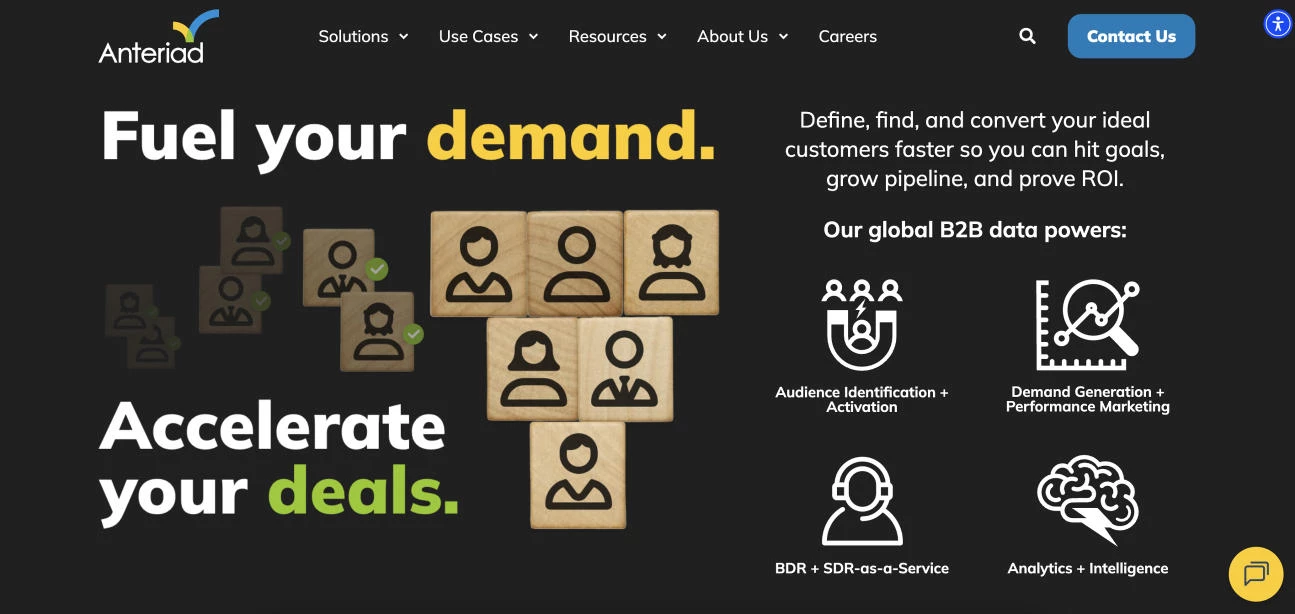
8. Anteriad: Best for Intent-Powered B2B Advertising
For teams that need high-fidelity audience data with full-funnel programmatic activation
Why Choose Anteriad
- Neutronian-certified B2B data with global coverage, including healthcare organization contacts and audience segments
- Proprietary intent signal engine covering 1,000+ B2B intent topics, enabling in-market audience identification in real time
- Managed programmatic trading desk that activates audiences across display, CTV, email, and content syndication
- Buying group profiling and activation to identify and reach all decision-makers within a target healthcare account
- CRM and MAP integration so programmatic interactions flow directly into existing marketing and sales workflows
Anteriad is a full-funnel B2B marketing platform built around the idea that data and activation shouldn't live in separate systems.
Rather than acting purely as a data supplier, Anteriad combines a verified B2B contact database, a proprietary intent signal engine, and a managed programmatic trading desk.
For healthcare B2B marketers, that means you can identify which healthcare organizations and professionals are showing active research signals in your category, build an audience around those signals, and activate that audience.
Who's It For?
Anteriad is a strong fit for B2B healthcare companies running ABM or demand generation programs where the buying decision involves multiple stakeholders across a healthcare organization.
It works best for marketing teams that want a managed, data-first programmatic partner rather than a self-service platform.
Potential Limitations
- Coverage is B2B broad, not HCP-specific at the NPI or clinical identity level
- Best suited for healthcare organization-level targeting rather than individual clinician-level audience builds
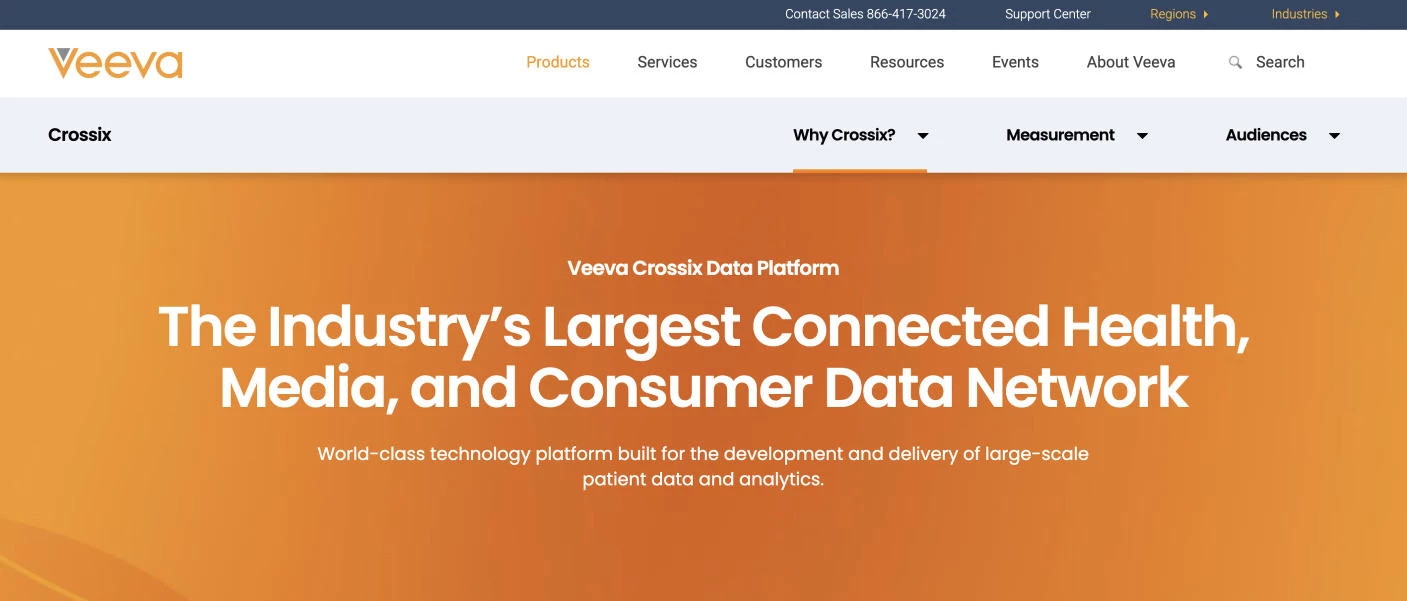
9. Veeva Crossix: Enterprise HCP Reach
For larger healthcare marketing programs that need the broadest HCP coverage across every digital channel
Why Choose Veeva Crossix
- Industry-leading HCP coverage powered by Veeva OpenData, with profiles on 11M+ healthcare professionals from 1,000+ data sources
- HCP Reach Segments compatible with 60+ DSPs, social platforms, digital publishers, audio, OOH, and connected TV
- Custom segment development using specialty, medical degree, HCO type, and clinical behavior signals
- Privacy-by-design data architecture with NAI membership and full HIPAA compliance methodology
- Deep integration with Veeva CRM enabling sales and digital marketing teams to activate the same HCP audience across field and digital channels
Veeva Crossix operates one of the most extensive HCP audience data networks in the U.S. healthcare marketing industry.
Originally built as Crossix Solutions and acquired by Veeva Systems in 2019, the platform is now deeply integrated into Veeva's commercial cloud, with a health data network that spans over 4 million healthcare providers and decades of longitudinal health records.
The result is an HCP audience infrastructure that covers nearly the entire U.S. provider population, segmented by specialty, medical degree, affiliated organization, and clinical behavior.
Who's It For?
Veeva Crossix is best suited for larger B2B healthcare marketing programs that need HCP audience reach at genuine scale and require those audiences to activate consistently across a wide range of channels and media partners.
If you need to coordinate digital advertising with a field sales motion, Crossix's native integration with Veeva CRM creates a direct bridge between the HCPs your reps are targeting and the HCPs your digital campaigns are reaching.
Potential Limitations
- Enterprise-oriented pricing best suited to marketing programs with dedicated resources
- Deepest value is realized by organizations already in the Veeva ecosystem
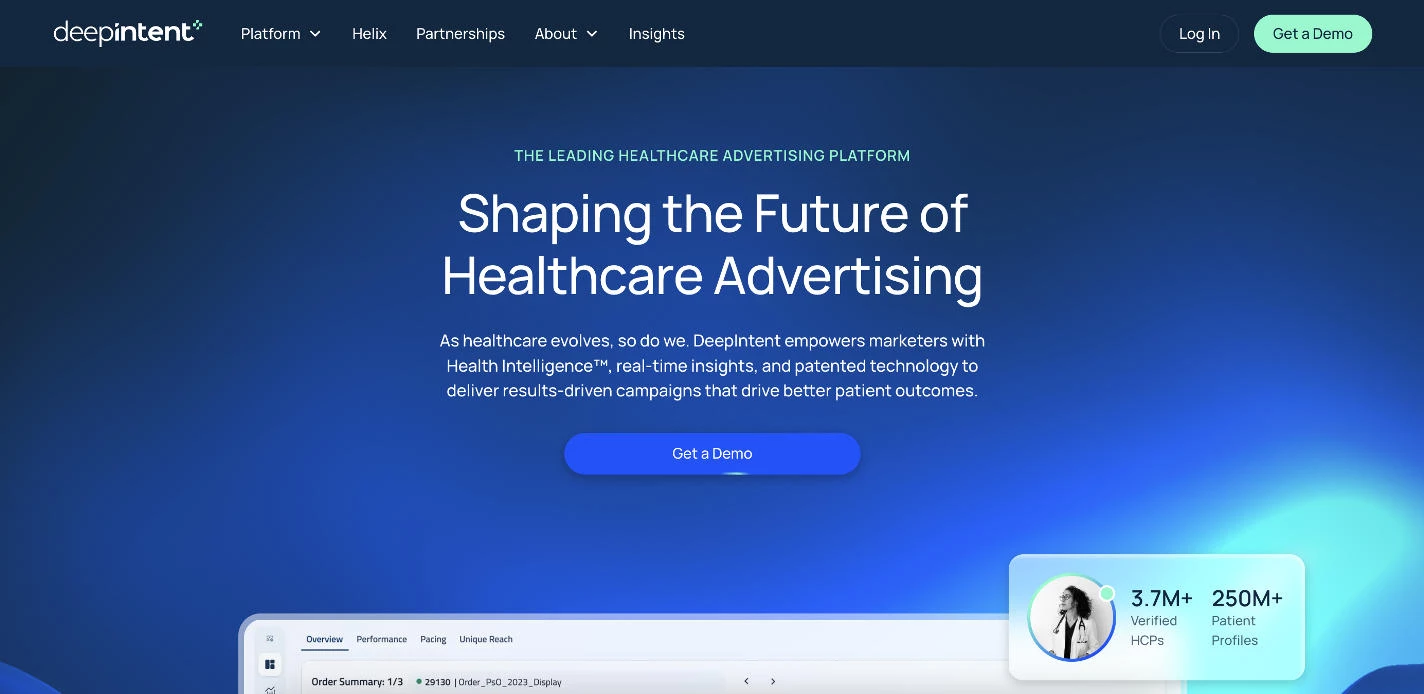
10. DeepIntent: Best for HCP Programmatic with Outcomes Measurement
For teams that need HCP targeting with campaign performance measurement tied to real-world provider engagement
Why Choose DeepIntent
- Purpose-built healthcare DSP with AI-driven campaign optimization and daily-refreshed NPI-level health data
- HealthFirst FAST package provides verified HCP audience reach across premium connected TV and streaming platforms
- Bring-your-own or AI-built audience options: upload an existing NPI list or let the platform build an optimized segment using health intelligence
- Seamless integration with leading healthcare data partners including PurpleLab for expanded audience depth and real-time targeting feedback loops
DeepIntent was founded by data scientists from Memorial Sloan Kettering and built from the ground up as a healthcare-specific demand-side platform.
It’s not a general B2B tool adapted for healthcare, but a platform designed exclusively for the dynamics of healthcare advertising.
Its DeepIntent Outcomes product tracks campaign performance down to the NPI level, connecting ad exposure to downstream provider engagement metrics.
That granular, verifiable measurement is important for healthcare B2B marketers who need to demonstrate that programmatic spend is reaching verified healthcare professionals.
Who's It For?
DeepIntent is the right choice for B2B healthcare marketers who want to move beyond basic HCP targeting and into measurable, outcomes-linked programmatic execution.
Marketing teams that run CTV alongside programmatic display, or that want AI-assisted optimization without managing a complex multi-vendor stack, will find DeepIntent's integrated approach significantly reduces operational overhead while improving targeting precision.
Potential Limitations
- Primarily a DSP and activation platform (organizations that need a raw, exportable HCP contact database for CRM or email will need a complementary data provider)
- Strongest for healthcare-specific programmatic programs
Healthcare Audience Data Providers at a Glance
| HCP Data Provider | Best For | Programmatic Activation | Email Data | Multi-channel |
| MCH Strategic Data | Verified HCP data + DSP activation | ✅ | ✅ | ✅ |
| Healthlink Dimensions | NPI-verified programmatic segments | ✅ | ✅ | ✅ |
| Definitive Healthcare | Facility-level intelligence | ✅ (Indirect onboarding) | ✅ | ✅ |
| IQVIA | Claims + Rx data (enterprise) | ✅ (Partner-dependent) | ❌ | ✅ |
| Outward Media | Intent-driven HCP campaigns | ✅ (Integration required) | ✅ | ✅ |
| WebMD Ignite | First-party HCP behavior | ✅ | ❌ | ✅ |
| StackAdapt | DSP with built-in targeting | ✅ | ❌ (Upload-based) | ✅ |
| Anteriad | Intent-powered ABM | ✅ | ✅ | ✅ |
| Veeva Crossix | Enterprise HCP reach | ✅ | ✅ | ✅ |
| DeepIntent | HCP targeting + outcomes | ✅ | ❌ (Partner-based) | ✅ |
How To Evaluate an HCP Audience Data Provider
The best providers combine accurate HCP identity data with seamless activation across channels, while weaker options create friction, waste spend, and limit scalability.
If you're comparing vendors, focus on the factors that actually determine whether your campaigns reach verified healthcare professionals and convert efficiently:
- Contact coverage & specialty depth: How many verified HCPs are in the database? Does it include physicians, nurses, allied health professionals, administrators, and facility decision-makers, or just MDs?
- Programmatic activation path: Can audiences be pushed directly into platforms like LiveRamp, The Trade Desk, Google DV360, or StackAdapt, or does activation require manual onboarding each time?
- Data freshness & update cadence: How frequently is the data refreshed? Given high HCP mobility, outdated records quickly lead to wasted spend and poor engagement.
- Multi-channel flexibility: Can you activate across email, programmatic display, connected TV, and even direct mail within one ecosystem, or will you need multiple vendors to execute a single campaign?
- Use case alignment: Does the provider fit your go-to-market motion (e.g., facility-level targeting, multi-channel physician campaigns, or CRM/API integration), or are you forcing a generic dataset into a specialized marketing workflow?
Evaluating providers through this lens helps ensure you’re investing in a scalable, multi-channel growth engine built on accurate, actionable healthcare intelligence.
Healthcare Audience Data Providers for Programmatic Advertising: Final Thoughts
The difference between average and high-performing healthcare programmatic campaigns comes down to one decision: the data provider behind your audience strategy.
When identity, activation, and channel execution are aligned, campaigns can reach the right professionals, in the right context, with measurable impact.
Our team ranks agencies worldwide to help you find a qualified partner. Visit our Agency Directory for the Top Healthcare IT Companies, as well as:
- Top TV Advertising Companies
- Top Media Buying Agencies
- Top Digital Marketing Agencies
- Top Branding Agencies
- Top IT Services Companies in NYC
Healthcare Audience Data Providers for Programmatic Advertising FAQs
1. What is the best healthcare audience data provider for programmatic advertising?
For most B2B healthcare marketers, MCH Strategic Data is one of the strongest options due to its combination of deterministic HCP contact data and seamless programmatic activation.
It offers 6M+ verified healthcare professional contacts linked to 25M+ digital devices, along with direct integrations into major DSPs via identity frameworks like LiveRamp. This enables high match rates, precise targeting by specialty and role, and true multi-channel execution across display, CTV, and email.
2. How do I activate healthcare contact data for programmatic advertising?
The most common activation path follows a structured identity resolution workflow:
- Upload your HCP contact list (e.g., email-based audience)
- Onboard the data through an identity platform like LiveRamp
- Match contacts to digital identifiers (cookies, MAIDs, CTV IDs)
Push the resolved audience into a DSP such as The Trade Desk, Google DV360, or StackAdapt
3. Is using healthcare contact data for programmatic ads HIPAA compliant?
Yes, when used correctly. B2B healthcare marketing data (such as professional contact information for physicians and healthcare staff) is not considered protected health information (PHI) and is therefore not subject to HIPAA regulations.
These datasets are typically compiled from professional directories, licensing boards, and opt-in sources, not clinical or patient records.
However, marketers should still follow industry best practices, including compliance with Network Advertising Initiative (NAI) guidelines and responsible data usage standards.
4. What’s the difference between a healthcare data provider and a healthcare DSP?
Healthcare data providers and DSPs serve different roles:
- Data providers supply verified HCP audience segments (e.g., by specialty, role, or facility)
- DSPs provide the infrastructure to buy and deliver ads across channels like display, video, and CTV
5. How many healthcare professionals can I reach with programmatic advertising?
Reach depends on the data provider, but leading platforms offer substantial audiences. For example, MCH Strategic Data provides access to over 6 million verified healthcare professional contacts linked to more than 25 million digital devices.
This level of scale enables highly targeted campaigns while still achieving meaningful reach across specialties, geographies, and healthcare organizations.