
Amazon PPC performance comes down to efficiency, timing, and how quickly you act on data.
These ten expert-backed tactics focus on reducing wasted spend and getting in front of demand before competition pushes costs higher.
Best amazon PPC Strategy: Key Findings
- Campaign performance depends on clear goals. Defining your ACoS target early helps guide bidding, budget allocation, and scaling decisions.
- Early preparation influences results during peak demand. Campaigns set up and tested ahead of seasonal surges are more likely to achieve better placement and results.
- Ongoing improvement is critical. Regular reviews of search terms, bids, and targeting help reduce wasted spend and keep campaigns efficient over time.
What You’re Up Against on Amazon PPC
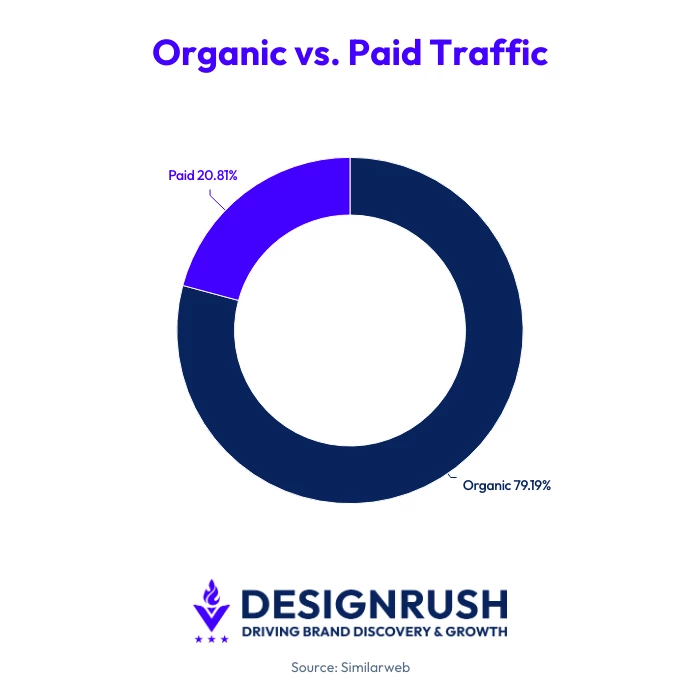
Amazon receives about 2.5 billion visits per month. With that scale, competition for visibility is high. Among keyword-driven traffic, about 79% is organic, and 21% comes from paid search.
PPC plays a critical role, even though more traffic comes from organic search. A good PPC strategy helps you claim your share in this vast marketplace.
1. Start Small and Scale
Launching with a controlled budget gives you cleaner data and more room to adjust early decisions. High spend at the start can lock you into inefficient keywords and placements before you understand which ones convert.
Begin with a small set of campaigns, test different keyword types and match types, and review performance closely. Once you identify terms and products that generate consistent sales within your target ACoS, increase spend on those areas first.
As performance stabilizes, expand slowly by adding new keywords, testing additional ad formats, or increasing budgets on proven campaigns.
Tool to try: Astra (by Sellrbox). Set conservative budgets and let Astra automate keyword discovery, campaign setup, and bid adjustments as performance data builds, then increase spend on campaigns that meet your targets.



2. Use Long-Tail Keywords
Broad keywords attract high volume but commonly come with higher costs and lower conversion rates. More specific queries reflect clearer purchase intent and help narrow targeting.
Long-tail keywords such as "shockproof red phone case for iPhone 17" improve relevance and make it easier to connect with shoppers who know what they want.
Use Amazon’s autocomplete and search term reports to identify these queries, then group related keywords into tightly structured campaigns so performance is easier to track and refine.
Tool to try: Helium 10 (Cerebro + Adtomic). Use Cerebro to uncover high-intent search terms and expand keyword ideas, then move proven keywords into Adtomic to manage bids and structure campaigns around what converts.
3. Optimize Product Listings
PPC performance depends on what happens after the click. If a listing doesn’t convert, ad spend becomes harder to maintain at a profitable level.
As Joshua Romo, CEO of Fiero Social Media and Marketing, explains:
“Having high-quality listings, descriptions, and images can be vital to a PPC campaign as customers want to feel they can trust a product past an ad.”
Clear titles, relevant keywords, quality images, and well-structured bullet points all influence conversion rate. Even small improvements here can improve efficiency and support better ad placement over time.
Treat your listing as part of your PPC strategy.
Tool to try: Jungle Scout (Listing Builder). Use it to refine keyword placement in titles, bullets, and backend terms. For better visuals and branded content, build A+ Content directly in Amazon Seller Central to build trust and drive conversions.
4. Bid Smarter, Not Harder
Amazon PPC runs on a cost-per-click auction, but higher bids do not guarantee better returns. If conversion rates are low, increasing bids can raise costs without improving results.
Start with Amazon’s suggested bid ranges as a reference point, not a rule. Test lower and mid-range bids, then adjust based on performance data tied to your target ACoS.
You should refine bids gradually. Increase bids on keywords that generate consistent sales within your target range, and reduce bids on terms that spend without converting. This keeps spend aligned with performance.
Use placement adjustments to prioritize visibility where it matters most. Higher bid modifiers for top-of-search placements can improve results when conversion rates are high.
Tracking both ACoS and TACoS gives a better view of efficiency, helping you balance short-term performance with total profitability.
Tools to try: Perpetua or Astra (by Sellrbox). Use goal-based bidding to align spend with ACoS or TACoS targets, and test incremental bid adjustments based on real performance data. In Astra, set guardrails such as max CPC and target ACoS, then scale bids on keywords that meet your targets.
5. Adjust Your Spend Based on Seasonality
Timing plays a direct role in how campaigns perform on Amazon. High-demand periods bring more traffic, but also more competition and higher costs.
As Bryan Fowler, President of Intero Digital’s Amazon division, explains:
“Brands that plan their seasonal calendar months in advance, align their inventory and forecasting, and preload campaigns with the right keywords before demand peaks are the ones capturing top-of-search placement when it matters most. Waiting until you see the surge means you’re already behind.
The brands we see win in Q4 aren’t reacting to the holiday season; they’ve been building toward it since at least Q3, because if your inventory isn’t in place when demand hits, no amount of optimization will recover that lost momentum.”
Planning ahead allows campaigns to build visibility before competition grows. It also gives you time to test keywords, refine bids, and align inventory with expected demand.
@interodigital Sara, Intero Digital’s Director of Partnerships, answers a question posed by one of our webinar attendees: “When creating your #marketingmix, what are the best ways to get started?” 🤔 #marketingtips#marketingstrategy#marketingadvice♬ Soulful Strut - The Young-Holt Unlimited
Intero Digital’s work with MOJO Outdoors shows how this approach plays out in practice. The team developed a seasonal calendar, increased advertising during key periods, and supported campaigns with SEO updates and product variation optimization.
This resulted in:
- $606,793 in shipped COGS in December
- Year-over-year growth increasing from 10% to 19.5%
The key takeaway is that campaigns perform better when they’re prepared in advance, not adjusted after demand rises.
Tool to try: Amazon Marketing Stream. Use hourly performance data to identify peak conversion periods and fine-tune budgets and keywords more precisely.
6. Tailor Your Ads to Product Lifestyle Stages
Most products move through stages such as launch, growth, and maturity, each needing a different level of investment and targeting focus.
As Christopher Snelling, Founder of TopOut Group, explains:
“When you launch a new product, invest more in ads to let people know it exists. Use broad keywords so a wide audience sees it.”
At launch, visibility is the priority. Broader targeting and higher spend help generate initial traction, reviews, and sales data.
As performance improves, PPC campaigns can become more focused. Shift attention to keywords that consistently convert and reduce spend on low-performing terms.
“Once your product becomes more popular, focus on the keywords that lead to the most sales and consider spending less on ads to save money.”
Over time, mature products usually rely more on efficient targeting and controlled spend to retain profitability.
Aligning your PPC strategy with each stage helps you avoid overspending early or limiting growth later.
Tool to try: Quartile. Start with broader targeting to gather data, then let the platform consolidate high-performing search terms and refine campaigns as performance improves.
7. Balance Automation With Manual Control
Automation and manual control serve different roles in Amazon PPC, and effective campaigns rely on both.
Bhavdeep Singh, CEO and Founder of LOAB Solutions, explains:
“Automation, like automatic campaigns, helps discover new keywords and manage bids efficiently, while manual control allows for fine-tuning based on performance data.”
Automatic campaigns are useful for gathering search term data and identifying new opportunities. They help uncover how shoppers actually search for your product.
Manual campaigns give you control over targeting and spend. Moving high-performing search terms into tightly structured manual campaigns makes it easier to manage bids and track performance at a granular level.
Both should run together. Automatic campaigns continue to discover new opportunities, while manual campaigns focus the budget on keywords that convert.
Automation tools can support bid management and budget control, but they still require regular oversight to keep performance aligned with your targets.
Tools to try: Amazon Ads Console (Automatic → Manual) + Astra. Use automatic campaigns to identify converting search terms, then move them into structured manual campaigns.
Use Astra to manage bids and budgets in line with your ACoS targets while maintaining visibility into performance.
8. Optimize, Monitor, and Refine Regularly
Amazon PPC performance changes quickly, so campaigns need consistent oversight.
Track essential metrics such as ACoS, TACoS, conversion rate, and spend at the keyword and product level. Reviewing these together lets you know where performance needs attention.
“Always keep an eye on how your ads are doing and make changes as needed to get the best results,” Snelling emphasizes.
Use search term reports to understand where your budget is going and which queries lead to sales. Reduce bids or pause terms that spend without converting, and increase bids on keywords that deliver consistent results within your target range.
Review campaigns regularly to monitor performance. This makes it easier to reallocate budget, optimize targeting, and keep control over spend.
Tools to try: DataHawk + Astra (by Sellrbox). Use DataHawk to track performance metrics in one place, then apply rules in Astra to reduce bids on non-converting terms or increase spend on keywords that meet your targets.
9. Use Negative Keywords To Improve Efficiency
Negative keywords help control where your ads appear by excluding search terms that don’t match your product.
Without regular updates, campaigns can spend on queries that generate clicks but no sales. Reviewing search term reports will help you identify these patterns early.
Focus on terms with high spend and no conversions, or repeated clicks without results. Adding them as negative keywords keeps the budget focused on queries that are more likely to convert.
For example, a premium leather handbag brand may avoid terms like 'cheap' or 'budget' to maintain relevance.
Negative keywords also stabilize performance by reducing data noise and improving conversion rates.
Tool to try: Helium 10 Adtomic. Use automation rules to flag high-spend or non-converting search terms and add them to your negative keyword list.
10. Set Your ACoS Target Before You Scale
Before increasing budgets or expanding campaigns, define what efficiency looks like for your business.
ACoS should reflect your margins, product lifecycle, and campaign goals. A higher ACoS may be acceptable during product launches or ranking campaigns, but established products often require tighter cost control.
Without a set target, it becomes difficult to evaluate performance or make consistent decisions.
Use your break-even ACoS as a baseline, then adapt according to your objective. This provides a better direction for bidding, scaling, and keyword expansion.
Which Type of Amazon PPC Ad Is Right for You
Different ad formats serve different goals, so choosing the right one depends on what you’re trying to achieve.
Here’s a quick breakdown of Amazon’s main PPC ad types and where they fit.
Sponsored Products
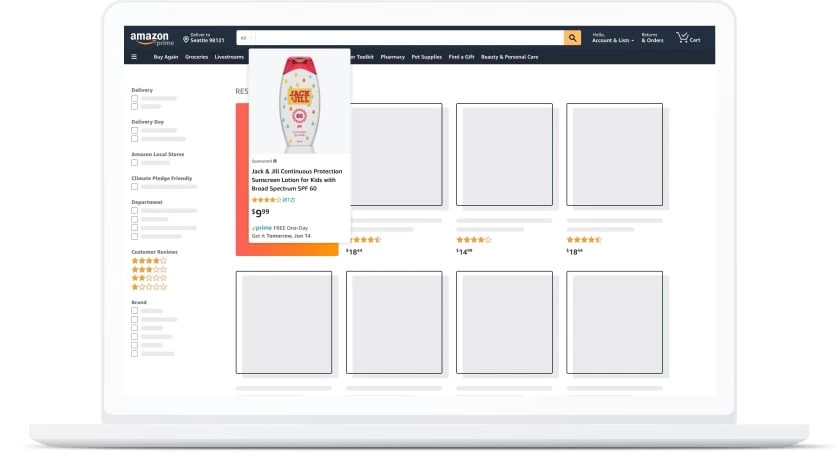
Sponsored Products appear in search results and on product detail pages, placing individual listings in front of high-intent shoppers.
They are typically the starting point for most campaigns and are used to increase visibility, boost sales, and support organic ranking.
Sponsored Brands
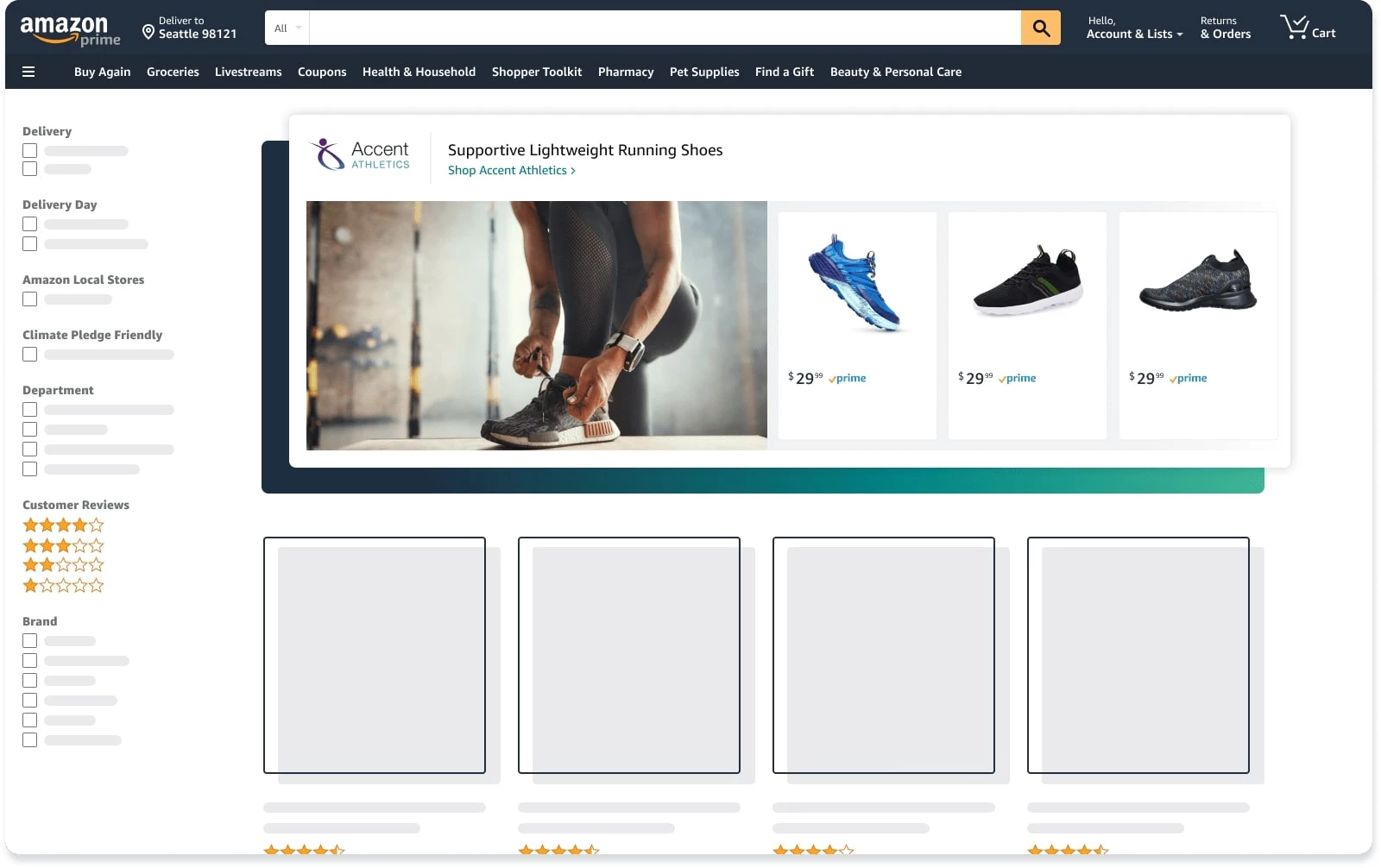
Sponsored Brands appear at the top of search results and feature multiple products alongside your brand logo.
They are useful for increasing brand visibility and attracting attention for broader keyword searches, especially when you want to showcase a product range.
Sponsored Display Ads
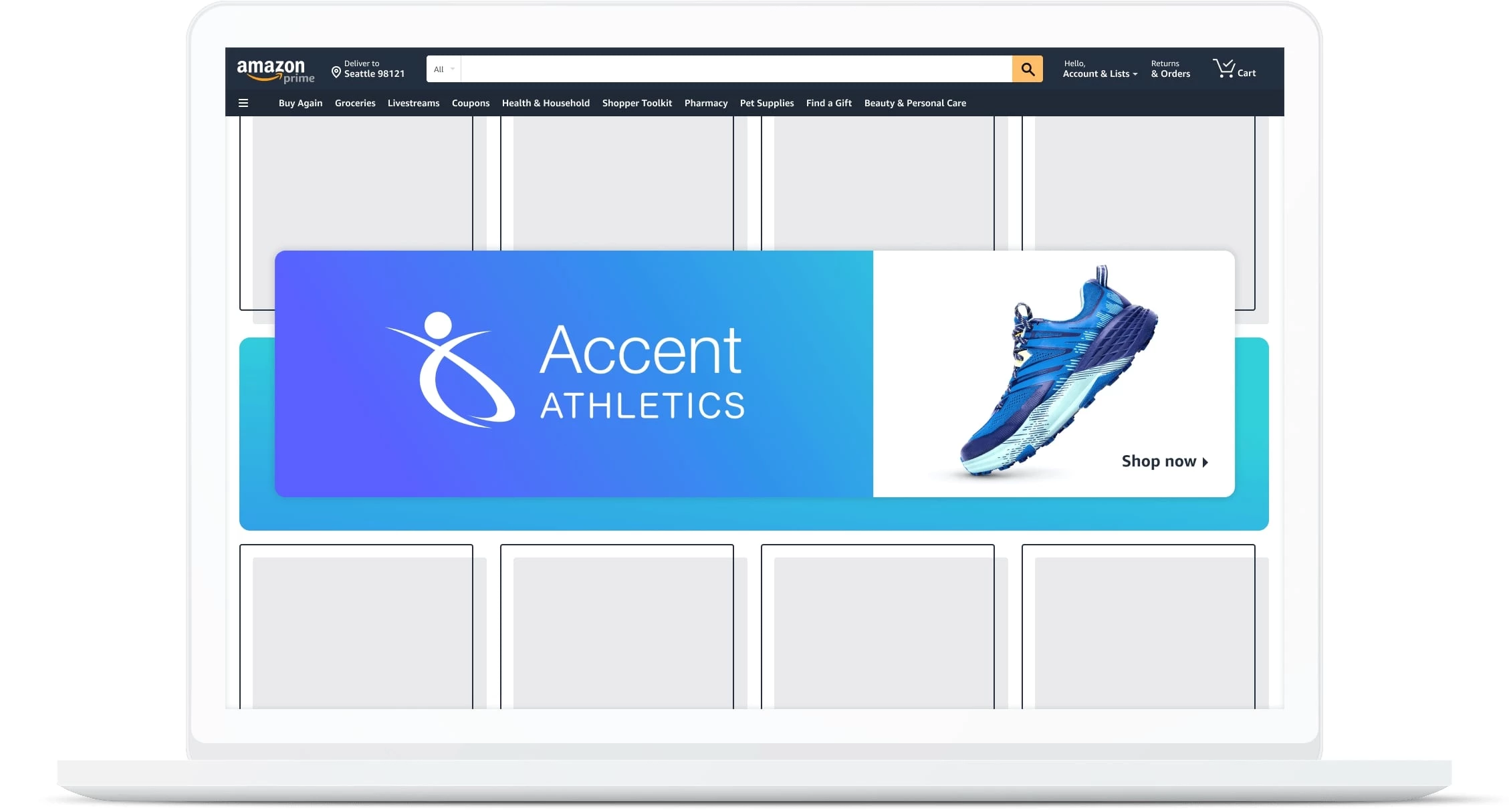
Sponsored Display ads go beyond search results and can appear both on and off Amazon.
They support audience targeting, product targeting, and remarketing, making them effective for re-engaging shoppers who viewed your products or similar listings.
Amazon Demand Side Platform (DSP)

Amazon DSP allows advertisers to run display and video campaigns both on Amazon and external sites using Amazon audience data.
It is typically used by larger brands managing advanced campaigns, as it requires a higher budget and more structured planning than standard PPC formats.
Amazon PPC Campaign Strategy: Bottom Line
Amazon PPC works best when each decision is tied to your objective. Budget, bids, and targeting all perform differently depending on whether you are launching a product, scaling growth, or protecting margins.
The tactics in this guide help you control spend, improve conversion rates, and focus on what delivers results.
Consistent review and small but deliberate changes make a bigger difference than large adjustments made too late.
Over time, campaigns become more efficient when you build on what converts and remove what doesn’t.

Our team ranks agencies worldwide to help you find a qualified partner. Visit our Agency Directory for the top Amazon PPC companies, as well as:
- Top PPC Agencies
- Top Bing PPC Companies
- Top Amazon PPC Agencies in San Antonio
- Top eCommerce PPC Agencies
- Best Google Ads Agencies
- Top Real Estate PPC Companies
Our design experts also recognize the most innovative design projects across the globe. Visit our Awards section for the best & latest in eCommerce website designs.
Amazon PPC Strategies FAQs
1. How much should I budget for Amazon PPC?
It depends on your goals, but starting with $10-$50 per day is a good range for beginners. You can adjust as you gather data on ad performance.
2. What is ACoS, and why is it important?
Advertising cost of sale (ACoS) is the ratio of ad spend to sales. A lower ACoS means a more efficient campaign. Most sellers aim for an ACoS of 15-30%, but this can vary based on your profit margins.
3. When should I increase my Amazon PPC budget?
Increase the budget only when a campaign consistently generates sales within your target ACoS. Look for stable performance over several days, not short spikes.
If spend is limited but conversion rates are solid, increasing the budget can help capture more demand. If a campaign is not converting, increasing the budget usually increases losses.
4. How do I know if a keyword is worth keeping?
Evaluate keywords based on spend, sales, and conversion rate. A keyword that generates consistent sales within your target ACoS is worth scaling.
If a keyword accumulates spend without conversions or shows repeated clicks with no sales, it may need a lower bid or removal. Search term reports help confirm whether the query matches your product.
5. What is the difference between ACoS and TACoS?
ACoS measures ad spend against revenue generated from ads, while TACoS compares ad spend to total revenue, including organic sales.
ACoS helps you manage campaign results, while TACoS shows how PPC contributes to overall growth. Tracking both gives a more complete view of performance.