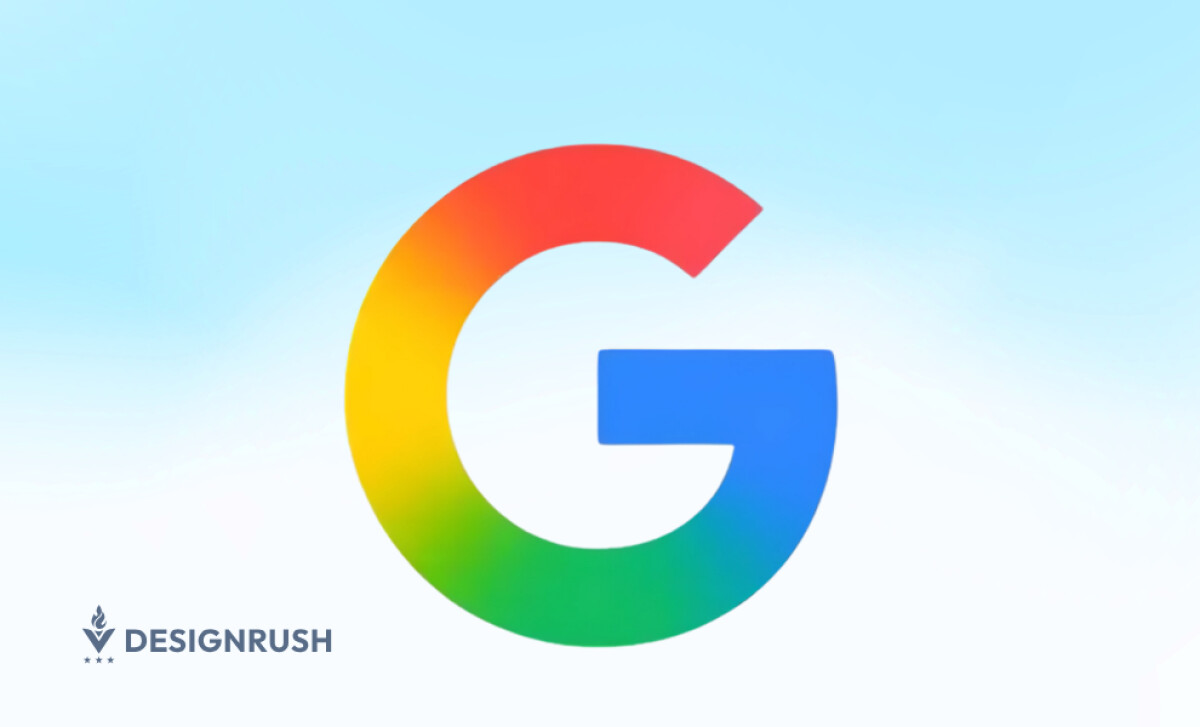

Google has transformed from a quirky search engine to a global powerhouse in AI, cloud, and consumer tech, and its logo has evolved in lockstep. Google’s logo evolution mirrors their commitment to innovation, user experience, and brand consistency across diverse platforms. In May 2025, Google introduced its first significant logo update in a decade, unveiling a new 'G' icon featuring a seamless gradient blend of its signature colors: red, yellow, green, and blue. This subtle yet impactful change aligns with the company's evolving focus on artificial intelligence and modern design aesthetics. Let’s break down what makes the Google logo so effective and why it remains a gold standard in minimalist branding.
Google Logo Design Details
In 2025, Google unveiled a redesigned “G” icon, the first visual refresh in a decade. While the typography and structure remained intact, the big change lies in the gradient treatment. The once segmented blocks of red, yellow, green, and blue now flow seamlessly into one another, resulting in a sleeker, more unified look. This subtle shift supports Google's brand expansion into AI, exemplified by products like Gemini. The gradient reflects motion, intelligence, and adaptability, qualities central to Google’s evolving brand. Scalable, accessible, and modern, this version continues to meet the demands of a global, multi-device user base.
Google Logo History
Google's logo has undergone several transformations since its inception, each reflecting the company's growth and the evolving digital environment.
1998: The Original Logo
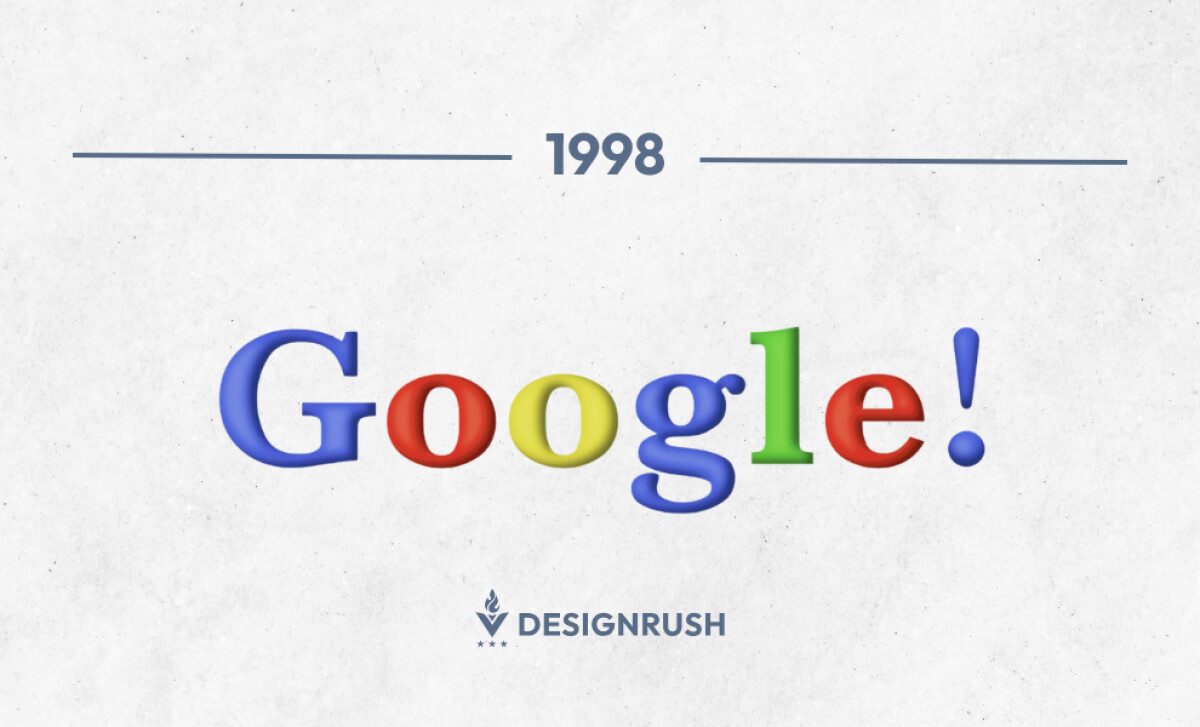
Google's first logo, designed by co-founder Sergey Brin using GIMP, featured a serif typeface with an exclamation mark, reflecting the tech aesthetics of the late '90s.
1999 – 2010: The Ruth Kedar Design
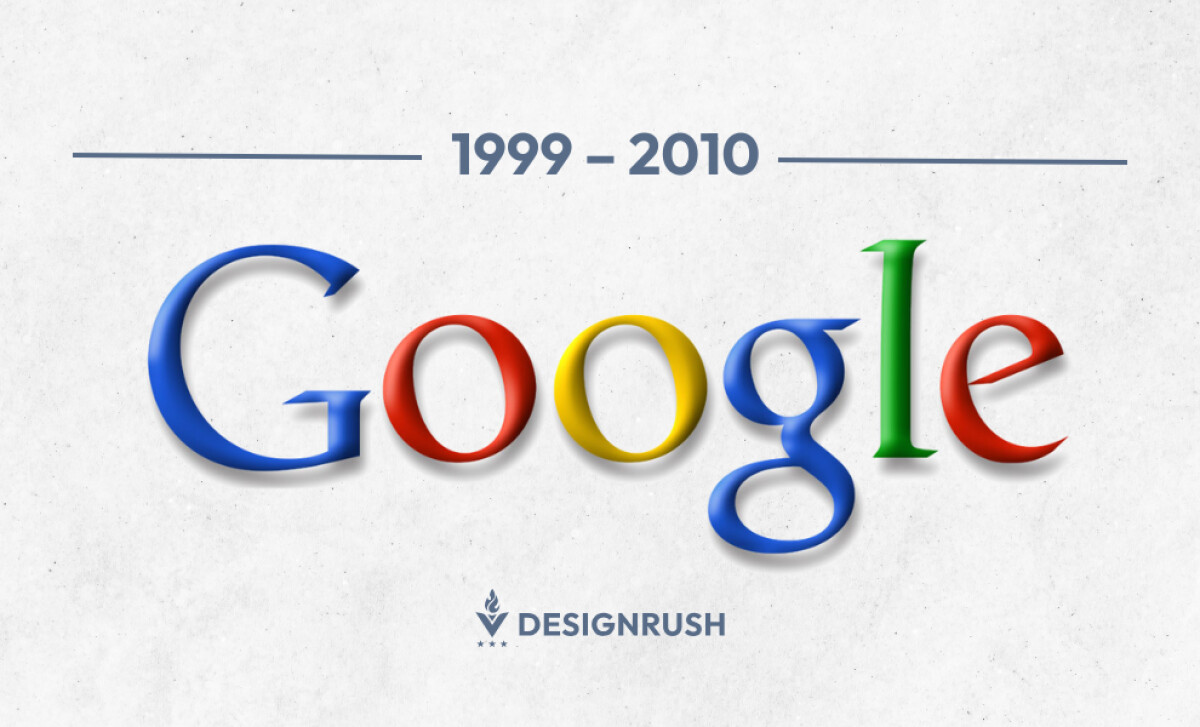
During this period, Google transitioned from a garage startup to a rising tech powerhouse, and its logo evolved to reflect that growth. Designed by Ruth Kedar, the new wordmark used the Catull typeface, giving the brand a more professional and structured appearance.
This visual upgrade coincided with several critical business milestones:
- 2000: AdWords launch, beginning its monetization engine
- 2004: Google IPO raises $1.67B
- 2006: Aquisition of YouTube
2010 – 2013: Simplification Begins
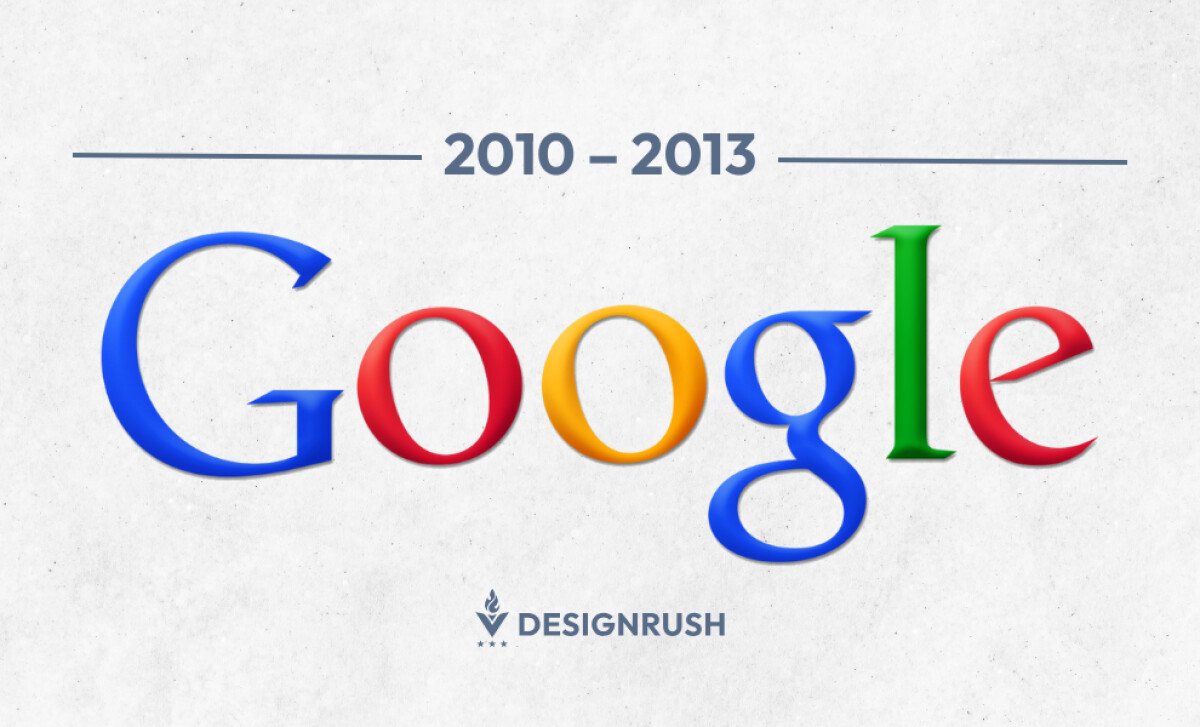
Google removed the bevels and shadows, flattening the logo for better digital use. This version signaled the shift toward a mobile-first design ethos and mirrored broader UI updates across products, underscoring the company's focus on speed, clarity, and efficiency.
2013 – 2015: Going Flat
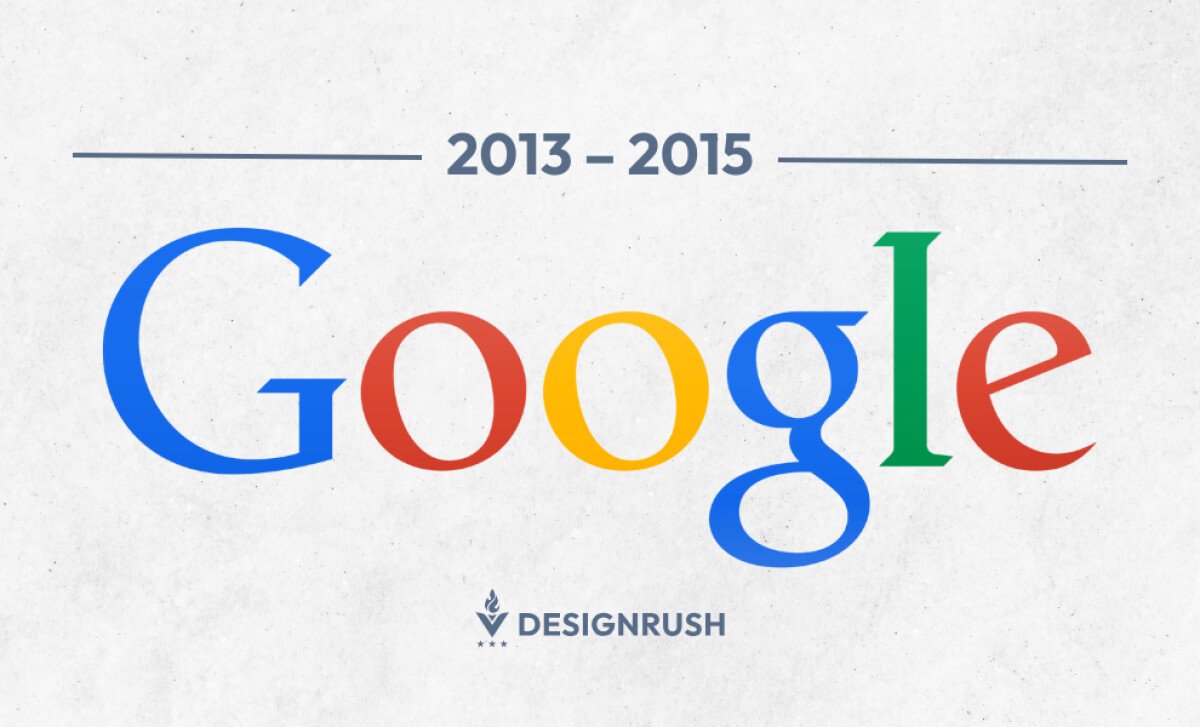
In this short yet pivotal period, Google fully embraced flat design principles, eliminating any visual depth or embossing. This version offered sharpness and modernity while keeping the original color scheme and serif typeface intact. It arrived just in time for key organizational changes.
Less is more. Get inspired by these minimalist branding success stories.
2015 – 2025: The Product Sans Revolution
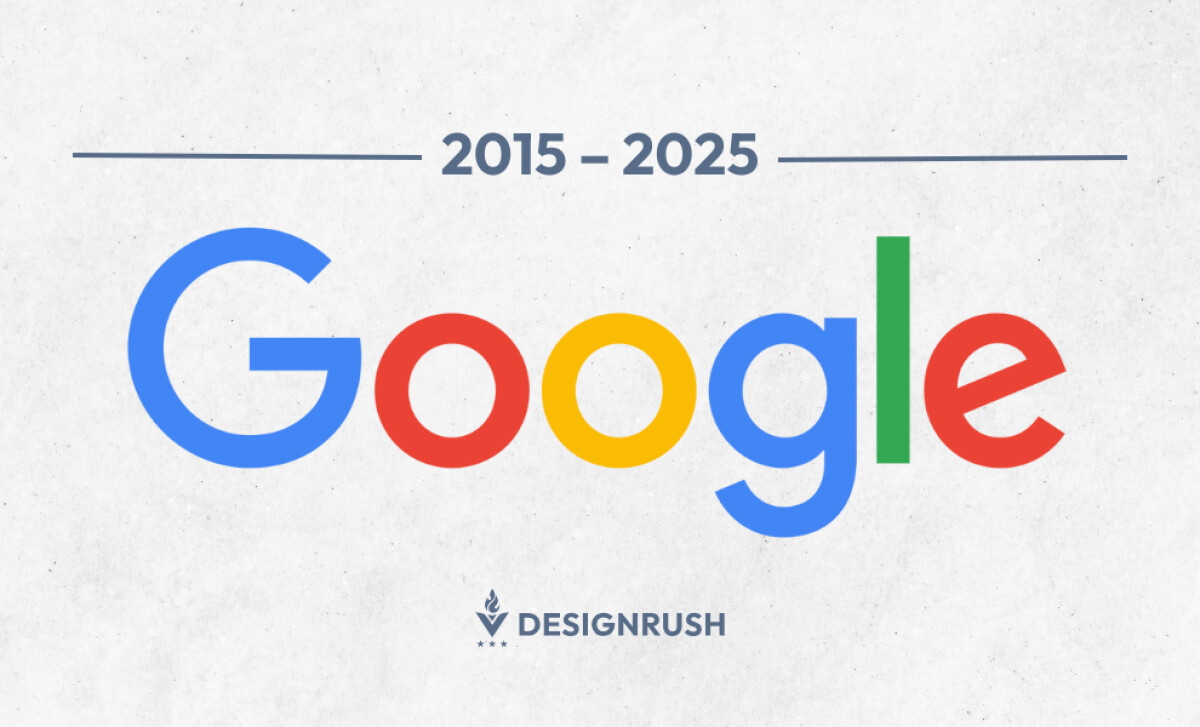
Google introduced the sans-serif Product Sans typeface and unveiled the single “G” icon — bold, geometric, and modular. This shift unified Google’s vast product ecosystem under a consistent visual umbrella.
Great brands evolve. Explore the boldest logo makeovers done right.
2025 – Present: The Future Looks Good in Gradient
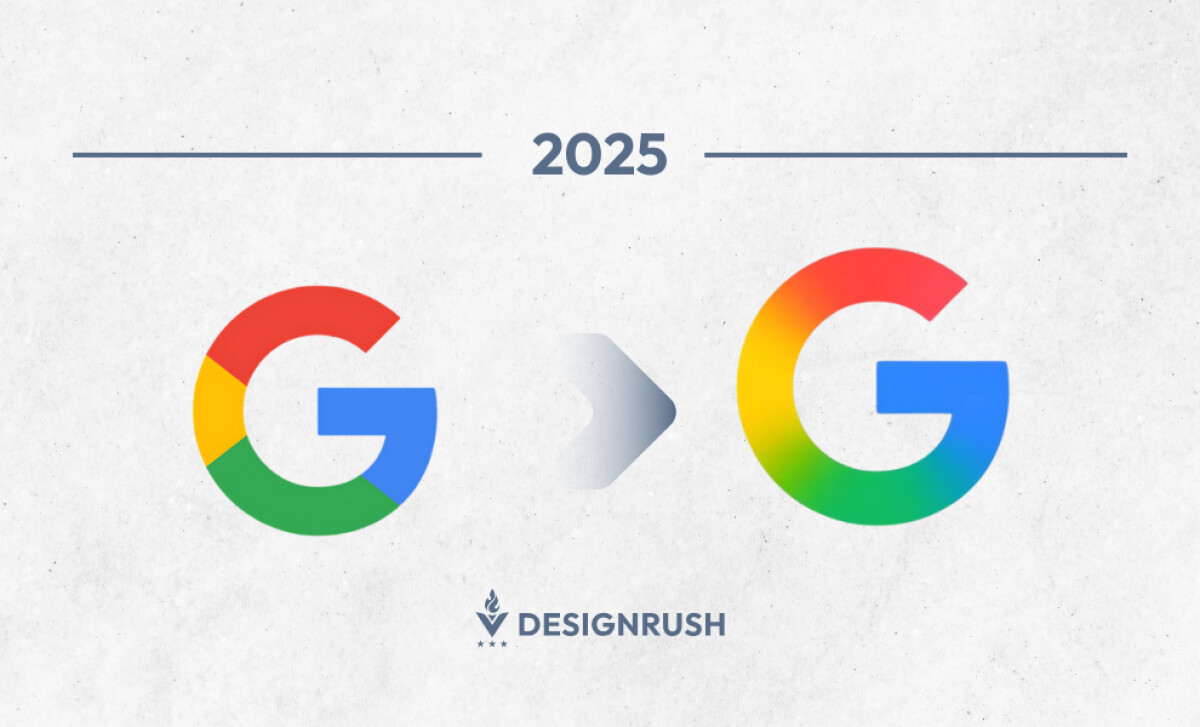
In 2025, Google unveiled its most subtle yet symbolically significant logo update in a decade. While retaining the “G” structure introduced in 2015, the design now features a seamless gradient blend of its signature colors.
This shift visually represents the fusion of AI across all Google touchpoints, especially as the company introduces Gemini, its flagship generative AI model, and repositions the Pixel and Android brands with AI-first messaging.
The gradient effect communicates intelligence, fluidity, and adaptability, qualities essential to Google's strategic vision for an AI-integrated future. Notably, this update is more than aesthetic.
A 2024 study published in the Journal of Business Research found that gradient (vs. solid) logos led consumers to perceive brands as significantly more innovative and boundary-defying, regardless of category or logo shape. The researchers attributed this to a “boundlessness effect,” where gradients evoke perceptions of progress and openness, reinforcing a brand’s forward-thinking nature.
Through this evolution, Google strengthens its modern identity without breaking from its visual heritage, a refined signal that the future is here, and it looks intelligent.
See how other brands use gradients to signal innovation in our list of the best gradient logo designs.
Google Logo: Designing for What’s Next
Google’s logo journey offers a powerful roadmap for brands navigating the complexities of modern identity design. From its quirky, skeuomorphic origins to today’s refined, gradient-infused “G,” each update reflects a calculated response to shifts in technology, user behavior, and platform demands.
For businesses, Google’s branding path offers five essential lessons:
- Design with momentum. Don’t just change to look modern. Evolve to reflect how your business grows and shifts.
- Reinforce brand memory. Keep color, geometry, or form consistent to ensure familiarity across redesigns.
- Align visuals with innovation. As products become smarter, your logo should communicate clarity and capability.
- Think across touchpoints. A great logo should scale intuitively across ecosystems, from watch icons to billboards.
- Subtle Doesn’t Mean Silent: The 2025 gradient update proves that even small refinements can communicate progress. It’s possible to evolve without disorienting loyal users.
As you assess your own brand’s trajectory, think like Google: design for what’s next, communicate clearly, and always evolve with purpose.