
The Red Bull Logo: Key Points
- The Red Bull mark originated as the Krating Daeng emblem created for Chaleo Yoovidhya's TC Pharmaceutical in 1976. Dietrich Mateschitz kept the composition when Red Bull launched in 1987, and the core identity has held ever since.
- That consistency supports a brand Brand Finance valued at $9.7 billion in 2025, the most valuable energy drink brand in the world, sold in more than 170 countries with 12.7 billion cans sold in 2024.
- The logo works because every element is doing a job: two charging bulls signal power and confrontation, the yellow disc reads as the sun and perpetual energy, and the palette is engineered around documented color psychology.
Before it became shorthand for adrenaline, extreme sports, and energy in a can, the Red Bull logo was a Thai working-class emblem that an Austrian marketer had the discipline not to touch.
What makes it endure? Partly the design itself, and partly nearly four decades of refusing to redesign it. The result is one of the best logo designs in the beverage industry and a visual asset behind a company that reported €11.2 billion in net sales for 2024.
Who Designed the Red Bull Logo?
No individual designer is publicly credited with the mark. The emblem was created for Krating Daeng, the energy drink Chaleo Yoovidhya launched through his company TC Pharmaceutical in Thailand in 1976, and TC Pharmaceutical has never named the artist behind it. What is documented is the decision that mattered most: when Yoovidhya and Dietrich Mateschitz co-founded Red Bull GmbH in 1984, Mateschitz retained the Krating Daeng iconography almost untouched, translating only the name.
From Krating Daeng to Red Bull: What Changed Visually
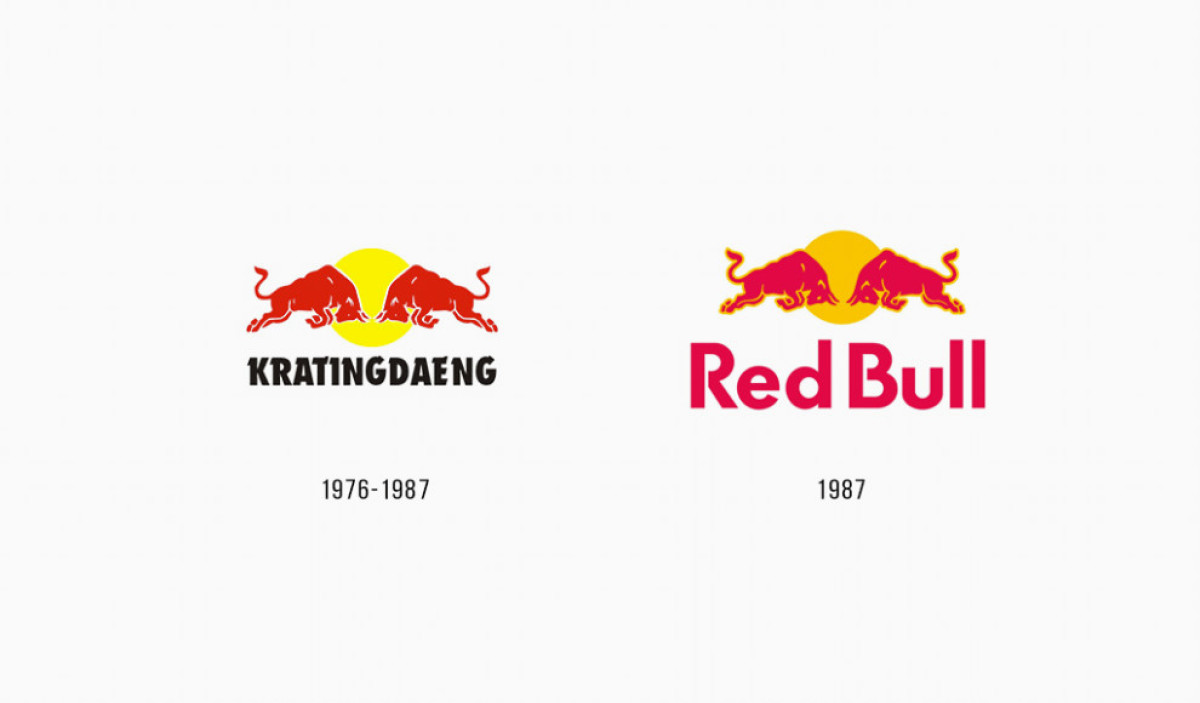
The original Krating Daeng label set the template the world now recognizes: two red gaurs charging at each other in front of a circular sun disc. The gaur, a large wild bovine native to Southeast Asia, is the literal meaning of "krating," so the animal was never an invented mascot. The Thai original used a more detailed, illustrative drawing style, and early Red Bull versions carried the "Krating Daeng" inscription in Thai script, set in dark blue beneath the emblem.
The Western adaptation kept the composition and tightened the execution. The bulls were redrawn with cleaner silhouettes, the English wordmark replaced the Thai inscription and moved above the mark, and the red outline around the sun disc was dropped. Both companies still use near-identical emblems today, each serving its own market. As brand identity designer David Airey observed in his analysis of the logo's Thai origins, Mateschitz seemed to recognize that the exotic, potent associations of the original mark were an asset for a new energy drink, and that knowing when not to change a design is a skill in itself.
Red Bull Logo Design and Symbolism
The emblem has three working parts, and each carries deliberate meaning.
- The twin bulls: In Thai culture, the gaur represents strength and fearlessness. In Roman and Greek tradition, the bull stands for virility, endurance, and willpower. In financial markets, the bull signals growth and optimism. The mirrored charging stance adds motion and confrontation, freezing the split second before impact.
- The yellow disc: The circle behind the bulls reads as the sun, a natural energy source. In semiotics, circles convey completeness, cycles, and harmony, which balances the aggression of the animals in front of it.
- The wordmark: "Red Bull" sits above the emblem in a bold, custom typeface. The closest commercial match is Futura SH DemiBold, with modified R and B characters. The geometric letterforms hold up at small can sizes and on fast-moving race liveries alike.
Typography and Color Specifications
The wordmark is proprietary, but its geometric construction places it firmly in the Futura family of influence, and Red Bull's sports properties use Futura for team lettering and merchandise. The brand's core palette, as documented by color references drawn from Red Bull's official logo assets, is:
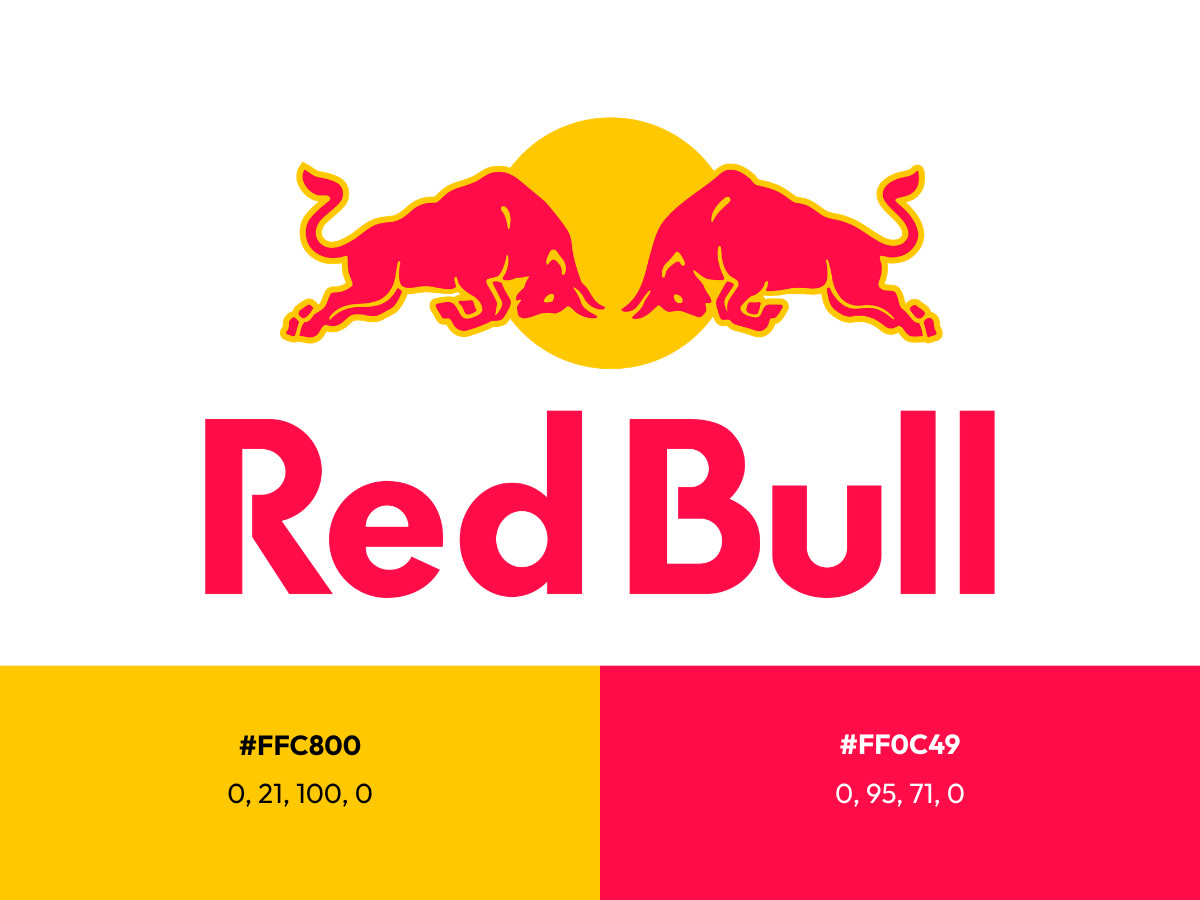
- Red Bull Red: Pantone 192 C, Hex #FF0C49, RGB (255, 12, 73)
- Red Bull Yellow: Pantone 7408 C, Hex #FFC800, RGB (255, 200, 0)
Note that Red Bull's sports properties publish slightly different values. Red Bull Racing, for example, specifies Pantone 2035 C (#E30118) for red and Pantone 7404 C (#FDD900) for yellow. The variance is small enough that consumers read them as the same brand, which is the point: the system flexes at the edges while the center holds.
Color Psychology: The Research Behind the Palette
The red and yellow pairing aligns with peer-reviewed findings. Lauren Labrecque and George Milne's 2012 study "Exciting red and competent blue: the importance of color in marketing," published in the Journal of the Academy of Marketing Science (Vol. 40, pp. 711-727), mapped hues onto brand personality dimensions across four studies and found that red reliably evokes excitement, shaping brand perception, likability, and purchase intent.
Satyendra Singh's 2006 paper "Impact of color on marketing," published in Management Decision (Vol. 44, No. 6, pp. 783-789), is a literature review of color psychology in marketing. It reports that people form judgments within 90 seconds of an initial interaction and that 62 to 90 percent of that assessment is based on color alone, and it identifies red among the colors that attract impulse buyers, which matters in the grab-and-go retail environments where energy drinks are sold.
Neither study examined Red Bull specifically, but both support the logic of the palette: red for arousal and urgency, yellow for alertness and optimism. For a practical guide to applying these effects, see DesignRush's breakdown of color psychology in branding.
Red Bull Logo History
1976-1987: The Krating Daeng Origins
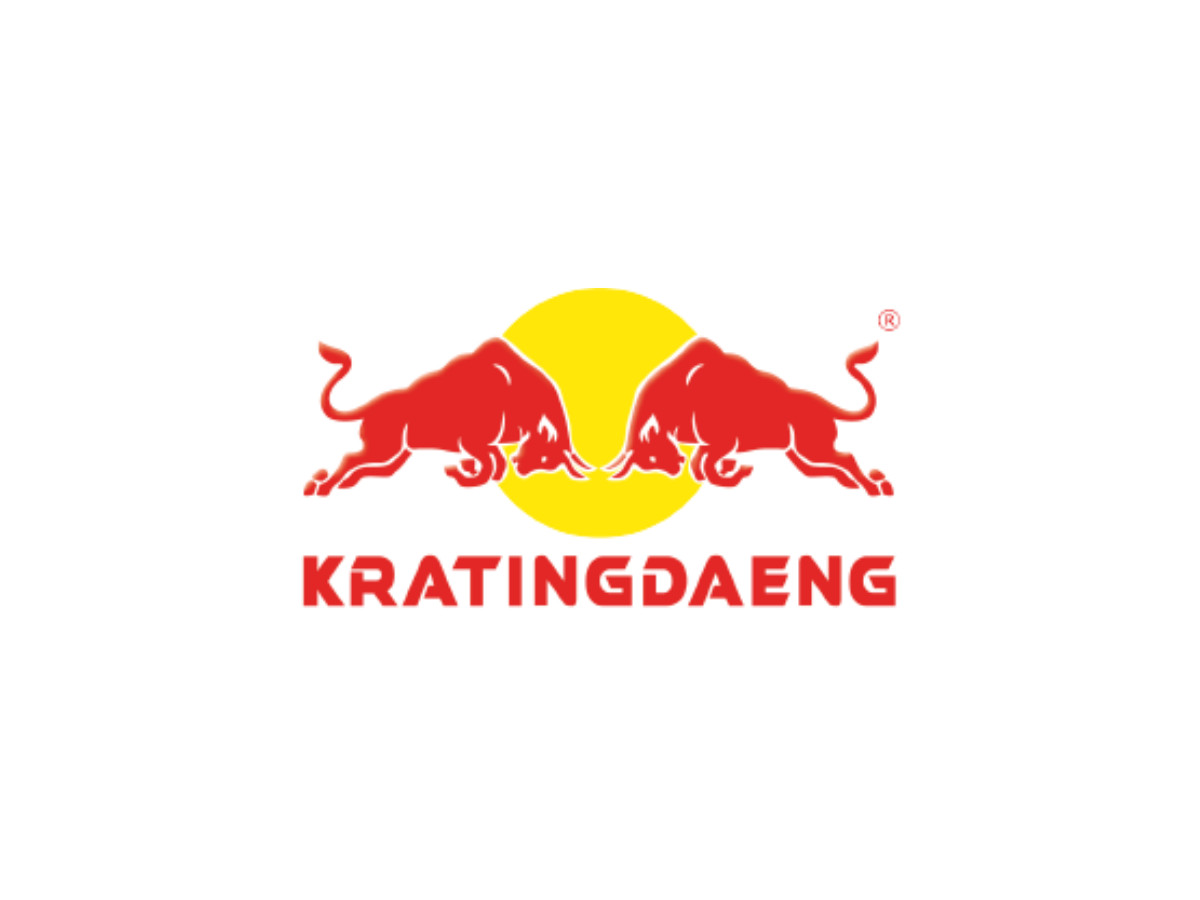
Chaleo Yoovidhya, a self-made Thai entrepreneur and founder of TC Pharmaceutical, created Krating Daeng in 1976 for blue-collar workers, truck drivers, and Muay Thai fighters who needed stamina through long shifts. The two-bulls-and-sun emblem debuted with the product.
Austrian marketing executive Dietrich Mateschitz discovered the drink on a business trip to Thailand in 1982 and reportedly found it cured his jet lag. He and Yoovidhya founded Red Bull GmbH in 1984, splitting ownership 49/49 with 2% for Yoovidhya's son Chalerm. Mateschitz adapted the formula for Western palates, added carbonation, introduced the slim 250ml can, and kept the emblem.
1987-Present: Refinement, Not Reinvention
Red Bull launched in Austria on April 1, 1987. The claim that the logo has "never changed" is close to true but not quite. The record shows a series of quiet refinements:
- Early 1990s: The Thai "Krating Daeng" inscription was replaced by the English wordmark, repositioned above the emblem and set in red, and the sun's red outline was removed.
- Early 2000s: Colors were made bolder and the emblem was scaled down slightly relative to the wordmark.
- 2014: The bull illustrations were simplified into cleaner silhouettes, the silver background was dropped, and the typography was subtly refined, per the brand analysis by Inkbot Design cited below.
None of these updates registered as a redesign to consumers, and that is precisely the lesson.
The composition, the symbols, and the palette have held for nearly four decades while the drawing quality kept pace with modern reproduction.
The honest version of the story is the more persuasive one: Red Bull managed its logo's evolution with unusual discipline, sharpening execution while holding the core identity steady. The McDonald's logo followed a similar path, refining the Golden Arches across decades without abandoning the core symbol.
The Red Bull Logo Variations
Red Bull runs a small family of executions from one master mark:
- The full lockup: The wordmark above the twin bulls and sun disc, used on packaging, sponsorship assets, and corporate communications.
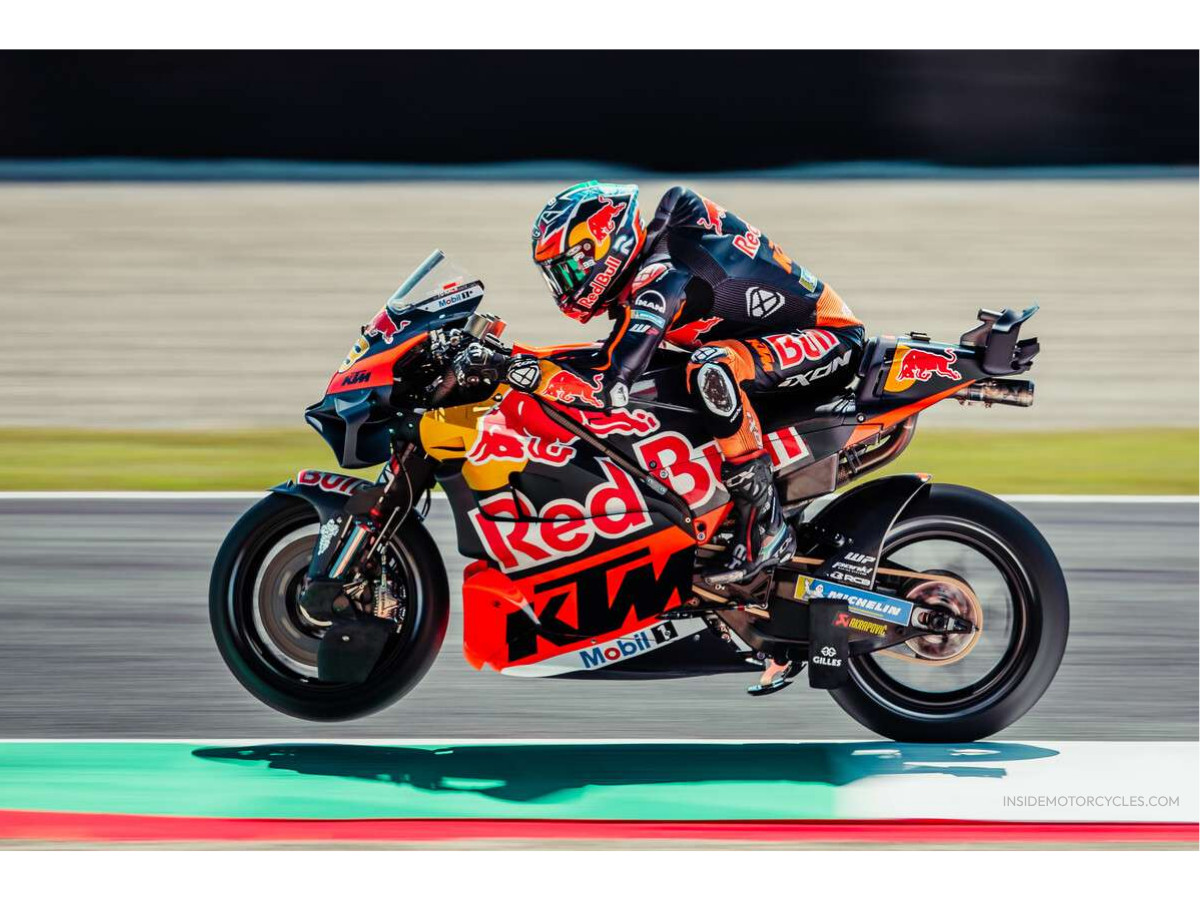
- The icon-only mark: The bulls and disc without the wordmark, used where recognition is already established, such as helmets, apparel details, and app icons.
- The can layout: The diagonal blue-and-silver panel design with the lockup, held constant across Original and Sugarfree, while the Editions line swaps in full-color cans and keeps the mark unchanged.
- Monochrome versions: Single-color reproductions for embossing, sponsorship contexts, and print constraints.
- Sports property lockups: Red Bull Racing, RB Leipzig, the New York Red Bulls, and other teams pair the bulls with property-specific wordmarks and adjusted color values while preserving the emblem's composition.
The system works because the confronting bulls and disc are the constant. Everything else is allowed to move.
What the Logo Is Worth: The Business Case for Consistency
Most brands redesign every five to 10 years. Red Bull has not, and the company-reported numbers give the strategy weight. Red Bull GmbH posted net sales of €11.2 billion in 2024, up 6.4%, on 12.7 billion cans sold, a 4.4% unit increase over 2023.
On the brand side, Brand Finance's 2025 Food & Drink report valued Red Bull at $9.7 billion, a 16% year-over-year rise, ranking it the most valuable energy drink brand in the world and fourth among all non-alcoholic drinks brands, behind only Coca-Cola, Pepsi, and Nongfu Spring. Brand Finance also ranks Red Bull as Austria's most valuable brand, at €8.7 billion in its 2025 Austria report, the same valuation expressed in euros.
A note on methodology for readers comparing figures: revenue numbers here are company-reported net sales in euros, and brand value is Brand Finance's independent estimate in US dollars. The two measure different things and should not be mixed.
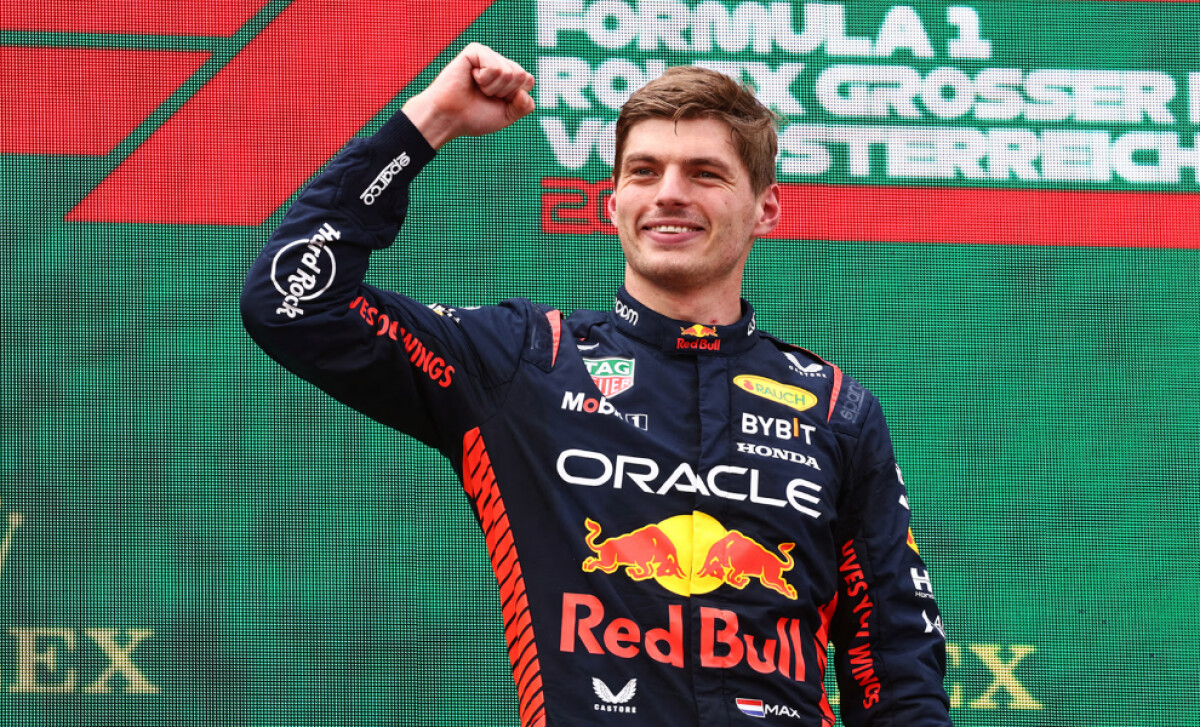
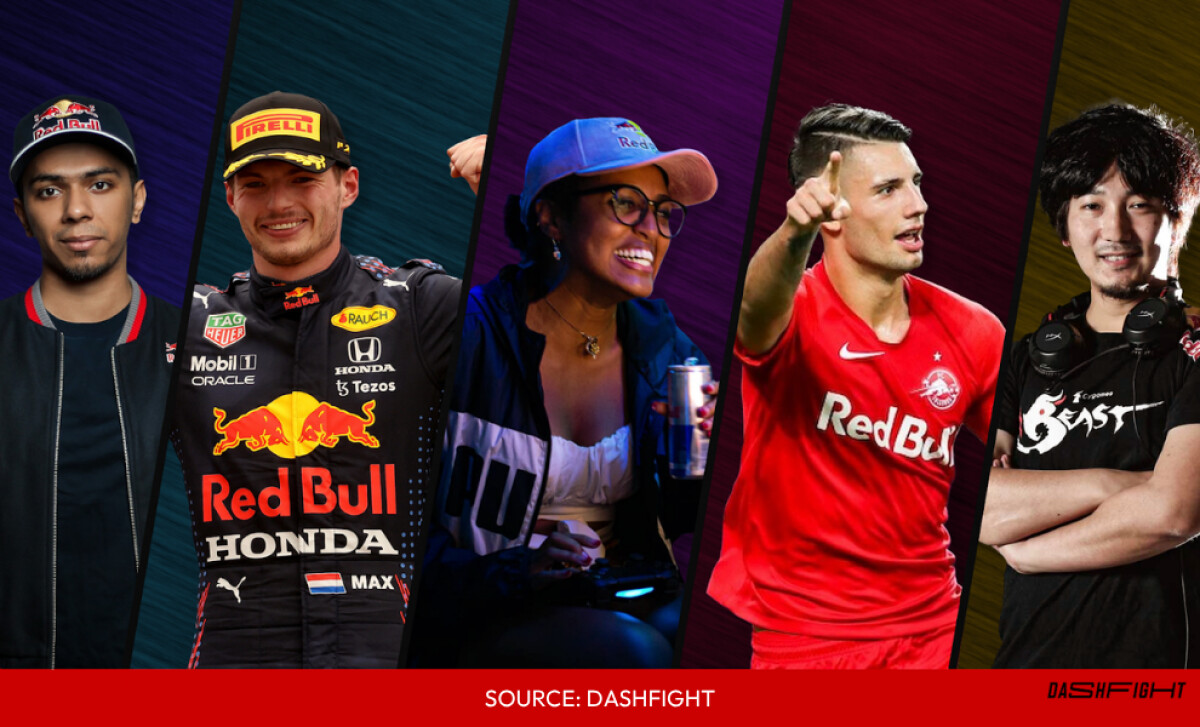
The logo compounds this value through exposure. Red Bull Racing has won six Formula 1 Constructors' Championships, the 2012 Stratos jump set a YouTube record of more than 8 million concurrent livestreams, and the company sponsors hundreds of athletes across cliff diving, air racing, breaking, and esports. Every one of those touchpoints repeats the same mark.
What Brand Identity Professionals Say
David Airey, the brand identity designer behind Logo Design Love and author of books on logo design, holds up Red Bull as a lesson in restraint in the analysis linked earlier. His argument: design icons are built over time, and the discipline to leave a working mark alone is as valuable as the ability to create one.
Stuart Crawford's brand analysis at Inkbot Design makes the operational case. A single master mark repeated across cars, kits, stadia, and broadcast backdrops reduces fragmentation in sponsorship audits and cuts the "re-learning cost" for audiences. Fans learn to spot the confronting bulls instantly, and that recognition feeds back into retail performance.
What Brands and Agencies Can Learn From the Red Bull Logo
Each lesson below is grounded in a visual identity choice rather than a campaign or sponsorship tactic, and each reflects the broader rules of logo design that hold up over time.
- Inherit Good Equity Instead of Replacing It
Mateschitz's most important design decision was a non-decision: he kept a mark that already worked.
Takeaway: In rebrand and acquisition projects, audit existing visual equity before proposing anything new. The strongest move may be a refinement brief, not a redesign brief.
- Build a Mark That Survives Wordmark Removal
The bulls-and-disc emblem carries the brand alone on helmets and app icons.
Takeaway: Design symbols that hold full recognition without the name attached, then test them at favicon and jersey-patch sizes.
- Refine Quietly, on a Long Cycle
Red Bull's updates in the early 1990s, early 2000s, and 2014 sharpened execution without touching composition.
Takeaway: Separate a logo's fixed elements (composition, symbols, palette) from its adjustable ones (drawing detail, letterform tuning), and only ever touch the second category.
- Let Color Do Measurable Work
The red and yellow pairing maps onto published research on arousal, attention, and impulse purchasing.
Takeaway: Choose brand colors against documented psychological effects and retail context, then lock exact Pantone, hex, and CMYK values in the guidelines.
- Design a System,Nota Single File
The lockup, icon-only mark, monochrome versions, and property-specific variants all flex around one constant emblem.
Takeaway: Deliver logo systems with defined variation rules, so regional teams and sponsorship partners can adapt without diluting the core. DesignRush's guide to building a brand visual identity covers how these pieces fit together.
- Anchor Symbolism in Something Real
The bulls are literal: "krating daeng" means red gaur. The mark's meaning is native to the product's origin, which is why it never feels arbitrary.
Takeaway: Ground your symbol in the brand's actual story or category, not in borrowed abstraction.
For comparable case studies in long-lived marks, see how Johnnie Walker evolved its Striding Man over a century, or how the best car company logos, including fellow bull brand Lamborghini, balance heritage against modernization.
Whether you're crafting the next beverage brand or rethinking your visual identity, choose a creative partner who sees design as business strategy. Visit our Agency Directory to find top-rated firms in:
Or explore our Best Beverage Logo Designs collection to see what makes a visual identity thrive in competitive markets.

_969860707e85-preview.jpg)