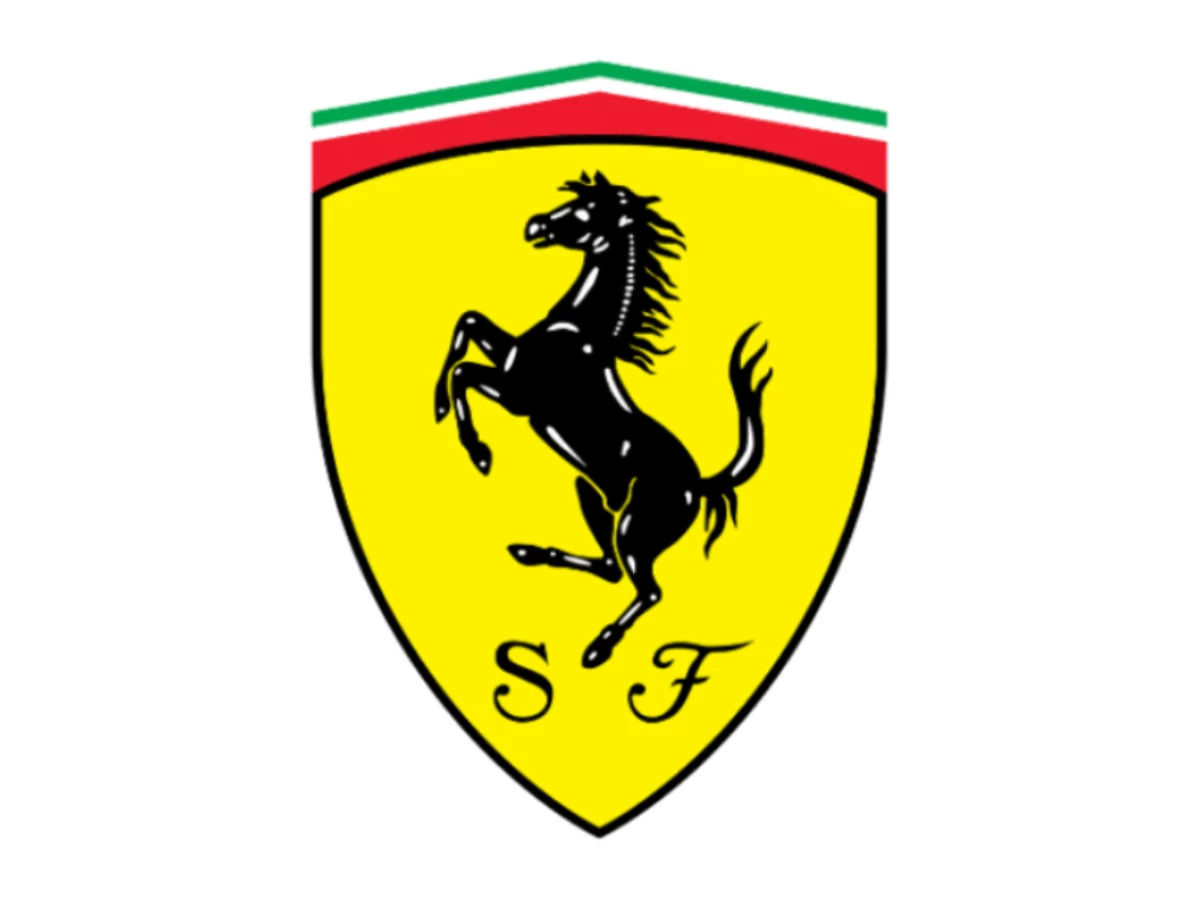

Ask anyone about the Scuderia Ferrari logo and you'll get the same story: war hero, prancing horse, good luck charm.
It's true. It's also about a third of the picture.
The full story has two halves.
The horse wasn't a symbol that arrived fully formed — it was a 30-year design collaboration with a named Milanese artisan family, shaped by documented sketches, rejected proposals, and a handwritten note from Enzo that changed the badge permanently.
And for roughly 15 years, that carefully crafted horse shared the Ferrari F1 car with some of the most cynical branding ever put on a racing machine: a shape-shifting series of tobacco advertising surrogates that cycled from a literal barcode to a fake aviation sustainability brand, all bankrolled by Philip Morris.
Almost nobody connects the two halves. Here's why that matters.
Half One: The Horse Was Never Just a Gift
The Baracca part is real.
In 1923, Enzo Ferrari won the Circuito del Savio GP and at the race met Count Enrico Baracca, father of WWI flying ace Francesco Baracca, a war hero killed in 1918 whose biplane had sported a rearing black stallion.
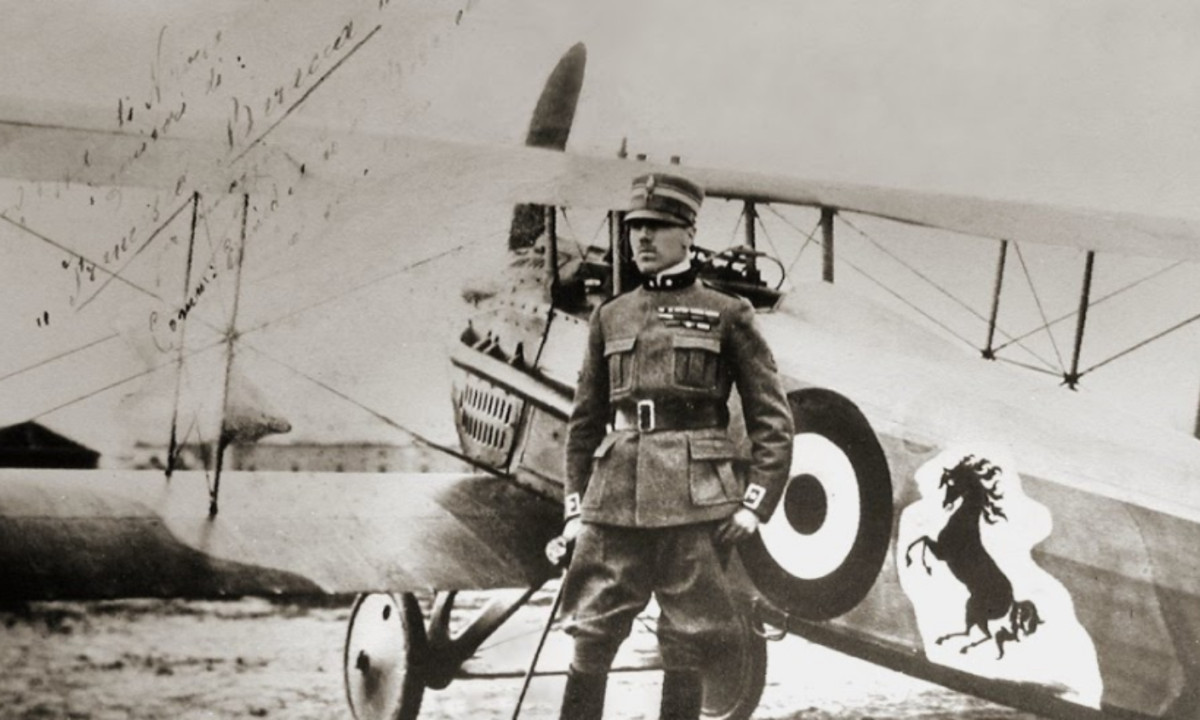
(Source: Wikimedia Commons)
The two struck up a friendship, and through it Enzo later met the Count's wife, Contessa Paolina Biancoli.
It was she who urged him to adopt the horse, assuring him it would bring good fortune.
Enzo wrote about it himself in a 1985 letter: "that meeting gave rise to the next one with his mother, Countess Paolina.’’
She said to me one day: ‘'Ferrari, put my son's prancing horse on your cars. It will bring you luck.'"
What's less told is the two decades that followed.
When Enzo established his factory in 1945, he sought out Eligio Gerosa, one of Italy's foremost artistic engravers, based in Milan.
It wasn't a random choice: Gerosa's firm had supplied enamel twisted-snake badges for Alfa Romeo, for whom Enzo had raced, and the two men shared a deep admiration for Baracca.
Gerosa had even founded a Baracca Association to preserve the pilot's memory, and had already evolved the horse symbol for it, giving it the upturned tail Ferrari's badge still carries today.
The relationship had history before the badge had a shape.
In 1949, Gerosa's company was absorbed by O.M.E.A. — Officine Meccaniche E Artistiche — owned by the Candiani family of Milan.
Gerosa stayed on, and the collaboration between Ferrari and the Candiani workshop would run for 30 years.
Their archives still hold the evidence: sketches, proposals, and the moments of decision that produced the badge we recognize today.
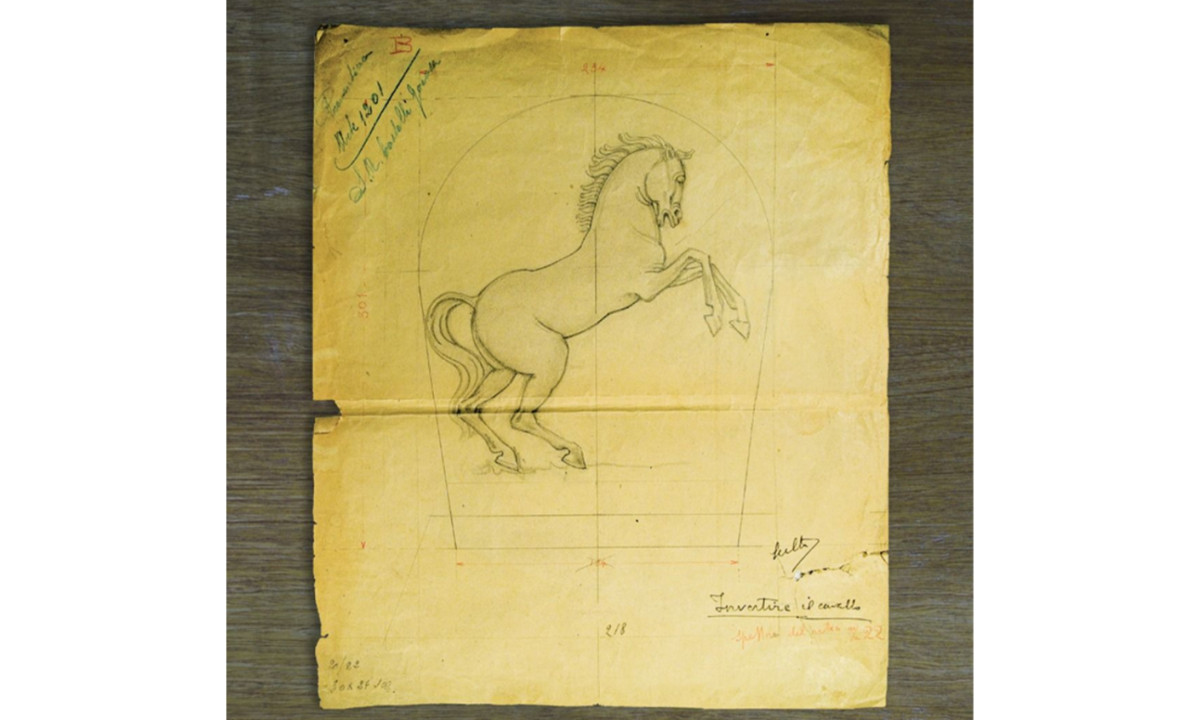
(Source: Ferrari)
One document stands out. A Gerosa sketch, delicate and Da Vinciesque, with a handwritten instruction in the bottom right corner from Enzo himself: "Invertire il cavallo."
Turn the horse around.
That note marks the exact moment the horse began facing left, and it has faced left on every car and every badge Ferrari has ever made.
The rest of the details carry the same deliberateness. The yellow background honors the civic color of Modena, Enzo's hometown.
The Italian tricolor at the top came after Enzo rejected an early curved version — "they remind me of Bugatti grilles," he told Gerosa. The raised hoof came from another Enzo directive: "me la faccia che voli" — make it fly for me.
And the horse itself, as Luigi Candiani explains, "gradually became slimmer, more elegant, moving away from an earlier, much chunkier horse, the 'Romagnolo' version."
This is what the badge actually is: a designed object, iterated over decades by specific people with specific intentions.
Not a symbol received and placed unchanged. Designed.
Half Two: The Badge That Had a Roommate
(Source: Fabrik)
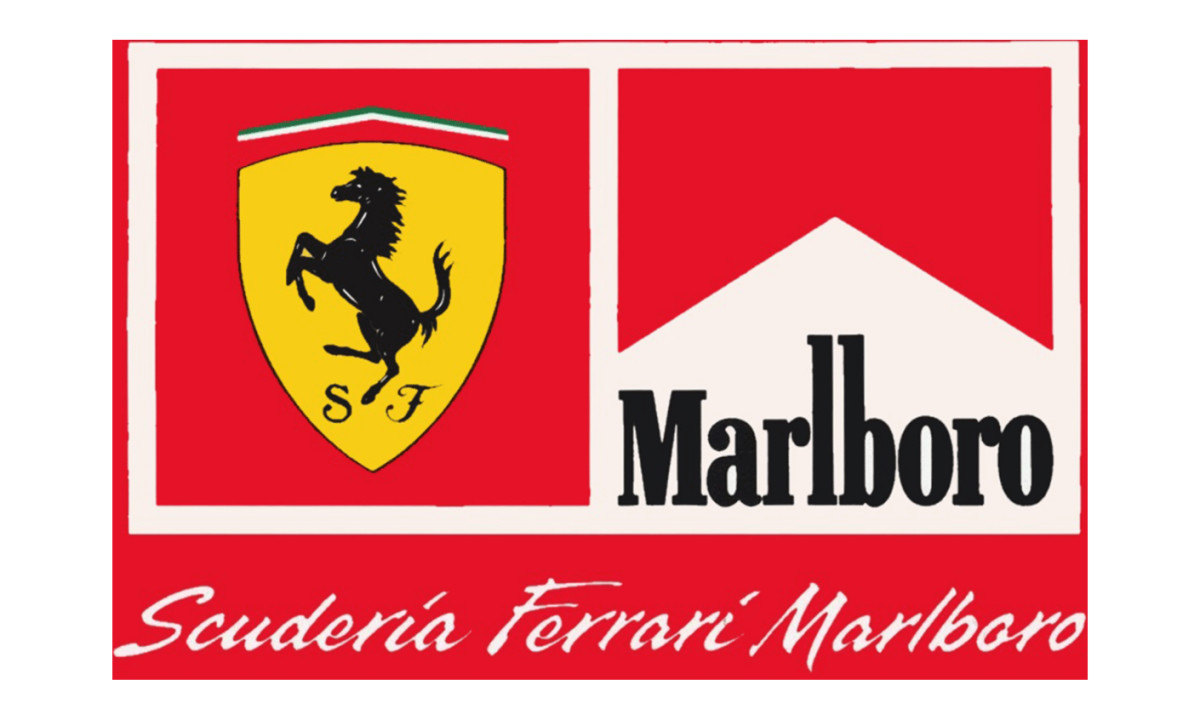
From 1997, the Scuderia Ferrari badge started sharing space.
Ferrari entered a sponsorship deal with Marlboro, Philip Morris's flagship cigarette brand, and the official team name became Scuderia Ferrari Marlboro.
The horse kept its shield. But it had company.
Then came the bans.
Tobacco advertising in Formula One had been tightening for decades, and by 2007 Marlboro's logo appeared openly on Ferrari's cars only in the handful of races still held in permissive markets: Monaco and China.
After that, the name disappeared from the livery. The money didn't.
Philip Morris had the Ferrari deal locked until 2011, and the team remained Scuderia Ferrari Marlboro in FIA entry lists.
So what do you do when you're paying hundreds of millions to sponsor a racing team but can't put your logo on the car?
Apparently, you invent a new one.
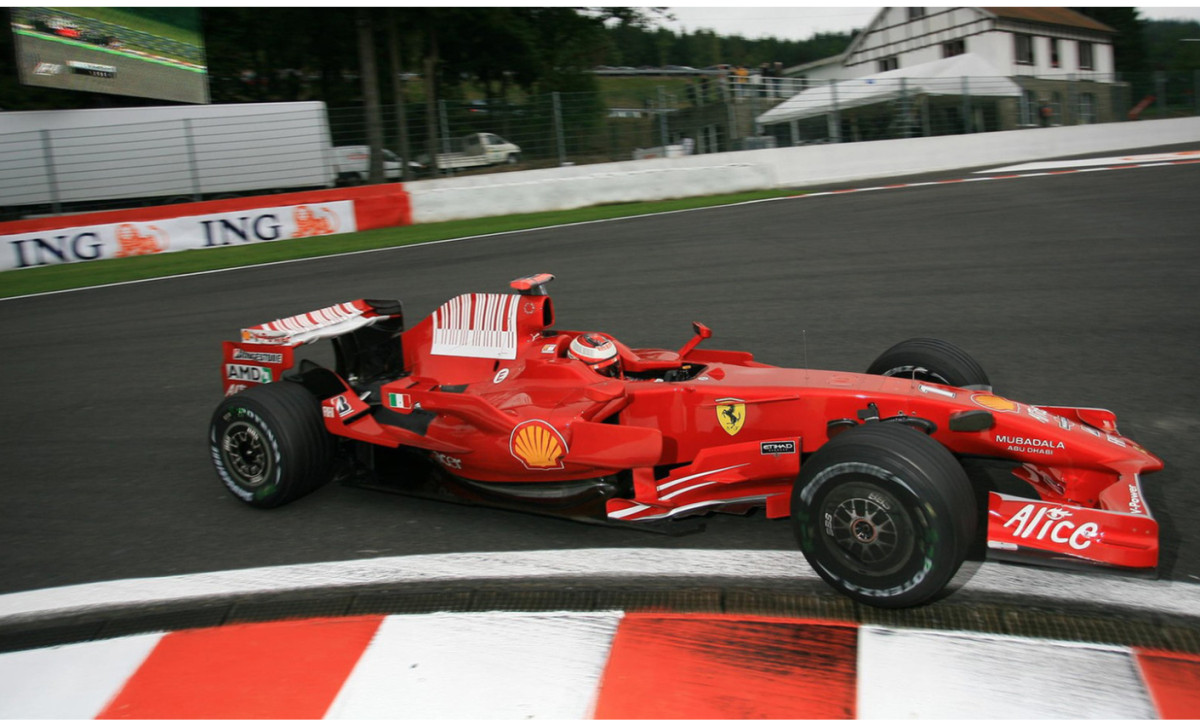
(Source: Ferrari)
From 2007 to 2008, a barcode pattern appeared on the car in Marlboro's exact red, white, and black, placed precisely where the Marlboro logo had previously sat.
John Britton, Fellow of the Royal College of Physicians, was direct: "The barcode looks like the bottom half of a packet of Marlboro cigarettes. I was stunned when I saw it."
There was also a theory the design was built for speed — that when the car blurred past cameras, the barcode would visually resolve into the original Marlboro triangular shape.
Ferrari's official response: "The barcode is part of the livery of the car, it is not part of a subliminal advertising campaign." Which is exactly what you'd say if it was.
By 2010, the European Public Health Commissioner was calling it illegal subliminal marketing and pushing for government investigations in Spain and Britain.
Ferrari and Philip Morris agreed to remove the barcode from the Barcelona Grand Prix onward. The sponsorship continued.
Philip Morris extended the deal in 2011 and again in 2015.
The next iteration — a prominent red-and-white geometric arrangement introduced with the 2011 rebrand — drew the same comparisons to the Marlboro pack design, now without a barcode to point at directly.
Then came Mission Winnow.
At the 2018 Japanese Grand Prix, Philip Morris launched a new brand on the Ferrari car: red chevrons presented as an initiative toward a "smoke-free future," and the team became Scuderia Ferrari Mission Winnow.
Australian authorities were skeptical from the start. Three separate government bodies launched investigations after local broadcasters aired the Japanese GP with Mission Winnow visible on Ferrari's cars, and a 2019 editorial in the BMJ connected it explicitly to the barcode playbook.
Ferrari stripped Mission Winnow branding for the 2019 Australian Grand Prix, removing it from the one market actively investigating while keeping it everywhere else.
The logo came and went for three more seasons before the contract ended in 2021.
The horse, as always, remained.
The Question Nobody Asks
Here's what's strange when you put both halves together.
The prancing horse, designed by named craftsmen, refined over three decades, shaped by documented decisions including a handwritten note that said turn it around, is the one element that never changed.
It sat in its yellow shield through every phase: the Marlboro chevron, the barcode years, the geometric shapes, Mission Winnow.
Just the horse, facing left, while everything around it was negotiated, replaced, investigated, and eventually dropped.
What that tells you about a logo is genuinely interesting.
The horse absorbed all of it without losing legibility. Ferrari fans kept buying merchandise. The Tifosi kept waving flags.
The horse was still just the horse. That's either a tribute to how strong the symbol is, or a sign of how much people see what they want to see on a Ferrari.
Most likely both.
What the Badge Actually Means Now
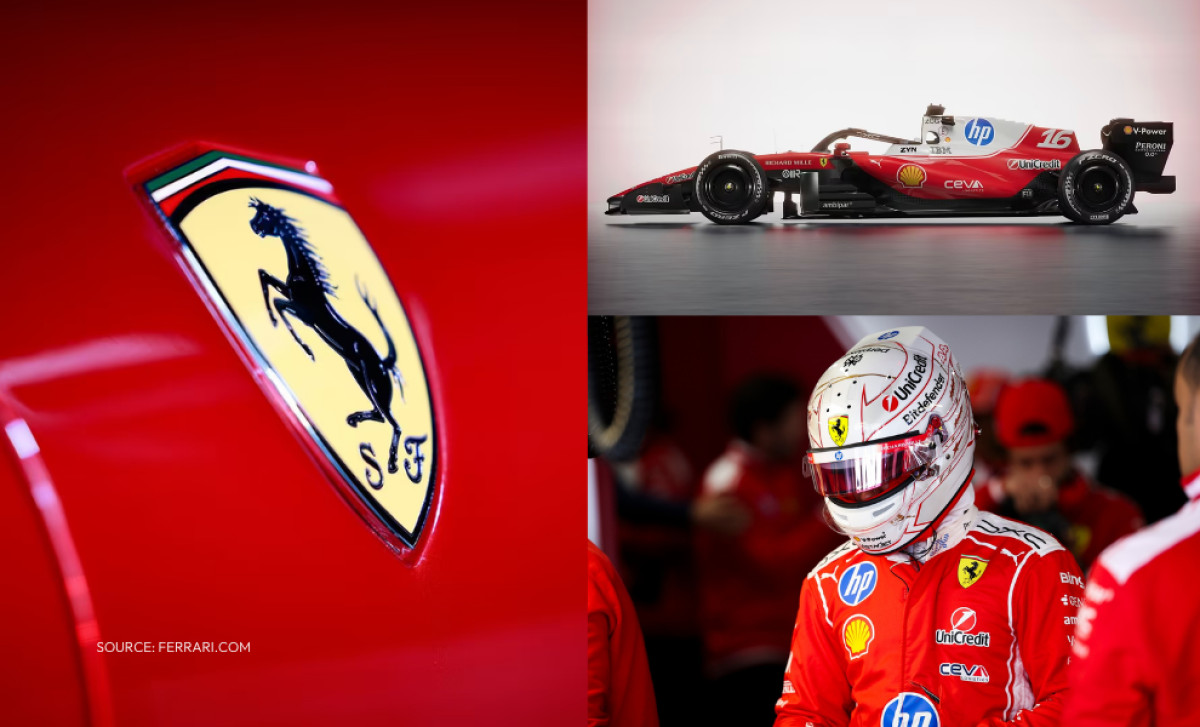
The current Scuderia Ferrari badge is the horse, stripped of everything that proved negotiable.
No barcode, no tobacco brand, no chevron standing in for a cigarette pack.
Just the horse that Eligio Gerosa sketched and Enzo Ferrari told to face left, refined over three decades by craftsmen in Milan, unchanged through 80 years of racing, resilient enough to outlast every commercial arrangement placed alongside it.
The horse is still there. Everything else changed.
Our team ranks agencies worldwide to help you find a qualified partner. Visit our Agency Directory for the Top Logo Design Companies as well as:
- Top Sports Marketing Agencies
- Top Design Agencies
- Top Branding Companies
- Top Graphic Design Companies