


- Agency: Brainlabs
- Client: Polaroid
- Category: Print Design — Billboards
- Location: New York City, New York, United States
- Project Brief: Create an outdoor campaign that promotes analog experiences and encourages people to disconnect from digital overload.
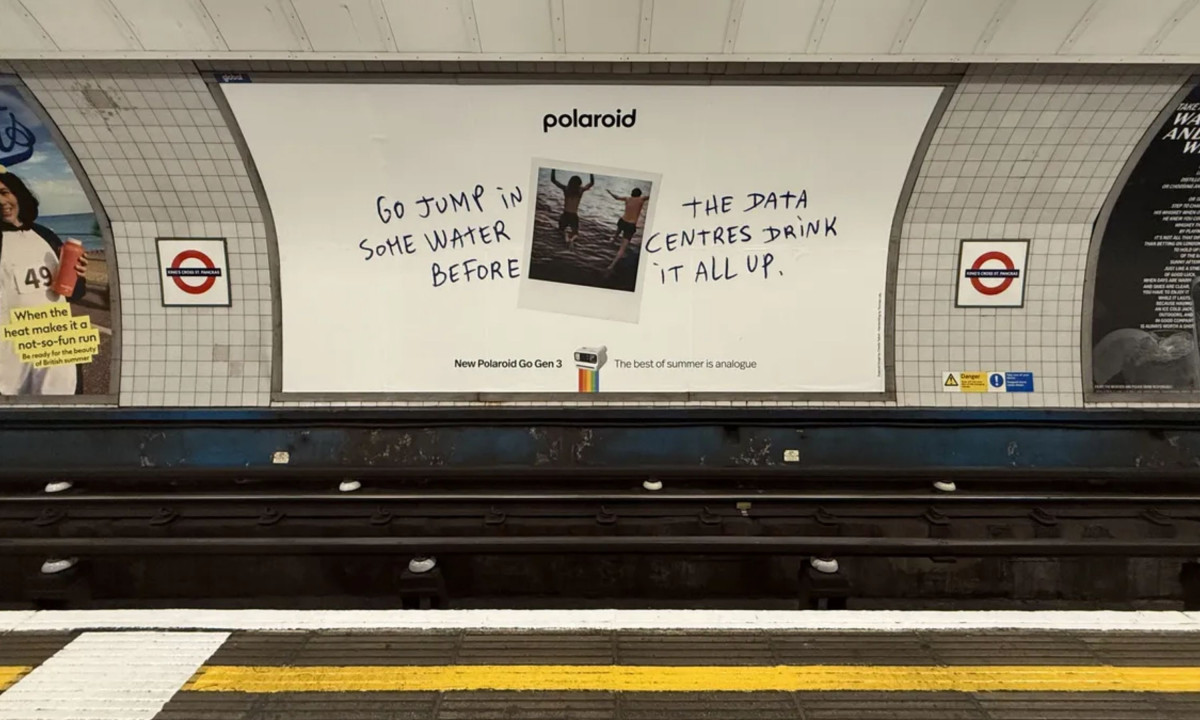
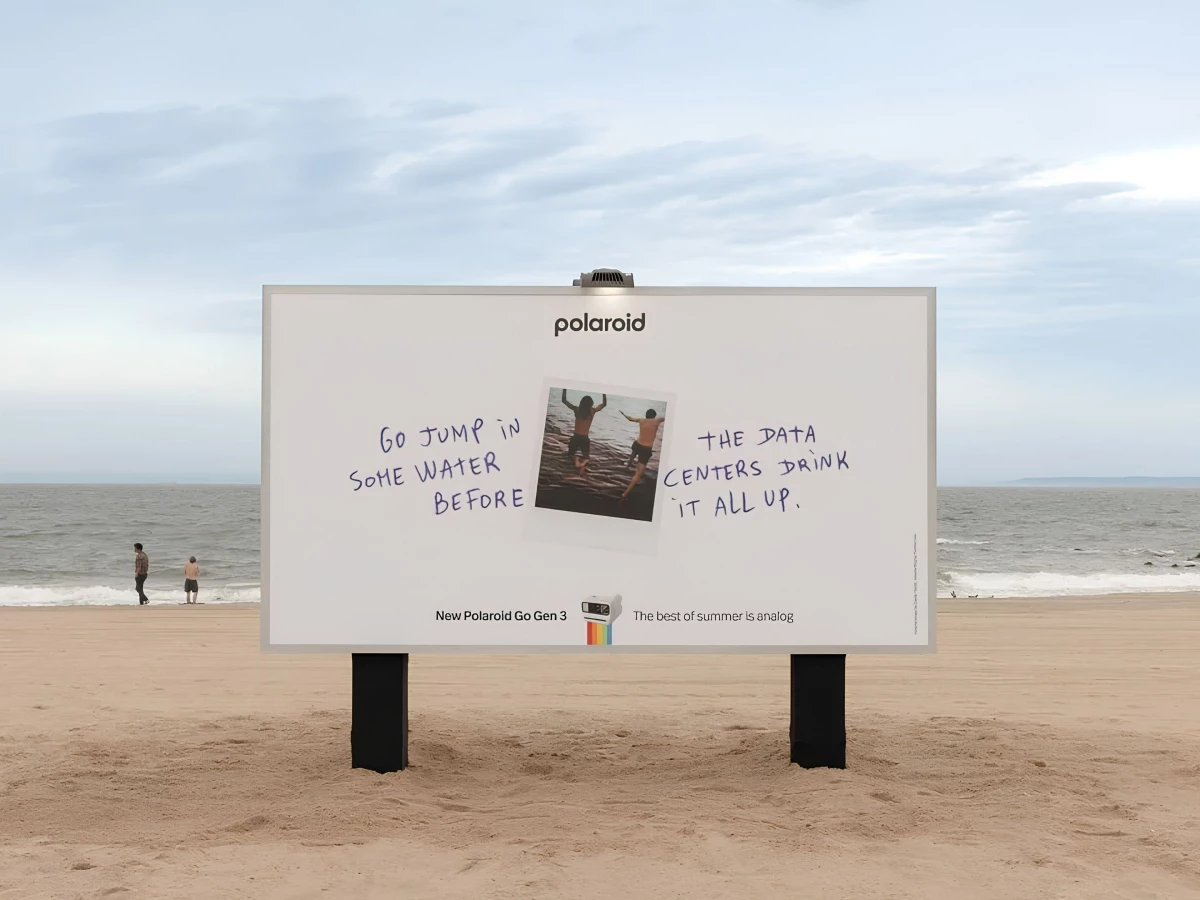
An effective billboard stops you with one thought, not a paragraph. Polaroid's Coney Island installation earns that with a single line: "Go jump in some water before the data centers drink it all up." It references a live technology debate and redirects it toward a beach, which is the right place to make that point.
The location is the design decision. Putting a billboard on sand at the start of summer, surrounded by people who have already chosen to be offline for an afternoon, turns the medium into the message. The copy does not need to work hard because the placement already did.
Juror Brett Jefferson named what the campaign actually pulled off: "A witty, human and quietly rebellious concept that proves the most persuasive way to sell analogue is to make the advert feel analogue too. How can one not want a Polaroid camera after being confronted by these billboards?"Andrea Owsinek-Brucker pointed to its reach across generations: "Utilizes nostalgia to bridge generations — reimagining living in the moment."
The wider outdoor system holds the same logic across London and New York. Lines like "You can't bask in blue light" and "Dance like nobody is recording" are written in the register of someone who has noticed something obvious that nobody says out loud. That tone travels across King's Cross, Bethnal Green and Hackney without needing a visual overhaul between placements.
What keeps the campaign from tipping into anti-tech preaching is the honesty in Polaroid's positioning. Creative Director Patricia Varella put it plainly: the brand is not anti-digital, it is pro-human. That distinction gives the billboard copy room to be provocative without feeling preachy, which is the hardest thing to get right in a campaign built around a cultural argument.
Viktor Ostrowsky closed it simply: "Simple, human, and unmistakably Polaroid. It doesn't reinvent the brand — it reminds you why you loved it in the first place." Guillermo Subuno agreed: "One of the strongest campaigns I've seen recently — original, highly shareable, and a perfect fit for the brand."